Advent & Christmas: they’re not the same thing (Ode to a Christian Calendar)


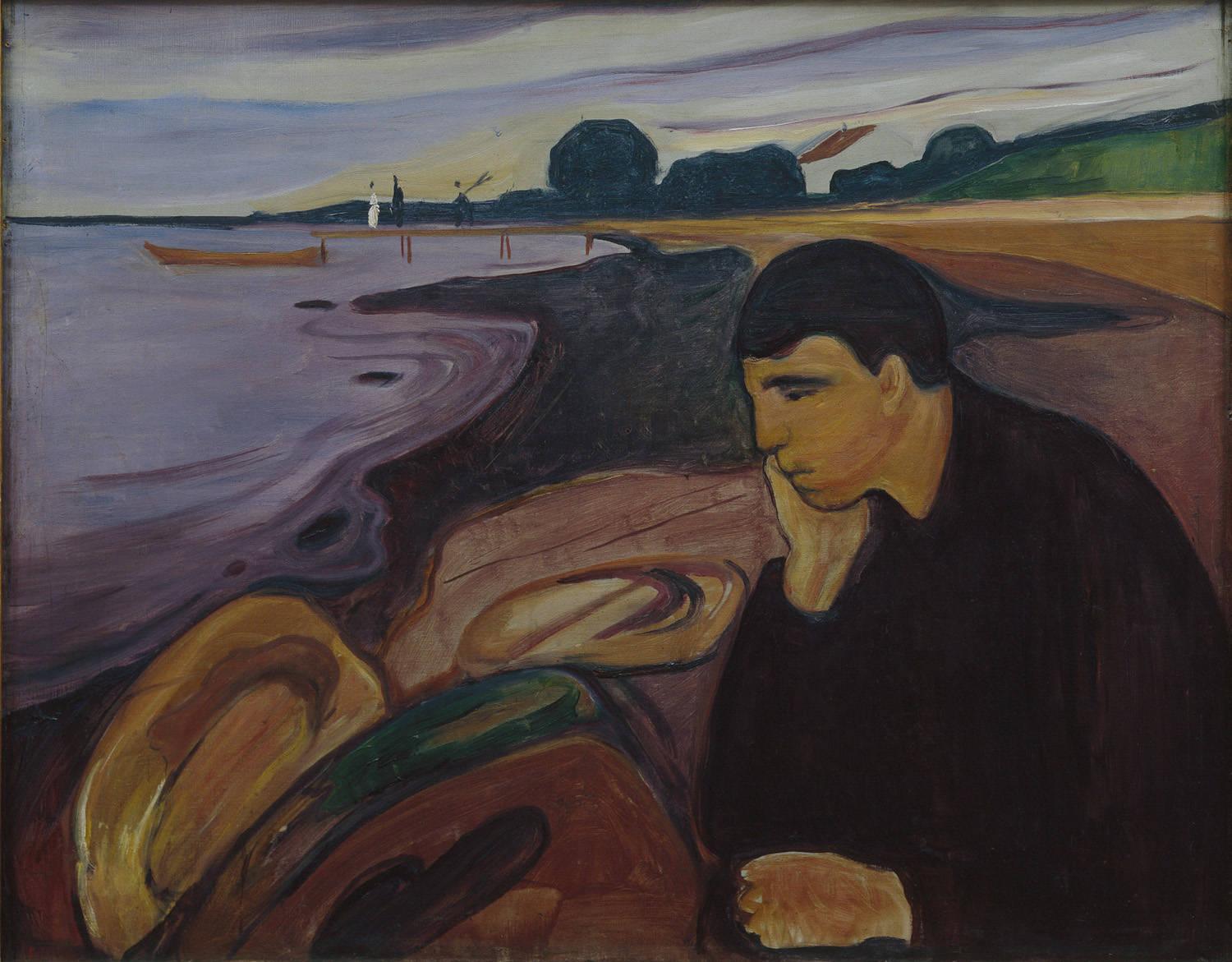
Munch-melancholyWell, it’s the Eve of Christmas season. Yes, that’s right, Christmas is not only an entire season in the Church calendar, but it’s a season that is distinct from Advent.

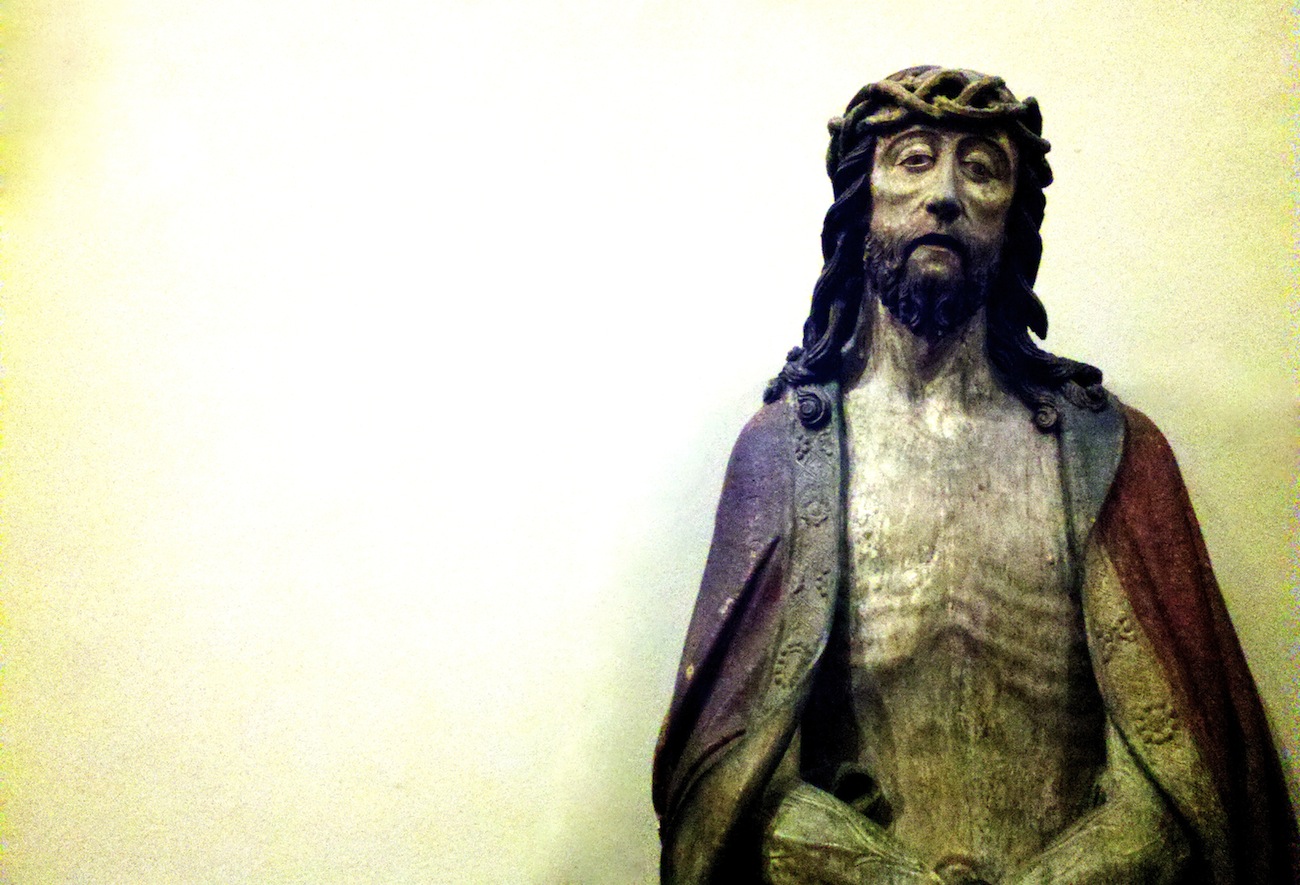
I know many in the global church know this fact, but I only learned it a couple of years ago, and each year it seems I have to be reminded. (Hopefully with this post, I can start internalizing it some.)

I find it interesting that we in the West have not only removed the “seasonal” aspects of the holiday, but have reduced this nearly two-month-long Advent/Christmas time into a single day on which we put most of our attention.

So why is the calendar structured like this? And what do we lose when we boil this down to one day?
Continue reading

Art & Advent’s Intellect: Barnett Newman’s “Black Fire”


barnett-newman-black-fireIf you look at the top of every page on this site, you’ll notice there is a prominent header image. If you’ve paid any sort of repeated attention to the posts on this site, you’ll notice I have different headers for different themes and series. Lent, Easter, Women in Ministry, The Bible, Theology, Art, Personal, Political, Writing, and my upcoming Guatemala posts each have their own distinct headers.

Throughout this year’s Advent series, I’ve used a cropped version of the above piece as the header image. It’s called Black Fire by Barnett Newman. Until recently, it hung for many years in the abstract expressionism room in the Philadelphia Museum of Art. I’ve spent much time sitting in the presence of this piece, contemplating it’s meaning.
Continue reading

Advent & the Goodness of Worldliness, c/o Dietrich Bonhoeffer [QUOTE]


‎”I remember a conversation that I had in America thirteen years ago with a young French pastor. We were asking ourselves quite simply what we wanted to do with our lives. He said that he would like to become a saint (and I think it’s quite likely that he did become one). At the time I was very impressed, but I disagreed with him, and said, in effect, that I should like to learn to have faith. For a long time I didn’t realize the depth of the contrast. I thought I could acquire faith by trying to live a holy life, or something like it. I suppose I wrote The Cost of Discipleship as the end of that path. Today I can see the dangers of that book, though I still stand by what I wrote.

I discovered later, and I am still discovering right up to this moment, that it is only by living completely in this world that one learns to have faith. One must completely abandon any attempt to make something of oneself, whether it be a saint, or a converted sinner, or a churchman (a so-called priestly type!), a righteous man or an unrighteous one, a sick man or a healthy one. By this-worldliness I mean living unreservedly in life’s duties, problems, successes and failures, experiences and perplexities. In so doing we throw ourselves completely into the arms of God, taking seriously not our own sufferings, but those of God in the world–watching with Christ in Gethsemane. That, I think, is faith: that is metanoia; and that is how one becomes a [human] and a Christian (cf. Jer. 45!). How can success make us arrogant, or failure lead us astray, when we share in God’s sufferings through a life of that kind?”

— Dietrich Bonhoeffer, Letters and Papers from Prison (via Kait Dugan)

The Surprise of Advent: WordPress Weekend Photo Challenge


jesus-suffering-pma

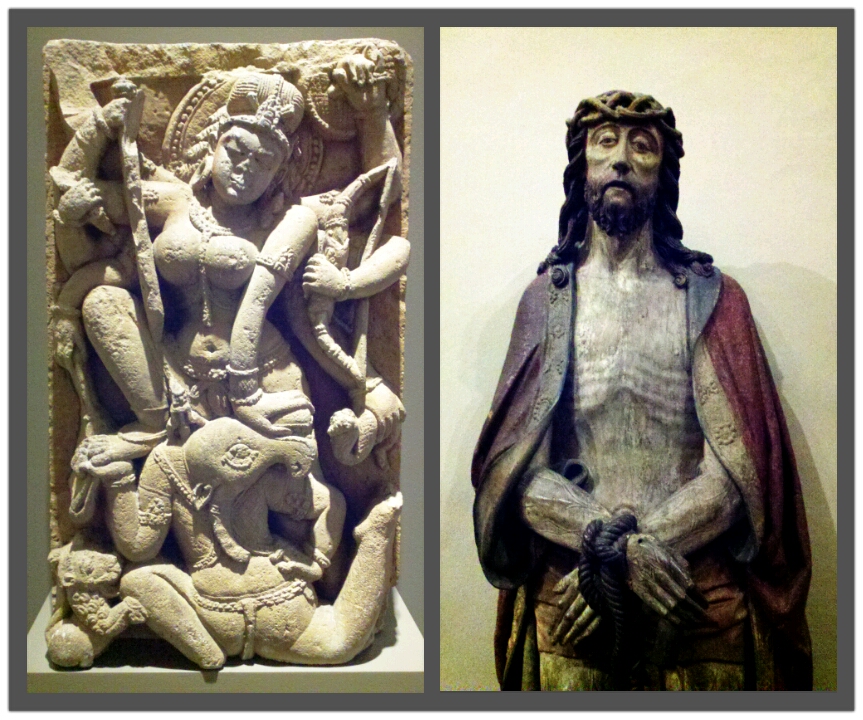
This week’s WordPress Weekly Photo Challenge theme is “Surprise“. With Advent having been on my mind (and blog), I thought of this picture. Or rather, to be more specific, the juxtaposition of these two pictures:

jesus-asian-god-pma

On one of my trips to the Philadelphia Art Museum to fight my inner Atheist, after spending some time with that beautiful Jesus statue above (a favorite of mine), I actually walked through the other side of the Medieval Art section to enter the Asian Art section.

I’m sorry, and forgive me if you can’t relate, but Asian Art has never done it for me. I don’t know why. I can see the craftsmanship aspect to it (I guess), but the beauty part feels lost on me. And so, when I go into Asian Art sections, my “art critic” side sort of quiets down and lets other parts of me take hold.

Continue reading

PSA: BibleGateway.com now has the NRSV Bible for free


For those that care, the website BibleGateway.com now offers the New Revised Standard Version (NRSV) [Wikipedia] as one of their many English translation options.

If you’re looking for a Bible verse or passage, or if you do lots of web writing about the Bible and need a good online Bible with lots of options, I’ve found BibleGatweay.com to be the best, especially for copying-and-pasting elsewhere.

This is also the most widely-used Bible site that now has access to this translation of the Bible. Before this, I couldn’t find it anywhere free online except at a weird, obscure site or two.

So why have I been eager for this translation (and why should you be)? The NRSV is the most ecumenically-used translation in the English-speaking world. It’s the standard translation used by Catholics, Anglicans, many Eastern Orthodox, and my own church. It’s also the standard translation used in academic Bible study.

And so, even though I still have a soft spot for the ESV, I like feeling like I’m swimming in the same stream as my church leadership (and academia, but that’s not as big a deal). And so, I prefer the ESV or the NRSV for in-depth Bible study, while I’m a lot more flexible in my more casual Bible reading.

So compare some versions and see if you like the NRSV yourself. Hopefully this new availability of this resource makes your continued engagement with the Bible all the more fruitful and exciting.

And so

Advent & Sex-lessness: here’s to singleness & celibacy!


sandorfi-le-pardon-wide

Yesterday, I wrote a post about some implications of Advent on sex. And, of course, I stressed the goodness and beauty and transcendance of that act as God intended it.

And it was one of my least read posts in a long time (as an update, interestingly, this is to date one of my most-read posts of all time!). I’m wondering if people are tired of hearing Christians talk about sex ad nauseam.

It is my humble opinion that the American Church right now is currently obsessed with sex. Well, to be fair, it’s always been obsessed with it; but now, it seems, the obsession is with “taking it back” and yelling and screaming about how Christians are just as sex-crazed, sex-eager, and sexually exciting as the most ardent secular hedonist.

Of course, they all qualify it by saying (as I even said yesterday) that this (oh my god really amazing Christian sex that we value so much) has to be “within the confines of marriage”. And so, this sex-obsession often expresses itself in an equal obsession with marriage. Preparing people for it, encouraging people towards it, beating up guys that aren’t “pursuing” women (or at least “preparing to”), and giving women tips on how to attract a “good, godly husband.”

And yet, yesterday, when I was thinking about the Advent of God into the world in the person of Jesus Christ, and the idea of the Incarnation, I realized something:

What is the story of Advent but the story of a virgin girl who has a virgin birth of a man who will remain a virgin his whole life?

The story of the Incarnation is, relatively speaking, one of the most “sex-less” stories in the Bible.

Continue reading

Advent & Sex: we are holy ground


Huber-untitled-crop

Update: I’ve also written some Advent thoughts on singleness and celibacy.

In Advent, we celebrate that God came as a human, in a mysterious act called the Incarnation. But in this act, God didn’t merely clothe himself in humanity. Flesh and blood were not the trappings of God. Instead, he became human. It was no mere illusion, nor was it a facade God took on.

God became flesh and blood.

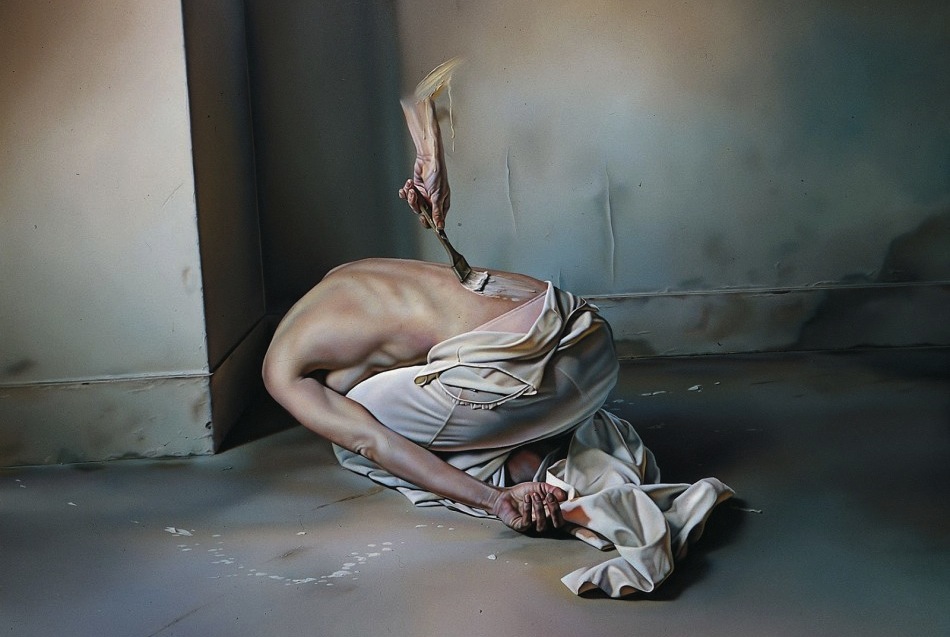
God found it suitable (desirable, even!) to take on a body–a created, formed, physical, material body. The implications of this are huge. Take sex for example.

Advent show us that the created world can contain God, and it still does not violate God’s Holiness–his “Otherness” or “Separated-ness”. He can know his Creation in such union and intimacy and yet still remain transcendent above it. Our bodies do not challenge his Holiness. He can take it on and still remain Other. He became “one” with us in a similar way to how we become “one” with others in sex. With this in mind, let’s unpack some implications:

Continue reading

Advent & the Connecticut Shooting: Ross Douthat’s “The Loss of the Innocents”


winter-snow-trees-bw

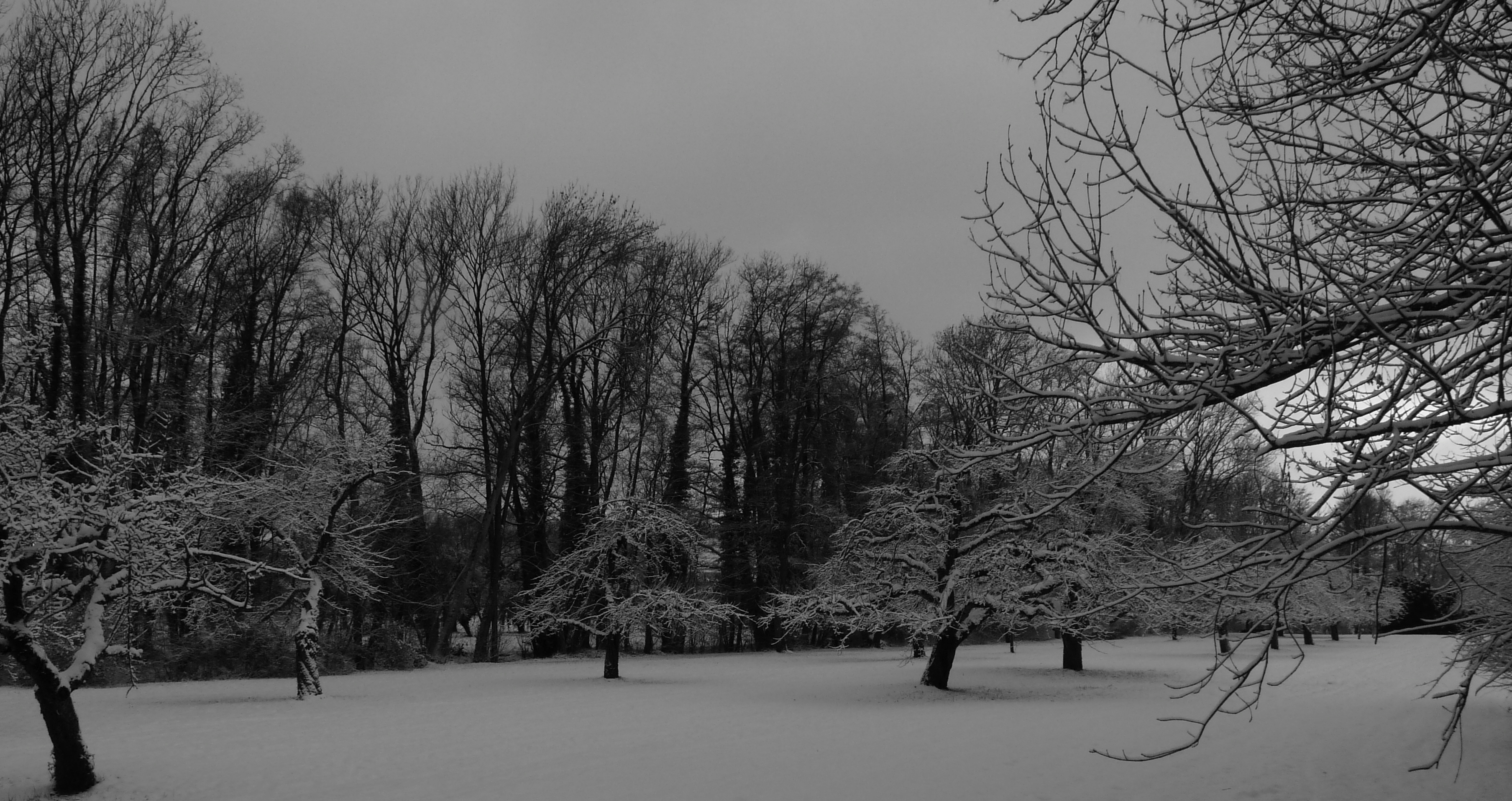
In the same spirit as today’s earlier post by Austin Ricketts, I wanted to share with everyone this incredible piece by New York Times columnist Ross Douthat (one of my favorite writers), entitled “The Loss of the Innocents”. It’s a beautiful and haunting reflection on the human condition and the theological senselessness inherent in events like last week’s mass shooting at an elementary school in Newtown Connecticut. He then concludes with these beautiful words of Advent hope in the midst of such darkness:

In the same way, the only thing that my religious tradition has to offer to the bereaved of Newtown today — besides an appropriately respectful witness to their awful sorrow — is a version of that story, and the realism about suffering that it contains.

That realism may be hard to see at Christmastime, when the sentimental side of faith owns the cultural stage. But the Christmas story isn’t just the manger and the shepherds and the baby Jesus, meek and mild.

The rage of Herod is there as well, and the slaughtered innocents of Bethlehem, and the myrrh that prepares bodies for the grave. The cross looms behind the stable — the shadow of violence, agony and death.

In the leafless hills of western Connecticut, this is the only Christmas spirit that could possibly matter now.

Read the full piece here.

Advent & Suffering: silent only for a time [GUEST POST]


richmond-mary-snow

[Here’s another post by my good friend and occasional blog contributor Austin Ricketts. In light of last week’s shooting in Connecticut, it takes on even more meaning.]

“I was mute and silent, I refrained even from good. And my sorrow grew worse…I have become mute, I do not open my mouth, because it is you who have done it. Remove your plague from me; because of the opposition of your hand I am perishing”

These words are painful. They hit the reader with sadness and little hope. The Psalm itself does not end on a happy note:

“Turn your gaze away from me, that I may smile again before I depart and am no more.”

Why all this talk of sorrow during this time of year, a time that should be joyous and celebratory? It’s safe to say that many will not feel the joy that should be felt during this Advent. Many will feel that deep turning feeling in their stomach, the beginning of depression, the weight in the center of their back.

Not all see the light.
Continue reading

Advent & Humor: stop taking yourself so seriously [casual fri]


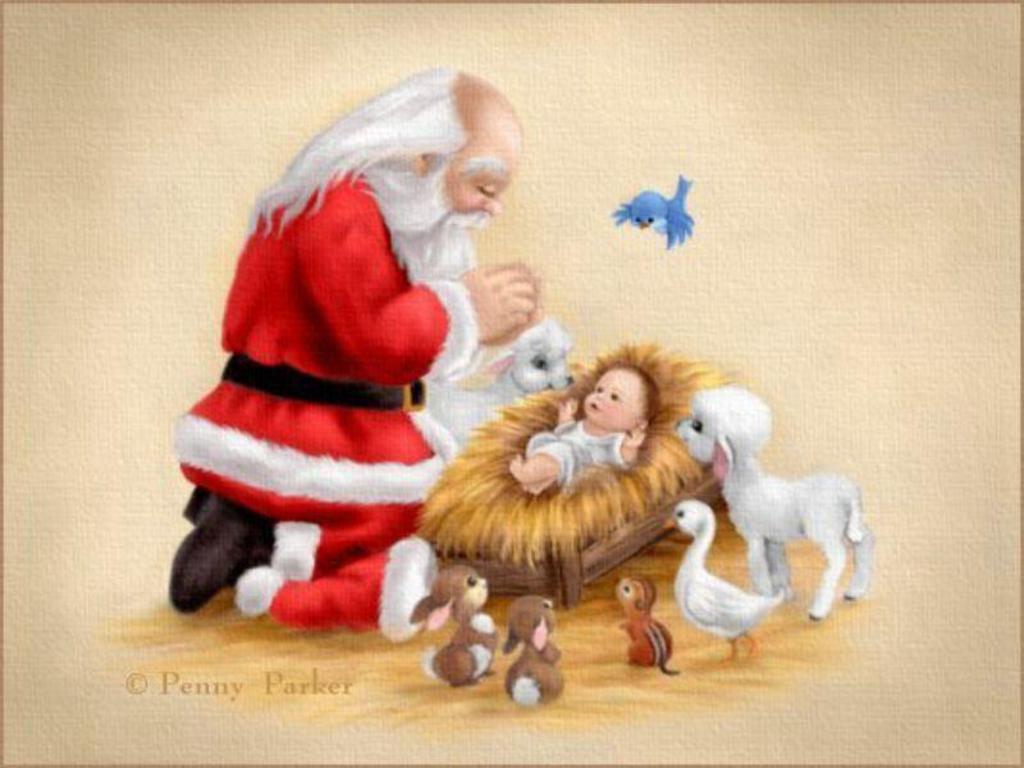
santa-baby-jesusIn one of the posts in last year’s Advent series, I posed this question:

“Why [did Mary, Joseph, and Jesus] flee to Egypt? If they stayed and Herod killed the child Jesus, would that not still be Jesus, the Son of God–the Incarnate God–dying unjustly at the hands of a Roman provincial governor attempting to cement the reign of the powers and principalities of the world? Why go to all that effort to wait 30 years later for the same thing to happen on a cross?”

The answer we discussed was that Christ’s purpose for coming was much bigger than the cross. He did not come just so he could die. As St. Paul said, “For if while we were enemies we were reconciled to God by the death of this Son, much more, now that we are reconciled, shall we be saved by his life.”

Jesus couldn’t die when he was so young, because the benefits we receive from his Advent are not limited to his death, but also his life. We receive his life of lived-out righteousness as our own when we come to know him.

I thought about this yesterday when pondering stand-up comedy.
Continue reading

Herman Bavinck on the Advent Election of Mary [QUOTE]


In a comment on yesterday’s post on Mary, occasional blog contributor Austin Ricketts posted this quote, another gem by Dutch Reformed theologian Herman Bavinck:

[the] entire preparation of the incarnation in the preceding centuries is concentrated, as it were, and completed in the election and favoring of Mary as mother of Jesus. Mary is the blessed one among women. She received an honor bestowed to no other creature. In the undeserved favor granted her, she far exceeds all other people and all other angels. Rome was right in maintaining this; those who deny it are not taking the incarnation of God seriously…Among all Protestants who confess the incarnation of the Word, Mary is held in high esteem. She was chosen and prepared by God to be the mother of his Son. She was the favored one among women. Christ himself desired her to be his mother, who conceived him by the Holy Spirit, who carried him beneath her heart, who nursed him at her breast, who instructed him in the Scriptures, in whom, in a word, the preparation of the incarnation was completed.

Reformed Dogmatics, Vol. 3, pp. 274; 281-282

Advent, Evolution, & Absolution [RE-POST]


Today, I’m re-posting a piece I wrote exactly a year ago for last year‘s Advent series. During this year‘s, we’re seeing how the Advent event affects parts of our lives that we usually don’t associate with it. Today, it’s Advent and Evolution. You can follow the series here.

It’s Advent. A time where we especially orient ourselves towards rejoicing and celebrating the fact that God did not remain far off and merely create a “legal” or “dogmatic” satisfaction for the plight of his creation and creatures. Rather, he broke into it and came into his creation and among his creatures. In this year’s Advent series, we’re exploring how, in this Coming, Jesus took on our creaturely formcare-taking functioncomprehensive fallenness, and communal formation.

First, God took physical, human, creaturely form. In the study I did–and subsequent lecture I gave–on Beauty a couple of years ago, I defined “Beauty” as the attribute of something that expressed complexity simply. Is not this God-in-human-flesh (theologically referred to as the Incarnation) the most beautiful of all miracles to take place? The Infinitely Complex God inhabits the simplest of human forms: a child.

Continue Reading –>

Advent & Mary: Ordained as Prophetess, Priestess, & Queen


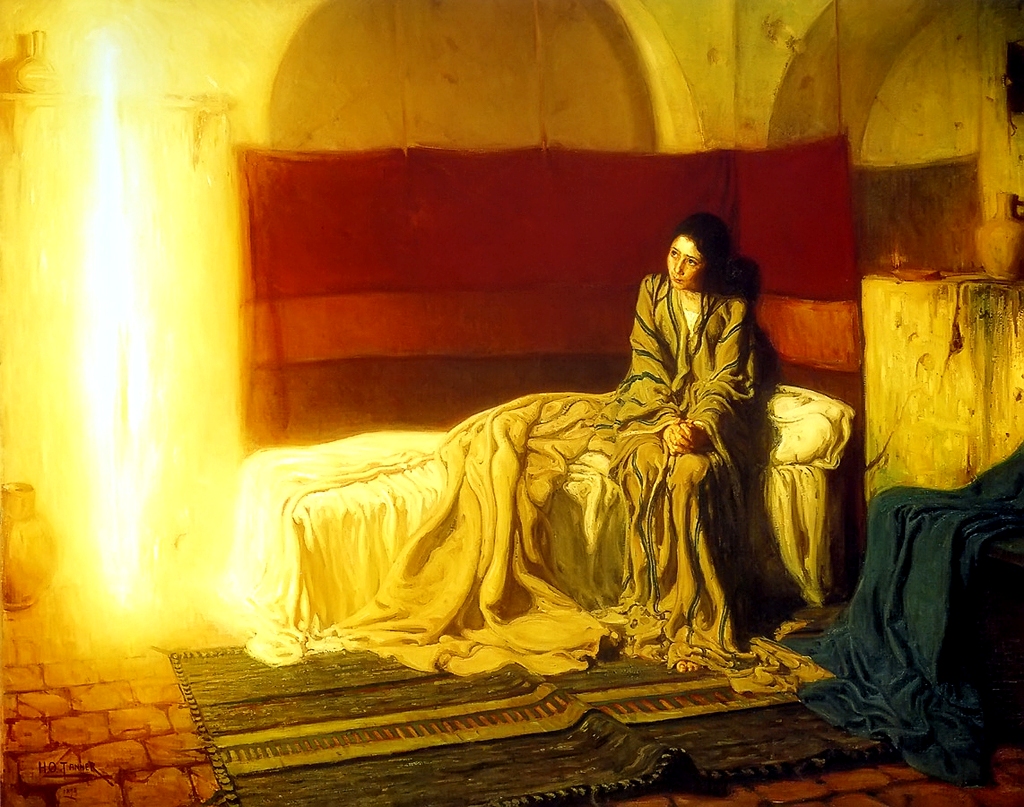
Tanner-the-anunciation-mary

This Advent, we’re seeing how this season affects parts of our lives we usually don’t associate with it. Follow the series here. This post is also filed in the series “Catholics Aren’t Crazy” and “Women Leading Stuff in Churches“.

If a woman is revered by the church for giving the faithful their savior, then surely women are good enough for leadership roles in the church to save it. –Vishwanath Ayengar

I ran across that quote in some letters to the editor of Newsweek a couple of years back in response to a cover story arguing that if women were ordained as priests in the Catholic Church, there wouldn’t have been any sex abuse scandal. I don’t know if that’s true, but the quote is insightful and (hopefully) thought-provoking.

I can hear conservatives now: Well, God used a donkey to speak! He used Caiaphas the high priest to unknowingly prophesy about Jesus before sentencing him to death! He used Judas to bring about Christ’s crucifixion and therefore our salvation! It doesn’t mean that they were fit to be ordained pastors!

Yeah, yeah, I get it. This post isn’t necessarily meant as a “proof” or “defense” of women’s place in ministry (though it’s a part of my on-going series on the topic). I just want to revel a bit in some divine mystery. Can we all just put our swords down and marvel?
Continue reading

Advent & Politics: The Government is on His Shoulders


laureti-triumph-christianity-pagan-statue

This Advent season, we’re seeing how the Advent event affects parts of our lives that we usually don’t associate with this time. You can follow the series here.

The book of Isaiah is a minefield for biblical studies, mainly because of the development it seems its contents went through to get to its final form. It appears to be a strange stitching together of many writings, perhaps by many people, for several different purposes. But in all of its complexity and mystery, there is one theme that it consistently holds throughout its contents: politics. The political movements of the nation of Israel and the nations around it–and God’s movement in and through all of it–occupy most every chapter of the book.

Interestingly, this is also where many of the most dramatic and explicit messianic prophecies are found–specifically Advent prophecies. When telling the Christmas story, the gospels quote Isaiah (I believe) more than any other Old Testament book. Images of virgins, Emmanuel, Davidic lineage, “roots of Jesse”, and John’s “voice crying in the wilderness” all find their source here.

There seems to be an intimate connection between politics and Advent.
Continue reading