For those that didn’t see the link on the blog, I put together a pretty good Advent Mixtape for this season. I hope it treats you well. Enjoy.
Christianity/Theology
God loves me. But does he like me? (on being “Christ-like”) | Advent {8a}
UPDATE: Part 2 of this post is now up.
I have a quick confession. I technically ascribe to the “flavor” of Protestantism called “Reformed” that takes the roots of its doctrinal tradition all the way back to the leaders of the Reformation. The first church I really learned much of anything about Christianity and theology is Reformed…ish. The seminary I went to prides itself in being the bastion of orthodoxy for “Reformed” theology. My church is a member of the Reformed Church in America family of churches.
But, I’m not a good Reformed man.
Continue reading
There is No One Like You (Adv, Days 23/24; HelloGoodBye 09/10) by David Schrott [GUEST POST]

[Through college up through about a year and a half ago, I ran a little online magazine called Reform & Revive. It’s dead now. While it was going on, one of my best friends, David Schrott, was one of our contributors. He’s an amazing drywaller, photographer, writer, person, and boyfriend (also here, here, and here). This is a post he wrote for R&R back in 2009 at the end of a particularly trying year for him. It’s one of my favorite Advent meditations I’ve ever read, and so I wanted to share it with all of you. Enjoy.]
_______
“I want men everywhere to lift up holy hands in prayer.”
–I Timothy 2.8, NIV
There are these days, when it is so difficult to find words that wrap around concepts, that, no matter how concrete in one’s mind, find it impossible to find substance in the barrier we use to communicate called language. In those moments, it seems that experience does precede existence and existentialism, for a moment, seems fun (and fun is clearly the wrong word, but for to-day, for this beautiful-day-before-Advent, will have to do).
Continue reading
Catholics Aren’t Crazy: an Advent & Communion Theological P.S. (for those who care) | Advent {7a}
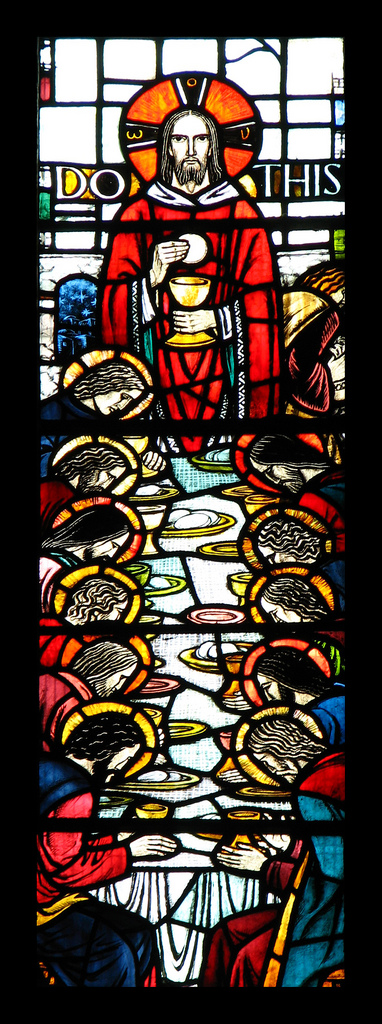 After my previous post on how Communion is no more a “symbol” than Advent itself, I can already hear some people right now thinking: “Wait. Isn’t this the Catholic idea of communion?” (As if that would be the worst thing.) I’ve mentioned some of my Communion views before in this ongoing series, and what I articulated is a synthesis and summary of the ideas of many theologians, both Protestant and Catholic. The pop idea of the Catholic view on the Eucharist is not really right or helpful (as is the pop conception of most of Catholic doctrine). Catholicism’s “Eucharist problem” is more historical and rhetorical than theological.
In the earliest decades and centuries of church history, people were able to simply maintain the simple doctrine that at Communion, they are receiving the true presence of Christ in the Bread and the Wine (source, albeit biased). In the middle ages, though, people starting asking themselves “Wait, what does that actually mean?” Differing answers started forming and a diversity of opinion about the Eucharist began taking place. The leaders of the Church tried to bring some commonality to this. In fact, the medieval Catholic church made a few “errant” teachers affirm these statements in 1078 and 1079:
Continue reading
The Holy Sacrament of Advent {7}
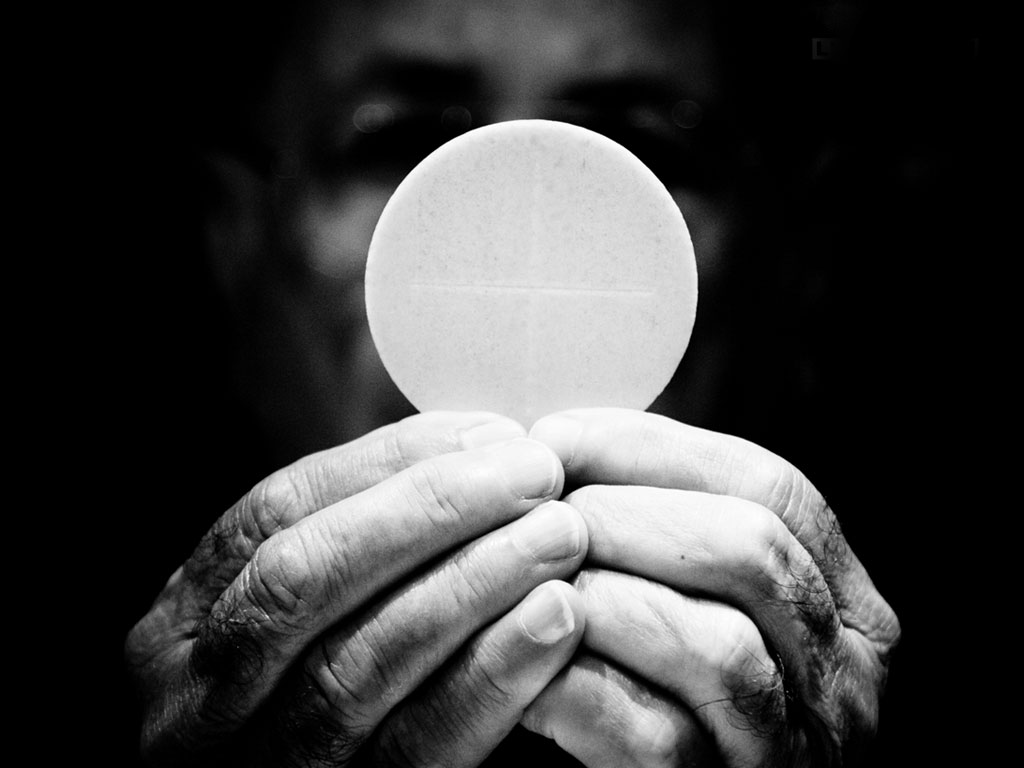 There is an abiding idea and assumption that plagues us humans. It has come up at various times in various worldviews with various names. It’s found in the implications of what Zoroastrians called the conflict between “Asha” and “Druj”, what Plato called “Dualism”, Diogenes called “Cynicism”, first-century heretics called “Gnosticism”, Descartes: “Rationalism”, Kant: “Idealism”, Bacon: “Empiricism”, French Enlightenment-ers: “Materialism”, Modernists: “Realism”, Postmodernists: “Pragmatism” and “Constructivism”, so on and so forth through the ages.
The thing all of these ideas have in common is a separation between the material and the immaterial; the abstract and the physical; the temporal and eternal; the objective and subjective; the spiritual and the human. Further, they tend to elevate one over the other.
We can’t really escape this (I’ve written about this before).
One of the basic obvious tenets of finitude is that we can’t be in two places at once, neither physically nor intellectually. To perfectly hold the delicate balance between these poles of the seen and unseen is difficult, if not impossible.
But Advent can help us.
The Formation of God | Advent {6}
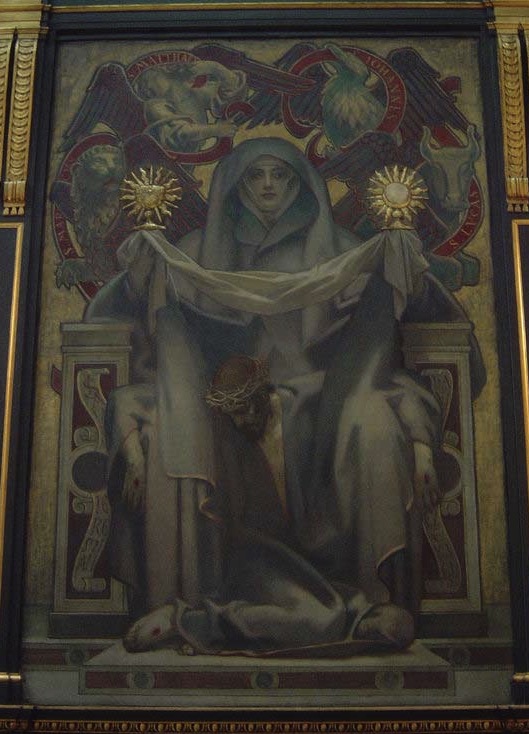 All last week, I offered some meditations on this season of Advent. I actually have several more I’ll be posting more or less every day until Christmas, but today I’ll be offering the last in this little alliterated series in which we’ve been exploring how in the Advent event, Jesus took on our creaturely form, care-taking function, comprehensive fallenness, and now, communal formation.
We spend a lot of time and energy in this season focusing on how Jesus has changed everything and how the implications of Advent change much of our lives and existences. But Jesus did not merely come to change and affect things, but to also be changed and affected by them.
Continue reading
Artist John Singer Sargent on the Advent {5}

“Being made man, I am maker of man, and redeemer of what I have made. God in the flesh, I redeem body and soul.”
“On the cross is the figure of the dead Christ, with the figures of Adam and Eve, typifying Humanity, kneeling on either side. They are bound closely to the body of Christ, since all are of one flesh, and each holds a chalice to receive the Sacred Blood. About the feet of Adam is entangled the Serpent of Temptation. Above the arms of the cross there is inscribed in Latin “The sins of the world have been redeemed.” At the foot of the cross the Church is symbolized by the Pelican feeding its young, while around it doves symbolize the Seven Gifts of the Holy Spirit.”
Read a full description of the pieces here. Find the official website for the commission here.
__________
What Christ did not taste, Christ did not redeem. | Advent {4}
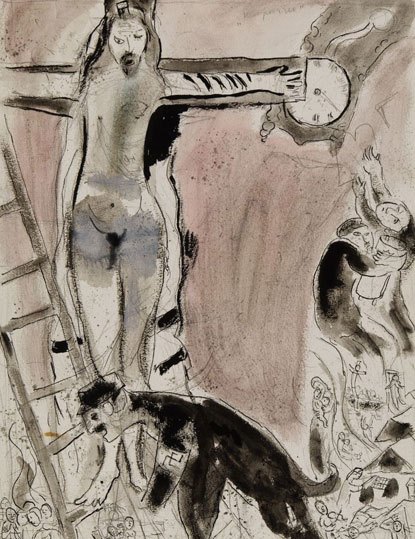 This Advent season, we’ve been meditating on how the Advent reminds us how God took on our creaturely form, care-taking function, comprehensive fallenness, and communal formation.
First, a question.
Think back on the Christmas story. After Jesus is born, when he’s about three years old, the wise men go to King Herod and say that they’re looking for this newborn King. Herod is shocked to hear about a child-king having been born right under his nose, whose potential future reign threatens his own, and so he puts out a decree calling for the death of all children ages three and under (in history and art this is referred to as “The Slaughter of the Innocents”. An angel comes to Joseph in a dream and tells him to flee to Egypt to prevent this from happening.
Here’s the question:
Why flee to Egypt? If they stayed and Herod killed the child Jesus, would that not still be Jesus, the Son of God–the Incarnate God–dying unjustly at the hands of a Roman provincial governor attempting to cement the reign of the powers and principalities of the world? Why go to all that effort to wait 30 years later for the same thing to happen on a cross?
Continue reading
our failed function, God’s full faithfulness | Advent {3}
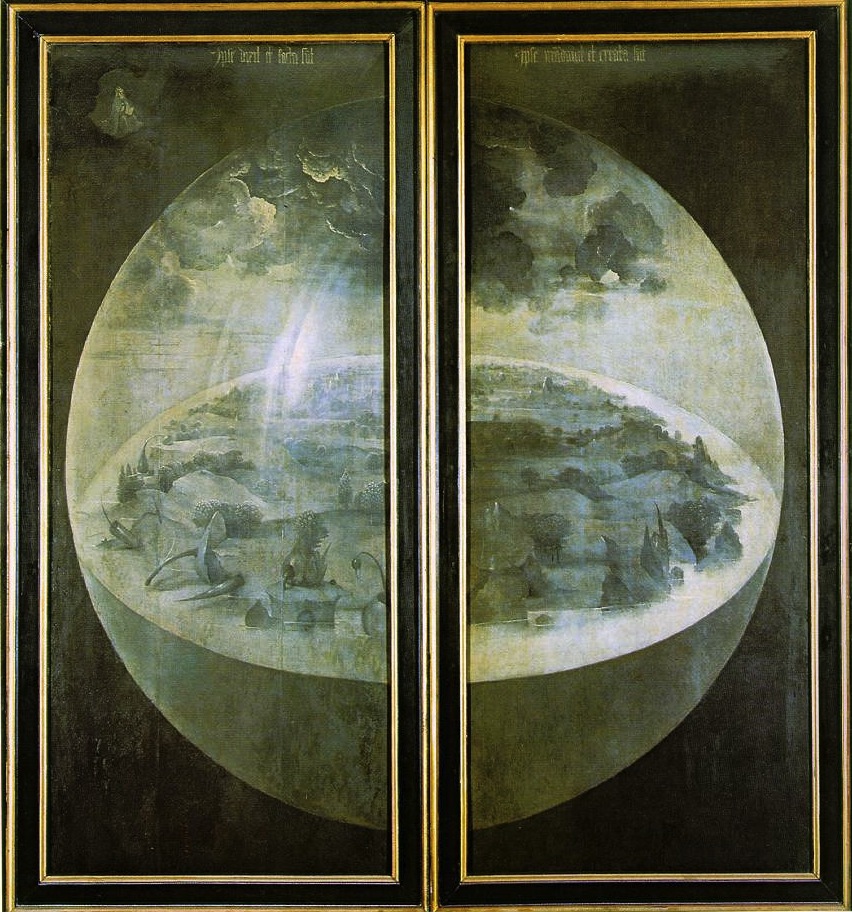 This week, I’m meditating on a few particular aspects of the Advent event. I’m thinking through and writing about how, in Jesus, God inhabited our creaturely form, care-taking function, comprehensive fallenness, and communal formation.
As I said in the teaching I gave over the summer about the Nature and Narrative of the Bible, the opening chapters of the Bible describe this divine act of creating in very architectural terms; the same words are later used in describing the building of the tabernacle and the temple. In this we see that God’s act of creating was, in essence, building this world as his temple in which he would rest (for more on this see John Walton’s amazing book, The Lost World of Genesis One, or just watch this short video).
In the story, he builds and establishes this Temple-World, and then creates and ordains two priests–Adam and Eve–to be his representatives in this temple to care for it and work in it faithfully. In the ancient world, temples were usually placed in the midst of large and beautiful gardens which acted as extensions of the temple itself; to care for the garden was to care for the temple, and to make the garden larger was to expand the scope and size of the temple.
Continue reading
Advent, Evolution, & Absolution
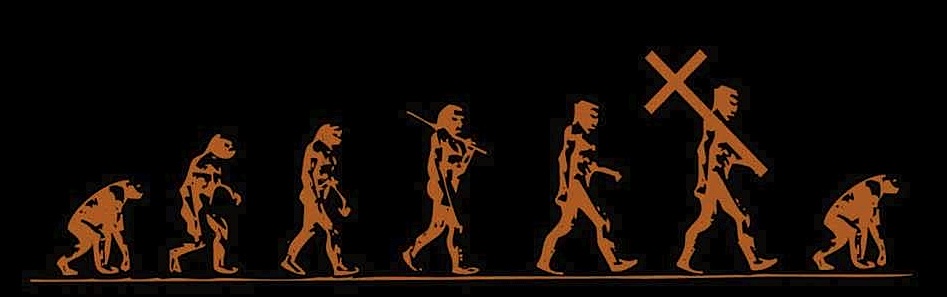
It’s Advent. A time where we especially orient ourselves towards rejoicing and celebrating the fact that God did not remain far off and merely create a “legal” or “dogmatic” satisfaction for the plight of his creation and creatures. Rather, he broke into it and came into his creation and among his creatures. In this year’s Advent series, we’re exploring how, in this Coming, Jesus took on our creaturely form, care-taking function, comprehensive fallenness, and communal formation.
First, God took physical, human, creaturely form. In the study I did–and subsequent lecture I gave–on Beauty a couple of years ago, I defined “Beauty” as the attribute of something that expressed complexity simply. Is not this God-in-human-flesh (theologically referred to as the Incarnation) the most beautiful of all miracles to take place? The Infinitely Complex God inhabits the simplest of human forms: a child.
Continue reading
a beautiful quote on life & pain
One cannot cut the lines of experience out of one’s face, like the rotten bits in an apple; one has to carry them about in one’s face and know that one carries them; one sees them, as in a mirror, every day when one washes oneself, and cannot cut them out, they belong there. But all the same, it is a festive waiting, full of joy and sorrow and remembrance and good-bye for ever.
— from “Death of the Adversary” by Hans Keilson, our December book club selection for Staché
Posted from WordPress for Android on my Droid X
a Jesuit Priest on Evolution. Enjoy.
Is evolution a theory, a system or a hypothesis? It is much more: it is a general condition to which all theories, all hypotheses, as systems must bow and which they must satisfy henceforth if they are to be thinkable and true. Evolution is a light illuminating all facts, a curve that all lines must follow… There is an absolute direction of growth, to which both our duty and our happiness demand that we should conform. It is human function to complete cosmic evolution…. Christ is realized in evolution.
—Pierre Teilhard de Chardin, Jesuit Priest and trained paleontologist in “The Phenomenon of Man“, ca. 1930s
I’ll be writing more about this in my Advent reflection on Monday. [Read reflection 1]
Welcome to Advent. 2011. {1}
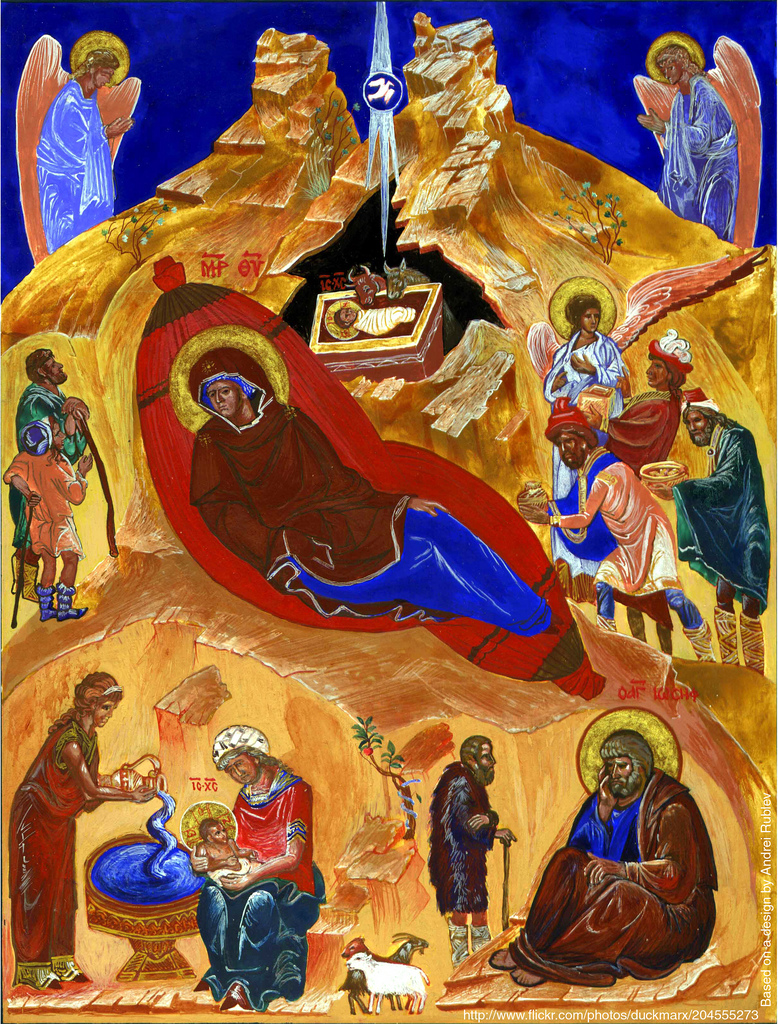 Yesterday was Day 1 of the season of the Church Calendar known as Advent (latin for “coming) . From now until Christmas, we spend time intentionally mediating upon the truth this season brings: God has come among us, clothed in the vestiges of human flesh.
Yes, this time of year was arbitrarily chosen centuries ago to recast pagan lunar festivals in a new light. Yes, many of the traditions of Christmas (fir trees, gift-giving, wreaths, etc.) find their source in pagan socio-religious rites. Yes, Jesus was probably more likely born in April, not December. Yes, Christmas has been co-opted by commercialism and consumerism. Nevertheless, this time has been set aside for nearly two millennia so that Christians around the world could, with one mind and heart, dwell upon the depths of the glory given to us in the events that transpired all those years ago.
Continue reading
The Pain & Substance of Gratitude. Happy Thanksgiving.
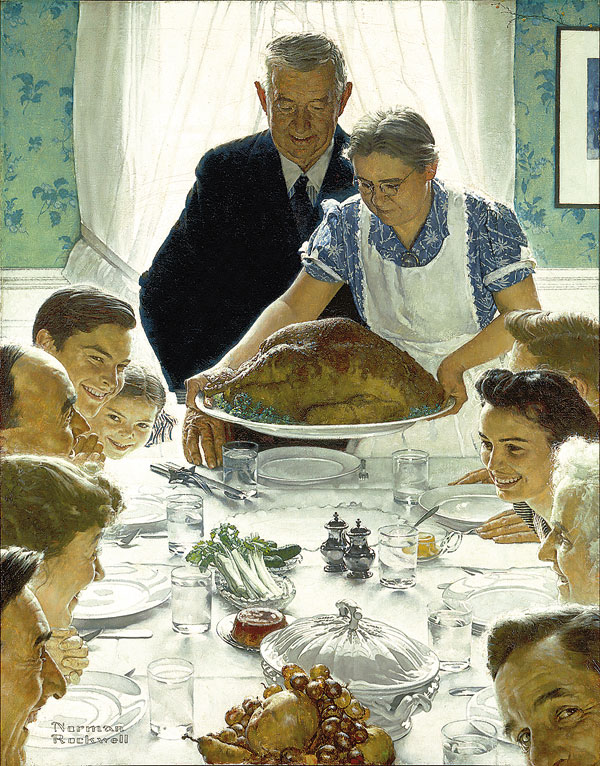 Sorry that this isn’t your typical feel-good Thanksgiving post.
On Tuesday, my job had a large Thanksgiving lunch for all the staff and clients we serve. I got my food and sat down next to some of my coworkers and across from a client I had never seen before. She was very friendly. She didn’t ask me my name or anything; she just began asking me questions about what I was doing for the holiday, where I was going, if my parents were still alive/together, if I had any siblings, so on and so forth.
As she kept firing one question about my Thanksgiving week after another, I started to feel an awkward tension developing because I wasn’t returning any of these questions back to her. I wondered if my coworkers thought this was odd of me to do, but it was very intentional.
Continue reading
“I once dated someone that…” {on enduring love}
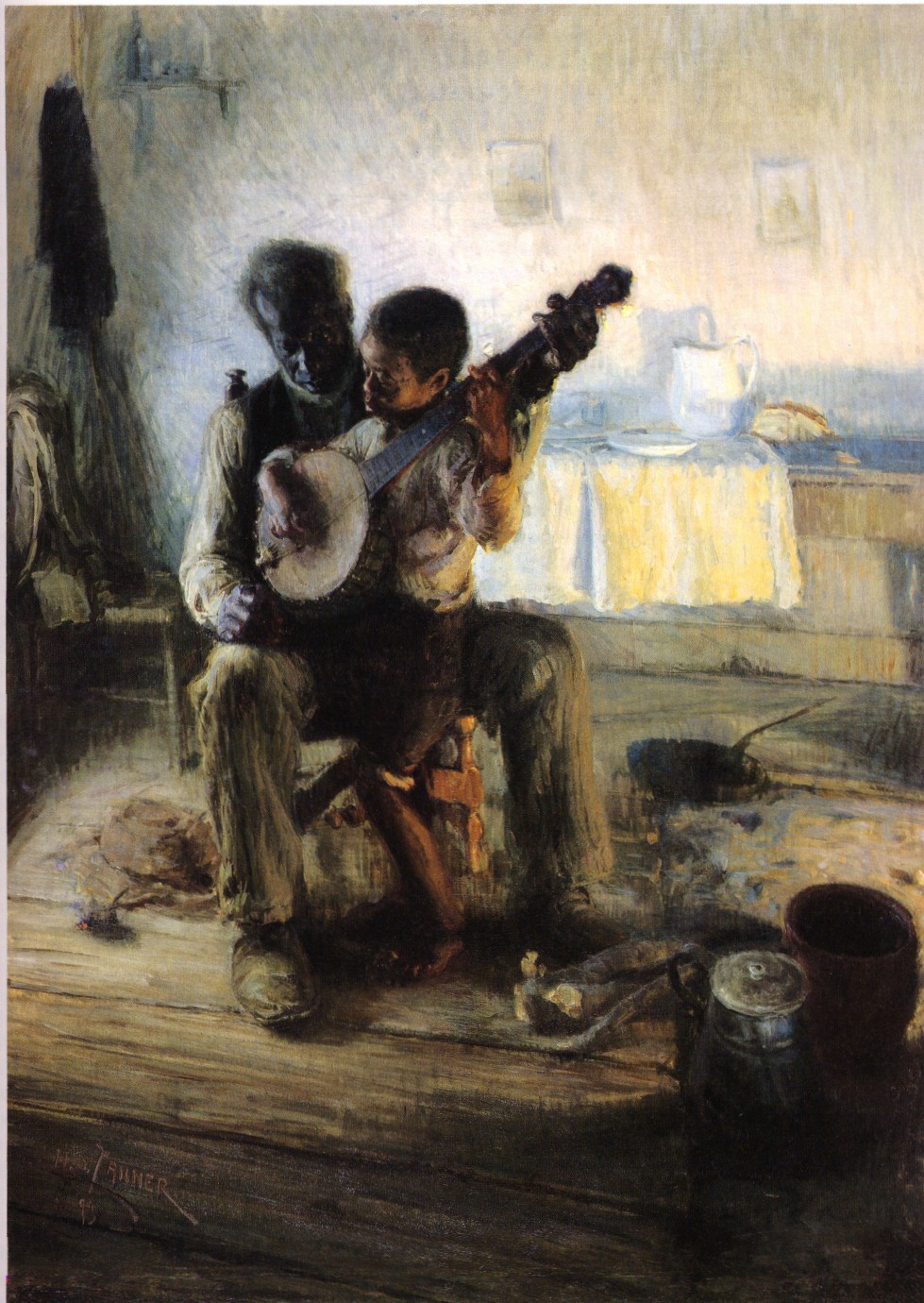 I hate being able to say that line.
I was reminded of this when I was walking out of one of my neighborhood coffeeshops this past week and overheard someone begin a story like that just as I walked out of earshot. The person saying this–a woman–said this in an almost cheery way. My first thought was, “I never say that phrase in that tone.” At least for me, there is a sobriety and somberness that I feel whenever some sort of reference to an old relationship comes up.
So, like I said, I hate being able to say that. Yes, yes, I know: I’ve learned much in these experiences and my story is my story and I wouldn’t be who I am and where I am without them. I wouldn’t know God, suffering, people, their hearts, counseling, or relationships in any sort of depth or in a way that could help others had I not gone through these things.
Continue reading
 the long way home