Creation/Evolution articles at R&R


Hey, at the behest of a good friend (you know who you are), I am putting up the links to the two articles I recently wrote on my magazine site, Reform & Revive.  I am currently reading a book called Perspective on an Evolving Creation, edited by Keith Miller.  It’s pretty phenomenal, and I’ve started blogging through the book.  I’m putting up articles concerning the better essays that could be the most helpful to everyone out there.  So, without further ado, here are those links:

Article #1: I’m Coming Out (Intro to an Evolving Creation)

Article #2: “An Evolving Creation: Oxymoron or Fruitful Insight?” by Keith Miller

Enjoy, and debate away!

Some writing news . . .


I just wanted to plug a new website that I am now contributing to.  It’s a site from the newest fellow Westminster dropout I’ve met, Allison Quient.  It’s a site called “By Whose Authority?” and it’s an ecumenical blog where people from varying theological perspectives write and discuss their respective views.  From the site:

This blog is devoted to addressing questions of Church authority and other doctrinal issues surrounding the Protestant, Eastern Orthodox and Roman Catholic churches. Our hope is to foster a charitable and winsome dialog in the pursuit of God’s truth.

I haven’t written anything yet, but I’ll try to put up a post on the site in the next couple of days.  You can be sure I’ll let it be known here on this blog when that happens.  But in the meantime, please go and read some of the posts that have been put up so far.  They are pretty phenomenal.

Beauty: The Complete Series


screen-captureIn 2009 I did a seminar at my old church, Epiphany Fellowship, on the topic of Beauty. I spent about nine months doing research, reading, talking, and thinking before offering it to the community. I then separated my overall talk into the series of blog posts you’ll see below. A year later, I updated the main manuscript with some expanded thoughts. Those blog posts represent the material before the update.

On this page you’ll find the audio from the talk and the updated manuscript,, as well as a special appendix I put together offering a complete breakdown of every word in both Greek and Hebrew that the English Standard Version of the Bible translates as “beauty” or “beautiful”, broken down by frequency.  Along with those words (and all their forms), I’ve offered the most literal definition of each so you can easily see the huge range of meanings that the Biblical words for “beauty” carry. I hope it’s helpful. You don’t need any knowledge of Greek or Hebrew to understand it or get something from it.

Series Table of Contents

Resources for this series:

[photo by David Schrott]

The Outline for the Entire Series:

Resources for this series:

[photo by David Schrott]

The Gospel is Beautiful{12} | it is finished


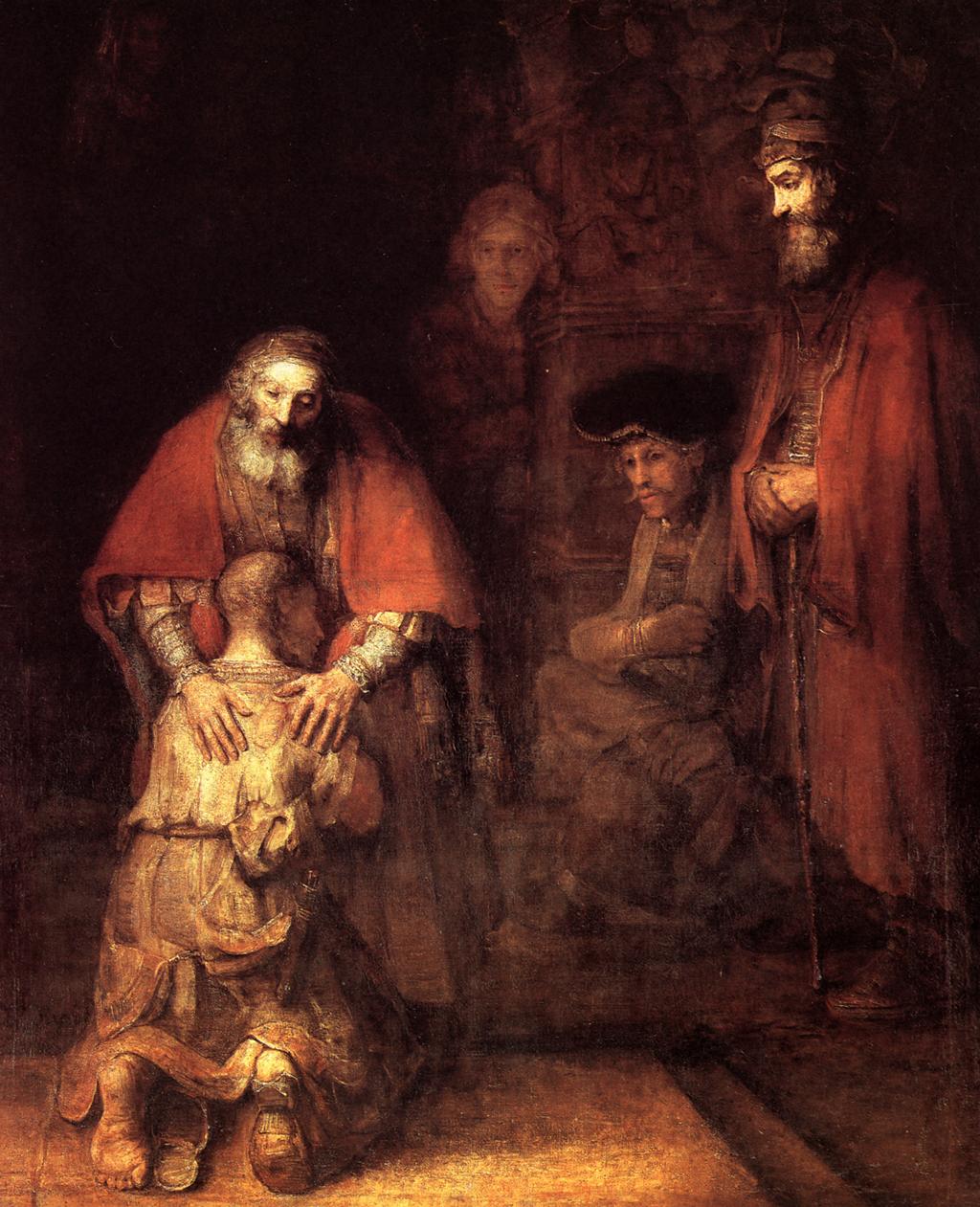
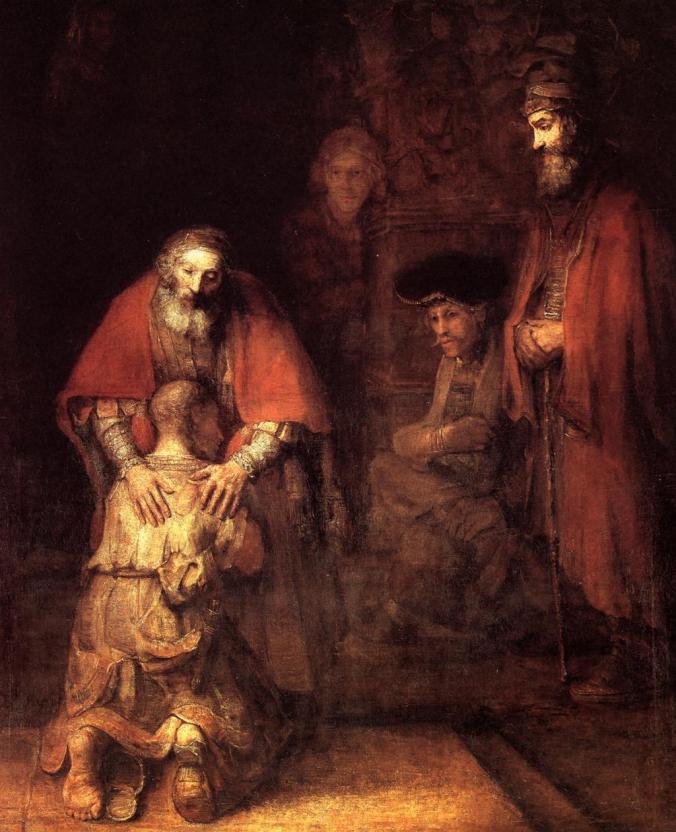
Rembrandt-Return of the ProdigalWell, it’s done. This is the end of the Beauty series. I won’t say too much, because this part is long enough already. I would just remind all of you of two things. Firstly, this whole piece began with the story of the most beautiful thing I have ever seen: the city of Edinburgh as I stood above it on top of a hill in the city. Secondly, our definition of Beauty: Beauty is the attribute of something that expresses complexity, simply. It what takes the complex strands of the world, reality, experience, or God and weaves those complexities into a simpler tapestry which we can perceive with our physical and spiritual senses. The more complexity expressed more simply, the more beautiful something is. And with that, let’s finish this thing out. What’s coming next? I have a post ready for that that I’ll post up in a couple of days. We pick up right where we left off

In conclusion, I want to talk about the thing that ties every one of these things together. The thing in which there exists in a glorious and beautiful harmony between all the different things we’ve talked about tonight. The last part of our text tonight, Ecclesiastes 3:15 says “That which is, already has been; and that which is to be, already has been; and God seeks what has been driven away.” God seeks what has been driven away.” In conclusion, the Gospel is Beautiful. The Gospel, in short, is the story and message of Christianity. It comes from the Greek word meaning “good news”. So what is this good news for us? The news that God did the ultimate act of beauty. The ultimate act of condescension of filling this finite world with the most Infinite of Beings for the sake of knitting it together again, and actually ultimately filling it with Himself. You see, God began History and ordered it in such a way that it was beautiful. He filled this simplicity with the marks of Himself, so all things pointed to Him and reflected Him perfectly. Humans came on the scene and were made in His image so that they as well truly and purely reflected, represented, and “Imaged” (that would be the theological term) this God on earth. But sin entered into the world, and made this world fallen from its original place of beauty. And we have followed suit. You see, sin is not finding certain things, people, or places beautiful. It’s that we find them more beautiful than God and these responses that are due God, we give to other things. We worship and “image” and express fallen simple things rather than the Holy complex God. We all have done this. I have done this. You have done this. You have soiled your beauty and abandoned it to your lusts! You no longer represent the One whom you were meant to mirror and reflect and therein find your beauty! You merely represent the world. The lowly fallen world. Fallen people imaging fallen things. There’s no beauty in that.

But God, being rich in mercy. Though we have abandoned God’s beauty and our own true beauty, God has not abandoned them. He loves His Beauty. And He loves the Beauty of His creation. So this God, for the sake of the worship His own beauty, and our own own joy in His Beauty, comes. The most perfectly knit together tapestry in the universe chooses to come and express the most Holy Complexity in the most intimate simplicity. This perfectly woven tapestry walks the earth, lives the perfectly woven life, and then stares into the cup of God’s perfectly woven wrath reserved for all things and people that are not beautiful in this world. And he drinks it. This perfect tapestry of complexity expressed simply goes to the cross willingly and allows the tapestry of His soul to be torn apart strand by strand by strand as the wrath of God that hung over everyone who would believe was gathered by God and poured it on Himself. That wrath that hung over many of us in here. That wrath that hangs above some of us tonight, that will be poured out on something. Either on Christ at the cross, or in you in Hell. Did you know that Hell is beautiful? Not for those that are there, but it is. It is pure, white, Justice and Wrath poured out on all that was wrong in the world. So God’s wrath will be poured out either in Hell or the Cross.

And history revolves around this cross. Because at the same time that Christ, Beauty Itself, was literally being torn apart, he was reconciling all things to Himself. In other words, he was taking every stray strand in the universe – every bit of evil, suffering fallenness there will ever be in history – and reserving its proper place in the final tapestry of History that we call heaven. He was making Himself the common glorifying thread that would reknit the broken fabric of a broken creation. And so we live now in the process and story of God putting all those strands in their proper place. As more and more beauty floods the earth He is still inviting his people to join Him in this epic story. He is calling his people to praise Him and draw near to Him, and out of the overflow of that to proclaim His Beauty to others and make more beauty, so as to usher in this new creation – or to put it in our terms tonight – the New Tapestry of Creation. Better than before. It is the one that has woven in it the purpose for all pain, sickness, death, and dying that God has ordained and allowed to take place so that this tapestry might make good on it all to the praise of the Beauty of God’s name.

And we, His people, His Bride, those that are “in Christ”, that are simple people Imaging and expressing the most complex of Beings, are woven into that tapestry that is Heaven and the New Creation. We’re not just going to live in it, we are part of it. Second Corinthians 5:17, in most Bibles reads: “if anyone is in Christ, he is a new creation. The old has passed away; behold, the new has come.” But that’s not what it says in the Greek. It doesn’t say “if anyone is in Christ, he is a new creation”. There is no “he is”. The Greek literally says “If anyone is in Christ: new creation!” More accurately, I think it should be translated “If anyone if in Christ, this is the new creation. he old has passed away; behold, the new has come.” I remember an old professor at Westminster named Richard Gaffin. He used to go up to students, stop them, and just say to them “you are just as resurrected now as you will ever be”. We often forget that. Yes, we will get new bodies and the penalty, power, and presence of sin will be done away with, but as far as our souls go, we are as resurrected now as we will ever be.

We are the new creation. The new tapestry. We have been woven into the fabric of this ever-increasingly redeemed world that is being flooded with the Beauty of God. The new has come in Christ. Through the Gospel. The good news of our salvation is that all that has been ugly with the world and in ourselves has been conquered. Beauty is here, and Beauty is ever increasingly filling the earth, and this Beauty is our salvation from ugliness and sin. George Marsden in his incredible biography of Jonathan Ecdwards ends the whole book with this summary of Edwards’ view of all of life and salvation. He says that

“[Edwards believed that] God’s trinitarian essence is love. God’s purpose in creating a universe in which sin is permitted must be to communicate that love to creatures. The highest or most beautiful love is sacrificial love for the undeserving. Those. . . who are given eyes to see that ineffable beauty will be enthralled by it. . . They will not be able to view Christ’s love dispassionately but rather will respond to it with their deepest affections. Truly seeing such good, they will have no choice but to love it. Glimpsing such love . . . they will be drawn from their self-centered universes. Seeing the beauty of the redemptive love of Christ as the true reality, they will love God and all that he has created.”

The Gospel, this salvation, is beautiful.

And we receive this salvation by seeing its Beauty, turning our stirred affections toward this God, and trusting that we cannot reknit our own souls but Christ has reknit them for us. And as our affections are further stirred we press into Him ever increasingly as He draws ever-nearer to us. I pray, I plead, that those in here tonight that have not done so, would trust this beautiful God to have accomplished for them what they could not do for themselves. Please, consider this story, this message. See if it is not the most beautiful thing you could ever conceive. Just for a moment, see if something in you is stirred for this God. Even if you don’t believe He exists, or that He is this particular God that I have spoken of tonight, is there something in you that at least wishes it were true? Wishes it were this way? Wishes that God did in fact arrange everything to make it all beautiful in its time? Even if you won’t admit it, if that’s true, if you did wish this were the case, don’t ignore that. You have been designed to long for the Beauty of this Gospel, this story. Don’t ignore it. Sovereign, Beautiful Father, Lover, and Lord, save people that read this.

In conclusion, I’m going to break every rule I learned in my preaching class this last semester about how to end a message and end mine tonight with a poem. But not someone else’s poem. This is a poem I wrote in one take one particular afternoon through broken tears standing on top of a hill looking out over the city of Edinburgh as I was taken over by the most beauty I’ve ever seen. Let this encourage the weary saints reading this blog post, and let it perhaps woo those that have yet taste what these words are about. You can find the poem here, or just click in the section above entitled “The Site”.

Here are the links to the full manuscript and the full audio of my presentation of this material:

Click for Manuscript Pdf

Manucscript

Click here for sermon audio

Audio

Proclaiming & Producing Beauty{11}


Sandorfi - KalfonariumThe next post after this will be the last in this series.  But today, we are finishing up the section on how we respond to Beauty.  As I stated earlier, there are two fundamental ways we respond to Beauty: we contemplate it, and we enjoy it.  But, within the enjoyment piece, I think there are four main ways to to that: we praise, participate in, proclaim, and produce Beauty.  Once more, our working definition is Beauty is the attribute of something that expresses complexity, simply.  It takes the loose strands in reality and weaves them together into a tapestry that out senses are able to perceive.

Now, let’s pick up right where we left off:

Proclaim

But the process is still not over. First we praise the thing as beautiful, then we participate in its beauty on its own terms. Thirdly, we proclaim it as beautiful. Proclamation is not the same as praise. I believe it was C.S. Lewis that something along the lines of this: joy in something is not complete until it is shared with someone else. Proclamation is the telling of the Beauty of this thing to someone else. It is sharing in this affection with someone else. Here we start seeing something about Beauty that will lead into our final response: Beauty longs to be known and spread – almost like a virus. It wants to inspire you to tell others about it, so that those people might participate in it as well. For creational Beauty this is done in many obvious ways like reviews and just telling someone else about it. For divine Beauty, this is typically referred to as preaching. Speaking of this God should be the natural response to someone who has praised and participated in the Beauty of God. It is out of the overflow of this in someone’s heart that they should speak. Not out of begrudging compulsion or sheer white-knuckled obedience. We tell others about the things we find most beautiful. Should this not also apply to the highest of all beautiful people – God?

Produce

This brings us to our last part in the process of responding to beauty. It’s very much tied to the previous one and has to do with Beauty replicating itself. God, in His love for us, calls us to respond to beauty not only by proclaiming beauty in word, but also producing beauty in deed. Produce is the last way we respond to Beauty. We are built in the Image of a God who doesn’t just desire, delight in, and display Beauty, but a God who also does Beauty. We, likewise, all have abilities to produce beauty. Not only that, our response to beauty is not complete until it has inspired us to likewise create beauty. Every musician in here knows what it’s like to be at a show or concert, seeing someone play the instrument that you play and suddenly having your mind swirling with musical ideas you want to try out when you get home. There’s an entire field of art history that tries and find the obscure pieces that inspired some of the greatest pieces of art we adore today. It works off the assumption that nothing that beautiful exists without inspiration before it. The longer I live, the more I am convinced that everyone has some creative ability in them. I don’t care how “uncreative” you think you are. You are built in the image of a Creator God! You have not only the ability, but I fully believe the responsibility as well to bring forth more beauty in this world and further participate in God’s “re-knitting” of the universe. Now this “creative” ability in all will look different in everyone, so don’t think you have to stick to conventional forms of “creativity”. Really, anything that makes beauty does this. It can be gardening, serving, counseling, or raising your kids, even. I would argue all those take a certain type of “artistic eye” to do them well. We all have it. Find it. Do it well. Do it often. And do it as a response to the Beauty that is around you in both God and Creation.

This also shows itself in the Christina life (and in our text) as holiness, or “doing good” as the author of Ecclesiastes puts it. Seeing the Beauty of God should inspire us to holy living and loving of others. Serving those around us in order to share with them and replicate the Beauty of God that we have seen.

Click for Manuscript Pdf

Manucscript

Click here for sermon audio

Audio

Baptized in Beauty{10} (Enjoy, Pt. II)


Schrott1

photo credit: David Schrott

For those that have followed this series on Beauty, you will know that we have hit three major sections so far: “Why do we long for Beauty?“, “What is Beauty?“, “What things are Beautiful?“, and now we’re in the “How do we respond to this Beauty” section. I am in the process of laying out four “stages” of an appropriate and full response to Beauty. The first stage of this response is a contemplation of the Beauty.  The second is our enjoyment of it.  The first step in that process is Praising Beauty, which we talked about last time. In this post, we talk about the next step. This also happens to be my favorite part of the process of responding to Beauty. It’s when we are joined to Beauty and are swept up in its complexity and nuances. I love this feeling, I love this experience, and I loved writing and talking about it. I hope you enjoy reading it. Once again, the full manuscript and audio of the lecture I gave on this is below. We pick up right where we left off, saying that we must praise Beauty.

______________

Bur praising is not enough. Seeing something beautiful and calling it such does not complete the purpose for which that beauty exists. Beauty has an attractive quality. It draws you toward it at a very deep level. The next step, after acknowledging this beauty is to allow it to suck you in. I call this “Participating” with the Beauty of that thing or person.

Practically, this looks lots of different ways. With other people, it’s a drawing near to that person. Conversing with them. Viewing more of the nuances of the Image of God in them that makes them beautiful. For art, it looks like accepting the art on its own grounds and letting it draw you in in whatever way it’s asking of you. For plays and films it’s that idea of “suspension of disbelief”, where you allow yourself to forget that you technically “know” this isn’t real, and you let yourself get sucked into this beauty. Other forms of art tend to ask us to get lost in the object itself and explore its nuances. Closing your eyes during a musical piece and hearing every note; letting the words of a poem get inside of you and change the vocabulary you use to describe its own beauty or the world around you; letting distractions fade as you stare at a painting and see every stroke, every color (anyone who has seen a piece in real-life by John Singer-Sargent or Vincent VanGogh knows this feeling most definitely). Have you ever cried because of Beauty? This is participating with it. In the contemplation stage of this process you ask yourself “what is the beauty of this thing asking of me? It’s drawing me to itself, but to what end?”

But what about God? What about Divine Beauty?  This is where His Beauty shows especially brilliantly. All other forms of beauty can only draw you near to itself. God can and does actually draw you into Himself and Himself in you. We can participate with Him in a way that every other form of beauty only faintly strives for. How? Well, He takes the first step upon changing someone by actually sending his very Spirit to dwell within His people.

But God not only let’s us participate in His Beauty spiritually, but also physically.  After He draws near to us, we do what the Bible calls “abiding” in Him, where we draw near to Him through various things the Bible calls “means of grace”. These are traditionally called sacraments.  They are physical things that we participate in and by faith He meets us there. One of the clearest examples is Baptism.  It is where we are brought into union and participation with Christ in response to his faithfulness and action toward us.  Another is Communion. Just think of the word: “Co-mmunion”. It’s where we “commune” with God. That bread and wine is a symbol, but not just that. It is in those elements that we His people are actually drawn further into God to “commune” and participate with Him in His beauty. This is why Communion is such a big deal in the Bible. God kills people – even Christians – because they misuse this beautiful thing. He will let no one lightly and trivially participate and be drawn into His Beauty.

This should lead us to a “sacramental” view of life, where God is using all things to communicate Himself to us and communicate His Grace to us. Let everything: every good-tasting piece of food, every sunset, every cool breeze, every joyful moment all be moments where God communicates Himself and His grace to you so you might participate and be joined to Him in His Beauty and we further praise Him even more. Historically, the Christians that do this well have been referred to as “mystics”. They are the ones that say seemingly crazy things. Brother Lawrence was a 17th century monk and he said: “I have at times had such delicious thoughts on the Lord I am ashamed to mention them.” John Owen, my favorite Puritan, says

O to behold the glory of Christ…Herein would I live; herein would I die; herein would I dwell in my thoughts and affections…until all things below become unto me a dead and deformed thing, no way suitable for affectionate embraces.

Oh that we longed in that way for God. There is a participation in the Glory, Beauty, Majesty, Goodness, and Love of God that is at hand for those who believe and far for those who don’t. Please, I beg of you, if you are not a believer, seek the Beauty of God, for it’s only suitable response is to be drawn into into and know his intimacy in this way. He, the fountain of all good things, the One for Whom your soul was made, does not disappoint those who seek to know Him. Participate in Beauty.

Click for Manuscript Pdf

Manucscript

Click here for sermon audio

Audio

“Seminaries & the Nature of Truth” – GoingToSeminary.com


Hey, just wanted to write a quick note letting you all know that my new article is up on GoingToSeminary.com.  This is Part 2 of a very unofficial series I’m doing on Truth and Doctrine.  The first part went up about a week and half ago, and had some great feedback on it.  This article is getting mostly positive feedback, though maybe I wasn’t as clear on this one.  I would love some more feedback.  By the way, Beauty Part 10, should be up in the next few minutes.  Here’s the link to the GtS article:

Seminaries & the Nature of Truth

Check out the rest of my Going To Seminary posts.

Enjoying Beauty{9}, Part I: Praise it.


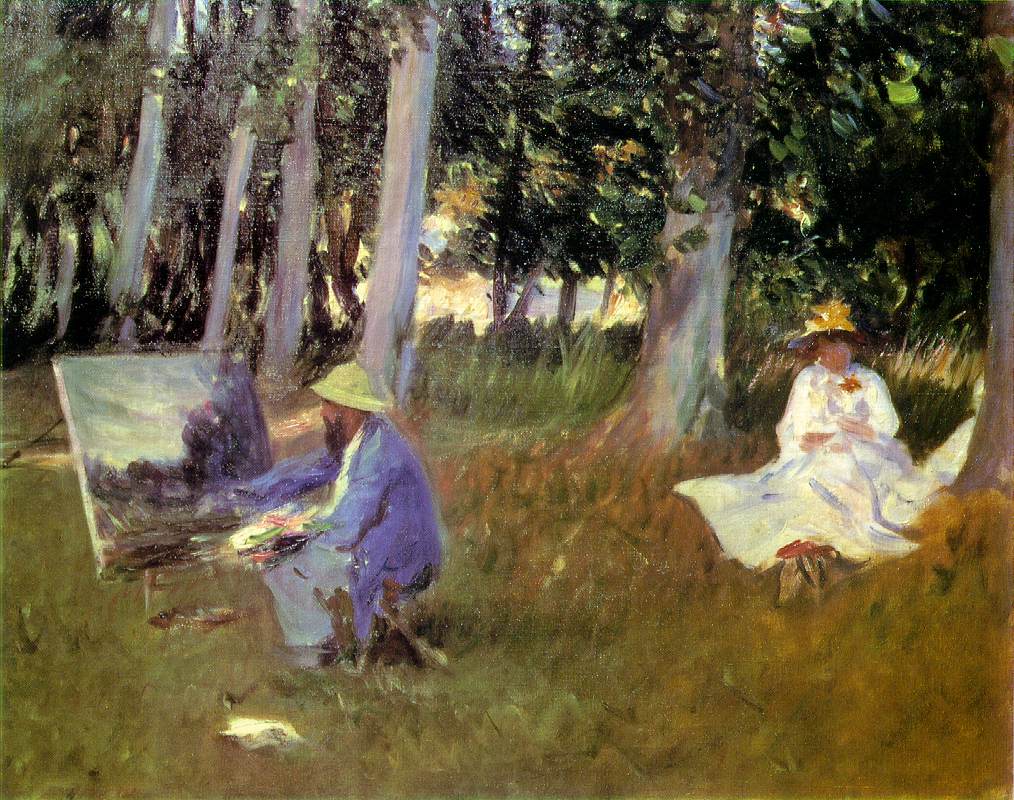
Sargent - Claude Monet Painting in a Garden

We’re almost done! This is the home stretch of the series. After this, there are three more posts in this series on beauty. Then maybe a summary-conclusion article. Last time, we talked about what it looks like to contemplate Beauty. Here, we ask why we contemplate it and what the implications of this answer are. So, why do we contemplate Beauty?

So we can enjoy it to the fullest.

Our text says that God’s gift to man is the ability and call to enjoy and take pleasure in all things, even our vain toiling and strivings of heart. After contemplation, there comes the time when we must engage with what we have contemplated. Even in Christianity, our theological study and discovery of who God is is not complete until actually close the Bible, look up, and enjoy this revealed God. But how? What does this enjoyment look like? Well, as I’ve thought about it, I’ve broken down enjoyment into four different stages. To enjoy Beauty, we Praise it, Participate in it, Proclaim it, and Produce more beauty. Let’s break this down:

First, we praise the beautiful things.

This seems fairly simple at first, but it has a deeper level to it. In its external form, praising the beauty of something is as simple as calling it beautiful. But what about nature? Or art? Or a book? or poem? Perhaps the original artist is dead or not available for you to say to them, “Hey, that’s beautiful.” Those cases help show us that “praise” goes deeper than mere words. “Praise”, more accurately, is a turning of affections toward the object of the beauty before you. It’s acknowledging beauty at the deepest part of who you are. Now, don’t worry. I’m distinguishing between the affections we turn towards these things and the affections we have for God. Those that have been changed by God to see His Beauty have had their deepest affections changed so that God is highest in those affections. But it’s okay to have an affection for things that God loves and has affections for. Having affection for His Church, His people, your family, and Beauty (even the Beauty of quote-unquote “non-religious” things) is completely in line with someone who has been changed by God to see Him as most beautiful. The implications of this more accurate idea of “praising” are huge. First, it means that you can be “praising” with your lips and not actually be praising. It also means that you can be praising something fully, accurately, and appropriately without ever having uttered a word. Imagine staring at a beautiful piece of art. It’s just you and the art while everything else fades away, and every distraction disappears. In that moment, as your affection swells for this thing of Beauty, you are calling it beautiful – you are praising.

In the next few days we’ll discuss what it looks like to Participate in Beauty.  This will be a much longer, more developed idea.  And my favorite way of enjoying Beauty.  So until then…

Here are the manuscript and lecture that this series is based off of.

Click for Manuscript Pdf

Manucscript

Click here for sermon audio

Audio

Derek Webb, Pete Yorn, Scarlet Johanssen, Jesus, & Art


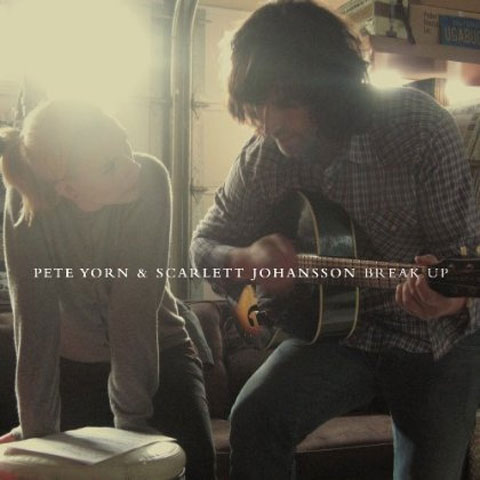
Break UpThe Mockingbird blog did a great interview with Derek Webb that was published today.  It seems like every interview he’s been doing has consisted of the same content, but this seems to have a few original questions in it.  It’s really enjoyable.

This was my favorite quote from the whole thing.  It’s a very biblical view of “Christian art” and it resonates well with my recent article on the Beauty of Art, so I thought I’d share it with all of you.

As an artist, my job is to look at the world and tell you what I see. Every artist, regardless of their beliefs, has some way that they look at the world that helps them make sense of what they see. A grid through which they look at the world which makes order out of it. For me that’s following Jesus, for other artists it’s other things. It could be anything, but every artist has that grid. Most Christian art unfortunately is more focused on making art/writing songs about the grid itself. As opposed to writing songs about what you see when you look through the grid. I’m more interested in looking through the grid and telling you what I see.

In other art news, I can stop listening to the new Pete Yorn/Scarlet Johanssen duet/compilation album Break Up.  It’s pretty phenomenal.  Expect a review here in the coming days. You can listen to the entire thing online here.  I know Scarlet’s received a lot of crap about her voice and singing ability, especially after her solo album of Tom Waits covers called Anywhere I Lay My Head.  Personally, I love her voice.  I think it’s amazing, refreshing, and seductive.  Here, try this random single she did called “Last goodbye” (I have no idea where it’s originally from.  Sorry.):

Enjoy the quote, links, and audio and let me know what you think.

“Letting Seminary Doctrinally Change You” & Controversy – GoingToSeminary.com


Remember “that” article I was talking about last week?  The one that may begin some “controversy” at GoingToSeminary.com?

Well, it’s up now.

It’s part one of two on a little series I’m writing on doctrinal changes while in seminary.  As I said then, I’m more concerned about this next article than this one.  If it even comes out.  In an hour and a half I have been called upon by the “Vice President of Advancement” and “Associate Professor of Systematic Theology” of Westminster Theological Seminary, David Garner to grab some lunch.  I have no idea what the topic of conversation is (and the one time I’ve asked, he never answered), but I’m optimistic.  He has always been one of my favorite professors I ever had and has one of the most pastoral, worshipful, Christ-centered hearts I’ve ever seen in a man.  I look up to him greatly as a pastor, preacher, teacher, husband, and father.

But, he is very much on the side of the issues at Westminster that I am not.  So I’m wondering what this is about.  I haven’t been that vocal against WTS have I?  I feel like whenever I have I’ve always made it clear that this is my opinion and I that I know I’m still young, arrogant, and don’t know anything.  I don’t know.  We’ll see.  I may let you all know.  But, in the meantime, read and enjoy the article “Letting Seminary Doctrinally Change You” at GoingToSeminary.com.  Here it is:

Letting Seminary Doctrinally Change You

Check out the rest of my Going To Seminary posts.

The Contemplation of Beauty{8}


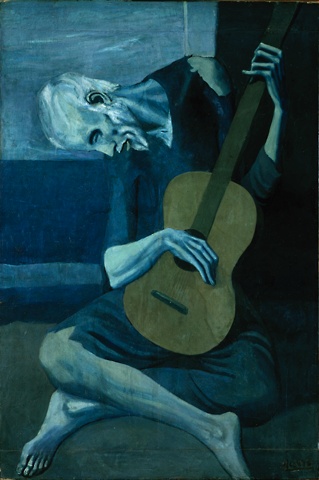
Picasso - The Old GuitaristSorry for the brief hiatus.  I don’t quite know what happened.  Probably just getting used to work and a new schedule and everything.  I have a few “lighter” articles in the works for the next couple of days, plus I’m working on more substantial things for other sites.  I’ll let you all know.  But now, back to beauty.

Last we left the Beauty series, we were discussing the proper way in which to respond to it.  Though there’s no absolute “most proper” way to respond, I used our main Biblical text that we’ve been looking at, and an idea developed by C.S. Lewis to break down our response into two useful categories: contemplation and enjoyment.  Before we enjoy, we contemplate.  This is not to say we can’t enjoy anything apart from comprehensively knowing it, but it does say that a contemplation and exploration of things helps us enjoy them more fully; and to be enjoyed to the fullest is the ultimate desire of Beauty itself.  But what does this contemplation look like in real life?

Let’s recall our defintion of Beauty as the attribute of something that expresses complexity, simply.  It’s what takes the complex unwoven strands out there in reality and weaves them into a tapestry that we can perceive with our spiritual and physical sense.  The more strands are woven more simply, the more beautiful that tapestry is. So in its most basic form, the contemplation of Beauty is thinking through what “strands” or what “complexity” is being represented in the thing in front of you.  So what does it look like? Well, formally, in philosophy, this endeavor is called “Aesthetics” or “Metaphysics”. It’s the philosophical study of Beauty and Beautiful things.

In the real world, for the rest of us, I thought of two ways this could look. First, when presented with something that your senses find beautiful, ask yourself, “What is it that’s actually being stirred in me?” Is it romance? Sorrow? Reminders of childhood joys? That stirring is your soul resonating with the strands that are in the tapestry in front of you. This is what art critics are really good at doing: teasing apart the strands that make up any given piece of art. The second way I could see this look is when you are encountered with something or someone that everyone seems to think is so beautiful but you just don’t get it. Maybe it’s the Mona Lisa. You may think: “Yeah, it’s a good painting, but what’s the big deal?” Maybe it’s some piece of abstract art that everyone else is swooning over but you. Maybe it’s a book, poem, or song you just don’t understand. In this case, I would encourage you to do research, read criticism, and try and understand the complexity behind the tapestry that others are noticing, but not you. It seems like people that know Music theory really well seem to like Jazz and Classical more than others. It seems like trained poets like weird abnormal poetry. The better you can understand the complexity in something, the easier it is for you to appreciate and ultimately enjoy the fullness of its beauty. This is why I would encourage all of you to be very curious about as many topics as possible. It’s not for the sake of more knowledge, but so that you can better enjoy the world around you and see it’s Beauty in everything.

Now, what I just went through is more for our everyday use and understanding of subjective, created Beauty. But more importantly, we must learn what it means to contemplate the Beauty of God. In Christianity this endeavor is called “Theology”. If Theology is (as most people know) “the study of God”, then it by definition is the study of Beauty Itself. This is what Theology was meant to be. It’s the kind of theology God calls us to do. Theology is the contemplation of the various complexities and revealed “strands” of God in order to better enjoy Him. John Calvin talks about this in his Institutes of the Christian Religion. He says that if your quote-on-quote “theological study” isn’t leading you to greater praise and enjoyment in God, then you’re not really studying theology! At that point it’s just studying literature – getting a better idea of this “character” named God in this “novel” called “The Bible”. This is why I had to leave seminary. I was in the midst of such beauty and I was numb to it! I was too immature. I didn’t have the spiritual infrastructure to see it for how beautiful it was! This infinite complexity being placed in front of me day in and day out was not leading me to enjoy Him. How many of us live day in and day out surrounded by the objective beauty of Christ and it does nothing to us? This contemplation of the Beauty of God can help us. Just yesterday our brother Marc Savage sent that group text (I have no idea how many of you got it) with this quote from Charles Spurgeon: “There is something exceedingly improving to the mind in a contemplation of the Divinity. It is a subject so vast, that all our thoughts are lost in its immensity; so deep, that our pride is drowned in its infinity. No subject of contemplation will tend to more humble the mind, than thoughts of God.”

May I challenge all of us to press in and seek the complexities of Who this God is and how He has revealed Himself? Understanding the beauty of God is of the utmost importance to the Christian, because His beauty is completely pointless. It can’t be manipulated, used, or abused. It can only be enjoyed. Something I’ve learned over time: whenever spirituality of any kind goes awry and goes off track, the Beauty of God is one of the first things to go. The inability to accept the mysterious complexities of God is the beginning of all heresy. You can’t have a right enjoyment of the Beauty of God and be a legalist, libertine (someone who abuses grace), or a hypocrite. Seeking to enjoy the Beauty of God is a guard against all these things. In my reading, one of my favorite things I came across was from a Catholic theologian named John Navone. He says in his book Toward a Theology of Beauty that Christian theologians (which I would argue should be all of us) are people given the task of articulating and putting into words how everything in life is given to us by God. Navone calls this the “givenness” of life and selfhood. This means that all of life is grace – unmerited favor; and that even things that are usually seen as secular (types of visual art, media, culture, jobs, and types of “non-Christian” music) are actually things that “mediate the mystery of the dawn of Christ’s Kingdom, as epiphanies or manifestations of grace. We as theologians [(and I would argue as artists and beholders of beautiful things)] are charged with the task of ushering in and articulating the mysteries of beauty which we will rest in forever.” That’s amazing. He goes on to say that “Theologians [(and I’d say even Christian artists)] are engaged in a dialogue, not only with their public, but with the object of their contemplation.” This should be one of the distinguishing factors between artists that are Christians, compared to those that are not: non-Christian artists can only use their art to dialogue with other people (speaking horizontally) and other art (speaking down). Only the Christian can make art with the confidence and hope that it also speaks and dialogues upwards to a God pleased to see, hear, or watch it.

Now what if you’re hearing all this, but you wouldn’t say you’re a Christian. First, if your interest has been piqued, but you just don’t get it, I’d give you the same encouragement I gave to those earlier that don’t understand the Beauty of things that others find beautiful. Learn about this God. Stick around. Ask questions. Seek answers. Try to see the infinite complexity of this God and how simply he has revealed Himself. Look into how He has revealed Himself and start to pick apart the strands of the incredible tapestry he has revealed Himself as. Secondly, let me encourage you: there is objective Beauty. You heart yearns for it and longs for it, and it is out there. Objective beauty is when the fullest possible complexity is expressed to us. So God – infinite complexity – is that objective Beauty Itself. But people don’t know full objective beauty before they know God. This complexity cannot be comprehended until God changes someone to comprehend it. If you’re not there yet, that’s fine. Pray. Ask God to change you as He has changed many of us. Contemplate this God. Contemplate His world. Contemplate all Beauty.

Why?  So we can enjoy Beauty.  I’ll see you next time.

Here are the manuscript and lecture that this series is based off of.

Click for Manuscript Pdf

Manucscript

Click here for sermon audio

Audio

How Do We Respond to Beauty{7}?


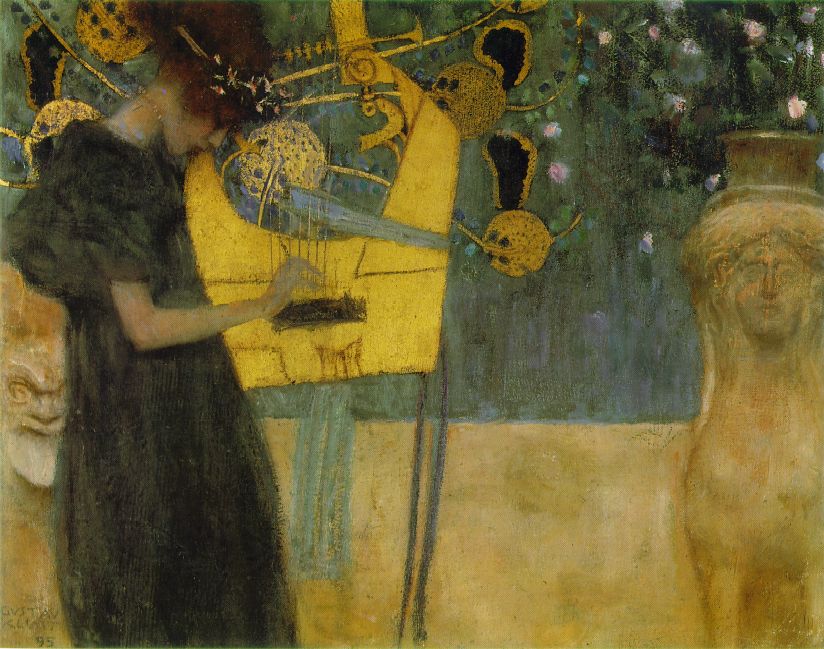
Klimt - Music 1

_______________

Wow. We have covered a lot of ground so far. We’ve discussed what beauty is, what things are actually beautiful (God, Nature, Humans, Art), and why they are beautiful. But there’s one more very important thing left to discuss (that will take a while to unpack): how are we meant to respond to Beauty? We used our text (Ecclesiastes 3:11-15) to give us a context to figure out a definition of Beauty, and then we applied that definition to different things, so let’s go back to it and see how we are supposed to respond to this beauty.

“He has made everything beautiful in its time. Also, he has put eternity into man’s heart, yet so that he cannot find out what God has done from the beginning to the end. I perceived that there is nothing better for them than to be joyful and to do good as long as they live; also that everyone should eat and drink and take pleasure in all his toil—this is God’s gift to man. I perceived that whatever God does endures forever; nothing can be added to it, nor anything taken from it. God has done it, so that people fear before him. That which is, already has been; that which is to be, already has been; and God seeks what has been driven away.”[Ecclesiastes 3:12-15]

The ultimate response, the final goal, of seeing all the Beauty God has put in our hearts, put in the world, and is doing in and around us, is joy and doing good. But the writer did something before he could declare this: he thought about it and “perceived” this to be the case. You see this in the final verses of this section as well. After declaring the joy that should come from seeing Beauty, he then steps back and sees the bigger picture. He tells us what first must be true about God if we are going to ultimately respond to beauty the way we should.

Reading this reminded me of something C.S. Lewis once said. In one of his philosophical works (I honestly don’t remember which one) he says that humans interact with things by contemplating and enjoying. He says that they cannot do these things at the same time though they can rapidly move back and forth between the two. I think this is a great way of saying what the author in Ecclesiastes is saying. We first must “perceive” (or contemplate) Beauty and then we enjoy the Beauty that God is making all things into and that he has placed into our hearts and world. Often, this distinction between contemplating and enjoying happens so rapidly that it seems like it is happening at the same time, so don’t worry, I’m not necessarily saying that you can’t enjoy beauty before sitting down and thinking about it, researching it, and writing out some paper something. Even before contemplating something and learning its complexities you can enjoy the Beauty of something. But this is the same way that a husband can enjoy his wife on the first day they’re married, but he must spend time and effort after that contemplating and getting to know his wife, so he can enjoy her more fully and more comprehensively. Contemplation is not necessary to enjoy at first, but it is necessary to enjoy fully.

I know this was a brief post. It’s just because the next several sections are substantial enough to deserve their own posts. So, mull on this for a while, read some other new posts of mine at Reform & Revive and GoingToSeminary.com, and Monday we’ll go really in depth into the contemplation of Beauty and beautiful things.

Click for Manuscript Pdf

Manucscript

Click here for sermon audio

Audio

Controversy, Controversy, Controversy at GoingToSeminary.com


old lady

Update: The two posts mentioned in this article are now up. “Letting Seminary Doctrinally Change You” and “Seminaries & the Nature of Truth“.

Yep, it’s a double-post sort of day.  (let’s just say I’m making up for Labor Day.)  But this is a personal one.  I’m asking for some prayer.

At publication time for this post, the site GoingToSeminary.com is currently changing servers, so it’s down.  It was just bought by the somewhat Lutheran and fully online Rockbridge Seminary, sold by my good friend (and former campus minister) Ryan Burns of Design Simple.

As some of you know, I am a Contributor for the site, and my articles have tended to be pretty weighty.  I don’t know why.  It hasn’t been purposeful.  I suppose when I think of seminary it tugs at my urgent pastoral heart more than the light, fun, twentysomething heart; and this has been evident in the posts.  From what I can tell, my last article “Realizing Seminary’s Not For You” has received more comments than any other single article that I can find on the site, and those comments were fiery.  I got blasted from every side (and defended by many – thank you all, by the way).  A couple of people even compared me to an unfaithful Israelite who saw the giants in the Promised Land and got scared.  Another, in light of my severe disappointment in Westminster Theological Seminary as an institution, said that apparently I don’t know good doctrine when I see it.  In short, it caused some controversy.  I really try not to seek such controversy, and I never thought that post would spurn such heated discussion.

But –

Tomorrow’s another story.  Tomorrow my new article is going live on the site and I’m fairly sure this one will ruffle some feathers.  In fact, I’m shocked Rockbridge went ahead and decided to post it.  Kudos to them.  It will be very easy for this article to be misunderstood on both sides: those that think I go too far, and those that think I don’t go as far as I am in fact trying to go.

The article is a discussion of how to let seminary doctrinally change you.  To do this, I very consciously employ postmodern thought into my own thinking and advocate others do so as well.  It’s very touchy and I am not wholly confident that I phrased myself as articulately as a more experienced writer may have been able to.  I guess we’ll see over the next couple of days.

But, I’m actually not as concerned with this article as I am with the follow-up article I am about half-way through writing.  In the first article I lay out the responsibilities for the seminarian in this respect; in this second one, I talk about the responsibilities of the healthy seminary institution.  And in doing so I am directly taking Westminster to task for how they have abandoned the principles I lay out in this first article.  I’m sort of doubting Rockbridge would run it on the site, but who knows?  Westminster’s a competing institution and Rockbridge is marketing themselves as a seminary for the 21st century, so we’ll see.

All that to say, look for my article tomorrow at GoingToSeminary.com, and please pray for me if you could.  I’m still young and arrogant, and I need the spiritual support.  I’ll also link to the article tomorrow.  Until then . . .

My Official Review of “Fearless” by Max Lucado at Reform & Revive


Look at that face.  That’s Max Lucado.  And I just reviewed his new book Fearless.  You can find the review here at Reform & Revive.  Some of you may have read my “Review Preview” and now are wondering why on earth I’m putting up this little post, just to send people somewhere else for the review.

Well, that “Review Preview” got a lot of hits due to search engine traffic.  That means that this site will appear sooner in a search for the book than will Reform & Revive.  But, seeing as reviews of this sort are much more in line with the mission and purpose of R&R, rather than that of this bog, I thought it was more appropriately posted there, and not on this blog.  So, I’m putting up this post on the off chance someone meanders here due to a search engine.  So, if you have fallen victim to such an off-chance, you can find the review at my webzine, Reform & Revive, found at the link below:

http://reformandrevive.com/2009/09/08/review-fearless-by-max-lucado/

By the way, for those that have stopped by for the next part of my Beauty series, you will find the next installment here tomorrow.  Probably.  Well, technically, my review of John Navone’s book Toward a Theology of Beauty counted as the “next installment”, but I’ll write another tomorrow.