Some Help for the Journey & the Fall (Matt Chandler, Patrol Mag, & the iMonk)


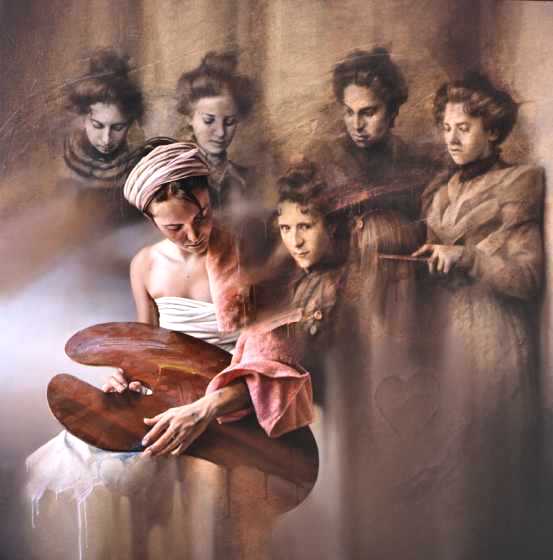
Melograna - fallingArt by Julia Meolgrana

If you have about an hour or so, I wanted to plug several articles and a sermon.  The sermon is from Matt Chandler.  It is a message he gave during a chapel service at Southern Baptist Theological Seminary.  There is both audio and video available.  The message is walking through Hebrews Chapter 11 and into 12 to show what the Christian life is meant to consist of.  This message blew me away.  It’s about 40 minutes long, and I was almost crying at work by the end.  It is a call to see the Fallenness of this world, the Beauty of its Savior, and our need to repent.

The main article I want to push now is an editorial from Patrol Magazine, a frequent subject and inspiration for posts on this blog.  These weekly editorials are becoming a highlight of my week.  They are always scathing critiques on Christian culture, but are written so intelligently, thoughtfully, and comprehensively, one cannot help but notice the dearth of such quality writing elsewhere in the Christian world.  This particular editorial is about how Evangelicalism is dead — not only as a term, but as a movement altogether.  Here’s a taste:

Continue reading

A New Church Home . . .


liberti south philly coverepiphany fellowshipAs of a couple of weeks ago, I am an in-covenant member at Liberti Church: South Philly. One of the reasons I am writing this is to inform those at Epiphany that don’t know this yet. I thought a good number of people knew, but I’m getting more and more texts and messages from people that obviously don’t know this. Sorry for not communicating this to more people.

As many people know, ever since I first got to Philadelphia, I was an avid member of Epiphany Fellowship. In fact, it was a message by Eric Mason delivered at the Village Church in Dallas, Texas that sealed my decision to come to Philly in the first place. When every other seminarian was spending their first few months at school in that awkward period of looking for a church home, I already had mine. The apartment-hunting visits I had made prior to moving let me visit Epiphany months before I actually moved here and I was made to feel the warmth and hospitality of a community that lived in line with the amazing teaching they receive in and out of Sunday mornings.

Continue reading

Beauty: The Complete Series


screen-captureIn 2009 I did a seminar at my old church, Epiphany Fellowship, on the topic of Beauty. I spent about nine months doing research, reading, talking, and thinking before offering it to the community. I then separated my overall talk into the series of blog posts you’ll see below. A year later, I updated the main manuscript with some expanded thoughts. Those blog posts represent the material before the update.
On this page you’ll find the audio from the talk and the updated manuscript,, as well as a special appendix I put together offering a complete breakdown of every word in both Greek and Hebrew that the English Standard Version of the Bible translates as “beauty” or “beautiful”, broken down by frequency.  Along with those words (and all their forms), I’ve offered the most literal definition of each so you can easily see the huge range of meanings that the Biblical words for “beauty” carry. I hope it’s helpful. You don’t need any knowledge of Greek or Hebrew to understand it or get something from it.

Series Table of Contents

Resources for this series:

[photo by David Schrott]

The Outline for the Entire Series:

Resources for this series:

[photo by David Schrott]

Proclaiming & Producing Beauty{11}


Sandorfi - KalfonariumThe next post after this will be the last in this series.  But today, we are finishing up the section on how we respond to Beauty.  As I stated earlier, there are two fundamental ways we respond to Beauty: we contemplate it, and we enjoy it.  But, within the enjoyment piece, I think there are four main ways to to that: we praise, participate in, proclaim, and produce Beauty.  Once more, our working definition is Beauty is the attribute of something that expresses complexity, simply.  It takes the loose strands in reality and weaves them together into a tapestry that out senses are able to perceive.

Now, let’s pick up right where we left off:

Proclaim

But the process is still not over. First we praise the thing as beautiful, then we participate in its beauty on its own terms. Thirdly, we proclaim it as beautiful. Proclamation is not the same as praise. I believe it was C.S. Lewis that something along the lines of this: joy in something is not complete until it is shared with someone else. Proclamation is the telling of the Beauty of this thing to someone else. It is sharing in this affection with someone else. Here we start seeing something about Beauty that will lead into our final response: Beauty longs to be known and spread – almost like a virus. It wants to inspire you to tell others about it, so that those people might participate in it as well. For creational Beauty this is done in many obvious ways like reviews and just telling someone else about it. For divine Beauty, this is typically referred to as preaching. Speaking of this God should be the natural response to someone who has praised and participated in the Beauty of God. It is out of the overflow of this in someone’s heart that they should speak. Not out of begrudging compulsion or sheer white-knuckled obedience. We tell others about the things we find most beautiful. Should this not also apply to the highest of all beautiful people – God?

Produce

This brings us to our last part in the process of responding to beauty. It’s very much tied to the previous one and has to do with Beauty replicating itself. God, in His love for us, calls us to respond to beauty not only by proclaiming beauty in word, but also producing beauty in deed. Produce is the last way we respond to Beauty. We are built in the Image of a God who doesn’t just desire, delight in, and display Beauty, but a God who also does Beauty. We, likewise, all have abilities to produce beauty. Not only that, our response to beauty is not complete until it has inspired us to likewise create beauty. Every musician in here knows what it’s like to be at a show or concert, seeing someone play the instrument that you play and suddenly having your mind swirling with musical ideas you want to try out when you get home. There’s an entire field of art history that tries and find the obscure pieces that inspired some of the greatest pieces of art we adore today. It works off the assumption that nothing that beautiful exists without inspiration before it. The longer I live, the more I am convinced that everyone has some creative ability in them. I don’t care how “uncreative” you think you are. You are built in the image of a Creator God! You have not only the ability, but I fully believe the responsibility as well to bring forth more beauty in this world and further participate in God’s “re-knitting” of the universe. Now this “creative” ability in all will look different in everyone, so don’t think you have to stick to conventional forms of “creativity”. Really, anything that makes beauty does this. It can be gardening, serving, counseling, or raising your kids, even. I would argue all those take a certain type of “artistic eye” to do them well. We all have it. Find it. Do it well. Do it often. And do it as a response to the Beauty that is around you in both God and Creation.

This also shows itself in the Christina life (and in our text) as holiness, or “doing good” as the author of Ecclesiastes puts it. Seeing the Beauty of God should inspire us to holy living and loving of others. Serving those around us in order to share with them and replicate the Beauty of God that we have seen.

Click for Manuscript Pdf

Manucscript

Click here for sermon audio

Audio

Baptized in Beauty{10} (Enjoy, Pt. II)


Schrott1

photo credit: David Schrott

For those that have followed this series on Beauty, you will know that we have hit three major sections so far: “Why do we long for Beauty?“, “What is Beauty?“, “What things are Beautiful?“, and now we’re in the “How do we respond to this Beauty” section. I am in the process of laying out four “stages” of an appropriate and full response to Beauty. The first stage of this response is a contemplation of the Beauty.  The second is our enjoyment of it.  The first step in that process is Praising Beauty, which we talked about last time. In this post, we talk about the next step. This also happens to be my favorite part of the process of responding to Beauty. It’s when we are joined to Beauty and are swept up in its complexity and nuances. I love this feeling, I love this experience, and I loved writing and talking about it. I hope you enjoy reading it. Once again, the full manuscript and audio of the lecture I gave on this is below. We pick up right where we left off, saying that we must praise Beauty.

______________

Bur praising is not enough. Seeing something beautiful and calling it such does not complete the purpose for which that beauty exists. Beauty has an attractive quality. It draws you toward it at a very deep level. The next step, after acknowledging this beauty is to allow it to suck you in. I call this “Participating” with the Beauty of that thing or person.

Practically, this looks lots of different ways. With other people, it’s a drawing near to that person. Conversing with them. Viewing more of the nuances of the Image of God in them that makes them beautiful. For art, it looks like accepting the art on its own grounds and letting it draw you in in whatever way it’s asking of you. For plays and films it’s that idea of “suspension of disbelief”, where you allow yourself to forget that you technically “know” this isn’t real, and you let yourself get sucked into this beauty. Other forms of art tend to ask us to get lost in the object itself and explore its nuances. Closing your eyes during a musical piece and hearing every note; letting the words of a poem get inside of you and change the vocabulary you use to describe its own beauty or the world around you; letting distractions fade as you stare at a painting and see every stroke, every color (anyone who has seen a piece in real-life by John Singer-Sargent or Vincent VanGogh knows this feeling most definitely). Have you ever cried because of Beauty? This is participating with it. In the contemplation stage of this process you ask yourself “what is the beauty of this thing asking of me? It’s drawing me to itself, but to what end?”

But what about God? What about Divine Beauty?  This is where His Beauty shows especially brilliantly. All other forms of beauty can only draw you near to itself. God can and does actually draw you into Himself and Himself in you. We can participate with Him in a way that every other form of beauty only faintly strives for. How? Well, He takes the first step upon changing someone by actually sending his very Spirit to dwell within His people.

But God not only let’s us participate in His Beauty spiritually, but also physically.  After He draws near to us, we do what the Bible calls “abiding” in Him, where we draw near to Him through various things the Bible calls “means of grace”. These are traditionally called sacraments.  They are physical things that we participate in and by faith He meets us there. One of the clearest examples is Baptism.  It is where we are brought into union and participation with Christ in response to his faithfulness and action toward us.  Another is Communion. Just think of the word: “Co-mmunion”. It’s where we “commune” with God. That bread and wine is a symbol, but not just that. It is in those elements that we His people are actually drawn further into God to “commune” and participate with Him in His beauty. This is why Communion is such a big deal in the Bible. God kills people – even Christians – because they misuse this beautiful thing. He will let no one lightly and trivially participate and be drawn into His Beauty.

This should lead us to a “sacramental” view of life, where God is using all things to communicate Himself to us and communicate His Grace to us. Let everything: every good-tasting piece of food, every sunset, every cool breeze, every joyful moment all be moments where God communicates Himself and His grace to you so you might participate and be joined to Him in His Beauty and we further praise Him even more. Historically, the Christians that do this well have been referred to as “mystics”. They are the ones that say seemingly crazy things. Brother Lawrence was a 17th century monk and he said: “I have at times had such delicious thoughts on the Lord I am ashamed to mention them.” John Owen, my favorite Puritan, says

O to behold the glory of Christ…Herein would I live; herein would I die; herein would I dwell in my thoughts and affections…until all things below become unto me a dead and deformed thing, no way suitable for affectionate embraces.

Oh that we longed in that way for God. There is a participation in the Glory, Beauty, Majesty, Goodness, and Love of God that is at hand for those who believe and far for those who don’t. Please, I beg of you, if you are not a believer, seek the Beauty of God, for it’s only suitable response is to be drawn into into and know his intimacy in this way. He, the fountain of all good things, the One for Whom your soul was made, does not disappoint those who seek to know Him. Participate in Beauty.

Click for Manuscript Pdf

Manucscript

Click here for sermon audio

Audio

Enjoying Beauty{9}, Part I: Praise it.


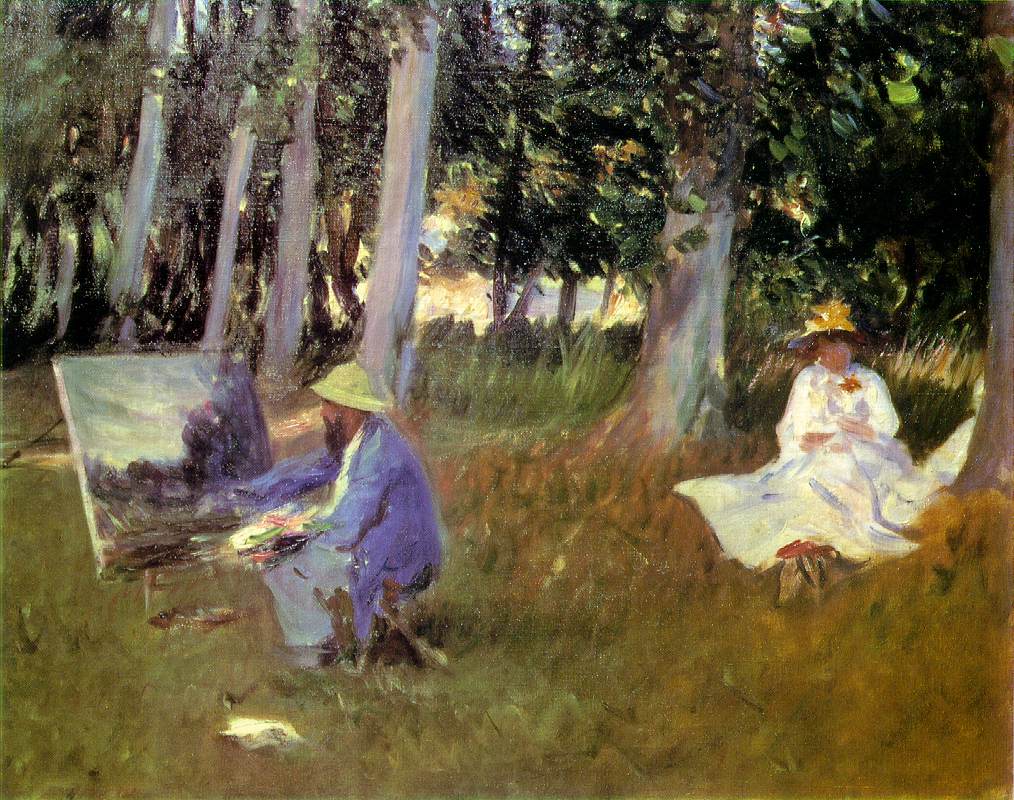
Sargent - Claude Monet Painting in a Garden

We’re almost done! This is the home stretch of the series. After this, there are three more posts in this series on beauty. Then maybe a summary-conclusion article. Last time, we talked about what it looks like to contemplate Beauty. Here, we ask why we contemplate it and what the implications of this answer are. So, why do we contemplate Beauty?

So we can enjoy it to the fullest.

Our text says that God’s gift to man is the ability and call to enjoy and take pleasure in all things, even our vain toiling and strivings of heart. After contemplation, there comes the time when we must engage with what we have contemplated. Even in Christianity, our theological study and discovery of who God is is not complete until actually close the Bible, look up, and enjoy this revealed God. But how? What does this enjoyment look like? Well, as I’ve thought about it, I’ve broken down enjoyment into four different stages. To enjoy Beauty, we Praise it, Participate in it, Proclaim it, and Produce more beauty. Let’s break this down:

First, we praise the beautiful things.

This seems fairly simple at first, but it has a deeper level to it. In its external form, praising the beauty of something is as simple as calling it beautiful. But what about nature? Or art? Or a book? or poem? Perhaps the original artist is dead or not available for you to say to them, “Hey, that’s beautiful.” Those cases help show us that “praise” goes deeper than mere words. “Praise”, more accurately, is a turning of affections toward the object of the beauty before you. It’s acknowledging beauty at the deepest part of who you are. Now, don’t worry. I’m distinguishing between the affections we turn towards these things and the affections we have for God. Those that have been changed by God to see His Beauty have had their deepest affections changed so that God is highest in those affections. But it’s okay to have an affection for things that God loves and has affections for. Having affection for His Church, His people, your family, and Beauty (even the Beauty of quote-unquote “non-religious” things) is completely in line with someone who has been changed by God to see Him as most beautiful. The implications of this more accurate idea of “praising” are huge. First, it means that you can be “praising” with your lips and not actually be praising. It also means that you can be praising something fully, accurately, and appropriately without ever having uttered a word. Imagine staring at a beautiful piece of art. It’s just you and the art while everything else fades away, and every distraction disappears. In that moment, as your affection swells for this thing of Beauty, you are calling it beautiful – you are praising.

In the next few days we’ll discuss what it looks like to Participate in Beauty.  This will be a much longer, more developed idea.  And my favorite way of enjoying Beauty.  So until then…

Here are the manuscript and lecture that this series is based off of.

Click for Manuscript Pdf

Manucscript

Click here for sermon audio

Audio

Review: John Navone’s “Toward a Theology of Beauty”


In my attempt at writing shorter and more frequent posts (rather than feeling the burden to produce daily meaty posts), I thought I’d put up this little review of a little book (91 pages) I just finished called Toward a Theology of Beauty by John Navone (1996, The Liturgical Press).  I had originally started reading it for the Beauty message I gave, but I never finished it.  As time went by, though, the things I had read in this book began creeping back into my thoughts, so I decided to finish it, and let me tell you, that was a good call.

This is an incredible book. I’m still in awe of it. It seizes your soul and takes it to the highest realms of the mind and heart of the Beautiful Triune God. I have almost an entire journal filled with notes I have taken form this book.  I will look over these notes often for years to come, to let myself get swept away by the ideas present here.  Navone doesn’t have progressive outline, so it’s difficult to lay out exactly everything he talks about.  The best thing one could do is shoot over to the Amazon.com page for the book and “Look inside” to peer at the Table of Contents for his topics.  Suffice it to say, the book is theologically comprehensive.  It doesn’t answer many of the more practical questions we may have about art, human beauty, and such, but it does help in a much greater understanding of the more ethereal and abstract realities of Beauty, especially as it originates in and delights God Himself.

I guess my only critique is a common one I had with most things I read during my preparation.  It assumes the validity, and authority of ancient Greek philosophy, especially the distinction between the True, the Good, and the Beautiful.  He uses this Hellenistic concept throughout.  Many things I read used this “trinitarian” framework to shape and organize their thoughts.  I don’t know how valid this is and I would argue this limits us in many ways.  but this is minor, and doesn’t really take away from the wonder and awe of this book.

Navone is a Catholic theologian, and if I learned one thing from reading this book, it’s that Catholics understand Beauty in a way that only 2,000 years of thought and reflection can provide. We Protestants can learn a lot from our Catholic brothers and sisters. Heck, after reading this, I’m practically Catholic now myself.

Navone’s writing is beautiful, his thoughts profound, and theology rich. I highly recommend this book to anyone looking to increase their worship of a Beautiful Transcendent God.

Ah, the Beauty{6} of Art


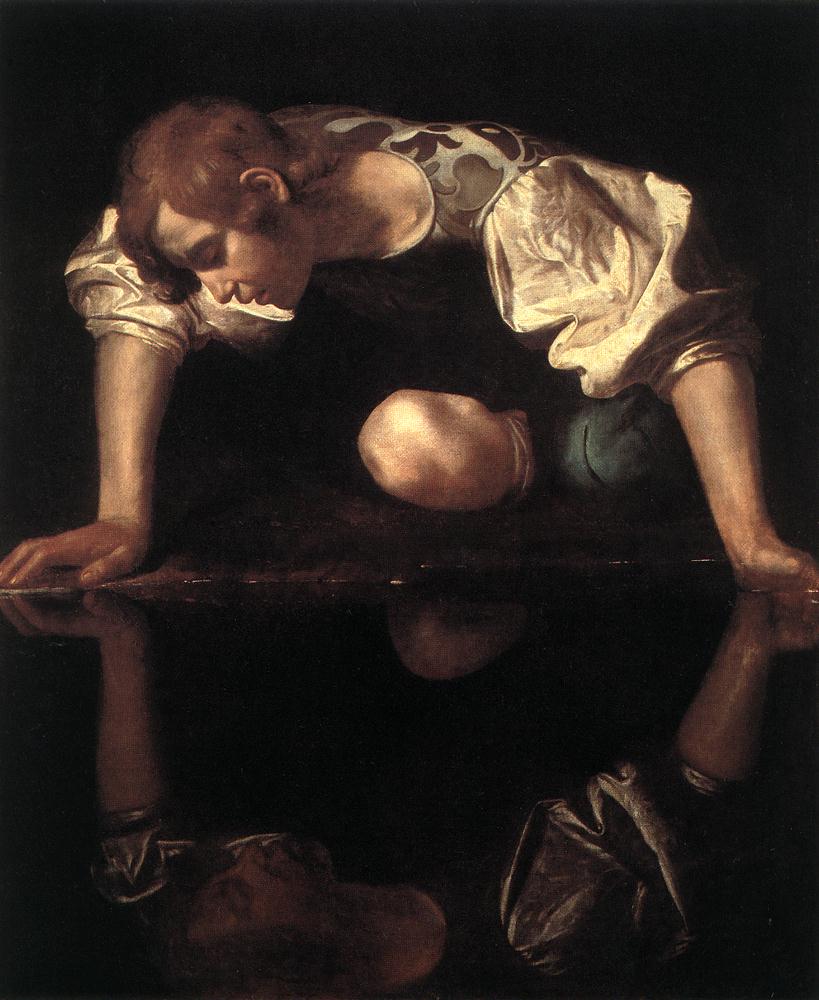
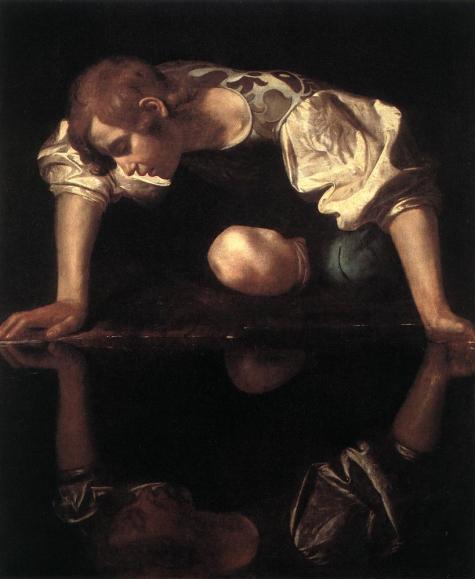
Caravaggio - NarcissusThis is the next installment in the Beauty series (for the complete series, click here).  This is based on the manuscript I wrote for a message I gave at Epiphany Fellowship in Philadelphia (links to both the manuscript and the audio are at the bottom).  We’ve gone through a lot so far, including a discussion of why we long for Beauty, a definition of Beauty, and how science and nature are beautiful.  This series has received great feedback from people (and it’s only about half done!).  So feel free to jump in and comment and keep the discussion going.  Today’s post is on the beauty of Art.

_______________

Humanity’s creations are beautiful.This is where we get to talk about art.

For some reason (I have no idea why) this was actually the very last section I worked on.Whether that means it’s a lot better or a lot worse, I don’t know.Anyway, art is a really tough thing to talk about.Its a huge topic that everyone has an opinion on, and as time has gone on, the conventions of art and what it is have broken down and definitions have broadened almost to the point of not really being definitions at all.Not only this, but you also seem to have people forgetting some very important things that we all must be reminded of.

First off, we are too quick to call God the “Supreme Artist”.That’s taking a description of humans and describing God with it.We’re right in starting with him in trying to understand art, but seeing Him as the “Supreme Artist” generally makes us picture in our minds the type of artistry we like best, and then begin thinking that God values that kind the most.This ends up being a bottom-up kind of description of art rather than top-down.Before God is Artist, He is a Creator, so we must start thinking of art creative-ly.This means that the way God is an artist is by making things that are not him and weren’t around before.So when I refer to God as Artist, that’s what I have in mind.

Secondly, we must keep in mind that God Himself was the first abstract artist.I kept reading all these books and articles written by Christians about art and so many of them seemed to not have room in their “theologies of art” for the abstract.The opposite of “abstract” art is “representational” art – art that “re-presents” something we know exists.When God did His artistry, it was all abstract.There was nothing to “re-present”So that being the case, I can’t think that God isn’t glorified in even the most abstract of art.There may even be an argument that abstract art is closer to the heart of God than representational.I’m not making that argument, but someone could.

Thirdly, as most Christians recognize, we create things because God does.In the first passage in the Bible that talks about people being made in the “Image of God” in Genesis 1:27, the logical question that follows is: what exactly does that mean?Now, theologians and philosophers have argued about this for thousands of years, and I’m not going to try and finish that fight right now, but I will say that it’s interesting that at this particular time in Scripture that this verse shows up, there’s only one thing we know about this God that humans are apparently in the “image of”: that He has the desire and ability to make things.I imagine that’s where we get our desire and ability.As G.K. Chesterton points out in his book “The Everlasting Man”, whatever role evolution may have played in the development of this world, it can’t by itself explain art.You don’t see monkeys in caves making bad art and humans now making good art.There’s something about art that reflects what makes us unique among all created things.

So when we do create and we do make, what does this have to do with beauty?Everything.I really do believe that art, like science, is a necessary endeavor in furthering God’s plan in History.God’s creation merely points to God’s Beauty.It doesn’t make beauty itself.Humans, on the other hand, actually make beauty and play an integral part in God “making all things beautiful in their time“.Let’s go back to our definition of “Beauty”:Complexity expressed simply – many complex strands woven into a sensually perceived simple tapestry.  The more complexity of “strands” that are represented in a piece of art, the more beautiful it is.And remember- different people, due to many factors, will find and feel different “strands” running through different pieces of art, leading to different personal aesthetic standards for each of us.

So imagine every strand in the universe is there before an artist preparing to do a piece.You have suffering over here, hope here, joy here, God, evil, life, humanity, death, birth, redemption, pain – all there before the artist.In art, the artist grabs as many of those strands as they can and crams and weaves them into the piece.And the more there are, the more beautiful it is.That’s why many people don’t like Postmodern art.There’s no complexity.It’s too simple and says nothing.There are not enough strands in it to strike the heart of a person so they can actually call it beautiful.A complexity of ideas makes art beautiful.In the Preface to The Picture of Dorian Gray, Oscar Wilde writes out his thoughts on Beauty and art.He writes: “It is the spectator, and not life, that art really mirrors.Diversity of opinion about a work of art shows that the work is new, complex, and vital.When critics disagree, the artist is in accord with himself.”Though I disagree with Wilde on some of what he’s saying, nevertheless he is noticing that different strands in any piece should resonate with different people.Some people will be offended.Others will praise it.It’s just the way beautiful things are. After all, it’s how God and the Gospel are.

I’ll end this oh-too-brief section on art with a few comments on the distinction between “Christian” art and “secular” art.As Phil Ryken, just down the street at Tenth Pres writes in his book Art for God’s Sake: Bad Christian art “ultimately dishonors God because it is not in keeping with the truth and beauty of His character.It also undermines the church’s gospel message of salvation in Christ.”How? Well, the kind of modern art that most Christians scoff at is art that is completely void of goodness, light, and truth.But Christian art tends to do the same thing by being void of other very real things in this world: depravity, pain, and sin.When our art shies away from these things, in effect, we’re avoiding showing the world what they need salvation from.Jesus didn’t come to save some cute coffee mug or bumper sticker kind of world.He came and suffered, bled, and died an ugly death that we celebrate as the most beautiful event in all of history.We must make room in our art to explore the darkness and pain of this world so we can show them that Christ can and does engage and enter into brokenness to see it redeemed.

To conclude, recall what I said a couple of posts ago on the structure and nature of history and time?  History is not the story of the present hurtling through time towards some future endpoint we call “heaven”.  Rather, it is the beauty of that future world invading the present, even as we sit and read this.  If “Beauty” is the end goal for which God is making all things in their time (Ecclesiastes 3:11), then whatever floods the world with Beauty is actually furthering this process of redemption.  Artists, both saved and secular, are actually missionaries of sorts, as they help reweave the fabric of the universe with the beauty of their creations.

Are you all starting to see why we need artists?Good artists doing good and beautiful work; and not trite, kitschy, cute things that keep us away from the real world out of fear that we might “catch it” or something?A creation always reveals something about its creator.If you are a Christian reading this right now, may I urge you to show the world through your creations that you have been saved by a Gospel that makes you care about excellence engaging darkness, beauty engaging filth, order engaging chaos, and redemption conquering sin?Let our art, our creations, speak of a beautiful work that a beautiful God has done in us, whether or not it is an explicitly “religious” piece.

Art is beautiful, and necessary for the redemption of this world.

Resources for this series:

Max Lucado’s “Fearless” and my heart (a review preview)


I’m a book reviewer for Thomas Nelson Publishers.  A few weeks ago I received a pre-publication copy of Max Lucado‘s upcoming book “Fearless“.  I hate so much about Christian “culture”, especially its commercialism, cheesy cliches, seemingly naive treatment of the fallenness of the world, and an inability to know and apply a deep understanding of the Gospel.  For years, admittedly, Lucado has stood in my mind as a representative of much of this.  I have, with little engagement with his material (other than his children’s books), tagged him as such a man; and in a certain way, he is the cheesy, cliche-ridden, mass appealing writer I have assumed (as is evidenced by this official site for the book), and the official trailer found below:

Let’s just say it’s been a big change going from Francis Turretin, John Calvin, and Herman Bavinck to Max Lucado in a matter of months.  Anyone that knows me knows that it has been a long journey through many frustrations with mainline evangelical culture to teach me how to love the Bride of Christ.  And I’m still learning.  I have belittled her, talked her down, mocked her, and ridiculed her in the most shameful of ways.

And this book has been a healing process for me.  Not giving away too much of my upcoming review when the book’s released, I just want to say that this book is amazing.  Save for the first few chapters, I have been shown that even amidst bad jokes, inadequate metaphors, “simple” writing, and an over-commercialized release (including shirts, calendars, mugs, study guides, DVDs, children’s books, teaching curricula), there can be poetry, depth, a real exploration of the human condition, and beautiful articulations and applications of the deepest, most precious truths of the Gospel.  Lucado has shocked me.  And taught me.  And helped me.  And stirred me for this God, His Gospel, and all that it supplies us.  Though I may be going against the fine print in my publisher’s agreement in doing so, I want to share with you all my favorite few paragraphs from the book so far:

A calmer death would have sufficed.  A single drop of blood could have redeemed humankind.  Shed his blood, silence his breath, still his pulse, but be quick about it.  Plunge a sword into his heart.  Take a dagger to his neck.  Did the atonement for sin demand six hours of violence?

No, but his triumph over sadism did.  Jesus once and for all displayed his authority over savagery.  Evil may have her moments, but they will be brief.  Satan unleashed his meanest demons on God’s Son.  He tortured every nerve ending and inflicted every misery.  Yet the master of death could not destroy the Lord of life.  Heaven’s best took hell’s worst and turned it into hope.

I pray God spares you such evil.  May he grant [you] long life and peaceful passage . . .. But if he doesn’t, if you “have been given not only the privilege of trusting in Christ but also the privilege if suffering for him” (Phil. 1:29 NLT), remember, God wastes no pain.

Amazing.  Look for my review September 8.  In the meantime, you can order the book here, and read some of the ebook here.

The Triune God is Beauty{3}


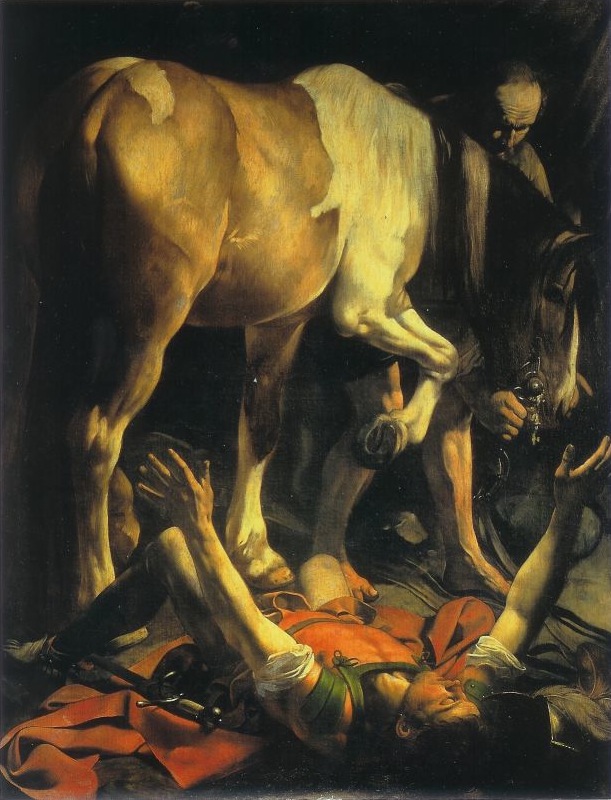
Caravaggio - The Conversion of Saint Paul 3bThis is the third part in what will end up being a fairly long and comprehensive series on Beauty. It’s based on a recent message I gave on the topic. You can find the full audio and full manuscript below. [Bold: things I had time to say // Regular: things I didn’t have time for] So far, we’ve seen why we long for Beauty, we’ve discussed what it is, now let’s apply this definition.

What is beautiful?

First and foremost, the Triune God is beautiful.

He is Three Persons (complexity) existing in One Deity (simplicity). Just think of that word God. That is the human term that he has chosen to be acceptable for us to call him. Those three letters contain the simplest expression of the Sovereign Creator God of the Universe. Most old school systematic theologies are structured the same basic way: the first actual section of theology is reserved for “the Doctrine of God”, and the first thing you learn about God is his “unknowability”. This is the fact that God is infinite, inexhaustible, holy, and completely separate from all things we could ever conceive or understand. We cannot know him. Any pursuit we go on to know him will always be futile. Just the fact that the Infinite God has revealed anything to us in a way that we can actually understand is beauty itself. He is the perfect and complete tapestry within which all things are woven together in the first place. He is peace. He is shalom. He is Beauty. But let’s look at His distinct persons as well.

God the Father is beautiful.

In Exodus 3, Moses is talking to this God who is showing Himself through a burning bush and he asks this God “Who are you?” The huge transcendent God simply says “I am that I am”. So, in the Bible and in the creation, God the Father reveals Himself clearly enough that we can know who we should worship. Think about it. The infinite God who is outside of time and space uses finite things within time and space to communicate himself. This Infinite Head of the Godhead reveals the Infinite strands of who He is in one of the simplest of tapestries: “I AM”. This is beautiful.

God the Holy Spirit is beautiful.

1 Corinthians 2 says, “As it is written, ‘what no eye has seen, nor ear heard, nor the heart of man imagined, what God has prepared for those who love him’” We often stop there. We talk about all those infinite promises God has made that no one has seen and no one can know. But this isn’t the case. Read on. Paul writes that all these things that no one has seen, all these infinite and glorious promises that would blow our minds “God has revealed to us through the Spirit. For the Spirit searches everything, even the depths of God. For who knows a person’s thoughts except the spirit of that person, which is in him? So also no one comprehends the thoughts of God except the Spirit of God. Now we have received not the spirit of the world, but the Spirit who is from God, that we might understand the things freely given us by God.” The Infinite complex Spirit of the Infinite complex God dwells within finite simple believers and what’s more, he communicates the previously unspoken thoughts of God Himself. So through the mediator of the Holy Spirit, God weaves his thoughts into the tapestry of our souls.

God the Son is beautiful.

Of course, we go to John 1 for this: “In the beginning was the Word and the Word was with God and the Word was God. He was in the beginning with God. All things were made through him, and without him was not any thing made that was made. . . And the Word became flesh and dwelt among us, and we have seen his glory, glory as of the only Son from the Father, full of grace and truth. . . For the law was given through Moses; grace and truth came through Jesus Christ. No one has ever seen God; the only God, who is at the Father’s side, he has made him known.” He is the ultimate earthly reflection of beauty. He is the living word of God. He is God of God in the flesh of man. The ultimate, infinite, precious, all-consuming, King of Kings and Lord of Lords takes on the form of a child born in a manger. Oh the humility. Oh the beauty in this act we call the Incarnation, where the infinite God takes on finite humanity.

Though much more could be said (and maybe should be) I feel I’ll stop there. This is an all too-brief picture of why/how God is beautiful, but this is because most people acknowledge that if there is a God, He is in fact what we would think of as beautiful. Otherwise He wouldn’t be worthy to worship. Most would agree with what I’ve written if in fact this was the God that existed. We’ll discuss that more next week. On Wednesday, though, we’ll talk about worship, nature, science and how all those things connect. It’s one of my favorite sections. Here are the links I mentioned earlier:

Click for Manuscript Pdf

Manucscript

Click here for sermon audio

Audio

Eternity in Our Hearts: The God of Beauty, the Beauty of God


Sargent - Madame Errazuriz-smallThis message was seven months in the making, and this past Friday I finally delivered it.  So, as promised, I’m posting both the audio and the manuscript here.  You can also find a general outline on my Sermon site, and you can also find it at my Podcast.

Click here for sermon audio

Click for Audio

Click for Manuscript Pdf

Click for FULL Manuscript

This is the message I gave at Epiphany Fellowship. The topic was Beauty. The attached manuscript is the full manuscript. It is 43 pages long and contains far more information than I was able to give in a 40 minute message. It includes an appendix where every form of every word in the Greek and Hebrew translated as “Beauty” or “Beautiful” in the English Standard Version of the Bible is ordered by frequency and includes the literal meanings and lexical range of each word.

I really cannot stress how much more is in the manuscript than was preached.  Every section has huge amounts of thought and prayer in it that was not able to be included in the final message.  That’s why throughout the next week or more, I’ll be blogging about every section of this manuscript.  Each post will focus and discuss the fuller version of each section.  If it gets to be too much I’ll spread it out as need be, but we’ll see.  This is where your thoughts and insights will be so helpful and needed, but if you have a question now, don’t feel like you have to wait for that blog post to come to ask.  Engage with any and everything now.

I hope this blesses all of you as much as it did me.  The feedback that evening was more than I knew how to handle and perhaps I’m still processing it.  Thank you all for your grace and affirmation.  For those that came out, I thank you. I very much enjoyed both preparing and delivering this message, and I look forward to further chances to do so.  If you’re interested in giving me such a chance, feel free to use the contact email on the sidebar to the right (or just click here).

Enjoy, and feel free to let me know what you think, and please at least look through some of the manuscript.  Until next time . . .

One small final note: on most every site and post I’ve used to discuss this message I’ve used the attached piece of art.  It is a piece called “Madame Erraruriz” and it is by my favorite American painter John Singer Sargent.  I got to see this painting in an exhibit of his at the Virginia Museum of Fine Arts and ever since seeing the brushstrokes in this simple painting and seeing the nuances and the subtleties that don’t quite come across from this digital shot, I have long found it to be one of the most beautiful paintings I’ve ever seen.  It is for that reason I have chosen it as the picture that has constantly been up for all these posts.  A few years back I even wrote a poem based on the piece called “Extended Engagement”.  I ended up writing two versions, one less structured than the other to better mirror the feel of the piece, but on this blog you can read both Version 1 and Version 2.  Let me know which you prefer.

I’m preaching in Philadelphia.


As the title clearly says, I will be giving the message tomorrow at Epiphany Fellowship‘s monthly event called “First Friday Fundamentals“.  Each month we take a topic and see how the culture, media, and world at large views this topic.  We look at various forms of media, art, film clips, and music to observe the predominant worldviews.  Then someone gives a message on a Biblical perspective on that topic.

This month’s topic is Beauty.

If you can make it, should be a great evening.  The info is below.  If you can’t make it, please pray for me (I’m not very experienced at this stuff).  And also know that I’ll be posting the audio, full manuscript (almost 40 pages long!) and other resources on the topic on this very blog you’re reading, my sermon site, and my podcast.  I’ll also be blogging about it all next week to let people discuss it further.  Here’s the info for the night:

First Friday Fundamentals @ Epiphany Fellowship

Friday, August 6, 2009

17th & Diamond, Philadelphia, PA

8-10:30pm, Free

I hope to see many of you there.  Below is the trailer for the evening:

{3John11} | Of Translations, Repentance, and Worship


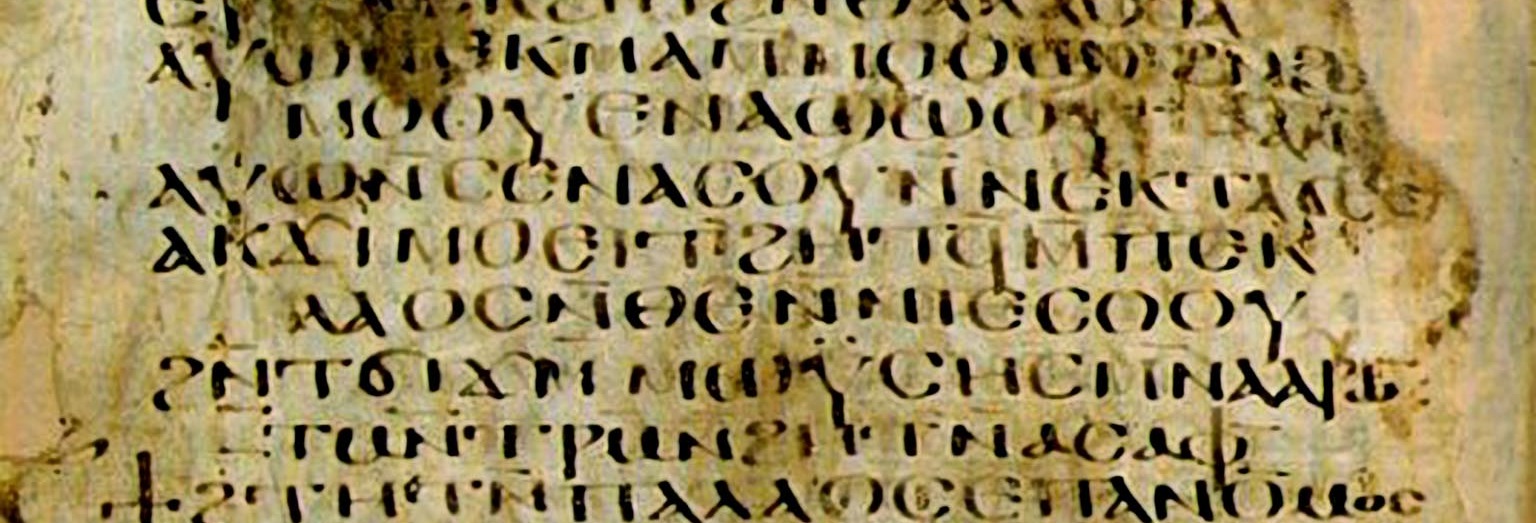
bible-greek-manuscript

ὁἀγαθοποιῶνἐκτοῦθεοῦἐστιν· ὁκακοποιῶνοὐχἑώρακεντὸνθεόν.

[ho agathopoion ek tou theou estin; ho kakopoion ouk heoraken ton theon.]

The one who does good is

[of/from/because of/in the manner of/apart from/part of/controlled by]

God.

The one who does evil has not seen God.

{3John11}

Forgive these fragmented and perhaps poorly-written or elementary thoughts. I write this post not to “show off my Greek” (today was the first I had opened it up in the past couple of months) nor to confuse people by talking very technically. I (hopefully) write this as worship.

I finished translating 3 John today. I’m starting with the shortest New Testament book and just continually trying to translate up to the longest. It’ll probably never be done, but it’s some sort of system, so it works for me. I always know what’s next so that’s helpful.

Anyway, like I said earlier, this was the first day I had gone back to 3 John in a couple of months. I only had a few more verses left so I quickly finished it and then started the first couple of verses of 2 John. I then began to shut my books and move on to the next item on my reading list when I realized something: I couldn’t even remember vaguely what I had translated in 3 John. I had been so concerned with just translating and “getting it done” that I forgot to even meditate or think on it.

I turned to my translation and looked over what I had written and the above verse popped out at me. So, I’m writing this as my act of both repentance for having this gift of the ability to translate and not using it to know God more, and as my act of worship, that I might explore some nuances in this text.

The problem with this verse is a problem common in any language: the preposition. That word εκ [ek] means any of the bracketed things above. Most simply, it’s translated as “of”, but the question always turns to “what does ‘of’ mean here? “Which of the myriad of possible translations does this mean? Well, you look at the context.

What I noticed is that whatever it means, it’s supposed to be a contrast to “The one who does evil has not seen God”. So whatever this “of God” means, it is in contrast with “not seeing God”. It also means that being “of” or “from” God is a matter of seeing him. To see Him is to be joined to Him, to be of Him, or to be from Him. I don’t know enough about Greek to make a definitive call about precisely which translation is correct, but this idea is enough for me: walking obediently so as to please God is a matter of seeing God, and those that continue in disobedience show that they have not.

The way this is phrased let’s us know that whoever is walking obediently can take no credit for this, because their obedience is of/from God. But at the same time, those that are still walking in disobedience bear the full weight of responsibility for their disobedience because they have not seen Him. It is a mystery that leads to God’s greatest Glory and our greatest joy.

So for those saints weary under the weight of their sin and disobedience, be encouraged: obedience and doing good is not a matter of striving and fighting your own will. It is a matter of seeing Him and therefore being joined with Him so that all our being, living, and moving is from/of/in the manner of God. Seeing and therefore being joined to Him through Christ allows us to move according to His nature and will. All disobedience, sin, and evil results from not seeing God. He is our hope. He is our salvation.

Let us therefore fix our eyes on Him, and run.

“bright as yellow” by David Schrott | Reform & Revive


One of my best friends and favorite writers (and photographers), David Schrott has finally broken his writer’s block to write another gem for the magazine.  So head on over to Reform & Revive and enjoy his prose and honesty.
Here’s the link to the article:

http://reformandrevive.com/2009/08/04/bright-as-yellow/

Remember to leave comments and send this link along to others!  Also remember that we’re always looking for submissions to the site so feel free to get in touch with me if you have any ideas.