Theology “versus” Pastoring | Ezra 7.11


This is a copy of the letter that King Artaxerxes gave to the priest Ezra, the scribe, a scholar of the text of the commandments of the Lord and his statutes for Israel:
Ezra 7:11

Well look at that! Ezra is described as a priest, scribe, scholar, and teacher of the Law (and, let’s not forget: a “doer” of it as well!). No false academic/pastoral dichotomies here!

See other Marginalia here. Read more about the series here.

We are descendants of the Covenant| Acts 3.24-26


And all the prophets, as many as have spoken, from Samuel and those after him, also predicted these days. You are the descendants of the prophets and of the covenant that God gave to your ancestors, saying to Abraham, ‘And in your descendants all the families of the earth shall be blessed.’ When God raised up his servant, he sent him first to you, to bless you by turning each of you from your wicked ways.”
Acts 28.23-31

In this, we see that we, the New Covenant People of God, are still members of the covenant that’s been in effect the whole time: the Abrahamic Covenant. It is not done away with; only brought under a new administration: that of Christ.

See other Marginalia here. Read more about the series here.

The beauty of God’s heart for us | Matthew 8.1-3


When Jesus had come down from the mountain, great crowds followed him; and there was a leper who came to him and knelt before him, saying, “Lord, if you choose, you can make me clean.” He stretched out his hand and touched him, saying, “I do choose. Be made clean!” Immediately his leprosy was cleansed.
–Matthew 8.1-3

Is this not our constant prayer? And is this not God’s constant answer to us?

See other Marginalia here. Read more about the series here.

How serious are you about ministering to your people? | Ezra 8.15-18


I gathered them by the river that runs to Ahava, and there we camped three days. As I reviewed the people and the priests, I found there none of the descendants of Levi. Then I sent for Eliezer, Ariel, Shemaiah, Elnathan, Jarib, Elnathan, Nathan, Zechariah, and Meshullam, who were leaders, and for Joiarib and Elnathan, who were wise, and sent them to Iddo, the leader at the place called Casiphia, telling them what to say to Iddo and his colleagues the temple servants at Casiphia, namely, to send us ministers for the house of our God. Since the gracious hand of our God was upon us, they brought us a man of discretion, of the descendants of Mahli son of Levi son of Israel, namely Sherebiah, with his sons and kin
Ezra 8.15-18

Here, you see Ezra refuse to settle for who he had before him. He was determined to see that the ministers to God’s people be the absolute most qualified people they could be. They had to be Levites. There were none there. Did he just throw up his hands and say that they had to “settle” for who was there and willing? No! He went out and sought qualified ministers.

See other Marginalia here. Read more about the series here.

The Saving Call of Christ: you’re already saved | Matthew 9.13


Go and learn what this means, ‘I desire mercy, not sacrifice.’ For I have come to call not the righteous but sinners.” —Matthew 9.13

 Notice here the emphasis. Evangelicals tend to stress how Jesus came to “save” (which he did, for sure). But Jesus here doesn’t day he came to “save” sinners. But rather to “call” them. I wonder if this speaks to the thought that salvation is everyone’s, and “evangelism” is more the process of calling people to be the saved people they are rather than to “get” or somehow “acquire” salvation. It’s a call to be something, not a call to get something.

See other Marginalia here. Read more about the series here.

Sin: God’s Favorite Part of Being God


sandorfi-le-pardon-wide

Lent is a time that we dwells a lot on Sin. It’s a preparation for Easter and celebrating the Resurrection, and so to prepare for this, we must meditate on those things that Resurrection itself addressed. Resurrection was a response to Sin and Death. The more we feel and dwell in the reality of our Sin and Death, the more tangible Resurrection becomes.

This can seem morose, annoying, unnecessary, or not in line with our identity as Christians. Should we do this though it might make us depressed, feel like self-focused navel-gazing, or if it distracts us from much of the rest of our Christian living?

There’s definitely a time and place for it and a degree after which it becomes unhealthy, but more than what this does for/to us or our emotional state, could I offer another reason that it’s good to have times where we bring our focus to our weakness and sinfulness?

God loves it.
Continue reading

#Marginalia Weekly Round-Up #2 [3/3-7/14]


Marginalia is a section of this blog dedicated to (mostly) short reflections, meditations, questions, and difficulties I have while going through my Bible reading plan. I generally post between 1 to 3 of these per day, which can be difficult to keep up with. To aid in helping people engage with these posts, every weekend I post a round-up of all of Marginalia posts that appeared during that week. This list is in biblical canonical order.

Haha. Such a great narrative turn. | Genesis 6.5-8

Haha.

Weirdest. Love story. Ever. | Genesis 29.10-12

The OT has some great stories to tell great truths. It’s love stories, however…

You marry a family | Genesis 29.13-14

In which the father of the bride says Adam’s marital vows to the future son-in-law.

Politics & Tithe | Ezra 8.35-36

Some interesting church/state arrangements here

The Economics of the Soul | Nehemiah 13:19-21

How capitalism can kill our souls.

Pastoring the Sabbath | Nehemiah 13:22

Here’s one pastoral task we often miss.

Esther is no Sunday School role-model | Esther 2.8-9

Turn on some slow jams and read this. Also be sure to catch the comments.

Esther & Political Advocacy by God’s People| Esther 4.3,8 [DOUBLE-HEADER]

This is why I started this series. Read this, and then read the comments. My mind was blown. Hopefully yours will be as well.

The Holy Spirit exorcizes, no matter who you are | Matthew 12:24-28

It seems the Holy Spirit shows no favoritism.

Love your neighbor…even other denominations | Matthew 22:34-40

Bet you never caught the context of this key verse….

Paul’s ministry thesis & maybe Theophilus’ identity? | Acts 28.23-31

We get a little deep into some reader-response literary criticism and biblical studies.

Preaching the Gospel to Christians | Romans 1:14-16

The Gospel. Is. Everything.

_________________

See other Marginalia here. Read more about the series here.

Politics & Tithe | Ezra 8.35-36


At that time those who had come from captivity, the returned exiles, offered burnt offerings to the God of Israel, twelve bulls for all Israel, ninety-six rams, seventy-seven lambs, and as a sin offering twelve male goats; all this was a burnt offering to the Lord. They also delivered the king’s commissions to the king’s satraps and to the governors of the province Beyond the River; and they supported the people and the house of God.
Ezra 8.36

Interesting line… Is this saying that they had people “on staff” who managed their civil tithe to the secular authority (taxes), and the lay people supported the House of God? Is this like tax accountants “on staff” among the leadership of the temple?

See other Marginalia here. Read more about the series here.

The Economics of the Soul | Nehemiah 13:19-21


When it began to be dark at the gates of Jerusalem before the sabbath, I commanded that the doors should be shut and gave orders that they should not be opened until after the sabbath. And I set some of my servants over the gates, to prevent any burden from being brought in on the sabbath day. Then the merchants and sellers of all kinds of merchandise spent the night outside Jerusalem once or twice. But I warned them and said to them, “Why do you spend the night in front of the wall? If you do so again, I will lay hands on you.” From that time on they did not come on the sabbath.
Nehemiah 13:19-21

Interesting economic implications. There was a real understanding of human nature that understood the power of economics on the human self. If you let the market or commercialism have any real presence among the people of God,  it destroys them, and invites God’s wrath upon them.  The market destroys souls. We cannot “un-economize”  our selves.  Hence Paul’s disruption of the Ephesians market when people are converted. This is essentially what the Pope wrote about recently. We can use the market to serve human flourishing, or we can serve it at the expense of that flourishing. Nehemiah knows the tendency of the human heart to serve economics rather than have it serve us,  so he keeps the merchants away from God’s people on the Sabbath,  when they should be re-syncing themselves with the Living God.

See other Marginalia here. Read more about the series here.

Lent & Ash Wednesday for Kids (….or maybe not)


rabu-abuLast night, my church had their Ash Wednesday service. I had the honor of helping lead the liturgy by offering the greeting and opening introduction/ explanation. Unlike most times we gather, the kids stayed in the service so I was asked to make sure my opening words were at least somewhat comprehensive to children.

This turned out to be one of the most helpful exercises for me. I ended up spending more time thinking through these brief opening words than I normally do and crafting each line as intentionally as possible. And so, for the heck of it, I thought I’d throw this up on the blog for anyone who was struggling with explaining Lent and/or Ash Wednesday to their young ones, and also to get your thoughts on how best to communicate this to kids. Here’s what I said:

(Lent: Two things hold us back)

Tonight kicks off the Church season of Lent. Most all of us live our lives wanting to be better people than we are right now. But if we’re honest, there are two things that can get in the way of that sometimes and make us frustrated as we try and become the people we want to be.
Continue reading

Pastoring the Sabbath | Nehemiah 13:22


And I commanded the Levites that they should purify themselves and come and guard the gates, to keep the sabbath day holy. Remember this also in my favor, O my God, and spare me according to the greatness of your steadfast love.
Nehemiah 13:22

It’s is part of the soul-care of the church leaders to safeguard the Sabbath rest of God’s people.

See other Marginalia here. Read more about the series here.

Love your neighbor…even other denominations | Matthew 22:34-40


When the Pharisees heard that he had silenced the Sadducees, they gathered together, and one of them, a lawyer, asked him a question to test him. “Teacher, which commandment in the law is the greatest?” He said to him, “‘You shall love the Lord your God with all your heart, and with all your soul, and with all your mind.’ This is the greatest and first commandment. And a second is like it: ‘You shall love your neighbor as yourself.’ On these two commandments hang all the law and the prophets.”

Matthew 22:34:40

I find it fascinating that this opens with the fact that the Pharisees were only respecting Jesus and calling him Teacher because he had smacked down their fellow Jews who happened to be in a different “denomination”. How often do we do this? How often do we latch on to a teacher not because God meets us in their  proclamation, but because they reaffirm our beliefs and/or put down those we disagree with? Fellow family members in the people of God, no less! How dare we?

This is why I find it brilliant that Jesus stresses the vertical in the greatest commandment, but he also throws in the necessity of loving our neighbors as well. Don’t miss this. He essentially adds a human-relational dimension to the Shema, one of the most beloved of Jewish texts! And so he incorporates how we treat others as just as essential as how we love God. When we don’t love those around us-especially the fellow people of God that we disagree with-we break the most important of commandments and fall short in loving our God.

See other Marginalia here. Read more about the series here.

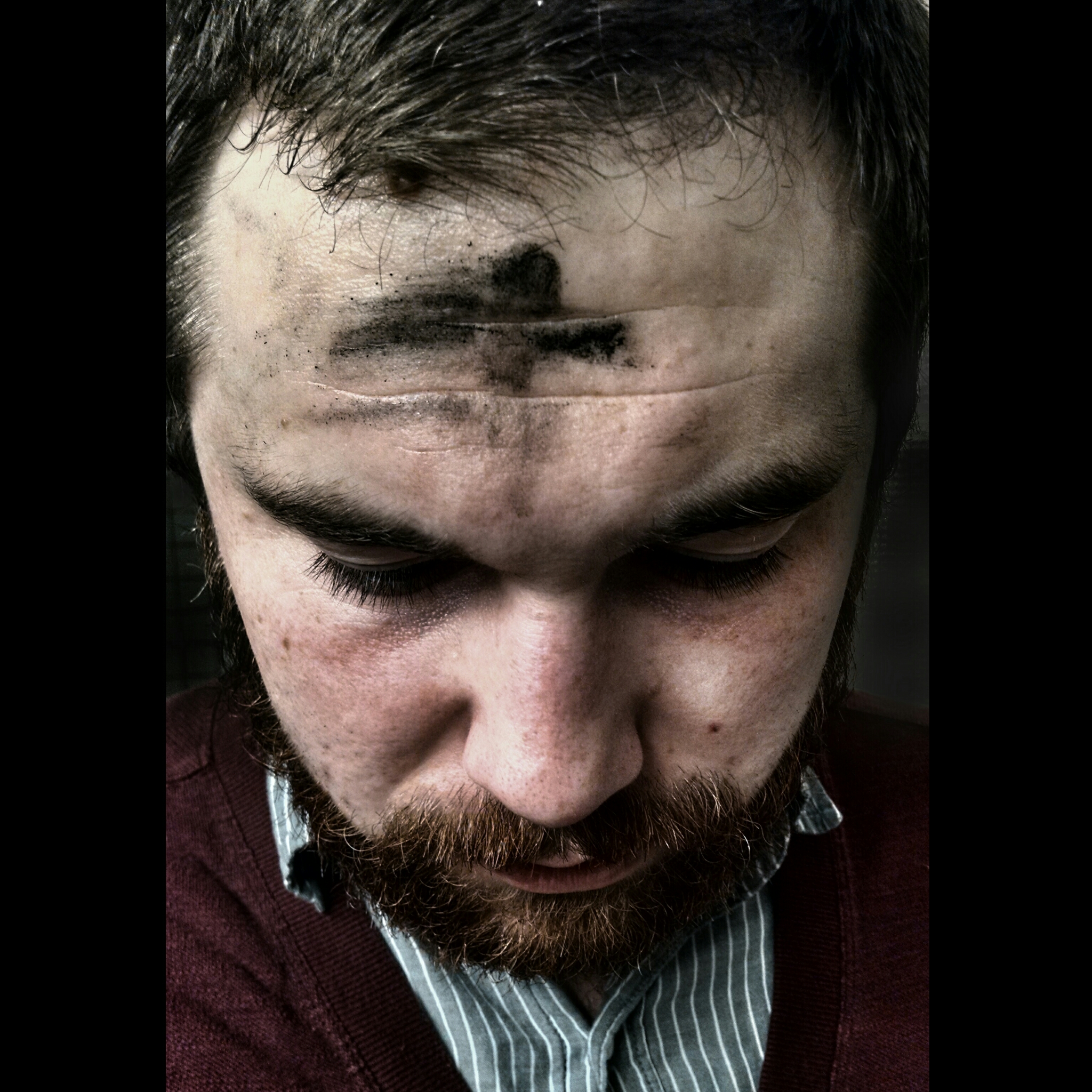
Ash Wednesday Benediction [POEM]


ash-wednesday-faces-of-the-faithful-photos

The shape of the promise is death 
Say the word, feel the space, build the coffin in your mouth
Climb inside and make it yours

For it is

That tomb washed white, emerges in life,
enslaves in death, watches the end

agape

Expiration exorcism, cast the spirit, cast it low;
Cast your eyes and feel the blow
Cast the lots

Carve the promise into your bones, your forehead

Let your face shine with Moses glory: that of the immortal God
–that suffering, dying, ashen glory-story

May your face shine with Ash
As you wear the world’s judgment embedded in your skin, in your body,
May you feel the world’s death in your face, may you hold it before your eyes

May the flame that licked the palm find its end in you.
Bear the flame the world shall never know, precisely so it never will

Take their judgment and rub it on our faces and cast it to proclaim

Lift up your eyes

Wear it loud

The shape of the promise is death

[read my other Holy Day poetry here]
all writings licensed: Creative Commons License