Catholics Aren’t Crazy: On Praying to Saints (Happy All Saints’ Day!)


This is a post in an on-going series called Catholic Aren’t Crazy exploring misconceptions Protestants have about Catholicism and lessons we can learn from them.

UPDATE: I responded to some critiques and gave some clarifications.

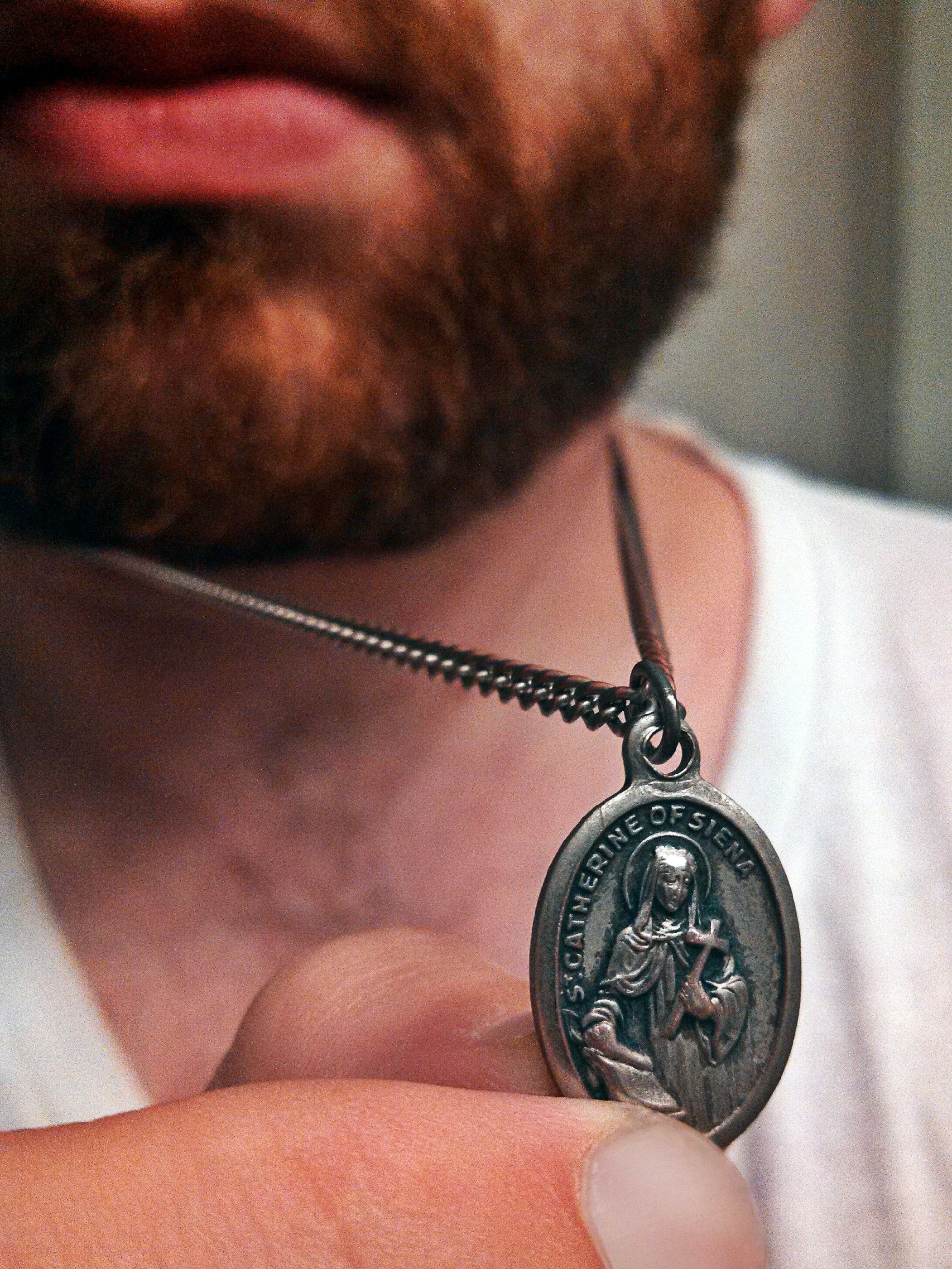
UPDATE II: Here’s the story of the Saint I pray to, Catherine of Siena.

Yesterday was Halloween. That makes today All Saints’ Day (read more about the history of these holidays in yesterday’s post).

All Saint’s Day has taken on different meanings for different groups of Christians. What seems to stay consistent, though, is that it is a celebration of the victory attained by those faithful Christians who have died. They are no longer pilgrims, as we are, but are the triumphant ones, having finished their race well and been brought into their peace with God. We celebrate Christ’s effectual victory over sin and death and that this has been granted to those that have gone before us.

The hope and encouragement in this holiday is not simply that we “remember” these saints, or meditate on their example. Instead (and this is important), there has been a long-held belief in the Christian Church that we still have a mystical communion and relationship with those saints that have already died. When Christians throughout Church history (and the Bible) have referred to “The Church”, they don’t simply mean those still around today, but all the saints who have ever lived (even in the Old Testament!). We are all the Church.

So we can truly celebrate those that have gone before us because we are truly still connected to them in a very real and vibrant way.
Continue reading
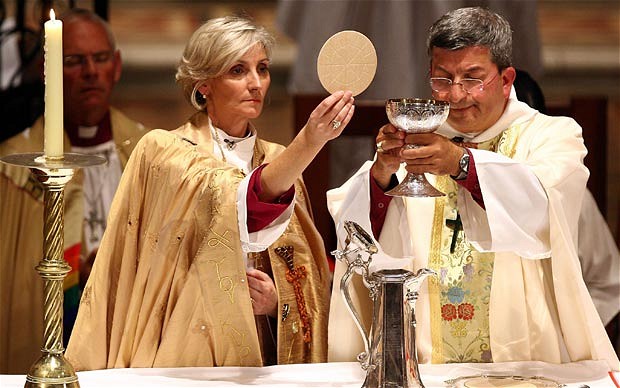
So, some women were ordained last week and…it wasn’t that exciting.


female-woman-bishop-anglican-communion

This is a post in our on-going series on Women in the Church.

The past week of my life was filled pretty heavily with church stuff. First, my church hosted our denominational meeting for those churches in our church family that are in cities. They talked about new developments in my seminary program, gave updates on the health of current church plants, adopted the 2014 budget, and ordained and commissioned new pastors to serve in churches across the country. It was a day and half filled with theology jokes, family talks, overdue introductions, and post-meeting sessions of cocktails and cigars on the front steps of the church.

Second, as I mentioned last week, my church spent yesterday celebrating it’s maturation from a “church plant” (a church that still relies on other churches for most of its support and leadership) to a full-blown self-sustaining, self-leading church. My parents came in town, the music was loud, the sermon was great, and we had a large block party after the service with a moon bounce, chili cook-off, and homebrew contest (the bourbon barrel stout won, by the way. It was called “The Nord’s Wrath”).

It was great, and it will be a block of days I will not soon forget.

Continue reading

The Best Communion Prayer my Church has ever had


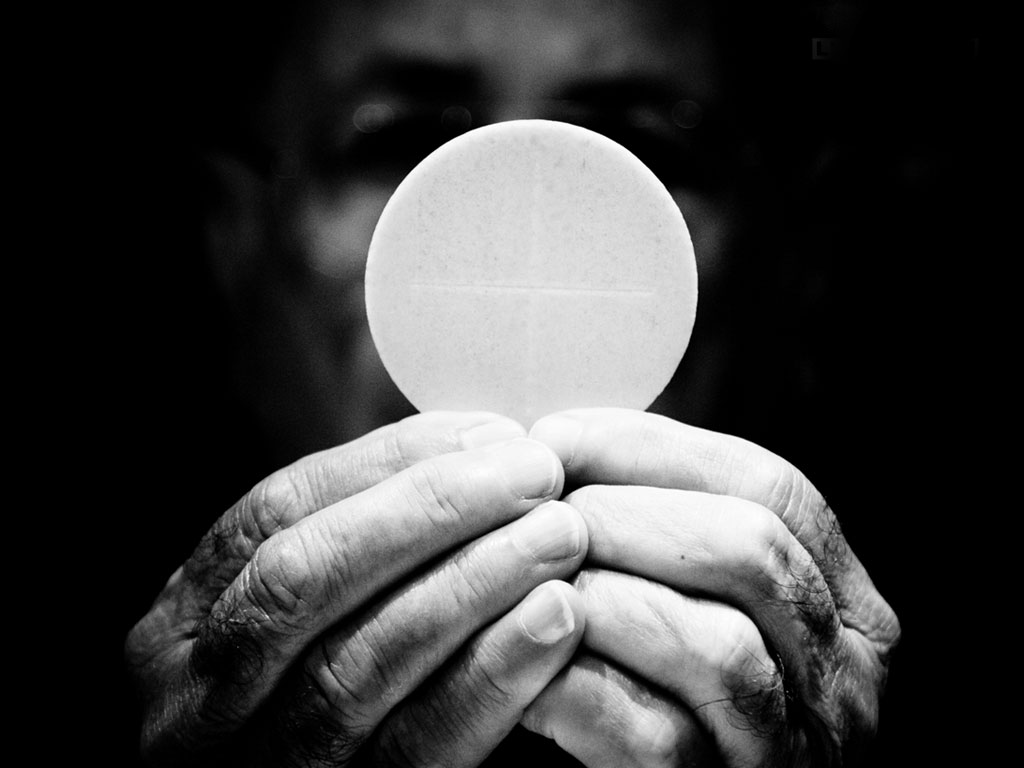
eucharist-bw-waferFather, your table proclaims to us your undying love for us. This table tells us that you do not simply endure our presence. This table tells us that you delight in being with us. You have invited us to feast in your presence.

So we have come to eat and drink deeply of your love for us. May we interpret our lives through this table. May we understand that we are a people with whom you are well pleased. May this reality energize us as we move into our world. May we live out our lives as your deeply loved, anointed children. Fill us with joy as’we labor for you in this world. Amen.

Liberti Church, 10/20/13

Karl Barth: Our Freedom, Our Home, & God’s Directing [AMAZING QUOTES]


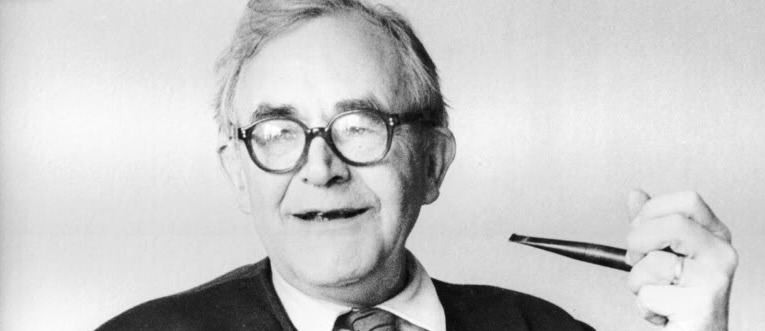
karl_barth crop

I’m writing this long paper on the ancient Christian Practice of Discernment. In my research, I pulled out some Karl Barth, my favorite theologian (hands down), and got to soak in the beauty of these words, and I wanted to share them. Now, for people that don’t read “real” and “proper” theology, this is it. It’s circular, it repeats itself, and it’s unnecessarily complicated and unclear. I know. I get that. But I promise, if you can spend a few minutes, quiet yourself, and focus, I promise the pay-off is huge. This guy stands as a tower over all of modern theology and deserves more attention than he gets. I’ve done slight edits to some of the wording and paragraph breaks for clarity. Enjoy.

* * * * * * * *

God’s direction is an all-powerful decision, His own divine act of lordship. By this means, too, God vindicates His honor and maintains His glory. By this means, too, He exercises authority….

God’s direction is the directing of humans into the freedom of His children. It is this which has taken place in Jesus Christ no less uniquely than the once-for-all fulfillment of the divine sentence on all humanity. In suffering in our stead the death of the old nature, and bringing in by His resurrection the life of the new, He has made room for the being of all humanity to be at peace with God.

On the basis of what we are and is not by virtue of the divine sentence passed and revealed in Jesus Christ… we have no other place but this—the kingdom in which God can be at peace with us and us at peace with God. Jesus Christ…is the all-powerful direction of God to us to occupy this place, to live in this kingdom. If we are told in Him who we are and are not, we are also told in Him where we belong, where we have to be and live.

Continue reading

Good Morning (prayer)! [photo sermon]


ultimo-coffee-cortado

Each week, WordPress has a Weekly Photo Challenge, where they give a theme and invite people to highlight photography representing that theme, accompanied by a few meditations on it. OccasionallyI try and write a “photo sermon” or meditation based on those themes, accompanied by a photo of mine . This week’s theme is “Good Morning“.

* * * * *

In one of those oddities of tire human condition, I love sleep, and yet I avoid it like the plague. I have a terrible sleep schedule. My sleep pattern is a microcosm of my lack of discipline in many parts of life, and maybe even an extremely low level of self-harm, where my body and heart wouldn’t really know what to do if it were consistently well-rested. There’s something about a constant weight of tiredness that—maybe—makes one feel “productive”, even as it steals productivity away from you.

This is a lie. I know. I’m working on it in therapy.

In some Christian circles, people claim “life verses” for themselves; bits of the Bible that they feel speak to them so deeply that the words amount to a blanket summary, call, encouragement, guiding principle, or telos to their life. People usually pick a “life verse” that speaks to what they want their life to be or how they want God to work in their lives.

Continue reading

“Coffee Crucifix” (a sonnet for National Coffee Day)


Coffee Crucifix

Crescent ring under porcelain smooth
___stain the wood-stained finish.
______(It is finished.)
___Marked with muddy water;
___mark the merry day; to
___marry the murdered man.

Floral notes in blackened waves
___crash the shore of trembled lips.
Choral bright, in darkest night,
___wake the tone of trebled kiss.

Younger tastes left open-wide; older eyes made
satisfied.

Mark the wood: complex simplicity.
Pierce my heart: storied infinity.

[read my other Holy Week poetry here]

all writings licensed: Creative Commons License

What is Discipleship? A Definition.


discipleship-silhouette

For one of my spiritual formation classes, I had the privilege of reading Deitrich Bonhoeffer’s Life Together and Henri Nouwen’s In the Name of Jesustwo incredible books. Last night, after having read these books, we were then asked to offer our own one sentence definition of Discipleship, and then spend some time expounding on the definition. Here was my contribution. Feel free to add your own definitions below.

______________________________

Discipleship: The cultivation of an inner and outer life–with both ourselves and others–that is marked by a humble reliance on the work, words, life, and leading of Christ and His Spirit.

The thing that struck me most about these readings as it pertains to discipleship was the weird paradox of one’s inner- and outer-lives. In both Nouwen and Bonhoeffer, there is such an emphasis that our hearts’ goal should be nothing less than the heart of Christ Himself and our reliance upon it. And yet, the primary access point to this Heart is found in the simple, mundane bodily actions we take upon ourselves with regularity.

The way in is from without, I suppose.

Especially for those of us in seminary and who minister in a Church context, isolation in these endeavors can be such an easy temptation. I don’t even pastor a church, and yet as a deacon leading a home group or class or the Sunday liturgy, I feel that damnable desire just to be liked, and not be seen for who I really am.
Continue reading

Sacred Autumn [GUEST POST]


autumn-western-pa2

This is another piece by my good friend Austin, who has written here before. You can also read my own, similar meditation from last year on what Autumn can tell us about our world and our God.

This month, we’ll witness the change of seasons. These liminal times, these times between the times, always put me in a mood of reflection. The approaching season is my favorite. It’s appropriate that it, unlike the other seasons, should be honored with two names—Fall and Autumn. And what about that?

Autumn is a noun, meaning cold. The word is anything but. It’s a beautiful word to look at, beautifully spelled. It’s a nice word to say. Think about how your mouth moves when you articulate it. Isn’t it like offering a kiss to something, someone? And didn’t Saint Paul say to greet the brethren with a holy kiss? That’s how I plan to greet the coming season.
Continue reading

Discipleship: Making Good Little Pharisees?


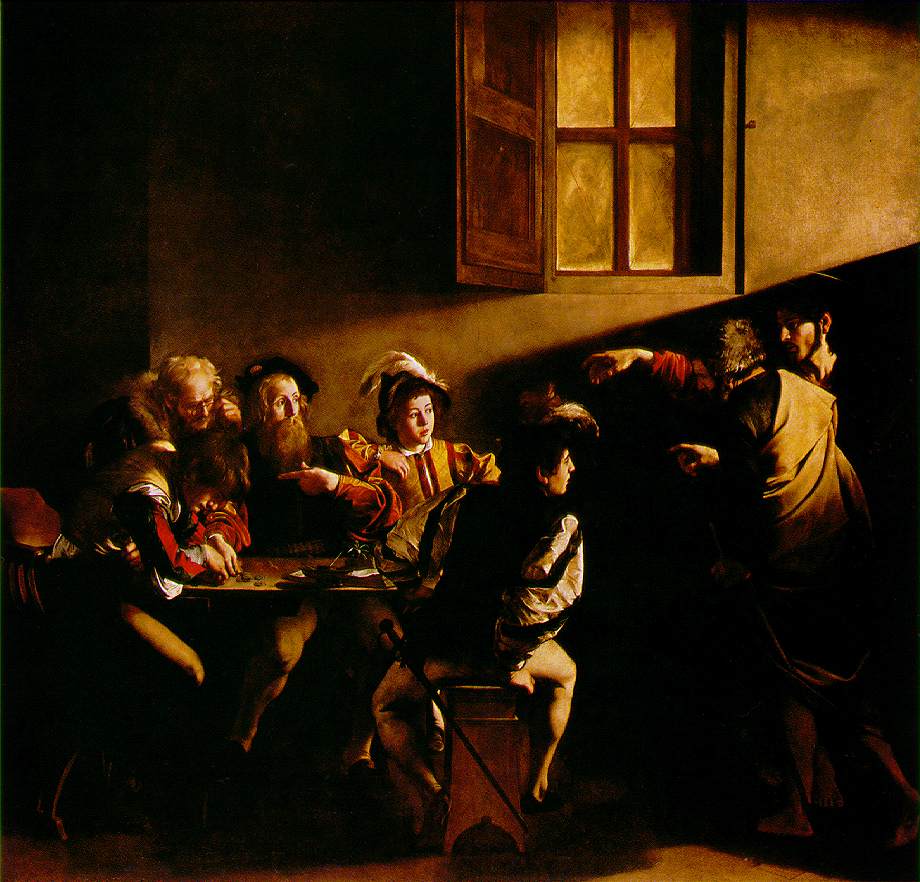
Caravaggio-The Calling of Saint Matthew{summary: the way we disciple others in the church is far too often a results-based process, and not a grace-driven one. Here, I explore Jesus’ example in Matthew as a guide for us. And, once again, we see Jesus’ radical application of grace to his Disciples’ lives.}

I’m taking a class on “The Practice of Discipleship”. Some discussions on our online message boards inspired these thoughts. Discipleship, as many people could tell you is all about “following Jesus”. After all, that’s how Jesus himself invited his disciples into it. But as I was thinking about this, I realized something: Pharisees had disciples too.

Now, with “Pharisee Discipleship” the point was to let that Pharisee get all up in your business so that you could become a good, well-behaved Pharisee someday. Christian Discipleship, as we are often told, is not about following Christians per se, but following Christians who are following Christ. The ultimate goal is to follow Christ and to help one another do that.

This is how it works in theory. I can’t speak for everyone, but at least in my experience, a lot of Christian Discipleship subtly looks more like the type that creates well-behaved Pharisees than the one that truly follows Christ.
Continue reading

A Christian Pacifist’s Lament for Syria, with help from Quakers


Godwin-untitled-sketch-bw-cropped

{summary: Though I consider myself a pacifist and consider force as something that goes against the Kingdom of God, I feel that governments, because they are not the Kingdom of God will always fall short of that and have a necessary level of sin in them. And so, for the sake of a greater good, I would not speak against my government using military action in Syria (though I wouldn’t say I’d explicitly “endorse” it).}

As many people have been doing, I have been snarkily criticizing President Obama’s pursuit of making an attack on Syria. It seems too pointless, too risky, too naivetoo counter-productive, and too lonely. I had felt sadness over the plight of Syrians, but while the rebel forces are over-run by Islamic radicals and terrorist groups, I haven’t thought that empowering, arming, or making their victory certain was better in the long-run. (If you need a refresher on the details of the Syria situation, this is a great one.)
Continue reading

A Brief History of Liturgy (for those interested)


emergent-tree-house-churchYesterday, I posted some brief thoughts on liturgy and how it shapes us.  Those words were primarily taken from a document I wrote up a few years ago to train those leading liturgy. Today, I wanted to post another little section from that piece, going through an extremely brief history of liturgy in the Bible and how it developed in the early church.

Liturgy in the Bible

We see fairly early on that God intends for there to be a definite pattern or shape to worship among his people. He spends chapter after chapter talking about both the space and structure of the worship of the Israelite people in both the Tabernacle and the Temple. This continues in the Jewish community even today.

But at this point in the story of the Bible, the fullness of all that God will do to bring about our worship is incomplete, and so this worship is merely anticipatory of something that is to come. But throughout the Bible we get glimpses of a definite pattern to how God relates to his people–to how this story will eventually look in it fullness. This story–this pattern–is what forms the structure of our liturgy even today.

Throughout the Bible, repetition of form and phrases is used to shape the people of God. In the Psalms, the same phrases are used over and over again in the music. In the Old Testament, verses from other parts of it are meditated upon and repeated for worship.
Continue reading

Postscript: J. I. Packer’s Helpful Evaluation of Praying in Tongues [QUOTE]


ji-packerI just have one more thing to post in this little series on my charismatic sensibilities. Yesterday, when writing about praying in tongues, I quoted from this long piece that J. I. Packer (the spry man to the left) wrote evaluating the charismatic movement as a whole. It’s a heavy article, but if you get to his conclusions, they are very interesting.

Packer is a Reformed Anglican, and believes that the “sign” gifts (the “extra-crazy” works of the Holy Spirit) have now ceased and were only used for a time to “get the church going” as it were. (If it weren’t clear, I think this designation of “sign gifts” is incredibly arbitrary and I think you have to twist the Bible backwards to prove that these things simply stopped at some point in time. I think they are still very much with us, however neglected they may be.)

But still, he is incredibly gracious to the charismatic movement and sees it as a legitimate expression of God’s people seeking a greater communion with him, and even believes that they need to teach the old Reformed fuddy-duddies (is that how you spell that?) a thing or two. I found his comments particularly on tongues especially delightful, and I thought it would be a fitting post-script to these posts I’ve been writing on my own charismatic side. The paragraph breaks in this quote are my own, for ease of reading. Continue reading

Charismatic Confessions, pt. 3: Praying in Tongues for Everyone!


flickr-sculpture-worship-kiss

{abstract: “Praying in tongues” is not really a “gift”, but rather a way in which God makes Himself known, and we commune with Him. Therefore, I believe it’s open to all of us, not just those with a “gift”. It is a sacramental, physical participation in the “real presence” of God praying within you. It may very well be random and not a “real heavenly language”, but nevertheless, God is sacramentally mediated to us in it. I conclude by offering some brief practical encouragements.}

Last week, I started writing some posts in response to a New York Times piece about research concerning the practice of talking in tongues. I wrote about how this piece reminded me of my own charismatic side and how I’ve been neglecting it. I then talked about my views concerning the use of tongues in a corporate Sunday church context. Today, I want to give people a realistic and (hopefully) sensible framework for understanding the private use of praying in tongues.

Continue reading

Charismatic Confessions, pt. 2: Tongues Don’t Have to be Weird


peter-preaching-statue{abstract: The Bible talks about two types of tongues that take place among the Church: speaking in human languages that get translated, and speaking a “heavenly language” that sounds like non-sense and an interpretation is given. The apostle Paul encouraged people to prefer speaking in regular human words rather than tongues, and this practice turned into the later historical practice of rooting authoritative Church speaking in Bible-based sermon preaching. Paul then encourages, and I have embraced, that we move speaking in tongues away from a corporate church usage and a private, prayer one. The next post will talk about praying in tongues.}

UPDATE: Part 3 is up, where I talk about the what, why, and how of individual praying in tongues.

Yesterday, I got thinking about my charismatic past. I mentioned an Op-Ed piece in the New York Times about recent research on the phenomenon of speaking in tongues. This got me thinking about my own charismatic past and experience of these sort of things, and reflecting on how little a part of my life those things are now. Except, that is, for personal praying in tongues.

A couple of nights ago, I raided my bookshelf and pulled down every theologian that may have said anything about this phenomenon and looked through all of them. Every person said something different. There are so many different opinions about tongues. I don’t write this post to sort out this issue or give a definitive account or defense of where I land. I just want to introduce some people to this idea who might otherwise be weirded out, strongly against it, or don’t really know what to think about it.

Continue reading

Confessions of a Lapsed Charismatic, pt. 1


Grace-words-mouth-poetry-psalms

{summary: Though rooted in a Reformed tradition that usually spurns this, I am very much a theological charismatic. I believe in the full, contemporary exercise of the Holy Spirit through his Church, including all of the manifestations this has had throughout Church History. And yet, though I “believe” these things, over the past few years, they’ve played a smaller and smaller part in my life. In this piece, I reflect on that.}

UPDATES: Part 2 is up, where I go through a brief history of tongues in a corporate church context. I’ve also posted Part 3, where I focus in on the why and how of individual praying in tongues.

Several days ago, the New York Times had a wonderful Op-Ed piece called “Why We Talk in Tongues“, by a researcher who is exploring this phenomenon. (It was also appropriate, as it is still sort-of, but not really, still Pentecost.) The piece seems to have been pretty popular. Playing around with Google Trends a bit, it seems that this article made the topic of talking in tongues more popular than it has been since “Speaking in Tongues” by Justin Bieber popped up on YouTube a few years ago. This article made the topic more popular than even Megan Fox’s revelation that she speaks in tongues (and is still a practicing Pentecostal).

It got some play all over my Facebook feed, and a couple of friends asked for some of my thoughts. That they asked for my opinion was both flattering and dismaying; it reminded me of how little I talk about this part of my spirituality among my church community.

I remember years ago, when I first found my church in Richmond, Virginia, right at the end of my first semester in college. I walked into this special evening service and I immediately knew this was where God wanted me. I joined the church and was exposed to a beautiful display of charismatic theology.

Continue reading