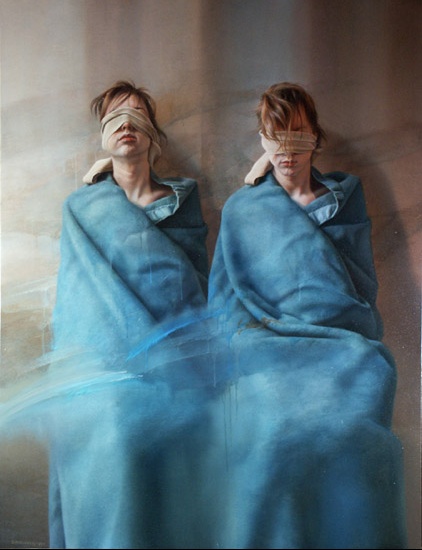
I like answers better than questions {a reblog}


Here’s a return to some more meditative reflections on God and life by Kimberly Novosel at The Ooh La La Life. This is so true of me. It was an encouragement to be reminded. (By the way, I posted similar thoughts about a year ago in my post: “to “why?” is human, to “what” is divine“)

Kimberly Novosel's avatarThe Ooh La La Life

A year or so ago I sat down with the counselors from my church, freshly broken-hearted, folded my hands in my lap and said, “Ok, how do I heal from this?” I may as well have had a notebook and pen, poised to take rigorous notes. They looked at me for a moment and, ever so gently, pointed out that there is no checklist for sorting though emotions. Even further, they handed me a page listing the stages of grief and pointed out that they would NOT happen in order, some would last longer than others, and they would repeat an unknown number of times.

I guess I wasn’t their first type-A.

It’s true though, there is no path through the sometimes dense and dark forrest of the things we struggle with in life, whatever they may be. Not even a winding path – no path at all. You have…

View original post 258 more words

Christianity: paradox & Paradise, fall & Fall


I had the privilege of spending a long weekend these past few days in western Pennsylvania under the kindness and hospitality of my girlfriend and her family. It’s a place that is hard to describe without falling into cliches of big sky, clear air, and bright stars. It’s near the area that Johann Jacob Burkhardt, my first ancestor in America, settled in 1754 after sailing from Germany and landing in Philadelphia exactly a week ago today. I made almost the exact same trek as Johann and his family, from the rivers of Philly to the rural countryside of unsettled Pennsylvania.

Strangely, in the rest of Pennsylvania that I have seen, the trees are still mostly green and just starting to turn for the Fall. But here, this weekend marked the peak of that beautiful transition. The pictures above and below should testify to this (click them for larger versions). They were taken only a couple of days ago–with my phone (fun fact: the picture directly above this text was taken from Mt. David, the highest point in Pennsylvania).

I can’t express to you the beauty my eyes and soul were able to behold.
Continue reading

Leviticus & the Political Season [GUEST POST]


Here’s another great guest post by my good friend Austin Ricketts. I love the perspective he brings to this topic. Enjoy.

Politics are difficult to escape during the Fall season.  Autumn is my favorite season, but I am irritated nearly every year with all of the political ranting and raving.  There is a point up to which politics is necessary.  Whenever you’re dealing with a group of people, be that group small or large, you’re already in the realm of politics.  Politics, in its best light, is all about establishing order and good behavior.  These are good things.  So, why do these good things bring about so much chaos with a lot of bad behavior to boot?

Perhaps we all need to be reminded of the fruits of the Spirit.  Those fruits are of the greatest importance, especially in times when differences of opinion and conviction are brought to a head.  Yet, it’s these fruits which are conspicuously absent at these times.  More often than not, people prefer the forbidden fruits of bitterness and condescension.  Fallen in sin, we all gravitate toward these forbidden fruits just like our ancient father and mother did.  We have always to be on guard.
Continue reading

Weekend Photo Challenge: Near & Far


Last week, I introduced a new weekend feature on the blog where I post a picture of mine and talk about it as a part of WordPress’s weekly “Photo Challenge” (see the bottom of this post for more information).

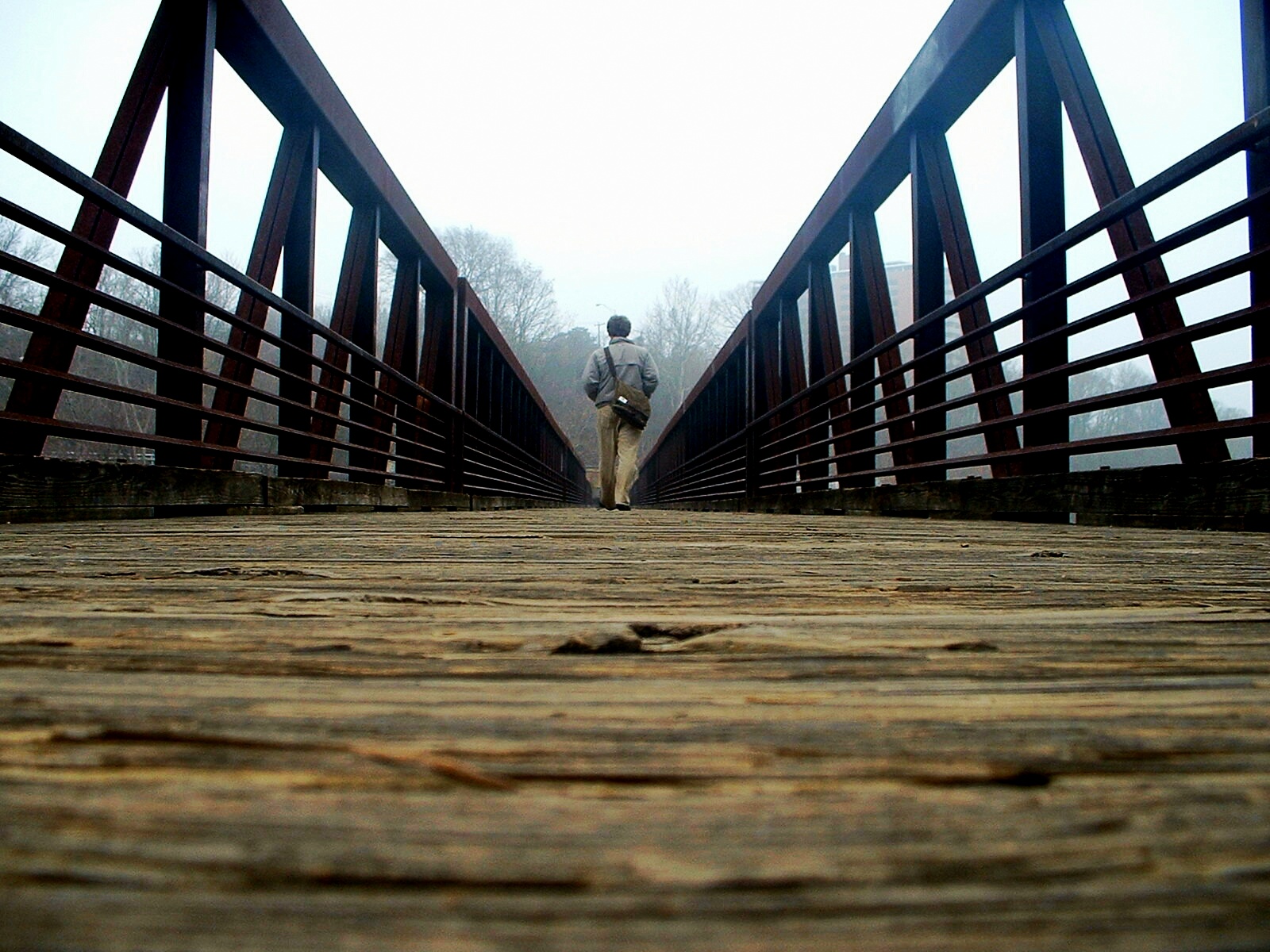
This week’s theme is “Near & Far“. The challenge is to use perspective to create a three-dimensional space in your two-dimensional photo and “literally suck in the viewer”. So’ I’ve chosen the above picture.
Continue reading

Weekend Photo Challenge: Free Spirit (a new weekly feature)


Today I’m introducing a new weekly post I’ll be doing. WordPress, the site that hosts this blog, has a weekly “Photo Challenge“, where bloggers are tasked with finding (or taking) a picture that captures a certain theme. See the bottom of this post for more information.

As my Facebook friends know, I do love taking pictures and trying to make them as beautiful as possible. And so, when I saw this today, I decided to begin this weekend featurette. The “challenges” are posted on Fridays, and so I will post mine over the weekend. Some weeks I might take a fresh picture, other weeks I’ll try and find an old one. I’ll post it, and tell a little bit about it.

Today’s picture is a really special one to me.
Continue reading

Using the Bible to Meet with God


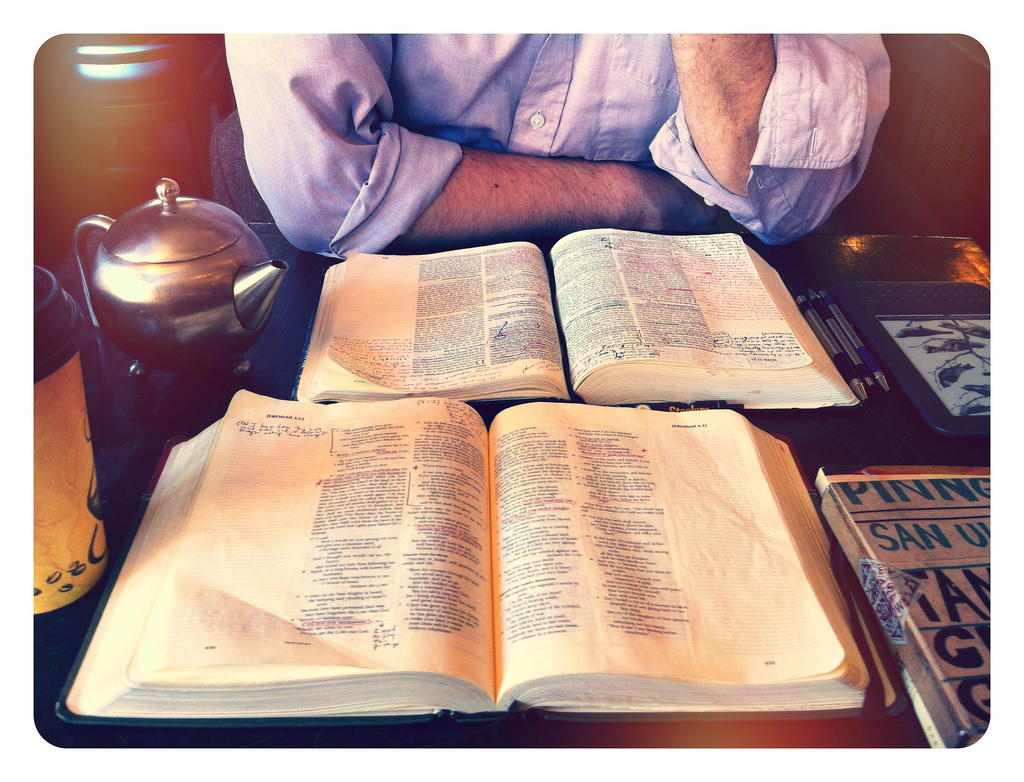
Last week, I asked a bunch of you how you go about using the Bible and the study of its contents to actually nourish your soul and meet with God. I got some great responses both here and on Facebook. This week, I wanted to put up how I ended up approaching this during the class I taught at my church. It’s super short, not very deep, and much more can/should/will be said. For what it is, I hope it’s genuinely helpful and speaks to how we might meet God through the Scriptures.

How do we move from the Facts of the Bible to the God of the Bible? From knowing the Bible, to knowing the Person? From Scripture being informational to formational?

The Meeting Place of God

As I said in the first class I taught, the Bible is not the passive “Revelation of God”. It is the place through which the Holy Spirit actively “reveals God” to us. When it comes to the Bible, we should start thinking more in verbs, not nouns. The Bible is “simply” a meeting place for God and his people, where he might meet them as he desires, by His Spirit.

When we meet God in Scripture, its the convergence of four things: Us and our faith, God and His Spirit.
Continue reading

How do you use the Bible and Bible knowledge in your spiritual life? [OPEN MIC]


This weekend, I will be teaching the last class in my six-week Bible Survey class at my church. I want to end the class talking about how to use the Bible (and especially the knowledge gleaned from the class) in one’s personal (and corporate) spiritual life. How does the Bible actually function in a believer’s life to cultivate a dynamic, deep, and intimate relationship with Christ and the Holy Spirit? I have my own thoughts on this, but I want to hear from all of you. So here are some questions:

  • Do more Bible “facts” actually have a direct impact on your spiritual engagement with God? In other words, has studying the backgrounds of the Bible ever led to meeting God? How or why not?
  • What practical methods of immersing oneself in Scripture have been most fruitful to you spiritually?
  • How might people use the tools of Biblical Studies (commentaries, etc.) to treat the Bible formationally, rather than merely informationally?
  • For those that are oriented in such a way that they constantly want to know the context, background, history, date, etc. of Scripture, how have you been able to quiet all these questions in order to meet God?
  • Similarly, for those more “intellectually”-oriented, how have you been able to move beyond the intellect to engage other parts of yourself with Scripture?
  • How do we move beyond facts of Scripture to the Person of Scripture?
  • If (as I said in the first class, and other theologians have said) the Bible only “becomes” the Word of God as the Holy Spirit meets us during our engagement with it, what have been the most effective practical ways that you have invited the Holy Spirit into your Bible Study time?
  • In your experience, what have been some of the pitfalls in other approaches that are commonly endorsed by the contemporary church, or what are some of the realities that aren’t talked about often?
  • What would you say if you were me (haha)?

Feel free to respond below, in a Facebook comment, email, text, or phone call. Thanks.

the order of the cosmos; the chaos of our souls [QUOTE]


We have been to the moon, we have charted the depths of the ocean and the heart of the atoms, but we have a fear of looking inward to ourselves because we sense that is where all the contradictions flow together.

Terence McKenna

This is why, I feel, that Order had to take on Disorder, and order it within Himself: so that all things, though still in chaos, might find their rest in Him.

Visions of Arcadia: the most terrifying art exhibit I’ve ever seen


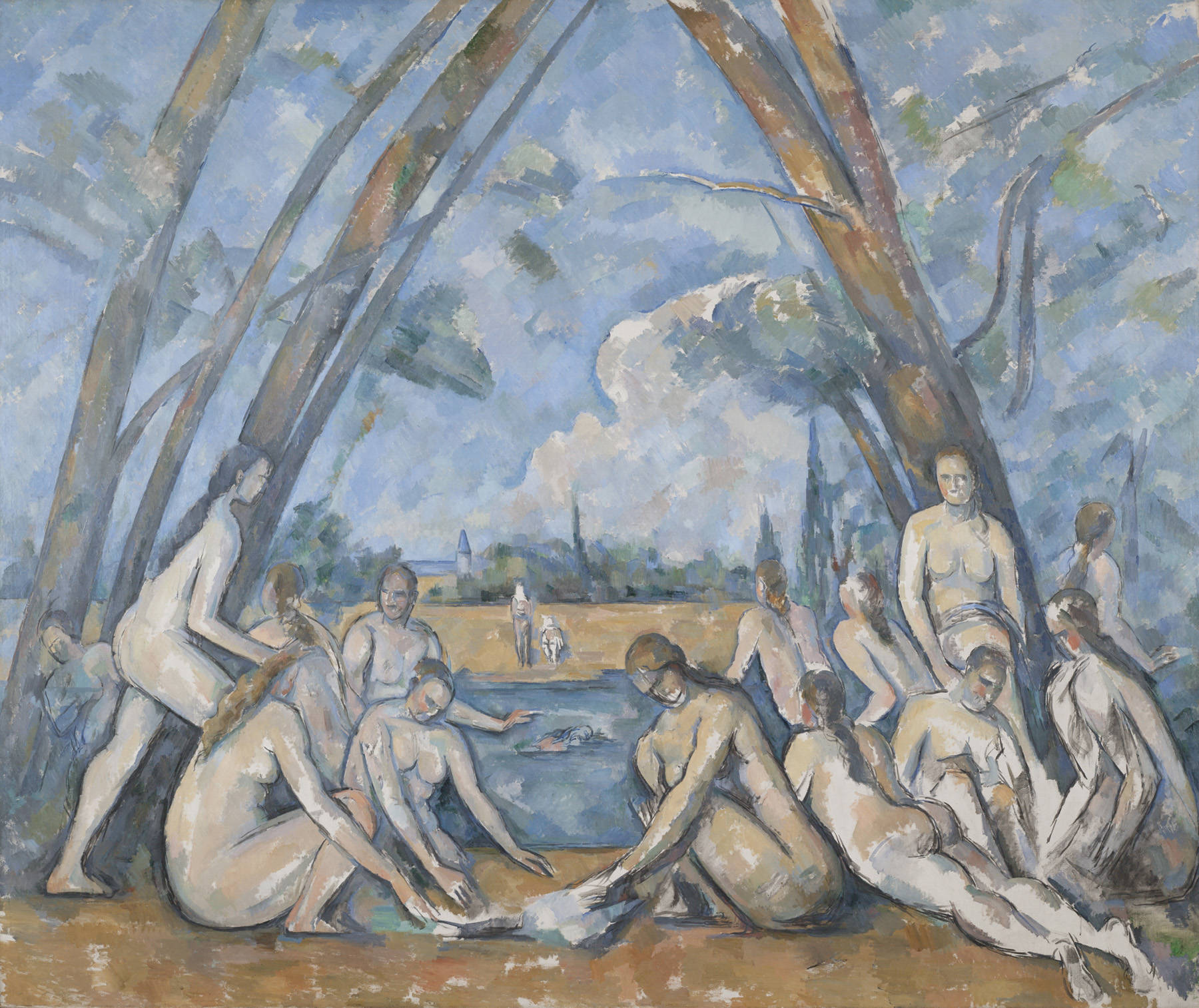
This weekend I had the privilege of seeing the Philadelphia Museum of Art’s new exhibit Gauguin, Cézanne, Matisse: Visions of Arcadia. The exhibit showcases works exploring the idea of “Arcadia“: an idyll pastoral world envisaged in Virgil’s first major poetic work Eclogues where nymphs and fauns dwell alongside Bacchus and Pan; where human dwellers exist in peace, rest, and joy in the natural world.

(To put it simply: you can usually recognize Arcadian themes at work in a piece of art when it has naked people hanging out in nature–usually around rivers.)

This image of Arcadia, having been explored in art epochs in the past, overtook art once more right as modern art was being born, right around the turn of the 20th century. In fact, the exhibit subtly makes the argument that this image of a rural, paradisal ideal is an essential element in modern art’s development. The modernists’ dilemma–the tensions between longing and reality, finding and losing, permanence and transience, human and mythic–all find their embodiment in this Arcadian world.

The exhibit begins with excerpts from Virgil’s poetic treatment of this theme, set beside works that visualized his words. These run along one wall. On the opposing wall of this introductory hallway, there are excerpts from Stéphane Mallarmé’s modernist treatment of Arcadia, L’Apres-midi d’un Faune, accompanied by pen-and-ink drawings from Matisse that visualize his words.

The exhibit is great, but very theoretical. It works subtly and on nuance. It’s not just a bunch of pretty things thrown into a room. Instead it is a thesis–an argument–in visual form. It watches a theme develop from myth to poetry to visual art (and then from Renaissance to modern) and explores how they are all connected and converse with one another. It’s really like no other exhibit to which I’ve ever been. If you get the chance, see it.

But that’s not why I’m writing today.
Continue reading

What do we make of the atrocities of the Old Testament?


This is a slightly edited version of an excursus I wrote in this week’s notes for the Bible Survey Class I’ve been teaching at my church. Follow that link for more information on the class. Also, I’m well-aware that the second half of this is exactly the “angle” talked about in the venerable Pete Enns’ recent blog post. I wrote this before he posted that, but still, I wanted to put it up on the off-chance this articulation might be helpful to others.

In the books of Numbers and Joshua, God commands the Israelites to commit genocide on many different people, including their women and children. He also commands them to forcibly enslave others. And in still another story, he commands Moses to take the remaining virgins of this particular people of which they disobediently did not kill all, and divide them evenly among the soldiers and the “rest of the Israelites”. We can only imagine what for.

A few quick thoughts:

Continue reading

I’m Obsessed with Myself (a blog fast)


I haven’t talked about it much (on this blog or to many people), but for the past 6 or 7 months I’ve been in professional counseling, primarily for anxiety (and it’s various outward expressions). There is a constant tension and busyness inside me that keeps me from living so many aspects of life. The counseling has been challenging, amazing, and painfully slow in the growth it has been producing in me.

But growth it has produced.

A couple of weeks ago, I decided to take a week off from the blog, somewhat as an experiment. That week, I experienced more freedom from the various expressions of anxiety in my life than I had for years. I began to experience once again that communion with Christ I’ve written about wanting before. I was reading his Word, praying, and serving those around me with such calm and freedom.

I then thought to myself, “Wow. That was amazing! Now, I can go back to blogging.” I came back to the blog all last week, and all the anxiety came rushing back with it.

Continue reading

MUST-READ: “Why I Will Not Divorce the Bible” by Jared Byas


My fellow former-Westminsterian (and co-author of a book I plugged a few weeks ago), Jared Byas, just posted an incredible blog post on his blog, Seeking the Good & Claiming it for the Kingdom. The post is called “Why I Will Not Divorce the Bible” and he articulates in such clear prose and winsome graciousness many of the thoughts and perspectives I have when engaging the Bible and then turning to engage the world around me.

Byas writes about how Evangelicals and theological “progressives” both end up devaluing the Bible and not truly respecting it or being “married” to it. He does a great job of exposing the reductionism of both sides as they use various techniques to keep the Bible at arm’s length so they don’t really have to deal with it as it is. (I’ve written similarly before.)
Continue reading

Compline: Now I Lay me Down to Sleep (for grown-ups)


I’ve taken to doing Compline devotions before I go to sleep. In the Church tradition of praying the hours of the day, “Compline” is the word used to describe that twilight space at the completion of the day, between evening and morning. Prayers and devotions for Compline are usually meant to be done right before a person (or couple) goes to sleep (perhaps even done in bed–that’s where I do them).

These devotions have helped mitigate that tendency in myself (which I’ve written about before) to try and ignore the voices of both God and contemplation within my heart as I end my day. These beautiful prayers give me a space that forced me speak to and with God and cry for mercy.
Continue reading

The Early Church: not so big on grace, so why are we so obsessed?


As promised, today Lore Ferguson, over at Sayable posted my second guest post on her blog, as she is on a sabbatical. My first post went up yesterday. Originally, Lore had asked me to write a post on grace. Ironically, this was the first post I wrote for her (almost an anti-grace article–even thought it’s really not). Anyway, I hope you enjoy it. Leave comments and, like I said yesterday, follow her blog. You won’t regret it. Here’s a preview of today’s post:

I grew up in a pretty stereotypical Evangelical setting, which led to a pretty stereotypical back-and-forth between guilt and self-righteousness. That is, until I heard the Gospel of radical Grace.

Many of us have this same story, where it has been so healing to hear that how God relates to us is not, in fact, based on our performance. Instead, everything necessary for God to be pleased with us has been accomplished on our behalf by his Son.

And so, in response to this, we fall in love with God’s Grace. We pray for it, long for it, and cry for it. We read books about it, write about it, and blog about it (I even did a five-part series on it myself). We try and speak it into others’ lives while trying to figure out why we don’t apply it to our own. We joyfully build our relationship with God on the glorious foundation of His Grace. It is fundamental, primary, and essential.

In short: we love Grace.

Imagine my surprise, then, as I fell in love with liturgy and forms of worship that were centuries-old, to begin noticing the utter lack of “grace” from the prayers and worship of the earliest saints.

Continue reading →

Thoreau on the Eternal God, made Present [QUOTE]


‎In eternity there is indeed something true and sublime. But all these times and places and occasions are now and here. God himself culminates in the present moment, and will never be more divine in the lapse of all the ages. And we are enabled to apprehend at all what is sublime and noble only by the perpetual instilling and drenching of the reality that surrounds us…The poet or the artist never yet had so fair and noble a design but some of his posterity at least could accomplish it.

Henry David Thoreau, Walden (via Austin Ricketts, who’s contributed to this blog before. My thoughts on this topic here.)