The Cross: eternal Beauty made present | Lent {2}


Earlier this week, I kicked off this year’s Lent series with a question.

This season, we’ll be meditating on the biblical idea that Jesus, in some mysterious way, was slain in eternity past. And so, I asked what this means for the Cross of Jesus:

Was it an eternal truth breaking into the temporal realm, or was it itself such a powerful event that it echoed backwards and forwards through the past and future?

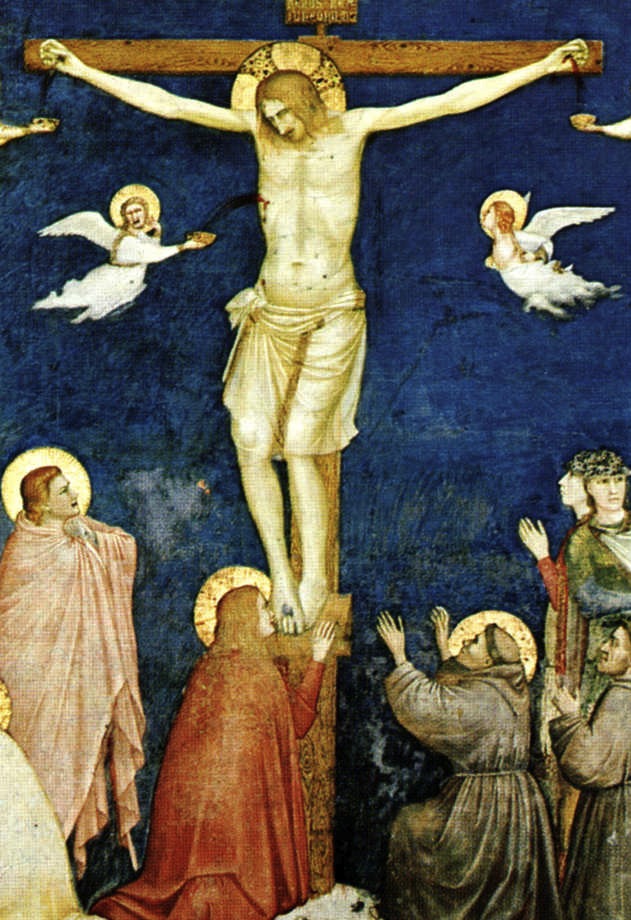
My vote? Jesus’ suffering and “slain-ness” is an eternal attribute of who he is, and the Cross was this aspect of the nature of God breaking into our reality. The Crucifixion was, in effect, God drawing the curtain back on a heavenly reality that had, until that point, only been hinted at.

I side with this for two main reasons: the essence of God, and the election of God.
Continue reading

prayer & reflections for Lent, wk2 (3.4-10.2012)


prayer for the day.

O God, whose glory it is always to have mercy: Be gracious to all of us who have gone astray from your ways, and bring us again with penitent hearts and steadfast faith to embrace and hold fast the unchangeable truth of your Word, Jesus Christ your Son; who with you and the Holy Spirit lives and reigns, one God, for ever and ever. Amen.
(from the liberti Lent & Easter 2012 prayerbook & the Book of Common Prayer)

Continue reading

prayer & reflections for Lent, wk1 (2.26-3.3,2012)


prayer for the day.

Almighty God, whose blessed Son was led by the Spirit to be tempted by Satan: Come quickly to help us who are assaulted by many temptations; and, as you know the weaknesses of each of us, let us find you mighty to save; through Jesus Christ your Son our Lord, who lives and reigns with you and the Holy Spirit, one God, now and forever. Amen.
(from the liberti Lent & Easter 2012 prayerbook & the Book of Common Prayer)

Continue reading

Lent: a silly Catholic ritual you should do [GUEST POST]


[Today’s guest post is written by one of my dearest friends and biggest theological influences, Austin Ricketts (pictured above). I’m trying to talk him into letting me post more of his stuff here. We’ll see. I hope you enjoy what he has on tap for us today.]

“Yet even now,” declares the LORD,
“Return to Me with all your heart,
And with fasting, weeping and mourning;
And rend your heart and not your garments.”
Now return to the LORD your God,
For He is gracious and compassionate,
Slow to anger, abounding in lovingkindness
And relenting of evil.
(Joel 2:12-13)

For many (probably most) Protestants in America, Ash Wednesday is just a silly Catholic ritual.  I would rather not start a debate about the historical fact that, without the silly Catholic ritual of the Eucharist or the silly Catholic ritual of Baptism, Protestants would not have the Bible that they have, nor the orthodox doctrines of the Trinity and Christ.
Continue reading

prayer & reflection for the beginning of Lent


prayer for the day.

Most loving Father, whose will it is for us to give thanks for all things, to fear nothing but the loss of you, and to cast all our cares on you who care for us: Preserve us from faithless fears and worldly anxieties, that no clouds of this mortal life may hide from us the light of that love which is immortal, and which you have manifested to us in your Son Jesus Christ our Lord; who lives and reigns with you, in the unity of the Holy Spirit, one God, now and forever. Amen. (from the liberti Lent & Easter 2012 prayerbook & the Book of Common Prayer)

Continue reading

Ash Wednesday & Lent 2012: how are you observing?


[For those in Philadelphia: the liberti church that meets in the Fishtown neighborhood is having an Ash Wednesday service tonight at 7:30. For those in Center City, I will be going to a 6pm service at the Church of the Holy Trinity right on Rittenhouse park. I hope to see you there.]

It’s Ash Wednesday!

(Here’s the prayer for this Holy Day that millions of Christians around the world are praying today–feel free to join them.)

Lent really is my favorite time of year. And Ash Wednesday is particularly special. We spend these weeks meditating on those ways in which we need God the most, and he meets us in it. As we lead up to the celebration of God dying and rising again, we meditate upon those reasons why he needed to come and do it in the first place–namely, that this world is not what it will be, and God took it in his hands to accomplish what was needed to get us there.
Continue reading

prayer & reflection for Ash Wednesday


prayer for the day.

Almighty and everlasting God, you hate nothing you have made and forgive the sins of all who are penitent: Create and make in us new and contrite hearts, that we, worthily lamenting our sins and acknowledging our wretchedness, may obtain of you, the God of all mercy, perfect remission and forgiveness; through Jesus Christ our Lord, who lives and reigns with you and the Holy Spirit, one God, for ever and ever. Amen.
(from the liberti Lent & Easter 2012 prayerbook & the Book of Common Prayer)
Continue reading

a beautiful quote on our security in the Incarnation (by T.F. Torrance)


The stark actuality of Christ’s humanity, his flesh and blood and bone, guarantees to us that we have God among us. If that humanity were in any sense unreal, God would be unreal for us in him. The full measure of Christ’s humanity is the full measure of God’s reality for us, God’s actuality to us, in fact the measure of God’s love for us. If Christ is not man, then God has not reached us, but has stopped short of our humanity – then God does not love us to the uttermost, for his love has stopped short of coming all the way to where we are, and becoming one of us in order to save us. But Christ’s humanity means that God’s love is now flesh of our flesh and bone of our bone, really one of us and with us.

— T.F. Torrance, Incarnation, 185

A good friend posted this on Facebook, and I just had to post it. It connects very well to a few of the Advent posts I did recently (namely the ones on Evolution, our Fallenness, doubting God’s “liking” of us, and how he makes us most human).

I’ve never actually read Torrance before, but I’ve heard a lot about him from people that were, at the time, reading his work. From what I understand, though, he is a theologian whose mind is brilliant and pen is beautiful–a combination sorely lacking in the Christian world today. I also hear that he is a theologian to which I would feel a certain affinity, so I look forward to reading more of him.

HAPPY ADVENT!! {10}


Well, it’s here. The day we’ve been building up to and meditating upon. This is the day we joyfully celebrate the King who broke into our reality and ushered in His Kingdom and our salvation by coming in the form of a little child.

Even though this time can be tough for some (my grandfather died a year ago tomorrow), I do hope and pray that we are all able to have at least one good laugh this year and see the smile of at least one person we love and that we know loves us. And eat good food. And drink good drink. And listen to bad, cheesy music. (On a side-note: the picture above is a picture of the wall-hanging that went up in my house every year as I grew up. And now I have it. I love it.)

Don’t worry, this isn’t really a whole other post. This Advent season has been an especially fruitful time for my writing (as my Facebook Wall obviously shows). I want to thank everyone that has been telling me how helpful these posts were–or even those that just told me they were reading them in the first place!. I can’t tell you how much it affects me, sticks with me, and encourages me. But anyway, I just wanted to write this post so I could put up all these posts in one place for you easy reading pleasure, should you so desire. Happy Advent!
Continue reading

There is No One Like You (Adv, Days 23/24; HelloGoodBye 09/10) by David Schrott [GUEST POST]


[Through college up through about a year and a half ago, I ran a little online magazine called Reform & Revive. It’s dead now. While it was going on, one of my best friends, David Schrott, was one of our contributors. He’s an amazing drywaller, photographer, writerperson, and boyfriend (also here, here, and here). This is a post he wrote for R&R back in 2009 at the end of a particularly trying year for him. It’s one of my favorite Advent meditations I’ve ever read, and so I wanted to share it with all of you. Enjoy.]

_______

“I want men everywhere to lift up holy hands in prayer.”
–I Timothy 2.8, NIV

There are these days, when it is so difficult to find words that wrap around concepts, that, no matter how concrete in one’s mind, find it impossible to find substance in the barrier we use to communicate called language. In those moments, it seems that experience does precede existence and existentialism, for a moment, seems fun (and fun is clearly the wrong word, but for to-day, for this beautiful-day-before-Advent, will have to do).
Continue reading

The Holy Sacrament of Advent {7}


There is an abiding idea and assumption that plagues us humans. It has come up at various times in various worldviews with various names. It’s found in the implications of what Zoroastrians called the conflict between “Asha” and “Druj”, what Plato called “Dualism”, Diogenes called “Cynicism”, first-century heretics called “Gnosticism”, Descartes: “Rationalism”, Kant: “Idealism”, Bacon: “Empiricism”, French Enlightenment-ers: “Materialism”, Modernists: “Realism”, Postmodernists: “Pragmatism” and “Constructivism”, so on and so forth through the ages.

The thing all of these ideas have in common is a separation between the material and the immaterial; the abstract and the physical; the temporal and eternal; the objective and subjective; the spiritual and the human. Further, they tend to elevate one over the other.

We can’t really escape this (I’ve written about this before).

One of the basic obvious tenets of finitude is that we can’t be in two places at once, neither physically nor intellectually. To perfectly hold the delicate balance between these poles of the seen and unseen is difficult, if not impossible.

But Advent can help us.

Continue reading

The Formation of God | Advent {6}


All last week, I offered some meditations on this season of Advent. I actually have several more I’ll be posting more or less every day until Christmas, but today I’ll be offering the last in this little alliterated series in which we’ve been exploring how in the Advent event, Jesus took on our creaturely form, care-taking function, comprehensive fallenness, and now, communal formation.

We spend a lot of time and energy in this season focusing on how Jesus has changed everything and how the implications of Advent change much of our lives and existences. But Jesus did not merely come to change and affect things, but to also be changed and affected by them.
Continue reading

our failed function, God’s full faithfulness | Advent {3}


This week, I’m meditating on a few particular aspects of the Advent event. I’m thinking through and writing about how, in Jesus, God inhabited our creaturely form, care-taking function, comprehensive fallenness, and communal formation.

As I said in the teaching I gave over the summer about the Nature and Narrative of the Bible, the opening chapters of the Bible describe this divine act of creating in very architectural terms; the same words are later used in describing the building of the tabernacle and the temple. In this we see that God’s act of creating was, in essence, building this world as his temple in which he would rest (for more on this see John Walton’s amazing book, The Lost World of Genesis One, or just watch this short video).

In the story, he builds and establishes this Temple-World, and then creates and ordains two priests–Adam and Eve–to be his representatives in this temple to care for it and work in it faithfully. In the ancient world, temples were usually placed in the midst of large and beautiful gardens which acted as extensions of the temple itself; to care for the garden was to care for the temple, and to make the garden larger was to expand the scope and size of the temple.
Continue reading

Advent, Evolution, & Absolution


It’s Advent. A time where we especially orient ourselves towards rejoicing and celebrating the fact that God did not remain far off and merely create a “legal” or “dogmatic” satisfaction for the plight of his creation and creatures. Rather, he broke into it and came into his creation and among his creatures. In this year’s Advent series, we’re exploring how, in this Coming, Jesus took on our creaturely form, care-taking functioncomprehensive fallenness, and communal formation.

First, God took physical, human, creaturely form. In the study I did–and subsequent lecture I gave–on Beauty a couple of years ago, I defined “Beauty” as the attribute of something that expressed complexity simply. Is not this God-in-human-flesh (theologically referred to as the Incarnation) the most beautiful of all miracles to take place? The Infinitely Complex God inhabits the simplest of human forms: a child.
Continue reading