Baptized in Beauty{10} (Enjoy, Pt. II)


Schrott1

photo credit: David Schrott

For those that have followed this series on Beauty, you will know that we have hit three major sections so far: “Why do we long for Beauty?“, “What is Beauty?“, “What things are Beautiful?“, and now we’re in the “How do we respond to this Beauty” section. I am in the process of laying out four “stages” of an appropriate and full response to Beauty. The first stage of this response is a contemplation of the Beauty.  The second is our enjoyment of it.  The first step in that process is Praising Beauty, which we talked about last time. In this post, we talk about the next step. This also happens to be my favorite part of the process of responding to Beauty. It’s when we are joined to Beauty and are swept up in its complexity and nuances. I love this feeling, I love this experience, and I loved writing and talking about it. I hope you enjoy reading it. Once again, the full manuscript and audio of the lecture I gave on this is below. We pick up right where we left off, saying that we must praise Beauty.

______________

Bur praising is not enough. Seeing something beautiful and calling it such does not complete the purpose for which that beauty exists. Beauty has an attractive quality. It draws you toward it at a very deep level. The next step, after acknowledging this beauty is to allow it to suck you in. I call this “Participating” with the Beauty of that thing or person.

Practically, this looks lots of different ways. With other people, it’s a drawing near to that person. Conversing with them. Viewing more of the nuances of the Image of God in them that makes them beautiful. For art, it looks like accepting the art on its own grounds and letting it draw you in in whatever way it’s asking of you. For plays and films it’s that idea of “suspension of disbelief”, where you allow yourself to forget that you technically “know” this isn’t real, and you let yourself get sucked into this beauty. Other forms of art tend to ask us to get lost in the object itself and explore its nuances. Closing your eyes during a musical piece and hearing every note; letting the words of a poem get inside of you and change the vocabulary you use to describe its own beauty or the world around you; letting distractions fade as you stare at a painting and see every stroke, every color (anyone who has seen a piece in real-life by John Singer-Sargent or Vincent VanGogh knows this feeling most definitely). Have you ever cried because of Beauty? This is participating with it. In the contemplation stage of this process you ask yourself “what is the beauty of this thing asking of me? It’s drawing me to itself, but to what end?”

But what about God? What about Divine Beauty?  This is where His Beauty shows especially brilliantly. All other forms of beauty can only draw you near to itself. God can and does actually draw you into Himself and Himself in you. We can participate with Him in a way that every other form of beauty only faintly strives for. How? Well, He takes the first step upon changing someone by actually sending his very Spirit to dwell within His people.

But God not only let’s us participate in His Beauty spiritually, but also physically.  After He draws near to us, we do what the Bible calls “abiding” in Him, where we draw near to Him through various things the Bible calls “means of grace”. These are traditionally called sacraments.  They are physical things that we participate in and by faith He meets us there. One of the clearest examples is Baptism.  It is where we are brought into union and participation with Christ in response to his faithfulness and action toward us.  Another is Communion. Just think of the word: “Co-mmunion”. It’s where we “commune” with God. That bread and wine is a symbol, but not just that. It is in those elements that we His people are actually drawn further into God to “commune” and participate with Him in His beauty. This is why Communion is such a big deal in the Bible. God kills people – even Christians – because they misuse this beautiful thing. He will let no one lightly and trivially participate and be drawn into His Beauty.

This should lead us to a “sacramental” view of life, where God is using all things to communicate Himself to us and communicate His Grace to us. Let everything: every good-tasting piece of food, every sunset, every cool breeze, every joyful moment all be moments where God communicates Himself and His grace to you so you might participate and be joined to Him in His Beauty and we further praise Him even more. Historically, the Christians that do this well have been referred to as “mystics”. They are the ones that say seemingly crazy things. Brother Lawrence was a 17th century monk and he said: “I have at times had such delicious thoughts on the Lord I am ashamed to mention them.” John Owen, my favorite Puritan, says

O to behold the glory of Christ…Herein would I live; herein would I die; herein would I dwell in my thoughts and affections…until all things below become unto me a dead and deformed thing, no way suitable for affectionate embraces.

Oh that we longed in that way for God. There is a participation in the Glory, Beauty, Majesty, Goodness, and Love of God that is at hand for those who believe and far for those who don’t. Please, I beg of you, if you are not a believer, seek the Beauty of God, for it’s only suitable response is to be drawn into into and know his intimacy in this way. He, the fountain of all good things, the One for Whom your soul was made, does not disappoint those who seek to know Him. Participate in Beauty.

Click for Manuscript Pdf

Manucscript

Click here for sermon audio

Audio

Enjoying Beauty{9}, Part I: Praise it.


Sargent - Claude Monet Painting in a Garden

We’re almost done! This is the home stretch of the series. After this, there are three more posts in this series on beauty. Then maybe a summary-conclusion article. Last time, we talked about what it looks like to contemplate Beauty. Here, we ask why we contemplate it and what the implications of this answer are. So, why do we contemplate Beauty?

So we can enjoy it to the fullest.

Our text says that God’s gift to man is the ability and call to enjoy and take pleasure in all things, even our vain toiling and strivings of heart. After contemplation, there comes the time when we must engage with what we have contemplated. Even in Christianity, our theological study and discovery of who God is is not complete until actually close the Bible, look up, and enjoy this revealed God. But how? What does this enjoyment look like? Well, as I’ve thought about it, I’ve broken down enjoyment into four different stages. To enjoy Beauty, we Praise it, Participate in it, Proclaim it, and Produce more beauty. Let’s break this down:

First, we praise the beautiful things.

This seems fairly simple at first, but it has a deeper level to it. In its external form, praising the beauty of something is as simple as calling it beautiful. But what about nature? Or art? Or a book? or poem? Perhaps the original artist is dead or not available for you to say to them, “Hey, that’s beautiful.” Those cases help show us that “praise” goes deeper than mere words. “Praise”, more accurately, is a turning of affections toward the object of the beauty before you. It’s acknowledging beauty at the deepest part of who you are. Now, don’t worry. I’m distinguishing between the affections we turn towards these things and the affections we have for God. Those that have been changed by God to see His Beauty have had their deepest affections changed so that God is highest in those affections. But it’s okay to have an affection for things that God loves and has affections for. Having affection for His Church, His people, your family, and Beauty (even the Beauty of quote-unquote “non-religious” things) is completely in line with someone who has been changed by God to see Him as most beautiful. The implications of this more accurate idea of “praising” are huge. First, it means that you can be “praising” with your lips and not actually be praising. It also means that you can be praising something fully, accurately, and appropriately without ever having uttered a word. Imagine staring at a beautiful piece of art. It’s just you and the art while everything else fades away, and every distraction disappears. In that moment, as your affection swells for this thing of Beauty, you are calling it beautiful – you are praising.

In the next few days we’ll discuss what it looks like to Participate in Beauty.  This will be a much longer, more developed idea.  And my favorite way of enjoying Beauty.  So until then…

Here are the manuscript and lecture that this series is based off of.

Click for Manuscript Pdf

Manucscript

Click here for sermon audio

Audio

The Contemplation of Beauty{8}


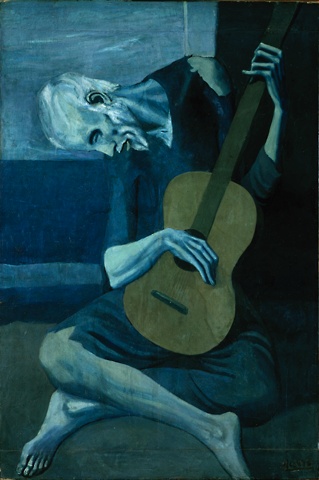
Picasso - The Old GuitaristSorry for the brief hiatus.  I don’t quite know what happened.  Probably just getting used to work and a new schedule and everything.  I have a few “lighter” articles in the works for the next couple of days, plus I’m working on more substantial things for other sites.  I’ll let you all know.  But now, back to beauty.

Last we left the Beauty series, we were discussing the proper way in which to respond to it.  Though there’s no absolute “most proper” way to respond, I used our main Biblical text that we’ve been looking at, and an idea developed by C.S. Lewis to break down our response into two useful categories: contemplation and enjoyment.  Before we enjoy, we contemplate.  This is not to say we can’t enjoy anything apart from comprehensively knowing it, but it does say that a contemplation and exploration of things helps us enjoy them more fully; and to be enjoyed to the fullest is the ultimate desire of Beauty itself.  But what does this contemplation look like in real life?

Let’s recall our defintion of Beauty as the attribute of something that expresses complexity, simply.  It’s what takes the complex unwoven strands out there in reality and weaves them into a tapestry that we can perceive with our spiritual and physical sense.  The more strands are woven more simply, the more beautiful that tapestry is. So in its most basic form, the contemplation of Beauty is thinking through what “strands” or what “complexity” is being represented in the thing in front of you.  So what does it look like? Well, formally, in philosophy, this endeavor is called “Aesthetics” or “Metaphysics”. It’s the philosophical study of Beauty and Beautiful things.

In the real world, for the rest of us, I thought of two ways this could look. First, when presented with something that your senses find beautiful, ask yourself, “What is it that’s actually being stirred in me?” Is it romance? Sorrow? Reminders of childhood joys? That stirring is your soul resonating with the strands that are in the tapestry in front of you. This is what art critics are really good at doing: teasing apart the strands that make up any given piece of art. The second way I could see this look is when you are encountered with something or someone that everyone seems to think is so beautiful but you just don’t get it. Maybe it’s the Mona Lisa. You may think: “Yeah, it’s a good painting, but what’s the big deal?” Maybe it’s some piece of abstract art that everyone else is swooning over but you. Maybe it’s a book, poem, or song you just don’t understand. In this case, I would encourage you to do research, read criticism, and try and understand the complexity behind the tapestry that others are noticing, but not you. It seems like people that know Music theory really well seem to like Jazz and Classical more than others. It seems like trained poets like weird abnormal poetry. The better you can understand the complexity in something, the easier it is for you to appreciate and ultimately enjoy the fullness of its beauty. This is why I would encourage all of you to be very curious about as many topics as possible. It’s not for the sake of more knowledge, but so that you can better enjoy the world around you and see it’s Beauty in everything.

Now, what I just went through is more for our everyday use and understanding of subjective, created Beauty. But more importantly, we must learn what it means to contemplate the Beauty of God. In Christianity this endeavor is called “Theology”. If Theology is (as most people know) “the study of God”, then it by definition is the study of Beauty Itself. This is what Theology was meant to be. It’s the kind of theology God calls us to do. Theology is the contemplation of the various complexities and revealed “strands” of God in order to better enjoy Him. John Calvin talks about this in his Institutes of the Christian Religion. He says that if your quote-on-quote “theological study” isn’t leading you to greater praise and enjoyment in God, then you’re not really studying theology! At that point it’s just studying literature – getting a better idea of this “character” named God in this “novel” called “The Bible”. This is why I had to leave seminary. I was in the midst of such beauty and I was numb to it! I was too immature. I didn’t have the spiritual infrastructure to see it for how beautiful it was! This infinite complexity being placed in front of me day in and day out was not leading me to enjoy Him. How many of us live day in and day out surrounded by the objective beauty of Christ and it does nothing to us? This contemplation of the Beauty of God can help us. Just yesterday our brother Marc Savage sent that group text (I have no idea how many of you got it) with this quote from Charles Spurgeon: “There is something exceedingly improving to the mind in a contemplation of the Divinity. It is a subject so vast, that all our thoughts are lost in its immensity; so deep, that our pride is drowned in its infinity. No subject of contemplation will tend to more humble the mind, than thoughts of God.”

May I challenge all of us to press in and seek the complexities of Who this God is and how He has revealed Himself? Understanding the beauty of God is of the utmost importance to the Christian, because His beauty is completely pointless. It can’t be manipulated, used, or abused. It can only be enjoyed. Something I’ve learned over time: whenever spirituality of any kind goes awry and goes off track, the Beauty of God is one of the first things to go. The inability to accept the mysterious complexities of God is the beginning of all heresy. You can’t have a right enjoyment of the Beauty of God and be a legalist, libertine (someone who abuses grace), or a hypocrite. Seeking to enjoy the Beauty of God is a guard against all these things. In my reading, one of my favorite things I came across was from a Catholic theologian named John Navone. He says in his book Toward a Theology of Beauty that Christian theologians (which I would argue should be all of us) are people given the task of articulating and putting into words how everything in life is given to us by God. Navone calls this the “givenness” of life and selfhood. This means that all of life is grace – unmerited favor; and that even things that are usually seen as secular (types of visual art, media, culture, jobs, and types of “non-Christian” music) are actually things that “mediate the mystery of the dawn of Christ’s Kingdom, as epiphanies or manifestations of grace. We as theologians [(and I would argue as artists and beholders of beautiful things)] are charged with the task of ushering in and articulating the mysteries of beauty which we will rest in forever.” That’s amazing. He goes on to say that “Theologians [(and I’d say even Christian artists)] are engaged in a dialogue, not only with their public, but with the object of their contemplation.” This should be one of the distinguishing factors between artists that are Christians, compared to those that are not: non-Christian artists can only use their art to dialogue with other people (speaking horizontally) and other art (speaking down). Only the Christian can make art with the confidence and hope that it also speaks and dialogues upwards to a God pleased to see, hear, or watch it.

Now what if you’re hearing all this, but you wouldn’t say you’re a Christian. First, if your interest has been piqued, but you just don’t get it, I’d give you the same encouragement I gave to those earlier that don’t understand the Beauty of things that others find beautiful. Learn about this God. Stick around. Ask questions. Seek answers. Try to see the infinite complexity of this God and how simply he has revealed Himself. Look into how He has revealed Himself and start to pick apart the strands of the incredible tapestry he has revealed Himself as. Secondly, let me encourage you: there is objective Beauty. You heart yearns for it and longs for it, and it is out there. Objective beauty is when the fullest possible complexity is expressed to us. So God – infinite complexity – is that objective Beauty Itself. But people don’t know full objective beauty before they know God. This complexity cannot be comprehended until God changes someone to comprehend it. If you’re not there yet, that’s fine. Pray. Ask God to change you as He has changed many of us. Contemplate this God. Contemplate His world. Contemplate all Beauty.

Why?  So we can enjoy Beauty.  I’ll see you next time.

Here are the manuscript and lecture that this series is based off of.

Click for Manuscript Pdf

Manucscript

Click here for sermon audio

Audio

Review: John Navone’s “Toward a Theology of Beauty”


In my attempt at writing shorter and more frequent posts (rather than feeling the burden to produce daily meaty posts), I thought I’d put up this little review of a little book (91 pages) I just finished called Toward a Theology of Beauty by John Navone (1996, The Liturgical Press).  I had originally started reading it for the Beauty message I gave, but I never finished it.  As time went by, though, the things I had read in this book began creeping back into my thoughts, so I decided to finish it, and let me tell you, that was a good call.

This is an incredible book. I’m still in awe of it. It seizes your soul and takes it to the highest realms of the mind and heart of the Beautiful Triune God. I have almost an entire journal filled with notes I have taken form this book.  I will look over these notes often for years to come, to let myself get swept away by the ideas present here.  Navone doesn’t have progressive outline, so it’s difficult to lay out exactly everything he talks about.  The best thing one could do is shoot over to the Amazon.com page for the book and “Look inside” to peer at the Table of Contents for his topics.  Suffice it to say, the book is theologically comprehensive.  It doesn’t answer many of the more practical questions we may have about art, human beauty, and such, but it does help in a much greater understanding of the more ethereal and abstract realities of Beauty, especially as it originates in and delights God Himself.

I guess my only critique is a common one I had with most things I read during my preparation.  It assumes the validity, and authority of ancient Greek philosophy, especially the distinction between the True, the Good, and the Beautiful.  He uses this Hellenistic concept throughout.  Many things I read used this “trinitarian” framework to shape and organize their thoughts.  I don’t know how valid this is and I would argue this limits us in many ways.  but this is minor, and doesn’t really take away from the wonder and awe of this book.

Navone is a Catholic theologian, and if I learned one thing from reading this book, it’s that Catholics understand Beauty in a way that only 2,000 years of thought and reflection can provide. We Protestants can learn a lot from our Catholic brothers and sisters. Heck, after reading this, I’m practically Catholic now myself.

Navone’s writing is beautiful, his thoughts profound, and theology rich. I highly recommend this book to anyone looking to increase their worship of a Beautiful Transcendent God.

May I Offer a Definition of | Beauty{2} ?


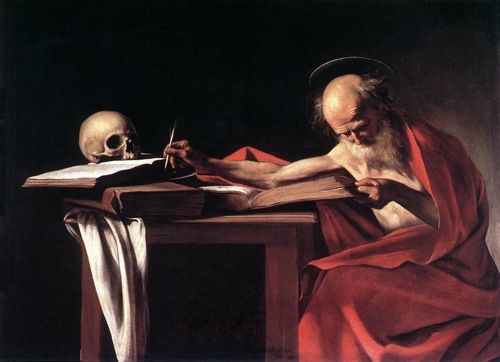
Caravaggio - Saint Jerome2This is Part 2 of an ongoing series based on the paper I wrote on Beauty and the subsequent sermon I gave on it. [Bold: things I had time to say // Regular: things I didn’t have time for]

__________

Whenever you go to study a particular topic in the Bible, the first place you go is the concordance. You go online, or you look in a book, and you search for every time that word is used. If you’re lucky, you’ll find some place in the Bible where the the writer gives you a direct definition for that topic. You look for statements like “This is love” or “Faith is” or “This is the will of God”. The Bible never gives a definition of Beauty. It calls God, creation, and people all beautiful. It says some people are beautiful. It says some people do beautiful things. It calls both good things and evil things beautiful. It calls for us to seek after certain beautiful things. It tells to avoid certain other beautiful things. So, just simply looking at the whenever the Bible uses the word “beautiful” doesn’t help us tremendously, but it’s a start. We can start to see that beauty is a bit more complex than we’re sometimes told. We start to see how a lot of common definitions we hear some times aren’t true Biblically. We see that:

  • it’s not perfection.
  • it’s not just when something reflects God.
  • it’s not just order or symmetry. We all know there can be beauty in chaos sometimes.
  • it’s not just in the eye of the beholder. There is some objective sense of beauty.
  • it’s not just an attribute of things or people.

The next step in studying something topically is to look at the original language to see what the English translation “beauty” meant in the Greek and Hebrew. When you do this, things get nuts. In the ESV alone, there are over 20 very different Hebrew and Greek words all translated as “beauty” or “beautiful”, but we can still learn a few things. First off, we see that the Hebrew mindset is a lot richer than the Greek one. The Hebrew words range in literal meanings such as pleasant, dignified, adorned, sweet, delightful, precious, boastful, arrogant, glorious, vigorous – one word used only once even means “scraped of all impurity”. The Greek words mean simply good and beautiful. But there is some depth here. The most common NT word used for “beautiful”, but most often translated as “good”, originally comes from a verb which means “to call”, speaking to the attractive nature of beauty. The other word used comes from the word for “hour” which describes beauty as being “within one’s hour”. By the way, in the attached manuscript, you can find a full breakdown of every instance these words appear in the Bible, their form, their frequency, and what each of those Greek or Hebrew words most literally mean.

So now we have a fuller idea of beauty, but still no working definition. At this point you just have to pray, read, and think a lot while looking at the broader context of theology. We use the things we clearly know about the nature of God, humankind, and reality to shed light on the ambiguous things and help us get closer to a definition. When you do that, some things come up that we need to keep in mind.

First, our definition needs to make God the most beautiful Person in the universe, it needs to make the cross the most beautiful event in history, it needs to make Jesus the most beautiful man who lived the most beautiful life this world has ever known, and lastly, it needs to make the Gospel (or the message of Christianity) the most beautiful thing anyone could ever hear or believe.

Secondly, we see that there is a tension that has to be held when it comes to talking about Beauty. It seems like Christians throughout history have fallen into one of two errors when thinking about it: either a pantheistic view or deistic view of beauty. The pantheistic view would say that God is beauty so only things that join him in His beauty can be beautiful. Nothing can have beauty in and of itself. It’s only beautiful as much as God shines through it. This definition would say that bad music made by Christians will always be more beautiful than really good music made by non-Christians. Now we all know that’s not true, because we’ve all heard really bad Christian music. This is the over-objective view of of beauty. The other view, the deistic view would say that God is beautiful, so He put beauty on earth that’s completely separate from Him so we can have a beauty that’s all our own, and it doesn’t relate to God in any way. God is beautiful. Humans are beautiful. There’s no connection. We don’t share in God’s beauty. This view would say that there is absolutely nothing more beautiful about one song that talks about the depths of who God is as opposed to another that doesn’t. They’re just songs. This view is an over-subjective view of beauty.

The Biblical view is different from both of these. The Bible teaches that God is separate from His creation, but He’s still present. God is not in created things, but those things can and do preach about who God is. Man is not God, but God has become a man so that He might communicate Himself to us and accomplish for us what we could not do for ourselves. So God is completely other, but He’s near. So, our definition of beauty has to reflect this. It has to be something that is connected to the nature of God but is still something humans can possess, but not in the same way. It has to objective for God, but subjective for us.

After doing all that, are you ready for an actual definition? The best definition that my arrogant, immature, and prideful 23-year old mind has been able to come up with for beauty is this:

Beauty is the attribute of something that expresses complexity, simply.

That’s it. Beauty is what makes infinity, finite; it makes transcendent things seem near. So the more “stuff” that is represented more “simply”, the more beautiful something is. The best image I’ve been able to think of to explain beauty is the Hebrew word shalom. Many people know that this word is usually translated as “peace” but it has a much richer meaning than this. The Old Testament uses this word to describe the ultimate goal and end of history and all that God is doing–peace. Now, when we think of peace, we usually define it negatively- no fighting, no war, no hunger, no pain. But this word in the Hebrew carries with it the connotation of reknitting the very fabric of the universe. It paints a picture of a world that is made up of an infinite number of “strands” of sorts, and shalom is when these strands are re-woven together into a sort of tapestry. Beauty, therefore, is when some or many of these complex strands are woven together into a tapestry that we can perceive with our senses, both physical and spiritual. The more complex strands contained in one simple “tapestry”, the more beautiful that thing is.

This is the objective idea of beauty. But, this definition also has the benefit of having an appropriate subjective component as well. You see, we as individuals over time become more sensitive to certain ones of those strands of the universe and less sensitive to to others. Our culture, experiences, natural make-up, and ultimately our spiritual state all cause us to sense and value various strands differently, making us value different “tapestries” differently.

Next time, we’ll begin applying this definition to other things to (a) better explain it, (b) see if it works, (c) explain why we find somethings beautiful. The first thing we’ll talk about being beautiful? God. Until then . . .

Click for Manuscript Pdf

Manucscript

Click here for sermon audio

Audio


CashTag

Enjoy the Post? Leave a tip with Square Cash!

Why We Long (Setting the Stage) [Eccl.2+3] |Beauty{1}


Scotland-Summer 2006-Edinburgh-Calton Hill-040This is the first part in my series going through the different ideas in the manuscript I wrote for a recent message I gave at Epiphany Fellowship’s monthly ministry “First Friday Fundamentals”. Upcoming topics include what Beauty is, how science reveals Beauty, why we find some things/people unattractive, and the nature of physical beauty. This first part lays out a theological and psychological understanding for why we long for beauty in the first place and how even that longing can get derailed because of our fallenness, finitude, and sinfulness. Also, I made a Web Album of pictures I took from Calton Hill.  They can never do it justice, and they look really anticlimactic, I know, but just trust me, God met me there.  I also linked relevant references in the manuscript to their appropriate pictures.

[Bold: things I had time to say // Regular: things I didn’t have time for]

___________________

In the Summer of 2006 I spent some time studying Creative Writing abroad at the Glasgow School of Art in Glasgow, Scotland. It was amazing in many ways. It was the first time I’d ever been out of the country. I saw things, met people, and went places I only could have dreamt of seeing, meeting, or going. One particularly memorable highlight: I had my first beer ever in a Scottish pub, July 4th, during the World Cup. The third week or so into the program, we had a free weekend so I decided to spend the weekend in Scotland’s capitol, Edinburgh. On Sunday I found a church and attended this amazing service. Afterwards, I just started walking around the city. I ended up following my map to this place called “Calton Hill. I walked in the shade of the tress around the base of the hill and found these little stairs to my right. I followed those stairs and as I reached the top, the trees broke just right, and the light fell so precisely, and I turned at just the right angle that I suddenly found myself standing above the entire city of Edinburgh looking out for miles. As I turned around 360 degrees, I could see the ocean on one side, the city on the other, and the giant hill to my left a mile or so away called Arthur’s seat that they say figures into the King Arthur legend.  [Click Here for the Web Album]

I began to cry almost immediately. One thing you’ll realize about me over time: I’m either the most rational romantic or the most romantic rational. To the charismatics in an old church of mine in Richmond I was the cold, dead theologian. To the seminarians up here I was the feely, emotional charismatic. They’re probably both right. But regardless, I broke down on top of this hill because I was staring at the most beauty I’ve ever seen. I felt small, I felt sinful, I felt worshipful, and I felt the presence of God more tangibly in those few hours I spent on top of that hill than at any other moment of my life. At the very same time I felt the most complexity and simplicity of emotions. I was so at peace, yet I wanted to scream.

So why is it that beauty draws those sorts of things from us? What is it anyway? How do we know what is beautiful and how to respond to it? We live in a world of such paradox. Pain and ugliness are the primary soundtrack of our lives, it seems, and yet most of us don’t live in a constant state of despair. We seem to live off those little oases of beauty in life. So how do we understand what beauty is and how it works in the midst of the seeming vanity of all life? Well, there was another man in history that pondered these things and recorded them in the book of the Bible we know as “Ecclesiastes”. He looked out on his own existence and the nature of life and saw it for what it was: full of useless strivings and the vain repetitions of repeated history as all reality just keeps turning, turning, turning. We know him today by the Hebrew word for “Speaker” or “Preacher” and that is what he does. In the text we’ll be in he tells us about life and beauty and how these things relate.

The Text (Ecclesiastes 2:22-3:15)

Read 2:22-24 | verse 24, as the Hebrew literally says it, and how it can legitimately be translated, reads: Nothing is better unto mankind than that he should eat and drink and see his soul as beautiful in the midst of his toil.

Read 2:25-26 | The “toil and striving of the heart” the writer talks about here is the work that we do in light of our deepest desires. It’s the pursuits to fulfill all we want and all we long for. It is those pursuits that can never be accomplished, those longings that can never be fulfilled. It’s the deepest drives within us that motivate everything we do. The writer says that these desires, these strivings can never be satisfied. We can try all we want, but no matter what, that pain and vanity will always be the constant state of our lives. But why? Why is it so vain to work so hard at this?

Read 3:1-8 | You see, it’s vain because all things already have their proper predetermined season. Everything you work to accomplish will only come in it’s appointed season for you, and everything you work to avoid will always come in its appointed season for you. That is why our toil is all in vain. But yet we strive anyway. So why do we still strive in this life? The Preacher asks this very same question: What gain has the worker from his toil? He then tells us that he thinks that God has given him a special perspective to give us some insight on why we do (and should do) the strivings that we do. He says: I have seen the business that God has given to the children of man to be busy with. He says that he thinks he sees it. He has looked out over history and life and he thinks he sees why it is we strive. Though it’s in vain, God still births something in us to toil. The Preacher has seen the proper striving that God has given humans to do. So what is it? Well, his answer to that is our main text tonight.

Read 3:9-15 | The writer says I have seen the business that God has given to the children of man to be busy with. He has made everything beautiful in its time. Also, he has put eternity into man’s heart, yet so that he cannot find out what God has done from beginning to end. Does anyone else see how weird this sounds? The writer says this is the business of man and then goes on to talk about God doing things and what we can’t do. So what’s going on? This is what I think the writer is saying: God has a picture of what a good and beautiful world looks like and He is forming this world into that picture as he is making all things beautiful. This beautiful world is an Infinite, eternal one. So, He has put eternity into our hearts, or in other words, put a deposit of this eternal beautiful world in our hearts, causing us to long for it. This seems to be so we can recognize the beauty that God is making while not seeing the exact mechanisms that God is using to do it. It forces us to enjoy what God is doing while still having to trust Him rather than trying to predict Him. Apparently the business of man, then, is to see, recognize, and enjoy the beauty God is doing. But, in our sinfulness, we don’t like not being able to find out what God is doing from the beginning to the end, so we like to form our own pictures in our heads of what a good and beautiful world looks like. So every action of every human being is to make the world out there match the world in their head. The task of the Christian, then, is to make the world they want in their head match the world the God has placed a longing for in their heart. The rest of our text describes what this looks like, so we’ll get to that later when we talk about how we respond to beauty. But let’s first get down a definition of Beauty.

And that, my friends, is for next time . . . Here are the audio and manuscript links, as promised:

Click for Manuscript Pdf

Manucscript

Click here for sermon audio

Audio

Eternity in Our Hearts: The God of Beauty, the Beauty of God


Sargent - Madame Errazuriz-smallThis message was seven months in the making, and this past Friday I finally delivered it.  So, as promised, I’m posting both the audio and the manuscript here.  You can also find a general outline on my Sermon site, and you can also find it at my Podcast.

Click here for sermon audio

Click for Audio

Click for Manuscript Pdf

Click for FULL Manuscript

This is the message I gave at Epiphany Fellowship. The topic was Beauty. The attached manuscript is the full manuscript. It is 43 pages long and contains far more information than I was able to give in a 40 minute message. It includes an appendix where every form of every word in the Greek and Hebrew translated as “Beauty” or “Beautiful” in the English Standard Version of the Bible is ordered by frequency and includes the literal meanings and lexical range of each word.

I really cannot stress how much more is in the manuscript than was preached.  Every section has huge amounts of thought and prayer in it that was not able to be included in the final message.  That’s why throughout the next week or more, I’ll be blogging about every section of this manuscript.  Each post will focus and discuss the fuller version of each section.  If it gets to be too much I’ll spread it out as need be, but we’ll see.  This is where your thoughts and insights will be so helpful and needed, but if you have a question now, don’t feel like you have to wait for that blog post to come to ask.  Engage with any and everything now.

I hope this blesses all of you as much as it did me.  The feedback that evening was more than I knew how to handle and perhaps I’m still processing it.  Thank you all for your grace and affirmation.  For those that came out, I thank you. I very much enjoyed both preparing and delivering this message, and I look forward to further chances to do so.  If you’re interested in giving me such a chance, feel free to use the contact email on the sidebar to the right (or just click here).

Enjoy, and feel free to let me know what you think, and please at least look through some of the manuscript.  Until next time . . .

One small final note: on most every site and post I’ve used to discuss this message I’ve used the attached piece of art.  It is a piece called “Madame Erraruriz” and it is by my favorite American painter John Singer Sargent.  I got to see this painting in an exhibit of his at the Virginia Museum of Fine Arts and ever since seeing the brushstrokes in this simple painting and seeing the nuances and the subtleties that don’t quite come across from this digital shot, I have long found it to be one of the most beautiful paintings I’ve ever seen.  It is for that reason I have chosen it as the picture that has constantly been up for all these posts.  A few years back I even wrote a poem based on the piece called “Extended Engagement”.  I ended up writing two versions, one less structured than the other to better mirror the feel of the piece, but on this blog you can read both Version 1 and Version 2.  Let me know which you prefer.

{3John11} | Of Translations, Repentance, and Worship


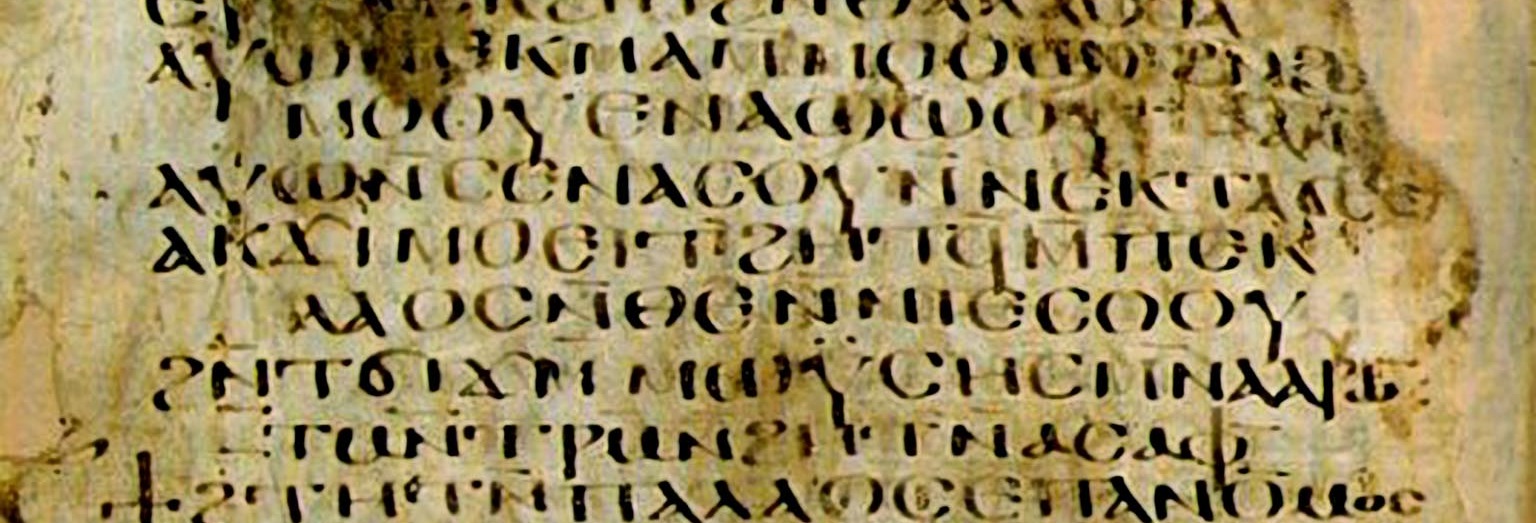
bible-greek-manuscript

ὁἀγαθοποιῶνἐκτοῦθεοῦἐστιν· ὁκακοποιῶνοὐχἑώρακεντὸνθεόν.

[ho agathopoion ek tou theou estin; ho kakopoion ouk heoraken ton theon.]

The one who does good is

[of/from/because of/in the manner of/apart from/part of/controlled by]

God.

The one who does evil has not seen God.

{3John11}

Forgive these fragmented and perhaps poorly-written or elementary thoughts. I write this post not to “show off my Greek” (today was the first I had opened it up in the past couple of months) nor to confuse people by talking very technically. I (hopefully) write this as worship.

I finished translating 3 John today. I’m starting with the shortest New Testament book and just continually trying to translate up to the longest. It’ll probably never be done, but it’s some sort of system, so it works for me. I always know what’s next so that’s helpful.

Anyway, like I said earlier, this was the first day I had gone back to 3 John in a couple of months. I only had a few more verses left so I quickly finished it and then started the first couple of verses of 2 John. I then began to shut my books and move on to the next item on my reading list when I realized something: I couldn’t even remember vaguely what I had translated in 3 John. I had been so concerned with just translating and “getting it done” that I forgot to even meditate or think on it.

I turned to my translation and looked over what I had written and the above verse popped out at me. So, I’m writing this as my act of both repentance for having this gift of the ability to translate and not using it to know God more, and as my act of worship, that I might explore some nuances in this text.

The problem with this verse is a problem common in any language: the preposition. That word εκ [ek] means any of the bracketed things above. Most simply, it’s translated as “of”, but the question always turns to “what does ‘of’ mean here? “Which of the myriad of possible translations does this mean? Well, you look at the context.

What I noticed is that whatever it means, it’s supposed to be a contrast to “The one who does evil has not seen God”. So whatever this “of God” means, it is in contrast with “not seeing God”. It also means that being “of” or “from” God is a matter of seeing him. To see Him is to be joined to Him, to be of Him, or to be from Him. I don’t know enough about Greek to make a definitive call about precisely which translation is correct, but this idea is enough for me: walking obediently so as to please God is a matter of seeing God, and those that continue in disobedience show that they have not.

The way this is phrased let’s us know that whoever is walking obediently can take no credit for this, because their obedience is of/from God. But at the same time, those that are still walking in disobedience bear the full weight of responsibility for their disobedience because they have not seen Him. It is a mystery that leads to God’s greatest Glory and our greatest joy.

So for those saints weary under the weight of their sin and disobedience, be encouraged: obedience and doing good is not a matter of striving and fighting your own will. It is a matter of seeing Him and therefore being joined with Him so that all our being, living, and moving is from/of/in the manner of God. Seeing and therefore being joined to Him through Christ allows us to move according to His nature and will. All disobedience, sin, and evil results from not seeing God. He is our hope. He is our salvation.

Let us therefore fix our eyes on Him, and run.

“bright as yellow” by David Schrott | Reform & Revive


One of my best friends and favorite writers (and photographers), David Schrott has finally broken his writer’s block to write another gem for the magazine.  So head on over to Reform & Revive and enjoy his prose and honesty.
Here’s the link to the article:

http://reformandrevive.com/2009/08/04/bright-as-yellow/

Remember to leave comments and send this link along to others!  Also remember that we’re always looking for submissions to the site so feel free to get in touch with me if you have any ideas.

“For your life – Flee!” by Sean Brendan Stewart – Reform & Revive | a Plugfest


sorry, no y-axis this time

sorry, no y-axis this time

[Thank you to spectacular photographer and friend David Schrott for inspiring this post]

Okay, due to a few recent articles I’ve written, the number of people visiting my blog has increased by over 4000% in the past week.  It’s pretty nuts.  That’s why everything has seemed to be about Derek Webb and his new album, Stockholm Syndrome.  So, I just wanted to take this chance to put in a few plugs for some of my other projects.

I have web magazine called Reform & Revive.  It looks at the intersection between faith and culture, politics, art, the church, and just life in general.  These Derek Webb posts would perhaps have been more appropriate on that site, but the readership here jumped up so fast (I’m actually on the first page of most Google searches having to do with the album).

Anyway, friend, brother, and fellow impassioned writer, Sean Brendan Stewart, just put up a special article that seems to have a similar message as the new Webb album.  It’s some commentary from him, then a very brief manuscript of some audio from a Carter Conlon message.  After that, feel free to look at our more regular full articles from our Contributors.

Lastly, I have my own personal site, Prodigal Paul, that acts as a hub for organizing other blogs, Bible studies, sermons, and such that I have produced over the years.

That is all.

Derek Webb’s “Stockholm Syndrome”| a preliminary album review


[NOTE: this is not a review of the whole album, just an impression from the songs released so far]

He has said it is his most important album to date.  But no matter what, Derek Webb’s Stockholm Syndrome will not be just an album. Regardless of the music, production, or vocals, this album will first and foremost be a manifesto, an indictment, a message. The lyrics will define this album. This album – this artist, even – has become a voice for an entire group of disgruntled twenty-something Christians that have surveyed the rolling hills of American evangelicalism and have found it lacking. They have called out for a prophet to say the words and use the language that will draw the line in the sand and separate the “Biblical” sheep from the “fundamentalist” goats. A man to come out in sackcloth and ashes and save real grace-driven Christianity from the clutches of the legalistic drones that would rob us of our freedom in Christ.

So, the question I have struggled with ever since the first songs on this album came out is: is this the right message spoken in the right way to the right people at the right time?

I hate saying it, but (from what we’ve seen so far) I don’t think so. There is a time and a place for the message this album seems to carry, don’t get me wrong. I don’t write off a song done by a Christian just because it has a curse word or says things sharply. The Old Testament prophets spoke just as harshly (if not more so) to the “church” at that time. They would call women cows (Amos 4:1), say that the people “lusted” after other gods like some dream of fornicating with others with penises the size of donkeys and ejaculations like that of horses (Ezekiel 23:20), and declare that the best things we ever did were nothing more than rags dipped in a woman’s menstruation tossed before the face of God (Isaiah 64:6).

I fancy Derek Webb sees himself as such a prophet, just as I know many of his fans do. Now, I think this harsh tone is absolutely appropriate and the balance is struck with all of Webb’s previous albums. But the vehemence of the songs released so far from Stockholm is off-putting and seems a bit out of place. It’s not just a declaration that the church is off on a few points and how they’ve gone about some things – all the songs are a mockery and sarcastic rant against her. As a friend well put it: this album probably will not accomplish the goal for which Derek set off writing this record. Rather than shock the church into reform, this album is far more likely to galvanize the opposition force against the church and those that think the Church has become so out of touch and impotent it has become unimportant all together.

I know that’s not Webb’s heart. Anyone that’s heard the album 2003’s She Must and Shall Go Free knows this. The songs from Stockholm Syndrome seem to form an epistle from a wounded lover. A man who loves the Bride of Christ so much he hates how she has gone a stray and has been personally affected and hurt by it. But I wish he would take a page out of Hosea and try to play a part in wooing the church back rather than trying to beat her back.

I just want to say it again: this criticism is not about language or tone. I am really not bothered by the “bad words” used or the forceful tone. Perhaps my favorite song ever recorded by any artist, “Wedding Dress“, has both of these elements, and yet it is geared more towards Webb’s own depravity rather than the Church’s flaws. Look, I have the same criticisms as him. Raised as a Dallas, Texas Southern Baptist, my family has been destroyed by the effects of fundamentalism and “easy believism”. But Jesus said He is building His church, so we must try and find the balance between working with Christ in building it or mocking what He’s done so far, and thereby working against the work Christ would have us do. I fear this album is the latter.

Much has changed on the landscape of American Christianity since Webb’s 2007 album The Ringing Bell. The Church has effectively lost its grip on pop culture, politics, and the prevailing worldview of the nation. This being the case, these songs from Stockholm Syndrome come on the scene too late and kick the church while she’s down, as it were.

But, at some point today, Derek is supposed to begin pre-orders for the album accompanied by immediate digital downloads. So when that happens, I’ll be sure to put up a more comprehensive review as soon as possible.

I pray he surprises us.  Thoughts, anyone?

“Independence Day?” by B.Rayshawn Graves – Reform & Revive


B.Rayshawn Graves, a Guest Contributor his way to becoming a regular on Reform & Revive just posted a new article.  He originally called it “Decision Day” but I renamed it “Independence Day?” for obvious American calendrical reasons.

The article contains a quote and some of Graves’ thoughts on the balance between God’s Sovereignty and our free will.  Here’s the article:

http://reformandrevive.com/2009/07/02/independence-day/

Wittgenstein, Edwards, & the Substance of Things | Philsophy & Theology {III}


I’ve been slowly working my way through Ludwig Wittgenstein’s “Tractatus Logicus-Philosophicus” and I ran across some ideas that seemed to connect with some of the ideas of Jonathan Edwards I had read in George Marsden’s “Jonathan Edwards: A Life.” This is not a comprehensive look at Wittgenstein’s thought, just how one facet of it can help illuminate Theological metaphysics. I will do my best to put this into normal, down-to-earth language, but metaphysics, by definition, talks about some really heady things. This really is not me just trying to sound smarter. My hope is to give anyone that reads this a bigger grander idea of just beautiful the Reality God has formed actually is, and therefore, a bigger grander idea of how beautiful this God is.

In Wittgenstein’s Tractatus he talks about the nature of possibility, things, being, language, and philosophy. He writes that people are objects of infinite possible properties. Before you’re born, there is an infinite number of various properties you may hold, but none of these properties are inherent to yourself. You have to borrow properties from the substance of this existing world, this realm of existence. So, the substance of the world decides your properties. If this were a world where people flew, one of those infinite possibilities would be that you could maybe fly. This isn’t the case. So, Reality (which Wittgenstein defines as just “the present”) decides your properties.

But (and this is where it gets fun) these properties that you have, in turn, help determine the substance of this world. There being no people in the world that fly helps determine that this world is one where no one flies. This allows for a certain dance between the world and us where each side helps influence the other. This is most readily seen in evolution.

Now, this is where Edwards’ ideas begin to enter in. This whole situation can also work on a bigger level. Before, we were talking about how the substance of the world help determine our properties that help determine the substance of this world. But, how where does the world itself get its substance? Christians would say that the world gets its substance from its relation to God – the Maker and Sustainer of all things. So, now lets start the thinking process over again. The substance of the world has infinite possible properties that are determined by God who upholds all things.

(I know this will sound heretical, but I promise it’s not) God has a a freedom of possibility but not an infinitude of possibility. He has one nature and one set of properties defined by His Own Substance, which is Triune Deity. His substance is the substance that determines the set of properties of the world that in turn help determine the properties of people that in turn helps determine the substance of the world. But, the world doesn’t in turn help determine God. This is where the Creator/creature distinction comes into play. There is a mysterious connection between God and His Creation, but not such that they are the same. Unlike God (as creation and creature), we have infinitude of possibility, but not freedom of possibility. We can be anything (within this world) but we don’t have the freedom to be anything.

Now this next point is important. We see through this process that there a reasonable hierarchy and system of determinants (things that determine the substance of other things). This hierarchy begins with God. Nothing determines His Substance, but he determines the substance of all other things. Therefore, our very being ultimately rests in God Himself. Further, the expressions of our properties ultimately show themselves in our willful choices and actions. When we act, we are expressing our properties. So, our willful actions are actually based on our relation to the substance of this world (remember the connection between these two things from earlier?).

So, in conclusion, who God is in His nature determines the substance of the world that determines our properties that determine our wills. So, when we freely act, we are actually, acting in accordance with our relation to the nature of God. We either love God or hate God. We either act in line with the substance of the world that caused our properties, or we act in line with and are joined to the Substance of the substance of the world, God. This God who, as I said earlier, is the only Being with a true freedom of possibility (but not infinitude of possibility). This means that we can both know who this God actually is while also having full faith He is able to do and accomplish all He sets out to do in us and for us.

We truly serve an awe-some God.

What is Faith? (a call to Atheism)


art by Amy Roberts

art by Amy Roberts (see bottom for link)

My good friend Monica sent me an email with a link to this New York Times blog that had a little weekend competition:

define “Faith”

The post gave the Bible’s definition of faith, a few quotes from others on what faith is and then told other “co-vocabularists” to offer their definitions (the pithier the better).

In a display ad absurdem and ad nauseam of the make-up of NYTimes readers, the vast majority of “definitions” are atheistic rants about how faith is just believing things that are so plainly and clearly not true.  It’s the opiate of the masses.  It’s the crutch that helps weak-minded people get through life.  So on and so forth.

I understand the sentiment.  I do.  And I also see why they think that.  It was just comical seeing post after post after post of people that were so clearly speaking from such bitterness, hurt, and pain that went well beyond “calm, collected reason”.  Even the atheist puts some level of faith in things, even though they feel like this faith is justified by their logical deductions.  Faith isn’t a bad word.  It doesn’t have to be religious at all.  My mac dictionary’s first definition for it is “complete trust or confidence in someone or something.”  The second definition is the religious one!  But in spite of this, that word, for some reason, touches such a deep nerve within those hostile to Christianity that they must do more than simply display a disagreement with a prevailing notion.  It’s not good enough being a-theistic, they must be anti-theistic.

And that, I find, is very interesting.  It implies that atheism is more than a lack of belief.  It can’t stay at that merely reasoned philosophical place.  It is at its core a most outward expression of the rebellion of the heart, and the antagonism of that rebellion must and will come out.

Don’t get me wrong, I love atheists! I do!  But it looks like Atheism is becoming the new radical fundamentalism of the urban United States.  Now I know how absurd all us Christians probably looked for the past 50+ years with all of our political activism, ad hominem attacks on dissenters, made-up “culture wars” to agitate our base, over-excessive vitriol against “opponents” of our system, a circling of the wagons to maintain a false sense of security for “us” and ease of insult towards “them”, and a childish fanatical assent to a few tired (fundamental) tenets with a few tired (apologetic) defenses made by a few tired (hyperbolic, caricatured) leaders that are already irrelevant.

I guess its Atheism’s turn to take the wheel.  Try not to mess up the country in the same ways we did.  Neither you guys nor us have history on our side when it comes to our particular systems reigning supreme.  Things just don’t seem to go well.  Have fun.

As far as my contribution to the discussion?  Here was the little definition I gave:

FAITH: trusting that another has accomplished on your behalf what you ought to have done but can’t.

Grace and peace.

and Faith.

[more artwork by Amy Roberts can be found here]

“Let’s Get it On” – Song of Solomon blog


READ THIS FIRST:

I have a new post up on my Song of Solomon Bible Study blog.

It was written a few days ago and since then it has been brought to my attention how weird it might be that I concern myself even somewhat with the sexuality of married couples.  The thought process is: you’re single.  Therefore, you have no business telling couples how the Bible says to have good sex.  It’s inappropriate and “shameful”.

My favorite metaphor for my relationship with Christ is the Bride/Bridegroom metaphor and the subsequent parallels between the sexuality and spirituality.  I love it.  But is it weird for me to think this way before I’m married?  I’ve thought and talked like this for several years now and no one has ever told me it’s awkward or inappropriate, but now a couple of people have, so I’m wondering:

Is it inappropriate, awkward, or weird for me to write the kind of post I just did on the Song of Solomon Bible Study site?

I’d really like feedback from everyone.  WARNING: the post is potentially sort of sexually graphic.  No more than Song of Solomon itself, but still – Jewish boys weren’t allowed to read the book until they were twelve for a reason.  So if you are drawn into temptation particularly through text and words, you probably shouldn’t read.

But for everyone else, please read and let me know.  I really am ready to change my perspective on this if I need to, I just need some feedback from my brothers and sisters.  So, here it is.  Read and let me know what you’re thinking.

http://solomonssong.wordpress.com/2009/06/16/41-51-lets-get-it-on/

I hope everyone has a good weekend.  I’ll be back on Monday with some posts I’m pretty excited about including posts on Christian cursing and the Southern Baptist Convention.