This is amazing.
Prayer/Meditation
My church let me preach another sermon. Here it is.

Believe it or not, even after preaching my first real sermon ever, my church let me preach again. All jokes aside, I had the honor of preaching this past Sunday as part of our Advent series.
The text is Luke 1:26-38, the moment in the life of Jesus known as The Annunciation, when the angel Gabriel tells Mary that she will give birth to Jesus. Cameos in the sermon include Mary, Friedrich Nietzsche, Karl Barth, the podcast Serial, racism, white privilege, and the story of everything. Here’s the audio:
You can also download it here, or subscribe to our podcast here.
Continue reading
Advent, Angst, & Ferguson

When my phone started blowing up with notifications about the Ferguson grand jury decision, I was in a daze. I grabbed my pipe, poured the biggest single glass of whiskey I’ve ever had, and sat in my backyard in tears, alternating between retweeting others’ comments on the case and just staring at the sky. I watched and heard the helicopters above as they watched the Philadelphia protests below, mere blocks from my house.
I think part of my response was because of where my mind had been in the days leading up to the decision.
I recently pored over Cornel West’s biography and watched 12 Years a Slave. As the weather has gotten colder, the city’s marginalized and homeless have become more noticeable. An organization whose heart is in the right place, and who I otherwise love, put out some promotional materials that unintentionally showcased the degree to which racism and power structures are so ingrained and so unconscious. Last Sunday, I watched as Rudy Giuliani went shockingly racist on Meet The Press (what he said is wrong, by the way). For school, I watched a presentation on the Civil Right’s movement, and also read King’s Letter From a Birmingham Jail.
And then the grand jury came back. No indictment.
Continue reading
Rhythms of Faith & Freedom

I’m currently reading through Ruth Haley Barton’s Strengthening the Soul of Your Leadership. Occasionally, I’ll post reflections on my reading.
One big strength of this particular book on cultivating one’s spiritual existence is that it’s focus is entirely on the spiritual life as a response to what God has been doing. Most books focus more on the stuff you’re “supposed” to do. Some slightly betters ones spend their time unpacking and expressing the “beauties of the Gospel” (as they pretty narrowly, individualistically, and Evangelically define it) and then trust that these intellectual ideas and truths woo us and turn our “affections” to God. These are the same people that often see “preaching the Gospel to yourself” as the panacea for everything, be it doubt, fear, confusion, theological questions, or mental health issues.
Barton, however, comes at it from a different angle. She uses the story of Moses as a picture and type for the dance that exists between God and his people. And at each stage of Moses’ life and deepening of his calling and relating to God, she shows how God has actually been at work to, for, and with Moses long before this moment ever came.
So it’s not, “God died for you, so you can live for him!”, or, “See how beautiful God is and all the things he’s done for you! Now doesn’t that make you want to engage with him? (And if it doesn’t, there’s something fundamentally wrong with you.)”
Continue reading
The Refuge of the Embattled Soul

I’m currently reading through Ruth Haley Barton’s Strengthening the Soul of Your Leadership. Occasionally, I’ll post reflections on my reading.
“Reach the campus, reach the world.”
That’s how they got me. With those words, I began an amazing three years in the campus ministry I was a part of throughout college. I was coming out of a fundamentalist evangelical fog, and was desperate for deep, impactful community. I found it in those incredible people.
They had pointed out that our college had students from almost every “closed nation” in the world (countries where missionaries aren’t allowed to go). The campus was a place of such diversity and nationalities; the thought was that this was the most strategic place to have the most global Christian impact. Playing a part in this excited me and stirred me to serve in this mission.
Compared to the few-hundred strong InterVarsity, our little band of 12 or so students were the definite underdogs of campus ministry. We were just starting out and decided to go legitimate and become an official student organization. This would give us access to room and equipment rentals, money, and advertising resources. But we needed “officers” and a board of leaders to do this.
I thus became the President of our campus ministry.
Continue reading
Cultivating Your Soul to Lead
 I’m currently reading through Ruth Haley Barton’s Strengthening the Soul of Your Leadership. Occasionally, I’ll post reflections on my reading.
In my seminary program, there’s a lot of talk about one’s “True Self”. We live so much of our existence living from the place of masks, coping mechanisms, fears, anxieties, etc.–our “False Selves”. Articulating it like this is so helpful in some ways, but in others can be frustrating.
At least for me, this “True Self” seems so deeply inside of me, so elusive, that I’ve very much resigned myself to never actually knowing this self. Like a celebrity or historical figure, I’ve had to learn to live with the reality that I’ll never actually meet this person, no matter how much I may want to. I’ve come to terms with a reality in which I just need to be gracious with myself (just as God is) that most all of my life and existence will be more “False” than “True”, and I just need to make the best out of that.
Continue reading
My first Sunday Morning Sermon. I’d like to share it with you.
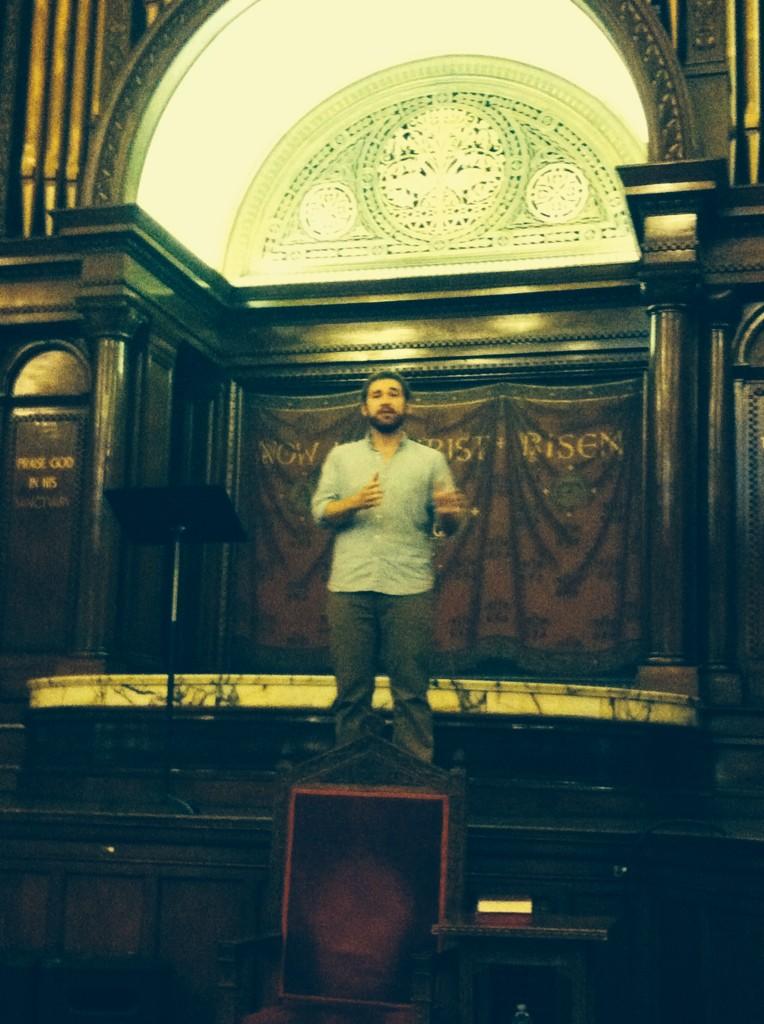 Sure, I’ve done some lectures, taught some classes, led a home group, and preached a sermon in a seminary class, but I’ve long believed that there was something truly sacred and “other” about preaching to a church family in a gathered worship service. And it’s something I had never done.
I’ve always been an over-zealous guy, and very wise leaders have pulled the leash on me, telling me to just sit and watch for a while, until the time was right to put me in front. This has continued through my life at my church in Philly, as they’ve slowly discipled me and loosened the leash bit by bit in service to our people.
Well this past week I had the honor of preaching my first Sunday morning sermon to my church family. It felt good and I myself experienced such a grace and blessing in preparing for it and offering it to my brothers and sisters. And so, I’d like to share it with all of you as well.
It’s the final sermon in our series “Finding Freedom” that went through the Ten Commandments. The text is Matthew 7:13-29, the very end of the Sermon on the Mount. Here’s the audio:
You can also download it here, or subscribe to our podcast here.
Continue reading
A Sermon I Got to Preach on Isaiah 61 [VIDEO]
Believe it or not, I don’t really have much experience at all in preaching. Yeah, I’ve spoken and “preached” at some things, but I’ve still never offered the preached proclamation at a Sunday worship service. It’s an area I’ve wanted to grow in for a while.
To that end, I took a preaching class last semester for my seminary program. It was a powerful course that changed my whole relationship to both the Bible and the act of preaching. Each of us wrote and presented a sermon on an assigned text. The sermons were recorded, and I’m offering mine here today. It opens with some brief words on the context I had in mind when preparing this.
I hope it meets you and speaks to you, wherever you are. The video is above, the text and my manuscript are below. You can also download files for both the audio or the manuscript.
Special thanks also to an old friend, J. Chord Barnes of ASERWorks Media, for fixing some audio issues in the original recording and remastering it for me. Check him out at the link above. Continue reading
#Marginalia Weekly Round-Up #6
Marginalia is a section of this blog dedicated to (mostly) short reflections, meditations, questions, and difficulties I have while going through my Bible reading plan. I’m still trying to figure out the best pace at which to post these, so be patient with me. To aid in helping people engage with these posts, every weekend I post a round-up of all of Marginalia posts that appeared during that week. This list is in biblical canonical order.
Job
Job, God, & Satan (Can I get some help from the scholar’s out there?)| Job 1.6-7
God, Social Justice, & Social Welfare | Job 5.15-16
Fragments from a speech by Job| Selections of Job 6 & 7
Job’s Friends are Right! Job’s Friends are Wrong.| Job 8.5-7,20-22
In a sense, God CAN’T favor the righteous| Job 9.1-4
The Trinity building the Church! | Acts 20.28
Keep watch over yourselves and over all the flock, of which the Holy Spirit has made you overseers, to shepherd the church of God that he obtained with the blood of his own Son.
—Acts 20.28
Wow, here’s the whole Trinity at work in leading God’s church! Would that we give more attention to this Trinitarian nature to the sustaining of our churches. Also, notice how Jesus’ blood “obtained” the Church. He didn’t merely create the space of possibility. He went out and got it. It is is his.
Anna, the Prophet of the Lord | Luke 2.36-38
There was also a prophet, Anna the daughter of Phanuel, of the tribe of Asher. She was of a great age, having lived with her husband seven years after her marriage, then as a widow to the age of eighty-four. She never left the temple but worshiped there with fasting and prayer night and day. At that moment she came, and began to praise God and to speak about the child to all who were looking for the redemption of Jerusalem.
—Luke 2.36-38
What a powerful testimony. She was only married for seven years before her husband died. She had been a widower for 84 years. What pain and loneliness she must have felt. And yet, how did she spend it? Serving God’s people as a prophet, being especially in tune with those “looking for Israel’s redemption” and then proclaiming Jesus to them. Even before the Cross and Resurrection, Jesus was the answer for the longing of God’s people for redemption.
Also, Luke said he went through all of the accounts and picked and chose what would get “in” and what wouldn’t. Of all the little anecdotes he chooses to keep in and keep out, he chooses this. What a powerful woman she must have been for her to have been seered into the collective consciousness of God’s people retelling this story.
Is There No Rest for God’s Weary Ministers? | Mark 6
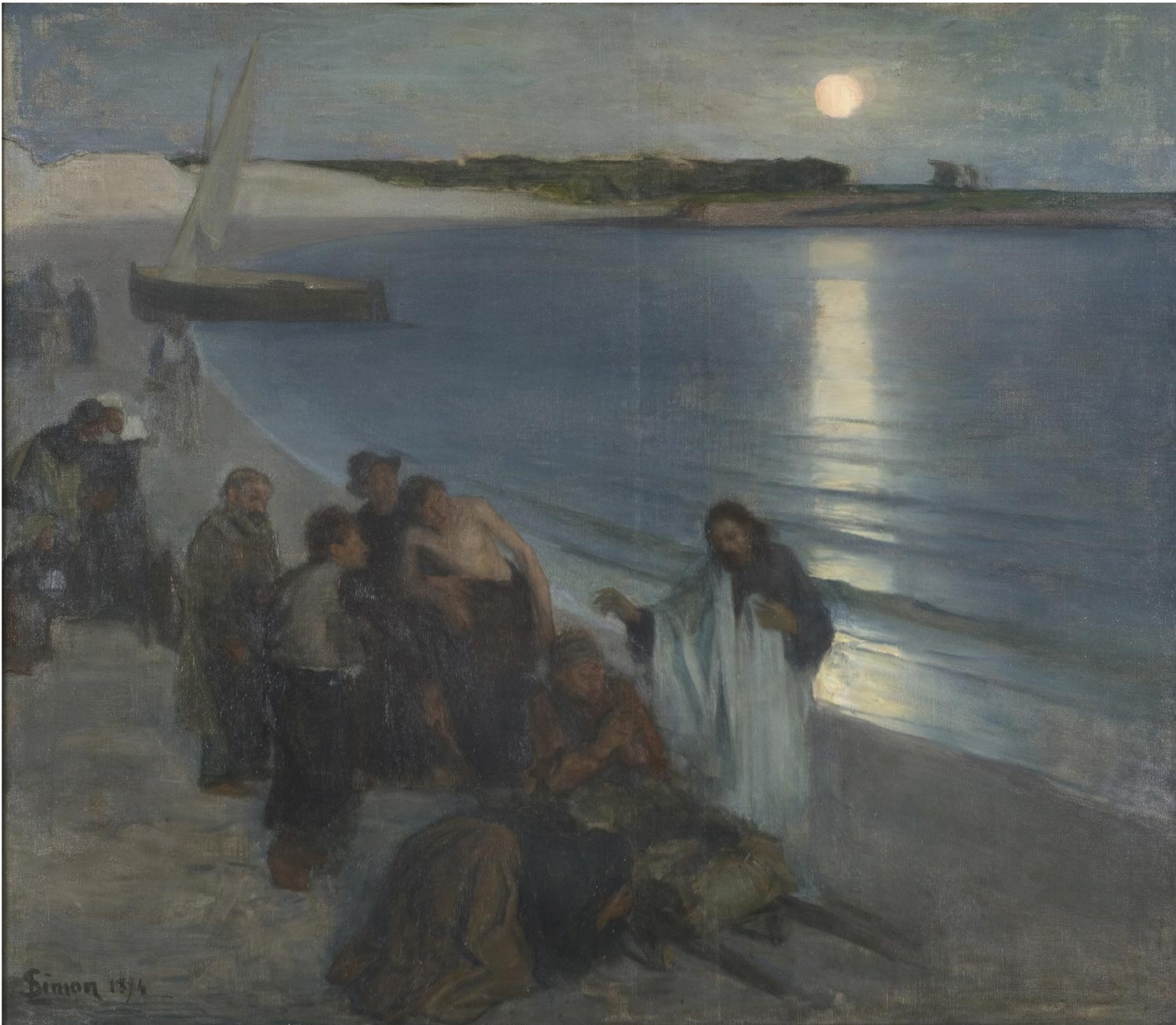 Reading through the sixth chapter of Mark, I recently noticed a way that Jesus relates to his disciples which is, at first, incredibly encouraging, but then gets exceedingly hard.
This is right after he had sent his disciples out, two by two, to try out this whole “ministry thing” by themselves. According to Mark, it was an incredibly powerful and effective time of ministry for them. They saw powerful things done, and they were able to play a part in them. They return from their first “ministry internship”, and this is where we pick up the story.
The apostles gathered around Jesus, and told him all that they had done and taught. He said to them, “Come away to a deserted place all by yourselves and rest a while.” For many were coming and going, and they had no leisure even to eat.
—Mark 6.30-31
Jesus’ pastoral concern extends not only to his flock but also to the shepherds. They have done so much ministry and now he insists that they withdraw and rest and eat. Also, they shouldn’t simply do this by themselves as individuals, but with those who are also doing ministry. The leaders of the church should rest together as fellow weary workers.
Continue reading
Jesus Getting Snarky Over the Sabbath | Luke 6.1-5
One sabbath while Jesus was going through the grainfields, his disciples plucked some heads of grain, rubbed them in their hands, and ate them. But some of the Pharisees said, “Why are you doing what is not lawful on the sabbath?”
Jesus answered, “Have you not read what David did when he and his companions were hungry? He entered the house of God and took and ate the bread of the Presence, which it is not lawful for any but the priests to eat, and gave some to his companions?” Then he said to them, “The Son of Man is lord of the sabbath.”
—Luke 6.1-5
I’ll be honest, I really don’t understand Jesus’ logic here. Yes, I get that Jesus is referencing this David story to simply say that there is precedent for eating food (even holy food) on the Sabbath. But if that’s the case, his logic is this: “You don’t like what I’m doing? Well, based on a very simplistic reading of the Bible, someone else did it, therefore I can do it.”
He does know that David also did the whole adultery and murder thing with Bathsheeba, right? Just because someone else did it, doesn’t explain why you have the right to do it. Secondly, after saying saying all this, he goes ahead and says that it doesn’t even matter anyway because he is “lord of the Sabbath”.
So, in the end, it seems to me like Jesus is just trying to be snarky here.
When your church’s “cultural relevance” fails | Acts 14.11-18
When the crowds saw what Paul had done, they shouted in the Lycaonian language, “The gods have come down to us in human form!” Barnabas they called Zeus, and Paul they called Hermes, because he was the chief speaker. The priest of Zeus, whose temple was just outside the city, brought oxen and garlands to the gates; he and the crowds wanted to offer sacrifice.
When the apostles Barnabas and Paul heard of it, they tore their clothes and rushed out into the crowd, shouting, “Friends, why are you doing this? We are mortals just like you, and we bring you good news, that you should turn from these worthless things to the living God, who made the heaven and the earth and the sea and all that is in them. In past generations he allowed all the nations to follow their own ways; yet he has not left himself without a witness in doing good—giving you rains from heaven and fruitful seasons, and filling you with food and your hearts with joy.”
Even with these words, they scarcely restrained the crowds from offering sacrifice to them.
—Acts 14.11-18
This is in contrast to Paul’s later methods at Mars Hill in Chapter 17. Here we see that not every “contextualization” is created equal. Sometimes, your “relevance” could be dragging people to worship yourself or false idols. As preachers, we should always be on the lookout for this, and to constantly speak against it.
On another note, that bold part (v.15) should be the model for every single sermon.
Jesus in His Father’s House: Rebuke, Encouragement, & Promise | Luke 2.46-51
After three days they found him in the temple, sitting among the teachers, listening to them and asking them questions. And all who heard him were amazed at his understanding and his answers. When his parents saw him they were astonished; and his mother said to him, “Child, why have you treated us like this? Look, your father and I have been searching for you in great anxiety.” He said to them, “Why were you searching for me? Did you not know that I must be in my Father’s house?” But they did not understand what he said to them. Then he went down with them and came to Nazareth, and was obedient to them. His mother treasured all these things in her heart.
—Luke 2.46-51
These are Jesus’ first words in Luke. I wonder if this is a prophetic word for all of us looking for redemption, salvation, peace, and God’s presence. I wonder if he looks at us, and says “Why were you looking for me? Didn’t you know I’d be in my Father’s house?” In two short and simple questions, Jesus gives us a rebuke (Why have you run yourself ragged looking in all the wrong places?), an encouragement (You have found me nonetheless.), and a promise (And I’ll always be right here for you to find me.).
No wonder this was something for Mary to treasure. We should treasure it as well.
 the long way home