
The Saving Call of Christ: you’re already saved | Matthew 9.13


Go and learn what this means, ‘I desire mercy, not sacrifice.’ For I have come to call not the righteous but sinners.” —Matthew 9.13

 Notice here the emphasis. Evangelicals tend to stress how Jesus came to “save” (which he did, for sure). But Jesus here doesn’t day he came to “save” sinners. But rather to “call” them. I wonder if this speaks to the thought that salvation is everyone’s, and “evangelism” is more the process of calling people to be the saved people they are rather than to “get” or somehow “acquire” salvation. It’s a call to be something, not a call to get something.

See other Marginalia here. Read more about the series here.

Sin: God’s Favorite Part of Being God


sandorfi-le-pardon-wide

Lent is a time that we dwells a lot on Sin. It’s a preparation for Easter and celebrating the Resurrection, and so to prepare for this, we must meditate on those things that Resurrection itself addressed. Resurrection was a response to Sin and Death. The more we feel and dwell in the reality of our Sin and Death, the more tangible Resurrection becomes.

This can seem morose, annoying, unnecessary, or not in line with our identity as Christians. Should we do this though it might make us depressed, feel like self-focused navel-gazing, or if it distracts us from much of the rest of our Christian living?

There’s definitely a time and place for it and a degree after which it becomes unhealthy, but more than what this does for/to us or our emotional state, could I offer another reason that it’s good to have times where we bring our focus to our weakness and sinfulness?

God loves it.
Continue reading
The Economics of the Soul | Nehemiah 13:19-21


When it began to be dark at the gates of Jerusalem before the sabbath, I commanded that the doors should be shut and gave orders that they should not be opened until after the sabbath. And I set some of my servants over the gates, to prevent any burden from being brought in on the sabbath day. Then the merchants and sellers of all kinds of merchandise spent the night outside Jerusalem once or twice. But I warned them and said to them, “Why do you spend the night in front of the wall? If you do so again, I will lay hands on you.” From that time on they did not come on the sabbath.
Nehemiah 13:19-21

Interesting economic implications. There was a real understanding of human nature that understood the power of economics on the human self. If you let the market or commercialism have any real presence among the people of God,  it destroys them, and invites God’s wrath upon them.  The market destroys souls. We cannot “un-economize”  our selves.  Hence Paul’s disruption of the Ephesians market when people are converted. This is essentially what the Pope wrote about recently. We can use the market to serve human flourishing, or we can serve it at the expense of that flourishing. Nehemiah knows the tendency of the human heart to serve economics rather than have it serve us,  so he keeps the merchants away from God’s people on the Sabbath,  when they should be re-syncing themselves with the Living God.

See other Marginalia here. Read more about the series here.

Paul’s ministry thesis & maybe Theophilus’ identity? | Acts 28.23-31


After they had set a day to meet with him, they came to him at his lodgings in great numbers. From morning until evening he explained the matter to them, testifying to the kingdom of God and trying to convince them about Jesus both from the law of Moses and from the prophets. Some were convinced by what he had said, while others refused to believe. So they disagreed with each other; and as they were leaving, Paul made one further statement: “The Holy Spirit was right in saying to your ancestors through the prophet Isaiah,

‘Go to this people and say,
You will indeed listen, but never understand,
and you will indeed look, but never perceive.
For this people’s heart has grown dull,
and their ears are hard of hearing,
and they have shut their eyes;
so that they might not look with their eyes,
and listen with their ears,
and understand with their heart and turn—
and I would heal them.’

Let it be known to you then that this salvation of God has been sent to the Gentiles; they will listen.”

He lived there two whole years at his own expense and welcomed all who came to him,31 proclaiming the kingdom of God and teaching about the Lord Jesus Christ with all boldness and without hindrance.
Acts 28.23-31

What a thesis statement for all of Paul’s ministry and the books of Luke: the hard-heartedness of the Jews and the inclusion of the Gentiles. Perhaps this was a main reason why Luke wrote both of these books to the mysterious Theophilus. Maybe he wrote these to offer assurance to this Gentile man (as evidenced by his Roman name) of his inclusion in the mission and salvation of God.

On a side note, it’s odd that this statement of the Gentile inclusion in the family of God (throughout Paul’s preaching) rests primarily on the a story of the preaching ministry of Paul. It’s well-known that Luke draws literary parallels between Jesus in the Gospel of Luke and Paul in Acts. But since this was being written to Theophilus, and these writings about Paul seem to rest on an implied authority and trust that it seems Theophilus would have had in Paul (if he said it, then it must be true), then could this be a hint that Theophilus met Paul at some point or even that Paul was the one that converted him?

Just a thought. A pure, conjectural thought.

See other Marginalia here. Read more about the series here.

Pastoring the Sabbath | Nehemiah 13:22


And I commanded the Levites that they should purify themselves and come and guard the gates, to keep the sabbath day holy. Remember this also in my favor, O my God, and spare me according to the greatness of your steadfast love.
Nehemiah 13:22

It’s is part of the soul-care of the church leaders to safeguard the Sabbath rest of God’s people.

See other Marginalia here. Read more about the series here.

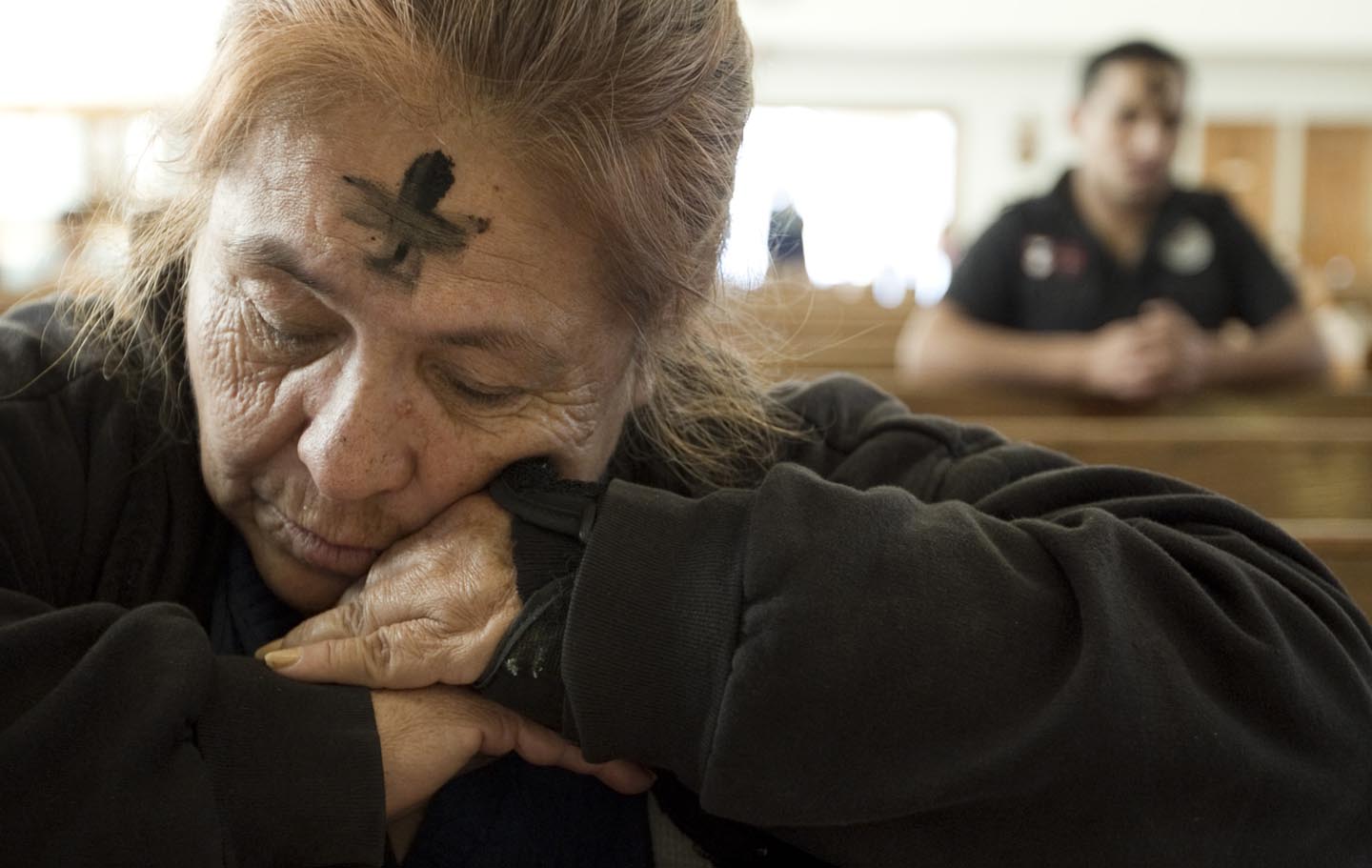
Welcome to Ash Wednesday. Lent begins.


ash-wednesday-pew-lentToday is Ash Wednesday. In just under two months from today we’ll come to the highest point in the Christian Church calendar, Easter. That is where we’ll celebrate Christ’s Resurrection and how God’s perfect world broke into the present and our greatest enemies–sin and death–were conquered and shown to have no more dominion over us and the rest of the world. It’s meant to be the most effusive, overflowing, even ridiculous time of joy.

And yet, when we look at Jesus’ Resurrection, we see that before it ever took place, there was Death. And before that, there was an entire lifetime of loneliness, pain, suffering weakness, and isolation. We see that it was a life surrounded by evil forces and whispers that haunt and hurt Jesus and the people he loved.

And so, our early Church Mothers and Father thought it would be wise to have this time before Easter to prepare, so we might end up celebrating during Easter all the more.

Resurrection was itself a statement against our two greatest enemies: Sin and Death. And so to participate in Resurrection, we take the time of Lent to meditate and press into those things to which Resurrection was the response. We do this not out of morbidity, but out of anticipation.

Continue reading

Haha. Such a great narrative turn. | Genesis 6.5-8


The Lord saw that the wickedness of humankind was great in the earth, and that every inclination of the thoughts of their hearts was only evil continually. And the Lord was sorry that he had made humankind on the earth, and it grieved him to his heart. So the Lord said, “I will blot out from the earth the human beings I have created—people together with animals and creeping things and birds of the air, for I am sorry that I have made them.”

But Noah found favor in the sight of the Lord.
Genesis 6:5-8

Greatest narrative turn ever.

See other Marginalia here. Read more about the series here.

The Holy Spirit exorcizes, no matter who you are | Matthew 12:24-28


But when the Pharisees heard it, they said, “It is only by Beelzebul, the ruler of the demons, that this fellow casts out the demons.” He knew what they were thinking and said to them, “Every kingdom divided against itself is laid waste, and no city or house divided against itself will stand. If Satan casts out Satan, he is divided against himself; how then will his kingdom stand? If I cast out demons by Beelzebul, by whom do your own exorcists cast them out? Therefore they will be your judges. But if it is by the Spirit of God that I cast out demons, then the kingdom of God has come to you.

Matthew 12.24-28

Even those that are not the people of God exorcise by the Holy Spirit. Don’t be so quick to discount the healing just because you disagree with the person or even if they’re not Christian! God is the Gospel of healing. However shalom happens, it is the Spirit that brings it.

See other Marginalia here. Read more about the series here.

Preaching the Gospel to Christians | Romans 1:14-16


I am a debtor both to Greeks and to barbarians, both to the wise and to the foolish—hence my eagerness to proclaim the gospel to you also who are in Rome.

For I am not ashamed of the gospel; it is the power of God for salvation to everyone who has faith, to the Jew first and also to the Greek.

Romans 1:14-16

Notice here that Paul wants to proclaim the gospel to those who are already believers! This Gospel is the whole of the Christian life, not simply our starting place. It not the ABC’s, after which we need theology, doctrine, good works, etc. It is the A-to-Z of the Christian life. When we think our churches, our preaching, and our lives essentially need something more than that, we begin to stray from the Gospel altogether.

See other Marginalia here. Read more about the series here.

Noah, Prophecy, & the Comfort of the Earth | Genesis 5.28-29


When Lamech had lived one hundred eighty-two years, he became the father of a son; he named him Noah, saying, “Out of the ground that the Lord has cursed this one shall bring us relief from our work and from the toil of our hands.”
Genesis 5.28-29

Noah’s name means “comfort” or “rest”. This is an interesting prophetic statement concerning Noah. Hebrew irony at its best. The same Hebrew word for “earth” is used here as “ground”. Same word as in “God created the heavens and the earth”. So, how Noah will bring “relief” from the toil is by playing a part in the undoing of God’s creation of “the heavens and the ground”. In other words, he comes out of the ground to bring comfort to that ground by undoing the ground. Oh, Hebrew.

See other Marginalia here. Read more about the series here.

Universal Intimacy: The Beautiful Transition | Matthew 11:25-39


At that time Jesus said, “I thank you, Father, Lord of heaven and earth, because you have hidden these things from the wise and the intelligent and have revealed them to infants; yes, Father, for such was your gracious will. All things have been handed over to me by my Father; and no one knows the Son except the Father, and no one knows the Father except the Son and anyone to whom the Son chooses to reveal him.

“Come to me, all you that are weary and are carrying heavy burdens, and I will give you rest. Take my yoke upon you, and learn from me; for I am gentle and humble in heart, and you will find rest for your souls. For my yoke is easy, and my burden is light.”
Matthew 11:25-39

What a beautiful transition; from words of exclusivity to words of rest and invitation. It is precisely into the intensely exclusive intimacy between the Son and the Father into which we are invited to come and find rest. This is true Christian “Universalism”: the whole cosmos is brought into the exclusive, fiery love of the Trinity.

See other Marginalia here. Read more about the series here.

The Good News changes, the Good News gifts | Acts 20.32


“And now I commend you to God and to the message of his grace, a message that is able to build you up and to give you the inheritance among all who are sanctified.”
Acts 20.32

Nice. The message of grace itself is enough to sanctify and grow them. Just the message. Further, this message–again, the message itself–gives us the inheritance of the Holy.

See other Marginalia here. Read more about the series here.

Women at the Cross | Matthew 27:55-56


Now when the centurion and those with him, who were keeping watch over Jesus, saw the earthquake and what took place, they were terrified and said, “Truly this man was God’s Son!”

Many women were also there, looking on from a distance; they had followed Jesus from Galilee and had provided for him. Among them were Mary Magdalene, and Mary the mother of James and Joseph, and the mother of the sons of Zebedee.
Matthew 27:55-54

It’s really interesting to me that Matthew adds this little addendum to the end of the account. Why point out the women that were there? Is the assumption that all the men have scattered, and so Matthew had to show his sources for this story?

See other Marginalia here. Read more about the series here.

Abraham’s son Ishmael was part of Covenant! | Genesis 17.23-27


This is my covenant, which you shall keep, between me and you and your offspring after you: Every male among you shall be circumcised… and it shall be a sign of the covenant between me and you…. Both the slave born in your house and the one bought with your money must be circumcised. So shall my covenant be in your flesh an everlasting covenant. Any uncircumcised male who is not circumcised in the flesh of his foreskin shall be cut off from his people; he has broken my covenant.”… As for Ishmael, I have heard you; I will bless him and make him fruitful and exceedingly numerous; he shall be the father of twelve princes, and I will make him a great nation. But my covenant I will establish with Isaac, whom Sarah shall bear to you at this season next year.”…. Then Abraham took his son Ishmael and all the slaves born in his house or bought with his money, every male among the men of Abraham’s house, and he circumcised the flesh of their foreskins that very day, as God had said to him…. And his son Ishmael was thirteen years old when he was circumcised in the flesh of his foreskin. That very day Abraham and his son Ishmael were circumcised; and all the men of his house, slaves born in the house and those bought with money from a foreigner, were circumcised with him.
Genesis 17.23-27

Yes, God said that Ishmael would not be the primary bearer and “administrator” of the covenant, but he still bears its marks. Reminds me of a reading from Lesslie Newbigin where he talks about how through our election and Covenantal relationship with God, Salvation is extended to all the nations. “Election” isn’t about blessing; it’s about responsibility to extend the Blessing to others.

Other peoples (even those not in the elect people of God) participate in and receive the full benefits of being part of the Covenant. To be elect is to extend these Covenantal blessings to all nations (as we see here with Abraham). To be marked as God’s is to be placed on mission.

Ishmael was still joined to the covenant! Praise God for his gratuitous grace!

See other Marginalia here. Read more about the series here.