Urban Lessons: Why cities will kill your soul.


paul-philly-skyline-2I just completed my first trimester of seminary (round 2). I took a class class on Urban Christianity that, while it may not sound like a difficult and comprehensive graduate course, really was demanding at every level. So much so, in fact, it has really changed a lot of the ways I’ve thought about the city and how humans relate to it (especially Christians).

The class really caught me at just the right time. To a certain extent, even before coming to this class, I “got” it. I had imbibed enough Tim Keller and Church Planting material to understand the centrality of the city in the story of the Bible. Further, my church is now my fourth urban church plant, I go to church and live, literally, in “Center City” Philadelphia, and I work in the midst of the brokenness of the city, seeing the extremes of its beauty and brokenness in ways that few people do in their everyday lives.

And yet, especially due to the rural roots of “certain people” extremely close to me (haha), I felt I needed to engage in this class to develop a far more nuanced view of the city. And I think I got that. Over a few posts over the next couple of weeks, I’d like to share some of the lessons I’ve learned through this time. I think some of these things are lessons that all of us cool urban twentysomethings could do well to internalize.

Continue reading

Catholics Aren’t Crazy: On Praying to Saints (Happy All Saints’ Day!)


This is a post in an on-going series called Catholic Aren’t Crazy exploring misconceptions Protestants have about Catholicism and lessons we can learn from them.

UPDATE: I responded to some critiques and gave some clarifications.

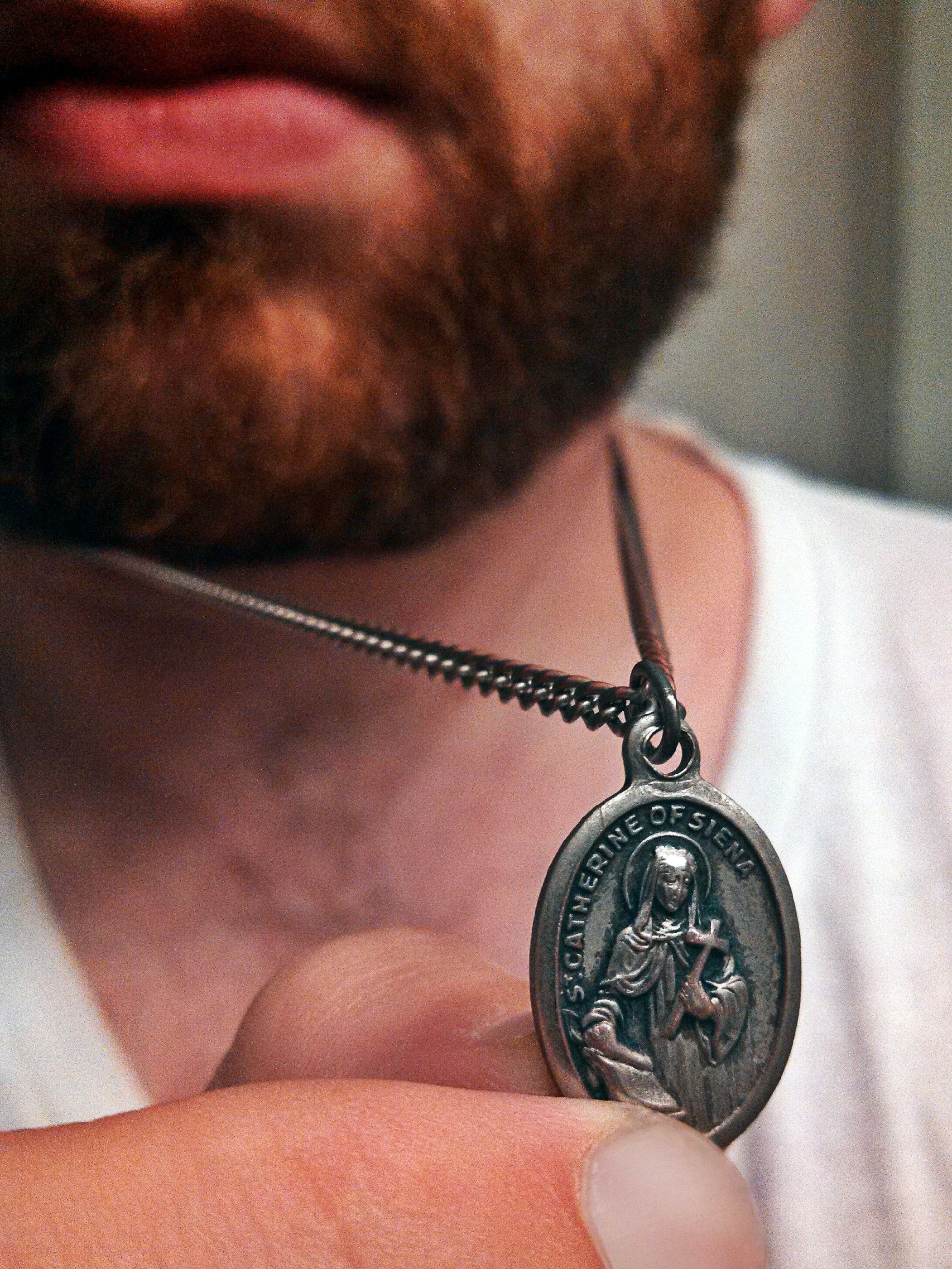
UPDATE II: Here’s the story of the Saint I pray to, Catherine of Siena.

Yesterday was Halloween. That makes today All Saints’ Day (read more about the history of these holidays in yesterday’s post).

All Saint’s Day has taken on different meanings for different groups of Christians. What seems to stay consistent, though, is that it is a celebration of the victory attained by those faithful Christians who have died. They are no longer pilgrims, as we are, but are the triumphant ones, having finished their race well and been brought into their peace with God. We celebrate Christ’s effectual victory over sin and death and that this has been granted to those that have gone before us.

The hope and encouragement in this holiday is not simply that we “remember” these saints, or meditate on their example. Instead (and this is important), there has been a long-held belief in the Christian Church that we still have a mystical communion and relationship with those saints that have already died. When Christians throughout Church history (and the Bible) have referred to “The Church”, they don’t simply mean those still around today, but all the saints who have ever lived (even in the Old Testament!). We are all the Church.

So we can truly celebrate those that have gone before us because we are truly still connected to them in a very real and vibrant way.
Continue reading
Karl Barth: Our Freedom, Our Home, & God’s Directing [AMAZING QUOTES]


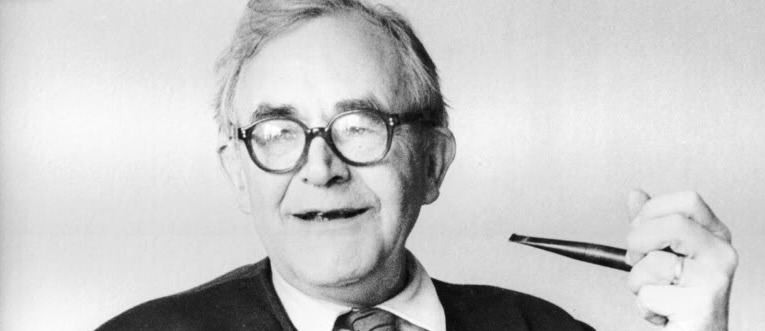
karl_barth crop

I’m writing this long paper on the ancient Christian Practice of Discernment. In my research, I pulled out some Karl Barth, my favorite theologian (hands down), and got to soak in the beauty of these words, and I wanted to share them. Now, for people that don’t read “real” and “proper” theology, this is it. It’s circular, it repeats itself, and it’s unnecessarily complicated and unclear. I know. I get that. But I promise, if you can spend a few minutes, quiet yourself, and focus, I promise the pay-off is huge. This guy stands as a tower over all of modern theology and deserves more attention than he gets. I’ve done slight edits to some of the wording and paragraph breaks for clarity. Enjoy.

* * * * * * * *

God’s direction is an all-powerful decision, His own divine act of lordship. By this means, too, God vindicates His honor and maintains His glory. By this means, too, He exercises authority….

God’s direction is the directing of humans into the freedom of His children. It is this which has taken place in Jesus Christ no less uniquely than the once-for-all fulfillment of the divine sentence on all humanity. In suffering in our stead the death of the old nature, and bringing in by His resurrection the life of the new, He has made room for the being of all humanity to be at peace with God.

On the basis of what we are and is not by virtue of the divine sentence passed and revealed in Jesus Christ… we have no other place but this—the kingdom in which God can be at peace with us and us at peace with God. Jesus Christ…is the all-powerful direction of God to us to occupy this place, to live in this kingdom. If we are told in Him who we are and are not, we are also told in Him where we belong, where we have to be and live.

Continue reading

Good Morning (prayer)! [photo sermon]


ultimo-coffee-cortado

Each week, WordPress has a Weekly Photo Challenge, where they give a theme and invite people to highlight photography representing that theme, accompanied by a few meditations on it. OccasionallyI try and write a “photo sermon” or meditation based on those themes, accompanied by a photo of mine . This week’s theme is “Good Morning“.

* * * * *

In one of those oddities of tire human condition, I love sleep, and yet I avoid it like the plague. I have a terrible sleep schedule. My sleep pattern is a microcosm of my lack of discipline in many parts of life, and maybe even an extremely low level of self-harm, where my body and heart wouldn’t really know what to do if it were consistently well-rested. There’s something about a constant weight of tiredness that—maybe—makes one feel “productive”, even as it steals productivity away from you.

This is a lie. I know. I’m working on it in therapy.

In some Christian circles, people claim “life verses” for themselves; bits of the Bible that they feel speak to them so deeply that the words amount to a blanket summary, call, encouragement, guiding principle, or telos to their life. People usually pick a “life verse” that speaks to what they want their life to be or how they want God to work in their lives.

Continue reading

“Coffee Crucifix” (a sonnet for National Coffee Day)


Coffee Crucifix

Crescent ring under porcelain smooth
___stain the wood-stained finish.
______(It is finished.)
___Marked with muddy water;
___mark the merry day; to
___marry the murdered man.

Floral notes in blackened waves
___crash the shore of trembled lips.
Choral bright, in darkest night,
___wake the tone of trebled kiss.

Younger tastes left open-wide; older eyes made
satisfied.

Mark the wood: complex simplicity.
Pierce my heart: storied infinity.

[read my other Holy Week poetry here]

all writings licensed: Creative Commons License

Heidelberg (Hyper-)Calvinism? | (a celebration)


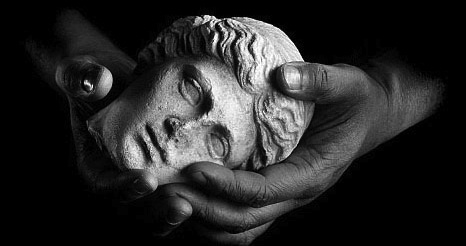
morlock-hands-cradling-stone-head

Q. What is your only comfort in life and in death?
A. That I am not my own, but belong—body and soul, in life and in death—to my faithful Savior, Jesus Christ. He has fully paid for all my sins with his precious blood, and has set me free from the tyranny of the devil. He also watches over me in such a way that not a hair can fall from my head without the will of my Father in heaven; in fact, all things must work together for my salvation. Because I belong to him, Christ, by his Holy Spirit, assures me of eternal life and makes me wholeheartedly willing and ready from now on to live for him.

So begins the Heidelberg Catechism, a 16th-century document written under extraordinary circumstances. Long story short, after the counter Reformation, different “princes” over different regions were allowed to declare what “denomination” their region would be. The problem for Frederick III? His region was split pretty evenly between Lutherans and Calvinists. And so, he brought together some people from different traditions, and had them write a document they all agreed upon. The Heidelberg was born.

This document is one of the main doctrinal statements of my denomination, the Reformed Church in America (RCA), and my church. I’ve read little bits and pieces of it in the past, but I recently sat down and read the whole thing. And I was pretty surprised.
Continue reading

What is Discipleship? A Definition.


discipleship-silhouette

For one of my spiritual formation classes, I had the privilege of reading Deitrich Bonhoeffer’s Life Together and Henri Nouwen’s In the Name of Jesustwo incredible books. Last night, after having read these books, we were then asked to offer our own one sentence definition of Discipleship, and then spend some time expounding on the definition. Here was my contribution. Feel free to add your own definitions below.

______________________________

Discipleship: The cultivation of an inner and outer life–with both ourselves and others–that is marked by a humble reliance on the work, words, life, and leading of Christ and His Spirit.

The thing that struck me most about these readings as it pertains to discipleship was the weird paradox of one’s inner- and outer-lives. In both Nouwen and Bonhoeffer, there is such an emphasis that our hearts’ goal should be nothing less than the heart of Christ Himself and our reliance upon it. And yet, the primary access point to this Heart is found in the simple, mundane bodily actions we take upon ourselves with regularity.

The way in is from without, I suppose.

Especially for those of us in seminary and who minister in a Church context, isolation in these endeavors can be such an easy temptation. I don’t even pastor a church, and yet as a deacon leading a home group or class or the Sunday liturgy, I feel that damnable desire just to be liked, and not be seen for who I really am.
Continue reading

Martin Luther on Baptizing Babies


“You say you don’t baptize children because they don’t believe. Why do you preach the Word to adults who don’t believe, unless perhaps in the hope that they may believe? You do it on the strength of God’s command alone. For if you baptize me because I say I believe, then you baptize on account of me and in my name. Therefore, since you don’t know whether I believe or don’t believe, you do it only because of God’s command. It isn’t necessary to exclude children, since as a rule you baptize all, whether they believe or not. It would be a terrible thing if I were baptized on the strength of my confession.”

– Martin Luther (Table Talk No. 549) on paedobaptism

Discipleship: Making Good Little Pharisees?


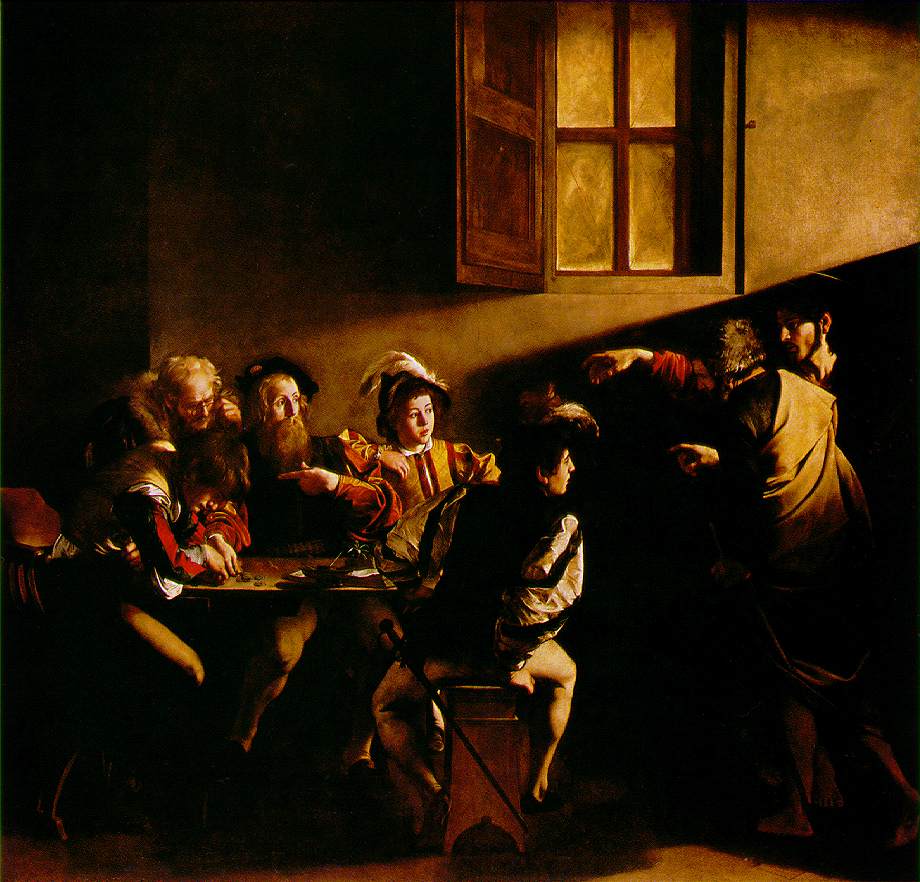
Caravaggio-The Calling of Saint Matthew{summary: the way we disciple others in the church is far too often a results-based process, and not a grace-driven one. Here, I explore Jesus’ example in Matthew as a guide for us. And, once again, we see Jesus’ radical application of grace to his Disciples’ lives.}

I’m taking a class on “The Practice of Discipleship”. Some discussions on our online message boards inspired these thoughts. Discipleship, as many people could tell you is all about “following Jesus”. After all, that’s how Jesus himself invited his disciples into it. But as I was thinking about this, I realized something: Pharisees had disciples too.

Now, with “Pharisee Discipleship” the point was to let that Pharisee get all up in your business so that you could become a good, well-behaved Pharisee someday. Christian Discipleship, as we are often told, is not about following Christians per se, but following Christians who are following Christ. The ultimate goal is to follow Christ and to help one another do that.

This is how it works in theory. I can’t speak for everyone, but at least in my experience, a lot of Christian Discipleship subtly looks more like the type that creates well-behaved Pharisees than the one that truly follows Christ.
Continue reading

My Walk to Church: One Shot, Two Ways (a photo sermon)


rittenhouse-alley-church-hor

For those new to  the blog: each week, I try and write a “photo sermon” based on the themes of the WordPress Weekly Photo Challenge. This week’s theme is “One Shot, Two Ways“, which is a silly title to describe taking two shots, from the same place, at the same time, but trying to make them very different.

* * * * *

Whenever I walk to my church, it’s one of the strangest experiences for me. I grew up in the South, when Sunday morning was a time of slow traffic, long lines at Donut shops, and lots of people milling around as they meander their way to their respective churches.

Not so, in Philadelphia.

As I walk down the few neighborhood blocks that stand between my house and the city center, I’m quite often by myself. I occasionally have my heart sink when I see a woman making the “walk of shame”, where she’s walking home in the same dress and heels from the night before, trying to fix tussled hair and making sure all of her personals are still in her purse as she walks. It could just be the time of morning and a potential hangover, but she never looks happy.

I usually see runners. They enjoy being able to run on the city streets in the cool of the morning with no annoying pedestrians to dodge. I also see a fair share of dog owners, still in pajamas, annoyed that their pet couldn’t hold it for a few more hours and give them more sleep.

Continue reading

Some random, contradictory thoughts on Hell. Discuss.


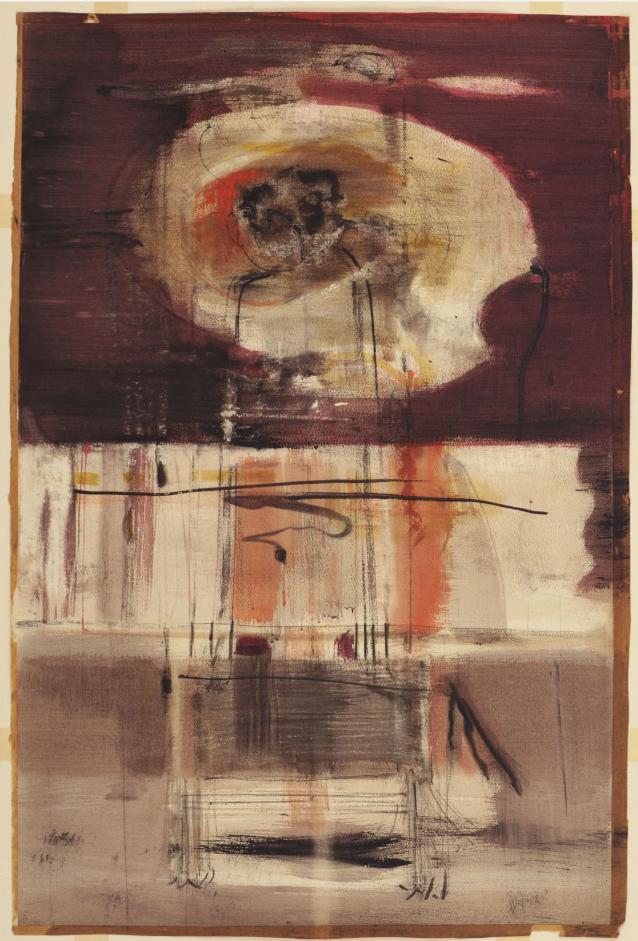
Rothko-untitled-2Below, you’ll find a random assortment of 30 completely disjointed musings on Hell. Each paragraph is its own statement, in no particular order. This is not meant to be a discussion of where I currently land on this issue. I’d love to just get your thoughts. Respond as you like, below.

(1) In the past 10 to 15 years, the American Church saw a new emphasis on Idolatry as the foundation of sinfulness, rather than “Law-breaking”. I’m starting to see a new re-emphasis on Law-Breaking and Hell as punishment for this. And yet, the “Law” is always connected to God’s Image and Character, and so Law-Breaking is living by a wrong law, or image, and therefore is idolatry. We have an analogy for how a Judge responds to breaking the law, and this leads to the popular view of Hell since Medieval times. But what is the analogy for the response to transgressing an image?

(2) Can any Universalist tell me what the point of missions or Evangelism is in this life, if their perspective is true?
Continue reading

Foreshadowing the City [a photo sermon]


philly-traffic-skyline-sunset

For those new to  the blog: occasionally, I try and write a “photo sermon” based on the themes of WordPress’ Weekly Photo Challenge. This week’s theme is “Foreshadow“.

* * * * *

Foreshadowing is a huge part of the Christian faith. The opening words of the Bible offer us the problem that the rest of the book will explore a solution to. It says, “In the beginning, God created the heavens and the earth.” From the beginning, “heaven” and “earth” are two different things, in two different “places”. God intends to bring them together and make them one. How will he do it? The book invites us to read on.
Continue reading

“Simplistic Atheism: a final response” by Daniel Bastian [GUEST POST]


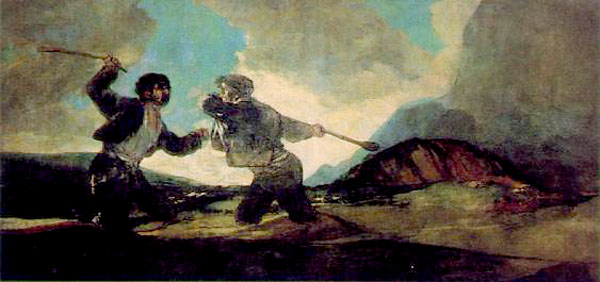
de Goya-fight with cudgels"

(Note: These exchanges are now complete. There is a Table of Contents to the discussion now available.)

Well, it seems that we were not in fact done with this little series. After my final post, Daniel chose to take me up on my offer to have the final word (as I normally try to do in exchanges like this). He has chosen to respond, point-by-point, to my list of what things would lead me to embrace Atheism. If you feel like any of the points still demand a reply from me, or if you have any questions about what Daniel says, feel free to to comment here, on Facebook, or get in touch with me privately. For my part, though, I consider this particular set of exchanges finished. Once again, I thank Daniel for this exchange. I hope you enjoyed it as well.

Paul,

When I initially decided to compile a list of criteria that would convince me my conclusion on the question of theism was wrong, I had sincere hope that a Christian, Muslim or other person of faith would tally up a corresponding register. I am glad to see you rose to the challenge and enrolled in this dialogue. It has been a wonderfully enlightening experience for me, and I do hope that sentiment is mutual.

I read your piece the day it was posted and while at first I found much of it persuasive, the more I reflected the more I realized it was probably the list I would have drafted two years ago, before I renounced my faith. Much of your criteria seems to rest firmly on the aesthetic appeal of the Christian narrative. And this would seem to slot right in line with your epistemological moorings-a concern for the communal connection, compelling force and overall mesmerism of a worldview over against its underlying facticity.

Yet it seems this only holds true up to a certain threshold, given a few of the items on your list. You seem to be OK with affirming the faith given its impact on your life, the power of influence you’ve seen it have on history, and the way it has shaped others with which you’ve crossed paths. But if you were to discover beyond reasonable doubt that this narrative was based on so much myth, that this loosely corroborated Yeshua the gospels are based on was a mere mortal (item #1), you would relinquish the faith forthwith.

Thus it seems to me that our epistemic divergence is one of degree, not of type. With that in mind, I’ll attach some brief notes beside the items in your list. Continue reading