Humbled into Pride (thanks & sorry) {a confession}


paul-pipe-bwLast week was an odd week on the blog. It was one that humbled me in such profound ways. The readers of this blog shocked and amazed me with their kindness, encouragement, and continued support of what I try to do here.

My series of discussions with my Atheist friend concluded on (what I felt was) a high note. The number of readers of that series numbered into the thousands, even though the writings were so long. (I copied and pasted all the posts into a single Word document just for the heck of it, and it was over 100 pages long–single-spaced! So if you read most of those, then congratulations, you finished a book in a week-and-a-half.)

People in all parts of my life were reading (at least some of) these pieces. People at work, church, Facebook, and Twitter all sought me out to encourage me in these conversations. The diversity of people who were keeping track of this stunned me and humbled me. I couldn’t believe how many people would spend their time reading stuff I wrote and listening to my own thoughts and opinions about things.
Continue reading

Simplistic Atheism {4}: What could make me an Atheist?


paul-schrott-painting-11-11

(Note: These exchanges are now complete. There is a Table of Contents to the discussion now available.)

In this series of exchanges with my friend Daniel, I’ve tried to argue that his Facebook post on why he is an Atheist expressed an overall view of the world that is too small and too simplistic. I think this is because of his empiricist method and materialist conclusion about reality–that all there is is what we can see, touch, feel, etc.

Some concluding remarks

My whole point has not simply been that Daniel’s facts or even his method is wrong. But rather, it finds its proper place, meaning, fullness, and possibility within the Christian view of reality. I have argued in each of my posts that Christianity does not “refute” reason, science, history, skepticism, textual messiness, historical difficulty, or even doubt. Instead, the Gospel encompasses it all, and each of those things find a greater fulfillment in their use, cohesion in the whole of the world, and reality within that place.

Continue reading

Simplistic Atheism {1}: a Reason & Spirituality that’s too small


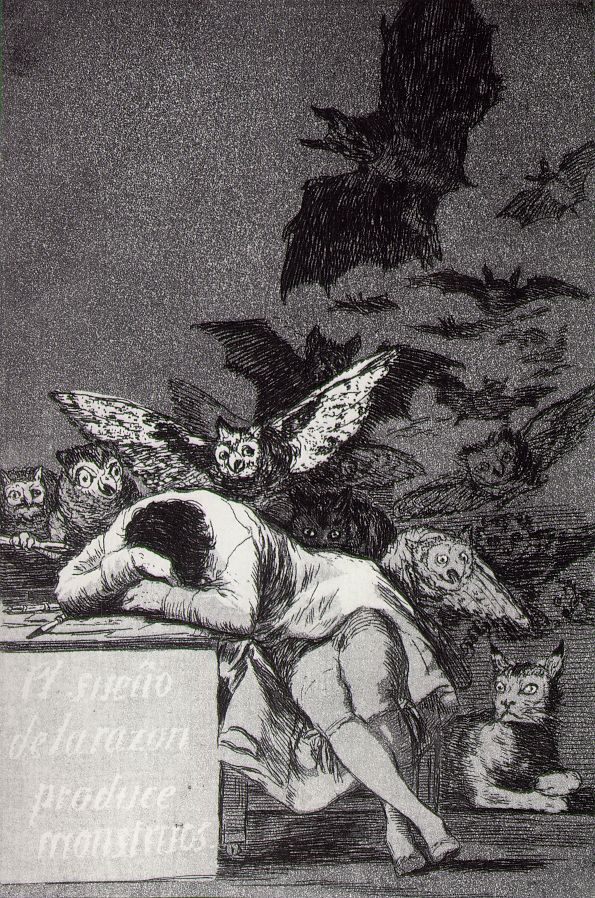
de-Goya-Sleep-Reason-produces-monsters

(Note: These exchanges are now complete. There is a Table of Contents to the discussion now available.)

Last week a friend of mine named Daniel Bastian posted a well thought-out catalog of the reasons why he is an Atheist (let me know if the link doesn’t work). This list includes items that don’t usually pop up in similar offerings, and I encourage every Christian to read this list and wrestle through the realities of what he says.

As I thought about it, though, and thought through how I would respond to some of these things, I found a consistent theme to what I would critique to each of his points: over-simplicity. In this series of posts, rather than going through each of the writer’s twenty points, I’d like to go through some broader ideas he touches on, and offer my thoughts.

By the time I was done writing everything up, I had at least four parts to this response. Today, we’ll briefly talk about how Daniel’s post represents an over-simplifying of human reason and spirituality..
Continue reading

Listen to the Hurting {ii}: how now shall we suffer?


Rothko-untitled-2Yesterday I wrote about how our offense and struggle with evil and suffering in the world is often detached from the feelings and words of those that actually endure much of it. I said that intense Suffering doesn’t seem to produce an extinguishing of faith to those that experience it.

People have often said that the deep suffering and injustice of the world is one thing that led them to Atheism or skepticism, but this seems to be more the case for those that observe and think about the idea of suffering, more than enduring it themselves. Yes, there are stories of those that lose their faith in the midst of their suffering, but they really are so few and far between.

This is one of the main themes of Dostoevsky’s Brothers Karamazov. The most powerful argument for Atheism I’ve ever read is in the famous “Grand Inquisitor” chapter. After reading it, I was so deeply shaken for a few weeks after. And it was written by a Christian.

One of the central themes of the book is that Atheism is an absolutely logical and reasonable system, but not one that can be consistently lived out. When observing the world and its injustice intellectually and from a top-down perspective, Atheism is probably more easily sensible than Christianity. But, as the book goes on to show, no matter the philosophical veracity of Atheism, no one can truly live real, actual human life as a fully-consistent Atheist and flourish as a human, in human relationships, and in human society.

Even if people think about suffering Atheistically, people usually live in the midst of it religiously.
Continue reading

Listen to the Hurting {i}: why Suffering is a silly reason to be an Atheist


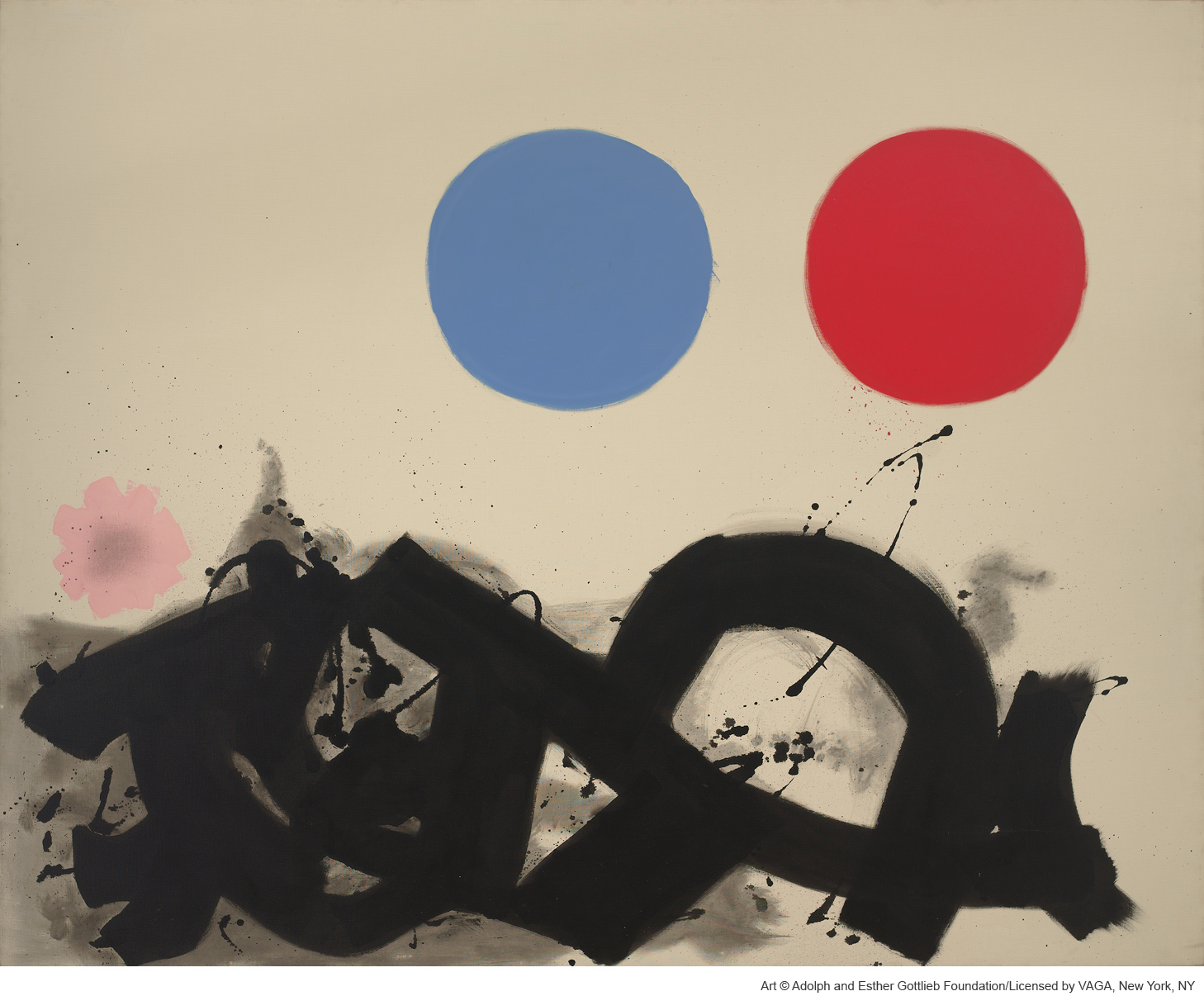
Adolph Gottlieb-rolling

Update: Part 2 is up.

In the religious circles I walk in, I hear about injustice and suffering quite a bit. Theology friends constantly muse about how to view these things in light of biblical revelation. Atheist and skeptic friends constantly point to these things as the inherent illogical inconsistencies that undermine religious faith.

And caught in the middle are many, many more friends, who live their lives trying to navigate their jobs, families, and relationships the best they can–all while these questions haunt them in their quieter moments or right before they sleep. Unlike the other two groups above, they don’t feel like they have answers. And this can lead to periods of doubt, insecurity, and frustration.

For every group, though, questions abound in these conversations. Oftentimes, they have a religious flavor. Why does this stuff happen? How does this relate to the goodness of God? What does it mean for the reality of God? How is God just when this stuff is real? Why does God seem absent?

And yet…

These are almost never the questions I hear from the people actually going through the suffering.
Continue reading

The Suffering of The Holy Spirit


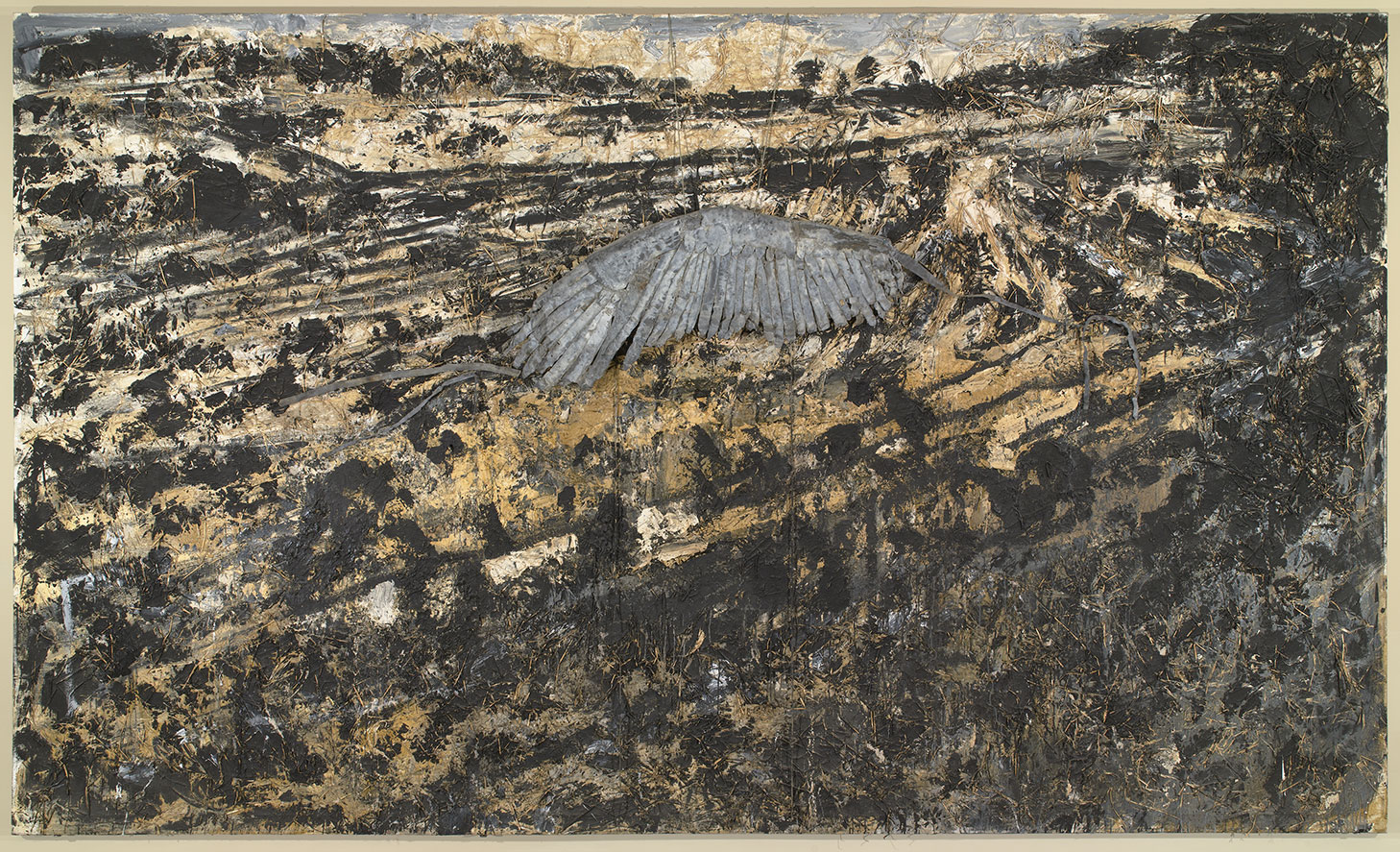
Anselm Kiefer-Landscape with a WingIf you’re like me, and were raised in the most previous generation of the American Church, the more painful parts of human existence didn’t really make an appearance in the course of religious conversations. There was talk about doctrine, and piety, and all “those people” that were sinners, but the only real insight that could be given to those that were hurting was that they needed to read their Bible more, trust Jesus more, sin less, so on and so forth.

Suffering was unconsciously assumed to be something outside of the everyday experience of the “victorious” and “justified and sanctified” Christian. People responded to the suffering of others with a cautious distance, thinking something had gone horribly wrong with their life, God’s providence, or their souls.

And then I had the privilege of sitting under amazing teaching in college that really brought suffering to the fore. I was encouraged that suffering was not “supposed” to be an aberration in life, but rather the expectation of how things are. We didn’t pursue it, but we certainly didn’t need to, because it would find us.

Continue reading

When easy & simplistic proof-texting trumps the nuance & complexity of wrestling pastorally with the text


On Tumblr, a very, very dear friend posted this earlier, in support of the Doctrine of Double Predestination, which says that in eternity past, God predestined not only who would be saved (apart from their own works), but also those who would not be saved (apart from their own works):

“They stumble because they disobey the word, as they were destined to do.” 1 Peter 2:8

Double predestination

#it’s biblical

In one of the most widely used Bible commentaries in existence, I found these words written about this verse, starting with commenting on the word “also” (which isn’t found in my friend’s translation of the verse). I’ve changed some formatting and some grammar to make it easier to understand. Enjoy:

“also” [as in “as they were also destined to do”;  this is in the Greek, though Revelation 19’s translation doesn’t have this]—[this is] an additional thought; God’s ordination; not that God ordains or appoints them to sin, but they are given up to “the fruit of their own ways” according to the eternal counsel of God. The moral ordering of the world is altogether of God. God appoints the ungodly to be given up unto sin, and a reprobate mind, and its necessary penalty.

The phrase “Were appointed,” (Greek, “set,”) is an answer to the “I lay,” (Greek, “set,”) found in 1Pe 2:6.

God, in the active, is said to appoint Christ and the elect (directly). Unbelievers, in the passive, are said to be appointed (God acting less directly in the appointment of the sinner’s awful course) [Bengel]. God ordains the wicked to punishment, not to crime [J. Cappel].

“Appointed” or “set” (not here “FORE-ordained”) refers, not to the eternal counsel so directly, as to the penal justice of God. Through the same Christ whom sinners rejected, they shall be rejected; unlike believers, they are by God appointed unto wrath as fitted for it.

***The lost shall lay all the blame of their ruin on their own sinful perversity, not on God’s decree; the saved shall ascribe all the merit of their salvation to God’s electing love and grace.***

(from the “Commentary Critical and Explanatory on the Whole Bible)

What are your thoughts on this issue? How important do you think it is in the grand scheme of the Gospel?

The Lord is Fleeting [photo sermon]


train-knitting-fleeting

For those new to  the blog: each week, I try and write a “photo sermon” based on the themes of WordPress’ Weekly Photo Challenge. This week’s theme is “Fleeting“.

* * * * *

A garden cool. A God at leisure. Lovers conspire. Nectar tasted.

The God is gone.

He appears in visitors and shapes and shadows, and as a voice to an ancient Babylonian:

“I will make you…”

The Babylonian’s faith is counted as righteousness, and deservedly so, for this man doesn’t hear the voice of God in any way for decades. (And I get mad when his voice leaves me for months.)

This God lets his people sit in slavery for hundreds of years. When his Chosen asks to see his Glory, He offers only the briefest glimpse of his back. When His People stray at Sinai, He still offers to give them every benefit that He promised–the land, the victory, and their identity. The only difference: He would send his angels with them and withdraw his own Presence.

They freak out.
Continue reading

Diving into Death


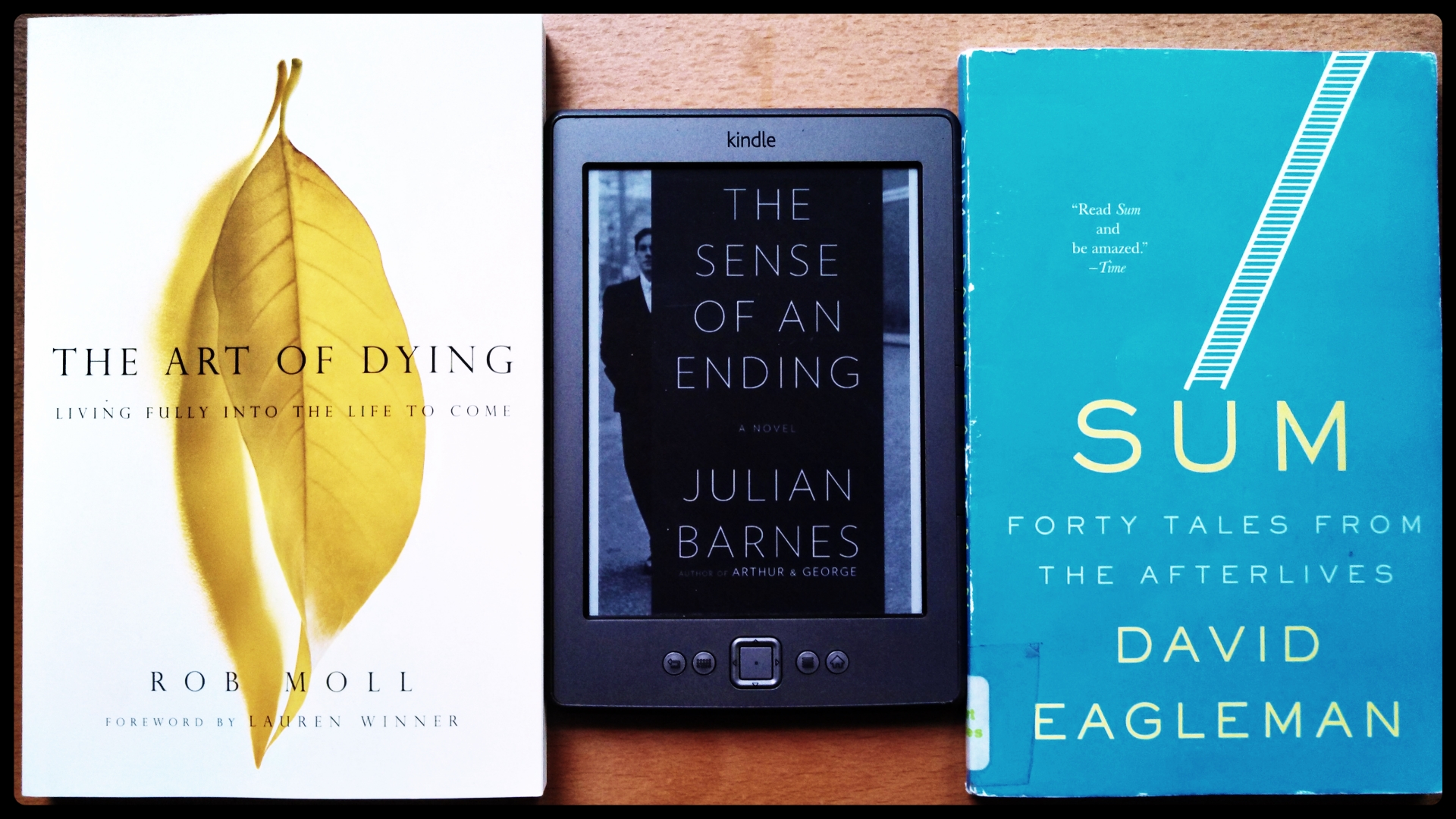
books-death

It’s always difficult to talk about one’s own fear of one’s own death. It usually comes across as a little melodramatic and seems to carry with it the appearance that somehow your fear of your death is somehow felt more deeply, analyzed more fully, or experienced more truly.

In short, when people start whining about their fear of death. It can be annoying. I acknowledge this. And yet, here I am, telling you all that I am really, really scared of death.

When I mention this to people that know me as the guy who writes a lot about faith and seems to believe these things pretty deeply, people are (for some reason) shocked to hear me explain just how deep my fear of death goes. I know it’s not logical, but I somehow find the past works of God more easily believable than the future acts of God. I know you can’t have one without the other, but the human heart is a storm of contradiction and paradox.

And for some reason, Death has occupied my thoughts of late. Sure, I’ve wrestle with it’s reality, thought through it’s theological origin, seen it in the faces of the hurting, wrote about how to live in spite of it, and even engaged it in poetry and in song, but something has really captured me recently. I’ve been sitting in the presence of this fear.
Continue reading

Ascension: Our glory & the Bible’s hinge


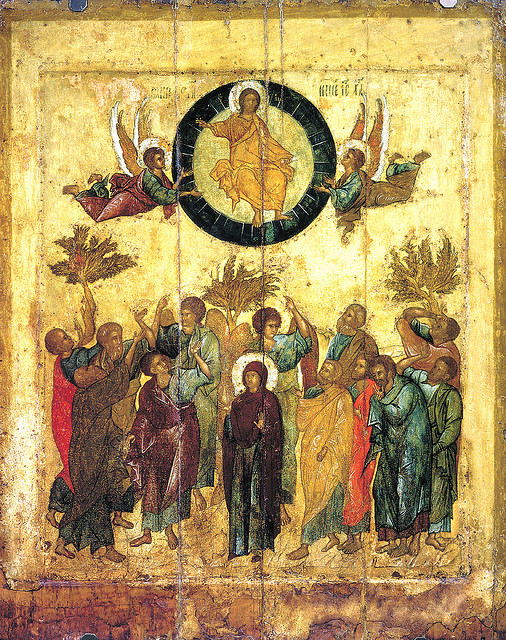
jesus-christ-ascension-iconToday in the Christian church calendar is Ascension Day, the day we celebrate Christ ascending into heaven 40 days after his resurrection and now sits at “the right hand of God the Father.” (You can read a prayer and poem I posted earlier for this Holy Day)

The Useless Ascension

The idea of “Ascension” doesn’t seem to get a lot of play nowadays in the Church. This, in spite of the fact that it is an essential part of all the Church’s earliest doctrinal formulations, and the subject of the most-quoted Old Testament verse in the New Testament:

The Lord says to my lord, “Sit at my right hand until I make your enemies your footstool.”

Compared to other, non-creedal things like Hell, homosexuality, and “attacks on biblical authority”, the Ascension isn’t really talked about. Maybe this is because the Ascension isn’t really a “doctrine”–it’s an “event” and a “declaration”.

And we western Christians love our systematic “doctrines” that we can pick apart as nauseam and/or figure out how we can “apply it to our lives” in such a way that we can feel like we’re “good Christians.” But honestly, the Ascension doesn’t have many direct applications for today.
Continue reading

Trickle-Up Resurrection (Guatemala Lessons)


Rothko-easterMy church is currently in a series called “Resurrection Stories” in which we’re going through each of the non-Jesus stories of resurrections (or “resuscitations”—whatever) found in the Bible. It is, after all, still Easter.

A few weeks ago, as we were talking about Elisha raising the Shunnamite’s son, our pastor pointed out that most of these resurrection stories seem to center more on the people around the dead person than the dead person themselves. And so, in a sense, these resurrections are more for the people affected by death than the one dead; the ones that “receive” the true resurrection power are mostly those around the resurrected one.

Further, as he pointed out, most all of these people that “receive” the truest benefits of these resurrections are women—the most alienated and disempowered group throughout world history.
Continue reading

Why I’m in Guatemala: Meet Lemonade International


La-limonada-lemonade-international-guatemala

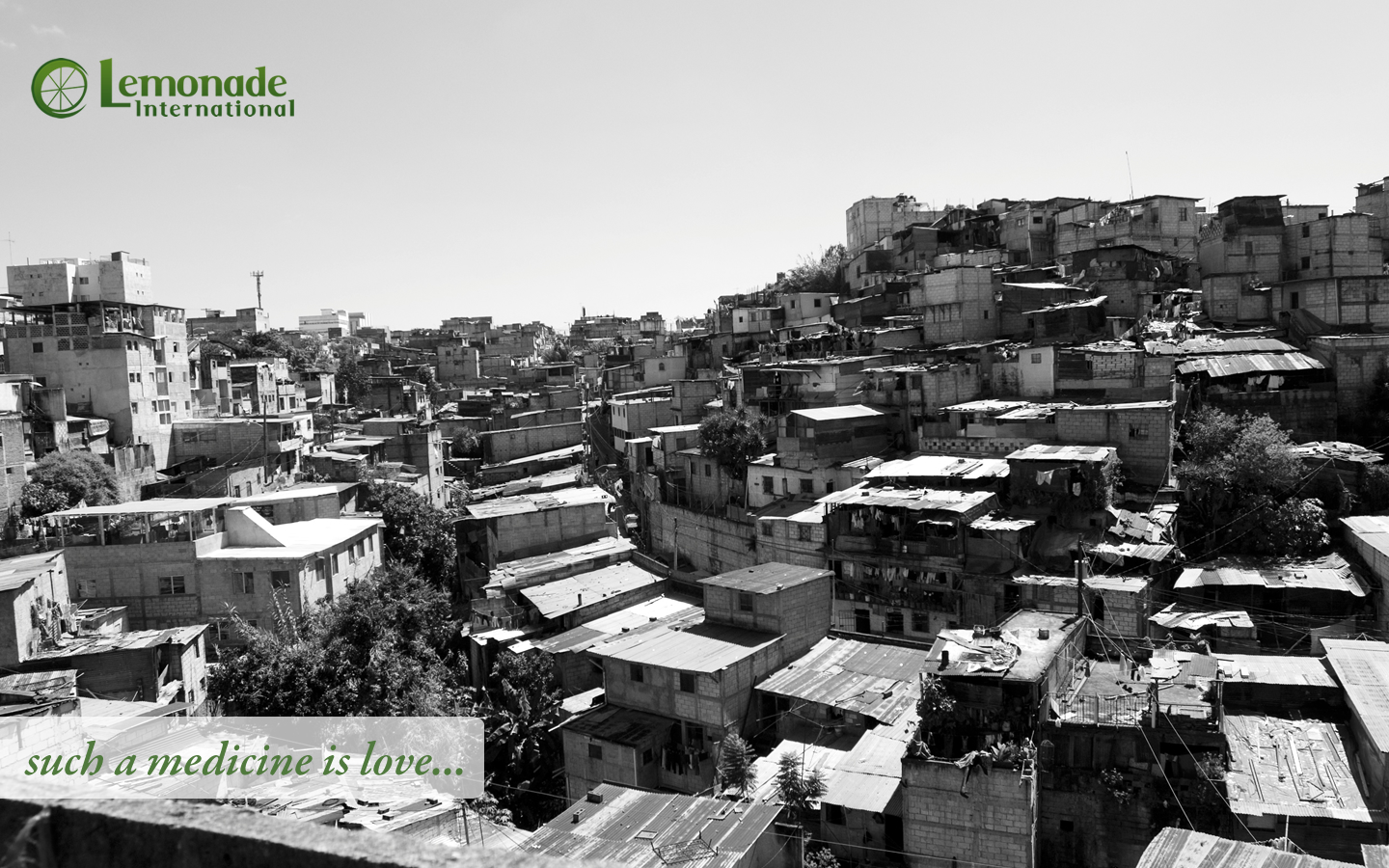
Yesterday, I touched down to begin my week in Guatemala on a blogger’s trip with Lemonade International, a non-profit development organization doing work in a particular called La Limonada.

This community of La Limonada is the largest slum community in Central America. After the 36-year-long Guatemalan Civil War began (due to an American coup to overthrow their leader), many, many children and women lost their fathers and husbands to fighting, leaving this huge community of hurting people. Many, many of the refugees ended up in La Limonada.

This community is a 1-mile long stretch that is a half-mile wide and straddles a ravine. 60,000 to 100,000 people live there. It is considered a “red zone” by Guatemala, meaning that deliveries, police, and most outsiders in general don’t go in there. In the boundaries of the “zones” of Guatemala City, La Limonada is between two different zones–it doesn’t even have a place in the official boundaries of the city.

It’s literally been abandoned and marginalized by the very nation in which it resides.
Continue reading

Death & Dignity: what’s the point?


philly-life-wall

Next week I head to Guatemala for the Lemonade International Blogger’s Trip. Having been introduced to this organization, I’ve been following their blog closely, trying to get to know them more and more.

A couple of days ago, they posted about a tragic loss. A member of their school, Herber Giovanni Sandoval, died a couple of days ago at the age of 17. In the conclusion of their post, they said this:

“We are especially grateful to the youth group at Lifepointe Church in Raleigh, NC for sponsoring him while he was still attending the Limón Academy.”

I immediately had the image of the youth group kids or sunday school class at that church who probably spent years following the story of Herber. I wondered how they would feel and respond to this news. How would the leaders help them process this? Would it impact the kids at all or would they be too removed from it?
Continue reading

The Cross vs. The Resurrection


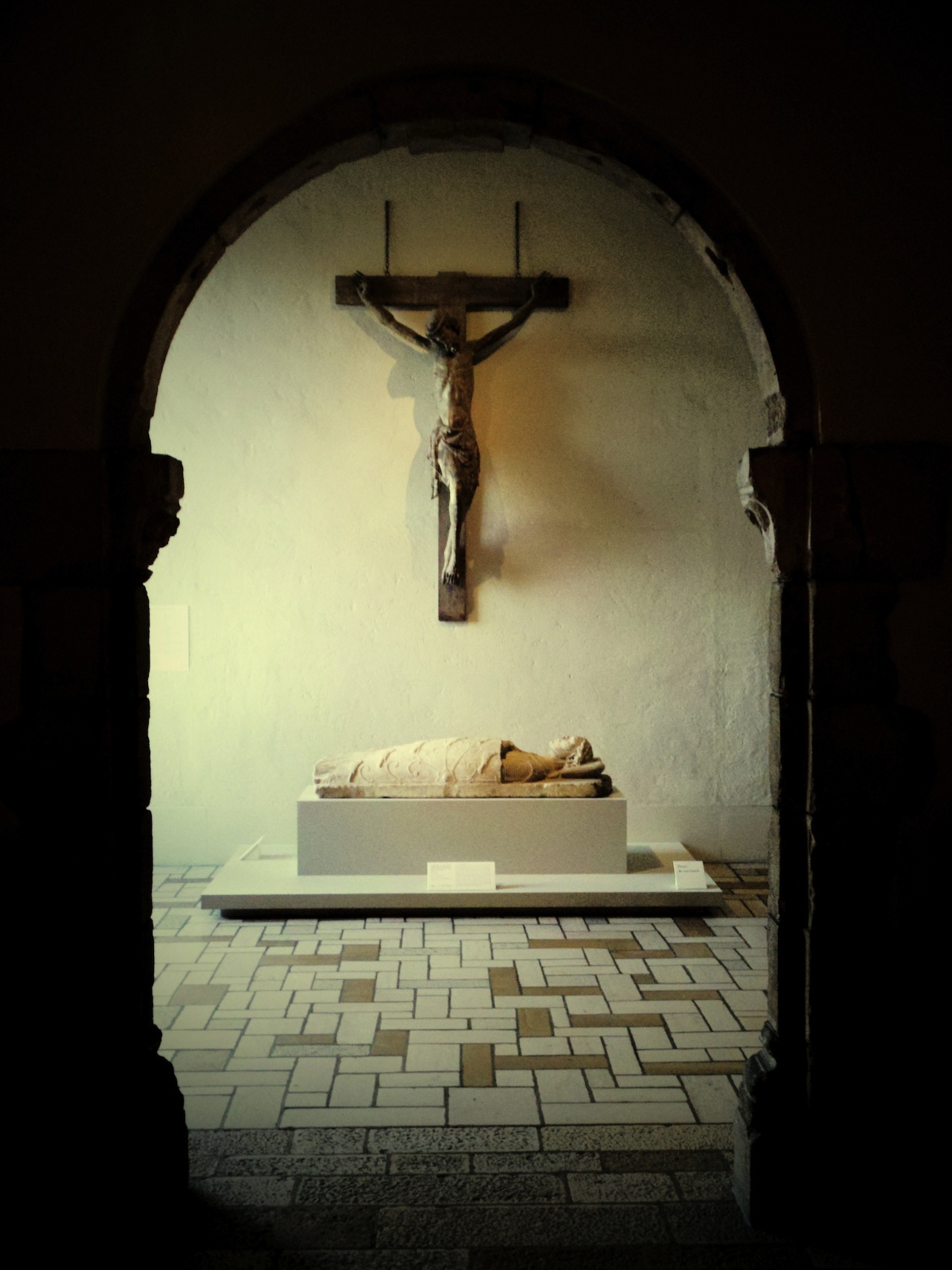
art-museum-crucifix-death-pmaIn Christian theology, there is a seemingly small thing that really influences so much of one’s theological outlook and even how they think they should live as a Christian.

Are you “Team Cross” or “Team Resurrection”?

Yeah, yeah, I know that the right answer is “both”, but really, most people tend to emphasize one more than the other.

What got me thinking about this was a Facebook post I saw on Easter evening. The poster said that the Resurrection was not when Jesus conquered sin and death. Instead, Jesus did that on the Cross, and the Resurrection was “simply” the “validation” of what Jesus did.

In other words, all that Jesus came to accomplish was done on Good Friday. God the Father saw it, thought it was awesome, so he went ahead and raised Jesus on Sunday.

In other other words, if the Resurrection never happened, nothing “essential” to salvation would be lost, merely the “proof” that it had been accomplished.

It really stuck with me, and no matter how much I tried to re-articulate it in my mind, give him the benefit of the doubt, or pick apart my own presuppositions, I really couldn’t shake how strongly I disagreed with this statement.

Continue reading

Our Easter Hope: Jesus Didn’t Rise from the Dead


statue-easter-bookHappy Easter! Let me greet all of you with the same Easter greeting that has been offered by generations upon generations of Christians before:

Alleluia, Christ is risen!

(And you respond with:)

Christ is risen indeed, Alleluia!

Now I don’t know how many of you have grown up saying that or have eventually settled into traditions that do, but I wonder how many of us have noticed the grammar of that statement. Why has it never said, “Alleluia, Christ rose”, or “Alleluia, Christ has risen”?

There is an extremely important and immensely practical aspect of the Resurrection that, as I’ve moved in more and more church circles, I’ve realized has either become de-emphasized, forgotten, or never known in the first place:

Jesus did not rise from the dead.
Continue reading