Christ’s Heart Breaking in Us | Lent {5}


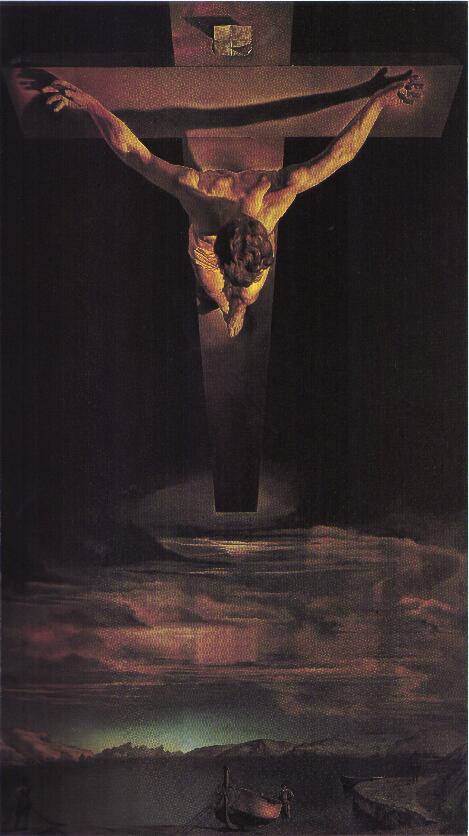
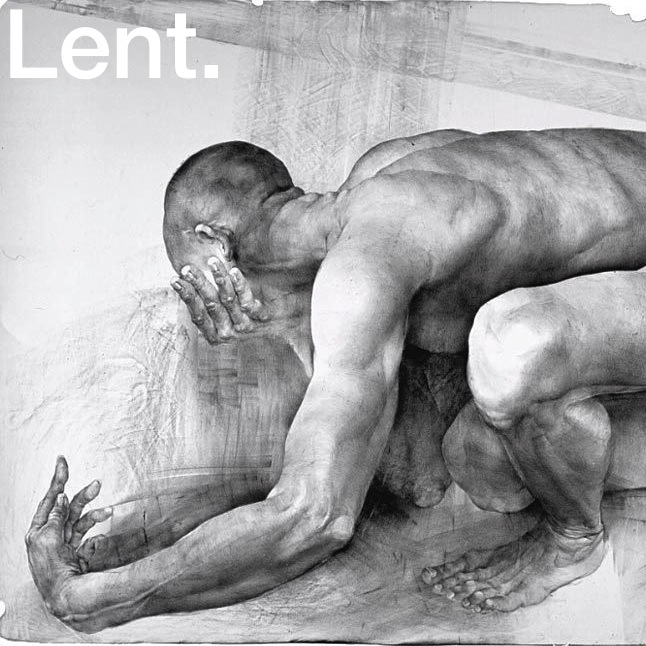
Lent is a season in which God’s people meditate on the slaying of Jesus on the Cross and all that is within them (and outside of them) that made that Cross necessary. So to that end, we’ve been doing a series meditating on the fact that Christ is the Lamb who was “slain before the foundations of the world”. We’ve been thinking through what it might mean that Jesus, in some sense, has been suffering for all time.

[suffering]

We’ve said that the Cross was an in-breaking of the suffering essence of God into our world. Think of it as a volcano that emerges after a millennia of quiet tectonic plate shifts. Eternity and infinity–past, present and future–break into the world at the Cross; eternity is the backdrop against which the death of Christ occurs.

We’ve also said that the world has a certain “slain-ness” to it as well, due to being created “through” a slain and suffering Christ.

Today I want to ask: What might that mean for our own suffering and death?
Continue reading

The Cross: eternal Beauty made present | Lent {2}


Earlier this week, I kicked off this year’s Lent series with a question.

This season, we’ll be meditating on the biblical idea that Jesus, in some mysterious way, was slain in eternity past. And so, I asked what this means for the Cross of Jesus:

Was it an eternal truth breaking into the temporal realm, or was it itself such a powerful event that it echoed backwards and forwards through the past and future?

My vote? Jesus’ suffering and “slain-ness” is an eternal attribute of who he is, and the Cross was this aspect of the nature of God breaking into our reality. The Crucifixion was, in effect, God drawing the curtain back on a heavenly reality that had, until that point, only been hinted at.

I side with this for two main reasons: the essence of God, and the election of God.

Continue reading

God, eternally-slain | Lent series {1:intro}


“…the Lamb who was slain before the foundation of the world.” –Revelation 13.8

“…you were ransomed…with the precious blood of Christ, like that of a lamb without blemish or spot, who was foreknown before the foundation of the world but was made manifest in the last time for your sake.” –1 Peter 1:18-20

“Jesus Christ and him crucified… a secret and hidden wisdom of God, which God decreed before the ages for our glory” –1 Corinthians 2:1,7

Today, I just want to briefly introduce the Lent series I’ll be doing (while listening to some free Lenten music!). It will be a meditation on an idea that only explicitly appears a few times in the Bible, but it’s truth echoes throughout the Scriptures. It’s mind-boggling in both its scope and implication, and yet gets so little treatment from mainstream Protestantism.

The idea? That Christ was slain in eternity past–before anything was; before any sin had been done by a single human.
Continue reading

liberti easter outreach: matching donation running out of time!


1,000 meals + 3 wells in celebration of the resurrection

I have the privilege of being a part of an amazing movement of churches in Philadelphia, seeking to “live, speak, and serve as the very presence of Christ” for the city (I go to the Center City one).

Last year, the churches gave away 1,000 Easter meals to familes in need. This year we’re trying to raise money to give away another 1,000 and to build 3 water wells in Africa

This week (until the end of Saturday), a donor is offering to match any donations up to $5,000.

There’s still a lot more to go to meet that goal. We need people to donate money to help us serve our neighbors in this city. So please donate if you can. Any amount will help. Remember, through church history Lent has been a time the church has given much to these sorts of efforts.

If you can’t give money, and still want to serve, we not only need money for the meals and wells (we’re trying to raise $35,000), we also need people to call families that would like the meals, as well as people to pack the meals and drive them. You can volunteer (and request a basket) at the website.

For more information or to sign up for any part of this initiative, please visit:

http://www.LibertiEasterOutreach.com/

Continue reading

some gospel encouragement sitting in a coffee shop…


I’m sitting in this coffee shop, and across the room there’s this college-aged girl walking one of her friends (apparently from another country) through the story of the Bible and the gospel.

She seems like a pro. She’s teaching her friend the structure of the Bible, answering her questions, and having her read the Scripture. She’s talking about who wrote the different books and each of their stories. They’re even hanging out in the Old Testament a bunch.

She’s not over-anxious or pushy; she’s just hanging out. The friend seems engaged and they keep laughing, sharing stories, and engaging the Scriptures.

I can’t help but feel I’m watching the Kingdom of God breaking all the more into this world–the future flooding the present.
Continue reading

Please help me give my money away! [UPDATED]


As I said the other day while introducing Lent this year, the Lenten season has historically been marked by three practices of those that participate in it. Prayer and fasting tend to get most of the attention, but almsgiving is another component of a Lent-historically-done-well. Almsgiving is the ancient term for giving materially of your resources for the purpose of charity, love, and grace.

I have never been good at giving my money away. Tithing has always been difficult for me to practice; giving to the homeless has been hard; and I always have a good excuse why I’m not able to give to some cause greater than myself. Sure, I’ll talk about the organization or even write a blog post in support of it, but it’s hard for me to part ways with my money.

This season, however, I wanted to try an experiment to fight against this and hope and pray that God meets me in it and grows me in deep, lasting ways.

This Lent, I want to give away some of my money everyday. For Monday through Saturday (the Church considers Sundays Lent “mini-breaks”), I want to give some amount of money to a non-profit or charity that can use it to help others.

But I need help.

If you have a non-profit or charity or social justice organization that you particularly like, could you leave a comment below telling me what it is?
Continue reading

a beautiful quote on our security in the Incarnation (by T.F. Torrance)


The stark actuality of Christ’s humanity, his flesh and blood and bone, guarantees to us that we have God among us. If that humanity were in any sense unreal, God would be unreal for us in him. The full measure of Christ’s humanity is the full measure of God’s reality for us, God’s actuality to us, in fact the measure of God’s love for us. If Christ is not man, then God has not reached us, but has stopped short of our humanity – then God does not love us to the uttermost, for his love has stopped short of coming all the way to where we are, and becoming one of us in order to save us. But Christ’s humanity means that God’s love is now flesh of our flesh and bone of our bone, really one of us and with us.

— T.F. Torrance, Incarnation, 185

A good friend posted this on Facebook, and I just had to post it. It connects very well to a few of the Advent posts I did recently (namely the ones on Evolution, our Fallenness, doubting God’s “liking” of us, and how he makes us most human).

I’ve never actually read Torrance before, but I’ve heard a lot about him from people that were, at the time, reading his work. From what I understand, though, he is a theologian whose mind is brilliant and pen is beautiful–a combination sorely lacking in the Christian world today. I also hear that he is a theologian to which I would feel a certain affinity, so I look forward to reading more of him.

HAPPY ADVENT!! {10}


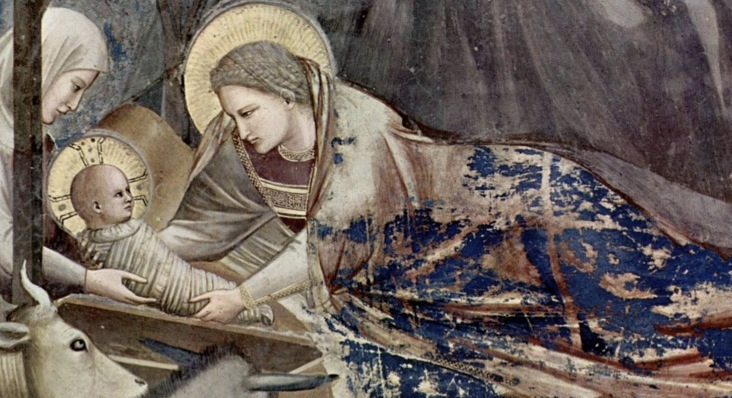
Well, it’s here. The day we’ve been building up to and meditating upon. This is the day we joyfully celebrate the King who broke into our reality and ushered in His Kingdom and our salvation by coming in the form of a little child.

Even though this time can be tough for some (my grandfather died a year ago tomorrow), I do hope and pray that we are all able to have at least one good laugh this year and see the smile of at least one person we love and that we know loves us. And eat good food. And drink good drink. And listen to bad, cheesy music. (On a side-note: the picture above is a picture of the wall-hanging that went up in my house every year as I grew up. And now I have it. I love it.)

Don’t worry, this isn’t really a whole other post. This Advent season has been an especially fruitful time for my writing (as my Facebook Wall obviously shows). I want to thank everyone that has been telling me how helpful these posts were–or even those that just told me they were reading them in the first place!. I can’t tell you how much it affects me, sticks with me, and encourages me. But anyway, I just wanted to write this post so I could put up all these posts in one place for you easy reading pleasure, should you so desire. Happy Advent!
Continue reading

What is the True Gospel of Advent? {9} (hint: it’s not your salvation)


As I mentioned in my previous post, my church has been doing an Advent series called “The Other Christmas Stories” where we’ve been looking at various texts (outside of the traditional Christmas narratives) that comment on the Advent event. Last week, our pastor preached from the book of Revelation, including some of these verses:

Then I heard a loud voice in heaven say: “Now have come the salvation and the power and the kingdom of our God, and the authority of his Messiah. For the accuser of our brothers and sisters, who accuses them before our God day and night, has been hurled down. They triumphed over him by the blood of the Lamb and by the word of their testimony; they did not love their lives so much as to shrink from death. Therefore rejoice, you heavens and you who dwell in them!”
–Revelation 12:11-12

Continue reading

God loves me. But does he like me? (on being “Christ-like”) | Advent {8b}


[This is Part 2. Read Part 1 here.]

My church has been doing a series called “The Other Christmas Stories” where we’ve been going through other texts in the Bible that comment on and meditate upon the event of Advent. The first message was preached on that quintessential Advent text, John 1. The preaching on these verses really struck me:

But as many as received him, to them he gave power to become the sons of God, even to them that believe on his name: Which were born, not of blood, nor of the will of the flesh, nor of the will of man, but of God.
— John 1:12-13

The sermon went on to remind us that in these verses is a promise that the Advent did not happen in order to make us into something we are not, but rather to give us the power to become who we most truly are (children of God). Now, I want to be clear. I grew up in Church hearing that phrase “be who you are” (and hearing it in music), and in certain seasons that thought has been helpful to me, but I’m not quite trying to express the same sentiment.
Continue reading

God loves me. But does he like me? (on being “Christ-like”) | Advent {8a}


UPDATE: Part 2 of this post is now up.

I have a quick confession. I technically ascribe to the “flavor” of Protestantism called “Reformed” that takes the roots of its doctrinal tradition all the way back to the leaders of the Reformation. The first church I really learned much of anything about Christianity and theology is Reformed…ish. The seminary I went to prides itself in being the bastion of orthodoxy for “Reformed” theology. My church is a member of the Reformed Church in America family of churches.

But, I’m not a good Reformed man.
Continue reading

There is No One Like You (Adv, Days 23/24; HelloGoodBye 09/10) by David Schrott [GUEST POST]


[Through college up through about a year and a half ago, I ran a little online magazine called Reform & Revive. It’s dead now. While it was going on, one of my best friends, David Schrott, was one of our contributors. He’s an amazing drywaller, photographer, writerperson, and boyfriend (also here, here, and here). This is a post he wrote for R&R back in 2009 at the end of a particularly trying year for him. It’s one of my favorite Advent meditations I’ve ever read, and so I wanted to share it with all of you. Enjoy.]

_______

“I want men everywhere to lift up holy hands in prayer.”
–I Timothy 2.8, NIV

There are these days, when it is so difficult to find words that wrap around concepts, that, no matter how concrete in one’s mind, find it impossible to find substance in the barrier we use to communicate called language. In those moments, it seems that experience does precede existence and existentialism, for a moment, seems fun (and fun is clearly the wrong word, but for to-day, for this beautiful-day-before-Advent, will have to do).
Continue reading

The Holy Sacrament of Advent {7}


There is an abiding idea and assumption that plagues us humans. It has come up at various times in various worldviews with various names. It’s found in the implications of what Zoroastrians called the conflict between “Asha” and “Druj”, what Plato called “Dualism”, Diogenes called “Cynicism”, first-century heretics called “Gnosticism”, Descartes: “Rationalism”, Kant: “Idealism”, Bacon: “Empiricism”, French Enlightenment-ers: “Materialism”, Modernists: “Realism”, Postmodernists: “Pragmatism” and “Constructivism”, so on and so forth through the ages.

The thing all of these ideas have in common is a separation between the material and the immaterial; the abstract and the physical; the temporal and eternal; the objective and subjective; the spiritual and the human. Further, they tend to elevate one over the other.

We can’t really escape this (I’ve written about this before).

One of the basic obvious tenets of finitude is that we can’t be in two places at once, neither physically nor intellectually. To perfectly hold the delicate balance between these poles of the seen and unseen is difficult, if not impossible.

But Advent can help us.

Continue reading

The Formation of God | Advent {6}


All last week, I offered some meditations on this season of Advent. I actually have several more I’ll be posting more or less every day until Christmas, but today I’ll be offering the last in this little alliterated series in which we’ve been exploring how in the Advent event, Jesus took on our creaturely form, care-taking function, comprehensive fallenness, and now, communal formation.

We spend a lot of time and energy in this season focusing on how Jesus has changed everything and how the implications of Advent change much of our lives and existences. But Jesus did not merely come to change and affect things, but to also be changed and affected by them.
Continue reading