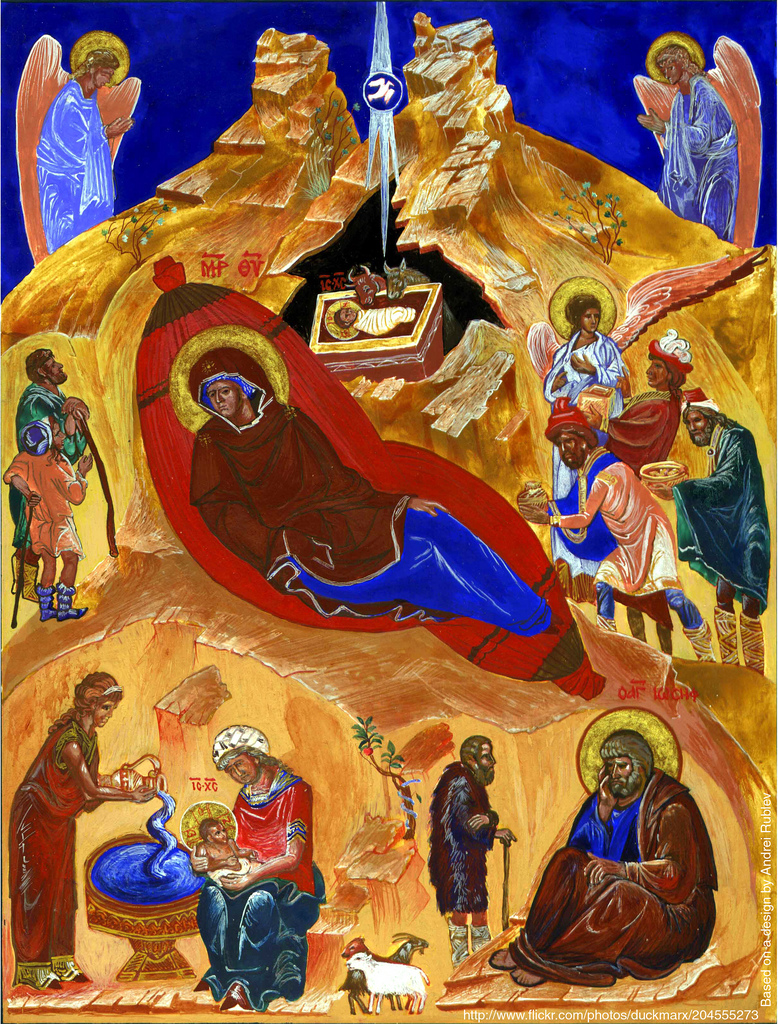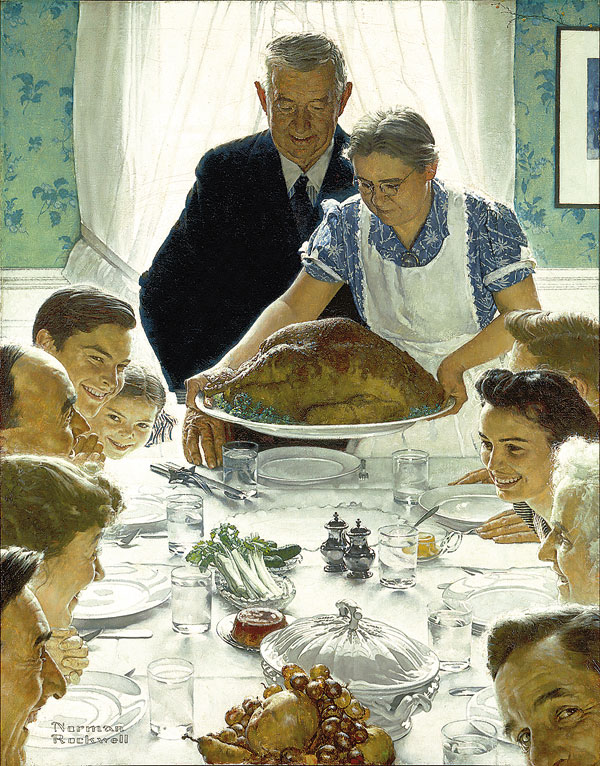
The Holy Sacrament of Advent {7}


There is an abiding idea and assumption that plagues us humans. It has come up at various times in various worldviews with various names. It’s found in the implications of what Zoroastrians called the conflict between “Asha” and “Druj”, what Plato called “Dualism”, Diogenes called “Cynicism”, first-century heretics called “Gnosticism”, Descartes: “Rationalism”, Kant: “Idealism”, Bacon: “Empiricism”, French Enlightenment-ers: “Materialism”, Modernists: “Realism”, Postmodernists: “Pragmatism” and “Constructivism”, so on and so forth through the ages.

The thing all of these ideas have in common is a separation between the material and the immaterial; the abstract and the physical; the temporal and eternal; the objective and subjective; the spiritual and the human. Further, they tend to elevate one over the other.

We can’t really escape this (I’ve written about this before).

One of the basic obvious tenets of finitude is that we can’t be in two places at once, neither physically nor intellectually. To perfectly hold the delicate balance between these poles of the seen and unseen is difficult, if not impossible.

But Advent can help us.

Continue reading

The Formation of God | Advent {6}


All last week, I offered some meditations on this season of Advent. I actually have several more I’ll be posting more or less every day until Christmas, but today I’ll be offering the last in this little alliterated series in which we’ve been exploring how in the Advent event, Jesus took on our creaturely form, care-taking function, comprehensive fallenness, and now, communal formation.

We spend a lot of time and energy in this season focusing on how Jesus has changed everything and how the implications of Advent change much of our lives and existences. But Jesus did not merely come to change and affect things, but to also be changed and affected by them.
Continue reading

What Christ did not taste, Christ did not redeem. | Advent {4}


This Advent season, we’ve been meditating on how the Advent reminds us how God took on our creaturely form, care-taking function, comprehensive fallenness, and communal formation.

First, a question.

Think back on the Christmas story. After Jesus is born, when he’s about three years old, the wise men go to King Herod and say that they’re looking for this newborn King. Herod is shocked to hear about a child-king having been born right under his nose, whose potential future reign threatens his own, and so he puts out a decree calling for the death of all children ages three and under (in history and art this is referred to as “The Slaughter of the Innocents”. An angel comes to Joseph in a dream and tells him to flee to Egypt to prevent this from happening.

Here’s the question:

Why flee to Egypt? If they stayed and Herod killed the child Jesus, would that not still be Jesus, the Son of God–the Incarnate God–dying unjustly at the hands of a Roman provincial governor attempting to cement the reign of the powers and principalities of the world? Why go to all that effort to wait 30 years later for the same thing to happen on a cross?
Continue reading
our failed function, God’s full faithfulness | Advent {3}


This week, I’m meditating on a few particular aspects of the Advent event. I’m thinking through and writing about how, in Jesus, God inhabited our creaturely form, care-taking function, comprehensive fallenness, and communal formation.

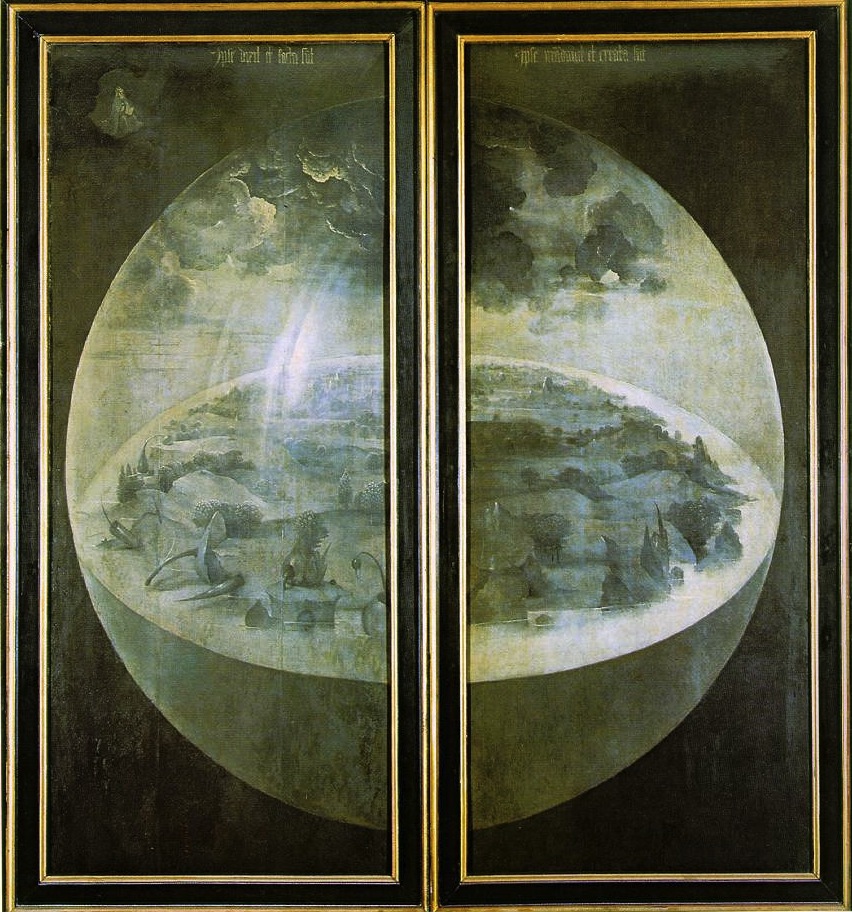
As I said in the teaching I gave over the summer about the Nature and Narrative of the Bible, the opening chapters of the Bible describe this divine act of creating in very architectural terms; the same words are later used in describing the building of the tabernacle and the temple. In this we see that God’s act of creating was, in essence, building this world as his temple in which he would rest (for more on this see John Walton’s amazing book, The Lost World of Genesis One, or just watch this short video).

In the story, he builds and establishes this Temple-World, and then creates and ordains two priests–Adam and Eve–to be his representatives in this temple to care for it and work in it faithfully. In the ancient world, temples were usually placed in the midst of large and beautiful gardens which acted as extensions of the temple itself; to care for the garden was to care for the temple, and to make the garden larger was to expand the scope and size of the temple.
Continue reading

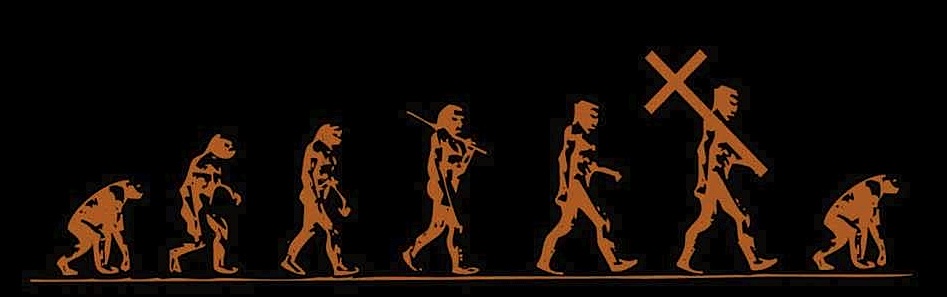
Advent, Evolution, & Absolution


It’s Advent. A time where we especially orient ourselves towards rejoicing and celebrating the fact that God did not remain far off and merely create a “legal” or “dogmatic” satisfaction for the plight of his creation and creatures. Rather, he broke into it and came into his creation and among his creatures. In this year’s Advent series, we’re exploring how, in this Coming, Jesus took on our creaturely form, care-taking functioncomprehensive fallenness, and communal formation.

First, God took physical, human, creaturely form. In the study I did–and subsequent lecture I gave–on Beauty a couple of years ago, I defined “Beauty” as the attribute of something that expressed complexity simply. Is not this God-in-human-flesh (theologically referred to as the Incarnation) the most beautiful of all miracles to take place? The Infinitely Complex God inhabits the simplest of human forms: a child.
Continue reading

a beautiful quote on life & pain


One cannot cut the lines of experience out of one’s face, like the rotten bits in an apple; one has to carry them about in one’s face and know that one carries them; one sees them, as in a mirror, every day when one washes oneself, and cannot cut them out, they belong there. But all the same, it is a festive waiting, full of joy and sorrow and remembrance and good-bye for ever.

— from “Death of the Adversary” by Hans Keilson, our December book club selection for Staché

Posted from WordPress for Android on my Droid X

Welcome to Advent. 2011. {1}


Yesterday was Day 1 of the season of the Church Calendar known as Advent (latin for “coming) . From now until Christmas, we spend time intentionally mediating upon the truth this season brings: God has come among us, clothed in the vestiges of human flesh.

Yes, this time of year was arbitrarily chosen centuries ago to recast pagan lunar festivals in a new light. Yes, many of the traditions of Christmas (fir trees, gift-giving, wreaths, etc.) find their source in pagan socio-religious rites. Yes, Jesus was probably more likely born in April, not December. Yes, Christmas has been co-opted by commercialism and consumerism. Nevertheless, this time has been set aside for nearly two millennia so that Christians around the world could, with one mind and heart, dwell upon the depths of the glory given to us in the events that transpired all those years ago.
Continue reading

The Pain & Substance of Gratitude. Happy Thanksgiving.


Sorry that this isn’t your typical feel-good Thanksgiving post.

On Tuesday, my job had a large Thanksgiving lunch for all the staff and clients we serve. I got my food and sat down next to some of my coworkers and across from a client I had never seen before. She was very friendly. She didn’t ask me my name or anything; she just began asking me questions about what I was doing for the holiday, where I was going, if my parents were still alive/together, if I had any siblings, so on and so forth.

As she kept firing one question about my Thanksgiving week after another, I started to feel an awkward tension developing because I wasn’t returning any of these questions back to her. I wondered if my coworkers thought this was odd of me to do, but it was very intentional.
Continue reading

Redefinition (or, “Paul: broken & beautiful” or, “on why the lack of bloggage”)


This is a weird post to write. The past two months have seen such a change and revelation in so much of who I am. God, that sounds so dramatic. Well, this season has been pretty dramatic, so I guess it’s okay. Let’s talk.

A little over a year ago, I wrote a series of blog posts called I’m A Fearful Man (and i need to get over it). In them, I talked about some of the subtle currents of fear at work in my heart; I talked of their source, their outworking, and how they led to great anxiety, insecurity, and non-communication in my life.

Throughout the series, I received great encouragement and comments from others and there seemed to be an excitement building as I wrote each post. People saw much of themselves in my story and baggage and were looking forward to the conclusion of this story to see how I was going to address these issues.
Continue reading

art that makes me cry (thank you, Jen Huber)


This is another amazing piece called “Broken Hold” (original post) by one of my favorite artists and closest friends, Jennifer Huber (I’ve featured her art here before). In all seriousness, I just started crying looking at this and just had to post it. This particular piece reminded me a lot of one of my favorite songs by some other good friends of mine (who are also amazing artists), the band My Epic. You can find the song and the lyrics below. This piece especially reminded me of the last line of the song. Enjoy.

“Communion” by My Epic [Spotify] [YouTube Continue reading

Retelling the Story (in crisis, loss, & healing)


Why does healing take time? Have you ever asked yourself that? Why does pain, heartbreak, and loss seem to have a very real lifespan it must go through before the process seems completely done?

As I’ve said several times before on this blog, we humans live on the basis of story. Our life, our world, and our faith provide our lives with a grand “narrative” in which all of our “sub-plots” find shape. We can’t help but use this shape of the present story to fashion some sort of idea of where this story is going. We’ve all experienced this when reading a book. The entire time, we have a guess of where the plot is heading; as we receive more information, we naturally readjust our expectations and thoughts as to the goal or end.

In short, the only way we know to make sense of the various aspects of our lives is to give them shape, narrative, and an anticipated goal towards which they are moving. This is the only way we know to justify each step forward we take in this career, relationship, etc. It gives us our bearings and a point of reference.

Continue reading

Dmitri, I Am (on sin, story, & salvation)


I once read a very good book by one of my former professors called When People Are Big and God is Small. It’s about the sin many in church history have called “Fear of Man.” I read this entire book with a particular friend in mind, wanting to know what I could say to her to help her in her struggles with this. It wasn’t until the final pages that I realized that this was something that I myself wrestle with profoundly.

But the book was now done, I didn’t want to immediately re-read it, and so I had missed my place in the story; I had missed how it could have spoken to me and perhaps led me to some freedom and healing in this. Indeed, even though I’d hear the author lecture about it years later, I still write about and struggle with my “Fear of Man” issues today.

Have you ever had a similar experience of missing yourself in a story?
Continue reading

Troy Davis, Capital Punishment, & the Death of Conscience


This is a tough one to write. And it’s long. I broke almost all of my personal blogging rules in this, but I just need to get this out. I’ve spent the past two days with this post and it’s central ideas rolling around in my head and even now as I sit to type, I have little knowledge how it’s all going to come out.

Today, for the first time in my young life, I shed tears for a man that was executed at the hands of the State. Two nights ago, Troy Davis was finally executed in Georgia for the 1989 murder of an off-duty police officer. Questions still abound concerning his guilt and innocence, the politics at play in the various boards and courts that refused to change their minds, and the calcification of a seemingly dispassionate justice system  that renders helpless the voices of those it presumes to protect. This New York Times article perfectly captures the complexity and tension that exists right now over this topic.
Continue reading

Of Robes & Righteousness


Yesterday I went to two church services. The first was my home church, where I participated in one of the best services we’ve ever had (oh, Communion was so sweet!); the second was the church of one of my closest and dearest friends. I could have just met up with him after his service, but I decided to go anyway. Why?

I thought I was looking pretty good yesterday.

Of course, this wasn’t the only reason I went (it’s an amazing church and I’d definitely go there if liberti weren’t around), but it was a real factor. People had spent that morning complimenting me, and I both appreciated and enjoyed it. And so, I wanted to be seen. (Surely all of us have experienced this sometime, right? Come on, I’m just trying to be honest.)

During the service, I found myself thinking about this. There is a constant conflict we have with our embodied selves and the garments that clothe them. I’ve spoken of this tension before and how our responses to it often betray a hatred we seem to have for our bodies. Our clothing both reveals and conceals at the same time; it communicates things about us all the while hiding our greatest intimacies.

Continue reading

to “why?” is human, to “what” is divine


One of the most impacting moments of Terrence Malick‘s Tree of Life is this moment where the son in the film prays to God: why do I have to be good if you’re not? Shortly after, there is this beautiful shot where the camera zooms in on the silhouetted back of the boy as he stands in an open door. As the camera approaches, we get a voice-over from the grown-up version of this child saying: Father, why do you hurt us? This moment is so powerful because you don’t know if he’s talking about his earthly father or his Heavenly one.

Fast-forward. The other day, as I was looking through The Economist and reading on all the loss, debt, crisis, and violence in the world, I noticed I kept having similar fleeting prayers go through my mind: why did that happen? or why did it have to be that way?

Neither the son in Tree of Life nor I found answers.

Continue reading