REVIEW: “Simply Christian” by N.T. Wright


Simply Christian
Bishop N.T. Wright
Zondervan, 2006
Buy Now Here
Pre-Order New Ed. Here

__________

As I revealed in a recent tweet, I believe I’m walking into a new obsession with the author/scholar/pastor N.T. Wright. Surprising to many, I’m sure, with me being a seminarian and all, is the fact that I had never read any Wright before this book. Sure, I’ve known of his existence for years, had seen a few of his YouTube clips, and skimmed a few of his articles, but I had never read his books. My housemate during the two months or so before seminary began reading through Wright’s entire Christian Origins and the Question of God series (books 1, 2, 3) constituting over 2,100 pages of reading. He couldn’t stop reading, nor stop telling me about how amazing this man was. I nodded and agreed, sure that I would read something at some point. I had no idea what I was missing.

Continue reading

Holy Day Meditations: Jesus Presented at the Temple


The backbone of my morning and evening meditations and prayer has become the Anglican Book of Common Prayer. It has taken me a while to figure out how to use it (with a lot of help from a friend), and I’m still clumsily trying to make my way along, but it is an amazing book. It gives just the right amount of both freedom and structure to give me both guidance and excitement. I’m really enjoying it. Secondly, I am a relatively new member of a church that belongs to the Reformed Church in America. Both of these things has led me to encounter ancient church documents, creeds, and traditions I was never exposed to as a Bible Belt Southern Baptist.

One of those newfound traditions that is really becoming a major part of my life is the Church Calendar. According to the calendar, we are currently in the season of Epiphany, where the church celebrates the travel of the Wise Men to see Jesus, therefore declaring him King and Lord among all the nations, and today is the Church Holy Day on which we celebrate Jesus’ presentation by His parents in the temple (forty days after Christmas) (Luke 2:22-40). As I went through the Daily Lectionary this morning, I found that focusing on this event and meditating on it bore some very real personal fruit that I wished to share.

Continue reading

Some Lord’s Day Meditations on Paul’s Thorn | 2Cor 12:7-11


I’m almost done going through 2 Corinthians, and last night I came across that oh-so-familiar passage of 2 Corinthians 12:7-11:

So to keep me from becoming conceited because of the surpassing greatness of the revelations, a thorn was given me in the flesh, a messenger of Satan to harass me, to keep me from becoming conceited. Three times I pleaded with the Lord about this, that it should leave me. But he said to me, “My grace is sufficient for you, for my power is made perfect in weakness.” Therefore I will boast all the more gladly of my weaknesses, so that the power of Christ may rest upon me. For the sake of Christ, then, I am content with weaknesses, insults, hardships, persecutions, and calamities. For when I am weak, then I am strong.

I thought I’d share some of the things that really spoke to me as I meditated on it:

Continue reading

just a little reminder of my life . . .


I was updating my Author page on this site tonight, and I was reminded once more of this quote that struck me so powerfully by poet Joe Weil.  It’s from a great interview posted on Patrol Magazine a while back.  I wrote about it when I originally first found it almost exactly a year ago.  It’s incredible and describes the nature and substance of my faith like no other set of words I have encountered before or since–coarse language and all.  I hope it speaks to you as well:

“I once described faith as something I got on my shoe and can’t kick or wash off. I’m stuck with it. My poems are the trespasses and blasphemies of a malpracticing Christian, one who can’t stop ogling an attractive leg, or wanting to be first, who is venial, foolish, seldom at peace, horny and lonely, and so far from the kingdom of God that his whole life becomes the theme of that distance, someone knowing he is in deep shit. It’s the perfect place to be, where you can’t fool yourself into thinking you’re on the right track… The only thing I have to offer God is my sins. I am interested in mercy when it appears in places where you would never expect it. I am interested in love that shovels shit against the tide. I am interested in grace… It is better to be annihilated and crushed by God, if you are in love with God, then it is to have no relationship at all. Better God smite you then merely be absent. God does not ‘tolerate’ me. God loves me.”

How do these words strike you?

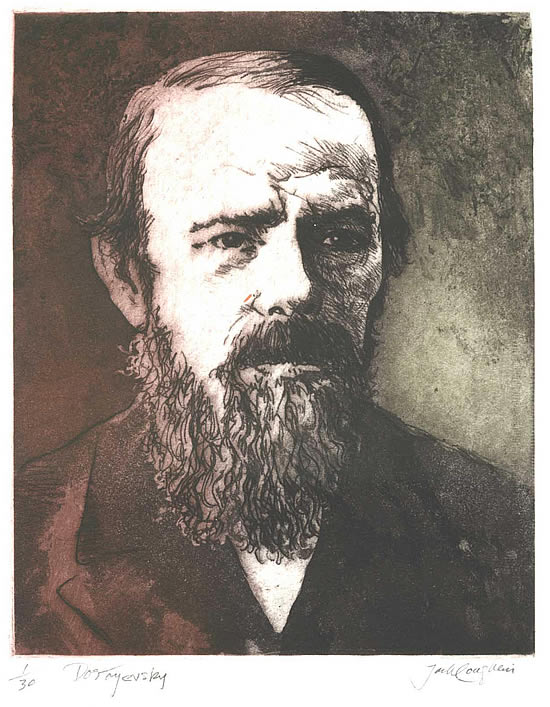
Dostoevsky on the Tensions of the Christian Life


I’m currently reading through The Brothers Karamazov by Fyodor Dostoevsky. Early in the book, there is a scene where the entire Karamzov clan goes to meet with this elder priest to solve some disputes amongst themselves. Of course, being a Russian novel, before they can get to the actual disputes they engage in various forms of political and theological philosophizing for a few chapters. One of the brothers, Ivan, has one of his ideas brought up concerning moral differences between Christians and Non-christians. The elder hears this and immediately identifies it for what it is: an over-intellectualization to help explain away tensions and mysteries existing in Ivan’s heart that he can’t stop wrestling.

As any reader of my writings knows, in the past year or so I have been absolutely taken captive by the truth that Christianity, and therefore the Christian life itself, is fundamentally an exercise in holding tensions and living within mysteries that have no real answer in this life. As Peter Rollins says in the amazing book The Fidelity of Betrayal: “doubt is intimately tied up with faith, because the deep truth of faith gives birth to doubt.” In other words, only the true believer has experienced something in their heart that they can doubt in the first place. Unbelievers don’t doubt, they just don’t believe. But we Christians follow our forefather Jacob whose blessing was to wrestle with God and receive the very name Israel, which means “He wrestles with God”.

Continue reading

“O Sovereign, Come” (an original Advent hymn)


On this beautiful White Christmas (at least where I’m at), for those precious few of you that will make it online today, I wanted to put up a hymn I wrote a about a year ago.  I pray this encourages you and creates anticipation for the Advent that is to come. Merry Christmas.

O Sovereign, Come

Our chains behind us, our sin before us
showing all our crippling need.
Your Grace within us, Your Spirit upon us
transforming our every deed.

After our freedom and we pass through the Red Sea,
let us not forget the desert comes.

Refrain:
Rip through the clouds, tear through the skies;
Let us see that you’re God on High.
O Sovereign, Come.  Seize our hearts.
Show yourself as Beautiful.

Your triumph of Glory, You crimson Cross
heralding Your Sovereign Way
of life through our death, enduring our thorns,
completing Your sufferings in ourselves.

Let us embrace your cross that’s set there before us
and know that it precedes the crown.

Refrain

On that day, when freed from sinning,
how I’ll see Thy lovely Face.
Clothed then in blood-washed linen,
how I’ll sing Thy Sovereign Grace.

Refrain

For Advent: A Reform & Revive Repost by David Schrott


In honor of this Advent/Christmas Eve, I decided to repost an article on Reform & Revive written almost exactly a year ago by my good friend (and incredible photographer) David Schrott.  He is an amazing writer (and here) and an even more amazing friend.  This article reflects much on the year that brought the writing into existence with anticipation for the year to come.  Well, having been with him and watching him for that year, it was an amazing moment for me to read this and see all that has been done in his life.

The article has all that Advent is about.  It’s a reflection on the work of God in the past to build your anticipation for the work of God to come.  May this article stir you, sober you, and give you a sense of both the fallenness of the world that is and the glory of the world to come.  Here’s the full link:

http://reformandrevive.com/2009/12/24/there-is-no-one-like-you-adv-days-2324-hellogoodbye-0809-repost/

Also, feel free to check out an article I wrote for Going To Seminary magazine for Advent called “The Beauty of Theology (an Advent Call)”

Lastly, if you’re in town (Philly, that is), my church Liberti: South Philly is doing what should be a beautiful Christmas Eve service tonight (details).

Merry Christmas Eve

The Bible, Slavery, & Atheists{2b}: Theology & Ethics | Reform & Revive


By the time I finished the next article in the series, it was substantive enough and socially-oriented enough to warrant being posted on my webzine Reform & Revive.  The previous post was on on how secular Philosophy can inform our view of ethics and contribute to the discussion of Slavery, Atheism, and the Bible.  This one is about how Christian theological ethics can uniquely inform our ethics in modern times.  The article covers a LOT of ground and is the longest one I’ve written yet in this series.  Hopefully that’s not a turn off.  This article has more of my thought concerning truth and Biblical interpretation than perhaps any one article I’ve ever written contains.  Here’s the link:

http://reformandrevive.com/2009/12/22/a-theology-of-ethics-contemporary-applications/

It seems in light of my earlier post I’ve decided to pour more of myself into this series, rather than just quickly finishing it off.  Hopefully it’s helpful.

Lastly, I keep getting private emails, texts, and messages from Christians talking about how much they’re enjoying this series, and how helpful it is to them, but hardly any Christians are publicly commenting.  I’m getting tons of comments from my atheist friends, though.  Discrepancy?  I think so.  If you have a thought, please leave it.  It could be really helpful to get more input on this and diversity of thought on this.

Thank you all for your support and encouragement.  It means a lot.

The Bible, Slavery, & Atheists{2a}: Philosophy & Ethics


As I’ve looked at and read the various articulations about this issue put forward by my atheist friends, I’ve noticed a few philosophical assumptions about ethics that are driving many people’s perspective on how the Bible does/should talk about these things. In this post, I’d like to highlight those things and show how they are neither philosophically or theologically correct. By the time I finished writing, it was really long, so, using one of the few benefits of blogging as a medium of discourse, I will put up the second part (concerning the more theological side of this) tomorrow or the next day.

The Philosophy of Ethics

Principles vs. Applications

Even the most cursory look shows that the study of ethics is the study of transcendent principles that govern our morality and behavior. There is an important distinction though made between those transcendent principles and their applications. One can hold to the exact same set of principles, but apply them differently at different times/cultures. It is simplistic and reductionistic to think that anyone’s “ethics” will be applied in the exact same way every time. No ethicist secular or otherwise treats ethics in this fashion. I believe that Scripture is consistent throughout in its transcendent principles, though not in their comprehensive applications (below). To navigate applications takes another pair of things the Bible talks at length about: faith and wisdom (more in the next post). Further, I don’t think this principle/application distinction provides any serious ethical challenge to biblical authority. The Bible itself never claims to treat ethics in this reductionistic manner, so to force it upon Scripture is dishonest.

One of my atheist friends mentioned the converts in isolated African tribes where nudity is prevalent, saying that if Christians were consistent, they must insist that they all cover up in order to be Church members in good standing. Except there’s a problem with that: there is no Christian ethic of “non-nudity”. There is a Christian ethic of “modesty” that says that we have the responsibility to adorn God’s beautiful creation of the human body in such a way that it maintains the respect and dignity it deserves. Now, how respect and dignity is shown changes culture to culture, so it takes wisdom to see where the human form is being abused in that culture — and that is not a compromise of Christian ethics. The consistent biblical principle has still been preached, upheld, and lived. If ethics (secular or Christian) were as naively structured as is necessary for some of these atheist criticisms to make sense, then the entire field of ethics would be unnecessary and non existent, because we could have a computer program that could make all the black-and-white moral decisions for us.

Continue reading

The Bible, Slavery, & Atheism: Part 1b


this is real (I did it myself)

The next post is pretty much done, but I wanted to send out this quick note before moving on. The previous post revealed a lot of things that I neglected to make clear. My fault. Sorry.

First and foremost, the last post was not meant to settle the question on slavery and the Bible. I just wanted to get out what the Bible actually says about it. The most I wanted to accomplish toward addressing the issue was to let people see a clear trajectory within Scripture wherein no part is inherently contradictory to the parts before or after it, no more than a seed is contradictory in nature or form to a fully blossomed flower. I also wanted to give a sense of the complexity of the issue. In every passage that lies out even the most comprehensive sets of morality and ethics for the Israelite people, you never see slavery there. It was never an action that was consistently seen as something moral. It’s not a freedom that the Israelites are free to use whenever they desire; it’s used sporadically, meaning that there must be something else going on beyond some explicit commentary by God on the moral nature of slavery. The New Testament is clear that the crucifixion of Christ was something that was foreordained and ultimately brought about by God, but this neither expunges the moral responsibility of the people that actually did it, nor says that God is all about crucifixion and thinks it is “morally neutral” or “ethically okay”. He clearly thinks it is wrong and evil, and yet He clearly ordained it, allowed it, and used it to bring about his promised redemption to the world.

Continue reading

Some Help for the Journey & the Fall (Matt Chandler, Patrol Mag, & the iMonk)


Melograna - fallingArt by Julia Meolgrana

If you have about an hour or so, I wanted to plug several articles and a sermon.  The sermon is from Matt Chandler.  It is a message he gave during a chapel service at Southern Baptist Theological Seminary.  There is both audio and video available.  The message is walking through Hebrews Chapter 11 and into 12 to show what the Christian life is meant to consist of.  This message blew me away.  It’s about 40 minutes long, and I was almost crying at work by the end.  It is a call to see the Fallenness of this world, the Beauty of its Savior, and our need to repent.

The main article I want to push now is an editorial from Patrol Magazine, a frequent subject and inspiration for posts on this blog.  These weekly editorials are becoming a highlight of my week.  They are always scathing critiques on Christian culture, but are written so intelligently, thoughtfully, and comprehensively, one cannot help but notice the dearth of such quality writing elsewhere in the Christian world.  This particular editorial is about how Evangelicalism is dead — not only as a term, but as a movement altogether.  Here’s a taste:

Continue reading

Beauty: The Complete Series


screen-captureIn 2009 I did a seminar at my old church, Epiphany Fellowship, on the topic of Beauty. I spent about nine months doing research, reading, talking, and thinking before offering it to the community. I then separated my overall talk into the series of blog posts you’ll see below. A year later, I updated the main manuscript with some expanded thoughts. Those blog posts represent the material before the update.

On this page you’ll find the audio from the talk and the updated manuscript,, as well as a special appendix I put together offering a complete breakdown of every word in both Greek and Hebrew that the English Standard Version of the Bible translates as “beauty” or “beautiful”, broken down by frequency.  Along with those words (and all their forms), I’ve offered the most literal definition of each so you can easily see the huge range of meanings that the Biblical words for “beauty” carry. I hope it’s helpful. You don’t need any knowledge of Greek or Hebrew to understand it or get something from it.

Series Table of Contents

Resources for this series:

[photo by David Schrott]

The Outline for the Entire Series:

Resources for this series:

[photo by David Schrott]

The Gospel is Beautiful{12} | it is finished


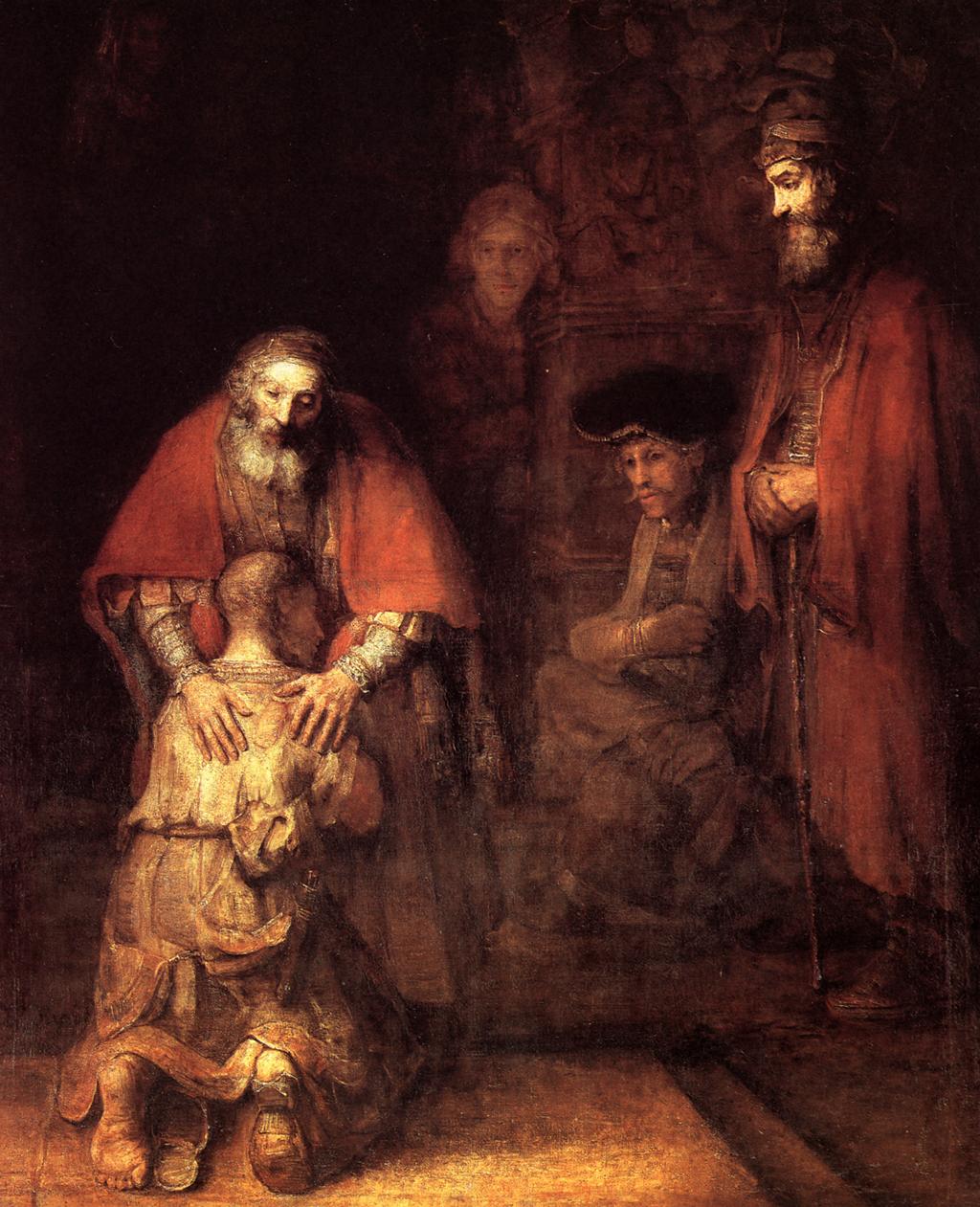
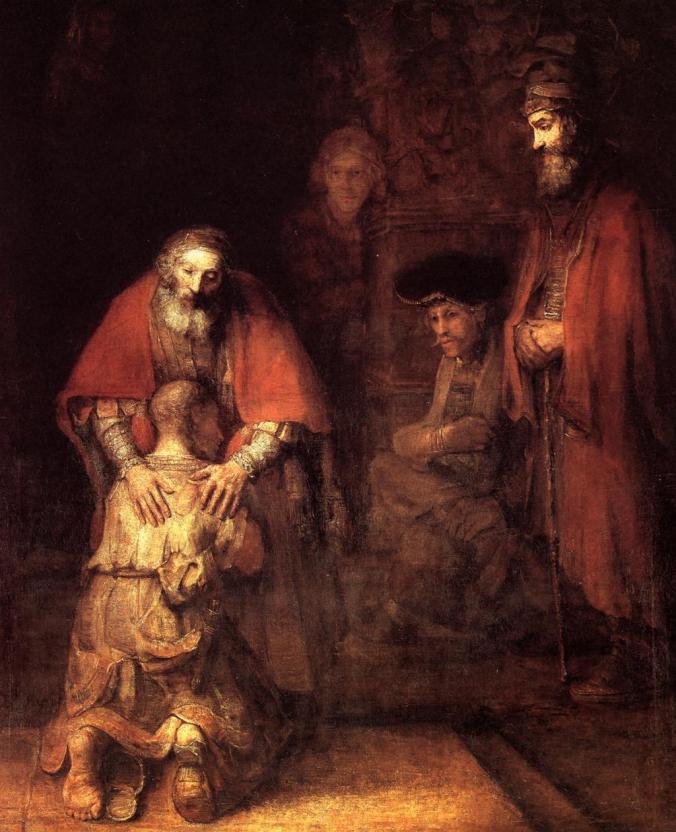
Rembrandt-Return of the ProdigalWell, it’s done. This is the end of the Beauty series. I won’t say too much, because this part is long enough already. I would just remind all of you of two things. Firstly, this whole piece began with the story of the most beautiful thing I have ever seen: the city of Edinburgh as I stood above it on top of a hill in the city. Secondly, our definition of Beauty: Beauty is the attribute of something that expresses complexity, simply. It what takes the complex strands of the world, reality, experience, or God and weaves those complexities into a simpler tapestry which we can perceive with our physical and spiritual senses. The more complexity expressed more simply, the more beautiful something is. And with that, let’s finish this thing out. What’s coming next? I have a post ready for that that I’ll post up in a couple of days. We pick up right where we left off

In conclusion, I want to talk about the thing that ties every one of these things together. The thing in which there exists in a glorious and beautiful harmony between all the different things we’ve talked about tonight. The last part of our text tonight, Ecclesiastes 3:15 says “That which is, already has been; and that which is to be, already has been; and God seeks what has been driven away.” God seeks what has been driven away.” In conclusion, the Gospel is Beautiful. The Gospel, in short, is the story and message of Christianity. It comes from the Greek word meaning “good news”. So what is this good news for us? The news that God did the ultimate act of beauty. The ultimate act of condescension of filling this finite world with the most Infinite of Beings for the sake of knitting it together again, and actually ultimately filling it with Himself. You see, God began History and ordered it in such a way that it was beautiful. He filled this simplicity with the marks of Himself, so all things pointed to Him and reflected Him perfectly. Humans came on the scene and were made in His image so that they as well truly and purely reflected, represented, and “Imaged” (that would be the theological term) this God on earth. But sin entered into the world, and made this world fallen from its original place of beauty. And we have followed suit. You see, sin is not finding certain things, people, or places beautiful. It’s that we find them more beautiful than God and these responses that are due God, we give to other things. We worship and “image” and express fallen simple things rather than the Holy complex God. We all have done this. I have done this. You have done this. You have soiled your beauty and abandoned it to your lusts! You no longer represent the One whom you were meant to mirror and reflect and therein find your beauty! You merely represent the world. The lowly fallen world. Fallen people imaging fallen things. There’s no beauty in that.

But God, being rich in mercy. Though we have abandoned God’s beauty and our own true beauty, God has not abandoned them. He loves His Beauty. And He loves the Beauty of His creation. So this God, for the sake of the worship His own beauty, and our own own joy in His Beauty, comes. The most perfectly knit together tapestry in the universe chooses to come and express the most Holy Complexity in the most intimate simplicity. This perfectly woven tapestry walks the earth, lives the perfectly woven life, and then stares into the cup of God’s perfectly woven wrath reserved for all things and people that are not beautiful in this world. And he drinks it. This perfect tapestry of complexity expressed simply goes to the cross willingly and allows the tapestry of His soul to be torn apart strand by strand by strand as the wrath of God that hung over everyone who would believe was gathered by God and poured it on Himself. That wrath that hung over many of us in here. That wrath that hangs above some of us tonight, that will be poured out on something. Either on Christ at the cross, or in you in Hell. Did you know that Hell is beautiful? Not for those that are there, but it is. It is pure, white, Justice and Wrath poured out on all that was wrong in the world. So God’s wrath will be poured out either in Hell or the Cross.

And history revolves around this cross. Because at the same time that Christ, Beauty Itself, was literally being torn apart, he was reconciling all things to Himself. In other words, he was taking every stray strand in the universe – every bit of evil, suffering fallenness there will ever be in history – and reserving its proper place in the final tapestry of History that we call heaven. He was making Himself the common glorifying thread that would reknit the broken fabric of a broken creation. And so we live now in the process and story of God putting all those strands in their proper place. As more and more beauty floods the earth He is still inviting his people to join Him in this epic story. He is calling his people to praise Him and draw near to Him, and out of the overflow of that to proclaim His Beauty to others and make more beauty, so as to usher in this new creation – or to put it in our terms tonight – the New Tapestry of Creation. Better than before. It is the one that has woven in it the purpose for all pain, sickness, death, and dying that God has ordained and allowed to take place so that this tapestry might make good on it all to the praise of the Beauty of God’s name.

And we, His people, His Bride, those that are “in Christ”, that are simple people Imaging and expressing the most complex of Beings, are woven into that tapestry that is Heaven and the New Creation. We’re not just going to live in it, we are part of it. Second Corinthians 5:17, in most Bibles reads: “if anyone is in Christ, he is a new creation. The old has passed away; behold, the new has come.” But that’s not what it says in the Greek. It doesn’t say “if anyone is in Christ, he is a new creation”. There is no “he is”. The Greek literally says “If anyone is in Christ: new creation!” More accurately, I think it should be translated “If anyone if in Christ, this is the new creation. he old has passed away; behold, the new has come.” I remember an old professor at Westminster named Richard Gaffin. He used to go up to students, stop them, and just say to them “you are just as resurrected now as you will ever be”. We often forget that. Yes, we will get new bodies and the penalty, power, and presence of sin will be done away with, but as far as our souls go, we are as resurrected now as we will ever be.

We are the new creation. The new tapestry. We have been woven into the fabric of this ever-increasingly redeemed world that is being flooded with the Beauty of God. The new has come in Christ. Through the Gospel. The good news of our salvation is that all that has been ugly with the world and in ourselves has been conquered. Beauty is here, and Beauty is ever increasingly filling the earth, and this Beauty is our salvation from ugliness and sin. George Marsden in his incredible biography of Jonathan Ecdwards ends the whole book with this summary of Edwards’ view of all of life and salvation. He says that

“[Edwards believed that] God’s trinitarian essence is love. God’s purpose in creating a universe in which sin is permitted must be to communicate that love to creatures. The highest or most beautiful love is sacrificial love for the undeserving. Those. . . who are given eyes to see that ineffable beauty will be enthralled by it. . . They will not be able to view Christ’s love dispassionately but rather will respond to it with their deepest affections. Truly seeing such good, they will have no choice but to love it. Glimpsing such love . . . they will be drawn from their self-centered universes. Seeing the beauty of the redemptive love of Christ as the true reality, they will love God and all that he has created.”

The Gospel, this salvation, is beautiful.

And we receive this salvation by seeing its Beauty, turning our stirred affections toward this God, and trusting that we cannot reknit our own souls but Christ has reknit them for us. And as our affections are further stirred we press into Him ever increasingly as He draws ever-nearer to us. I pray, I plead, that those in here tonight that have not done so, would trust this beautiful God to have accomplished for them what they could not do for themselves. Please, consider this story, this message. See if it is not the most beautiful thing you could ever conceive. Just for a moment, see if something in you is stirred for this God. Even if you don’t believe He exists, or that He is this particular God that I have spoken of tonight, is there something in you that at least wishes it were true? Wishes it were this way? Wishes that God did in fact arrange everything to make it all beautiful in its time? Even if you won’t admit it, if that’s true, if you did wish this were the case, don’t ignore that. You have been designed to long for the Beauty of this Gospel, this story. Don’t ignore it. Sovereign, Beautiful Father, Lover, and Lord, save people that read this.

In conclusion, I’m going to break every rule I learned in my preaching class this last semester about how to end a message and end mine tonight with a poem. But not someone else’s poem. This is a poem I wrote in one take one particular afternoon through broken tears standing on top of a hill looking out over the city of Edinburgh as I was taken over by the most beauty I’ve ever seen. Let this encourage the weary saints reading this blog post, and let it perhaps woo those that have yet taste what these words are about. You can find the poem here, or just click in the section above entitled “The Site”.

Here are the links to the full manuscript and the full audio of my presentation of this material:

Click for Manuscript Pdf

Manucscript

Click here for sermon audio

Audio

Proclaiming & Producing Beauty{11}


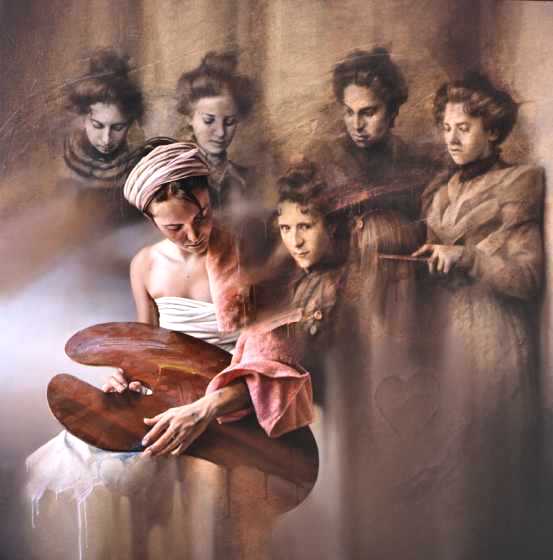
Sandorfi - KalfonariumThe next post after this will be the last in this series.  But today, we are finishing up the section on how we respond to Beauty.  As I stated earlier, there are two fundamental ways we respond to Beauty: we contemplate it, and we enjoy it.  But, within the enjoyment piece, I think there are four main ways to to that: we praise, participate in, proclaim, and produce Beauty.  Once more, our working definition is Beauty is the attribute of something that expresses complexity, simply.  It takes the loose strands in reality and weaves them together into a tapestry that out senses are able to perceive.

Now, let’s pick up right where we left off:

Proclaim

But the process is still not over. First we praise the thing as beautiful, then we participate in its beauty on its own terms. Thirdly, we proclaim it as beautiful. Proclamation is not the same as praise. I believe it was C.S. Lewis that something along the lines of this: joy in something is not complete until it is shared with someone else. Proclamation is the telling of the Beauty of this thing to someone else. It is sharing in this affection with someone else. Here we start seeing something about Beauty that will lead into our final response: Beauty longs to be known and spread – almost like a virus. It wants to inspire you to tell others about it, so that those people might participate in it as well. For creational Beauty this is done in many obvious ways like reviews and just telling someone else about it. For divine Beauty, this is typically referred to as preaching. Speaking of this God should be the natural response to someone who has praised and participated in the Beauty of God. It is out of the overflow of this in someone’s heart that they should speak. Not out of begrudging compulsion or sheer white-knuckled obedience. We tell others about the things we find most beautiful. Should this not also apply to the highest of all beautiful people – God?

Produce

This brings us to our last part in the process of responding to beauty. It’s very much tied to the previous one and has to do with Beauty replicating itself. God, in His love for us, calls us to respond to beauty not only by proclaiming beauty in word, but also producing beauty in deed. Produce is the last way we respond to Beauty. We are built in the Image of a God who doesn’t just desire, delight in, and display Beauty, but a God who also does Beauty. We, likewise, all have abilities to produce beauty. Not only that, our response to beauty is not complete until it has inspired us to likewise create beauty. Every musician in here knows what it’s like to be at a show or concert, seeing someone play the instrument that you play and suddenly having your mind swirling with musical ideas you want to try out when you get home. There’s an entire field of art history that tries and find the obscure pieces that inspired some of the greatest pieces of art we adore today. It works off the assumption that nothing that beautiful exists without inspiration before it. The longer I live, the more I am convinced that everyone has some creative ability in them. I don’t care how “uncreative” you think you are. You are built in the image of a Creator God! You have not only the ability, but I fully believe the responsibility as well to bring forth more beauty in this world and further participate in God’s “re-knitting” of the universe. Now this “creative” ability in all will look different in everyone, so don’t think you have to stick to conventional forms of “creativity”. Really, anything that makes beauty does this. It can be gardening, serving, counseling, or raising your kids, even. I would argue all those take a certain type of “artistic eye” to do them well. We all have it. Find it. Do it well. Do it often. And do it as a response to the Beauty that is around you in both God and Creation.

This also shows itself in the Christina life (and in our text) as holiness, or “doing good” as the author of Ecclesiastes puts it. Seeing the Beauty of God should inspire us to holy living and loving of others. Serving those around us in order to share with them and replicate the Beauty of God that we have seen.

Click for Manuscript Pdf

Manucscript

Click here for sermon audio

Audio