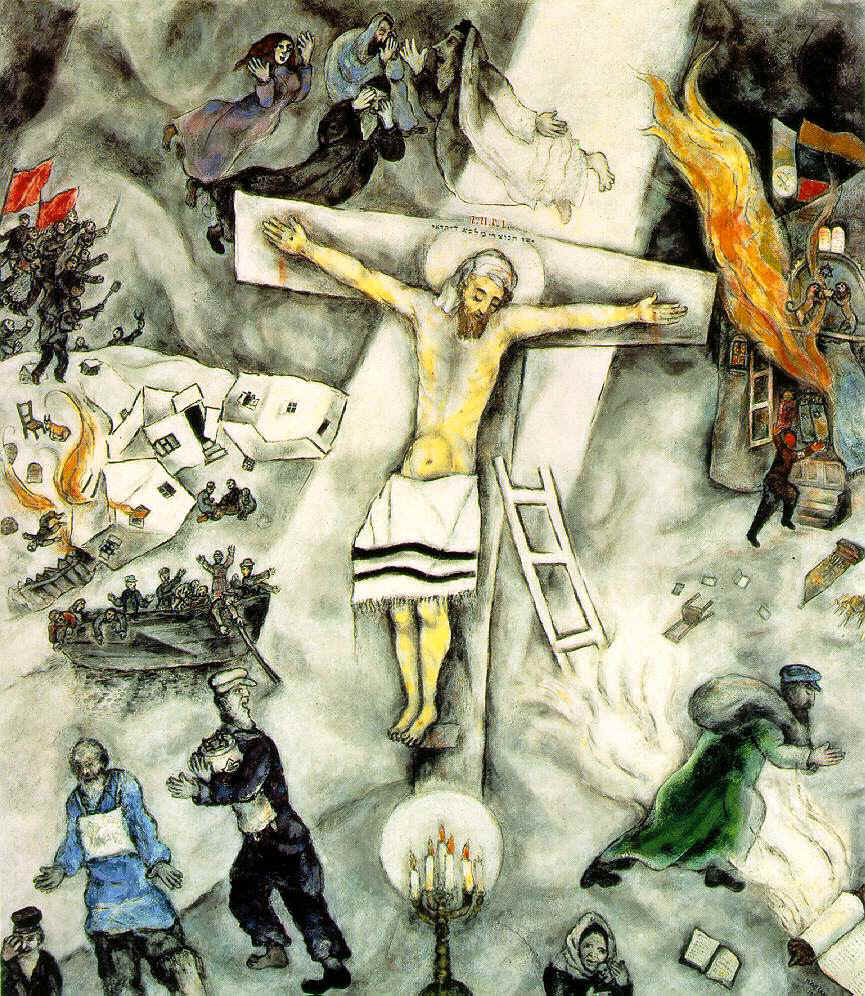
Prodigal, Let’s Go Home {pt.1} [GUEST POST]


This is Austin’s final response to a conversation we’ve been having on the blog concerning the Nature of God and Evil in the world–I know: light stuff, right? Here are the relavant links, if you’re interested: I wrote a post mentioning God taking death onto his own self; Austin took issue with this; I replied with a full-on development of the idea that God’s Nature is like an unfolding narrative–one in which there is Evil and Death; Austin responded by critiquing some of my Bible interpretation; I then wrote two posts, one responding to his response, and one telling of my fears that I’m wrong (where I also quote the James Joyce book Austin references below, as well as list out my 5 main premises for my thoughts he responds to here). This post is Austin’s final words on this (or part 1 of those words, at least). I’ll have a few concluding thoughts next week.

_______________________

Is then the whole of life only a contradiction; can love not explain it, but only make it more difficult? That thought he could not endure; he must seek a way out. There must be something wrong with his love.

—Kierkegaard, The Expectation of Faith

I, like Paul, am one who has been deeply affected by Joyce’s story. That story, A Portrait of the Artist as a Young Man, is really the central struggle of my life: Artist or Theologian? Much in that book, including the scene that Paul elaborated in his response, continues to resonate in the sometimes hollow-feeling caverns of my mind. “I shall never swing the thurible…the oils of ordination shall never touch my head.” Those words wounded me and have stayed with me like a scar, long after their initial cut. I, too, am often much afraid.

Like Jacob, I wrestle with God. Israel indeed.
Continue reading

Evil & God {2}: I’m a Heretic, I Fear


This is my final post in a discussion I’ve been having with a very good friend of mine, Austin Ricketts, about the relation of Evil to the Nature of God. For more on the background of this discussion, see  Part 1 of this reply, although you should be able to gather a good idea of the conversation from this post. After this, I’ll let Austin have the last word, if he’d like.

Pressing into the Story of God’s Nature

I’ve been saying that God’s Nature is not static, but, just like us humans, it’s like a Story, unfolding in time (click here for more). Further, it’s a Story that includes Evil and Death within in. Hopefully I can clarify some points all the more by drawing out the “Story” metaphor further (because, at the end of the day, that’s all this whole “Narrative” framework is).

When I write a story about redemption and healing, I include evil in that story–evil that ends up being resolved and healed in the end. The thought of that evil (whatever it may be) is borne from my mind and existence. Just because the thought of that evil has “existed” in my mind, does not, however, make me evil.
Continue reading

Evil & God {1}: a refutation’s refute


Update: Part 2 of this post is up.

Last week, I wrote a post about being overwhelmed by God’s beauty in Western Pennsylvania. In it, I talked of the beautiful paradox of a God who would incorporate within his own divine life both Beauty and Suffering. My good friend (and huge theological influence) Austin Ricketts (who’s written on this blog beforetook issue with these statements, saying that he fears that they lead to making God the author of Sin and Evil. I wrote a reply to his comments in which I asked whether the very nature of God might be “narratival” and unfold over the course of history, and perhaps suffering and even Evil itself are “motifs” or “themes” in that “Storied Essence” of God–a story that eventually does away with these things. He wrote a reply in which he countered some of my views on revelation and some biblical texts.

Here, in the two parts of this post, I plan on (1) responding to Austin’s refutation, and (2) writing up some final thoughts (and fears) on my end. I’ll leave the final word to Austin if he so desires. Feel free to also chime in with your own thoughts if you like!
Continue reading

Evil & the Essence of God {2}: a storied solution?


Updates: Austin has replied to this post with his own thoughts. I have also edited this post to correct some of my incorrect Hebrew grammar Austin pointed out.

Earlier, I posted some comments that my good friend (and occasional contributor to this blog) Austin Ricketts wrote on my post yesterday about the relationship between evil, beauty, and the nature of God. Read those words if you would like his beautiful and articulate wrestling with this idea. Here is my response.

At some point in their lives, most people face the question: Can God stop this suffering? If not, is he God? If he can, but doesn’t, what kind of God is he?

Most of the time, attempts to push this question to a solid conclusion lead to unfortunate results. Many have abandoned God altogether over this, and still others, who maintain their faith, end up doing the mental gymnastics only to end up in positions entirely foreign to the Bible or that are even more illogical than when you began.

Here’s my attempt at a response, fully aware of the dangers that come with doing so. Please be gracious. Please reply. Point out my heresies, And please allow me the room to change my mind later on.

Continue reading

Evil & the Essence of God {1}: the discussion


Update: Part 2 is now up.

Yesterday, I wrote some meditations on the world’s suffering and evil in light of the incredible Beauty I saw this past weekend on a trip to western Pennsylvania. One of my very best friends, Austin (who’s written for this site before), appreciated the post but had some thoughts on some of the theological implications of my thinking, and talked about where/how he differed. I love his mind (and his heart), and I see where he’s coming from, but it’s a place I can’t go. I want to offer you all his comment, and then my perspective on all of this, hoping to offer all of you some things to think about and a space to discuss anything that strikes you as off.

Continue reading

Jesus’ Wife fragment judged a fake [casual fri]


hmm… so did you hear about that fragment found recently that talked about Jesus’ wife? (By the way, here’s a great segment Jon Stewart did on this.)

Daniel B. Wallace's avatarDaniel B. Wallace

“News flash: Harvard Theological Review has decided not to publish Karen King¹s paper on the Coptic papyrus fragment on the grounds that the fragment is probably a fake.” This from an email Dr. Craig Evans, the Payzant Distinguished Professor of New Testament at Acadia University and Divinity College, sent to me earlier today. He said that Helmut Koester (Harvard University), Bentley Layton (Yale University), Stephen Emmel (University of Münster), and Gesine Robinson (Claremont Graduate School)–all first-rate scholars in Coptic studies–have weighed in and have found the fragment wanting. No doubt Francis Watson’s comprehensive work showing the fragment’s dependence on the Gospel of Thomas was a contributing factor for this judgment, as well as the rather odd look of the Coptic that already raised several questions as to its authenticity.

View original post

Weekend Photo Challenge: Everyday Life (a double-header!)


This weeks’s WordPress “Photo Challenge“theme is “Everyday Life”. The challenge is to find and create beauty from people doing the most everyday things in their lives. I’ve chosen–not one, but–two (!) pictures for this week.

The first picture above (be sure to click it to view it full-size) is of one of my very best friends during a trip she made to Philadelphia a few years ago. This is one of those friends that you immediately connect with and can go years without talking to, and yet can pick up right where you left off when you see each other again.

She had visited Philly and I had just finished showing her and a couple of our friends the campus of my seminary. We then went to a local pizza shop called “The Pizza Box” that us seminarians would frequent between classes.
Continue reading

The Best Bible Resource I’ve Ever Read [casual fri]


To do this Bible Class that has consumed the past few months of my life (and this blog–I swear I’ll stop talking about it soon), I had to read a lot of stuff, including these (as well as their New testament counterparts). I checked out stuff from the Philadelphia library, and watched a bunch of lectures from iTunesU (especially these). I looked through commentaries and websites and articles and handbooks and sermons.

In other words, I at least glanced over a lot.

But there was one resource that I found more helpful, clear, and amazing than any other Bible resource I’ve ever found. No exaggeration. No hyperbole. I’m serious.

It’s a pair of textbooks (one on the Old Testament, one on the New, one combined with both) written by a theologian I had never heard of before. his name is John Drane (here’s his painfully poor-designed website as well). Yes, textbooks. And I read most of the Old Testament one and all of the New Testament one.

Continue reading

Join Us for a Tour of Biblical History at the Penn Museum this Saturday!


As a fitting conclusion to the six-week Bible Survey Class I’ve been teaching at my church, I’ll be leading a tour of The University of Pennsylvania’s Museum of Archaeology of Anthropology, focusing on much of the Biblical History we covered in the class. The museum has a very rich collection of items from the regions and eras in which most all of Biblical History unfolds. We will be following the unfolding storyline of the Bible as we travel to each section, learning the context and the history that set the stage for the faith many of us now call our own.

If you’re interested, meet us at 10am this Saturday, August 25th in the courtyard in front of the main entrance (pictured above). Note: There’s a smaller entrance at street level some may confuse as the main entrance. We will be up the steps where the main fountain is.

The cost is $12 for adults and $8 for students (and well worth the price). The museum is located at 33rd and Spruce (map), right across the South St bridge. (Parking advice: park on the east side of the South St bridge in the Graduate Hospital area and then walk over the bridge). See you there!

Class 6: NT Letters, Revelation, & The Bible in Worship (WE’RE DONE!)


This week was the last week in the six-week Bible Survey class I’m been doing at my church.

It’s been an honor to do this class, and I feel like this last one went especially well. Others seemed to find it genuinely helpful.

We ended our time in this class by talking for a little bit about how we can use the Bible–and all the information we just gleaned these past weeks–in our own, personal, spiritual lives.

To conclude the class, this Saturday we will be going to University of Pennsylvania Museum of Archaeology and Anthropology. You really won’t want to miss this. I’ll be putting a post up on this tomorrow.

For those that have followed in class and online, thank you so much for doing so. It was such an honor to be able to do this class, and I can’t believe I was given the time and grace to do it.

I hope that these resources are found to be helpful to those that invest their time into them; and that they draw each of you into a greater knowledge, love, and desire for our God as He meets us in our Scriptures.

And lastly, over the next months, I will be compiling all of these notes, as well as other essays I’ve written on the Bible in the past and self-publishing a book in both print and electronic forms. If you think about it, please pray for me. I’m starting to see that self-publishing is a lot more costly and complicated than I had originally thought.

This Lecture Covers:

  • A chronological survey of the contents and background of Paul’s letters
  • Discussion of the contents and background of the other letters of the  New Testament
  • A talk about that crowd-favorite, Revelation. We talked about how it fits into the greater story of Scripture, how it’s often misread, how to properly read it, and it’s contents and background
  • How one should approach the Bible to build up their spiritual life
  • Practical methods people can employ to know God through the Scriptures

**Side Note: twice in the audio of this lecture, I refer to Galatians and James as books that may each have been the “first book of the Bible written”. I meant to say “New Testament”, not “Bible”. Sorry.**

Download: [Audio] [Notes] Continue reading

How do you use the Bible and Bible knowledge in your spiritual life? [OPEN MIC]


This weekend, I will be teaching the last class in my six-week Bible Survey class at my church. I want to end the class talking about how to use the Bible (and especially the knowledge gleaned from the class) in one’s personal (and corporate) spiritual life. How does the Bible actually function in a believer’s life to cultivate a dynamic, deep, and intimate relationship with Christ and the Holy Spirit? I have my own thoughts on this, but I want to hear from all of you. So here are some questions:

  • Do more Bible “facts” actually have a direct impact on your spiritual engagement with God? In other words, has studying the backgrounds of the Bible ever led to meeting God? How or why not?
  • What practical methods of immersing oneself in Scripture have been most fruitful to you spiritually?
  • How might people use the tools of Biblical Studies (commentaries, etc.) to treat the Bible formationally, rather than merely informationally?
  • For those that are oriented in such a way that they constantly want to know the context, background, history, date, etc. of Scripture, how have you been able to quiet all these questions in order to meet God?
  • Similarly, for those more “intellectually”-oriented, how have you been able to move beyond the intellect to engage other parts of yourself with Scripture?
  • How do we move beyond facts of Scripture to the Person of Scripture?
  • If (as I said in the first class, and other theologians have said) the Bible only “becomes” the Word of God as the Holy Spirit meets us during our engagement with it, what have been the most effective practical ways that you have invited the Holy Spirit into your Bible Study time?
  • In your experience, what have been some of the pitfalls in other approaches that are commonly endorsed by the contemporary church, or what are some of the realities that aren’t talked about often?
  • What would you say if you were me (haha)?

Feel free to respond below, in a Facebook comment, email, text, or phone call. Thanks.

Class 5: Intertestament, pt. 2; NT Intro; Gospels; Acts


This week was the fifth week in the six-week Bible Survey class I’m doing at my church.

And wow, we covered a lot in the class. But still, this class probably had the greatest percentage of material I had prepared that was not actually touched on in the talk. This makes the manuscript that much more full of extra material.

Covering the topics above, I have 35 pages of material below.

You may have noticed that I never actually finished the materials I talked about last week. Well, entering into an entirely new testament of the Bible put me in a mindset that I just couldn’t go back to finish up writing about every one of the Prophets. I’ll do it someday. I promise.

Lastly, mark your calendars for August 25th, where we will be going to University of Pennsylvania Museum of Archaeology and Anthropology. You really won’t want to miss this. Details to come next week.

This Lecture Covers:

  • A discussion of the Political and Religious history between the Old and New Testaments
  • An Introduction to the Background of the New Testament
  • Background and context of Jesus, his upbringing, and his life
  • Survey of the content and background of the Gospels.
  • An extensive and in-depth look at the book of Acts.

Download: [Audio] [Notes] Continue reading

Class 4: Prophets, pt. 2; Wisdom Books; & Intertestamental Period, pt. 1


This week was the fourth week in the six-week Bible Survey class I’m doing at my church.

We didn’t quite get to the Introduction of the New Testament like I had planned. This class was a bit different than other ones. Rather than focusing on a lot fo content of each book, this week was mostly a “tour” of these sections of the Bible and History, with some “highlights” along the way. The main point was to give people a bigger picture of these things to help them read the Bible themselves.

Just like last week, my notes are very incomplete. Most everything I said is in there, but I definitely want to provide a lot more in the notes than I say–and that hasn’t been filled in for most of the books so far. I will be spending the next two weeks filling that in. Once I’m done, I’ll let you all know. Thanks for your patience.

Lastly, I know I did a very poor job at telling the story of the Intertestamental history. I will try this again and condense it more in the next class. I will be much better prepared then.

This Lecture Covers:

  • Principles to keep in mind to help when reading the Prophetic books
  • Highlights from the Prophetic Books
  • Survey of the content and some of the background of the Wisdom Books of the Old Testament, with a special focus on the content of Job
  • Survey of the History between the Old Testament and New

Download: [Audio] [Notes] Continue reading

notes from last week’s class are finally done!


Earlier this week, I posted the audio and incomplete manuscript for Class 3 for the Bible Survey class I’m doing. Last night, I finally finished polishing up the notes with all the extra information I wasn’t able to say in the class. I hope it’s helpful. This final manuscript comes in at 36 pages long (admittedly, that’s with size 14 font to make it easier to read online, but still), so there is lots of stuff there that wasn’t talked about (especially with Kings, Chronicles, Ezra-Nehemiah, and Esther).

So, check it out below, download it, share it, critique it, and let me know what you think! I’d love to get some feedback on these to know if they’re actually helpful. Enjoy, and thanks for your patience! (and P.S. don’t forget about the Dead Sea Scrolls trip tomorrow.)

What do we make of the atrocities of the Old Testament?


This is a slightly edited version of an excursus I wrote in this week’s notes for the Bible Survey Class I’ve been teaching at my church. Follow that link for more information on the class. Also, I’m well-aware that the second half of this is exactly the “angle” talked about in the venerable Pete Enns’ recent blog post. I wrote this before he posted that, but still, I wanted to put it up on the off-chance this articulation might be helpful to others.

In the books of Numbers and Joshua, God commands the Israelites to commit genocide on many different people, including their women and children. He also commands them to forcibly enslave others. And in still another story, he commands Moses to take the remaining virgins of this particular people of which they disobediently did not kill all, and divide them evenly among the soldiers and the “rest of the Israelites”. We can only imagine what for.

A few quick thoughts:

Continue reading