Women at the Cross | Matthew 27:55-56


Now when the centurion and those with him, who were keeping watch over Jesus, saw the earthquake and what took place, they were terrified and said, “Truly this man was God’s Son!”

Many women were also there, looking on from a distance; they had followed Jesus from Galilee and had provided for him. Among them were Mary Magdalene, and Mary the mother of James and Joseph, and the mother of the sons of Zebedee.
Matthew 27:55-54

It’s really interesting to me that Matthew adds this little addendum to the end of the account. Why point out the women that were there? Is the assumption that all the men have scattered, and so Matthew had to show his sources for this story?

See other Marginalia here. Read more about the series here.

Introducing Marginalia: a new part of this blog


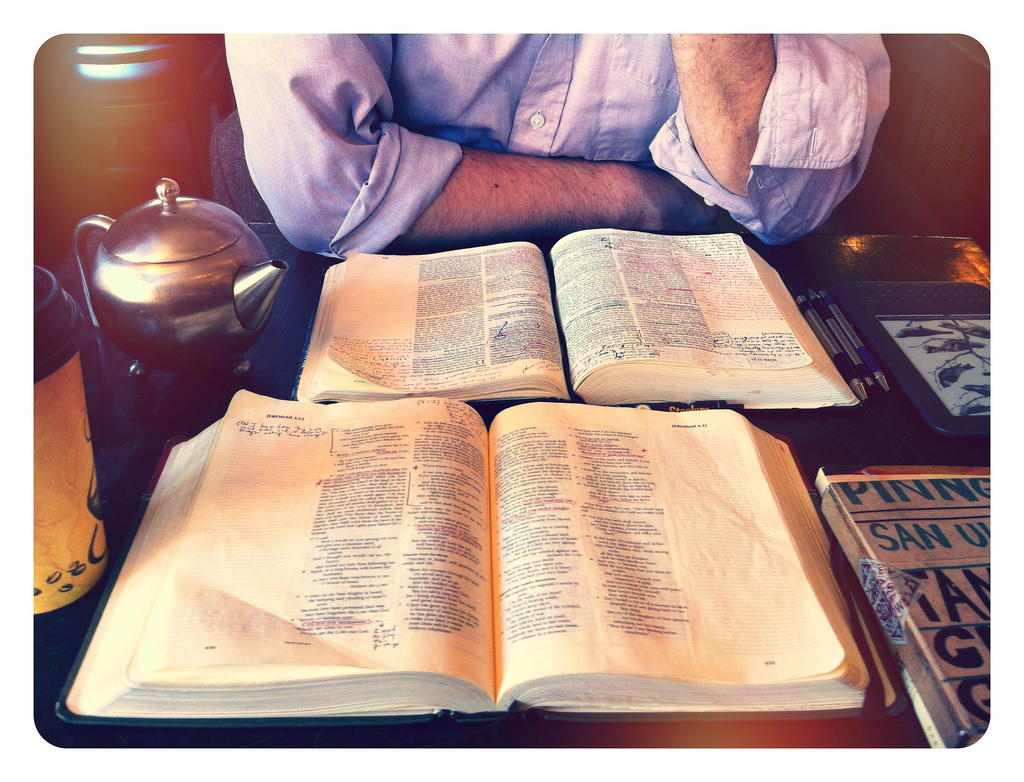
schrott-bibles-paul-coffee

I’ll be honest. It’s been years since I’ve been able to find a way to regularly read the Bible that sticks and works for me. To be frank, readings plans usually don’t work for me because I get bored. Depending on the plan, you’re either stuck in the same book for long stretches of time or you’re jumping around so much that you lose the sense of the whole.
This year, I think I’ve started a regimen that is clicking: the M’Cheyne Bible reading plan. At any given time, I’m going through four completely different part of Scripture and for me, this is keeping me really engaged. As I’ve gone on through the plan these past couple of months, I started highlighting and writing up little notes on random verses here and there. Lots of themAnd I’d like to share them with you.

So today, I’m introducing a new little part of this blog called Marginalia, where I’ll be posting these short little meditations on Scripture as I go through this plan.
Continue reading

Abraham’s son Ishmael was part of Covenant! | Genesis 17.23-27


This is my covenant, which you shall keep, between me and you and your offspring after you: Every male among you shall be circumcised… and it shall be a sign of the covenant between me and you…. Both the slave born in your house and the one bought with your money must be circumcised. So shall my covenant be in your flesh an everlasting covenant. Any uncircumcised male who is not circumcised in the flesh of his foreskin shall be cut off from his people; he has broken my covenant.”… As for Ishmael, I have heard you; I will bless him and make him fruitful and exceedingly numerous; he shall be the father of twelve princes, and I will make him a great nation. But my covenant I will establish with Isaac, whom Sarah shall bear to you at this season next year.”…. Then Abraham took his son Ishmael and all the slaves born in his house or bought with his money, every male among the men of Abraham’s house, and he circumcised the flesh of their foreskins that very day, as God had said to him…. And his son Ishmael was thirteen years old when he was circumcised in the flesh of his foreskin. That very day Abraham and his son Ishmael were circumcised; and all the men of his house, slaves born in the house and those bought with money from a foreigner, were circumcised with him.
Genesis 17.23-27

Yes, God said that Ishmael would not be the primary bearer and “administrator” of the covenant, but he still bears its marks. Reminds me of a reading from Lesslie Newbigin where he talks about how through our election and Covenantal relationship with God, Salvation is extended to all the nations. “Election” isn’t about blessing; it’s about responsibility to extend the Blessing to others.

Other peoples (even those not in the elect people of God) participate in and receive the full benefits of being part of the Covenant. To be elect is to extend these Covenantal blessings to all nations (as we see here with Abraham). To be marked as God’s is to be placed on mission.

Ishmael was still joined to the covenant! Praise God for his gratuitous grace!

See other Marginalia here. Read more about the series here.

This is why Genesis was written (and Ken Ham doesn’t see it)


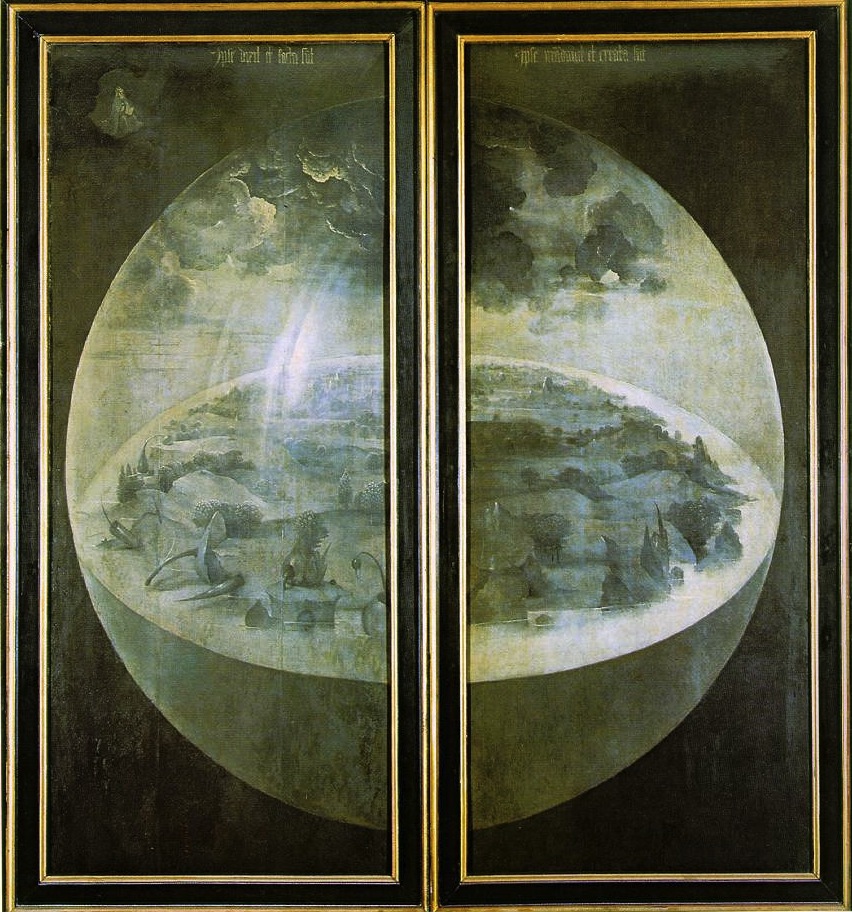
Bosch-Garden-Earthly-Delights-Outer-Wings-Creation-WorldIf my Facebook feed is representative of the general population at all, then I can confidently say that most of you have heard about the debate between Ken Ham and Bill Nye about creationism and evolution.

On this blog, I try not to get too much into issues of great contention in the church family when I don’t think it’s necessary, especially when I think it would unnecessarily prevent someone from reading this blog with a free conscience, or just mess with their head too much. But this is the one issue that I have felt the freedom to be blunt, bold, consistent, and loud about my opinion. So, I don’t have too much to add to everyone else out there that was more or less lamenting this debate more than celebrating it. Maybe I’ll have some thoughts next week coming at it from a different angle, but we’ll see.

Today, I wanted to share with you a video from the in-person portion of my Hebrew class a couple of weeks ago. To get an A in the class I have to translate, memorize, and recite a section of the Genesis 1 in the Hebrew. To help us with that, my professor made a video of him reciting it and acting out the recitation in front of us.
Continue reading

A Sacrament Primer (and some questions I still have)


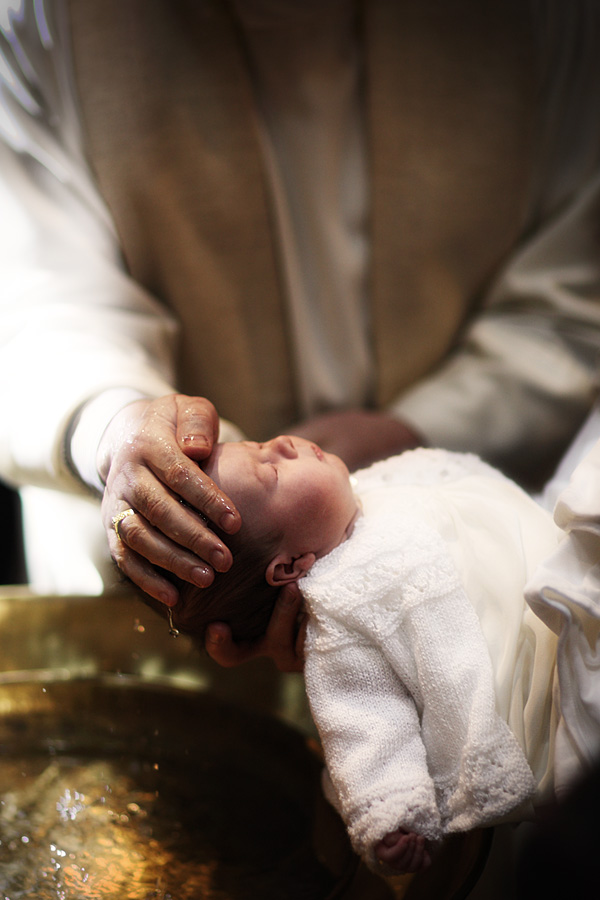
infant-baptism-water-7

For my worship and liturgy class, we had to write up a little thing explaining how we would explain the Sacraments to an everyday person. We were also supposed to throw up some questions that we might still have about them. Here are is mine.

In the beginning of the Bible, we see God create what amounts to a “temple-world”. He wants to dwell in this temple, with his people, and make it his home. He ordains priests to care for it but they fail. So God puts in motion a plan and story to rebuild this world and re-prepare it for his dwelling.

The focal point of this story and our entire faith is Jesus Christ. He is God among us having come dressed in humanity. The Gospel of John says he literally “templed” among us, using our created humanity as something he was pleased to dwell in.

This is the Gospel; it is our life and strength as Christians.
Continue reading

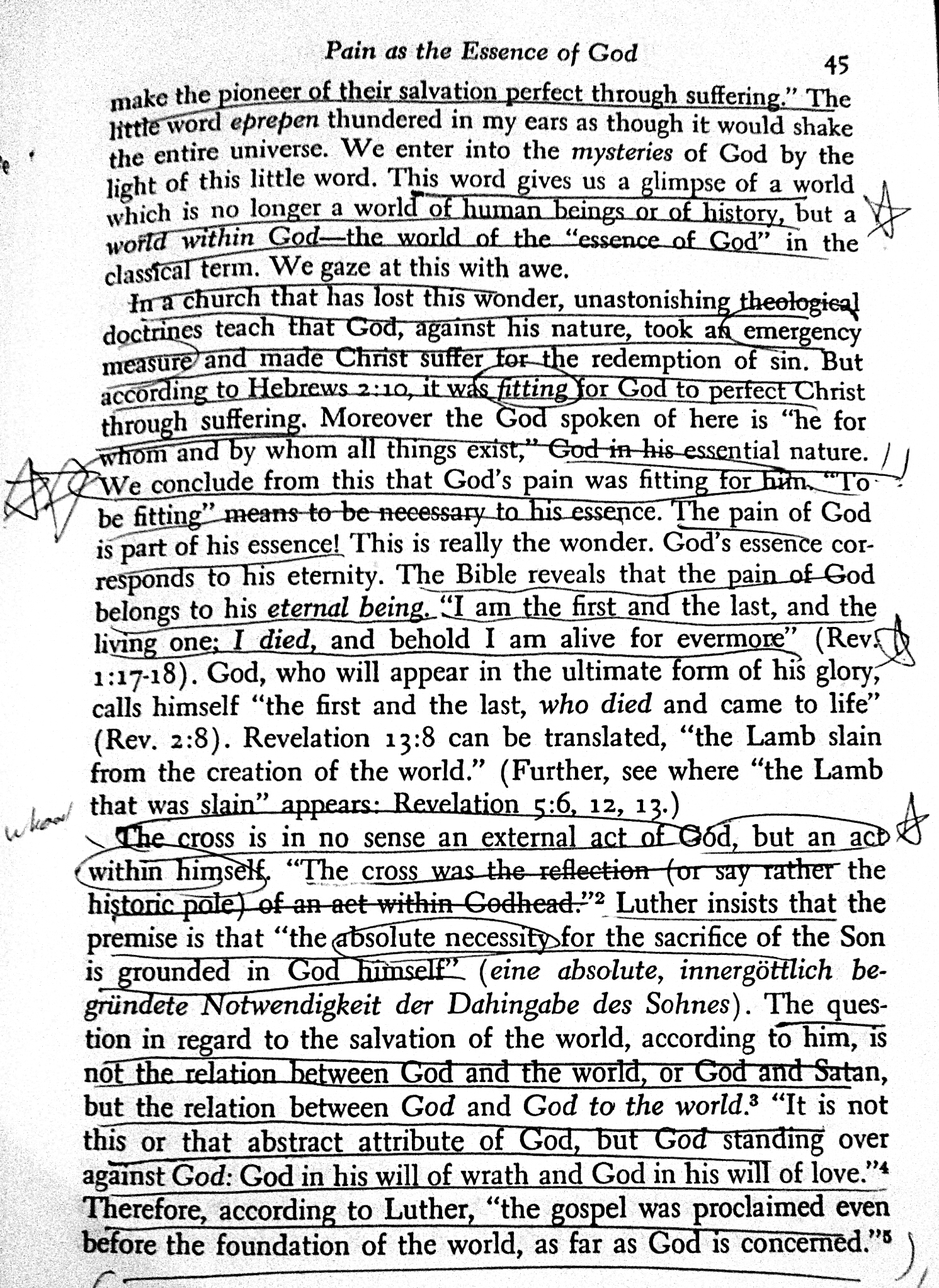
Crazy thought of the day: God Died. [QUOTE]


“The task of witnessing to the gospel is to vitalize the astonishing fact of the gospel. The message “the Son of God has died” is indeed most astonishing…. God has died! If this does not startle us, what will? The church must keep this astonishment alive. The church ceases to exist when she loses this astonishment. Theology, the precise understanding of the gospel, must be seized by this astonishment more than anyone else. It is said that philosophy begins with wonder; so theology begins with wonder. The wonder of philosophy pales before the wonder of theology. The person astonished by the tidings “God has died” can no longer be astonished at anything else.”

Kazoh Kitamori, Theology of the Pain of God

Why my soul is glad to have feminists around me


wwii-woman-we-can-do-it-feminismThis is a post in our on-going series on Women in the Church.

As I wrote last week, I was at my in-person seminary intensive the past two weeks. While there, I met a woman who is about to be ordained a minister in my denomination. We were all sharing our stories and I told her I was raised a Southern Baptist. Having been raised in area where they have little to no foothold, she had only had one experience with a Southern Baptist.

She was working a table at a conference where an older gentleman carrying a large briefcase approached, telling her how excited he was about the next speaker–a “fellow Southern Baptist”. Not being familiar with the speaker’s work, this woman asked the gentleman what the work was on. He put his briefcase on the table, opened it up and pulled out a large tome, saying “this is his book, and it is wonderful.” He almost began to summarize its contents, but stopped short, instead pulling out a much smaller paperback, saying “but that book may be too hard for you to understand. Here, look at this one. It’s much simpler.”

He then realized he had no idea why a woman would be at this conference in the first place. He asked, “and so what do you do?”

She told him that she was at seminary studying for her Masters of Divinity.

This gentleman quietly put the books back in his suitcase, shut it, locked the clasps, looked at her, and solemnly said, “you know you’re going to burn for that, right?” And he walked away.

Continue reading

Dispatches from the Snowy Midwest (Seminary Daze)


winternight-bw2For the next week-and-a-half more, I find myself in Holland, Michigan. I’m here for an in-person intensive in my otherwise distance seminary program. It’s two weeks of Hebrew for over 5 hours a day and two other classes in the afternoon and evenings.

I’ve been here since Sunday and it really has been amazing. There was tons of snow here causing travel hiccups for a lot of people, though I came in just before the worst of it. I’m staying with some guys from the program in a house right on Lake Matacawa (see picture above).

I still don’t know how to relate to these sorts of times. Going into it, I expected it to be a time appealing to my introverted self; mainly sitting and staying to myself (and happily so), keeping my nose in books. I wasn’t looking forward to taking this much time off from work, and I wondered why these classes couldn’t continue being online. I didn’t need to know these other people in the program. Why was I being forced to spend time with them in person?

Instead, it’s been hard to get a moment to myself (and–surprisingly–happily so). These guys I’m staying with are all amazing men, and the classes have been learning experiences unlike anything I’ve seen before. I get to have conversations that are so refreshing compared to my previous seminary experiences. Yes, the talks are still all about those things most normal people don’t (and shouldn’t) spend much time in thought over (theories of lapsarianism, the mutability of God, the influence of Western philosophical models on classical theology, etc.).

And yet, these talks have been marked by two big differences from their prior college and seminary iterations. First, few of these talks have stayed there in the ether for their entire duration. Eventually they get to talks about how it affects how we do ministry, serve others, how we communicate these ideas in helpful ways, and how we can peaceably coexist with others that disagree with us on any particular niche issue. It has challenged my pastoral sensibilities and has really connected high theology with the mundane in really beautiful ways.

And that leads to the second thing. In my particular program, there is so much diversity in opinion on even major parts of theology and church life. This school is a denominational school with lots of beliefs about lots of things–and they don’t hide it–they’re anything but wishy-washy on doctrinal issues. And yet, those that are here have such a beautiful sense of what’s essential and not. To see the most theologically conservative members of our group joking around with and living life with those that would be considered some of the most rebellious “liberal” theologians in the Church today truly is a beautiful thing.

So many of our theological conversations have simply been exploring what one another thinks, why they think it, what led them there, and how it affects their lives. It’s not debate or argument. Just sharing and, in a sense, playing in the playground of theology.

And when theology becomes that–not a battle ground with God as our theological General, but a playground with our loving Father watching on, kissing boo-boos, and bandaging scraped knees–theology becomes an exercise in freedom, worship, beauty, and invitation unlike anything the rest of the world has to offer.

Would that all of our brothers and sisters felt the same way.

A Biblical Critical Advent: Luke’s Cosmic Christmas


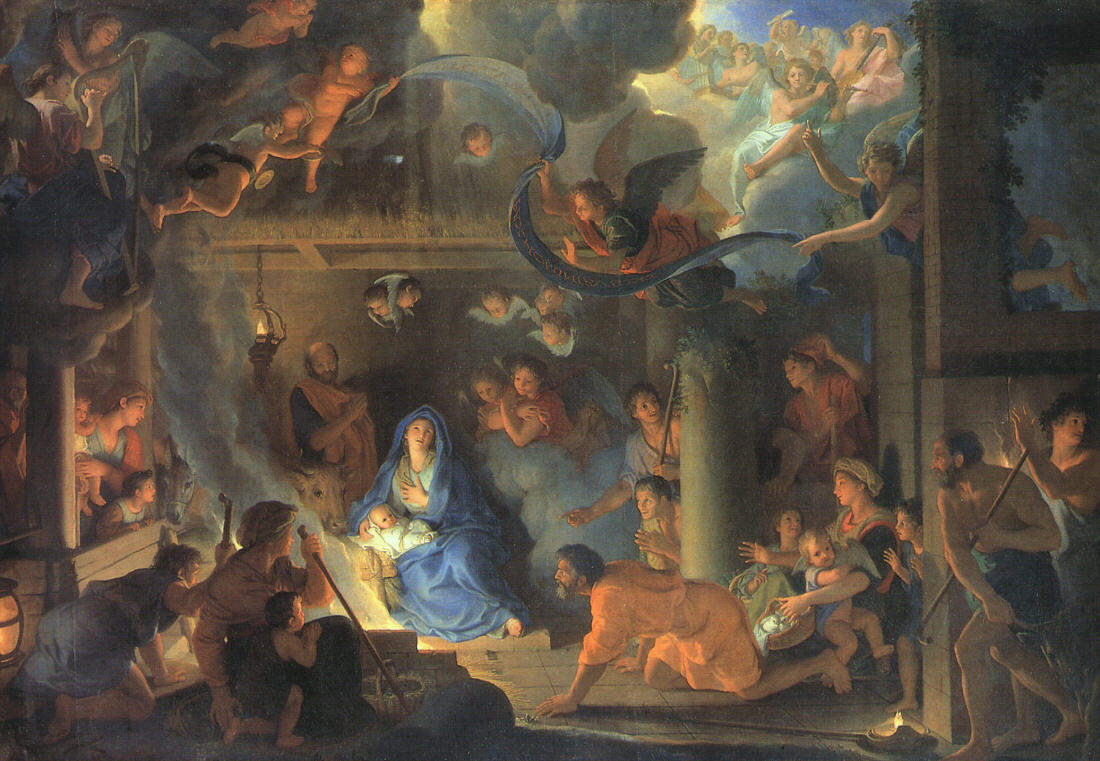
Charles-le-Brun-Adoration-of-ShepherdsFor Advent this year, I wanted to put up a few posts looking at Matthew and Luke’s Nativity stories as they were meant to be read: as two separate stories with their own purposes and themes. We often just mush them together, and I think we lose something in that process. Last week, we sat with Matthew’s Nativity story. Today, we turn to Luke’s Christmas.

Matthew’s Nativity focuses on how Christmas plays right into Israel’s own story; how this is exactly how the Jewish Messiah should be expected to have come into the world. Luke’s Gospel, on the other hand, emphasizes Jesus’ significance to the entire world, all parts of society, and the entire cosmic order.

In other words, Jesus’ mission in Luke is much larger than simply Israel. These and other Lukan themes are brought out quite strongly and explicitly in his Nativity narratives. Today we’ll see how he does this through signs of the universal mission of Jesus, the story’s emphasis on the lowly and powerless, and his stories of Spirit-filled joy.

Continue reading

A Biblical Critical Advent: Matthew’s Old Testament Christmas


root-jesse-matthew-icon

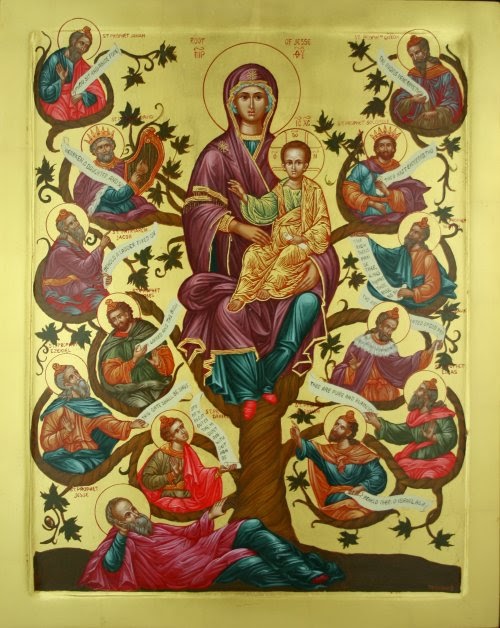
For Advent this year, I wanted to put up a few posts looking at Matthew and Luke’s Nativity stories as they weren’t meant to be read: as two separate stories with their own purposes and themes. We often just mush them together, and I think we lose something in that process. Today, we look at Matthew’s Christmas Story.

It’s well-known that the Gospel of Matthew portrays Jesus as the fulfillment of Jewish messianic expectations. But the path Matthew takes in doing this moves against the way most messianic expectations played themselves out at time. Matthew recalibrates these expectations to show how even in Jesus’ infancy and birth, his “Messiah-ness” includes a retelling of Israel’s own history, both good and bad.

You can see this especially clearly in the way Matthew crafts his version of the Nativity story. Today, we’ll look at three particular aspects of this story that show his unique thematic and purposeful crafting of the birth story: his use of people and names, geography, and the fulfillment of the Old Testament.
Continue reading

Have yourself a biblical critical Christmas


Nativity-logosSorry, this post isn’t about the pessimism and critical irony that can sometimes mark how we engage in this time of year. When I use the phrase “biblical criticism”, I’m referring to (as Wikipedia says) the  “[scholarly] study and investigation of biblical writings that seeks to make discerning judgments about these writings”.

Last year, I wrote about how the story of the Wise Men can inform our doctrine of the Bible. This Advent, I want to do a brief series where we use the tools of scholarly observation to look at each of the two Nativity compositions (yeah, only two out of four gospels have them) and see each of them on their own terms.

For millennia, the birth narratives of Jesus Christ in the Gospels have captivated readers both within and without the Christian faith. Their reading and meditation form the beginning of the Christian Church calendar, and their theological implications of Incarnation form the foundation of nearly all of the distinctives of the Christian faith.
Continue reading

What is the Proclamation of the Word?


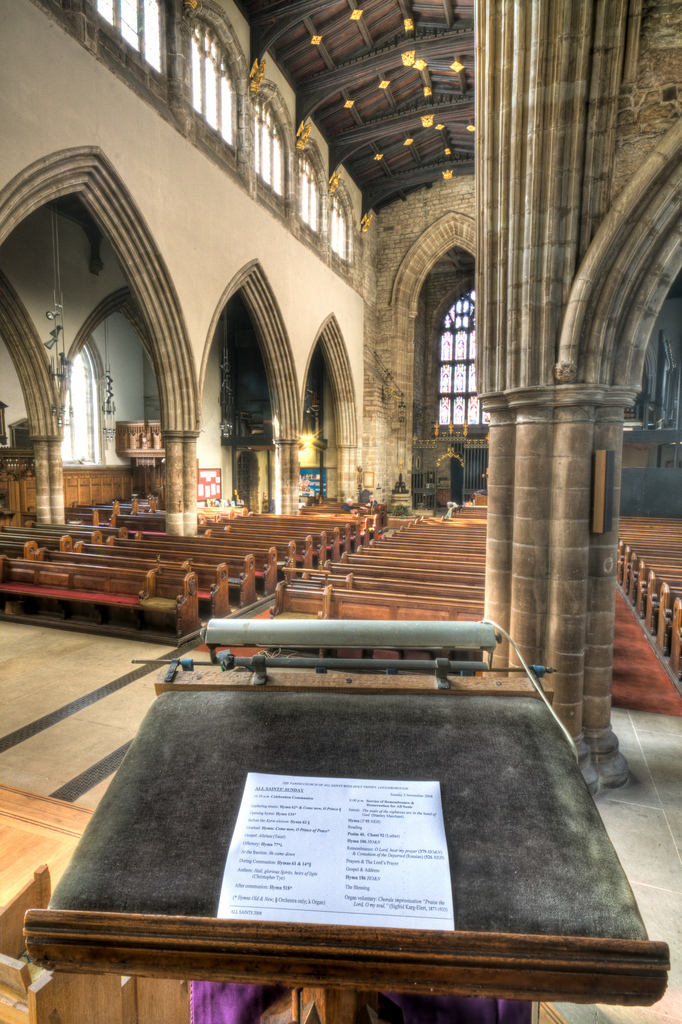
pulpit-church-hdr-bibleFor a class recently, I had to read a bunch of items on the part of a worship service in which the Bible is front and center. This “section” of the service is called “The Proclamation of the Word”, or more generally, the “sermon” or homily”. I ran across this great quote:

The very act of preaching, in fact, sets up questions and problems.  Most people no longer understand the difference between preaching and other types of public speaking…. Many people think of a sermon as an occasion for being entertained, instructed, or inspired in matters of religion — hence the customary comment at the church door, “I enjoyed your sermon.”  Nowadays, it is only congregations who have been engaged in a new way of thinking for a long time who are going to sit expectantly waiting for the Word of God to be spoken — for preaching, properly understood, is the good news that God preaches through human beings.  Astonishingly enough, this is the method of communicating that God has chosen.  This is an offensive idea; there are a hundred complaints to be brought against it.  Most common is the objection, “How can anyone presume to speak the Word of God?”  Or to put it another way, “How can any human being be so arrogant as to think he is a mouthpiece of God?”  How indeed?  It is a very good question.  The validity or invalidity of preaching rests on such issues as these. (Fleming Rutledge, Not Ashamed of the Gospel)

I think Rutledge is right (and not just because she is an incredible preacher–all you complementarians could learn a thing or two from her!): people don’t seem to really see preaching as fundamentally different than any other lecture or other public speaking. Preaching is often (subtly and unspokenly) seen (or at least treated) as “mere” personal edification–similar to a book discussion or philosophical lecture or self-help conference.
Continue reading