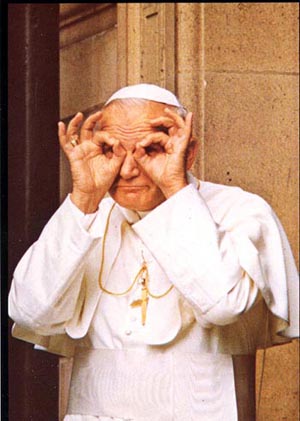
Advent Transition Music: Christmas Eve “Vespers” by Sergei Rachmaninov


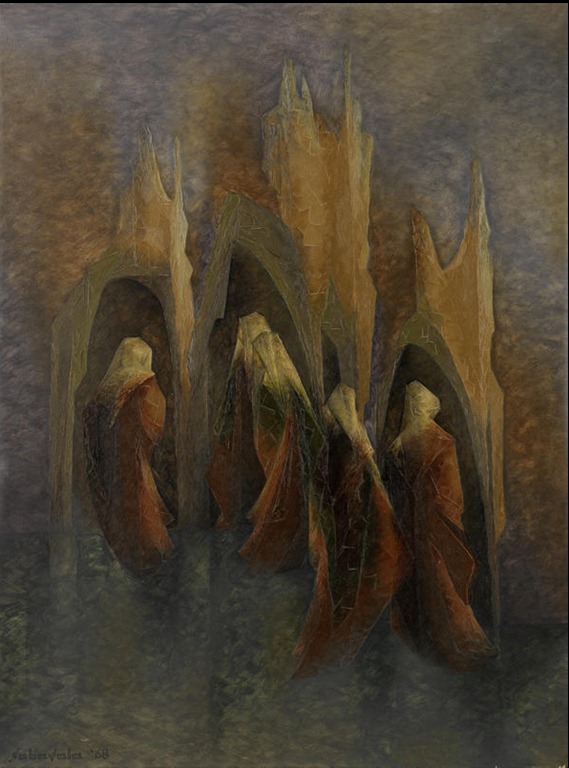
vespers-1-art-sabawala-paintingPerhaps Sergei Rachmaninov’s greatest piece, All-Night Vigil (usually simply called Vespers) is a choral presentation of the texts used during Eastern Orthodox all-night vigils. These vigils are usually done on the Eve of major church festivals, such as…Christmas Eve!
As I said earlier today, Christmas isn’t simply a day; it’s an entire church season. It’s a season where we transition from repentance and meditation to celebration and joy. And to aid in that transition, many traditions have all-night Vespers to help us move from one season to the next.

And so, to encourage us in this transition time, I’d like to offer you my favorite recording of one of my favorite pieces ever, Sergei Rachmaninov’s Vespers, performed by the Swedish Radio Choir. You will need Spotify to play the playlist below (you can purchase the album as well). Have fun:

[image credit: “Vespers 1” by Jehangir Sabavala]

Advent & Christmas: they’re not the same thing (Ode to a Christian Calendar)


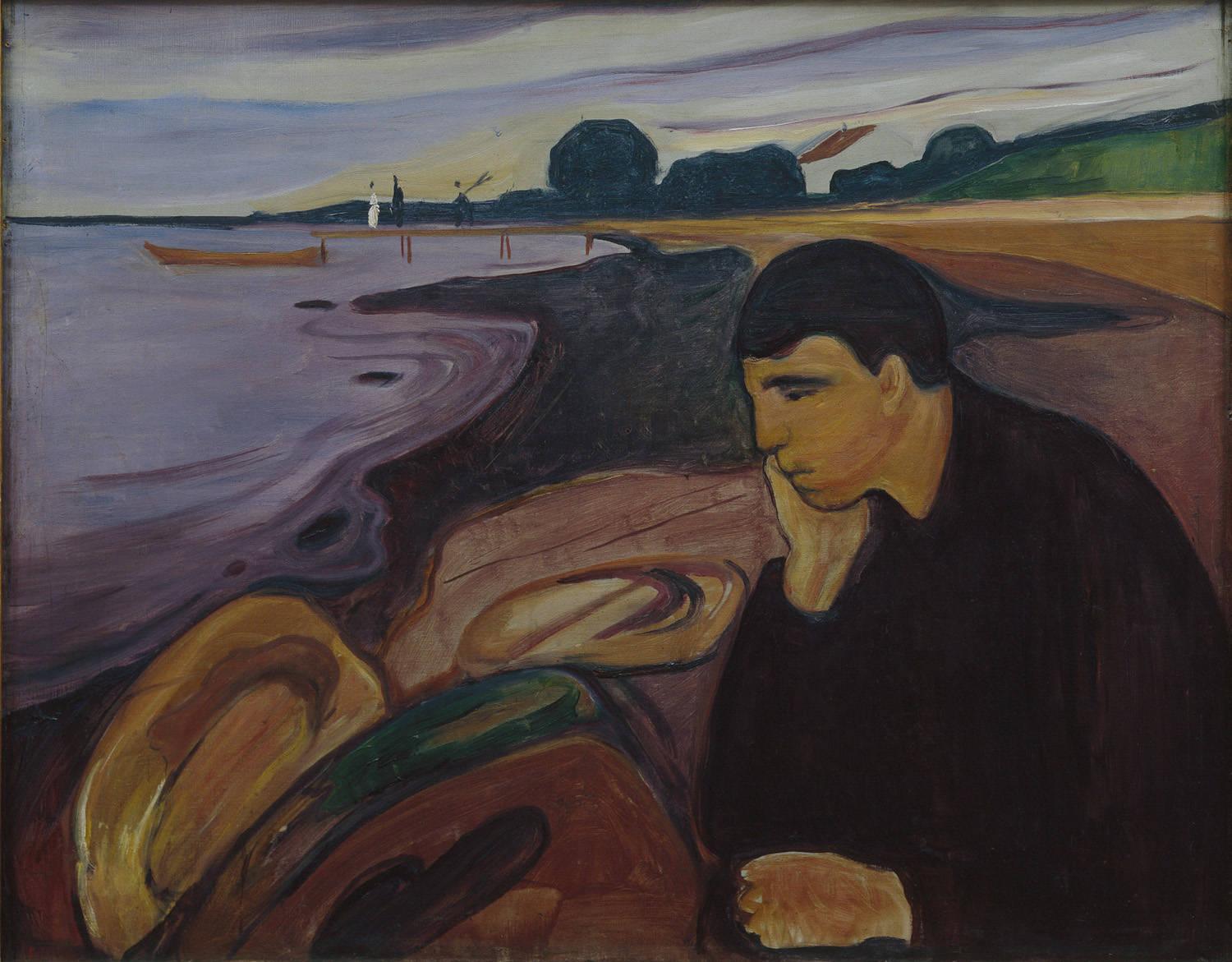
Munch-melancholyWell, it’s the Eve of Christmas season. Yes, that’s right, Christmas is not only an entire season in the Church calendar, but it’s a season that is distinct from Advent.

I know many in the global church know this fact, but I only learned it a couple of years ago, and each year it seems I have to be reminded. (Hopefully with this post, I can start internalizing it some.)

I find it interesting that we in the West have not only removed the “seasonal” aspects of the holiday, but have reduced this nearly two-month-long Advent/Christmas time into a single day on which we put most of our attention.

So why is the calendar structured like this? And what do we lose when we boil this down to one day?
Continue reading

The Surprise of Advent: WordPress Weekend Photo Challenge


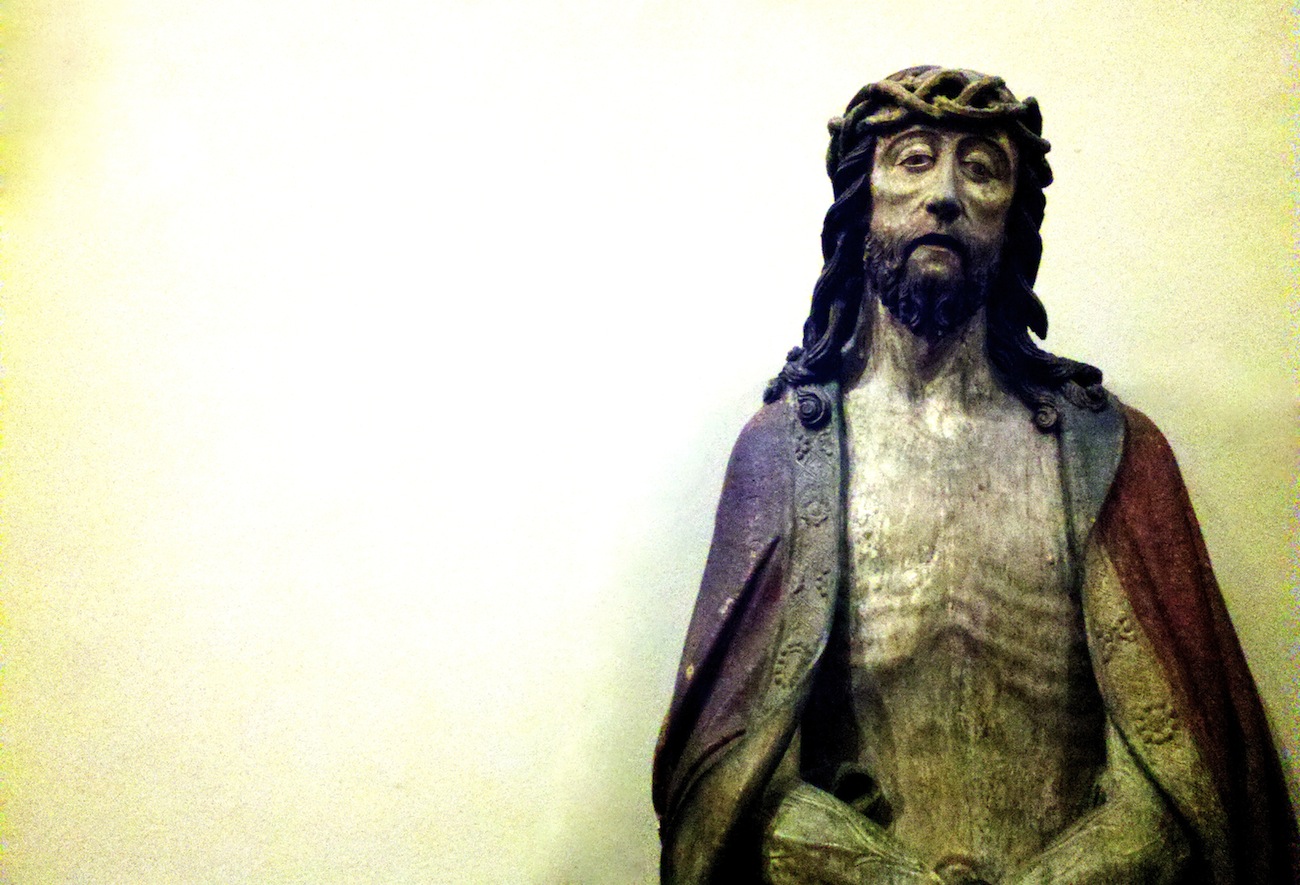
jesus-suffering-pma

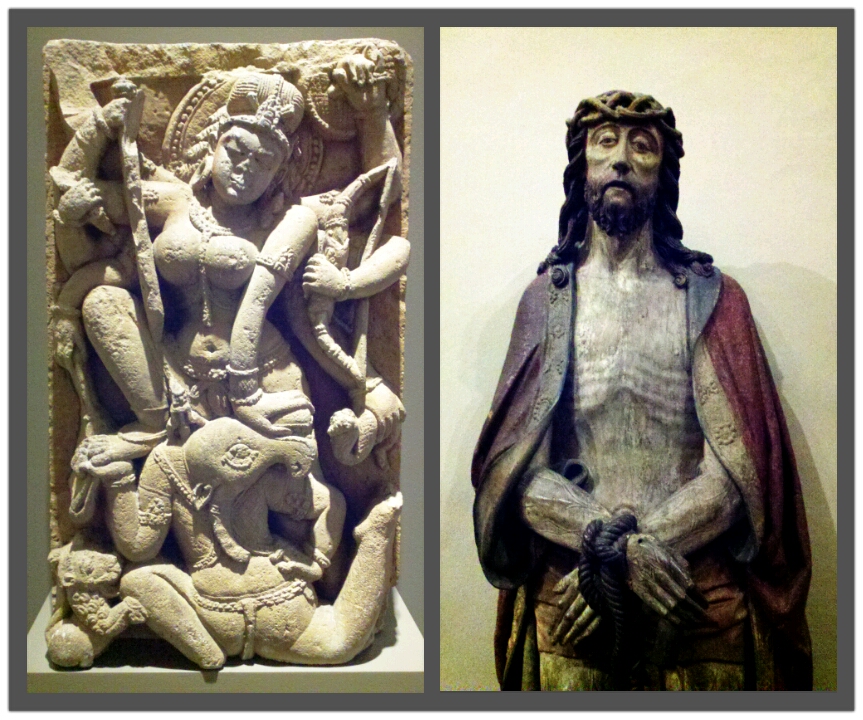
This week’s WordPress Weekly Photo Challenge theme is “Surprise“. With Advent having been on my mind (and blog), I thought of this picture. Or rather, to be more specific, the juxtaposition of these two pictures:

jesus-asian-god-pma

On one of my trips to the Philadelphia Art Museum to fight my inner Atheist, after spending some time with that beautiful Jesus statue above (a favorite of mine), I actually walked through the other side of the Medieval Art section to enter the Asian Art section.

I’m sorry, and forgive me if you can’t relate, but Asian Art has never done it for me. I don’t know why. I can see the craftsmanship aspect to it (I guess), but the beauty part feels lost on me. And so, when I go into Asian Art sections, my “art critic” side sort of quiets down and lets other parts of me take hold.

Continue reading

PSA: BibleGateway.com now has the NRSV Bible for free


For those that care, the website BibleGateway.com now offers the New Revised Standard Version (NRSV) [Wikipedia] as one of their many English translation options.

If you’re looking for a Bible verse or passage, or if you do lots of web writing about the Bible and need a good online Bible with lots of options, I’ve found BibleGatweay.com to be the best, especially for copying-and-pasting elsewhere.

This is also the most widely-used Bible site that now has access to this translation of the Bible. Before this, I couldn’t find it anywhere free online except at a weird, obscure site or two.

So why have I been eager for this translation (and why should you be)? The NRSV is the most ecumenically-used translation in the English-speaking world. It’s the standard translation used by Catholics, Anglicans, many Eastern Orthodox, and my own church. It’s also the standard translation used in academic Bible study.

And so, even though I still have a soft spot for the ESV, I like feeling like I’m swimming in the same stream as my church leadership (and academia, but that’s not as big a deal). And so, I prefer the ESV or the NRSV for in-depth Bible study, while I’m a lot more flexible in my more casual Bible reading.

So compare some versions and see if you like the NRSV yourself. Hopefully this new availability of this resource makes your continued engagement with the Bible all the more fruitful and exciting.

And so

Advent & Humor: stop taking yourself so seriously [casual fri]


santa-baby-jesusIn one of the posts in last year’s Advent series, I posed this question:

“Why [did Mary, Joseph, and Jesus] flee to Egypt? If they stayed and Herod killed the child Jesus, would that not still be Jesus, the Son of God–the Incarnate God–dying unjustly at the hands of a Roman provincial governor attempting to cement the reign of the powers and principalities of the world? Why go to all that effort to wait 30 years later for the same thing to happen on a cross?”

The answer we discussed was that Christ’s purpose for coming was much bigger than the cross. He did not come just so he could die. As St. Paul said, “For if while we were enemies we were reconciled to God by the death of this Son, much more, now that we are reconciled, shall we be saved by his life.”

Jesus couldn’t die when he was so young, because the benefits we receive from his Advent are not limited to his death, but also his life. We receive his life of lived-out righteousness as our own when we come to know him.

I thought about this yesterday when pondering stand-up comedy.
Continue reading

Free Advent Mixtape Available Now!


Advent-Mixtape-Cover

Update: I got some inspiration and updated the Mixtape, changing the song selection/order a little bit from when this was originally posted. Sorry for the inconvenience.

A new church season, a new mixtape. You can find this year’s Advent Mixtape above, in the appropriately-named tab, or just click here. It’s free, and you can stream, download, or share it.

It’s very similar to last year’s except with some songs removed, added, and re-ordered. I definitely think this one is better. (Let me know what you think!) Be sure to read my post introducing Advent this year, including ways than you can more intentionally participate in this season. I hope this Mixtape can play some role in your time as well.

Here’s some more info, from the “Advent Mixtape” page:
Continue reading

Weekly Photo Challenge: Thankful (humor edition) [casual fri]


Earlier this week I posted a response to this week’s WordPress Weekly Photo Challenge, which is on the theme of “Thankful“. I wrote what I hope was a beautiful expression of thankfulness that I ran across in my job; I wrote about a client of mine and the slow process of healing that brings us healing in the smallest things.

With that encouragement in mind, I’d like to offer you one of the things I’m most thankful for. What is it? I’m very, very thankful I no longer have the hair pictured below, circa 2006 (for comparison, here’s a current one):

See my past Weekly Photo Challenges here.

___________________________

Continue reading

Could you maybe help me win some Bible stuff? One click is all that’s needed.


Hello, blog readers. I just ran across this sweepstakes on the site of my favorite Bible Study software, Logos. To celebrate the release of Logos 5, they are giving away a Microsoft Surface Pro tablet with Logos 5 on it. With my seminary and graduate school studies starting anew, both of these items would be of great, great value to me, my thinking, my studies, and my writing. Which means, if you all help me win this, I promise you’ll reap the benefits here on the blog as well.

With that being said, could I humbly ask you to click the this link? For each person that clicks, I get 5 more entries into the drawing: http://ptab.it/iGGA

Thanks again.

Weekend Photo Challenge: Healing Thankfulness


This week’s WordPress Weekly Photo Challenge theme is “Thankful“. As soon I read the prompt, I thought of this picture.

It’s a client of mine. As a social worker, I have to deal in lots of tough stories (as I’ve written about before). This particular client is an interesting one, though. She doesn’t have too much “traditional” major trauma in her life, but that which she has, mostly, is of her own doing–or the doing of her illness, rather.

You see, she has what we call a “Personality Disorder“, meaning that she’s not really psychotic, doesn’t suffer the highs of mania, nor the lows of depression, nor is she suicidal. Rather, what she struggles with the most is a psychological disease that affects her very personality. She has a child-like demeanor that can be annoying, off-putting, attention-seeking, soul-sucking, and always full of emotional drama.

Continue reading

Top 10 Reasons Why Men Shouldn’t Be Ordained [casual fri]


In this on-going series on women in the ministry of the church, I’ve certainly tried very hard to not be snarky, sarcastic, or ungracious to those that disagree with me on these issues. Nevertheless, this was a bit of fun I could not resist. It’s from a post on the (now defunct, it seems) blog Christian Feminism (of course). It was originally a comment left on one of their posts. I loved this list so much, I decided to post a few of my favorites from the list. Enjoy.

Top 10 Reasons Why Men Shouldn’t Be Ordained

10. A man’s place is in the army.

9. For men who have children, their duties might distract them from the responsibilities of being a parent.

8. Their physical build indicates that men are more suited to tasks such as chopping down trees and wrestling mountain lions. It would be “unnatural” for them to do other forms of work.

7. Man was created before woman. It is therefore obvious that man was a prototype. Thus, they represent an experiment, rather than the crowning achievement of creation.

6. Men are too emotional to be priests or pastors. This is easily demonstrated by their conduct at football games and watching basketball tournaments.

5. Some men are handsome; they will distract women worshipers.

4. To be ordained pastor is to nurture the congregation. But this is not a traditional male role. Rather, throughout history, women have been considered to be not only more skilled than men at nurturing, but also more frequently attracted to it. This makes them the obvious choice for ordination.

3. Men are overly prone to violence. No really manly man wants to settle disputes by any means other than by fighting about it. Thus, they would be poor role models, as well as being dangerously unstable in positions of leadership.

2. Men can still be involved in church activities, even without being ordained. They can sweep paths, repair the church roof, change the oil in the church vans, and maybe even lead the singing on Father’s Day. By confining themselves to such traditional male roles, they can still be vitally important in the life of the Church.

1. In the New Testament account, the person who betrayed Jesus was a man. Thus, his lack of faith and ensuing punishment stands as a symbol of the subordinated position that all men should take.

My Rothko, My Rothko (I’m in an art rage)


I’ve mentioned before on this blog (though admittedly in passing) that my favorite artist is Mark Rothko, the 20th century abstract expressionist. He’s often made fun of because his pieces are, usually, blocks of color on canvas. So many people (and I was one of them) look at his pieces and say “Where’s the skill in that? Anyone could do that! How is this art?”

The big turn for me happened several years ago when studying for the lecture/series I did on Beauty. As I spent nearly a year immersing myself in the philosophy, theory, and theology of aesthetics, I came to finally “get” abstract art. And with it, I realized how to connect with Rothko; and my art sensibilities have been the same since. For more, read my post on the beauty of  art.

Still don’t get it? Here’s a quick exercise. Look at the two pieces below. The one on the right is the genuine Rothko. The one on the left is one of those reproductions where someone paints it inch for inch as close to the original as possible.
Continue reading

Weekly Photo Challenge: Renewal


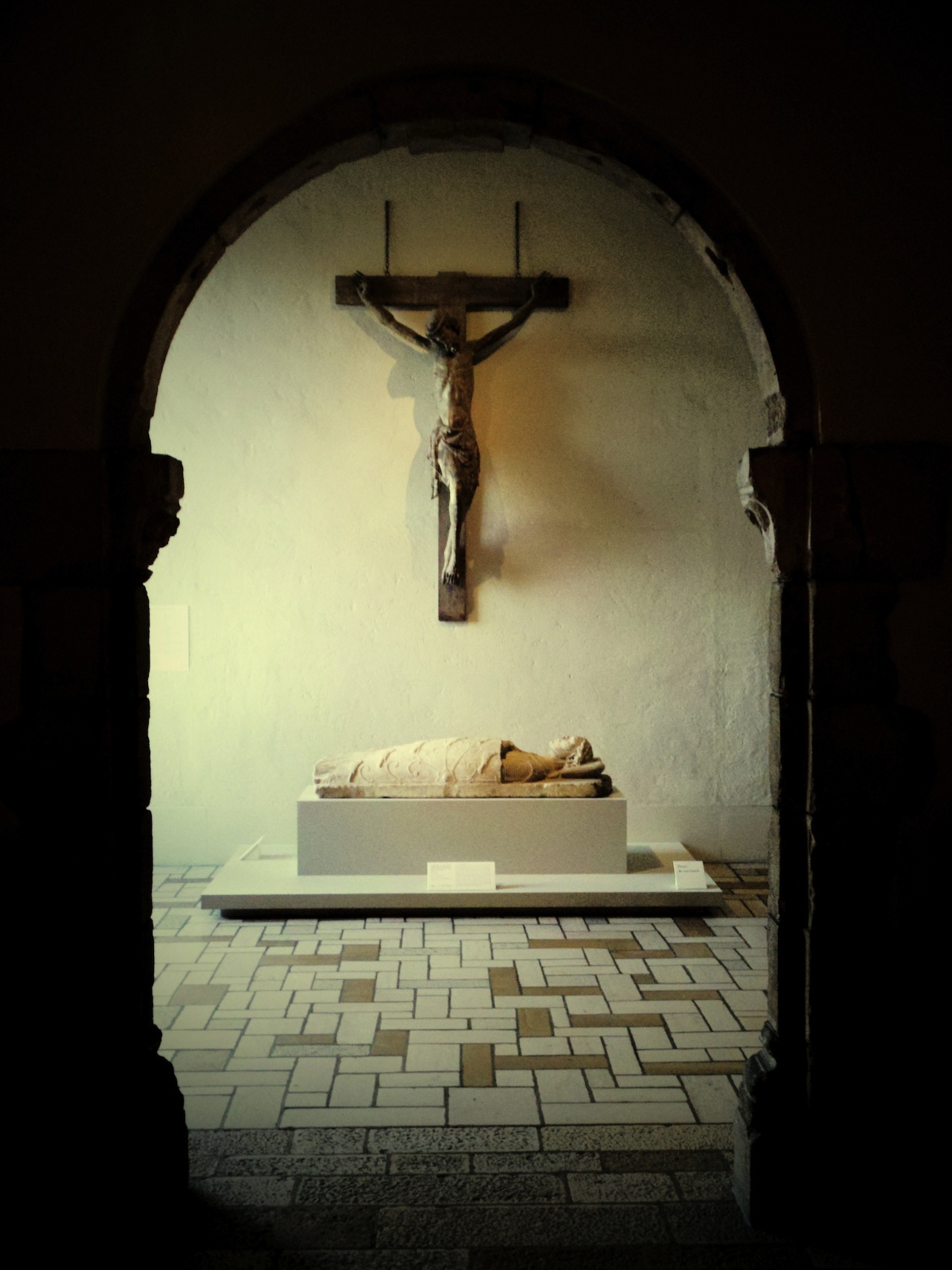
This week’s WordPress Weekly Photo Challenge theme is “Renewal“.  This here is a picture of one of my favorite rooms in the Philadelphia Museum of Art. It’s in the medieval art section (a section which, as I’ve written before, carries much significance to my soul).

I still remember the first time I turned the corner and saw this crucifix on the wall. It’s crude, yet so beautiful. It faces another, dimly-lit room in which there is a medieval-era altar on which there was taken countless pieces of Eucharist.

The last time I was at the museum, though, I noticed a bit of symbolism I’d never noticed (and I have no idea why). This crucifix is positioned above a 13th-century knight’s tomb effigy. After spending some time in reflection near the aforementioned altar, I looked back through the arch and for the first time noticed that the gaze of the dying Christ seemed to be settling not on the museum passer-bys, but on the effigy of the dead knight before him.

The Christ’s gaze of sadness and pity no longer seemed to be for his own sufferings, but for the death and suffering of this one that lay before him. This gaze seemed to carry with it not only sadness, but also a stoic confidence that through this act, he would bring an end to this knight’s sleep.

Through this act of loss and sadness, here is a picture now of rebirth and renewal, made all the more meaningful as I took this picture from the steps of that altar, bathed in darkness, on which was consecrated and served Christ’s body, broken for our renewal and light–then, and today.

See my past Weekly Photo Challenges here.

___________________________

Continue reading

Okay, election: done. Time to get this blog back on track. [casual fri]


Well, on this blog we’ve contemplated electing Romney, electing Obama, each of the election debates, laughing at the election, the election foreign policy, the election domestic policy, reminded ourselves it’s all going to be okay, votedlaughed on voting day, partied on election nightprayed for the election, and we prayed for the elected officials.

Now we’re all election’d out.

It has now become almost as cliche as election-season Facebook politics posts, to complain about those election season Facebook politics posts. In fact, I think my Facebook feed was filled with more complaining about political posting than actual political posts. (This is not to discount the very real experience that many of us had, to be sure, with those one or two people ib our feeds that would put 12 to 15 posts up a day and carry on endless vitriolic arguments in the comment section.)

I wonder if our malaise wasn’t even as much about other people posting as much as it was the campaign itself. With all the politicking having already wearied us, seeing anything more on Facebook surely just put many of us over-the-top. For any ways that I may have been “that guy”, please forgive me. I had hoped I would be a more clear-headed voice in the political wilderness.
Continue reading