A Christian Pacifist’s Lament for Syria, with help from Quakers


Godwin-untitled-sketch-bw-cropped

{summary: Though I consider myself a pacifist and consider force as something that goes against the Kingdom of God, I feel that governments, because they are not the Kingdom of God will always fall short of that and have a necessary level of sin in them. And so, for the sake of a greater good, I would not speak against my government using military action in Syria (though I wouldn’t say I’d explicitly “endorse” it).}

As many people have been doing, I have been snarkily criticizing President Obama’s pursuit of making an attack on Syria. It seems too pointless, too risky, too naivetoo counter-productive, and too lonely. I had felt sadness over the plight of Syrians, but while the rebel forces are over-run by Islamic radicals and terrorist groups, I haven’t thought that empowering, arming, or making their victory certain was better in the long-run. (If you need a refresher on the details of the Syria situation, this is a great one.)
Continue reading

Why was Obamacare necessary? Christians, it seems.


nyt-flowers-medicine-bw{abstract: My point in this post is pretty simple. Christians seek radical end-of-life care dramatically more than non-religious people, and this accounts for a huge portion of American Health Care cost. In this piece, I ask if this drove prices up, therefore creating the situation where, ironically, Obamacare (a policy Evangelicals widely despise) was necessary.}

I wrote a while ago about my own current preoccupation with my fear of death. It caused me to read several related things, including the amazing book, The Art of Dying. In it, Rob Moll carefully helps guide Christians back toward embracing death for what it is: our greatest enemy, yes, but an enemy whose sting has been turned into a doorway to Glory Itself.

And so, as the horror-turned-beauty that Death is, the book encourages us to spend our energy preparing for Death more than avoiding it. He encourages Christians to recapture the doctrine of the “good death”.

And yet, it seems that American Christians are prone to do everything but that.

Moll talks of a study published in the Journal of the American Medical Association that found that Christians were three times more likely than those without religious faith to pursue aggressive end-of-life care, even though they fully understood they were dying and that the treatments would most likely not add any time to their lives.

One researcher told Moll, “patients who received outside clergy visits had worse quality of death scores than those who did not.” And if you have problems with this particular study, know that the book is full of research, studies, and interviews that lay out the pretty clear case that American Evangelicalism widely avoids preparing for death.

Now, we can talk about why this is and whether or not this is a sound Christianly posture another day (I happen to think it is not). Hopefully I’ll write a full review of the book in the weeks ahead. Today, though, I wanted to point out a huge irony this made me think of.
Continue reading

Regarding Obama’s Surveillance Views


Listening to President Obama’s press conference today, as he outlined “reforms” to the intelligence-gathering if the N.S.A., I had this thought:

He’s missing that people aren’t simply worried that abuse might be happening in the N.S.A. programs. Rather, people think the programs themselves are the abuse. People want the programs changed and limited, not simply to be more awareness of them.

What do you all think?

Millennials, Media, & Meta-Churching


coffee-client-mugFor those of you out there that keep track of the “Christian blogosphere” (and if you don’t, you’re probably better for it), there’s a very weird discussion happening amongst many different writers and thinkers about “millennials” (those born from the early 80s to early 2000s), and how they relate to the church.

A couple of weeks ago Rachel Held Evans wrote a post for CNN’s religion blog in which she said that millennials are leaving the church because they don’t find substance there; but rather, all they seem to find are hypocritical, judgmental, and bigoted people that want to fight over silly things. She said that this desire for substance is why the millennials that do stay in the church are leaning towards more liturgical traditions. She encouraged church leaders to look at millennials and consider whether their departure might be speaking to systemic issues that are plaguing the American evangelical church.

Continue reading

Yes & Amen: NYT on Bradley Manning Sentence & Press Freedoms. [QUOTES]


obama-newspaperEverything about this New York Times editorial is absolutely right. We should praise the NYT Editorial Board for their brave and clear stance on this issue. The money quotes:

A Mixed Verdict on Manning

Lurking just behind a military court’s conviction of Pfc. Bradley Manning, on charges that included multiple violations of the Espionage Act, is a national-security apparatus that has metastasized into a vast and largely unchecked exercise of government secrecy, and the overzealous prosecution of those who breach it….

When he entered his guilty plea, Private Manning said he was trying to shed light on the “day-to-day reality” of American war efforts. He hoped the information “could spark a debate about foreign policy in relation to Iraq and Afghanistan.” These are not the words of a man intent on bringing down the government. To the contrary, Private Manning continues to express his devotion to his country, despite being held without trial for three years, nine months of which amounted to punitive and abusive solitary confinement.

Private Manning still faces the equivalent of several life sentences on the espionage counts regarding disclosure of classified information. The government should satisfy itself with a more moderate sentence and then do something about its addiction to secrecy.

Also be sure to read the NYT’s Public Editor’s piece on the decade-long government persecution of their own reporter, and how an appeals court recently decided that reporters do not have a First Amendment right to protect the sources.

A Blow for the Press, and for Democracy

The chilling ruling by the United States Court of Appeals for the Fourth Circuit said that even though a journalist has promised confidentiality to a source, “there is no First Amendment testimonial privilege, absolute or qualified, that protects a reporter from being compelled to testify by the prosecution or the defense in criminal proceedings about criminal conduct that the reporter personally witnessed or participated in.” National security necessitates that those who illegally leak classified information be brought to justice, the court said. It added that it saw no clear legal justification for treating a reporter differently than any other citizen, and that “other than Sterling himself, Risen is the only witness who can identify Sterling as a source (or not) of the illegal leak.”….

The case has real-world consequences not only for journalists but for all Americans. It is part of a troubling trend that includes unprecedented numbers of criminal investigationsinvolving leaked information; the obtaining of reporters’ phone records; and even one government claim that a journalist “aided and abetted” a leak.

We’re living in strange times. And until we start speaking out and letting these issues actually affect how we vote, I fear nothing will change.

What do you think? Do you think things need to change? Why or why not? What do you think is the most effective right to producing change?

Repeal the 4th Amendment! (and a few other quick & dirty items)


american-flag-waving-sunsetLast week, I wrote up a post with several short and random items just listed out with some thoughts brought up by the NSA Surveillance leaks. I had a few ideas that I forgot to put in last time (and it would have made the post too long anyway), so here they are.

Egypt. Firstly, in the midst of continuing NSA leaks, and even the Director of National Intelligence admitting he lied under oath to Congress, is it wrong of me to be a little frustrated at Egypt right now? I mean, they’re taking up all of the news cycle coverage. Can’t we get a little time for a Constitutional crisis here? Stop stealing the spotlight.

(You too, Snowden, although I know it’s not all your fault.)

Law vs. Constitution. This is one I forgot to say last week. Everyone keeps wanting to stress that these surveillance and wiretapping programs were legal and law-abiding; that Congress and the Judiciary were fully aware of it.

Well, I already mentioned last week about the Judciary part of this, but as far as Congress goes, they’re right–it is indeed legal for the Executive branch to have been doing this stuff. But, there are two caveats to that.
Continue reading

Evangelicals on Immigration: finally doing something right.


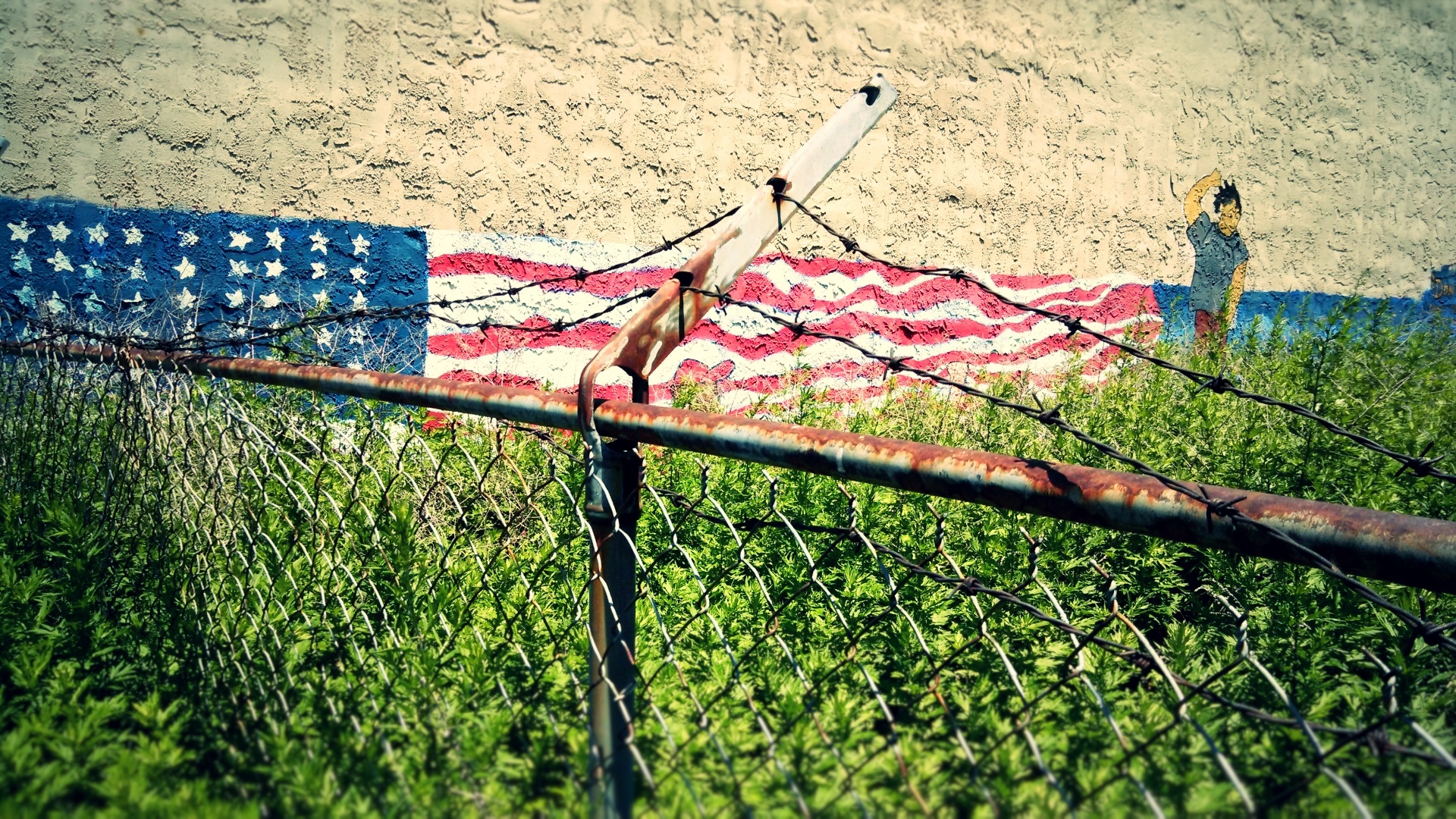
barbed-liberty-flag-wallLast Thursday, after so much grueling debate and a tough amendments process, the Senate passed a comprehensive Immigration Reform bill. Now the bill moves from the grown-ups to the children in the Legislature, the House of Representatives, where Republicans are already playing politics with the issue, most likely thinking it will just magically “go away” like other reform attempts have.

But, the New York Times published a great article about how the pressures on the House are different this time. It was really encouraging.

The encouragement did not just come from Immigration Reform’s potential, but where Evangelicals have found themselves in the debate. In the article, there were these amazing lines:

Asked why he thought the overhaul had a fighting chance in the House, Ali Noorani, a veteran of many immigration wars, pointed to a big green mobile billboard that had circled Capitol Hill every day this week.

Its flashing message was “Praying for immigrants. Praying for Congress.” Groups of evangelical Christians prayed on the Capitol lawn for the Senate to pass its bill. Mr. Noorani’s group, the National Immigration Forum, has worked with Southern Baptists and other large evangelical denominations to coordinate prayer campaigns and run pro-overhaul spots on Christian radio stations in states where lawmakers might be persuaded to change their views.

“In 2007, we weren’t even on the radar,” said the Rev. Samuel Rodríguez, the president of the National Hispanic Christian Leadership Conference, an evangelical group. Mr. Rodríguez said he had been on the road continuously, addressing primarily non-Hispanic Christian conferences to spread the message on the overhaul.

Now, you may be an Evangelical and may be thinking “hey, I don’t agree with that bill!”. That’s not really my point. Evangelicalism has never been as monolithic or homogenous as many of its leaders have wanted it to be. I am under no illusion that all (or even most) Evangelicals find themselves actually agreeing with the Senate reform plan.

What’s more astonishing to me is that regardless of the nuances and complexities of thought among Evangelicals on this issue, this is the reputation Evangelicals are having in this discussionThis is what the wider world sees. This is what has been noted in America’s paper of record as the primary takeaway that the world needs to have when fitting in the force of Evangelicalism and Christianity into the broader narrative of this story.

Of the many forces this article talks about that push this discussion forward (religious, electoral, business, labour, etc.), I love that American Christians have the pride of place here as the first “force” listed.

For once, Evangelicals are being known for taking the lead in actual cultural change and not stalwart reactiveness to the force around them.

Yes, I know there are other potential factors: many Evangelicals might be more concerned with maintaining Republican dominance by “winning Hispanic votes” through this effort. Some may be reacting to their own demographic changes in the South, instead of their own heart and theological changes.

But still, it’s telling that none of these alternative narratives are offered in this piece.

I am certainly not one of those Christian twentysomethings that think that theological convictions have no place in one’s political beliefs, nor do I think that “laws” are inherently morally-neutral. All politics and legislation reflects one’s morality (just look at a nation’s wallet to see where their heart is) and, ultimately, their theological convictions. For once, I’m proud of American Christians as they interact politically on this issue.

As Christians, we are called to love Neighbor before Nation. Whatever “damage” you think these poor, marginalized people do to America economically, politically, or demographically, we are called to have more concern for their welfare than the welfare of the abstract idea of “our country”.

That’s not to say that illegal immigrants are not “breaking laws”, but as Christians we are not called to primarily relate to others based how obedient they have been to civil authorities or not. The main thing that dictates how we relate to them is the image of God in which they are made. And this has been sorely lacking in the Evangelical presence in this discussion.

There are few–if any–illegal immigrants that come to this nation with any malice in their heart or hostility in their intentions. At the very least, they deserve compassion before condemnation–especially from Christians. Even if you ultimately think they should legally be carted away, should not the first concern of Christians be to love them? Or at least not demonize them?

Illegal immigrants in America are some of the closest we’ll ever get to a single group that fits almost every criteria for those to whom Christian should offer support, deference, protection, and resources: the outcast, foreigner, poor, needy, alien, outsider, downtrodden, despised, and poor in spirit.

Supporting immigration reform is the easiest way that I can think of, in our current political situation, for Christians to follow-through with this oft-neglected dynamic of Christian faith. It’s one of the clearest ways that Christians can act “Christianly” in a direct, political way.

So learn about the bill, contact your representatives, and then pray for our leaders and those who will be most affected by their actions. And then go out and try love your neighbor some.

What do you think about the immigration bill? How does your faith guide this decision? How do you feel about Christians being known for this advocacy?

[image: “Barbed Liberty” by myself]

Two of my best friends got engaged this weekend. This is a very good thing.


david-ej

[Appropriately, this week’s WordPress Weekly Photo Challenge is the topic “Companionable“. I could think of no better picture to post and story to tell than this.]

That there is a picture of David and Elizabeth Jane. (They’re in the process of converting to the Orthodox family of the Church, where the ring is on the right hand.)

David here is my oldest friend. Being bad at keeping friends that don’t live near me, this means that our friendship is about five-and-a-half years old. Not a crazy long time, I know. But for what we lack on the front-end duration of our friendship, we definitely make up for it in our desire to stay friends for decades to come.

We’ve seen each other through spiritual darkness, relational pain, and dramatic theological changes. He’s an amazing drywaller, photographer, writer, farmer (as of recently), and general human being.

And he got engaged to an incredible woman this weekend.
Continue reading

Some random scribblings & musings on NSA surveillance


Blindfolded-ManIt seems that every few days, the basic understanding of the NSA surveillance leaks changes. At first, it was just phone records, but really, how many of us use our phones to call all that much any more? Then, it included nearly all internet traffic, but we were assured there were “meaningful safeguards in place”. And then, last week (to far too little fanfare) we found out just how meaningless these “safeguards” really are.

And still, the journalists at The Guardian say they are preparing their “next round” of articles, and so who knows where we’ll be, come next week.

To a large extent, this prevents truly meaningful and lasting commentary that can sustain a discussion for more than a few days. And so, instead of trying to do that, I will just put up some random, disjointed nuggets of thought on this issue; things that, hopefully, can offer us some food for thought. Respond as you like in the comments below.

_________________________

I realized I’m a racist. I realized in the course of these leaks that I have some latent racism. The US government kept assuring us that these spy capabilities were not ever turned on Americans (this is false), but were only turned on “foreign entities”. It wasn’t until a day or so went by that I realized that whenever I saw that assurance, I automatically had an image in my head of Middle-Eastern “foreign entities”. This isn’t at all true.

We spy on our allies. Most of the spying powers are used on our allies, not on the “big bad terrorists” that we use to justify this surveillance.

Germany is awesome, but the NSA is suspicious. A new friend of mine who lives in Germany told me this past weekend that, in Germany, an employer is not allowed to see or know about any email that an employee sends, even if it is sent using the company’s own software, email addresses, computers, or servers. That’s crazy. I couldn’t imagine that here.

And yet, Germany is the European country that America spies on the most, conspicuously more than everyone else. Perhaps it’s precisely because they don’t make their data so easily accessible to America that we just have to go in and take it?

And so, it’s America’s fault that no one sympathizes with their Snowden woes. Edward Snowden, the leaker of all this stuff, is globe-hopping, trying to find asylum, and no nation is willing to arrest him and extradite him to America. American authorities, meanwhile, are flabbergasted that this could happen. If you’re a bully in the rest of the world, spying on everyone without their knowledge or consent, you’re not going to have too many friends. Do you, reader, feel America has a “right” to spy on everyone else? How does telling our allies that America is spying on them fall in line with “espionage” as Snowden has been charged?

Civil liberties vs. security: It’s not a compromise. Two parts of this one. Obama said over and over again that we need to find a “balance” to our liberties and our security. That’s not how the Constitution lays out our rights. Our civil liberties are absolute. They are the boundaries within which the government must play to “keep us safe”. They are the lines on the field on which the game is played. A sport is not a “compromise” between the rules and your winning. You are given the rules and boundaries and then given free reign to work within those to win the game, not try and change the lines and rules as you go.

Secondly, there is no compromise here. The NSA begins this “compromise” with everything, sacrificing nothing. And then tells us to “deal with it, we’re compromising”.

You’re 14 times more likely to be killed by fireworks than by a terrorist attack. Look at these stats. You’re also 9 times more likely, as an American, to be killed by a police officer than a terrorist. So where’s our “War on Law Enforcement” or “War on Fireworks”? Really. All this surveillance stuff was put in place to save us from terrorism which, in 2011, killed 17 non-military Americans. Is it because it’s working so well, then? Maybe, but even before the “War on Terror” there weren’t many American fatalities from terrorism. Far more from poverty, cancer, and other things that could really use the money that is otherwise being spent on this “war”.

Imagine this in the hands of the politician you fear the most. Even if you’re inclined to be in favor of these policies, you have to imagine this apparatus in the hands of whatever politician you fear the most. Maybe you trust Obama. Do you trust Michelle Bachmann with these powers? Lindsey Graham? Hillary Clinton? Nancy Pelosi? Whatever system you put in place has to be “leader-neutral” so as to be safe no matter who’s in power. That’s why we have the Constitution.

I’m actually impressed with Obama. I’ll admit it. I’m really impressed with the safeguards he attempted to put in place here. In a sense, Congress was the one that gave him these powers and told him “use this to keep us safe”. And you know what? It really seems like he tried to put safeguards on these programs. I completely disagree with where he drew those lines, but at least he drew some.

Lindsey Graham is the most vile, morally bankrupt and twisted individual with any semblance of power in this nation. I just needed to say that.

We prefer Daddies to Mommies in our Government. It seems to me that there is a sort weird metaphor here. Republicans rail against the “nanny” or “mommy” state that lets its citizens “suckle at the federal breast”. So the government can’t do those “maternal” things like support, offer security, educate, care, feed, and clothe. But then those same Republicans (and many Democrats) feel like the government must be as big and intrusive as possible to do those “paternal” things like protect, punish, admonish, assert influence and control, and bestow authority upon. It seems like many of our leaders think America should be a “Daddy State” rather than a “Mommy State”. That explains a lot.

There really aren’t meaningful safeguards here. Read this excellent and readable summary of what we know so far about these program.

You really should care about this. All of you. This stink about all this isn’t about people “not having anything to hide”. It’s about a fundamental shift in how laws are enforced in this country. The burden of finding crimes has always fallen on the authorities. They were the ones that had to search out and prove wrongdoing, and no one could incriminate themselves. In a sense, the system has been this: everyone is going to be assumed innocent; if you do something wrong and we don’t find you, then it’s our fault–you’re still presumed innocent until we prove you otherwise.

With these NSA programs, however, that changes. It’s no longer “we consider you innocent until we prove you otherwise”, nor is it even “we think you’re guilty until we prove you innocent”. Rather, it’s a weird ambiguous, unprecedented middle space where we are all considered potentially guilty and kind of stay there until declaring us one way or the other becomes relevant.

You do have something to hide. This is sort of a lame argument, I know. But still, it could be important. Plenty of studies have shown that as more and more laws are made, there’s more of a chance that we break them without knowing. One book even estimates that the average American breaks at least three federal laws a day. The way these NSA programs are structured is that if at any point in the future that there is a reason to suspect you of anything (whether you’ve legitimately committed a crime, you are part of some marginalized group, or even if you’re running for office!), the NSA can–literally–“rewind” your entire communications and online history and find something–anything–that might actually break a law.

History, History, History. It’s well-known now that Martin Luther King, Jr. was the subject of surveillance like this, and tapes of him and his mistresses were used to try and get him to stay quiet. J. Edgar Hoover constantly did this to political enemies. Occupy Wall Street had these powers turned on them, and I’m sure the Tea Party has. You simply can’t assume that you will never find yourself in solidarity (or at least agreement) with a group that this apparatus would never be turned upon. History shows that governments can’t be trusted with powers like this.

Living Room Toilets: The best metaphor I’ve heard about all of this. I was listening to a radio show and one of the interviewers referenced this, and so I don’t know the exact source (please let me know if you do), but it was about how the whole “I have nothing to hide” reasoning is silly. I’ll end with this.

No one has a toilet in the open in their living room. Why? Not because people have anything to hide in their bathroom. But simply because some things inherently deserve to stay private.

[image credit]08

Proud to be an American: a blow to Voter ID Laws


spanish-voter-stickerToday, the Supreme Court found unconstitutional Arizona’s law requiring extra ID when registering to vote, saying that States can’t regulate federal elections to that degree, because that is under the authority of Congress, not the States.

Admittedly, I wish the legal reasoning was more specifically on the principal of extra voting requirements rather than just a Federal vs. State’s rights issue. Technically, the basis of this decision would still allow for federal election committees to create a national Voter ID requirement for registration, the prospect of which I’m not excited about.

And, it also need to be pointed out that this case was not about the state laws requiring people to present Voter ID on election day, but rather just when they register to vote. But either way, this is a small win for America today.
Continue reading

POLL: What do YOU think about the NSA Surveillance stuff?


i-voted-stickerI promised earlier this week to write up some of my own thoughts on the whole NSA Surveillance leaks. And of course, as usual, I started thinking through it and writing about it, and saw that I need to break it up into two or three posts. So that’s next week.

Earlier today, I posted the best things I’ve encountered on these leaks. I hope you were able to partake in any of those. But, until I can post some of my thoughts next week, I thought I’d do the first poll this blog has ever had and get your thoughts on this issue.

Yes, there are a lot of options below; you can pick more than one option. They range from most freaked out by this stuff to least worried. I’m really interested in where you all stand on this. If you feel like there are any answers I missed, or if you have any comments and what to add what and why you voted like you did, feel free to share in the comments below. Continue reading

The best, most entertaining resources on the NSA leaks


When it comes to the political news this week, I’ve felt a large range of emotions. I’ve felt just a little bit of “I told you so” vindication, joy over the attention the media is giving to it, anger at the government, pride in some brave politicians, and frustration over the fact that no one else in my life seems to be paying attention to this or even care.

I’ve also felt a certain futility in grasping all off this and being able to distill it in a concise, communicable way. I’m going to do my best next week on this blog, but in the end, I don’t think I could do better than these three shows in doing so.

First, nothing helps ease the shock of learning that your government is storing your entire digital life than a little laughter. And to that end, there’s no place better for that than The Daily Show. Jon Stewart is gone for the summer, but he is being ably covered by John Oliver. This clip below is Oliver’s first night hosting:

http://www.youtube.com/watch?v=e4i_A9nZpiI
Full episode: [Daily Show] [Hulu]

Continue reading

Fleeting: our Societal Anger; our National Substance


This week’s WordPress Weekly Photo Challenge theme is “Fleeting“. I’ll be posting a more meaningful “photo sermon” based on this theme later in the week, but I saw something last night I wanted to share.

This blog has not shied away from its concern over the civil liberties and privacy issues that have been exposed this week. I hope to post some more in-depth thoughts on these specific revelations later today or tomorrow. For this photo post, though, I ran across a couple of images that show just how fleeting any American societal anger, attention, or protest really is.

Continue reading

Death & Dignity: what’s the point?


philly-life-wall

Next week I head to Guatemala for the Lemonade International Blogger’s Trip. Having been introduced to this organization, I’ve been following their blog closely, trying to get to know them more and more.

A couple of days ago, they posted about a tragic loss. A member of their school, Herber Giovanni Sandoval, died a couple of days ago at the age of 17. In the conclusion of their post, they said this:

“We are especially grateful to the youth group at Lifepointe Church in Raleigh, NC for sponsoring him while he was still attending the Limón Academy.”

I immediately had the image of the youth group kids or sunday school class at that church who probably spent years following the story of Herber. I wondered how they would feel and respond to this news. How would the leaders help them process this? Would it impact the kids at all or would they be too removed from it?
Continue reading

And….We All Have a New Pope! (Catholics Aren’t Crazy)


pope-funny-bigMere minutes ago, a new Pope emerged from the conclave in Rome after Pope Benedict’s surprising resignation several weeks ago. The new Pope is the cardinal formerly-known as Jorge Mario Bergoglio.

But now, he is Pope Francis.

Now, I am fully and securely a Protestant, as most of the readers of this blog are. But for those of us that find ourselves in that Protestant tradition, we often forget a little detail of that name: Protestant.

It means, literally, “the protesting ones”. We are “protest-ant” about many of the practices and teachings of the Catholic Church. But to “protest” something does not necessarily mean you are no longer a part of it.

This is why I describe myself, denominationally, as a “Protesting Catholic”. (Okay, I stole that from Austin Ricketts.)

And you should to.
Continue reading