This is my 1,000th post. Thank you all for the chance to write this blog these past (almost) 10 years. It has grown me in countless ways. It took seven and half years to get to 500 posts, and less than two more to double that. Here’s to 2,000. Thanks for the encouragement, commenting, and criticism. It means a lot. Really.
As is my custom, here is your blog milestone dancing video:
Let not those who hope in you be put to
shame through me, O lord God of Hosts;
let not those who seek you be brought to
dishonor through me, O God of Israel.
—Psalm 51
I have written before how much I enjoy my own ignorance of the Christian blogosphere. Things happen in evangelical corners of the world, that I have no idea about. I am happy to know more about the Ukrainian crisis than whatever crisis some mega church or celebrity pastor is going through.
And yet, somehow (usually Facebook), I always seem to keep up with whatever is going on with Mark Driscoll. He has lots of critics, and I am certainly one of them, and many of them seem to be grasping at whatever they can to “bring him down”. There seem to be so many Driscoll obsessions out there, be it plagiarism, making fun of “effeminate” church leaders, extreme church discipline, messy staff turnovers, un-credited ghost writing, or buying his way onto best seller lists. (If you care about those “scandals”, just Google them.)
I have big problems with how a lot of folks criticize Driscoll and the glee they seem to feel in each new thing we all find out. Lore Ferguson has the best and most beautiful articulation I’ve read of the unhelpful ways people levy these criticisms his way.
Since they had been without food for a long time, Paul then stood up among them and said, “Men, you should have listened to me and not have set sail from Crete and thereby avoided this damage and loss. I urge you now to keep up your courage, for there will be no loss of life among you, but only of the ship. For last night there stood by me an angel of the God to whom I belong and whom I worship, and he said, ‘Do not be afraid, Paul; you must stand before the emperor; and indeed, God has granted safety to all those who are sailing with you.’ So keep up your courage, men, for I have faith in God that it will be exactly as I have been told. But we will have to run aground on some island.”
— Acts 27.21-26
Good lord, Paul must have been so freaking annoying. I hope to live up to my namesake, haha.
See other Marginaliahere. Read more about the series here.
Some days later when Felix came with his wife Drusilla, who was Jewish, he sent for Paul and heard him speak concerning faith in Christ Jesus. And as he discussed justice, self-control, and the coming judgment, Felix became frightened and said, “Go away for the present; when I have an opportunity, I will send for you.”
— Acts 24.24-25
These are very odd, very specific things. It’s funny that these things shook him so much to the core. I wonder what it was specifically that was enough for Luke to include this? Was the Justice Paul talked about more along the lines of the wrath of God, or more like equality in society and Social Justice (that would surely shake a wealthy local governor!). It was probably something like the fact that God would make all things right someday. Maybe the judgment piece made him scared? But either way, personally, I find it interesting that the one that scares me the most is the call to self control.
See other Marginaliahere. Read more about the series here.
If you don’t care about the commentary, and just want the amazing music, you can get it at Noisetrade. If you’d like to listen to the album first, just press play:
Someone’s “favorites” are a weird thing to define. They are prone to fickleness, are tied so closely with whatever else is subjectively happening in one’s life, and usually bear little resemblance to what that person would consider as the technically “best” of any particular thing. So when you have a “favorite” that sustains that title for years–decades, even–it’s a big deal.
Since high school my favorite band has been Cool Hand Luke. Back then they were a little hardcore screamo band. At that time, to get their CD, you had to mail a check to the lead singer’s house. As time when on, their style changed at the very same time and in the very same way as my own. It felt like we were growing together.
Around my senior year of high school, they came out with an album called Wake Up, O Sleeper. Anyone who’s heard of CHL probably knows them from this stunningly powerful work of art. It quickly became the most influential and “favorite” album of mine. And it has been ever since.
Towards the end of college, I became pretty good friends with the lead singer. For a while, every few months, we’d talk for a couple of hours on the phone. He was discerning whether to go to seminary and what to do about the financial mess their shady manager had left the band in. I got to see his heart and the heart behind the beautiful music they made.
Eventually, he got married, I started seminary, and he decided it was time to end the band and begin seminary himself. But there was one last project he felt he had to do.
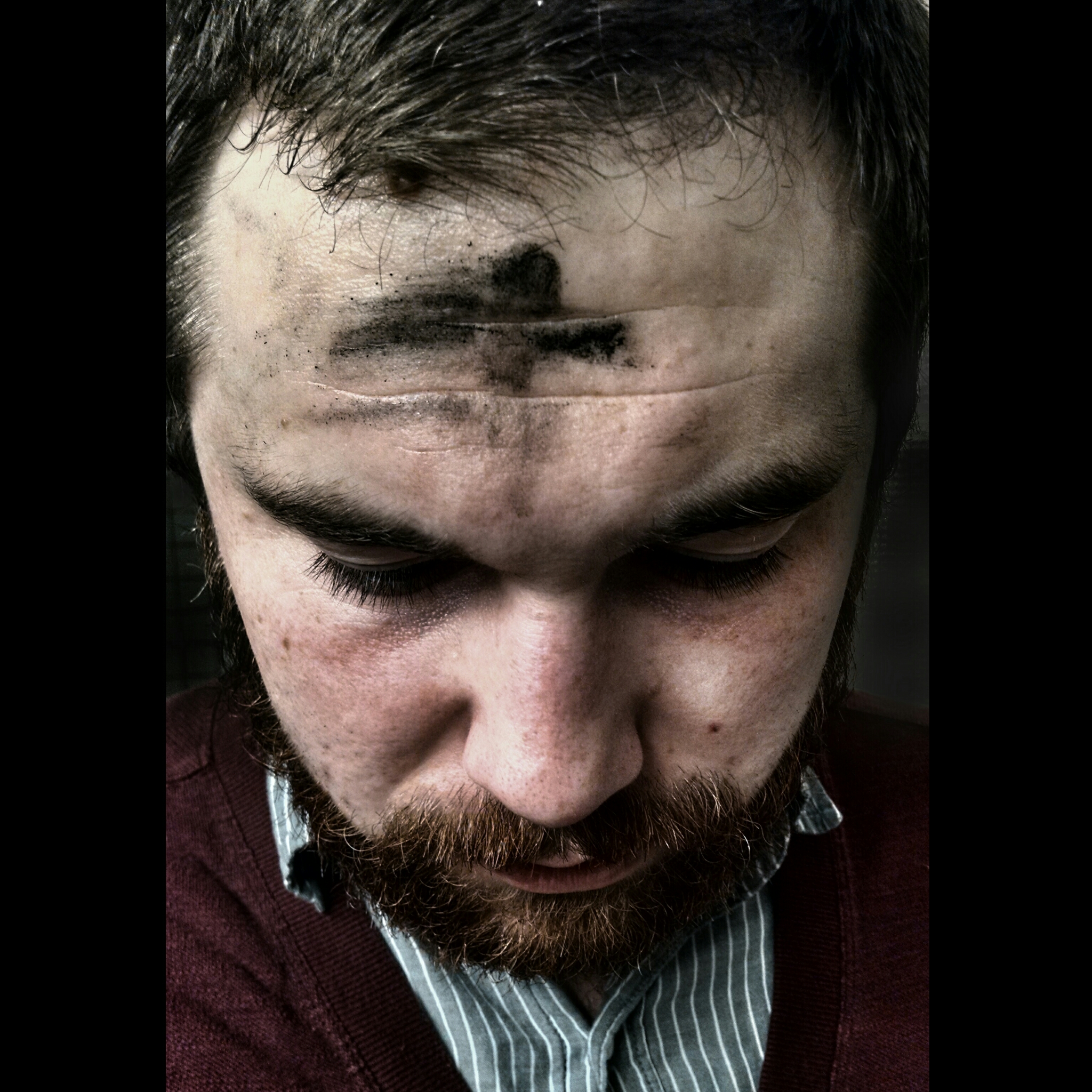
Last night, my church had their Ash Wednesday service. I had the honor of helping lead the liturgy by offering the greeting and opening introduction/ explanation. Unlike most times we gather, the kids stayed in the service so I was asked to make sure my opening words were at least somewhat comprehensive to children.
This turned out to be one of the most helpful exercises for me. I ended up spending more time thinking through these brief opening words than I normally do and crafting each line as intentionally as possible. And so, for the heck of it, I thought I’d throw this up on the blog for anyone who was struggling with explaining Lent and/or Ash Wednesday to their young ones, and also to get your thoughts on how best to communicate this to kids. Here’s what I said:
(Lent: Two things hold us back)
Tonight kicks off the Church season of Lent. Most all of us live our lives wanting to be better people than we are right now. But if we’re honest, there are two things that can get in the way of that sometimes and make us frustrated as we try and become the people we want to be. Continue reading →
I grew up in a church tradition that did not take seriously the Christian Church Calendar. Even as I went to college and moved into communities that took some level of tradition more seriously (which was usually limited to quoting Puritans and Reformers in sermons), the Church Calendar wasn’t that big of a deal. It was seen as something sort-of cool that could be incorporated into the already established life of the Church; a buffet from which leaders could pick and choose some aspects that might be helpful in organizing some sermon series or songs. But it certainly wasn’t seen as something that a church should actually incorporate itself into, or build it’s own rhythm around.
I’ve had the privilege of having this paradigm rocked the past several years at my church, and have fallen in love with the Church calendar. It influences much of the rhythm and timbre of my everyday life–both ecclesial and otherwise. I find such life in living within a stream of thought that was not simply created within the past generation by baptizing modern Western American cultural ideas.
I love finding myself as embedded within the cloud of witnesses that have gone before me as possible–even those I may disagree with passionately and fundamentally. Because, at the end of the day, they are my family, and families have traditions. Sure, you can be “that guy” that does his own thing and doesn’t participate in the family rhythms, but where’s the life in that?
At my work, we recently had a training on mindfulness. Now, before you roll your eyes, it was maybe my favorite work training I’ve ever done. It was engaging, practical, and participatory like few trainings are.
Anyway, “mindfulness” is the fancy word used to describe a “non-judgmental awareness of the present”. It’s heightening your senses and calming yourself in order to fully inhabit the present without analyzing it, mulling it, or needing to evaluate it. For those of us with anxiety issues, it really is an amazing way of centering and calming oneself, as well as separating oneself from the internal busyness–at least for a moment.
Another way of putting it is that it is radical present-ness. It is letting this very moment not be merely something you’re passing through as a bridge from the moment that has passed and into the moment that is not yet here. It is to fully inhabit the moment you find yourself in, and let the future come to you rather than anxiously trying to run towards it.
Not gonna lie. It was very spiritual to me. I felt more in tune to God and it got me thinking about how we mystically experience Him in our everyday lives.
When an Atheist talks about this hard-wired human sense to feel the “Numinous”, it often carries with it the sense that it rises from within us. When a lot of Christians talk about meeting the Divine, it often sounds like a presence that comes pointedly at us from outside of us. I’m starting to think that neither of these is right.
I’ll be honest. It’s been years since I’ve been able to find a way to regularly read the Bible that sticks and works for me. To be frank, readings plans usually don’t work for me because I get bored. Depending on the plan, you’re either stuck in the same book for long stretches of time or you’re jumping around so much that you lose the sense of the whole.
This year, I think I’ve started a regimen that is clicking: the M’Cheyne Bible reading plan. At any given time, I’m going through four completely different part of Scripture and for me, this is keeping me really engaged. As I’ve gone on through the plan these past couple of months, I started highlighting and writing up little notes on random verses here and there. Lots of them. And I’d like to share them with you.
So today, I’m introducing a new little part of this blog called Marginalia, where I’ll be posting these short little meditations on Scripture as I go through this plan. Continue reading →
The man named his wife Eve, because she was the mother of all living. And the Lord God made garments of skins for the man and for his wife, and clothed them. —Genesis 3.20-21
I don’t know why I’ve never noticed this before. Why does Adam only name Eve after they sin? Further, of all the things to do after receiving the curse from God, he does this covenantal, marital act: he gives her a name.
I know this isn’t in this text, nor was it on the mind of the original writer, but it reminds me of the odd line in Revelation where God promises to give each person a new name that only He and they will know.
It seems that in the whole sweep of redemptive history, the Bride of the first Adam received a new name when he brought death, just as the Bride of the second Adam receives a new name when he brings life.
See other Marginaliahere. Read more about the series here.
Donald Miller put up another post sort of talking more about his church attendance thoughts, this time talking about how the doctrine of the “priesthood of believers” means he does sacraments on his own and whenever he wants because God has given us all “agency” in this world to do that kind of stuff. He longs that pastors would empower their people to feel free to do these sort of things as well.
I made my thoughts clear last week about how wrong I think he is on this stuff (especially so with the sacraments. He even says he does baptisms for other people even though he himself has never been baptized). I won’t rehash that here. I did want to bring up one thing I noticed in his other posts that was more explicit in this last post. He writes:
To be fair, I’m wired a bit differently. I’m creative and I’m a risk taker. I realize a mistake I often make in my writing is assuming people are wired the way I’m wired. They aren’t. Most people are looking to “do it right” and play by the rules. This saves them from the trouble I often find myself in.
I can’t get past the the feeling here that Miller is saying that “most people” (read: “those that go to church”) at least primarily go to church because they want to “do it right” and “play by the rules”; that not going to church is an act of freedom, while those that still go are bound by something Miller thinks he has freed himself from. It’s not that he necessarily thinks he’s “better” than others, but I fear he makes a dangerous division within the Body of Christ between himself and “most people”. Continue reading →
Yeah, that’s my family (I’m in the front left). This was one Easter Sunday in the 90’s in Dallas, Texas, at a time and place where (I promise) it was absolutely appropriate to dress like that for Easter (except the glasses, of course). I look at this picture a lot, and not just to chuckle. I find it so oddly and powerfully symbolic of what life in the Bible Belt was like.
You see, my family was deeply wounded by “Church folk” throughout my childhood. Just as in the picture, people in the Church would live their Christian lives dressed up and looking good, all while wearing masks, disguising who they really were. When things were hard at home, people at church had no categories to process it. After all, to be a Christian is to be cleansed by Jesus and walk in new life, right? Failures, sins, and brokenness were seen as signs of some disobedience – some place where you weren’t “okay.”
_______________
And so begins a guest post I wrote for a wonderful site that should be on all of your radars, Restoration Living. Read the rest of the post here.
Well, it’s been a good long while since I’ve posted a Reading List for you all to enjoy–too long, in fact. These were some of my favorite things I read this week. What were some of yours?
I referenced this at the end of my post yesterday, but this is a stunningly beautiful piece that wrestles with humanizing those that frustrate us the most in the Christian family. A must-read for sure.
Don’t overlook this piece too quickly. It is an incredibly powerful piece that speaks to how all of us–married, single, gay, straight–engage our sexuality in this world. It showed me how having celibate unmarried people in the world is necessary for healthy marriages, as well as how masturbation ruins even good friendships.









 the long way home