Karl Barth: Our Freedom, Our Home, & God’s Directing [AMAZING QUOTES]


karl_barth crop

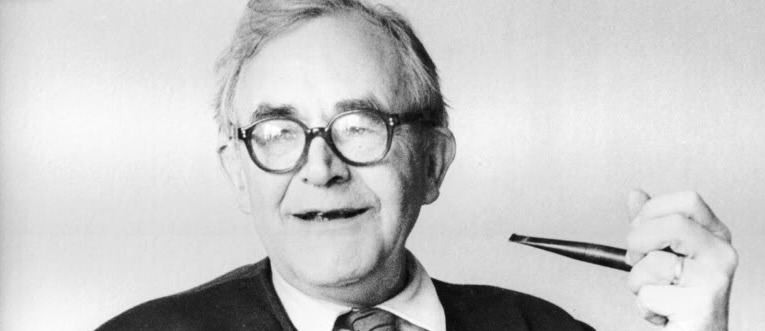
I’m writing this long paper on the ancient Christian Practice of Discernment. In my research, I pulled out some Karl Barth, my favorite theologian (hands down), and got to soak in the beauty of these words, and I wanted to share them. Now, for people that don’t read “real” and “proper” theology, this is it. It’s circular, it repeats itself, and it’s unnecessarily complicated and unclear. I know. I get that. But I promise, if you can spend a few minutes, quiet yourself, and focus, I promise the pay-off is huge. This guy stands as a tower over all of modern theology and deserves more attention than he gets. I’ve done slight edits to some of the wording and paragraph breaks for clarity. Enjoy.

* * * * * * * *

God’s direction is an all-powerful decision, His own divine act of lordship. By this means, too, God vindicates His honor and maintains His glory. By this means, too, He exercises authority….

God’s direction is the directing of humans into the freedom of His children. It is this which has taken place in Jesus Christ no less uniquely than the once-for-all fulfillment of the divine sentence on all humanity. In suffering in our stead the death of the old nature, and bringing in by His resurrection the life of the new, He has made room for the being of all humanity to be at peace with God.

On the basis of what we are and is not by virtue of the divine sentence passed and revealed in Jesus Christ… we have no other place but this—the kingdom in which God can be at peace with us and us at peace with God. Jesus Christ…is the all-powerful direction of God to us to occupy this place, to live in this kingdom. If we are told in Him who we are and are not, we are also told in Him where we belong, where we have to be and live.


Continue reading

Good Morning (prayer)! [photo sermon]


ultimo-coffee-cortado

Each week, WordPress has a Weekly Photo Challenge, where they give a theme and invite people to highlight photography representing that theme, accompanied by a few meditations on it. OccasionallyI try and write a “photo sermon” or meditation based on those themes, accompanied by a photo of mine . This week’s theme is “Good Morning“.

* * * * *

In one of those oddities of tire human condition, I love sleep, and yet I avoid it like the plague. I have a terrible sleep schedule. My sleep pattern is a microcosm of my lack of discipline in many parts of life, and maybe even an extremely low level of self-harm, where my body and heart wouldn’t really know what to do if it were consistently well-rested. There’s something about a constant weight of tiredness that—maybe—makes one feel “productive”, even as it steals productivity away from you.

This is a lie. I know. I’m working on it in therapy.

In some Christian circles, people claim “life verses” for themselves; bits of the Bible that they feel speak to them so deeply that the words amount to a blanket summary, call, encouragement, guiding principle, or telos to their life. People usually pick a “life verse” that speaks to what they want their life to be or how they want God to work in their lives.

Continue reading

How’d We Get Here?: An open letter to my Republican friends (gov’t shutdown, day 2)


kilroyart-Im-just-a-BillHey, Republican friend.

Yeah, I’m writing to you. Not to the pundits or the politicians (not that they’d read this anyway), but you: the everyday Joe (or Jane) that considers themselves a Republican, who reads these headlines about the government shutting down and wonders how it got here and whether or not the people you most agree with are actually at fault here. This post is a long one, but hopefully it’s a helpful one.

But first let me say that, on a grand scale, I’m with you politically. I consider myself a center-right pragmatist. I think the government should be dedicated to very few things, the private sector should be utilized whenever possible, and that States–rather than the federal government–are the greatest laboratories for democracy and the greatest vehicles of government to their people.

But there’s a bigger context to this showdown that I fear is getting lost in all the noise. Everyone seems to be focusing on a series of events in the past month or so that led to this, but it actually goes back a little further than that.

Continue reading

“Coffee Crucifix” (a sonnet for National Coffee Day)


Coffee Crucifix

Crescent ring under porcelain smooth
___stain the wood-stained finish.
______(It is finished.)
___Marked with muddy water;
___mark the merry day; to
___marry the murdered man.

Floral notes in blackened waves
___crash the shore of trembled lips.
Choral bright, in darkest night,
___wake the tone of trebled kiss.

Younger tastes left open-wide; older eyes made
satisfied.

Mark the wood: complex simplicity.
Pierce my heart: storied infinity.

[read my other Holy Week poetry here]

all writings licensed: Creative Commons License

On a Theology of “Non-Place” & Being the Suburb of God


suburbs-flickr

Yesterday’s post on how I’m wrestling through a Theology of the City really seemed to have struck a chord. Here on the blog, there was an interesting discussion about how to theologically view the suburbs. We asked many questions, but landed at few answers. And so, I thought I’d continue the discussion by posting the essence of these conversations on the blog and seeing if we can’t keep the conversation going.

To further offer context, I’ve also added a video I had to record as an introduction to my “Urban Christian” seminary class. In it, I offer a little background on where I’m coming from in this discussion and how I came to question my own subtle sense of urban elitism. The angle also makes my hands look massive, so you can enjoy that as well. Feel free to read these exchanges, and jump in, offering your own comments to move this discussion along!

_______________________________

Jacob Haynes wrote:
Continue reading

I’m starting to wonder about this whole Urban Christianity thing…


rooftop-philly-2

Let’s file this one under: Things I Never Thought I’d Say.

First, some realities.

America, almost since its founding, has had an Agrarian ideal spliced into its DNA that has thought more highly of the vision of the independent rural farmer–building himself up from nothing and sustaining his family by the work of his brow–over and above the idea of the dirty urban manufacturer, competing with others for the few jobs that are there.

Further, it’s pretty clear that during White Flight in the mid-1900s, whites took the association of “good, religious folk” with them to the suburbs (along with the support and attention of governments), leaving the cities to be seen as the cesspools of sin that deserved to rot away.

Along with this, the American Church (especially so, but this is definitely global) has tended to neglect cities, enjoying the safe numbers and comfort of the suburbs. In my opinion, this has helped ravage American faith, causing it to take on the aspects of the surrounding suburban culture, making it often isolating, consumerist, capitalistic, intellectual, based on convenience, behavior-driven, and not rooted to any sort of historical tradition or depth. (This does not extend to individuals per se, and it is a broad generalization, but it’s one that I think statistics would show is generally true.)

Continue reading

What is Discipleship? A Definition.


discipleship-silhouette

For one of my spiritual formation classes, I had the privilege of reading Deitrich Bonhoeffer’s Life Together and Henri Nouwen’s In the Name of Jesustwo incredible books. Last night, after having read these books, we were then asked to offer our own one sentence definition of Discipleship, and then spend some time expounding on the definition. Here was my contribution. Feel free to add your own definitions below.

______________________________

Discipleship: The cultivation of an inner and outer life–with both ourselves and others–that is marked by a humble reliance on the work, words, life, and leading of Christ and His Spirit.

The thing that struck me most about these readings as it pertains to discipleship was the weird paradox of one’s inner- and outer-lives. In both Nouwen and Bonhoeffer, there is such an emphasis that our hearts’ goal should be nothing less than the heart of Christ Himself and our reliance upon it. And yet, the primary access point to this Heart is found in the simple, mundane bodily actions we take upon ourselves with regularity.

The way in is from without, I suppose.

Especially for those of us in seminary and who minister in a Church context, isolation in these endeavors can be such an easy temptation. I don’t even pastor a church, and yet as a deacon leading a home group or class or the Sunday liturgy, I feel that damnable desire just to be liked, and not be seen for who I really am.
Continue reading

Putting the FUN back in Fundamentalism! (vs. Atheism)


anastasis-resurrection-dead-hell

For those that follow this blog only through WordPress, you may have seen the guest post yesterday–a beautiful meditation on spiritual realities that Autumn brings to our minds–and didn’t think much of it. It was pretty and all, but not controversial, right?

Not so, on Facebook.

A good friend, and Atheist (that we here at the blog know quite well), made a comment taking issue with references to the “Fall” and “first parents” (and even the Resurrection) on the grounds that these do not jive with evolutionary science. (Although I don’t think he clicked on the link to a similar post I wrote last year in which I used the same terminologies in the same way, but whatever.) He was surprised that I would have let a seemingly “young earth creationist” (someone who thinks the world was created in six literal days) post on my blog.

Though I assured him that this guest poster was not, in fact, a young earth creationist, and was merely speaking using the common poetic language shared by all of Christian theology and not at all trying to speak in scientific terms, he doubled down. Then, Christians and Atheists all jumped into this thread. Sarcasm, insults, and “who-said-what when” arguments began, all having little to do with the post, and more to do with who was condescending first, who understands genre theory, and who were the more aggressive and defensive parties in the discussion.
Continue reading

Sacred Autumn [GUEST POST]


autumn-western-pa2

This is another piece by my good friend Austin, who has written here before. You can also read my own, similar meditation from last year on what Autumn can tell us about our world and our God.

This month, we’ll witness the change of seasons. These liminal times, these times between the times, always put me in a mood of reflection. The approaching season is my favorite. It’s appropriate that it, unlike the other seasons, should be honored with two names—Fall and Autumn. And what about that?

Autumn is a noun, meaning cold. The word is anything but. It’s a beautiful word to look at, beautifully spelled. It’s a nice word to say. Think about how your mouth moves when you articulate it. Isn’t it like offering a kiss to something, someone? And didn’t Saint Paul say to greet the brethren with a holy kiss? That’s how I plan to greet the coming season.
Continue reading

How to End Homelessness (this is what I do for a living) [VIDEO]


philly-rowhomes-neBelow, you will find a brief documentary that was done at my wonderful job, Pathways to Housing, to highlight the work that we do. It features many of the clients and coworkers I work with, and I had the chance to be present for a few of the film shoots. It is so beautiful and well-done. I’m so happy to share with you all a part of me that I don’t really talk about much in the rest of my life.

(Also, if you’ve lived in Philadelphia for a few years, you might recognize some folks in this video that you used to see on the street. But now, they have housing.)

I have spent most of my time in the field of social work pretty disengaged intellectually and emotionally. The older, more subtly coercive model of social work marked my previous companies, and the way the work was structured definitely played more to my weaknesses than my strengths. This left me in a constant state of feeling like I was terrible at my job. And so, it was just easier to not invest much of myself into it at all.

And so I’m only now learning how much of a difference it makes to love and adore your job. This is where I’m at now. I’m at an amazing company with amazing people doing amazing work that produces amazing results. I feel I’m good at my job, and I feel like I’m flourishing professionally, intellectually, and emotionally in it. There’s so much hope and excitement over my work. Here a couple of things I’ve recently heard clients say:

“When I was homeless, I felt like an animal, stuck in a concrete jungle. I only came out to eat and survive. Now that I have housing, though, I feel like a human again. It feels good to be human.”

“I haven’t been homeless my whole life, but I’ve always been a human being.”

And so, though much of my writing (and conversation) is centered around religious, political, and church things, I’m happy to share a little bit of how I spend 40+ of my hours each week. I hope you are encouraged and that you are offered a little bit of hope in the midst of our urban brokenness.

Discipleship: Making Good Little Pharisees?


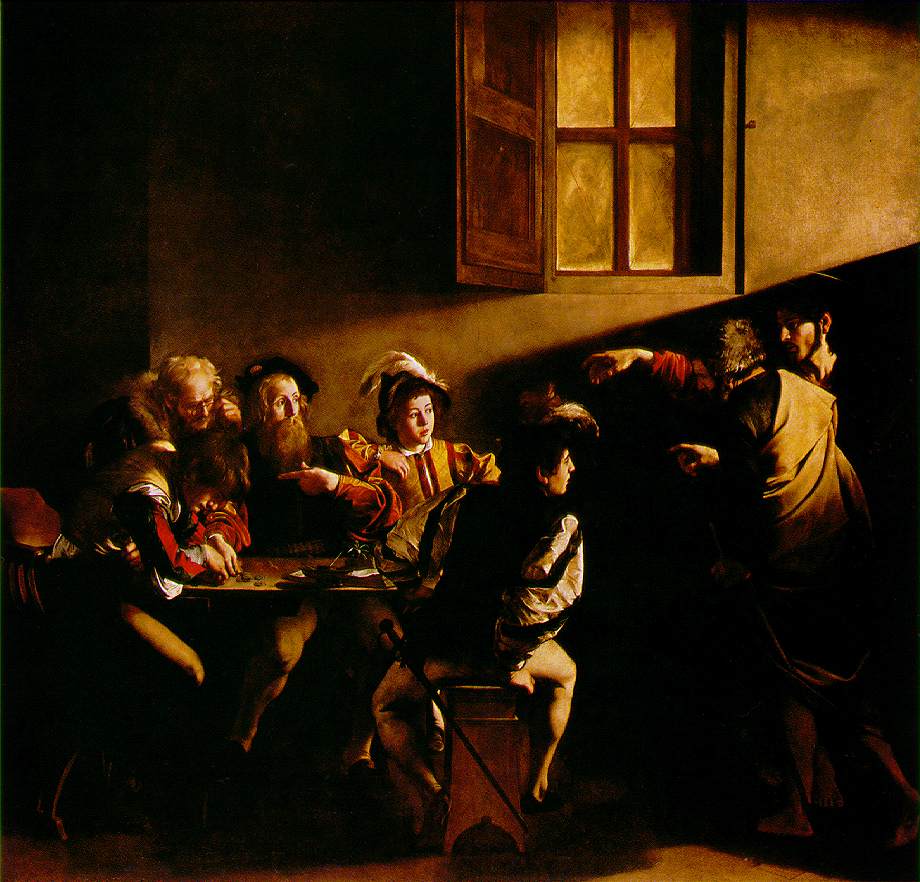
Caravaggio-The Calling of Saint Matthew{summary: the way we disciple others in the church is far too often a results-based process, and not a grace-driven one. Here, I explore Jesus’ example in Matthew as a guide for us. And, once again, we see Jesus’ radical application of grace to his Disciples’ lives.}

I’m taking a class on “The Practice of Discipleship”. Some discussions on our online message boards inspired these thoughts. Discipleship, as many people could tell you is all about “following Jesus”. After all, that’s how Jesus himself invited his disciples into it. But as I was thinking about this, I realized something: Pharisees had disciples too.

Now, with “Pharisee Discipleship” the point was to let that Pharisee get all up in your business so that you could become a good, well-behaved Pharisee someday. Christian Discipleship, as we are often told, is not about following Christians per se, but following Christians who are following Christ. The ultimate goal is to follow Christ and to help one another do that.

This is how it works in theory. I can’t speak for everyone, but at least in my experience, a lot of Christian Discipleship subtly looks more like the type that creates well-behaved Pharisees than the one that truly follows Christ.
Continue reading

A Christian Pacifist’s Lament for Syria, with help from Quakers


Godwin-untitled-sketch-bw-cropped

{summary: Though I consider myself a pacifist and consider force as something that goes against the Kingdom of God, I feel that governments, because they are not the Kingdom of God will always fall short of that and have a necessary level of sin in them. And so, for the sake of a greater good, I would not speak against my government using military action in Syria (though I wouldn’t say I’d explicitly “endorse” it).}

As many people have been doing, I have been snarkily criticizing President Obama’s pursuit of making an attack on Syria. It seems too pointless, too risky, too naivetoo counter-productive, and too lonely. I had felt sadness over the plight of Syrians, but while the rebel forces are over-run by Islamic radicals and terrorist groups, I haven’t thought that empowering, arming, or making their victory certain was better in the long-run. (If you need a refresher on the details of the Syria situation, this is a great one.)
Continue reading

I just had a war with my phone. And I won. [BRAGGING]


paul-droid-warI’m sorry. This has nothing to do with anything I ever talk about on this blog. I just had to share. I feel like I just reached a whole new level of nerd ‘lite-dom.

A couple of days ago, I dropped my phone twice in one day. Now, I’ve dropped my phone before, and there have been no problems, save for a scratch here or there. But this time, something happened, and I couldn’t click the power button in. I spent hours Googling solutions. I ended up being able to download apps to let me put the phone to sleep, and even use my volume buttons to wake the phone. But, if my phone ever died or otherwise turned off, there was absolutely no way to turn it back on.

I checked into getting it repaired professionally, but between price and time, that wasn’t a realistic option. I slowly began to realize I only had two options: start looking for a new phone (when this one still isn’t paid off), or take it apart myself and see if I could fix it.

I’ll admit it: I really like my phone. It’s a (take a deep breath) Motorola Droid Razr Maxx HD. (What a terrible name.) I got it off Ebay for full price so I could keep my unlimited data. It has a great screen, amazing battery life, and it still running smoothly after a year or so of pretty intense usage.
Continue reading

How Liturgy Shapes & Makes Us


schrott-cross-church-office-apartment

UPDATE: I posted a brief history of liturgy and its movements.

A couple of nights ago, those that help lead and facilitate the worship service at my church met to discuss how we should continue to grow and remain faithful to our mission in the city of Philadelphia through our liturgy and music. It reminded me once more of how much I love being a part of this church and its tradition, and how excited I am to live life with these people.

Meditating on these discussions about our liturgy, I was reminded of the myriad of ways that the structure of one’s worship service forms the people that sit there each Sunday. I thought of how liturgy functions. If you go to a church, it has a liturgy: some structure that proclaims a certain story and shape of existence, and it changes people to fit into that shape and story.

And this got me thinking of a document I wrote up a couple of years ago to help train and encourage those leading liturgy at our church. In it, I wrote about six “facets” of the diamond that is liturgy. And that’s what I wanted to post here today.

These are some ways that liturgy acts to shape us. After each thing, I’ve given a sample topic and tried to show how liturgy functioning in that way can speak to and shape someone in that area. This was originally meant as a guide for people that introduce the service and try to acclimate people to the liturgy.

I hope this reminds us that liturgy matters, and being intentional about your liturgy is such an important part of leading and ministering within your church context. If you don’t serve as a leader in this aspect of your church’s life, and don’t really speak to liturgy formation, I hope this helps you recognize the formative nature of your church’s liturgy, and that it helps you connect to and engage with your church in a deeper, more intentional way. For more on this, I could not suggest more highly James K.A. Smith’s book Desiring the Kingdom.

Continue reading