“The End & The Beginning”: On Houses, Wise & Foolish [sermon]


01111_blacksandbeach_1680x1050

A couple of weeks ago, I got to finish up our church’s series going through the Sermon on the Mount. This sermon was such an experience to prepare and give. For one, this was my first time ever preaching two weeks in a row (if your pastor does this regularly, give him or her a hug for me–it’s hard!)

Second, this was my firs time preaching on a text I previously preached on. This text was the same as my first ever “real” sermon. It was the oddest experience diving back into this text and it feeling so new–as if I’d never read or studied it previously.

And lastly, this is the shortest set of verses I’ve ever been able to preach on–5 verses! This gave me the freedom to slow down, and experiment with how I wanted to structure this and go about writing the sermon.

This sermon tries to serve both as a summary of the entire Sermon on the Mount as well as a conclusion and call to action for those of us who have sat under it all Summer. If that piques your interest, feel free to listen to or read the sermon below. The text is Matthew 7:24-29. Here’s the audio:

You can also download it here, or subscribe to our podcast. If reading is more your style, here is my manuscript for your perusal. Continue reading
September Book Club: What IS Reformed Theology, anyway?


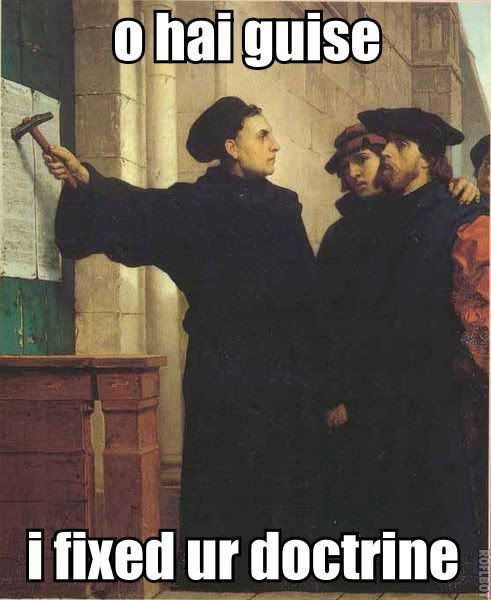
luther-95theses-humor-memeSeptember’s Books
(just pick 1)

Welcome to a Reformed Church: A Guide for Pilgrims by Daniel Hyde

Reformed Theology by R. Michael Allen

One thing I appreciate about my church is that we don’t wear our labels on our sleeve. That does mean, however, that a lot of people can go to our church for quite a while and not know that there is a very real theological ethos woven into everything we do.

We belong to the oldest American denomination–the Reformed Church in America–which ascribes to a theological tradition called “Reformed Theology”. And because many, many people in our church likely have little idea of what that especially means within the broader Christian family, we’ll be spending this Fall exploring these ideas in our monthly Theology Book Club.

So how are we going to do this? Well, I really struggled with this one, because though Reformed Theology has some general contours, there really is quite a bit of diversity and flexibility within that definition of being “Reformed”. In looking for a good book, the problem I kept finding was that most books on this topic tend to define Reformed Theology very narrowly and very dogmatically. I don’t think this is helpful.
Continue reading

“Do Unto Others”: The Golden Rule of God’s Kingdom [a sermon]


bw-three-paths-meet-williams-cairns-photography-llc

As part of my church’s series on The Sermon on the Mount, I got to preach this past week on the Golden Rule, as well as Jesus’ call to action at the end of the Sermon.

For many of us, when exploring Christian faith, what we’re really looking for is what makes Christianity distinctive. What does it have to say that any other perspective on existence doesn’t—or can’t? I can imagine many people see Jesus offer the Golden Rule and think that he is acting as just one more ethical teacher repeating this ethical principle that most anyone who wants to be a nice person knows about. And it’s true: much of what Jesus says is, technically, not new in human history.

But here’s the trouble: as a human race, we’ve had a lot of practice with the Golden Rule. It’s in us. It’s in our laws. It’s in our societies. It’s in our intuitions that guide and shape how we move through the world. It shapes our sense of justice and morality. And yet we still fail it every day. We’ve had so much practice legislating it, commanding it, manipulating it, teaching it, and hoping for it. And yet it is not the predominant reality in our world or relationships.

That’s why when Jesus comes on the scene, it’s not enough for him to simply repeat the same old teachings in the same old ways. We need more than that if we have any hope for living his vision out. And in this sermon I argue that what Jesus offers here is an entirely new framing and context of the Golden Rule. What Jesus offers here is so much more than a simple ethical maxim. It’s not even Ethics at all! Further, if we see Jesus as just one more religious authority trying to tell people how to act, then we’ve profoundly missed Jesus’ point and what he’s trying to offer us here.

So feel free to listen to or read the sermon, and let me know what you think. The sermon text is Matthew 7:12-23. Here’s the audio:

You can also download it here, or subscribe to our podcast. If reading is more your style, here is my manuscript for your perusal. Continue reading

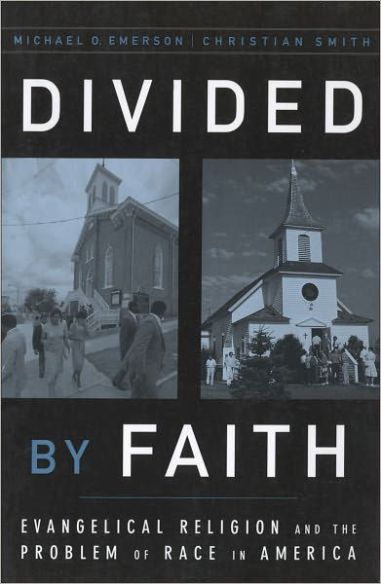
August Book Club on Christianity & Race: “Divided by Faith” by Emerson & Smith


August’s Book book-divided-by-faith-race width=

Divided by Faith: Evangelical Religion & the Problem of Race in America
by Michael Emerson & Christian Smith

Last night’s book discussion went really well, and it makes me even more excited for this month’s meeting.

For my church‘s monthly Theology Book Club, I’m excited to have us read an especially timely and important book, Divided by Faith by sociologists Michael Emerson and Christian Smith. The opening lines of the Preface summarize their purpose beautifully:

To learn more about American life, this book examines the role of white evangelicalism in black-white relations. Our argument is that evangelicals desire to end racial division and inequality, and attempt to think and act accordingly. But, in the process, they likely do more to perpetuate the racial divide than they do to tear it down.

In America, we have a problem with race. White Christians, I think, genuinely act in good faith to play a positive role in race relations in America. And yet, they often end up unintentionally exacerbating some of the broader cultural problems that feed into racial injustice.
Continue reading

On the Trump Convention Speech: We are better than this


trump-convention

The hardest thing about writing anything about politics (or religion, for that matter) is not having someone write you off immediately by placing you into one of the Right-Left boxes that dominate our national discussion. I am really not a liberal progressive. I have voted Republican, Democrat, Libertarian, and even Green Party. In 2008 I voted down the ticket but conscientiously abstained from casting a vote for President as a “none of the above” protest vote.

All that to say, on most any issue, I can see both sides of it. I can see why people believe what they believe and I can see much of its merits. But (as so many written sentences this election season have concluded), that was until Donald Trump.

I am so strongly against Trump for President. I am not against critiquing the foreign and domestic policy views of the Obama administration and Secretary Clinton. I am not closed off to new recalibrations over trade and foreign policy. I understand the economic forces that have driven wedges between the working class and all others, and I can see the pain and malaise in middle America and groups that have been so forgotten and overlooked.

I see the forces that have given rise to Donald Trump and though I want to validate the cynicism, pain, and feeling of disempowerment, I struggle to know how to communicate to these voters that Trump is not the answer. He will not help you. People may respond that he’s better than Secretary Clinton. He’s not. Crunching the numbers, it is clear that Clinton’s policies would be far more effective in ameliorating these cultural and economic pressures.

You may not like Clinton personally, then, but we can’t overlook one candidate’s personal foibles only to condemn the other for theirs. On moral, legal, ethical, intellectual, and religious grounds, Trump is far and away the lesser of the candidates. If character, morality, and heck, even legal uprightness are important to you in choosing a candidate, Trump is worse.
Continue reading

Philly TONIGHT: Open Sanctuary Time for Reflection & Prayer


liberti-church-ceiling-lights

We live in a time and place that is happy to tell us all the things we need to do to be the kinds of people we want to be. And churches are good at telling us more things to do and occupy our time with in order to live in greater closeness with God.

But there are some parts of being human and knowing God that don’t involve doing more, but rather stopping and doing less.

At my church, over the summer, we want to try and create space where people can come and just stop; to experience silence, reflection, prayer, meditation, and a little guidance in those things. This is a spiritual muscle we don’t exercise much, but it’s an essential one to work out if we are to become more human and know God more deeply.

So starting tonight, from 6:30-8pm and every Thursday in July and August, we’ll be having an open, unstructured time for prayer, reflection, contemplation, journaling, and meditation.

A few times I’ll get up and read some Scripture, but outside of that, it’s a space people are free to come and go, lie down, walk around, sit on the floor, or whatever they need to connect with themselves and connect with God. No matter your church home, religious tradition, or lack of belief, feel free to use this space in whatever way you need.

So feel free join us at 17th and Sansom St in Center City Philadelphia between 6:30 and 8, and each subsequent Thursday.

A Prayer Service of Lament for Race & Injustice


job-silohetteLast week I led a prayer service of lament at my church for the racial injustice and violence experienced in our country. I put together the below order for the prayer service and it ended up being a helpful expression for us. I wanted to share this with anyone else interested in using it in their own contexts.

Another benefit of this service is that the contemporary prayers below are not mine or any other white males, but were written by women of color and slightly modified for our context. I hope this acts as a helpful outlet to give voice to our hearts as brothers and sisters.

[Prayer Guide: pdf/docx ; Leader’s Guide: pdf/docx]

Preparation

Encourage other voices that are not typically heard at your church to read the Scripture sections. In the times of silence, encourage open prayer from those sitting in the pews. Allow space for up to 5-10 minutes of silence, and be sure to let people know beforehand to expect such long silence.

Continue reading

Join the Liberti Church Theology Book Club!


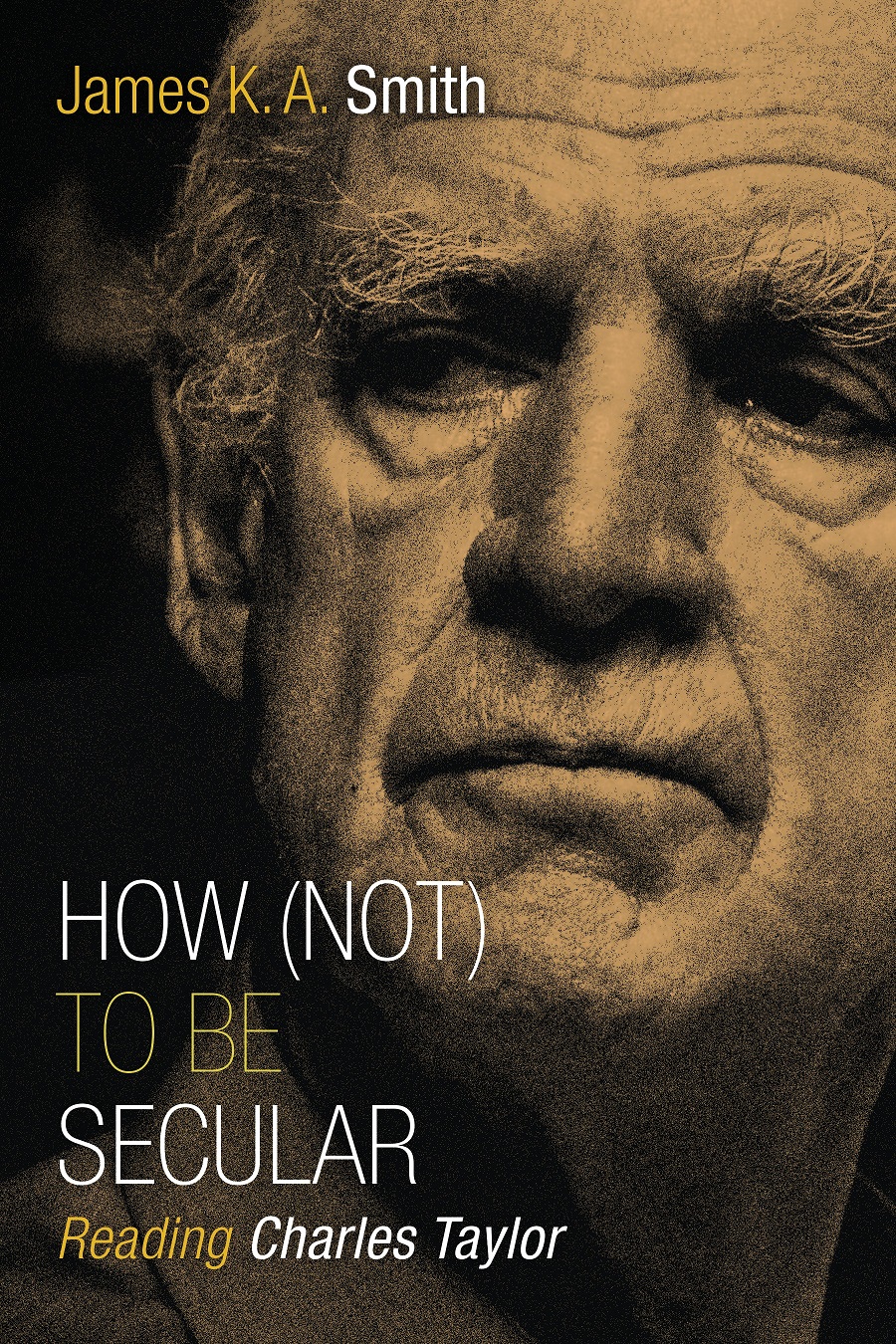
July’s Book book-jamessmith-hownottobesecular

How (Not) To Be Secular
by James K.A. Smith
Amazon


Wtsbooks

For those of us that are Christians, we come to church on Sundays to get re-grounded and re-oriented in the rhythms and truths of the Christian life.

Many of us also try and live life in various small groups and Bible Studies throughout the week in order to press these truths all the more deeply in our hearts and communities.

But still, some of us are wired to wrestle with big ideas in a different way. That’s why at my church we’re starting the Liberti Theology Book Club: a way to walk with others through different perspectives and insights on theology, the Bible, and Christian thought.

It’s been designed to take up as little of your time as needed, while also letting us really work through some deeper and harder parts of faith. Also, because of the decentralized nature of it, anyone across the country can join in!

Continue reading

Philly TONIGHT: A Prayer Service of Lament for Race & Injustice


black-and-blue-lament-e1468181738718[1]

The past few weeks (heck, the past several years) have exposed so many fissures in the fabric of American society. It has shown how power, politics, and the invisible structures and systems around us have attempted to paper over real divisions that still remain. Last week, especially, showed us how these divisions can overflow into violence and cut to the core of the American psyche.

And the Christian Church ought to be there to give voice to this pain.

Tonight at 7p at Liberti Church‘s Center City Campus (17th and Sansom St), I will be leading a service of lament for our country, our cities, and our hurting black communities experiencing injustice. There will be time to hear Scripture, reflect, sit in silence, and also offer prayer from those in the pews. We will ask hard questions, sit in the pain, and not settle for easy answers. It is open to the public and all are welcome, no matter your religion, political persuasion, or personal opinion in this national discussion. I hope to see you there.

[image credit: photo from the Intersect Blog]

The Belgic Confession: Church, State, & Reformation


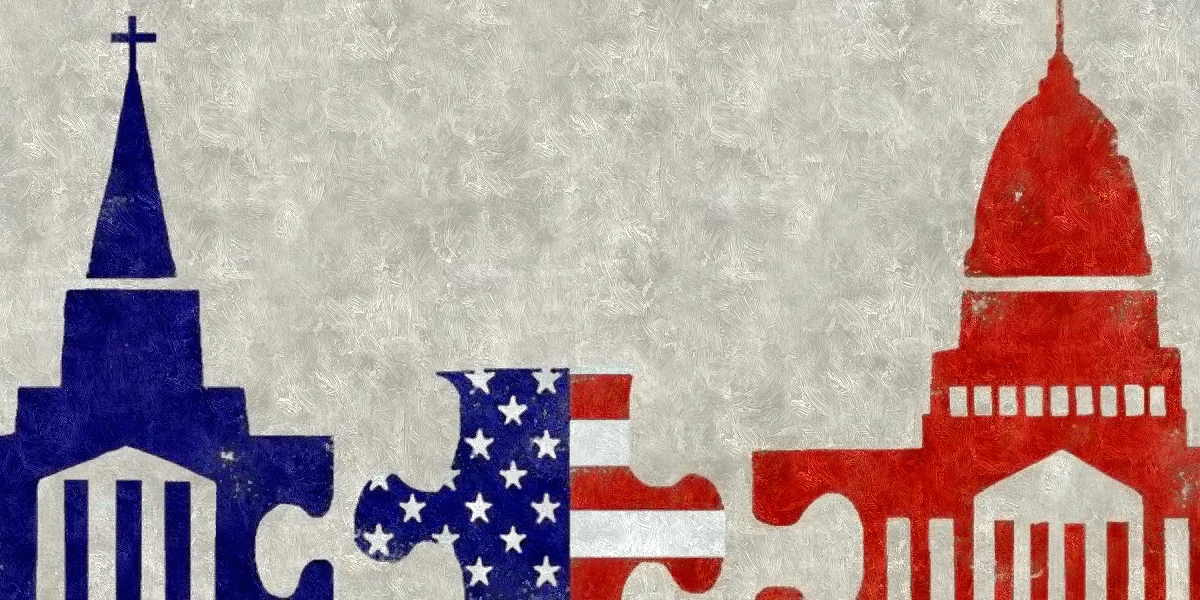
church-state-puzzle

As I prepare for ordination in the Reformed Church in America, I am wrestling with the documents, Creeds, and Confessions to which I will be committing myself. I invite you to reflect alongside me.

In the Belgic Confession, one of the most foundational documents of the Reformed tradition, there is an incredibly odd Article towards the end–number 36. It is about the Civil Government and it says, among other things:

We believe that because of the depravity of the human race, our good God has ordained kings, princes, and civil officers. God wants the world to be governed by laws and policies so that human lawlessness may be restrained and that everything may be conducted in good order among human beings….

And the government’s task is not limited to caring for and watching over the public domain but extends also to upholding the sacred ministry, with a view to removing and destroying all idolatry and false worship of the Antichrist; to promoting the kingdom of Jesus Christ; and to furthering the preaching of the gospel everywhere; to the end that God may be honored and served by everyone, as he requires in his Word….

The whole of the Confession is worth your time and reading. It is beautiful and ecumenical. Its desire is to bring people together and articulate the Reformed tradition in a charitable and loving way. And yet, this Article–the next to the last one in the whole writing–sticks out like a sore thumb in both tone and content. It’s so confusing. Why is it written this way? What do we make of it today?

Continue reading

Bible Nerds: Help Me Choose NICOT/NICNT Commentaries!


My go-to Bible Study software of Logos. They have some amazing sales every once and a while and right now they are having a great sale on the New International Commentary Series (popularly known as NICOT and NICNT). They are selling each volume at $19.99 a pop, which is amazing. I am really picky about commentaries, but I know a good deal when I see it. So, I’m enlisting your help to help me pick out a few of these for my library.

So…for those of you that have had experience with these, which would you say are really good and why? Which would you say are definitely not worth one’s time?

So you know what I’m looking for: I go to commentaries more for biblical critical scholarship, not systematic theology. Even though I am theologically conservative, I really do not enjoy commentaries by conservative Evangelicals that spend most of their time grinding their conservative axe against all those “big bad liberals”. Those commentaries end up being more about conservative theological apologetics than the text. For that reason, I find it far more helpful to engage with commentaries that have an openness and sympathy to critical (“liberal”) scholarship.

In short, if one of the primary selling points for a commentary is that it is “conservative”, then it’s probably not for me. I can think of so many other adjectives I would prefer came to one’s mind first to describe a good commentary. If a commentary writer is conservative, great! But breathlessly defending that dogma at the expense of the text isn’t helpful to me.

Okay sorry, soapbox done. What do you all think?

Who has a brand new Masters of Divinity degree? This guy.


Grad2016-310

After going to seminary nearly 8 years ago, dropping out after a year, and then returning 5 years later, I have now graduated with my Masters of Divinity from the Newbigin House of Studies program at Western Theological Seminary. (Sorry for all those links.)

I was also proud and humbled to have been voted by the faculty to receive the Stanley A. Rock award in Pastoral Care and Counseling, “for outstanding work in pastoral care and counseling courses and formation for ministry assignments”.

So what now? Well, first I have to finish my last six weeks of classes before actually getting my actual degree. Then I will need to finish my requirements for ordination as a minister in the Reformed Church in America. After that? I’m still figuring it out.

I’ll still be in Philadelphia. I won’t be looking for a ministerial job outside my own church. I’ll continue my job in social work while other opportunities work themselves out. I still hope to do Ph.D. work in the future, but I’m taking a breather for the immediate moment.

Continue reading

Cruz/Fiorina ’16: A Marriage of Convenience, For One


cruz-fiorina-1

I really liked Carly Fiorina when she was running for President. I admit: even though I voted for Bernie Sanders on Tuesday, Fiorina would have been one of my top choices early on in the campaign. Yeah, yeah, yeah, it’s confusing, I know. Anyway, a friend of mine who knew this was the case asked for some of my thoughts on whether her choice as Ted Cruz’s VP pick made me any more inclined towards Cruz. Well, here were my thoughts:

Man, if Cruz was going to do anything to make me even consider voting for him, this was it.  Even though I would have voted for Kasich over Fiorina, Kasich as VP wouldn’t encourage me to vote for Cruz as much as this pick. I really like Fiorina and think she could be an incredibly powerful and effective Vice President.

That being said, however…
Continue reading

The Moderate We Need: Why I’m voting for Bernie Sanders in PA


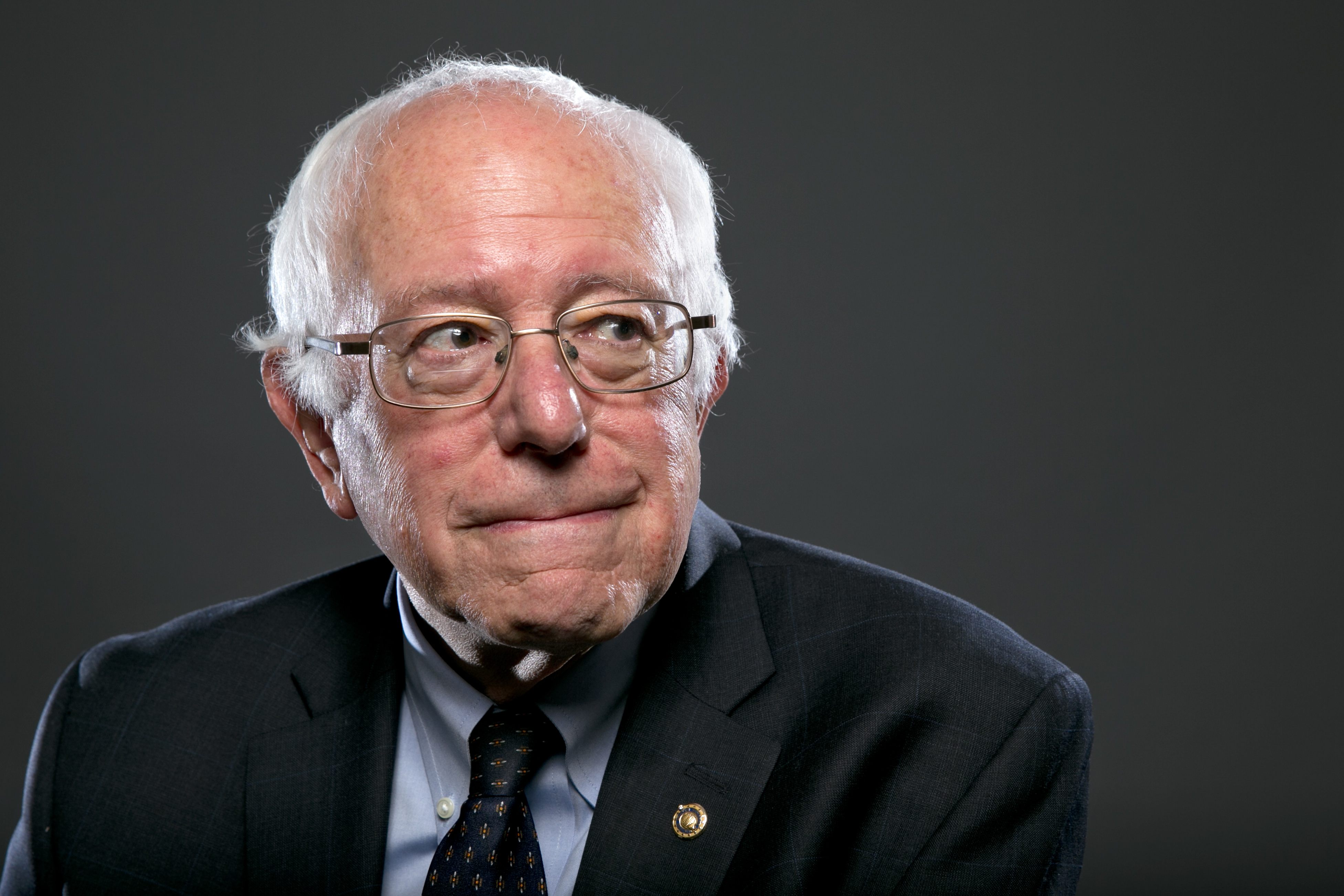
BernieSanders-3

At this point it is a cliché to point out the brokenness of the American political system. In the past eight years, we have seen the least productive Congressional sessions in our country’s history, and have watched as even the most routine political acts are turned into controversial sideshows. What we need is not ideology, dogmatism, or a “political revolution”. We need a functioning, effective democracy.

And it is for that reason that this Tuesday, April 26th, I will be voting for Senator Bernie Sanders in the Pennsylvania Democratic Primary.

Let me explain.

Though I cannot in good conscience throw my lot in with today’s Republican party, I consider myself a conservative in my political philosophy. I am a registered Democrat (rather than an Independent) only because in a city as blue as Philadelphia where our Democratic primaries are the decisive ones, I’d have no say in my city’s politics if I weren’t.

Nevertheless, I do not agree with the idealistic and utopian vision that much progressive politics entails. I loathe the cynical identity politics of the Democratic party. I think the bigger the federal government is, the more frayed our communal bonds become. Further, politics must also have a moral foundation. Now, both Democrats and Republicans would agree with that, but there is a difference between ideology and morality.
Continue reading