On “Real” Food: a TED Talk everyone should watch


This is a recent TED Talk given by Robyn O’Brien, the author of The Unhealthy Truth: How Our Food Is Making Us Sick – And What We Can Do About It. It’s on food. She makes a pretty compelling case for the “Real Food” movement, encouraging us to move towards “knowing” our food once again–it’s source, it’s farming method, and it’s distribution.

Now, this whole local, organic thing is a pretty big fad right now (and I’m as guilty as any for being an evangelist for it–even though I’m also a weak practitioner), but O’Brien’s perspective is different. She is a former Wall Street analyst, and so she spends her time not trying to belittle or demonize businesses who have a legal responsibility to maximize profits for their shareholders. Nor does she try and show how this perspective on food is inherently “better” or more “ethical” or “moral” (even though I might think so).

Instead, she shows how our current food system is–literally–killing us. There’s no sensationalism. No partisan backhands. No sarcasm. No exaggeration or twisting of facts; just a simple telling of her story of transition from a “normal” mom to her views today.

Ultimately, she shows how changing our food system could actually be best for our nation, both economically and politically.

On a personal note: I applaud this video, and yet I still find myself not following its suggestions (even as I’ve watched and read similarly-minded “exposes“, books, and documentaries). Nothing has been enough yet to actually change my habits. My main concern isn’t necessarily money or sourcing. Rather, it’s time. It takes time to plan, shop, and cook with intentionality and thought (or so I think).

I’m sure many of the readers of this blog will agree with the principles laid out in this video. If so, I want to hear from you. No. Actually, I need to hear from you. I need help in this. What’s your story? Do you follow these principles, even a little bit? What has worked? What hasn’t? Any tips for a time-bound (and probbably, more realistically, just lazy) twenty-something looking to reform his eating habits? Sound off below.
“religion + politics = nothing good” by James Madison [QUOTE]


What influence, in fact, have ecclesiastical establishments had on society? In some instances they have been seen to erect a spiritual tyranny on the ruins of the civil authority; in many instances they have been seen upholding the thrones of political tyranny; in no instance have they been the guardians of the liberties of the people. Rulers who wish to subvert the public liberty may have found an established clergy convenient allies.

— James Madison, Memorial And Remonstrance Against Religious Assessments, June 20, 1785.

(via Charlie Pierce at Esquire’s political blog and Twitter)

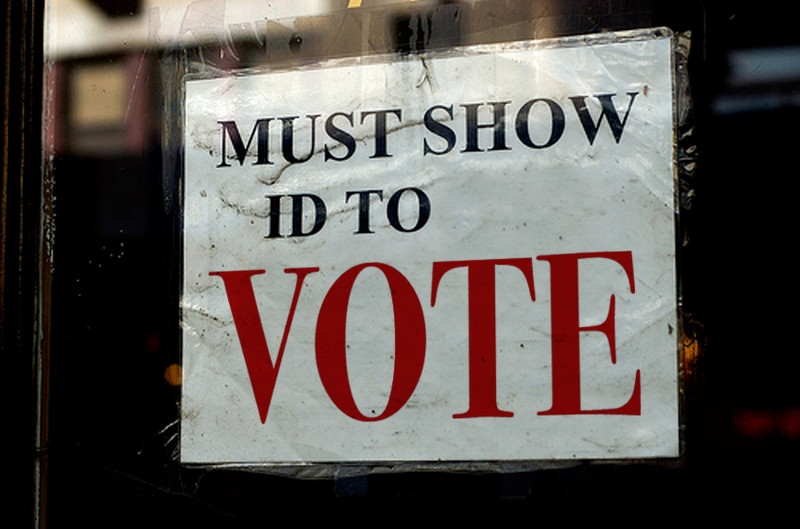
ACLU of Pennsylvania Files Suit Against Voter ID Law


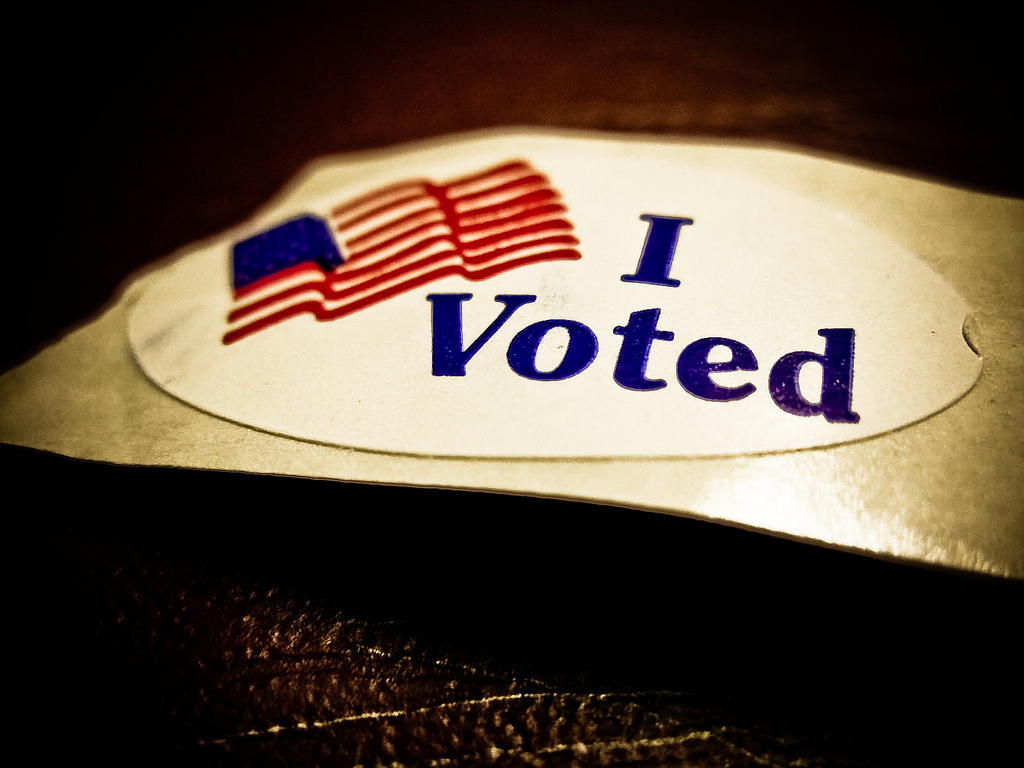
I’ve not hidden my opposition to the recent wave of Voter ID laws being passed and pursued across the nation. I have written about this on this site, posted articles on the topic, and argued extensively on Facebook about this.

I have offered a simple mathematical challenge that no supporter of these laws has been able to meet: if it can be shown that more fraud would be prevented than voters being disenfranchised, I’ll change my mind and support these issues.

As I said, no supporter of these laws has been able to demonstrate this. They have given anecdotal evidence of random voter fraud, they have appealed to philosophical reasons behind this policy, and to try and show how the voters that would be disenfranchised wouldn’t deserve to to vote anyway because they would not be “enthusiastic”, “eager”, or “self-motivated” (because apparently every person without an ID  only ever votes because liberal social activist organizations manipulate and pay them to vote Democrat).

Yesterday, the ACLU of Pennsylvania, among other organizations, officially filed suit against the Commonwealth, claiming that the Voter ID law passed by Governor Tom Corbett violates the Commonwealth’s Constitution. They seem to have a pretty good case.
Continue reading

In Defense of Douthat: a response to Patrol Magazine


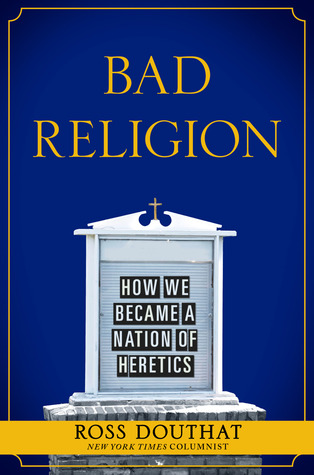
Last night I had the privilege of going to a book talk and signing by Ross Douthat (a new hero of mine), promoting his new book Bad Religion: How We Became a Nation of Heretics. It was, more or less, a summary of the book’s primary lines of argumentation, followed by a Q&A.

The book itself (which I am only half-way through) lays out some pretty provocative ideas that are sure to ruffle the sentiments of most anyone that finds themselves securely in allegiance with either of the left-right poles of society. I have yet to find someone who sits in ambivalence concerning this book. It evokes. It calls out. It leads to introspection and reaction. You either love it, or you hate it.

This is further complicated by the times we live in. In a world of blogs, podcasts, comment boxes, and the online immediacy of opinion, there is an unspoken and unrealistic expectation of comprehensiveness in any person’s expression of thought. There was a time where an author would write a book, others would write whole books in response, and then the original author would respond with a follow-up book. This process then moved on to newspapers and magazines (the Federalist Papers come to mind).

Continue reading

Ross Douthat: a new hero of mine


Look at that face. If I saw him walking down the street, I would think he was just another guy; I’d have no idea the kindred spirit that lay in this man’s mind.

Ross Douthat (don’t ask how to say his last name), like myself, seems to be a man that life has continually thrown from one-extreme to the other: born in San Francisco, and then transplanted to New Haven, Connecticut; attended Harvard and then turned around three years later and wrote a book denouncing the Privileged culture there; started out as a Pentecostal, then converted to Catholicism; wrote for his college newspaper and is now the youngest-ever Op-Ed columnist at the New York Times.

These extremes seem to have helped him settle in nicely with a well-informed and balanced view, able to to comfortably exist, engage, and critique in a world of poly-everything.

Over the past year or so, I’ve seen (and been sent), a few of his articles and blog posts, but I think I was missing something. All I knew of him was that he was a Catholic writer with a sharp mind, and I didn’t pay him much proactive attention.

And this was to my great detriment.

Somehow I stumbled upon this set of exchanges on Slate, where Will Saletan, one of the most thoughtful secular liberals I’ve ever read, engages Douthat on some issues raised in Douthat’s newest book Bad Religion: How We Became a Nation of Heretics. This exchange cemented Douthat’s stature in my mind, as well as his place in my reading repertoire. It’s great. You all need to read it.

I’ve started to read the book, and it’s definitely going to be a personal classic for me and a turning point in my development as a solidly religious person firmly engaged in the body politic. I also have the privilege of attending a book talk/signing with him next week here in Philly.

I have much more I could say and commend about him (including the fact that he’s a Catholic who fully-embraces praying in tongues–kindred spirit indeed!), but to do so would steal precious time from you, the gracious reader of this blog post, that could be spent reading Douthat’s work itself. Here’s a representative piece to get you started.

Oh. And you’re welcome.

Philly’s Outdoor Feeding Ban: Good for the City, the Church, & the Gospel (ii)


Yesterday I wrote a post about the Philadelphia ban on outdoor feeding of the homeless. I wrote about how the issue here is not about hunger, it’s about choice. It’s also not a religious freedom issue, as some groups say. These feedings have been one way that Christians have tried to accomplish their call to serve the homeless. Banning these outdoor feedings does not ban our service, just one particular way we’ve done it. Lastly, I talked about how honoring someone’s dignity is more about acting for their greatest good more than it is about creating space for them to choose whatever they want.

Today, I want to talk about how this ban is actually good for the Gospel in this city.
Continue reading

Philly’s Outdoor Feeding Ban: Good for the City, the Church, & the Gospel (i)


Update: the second (and final) part of this article is up, where we discuss some ways to look at this theologically.

Just over a month ago, Mayor Michael Nutter of Philadelphia announced a controversial plan to ban the outdoor feeding of homeless individuals in the city parks and on the Benjamin Franklin Parkway, home to many of this city’s finest museums, including the soon-to-open (and just as controversial) Barnes Foundation.

This has been met with the expected and understandable anger and protest from many of the city’s hunger-based non-profits and faith-based homeless ministries that participate in these outdoor feedings (the ban is still in process and has not been enforced yet). Some leading homeless advocates support it.

Many of these religious groups understandably feel like this move is an over-reach of cold, heartless government, trying to keep the church from doing its God-given call to feed the hungry and clothe the naked. Many have felt like this is an imposition on the religious freedom of the Christians of Philadelphia.

I would like to, as humbly as possible, disagree.

Continue reading

Thoughts on Recent Voter ID Laws (including Pennsylvania)


Update: the ACLU of Pennsylvania has joined with some other groups in filing a lawsuit against the Commonwealth for the Pennsylvania Voter ID law

Yesterday, Conservative activist James O’Keefe pulled a clever prank on Attorney General Eric Holder.

There has been a wave of voter ID laws passing across the country. These laws create the requirement that residents must show a state-issued photo ID before they can cast a ballot in an election.

Attorney General Holder (not my favorite guy, I might add) has said in the past that there is no evidence of widespread voter fraud in the U.S., and so these laws are unnecessary. Yesterday, O’Keefe made a video of a man clearly not Eric Holder, going into Holder’s own voting precinct, asking for Holder’s ballot, and being offered it with no ID needed. The point? Voter fraud can happen!

Conservative blogs went nuts yesterday; it seemed like the ultimate “gotcha” moment against the Department of Justice. But was it?
Continue reading

David Brooks on “Centralization” [REBLOG]


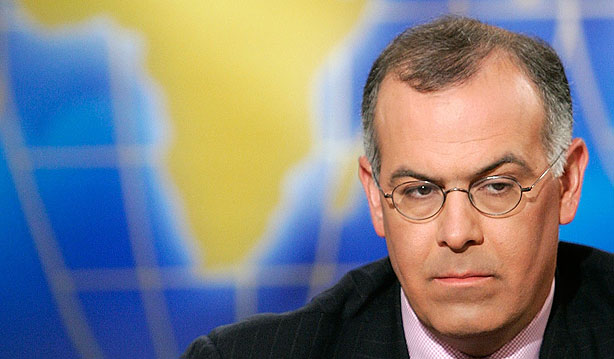
Great post by this philosophy professor in New York whose blog I follow. He points out the hyperbole and absurdity of a recent David Brooks article. I like a lot of the things Brooks usually says, but this is a little ridiculous.

I like the sound of Brooks’ eventual conclusion of “centralizing goals” but “decentralizing processes”, but how he describes what this might look like in health care ends up looking awhole lot like the Affordable Care Act.

Samir Chopra's avatarSamir Chopra

On May 23-24, 1865, the victorious Union armies marched through Washington. The columns of troops stretched back 25 miles. They marched as a single mass, clad in blue, their bayonets pointing skyward.

Those lines, dear reader, are the openers of a David Brooks article about the “centralization” of power in Washington via the “Obama health care law” (whose official moniker is “The Patient Protection and Affordable Care Act”). “Obama health care law,” then, in the next sentence or so, becomes just plain “Obamacare.” Another sentence or so later, as Brooks commences a four-step listing of how “Obamacare” has “centralized” Washington’s authority, we are told about how “Obamacare centralizes Medicare decisions — and the power of life and death — within an unelected Independent Payment Advisory Board.”

At this stage, I am eight paragraphs through this seventeen-paragraph missive, and thus far, I’ve been exposed to civil war imagery, Obamacare, and the…

View original post 383 more words

a question from a straight white christian male without a voice…


To date, this is the post I am most ashamed of ever having written on this blog. It perpetuates power dynamics and long-held ways of thinking that add to problems and ignore their structures. This post participates in a system of injustice and “not listening”. It’s a profound exercise in missing the point in these issues. I keep it up as a reminder to myself and others of how wrong-headed and dumb I can be. I’m sorry for these words, and I’m grateful for your grace.

________________________

I find myself in an awkward time in our current news cycle. As part of the most talked-about news items of late, we have birth-control (and by extension, abortion), racial tensions over the death of Trayvon Martin, gay marriage being approved and some states and vetoed in others, the health care law going before the Supreme Court, and a Philadelphia ban on the public feeding of the homeless.

Is it possible for me, as a (relatively) middle-class white Protestant male, to communicate opinions about these topics if I don’t share the same sentiments as most others?
Continue reading

a word on the effect of Corbett’s budget on Philly social services…


The Philadelphia Inquirer had this front page article today on Governor Tom Corbett’s drastic proposed Pennsylvania budget cuts and their particular effect on social services.

I work for one of the main social service agencies in Philadelphia. I can tell you that these effects will be real, not exaggerated, and felt by everyone (and perhaps even illegal). Is there really no more balanced, thoughtful, or nuanced approach to this?

In a notable quote from the article, executive director of NHS Human Services, Paul Sachs, told the Council committee about how the changes would eventually cost us more, not less:


We will see an increase in medical hospitalizations for the types of problems that frequently coexist with behavioral-health problems, such as diabetes, pulmonary, and cardiac conditions, not to mention sensitivity to extremes of cold or hot weather. And, I am sorry to say, we will see more people die whose deaths could have been avoided…. The governor’s budget cuts will not save money. Rather, it is an elaborate cost shift to emergency medical care and criminal justice systems, neither of which is designed to address the core problems facing these vulnerable individuals.

Please contact your local representative and let them know that you want this Commonwealth known for fighting for the vulnerable, and to at least show a little restraint, creativity, and nuance in how it maintains fiscal responsibility.

Posted from WordPress for Android on my Droid X

Catholics Aren’t Crazy: Paul Ryan & the 2013 House Budget


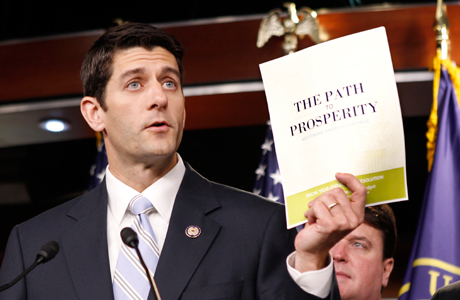
Yesterday, House Republicans unveiled their own 2013 budget to counter President Obama’s proposed budget.

Now, neither of these have (or will) become law. These annual budgets are merely proposals and are often political statements of priority. Both the President and the House write their budgets, not realistically, but extremely, hoping that once negotiation begins, they’ll walk away with more of what they want.

But still, like I said, these proposals are expressions of priority and direction to which a party will try and “bend” the nation’s spending. The House Budget Committee Chairman, Paul Ryan, said as much when he unveiled the plan (upon which he bears the final word), calling it “a choice between two futures” (others called it “careless”).

Continue reading

“What if George W. Bush had done that?” (Opposites Coming Together) [Casual Friday]


Firstly, let me formally introduce “Casual Friday” posts. After all the seriousness in my posts on theology, politics, and such through the week, one could get the impression I can’t have any fun. Well, not so. Whenever I’m able, I hope to take Fridays to write up shorter, casual, and generally more light-hearted posts to talk about news, technology, entertainment, food, or whatever. Probably, it’ll mostly be me sharing some of my favorite things with all of you. Enjoy.

I subscribe to a great service called Summify. It analyzes my social feeds and gives me a reading list each day of the articles that my social graph has most-shared (don’t get too excited. It just got bought by Twitter and they will be shutting down the service shortly).

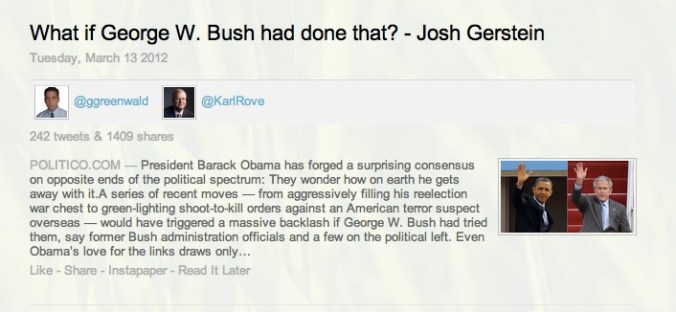
Anyway, in my email a couple of days ago, there was a link to this great article by Josh Gerstein showing both the (negative) similarities between Bush and Obama, and the blatant and (at times) comical hypocrisy of those that have hated/loved those respective men.

And what do you know? According to the screenshot above, this article was recommended by both Uber-Progressive Glenn Greenwald and Uber-NeoConservative Karl Rove (this was confirmed by each of their tweets). There could not be two more different men coming together to promote the same political article.

But anyway, the article is great, and if it was good enough for both of these guys to recommend it, then it should be worth all of our time and consideration. And as you do, remember all the things I’ve been saying. Like I said then: I promise, I’m not crazy. Other people are saying these things too.

Too Big Not To Fail [2]: the limits of Big-Gov


A couple of days ago, I started this little “mini-series” on some of the more structural problems that seem to be messing the country up. I used the Obama Health Care law as an example of the limits of “Big-Corp”, and today I turn to the other behemoth in the room, Big Government.

The Shortfalls of Big-Government

Is the answer, then, in light of the breakdown of free market forces at the huge “macro” level, to bring in more Government?  I don’t really know, but I don’t think so.

Big-Gov, it seems, suffers from the same shortfalls as Big-Corp.  Our government, in a way, is structured to work on the same principles that are supposed to make Capitalism work well, and, in the end, suffers the same disadvantages as it increases in size.
Continue reading

Too Big Not To Fail [1]: the limits of Big-Corp


[A little while ago, I wrote a little essay I never put out there on the virtues and troubles of sheer “size” when it comes to the entities that seem to govern most of our lives. I’ve decided to split it up into a couple of posts to get everyone else’s thoughts. Our nation was meant to be a nation of discourse and was built on the idea that with friction between ideas, something beautiful might happen. Let the friction begin…]

The Shortfalls of Big-Corporate

To begin, let’s use Obama’s health care law as a little case-study. A while ago, I was sent an 8-part series by Ann Coulter entitled “Liberal Lies About Health Care”.  The first article opened with these lines:

[Liberal Lie #](1) National health care will punish the insurance companies.  You want to punish insurance companies? Make them compete.  As Adam Smith observed, whenever two businessmen meet, “the conversation ends in a conspiracy against the public, or in some contrivance to raise prices.” That’s why we need a third, fourth and 45th competing insurance company that will undercut them by offering better service at a lower price.”

Continue reading