Trump & My Sleepwalking Daydream


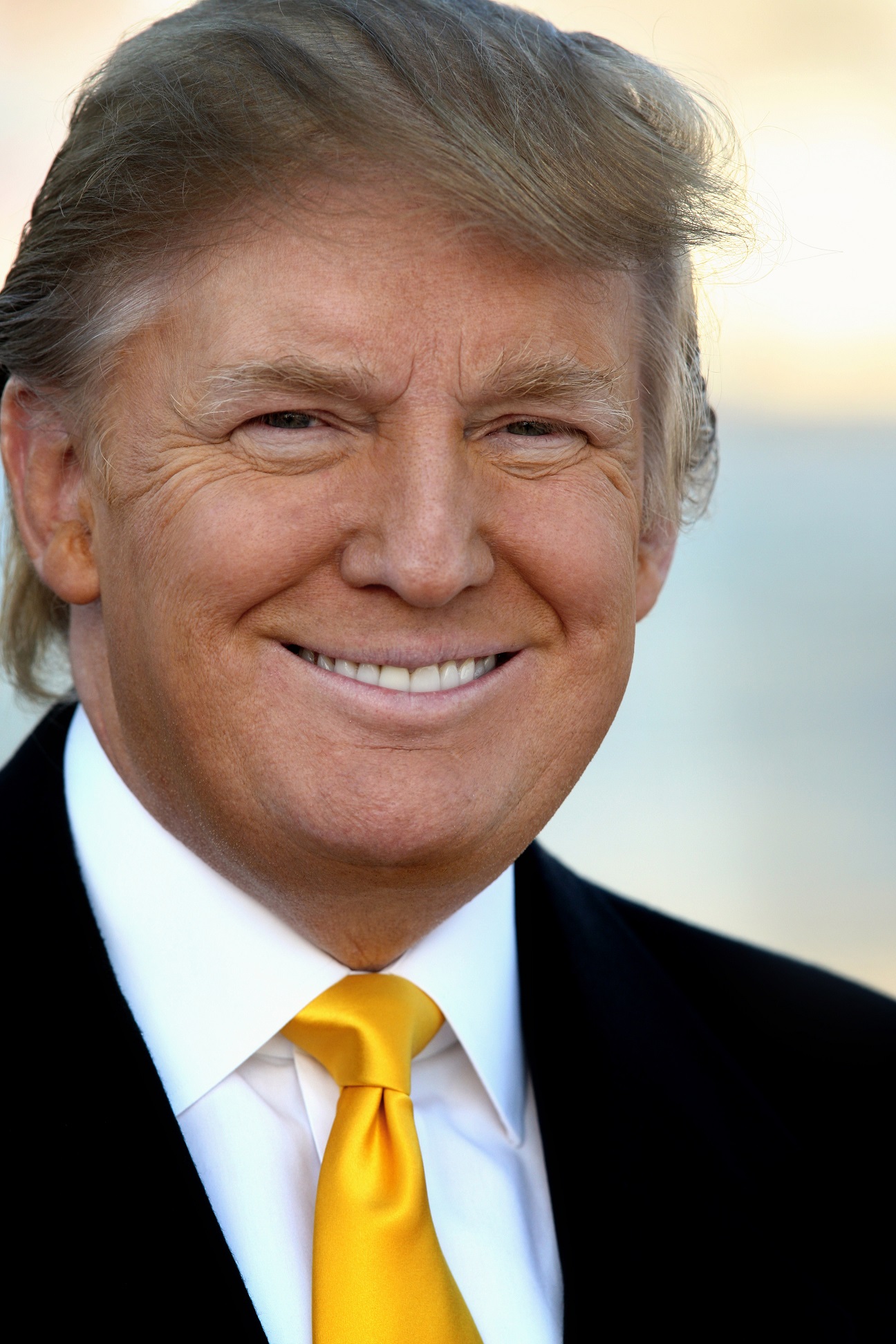
jamelle-bouie-bw-donald-trump

For several years now, I’ve had this recurring dream in which I’m trying to come up with the scariest story possible. The dream itself isn’t scary, mind you. It’s more about me intellectually trying to think of and experience what would terrify me most.

As I’ve played this out in my dreams over and over, certain contours have emerged as to what would truly scare me and evoke terror the most. It is not necessarily death, harm, nor paranormal antagonism. For me, it is more existential. It is soul-deep.

I still can’t nail down the precise plot to this horror movie in my mind, but it involves a man who has an entire set of worldviews, beliefs, opinions, and actions that are entirely consistent with the data he has available to him. He feels he has a reasonably clear picture of reality–or at least as clear as can be expected–and has a coherent life built on top of that picture of reality.

The soul-terror comes when he realizes that it is all a lie.
Continue reading

A Prayer for America & President-Elect Trump


Ruler and King of all, our nation is now entering into such a delicate time. Many emotions are being felt very deeply after this election. It was a hard-fought fight that many had much invested in. Would you be with us as the immediate emotional aftermath of the election occurs?

Lord, hear our prayer.

O God of peace, you do not desire that we would be filled with anxiety, fear, or gloating, as if our greatest joy or pain would be the result of this one election. You have taught us that in returning and rest we shall be saved, in quietness and confidence shall be our strength: By the might of your Spirit lift us, we pray, into your presence, where we may be still and know that you are the God who is the sustaining Presence in all nations,

Lord, hear our prayer.

Continue reading

A Prayer for Election Day


O Lord our truest Ruler and King, many words have been said these past months leading to this election day. Far too many of these words have been hurtful, fearful, divisive, angry, and anxious. Being able to see our nation’s policies so tangibly, it is far too easy to equate this nation with your Kingdom, and so act as if this election were of supreme eternal importance.
Lord, forgive us, we pray.

Bless the leaders of our land–those currently in office and those elected today–that we may be a people at peace among ourselves and a blessing to other nations of the earth. Let this be the conviction of every leader as they model for us, however imperfectly, political relations amongst both their fellow countrymen and citizens of the world. Continue reading

Christian Diversity & Charity in a Contentious Election Year


us-flag-america-genesis-bible

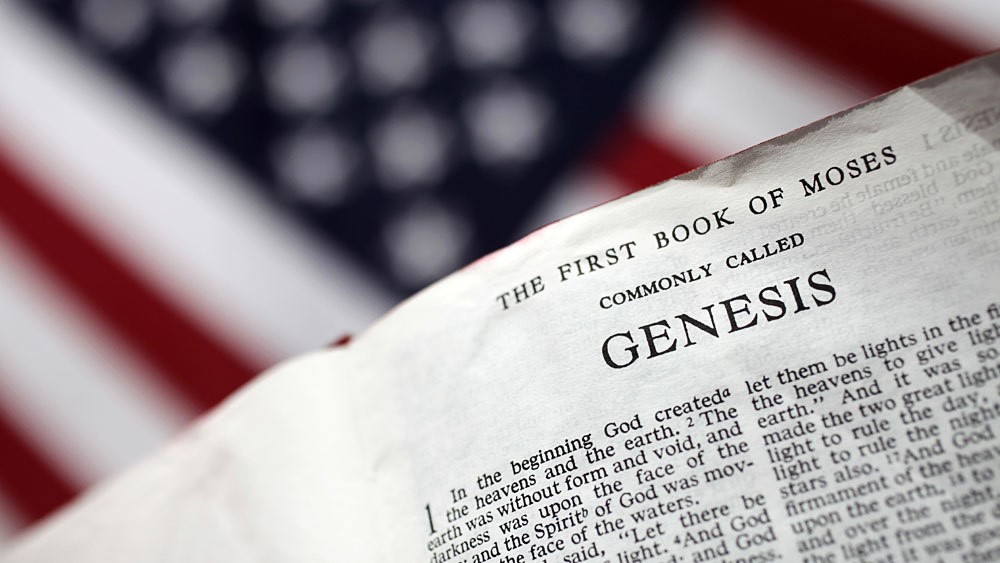
Regardless of one’s personal political beliefs, it’s hard to deny that this particular election season is one of the most brutal in decades. On both sides of the aisle, a harsher edge has accompanied our political discourse. This has been exacerbated by people retreating further and further to the safety of their own “sides” in these uncertain times, leading to pockets of like-minded people who rarely interact with those with whom they disagree.

And yet, the good news is that there is still one institution in society whose very nature draws people together from a diversity of views, classes, opinions, and income brackets: the Christian Church. Christians do this imperfectly, for sure, and many of our churches are marked by sharp divisions and high uniformity on issues secondary to the essentials of our faith; yet the Christian Church, throughout history, has been able to contain within itself a huge diversity of views, opinions, cultures, and societal structures, all while maintaining its essential integrity.

This puts Christians in a bind, though, when studying Scripture in a diverse community and in a tense political time. As Christians, we want the Bible to inform our political beliefs, but we also want to be in unity with other believers around us. As the Bible shapes us and we come to our own beliefs on political issues, how do we do so in a way that leads to charity and a deeper knowledge of God through the Scriptures?

I think we can chart a way forward by looking at the diversity of ways the Scriptures interact with the politics of God’s people, the politics at the time the Bible was actually written, and by focusing on the central point of Christian teaching: Jesus. Continue reading

October Book Club: Un-Crazy Calvinism, with Richard Mouw


UPDATE: I also did a little series exploring topics in this book, including Calvinism’s history, and TULI-P. Enjoy!

October’s Book

book-mouw-calvinism width=

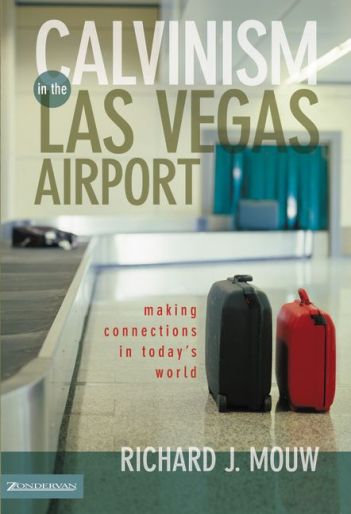
Calvinism in the Las Vegas Airport
by Richard Mouw

For my church‘s monthly Theology Book Club, we’ve been spending the Fall exploring some of the distinctive beliefs of Reformed Theology.

Well, if there’s any set of ideas Reformed Theology is most known for (and controversially so), it is surely that cluster of doctrines known collectively as “Calvinism”. That’s what we’re exploring this month through Richard Mouw’s amazing book, Calvinism in the Las Vegas Airport.

To be clear, “Reformed Theology” is a lot bigger than Calvinism. You can agree with Calvinistic thought and not be Reformed, and you can have a huge range of opinions on Calvinist doctrines while still being Reformed. And yet, it is so connected to the thought of my church’s tradition that it deserves a deep dive.
Continue reading

“One Race, Different Ethnicities” [spoken word]


This is a beautiful piece by a friend of mine, Aisha Monique, from my previous church. She is a wonderful spoken word artist who wrote and performed this a couple of months ago as a way of prophetically processing the deaths of Alton Sterling and Philando Castille, and hwo they fit into the broader narrative of the Black experience in America. I recently found myself watching it again, and I thought I would share.

Like the biblical book of Lamentations, this is a raw cry from the heart wrapped within the rhythm and boundedness of poetry. So grab some coffee and a quiet place and watch this. Let it sink in and sit with it. And most importantly, especially if you are part of the majority culture, just listen.

September Book Club: What IS Reformed Theology, anyway?


luther-95theses-humor-memeSeptember’s Books
(just pick 1)

Welcome to a Reformed Church: A Guide for Pilgrims by Daniel Hyde

Reformed Theology by R. Michael Allen

One thing I appreciate about my church is that we don’t wear our labels on our sleeve. That does mean, however, that a lot of people can go to our church for quite a while and not know that there is a very real theological ethos woven into everything we do.

We belong to the oldest American denomination–the Reformed Church in America–which ascribes to a theological tradition called “Reformed Theology”. And because many, many people in our church likely have little idea of what that especially means within the broader Christian family, we’ll be spending this Fall exploring these ideas in our monthly Theology Book Club.

So how are we going to do this? Well, I really struggled with this one, because though Reformed Theology has some general contours, there really is quite a bit of diversity and flexibility within that definition of being “Reformed”. In looking for a good book, the problem I kept finding was that most books on this topic tend to define Reformed Theology very narrowly and very dogmatically. I don’t think this is helpful.
Continue reading

August Book Club on Christianity & Race: “Divided by Faith” by Emerson & Smith


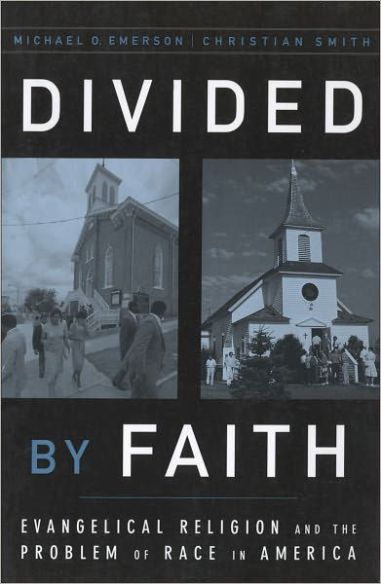
August’s Book book-divided-by-faith-race width=

Divided by Faith: Evangelical Religion & the Problem of Race in America
by Michael Emerson & Christian Smith

Last night’s book discussion went really well, and it makes me even more excited for this month’s meeting.

For my church‘s monthly Theology Book Club, I’m excited to have us read an especially timely and important book, Divided by Faith by sociologists Michael Emerson and Christian Smith. The opening lines of the Preface summarize their purpose beautifully:

To learn more about American life, this book examines the role of white evangelicalism in black-white relations. Our argument is that evangelicals desire to end racial division and inequality, and attempt to think and act accordingly. But, in the process, they likely do more to perpetuate the racial divide than they do to tear it down.

In America, we have a problem with race. White Christians, I think, genuinely act in good faith to play a positive role in race relations in America. And yet, they often end up unintentionally exacerbating some of the broader cultural problems that feed into racial injustice.
Continue reading

Is the Democratic Party the New Home for Conservatives?


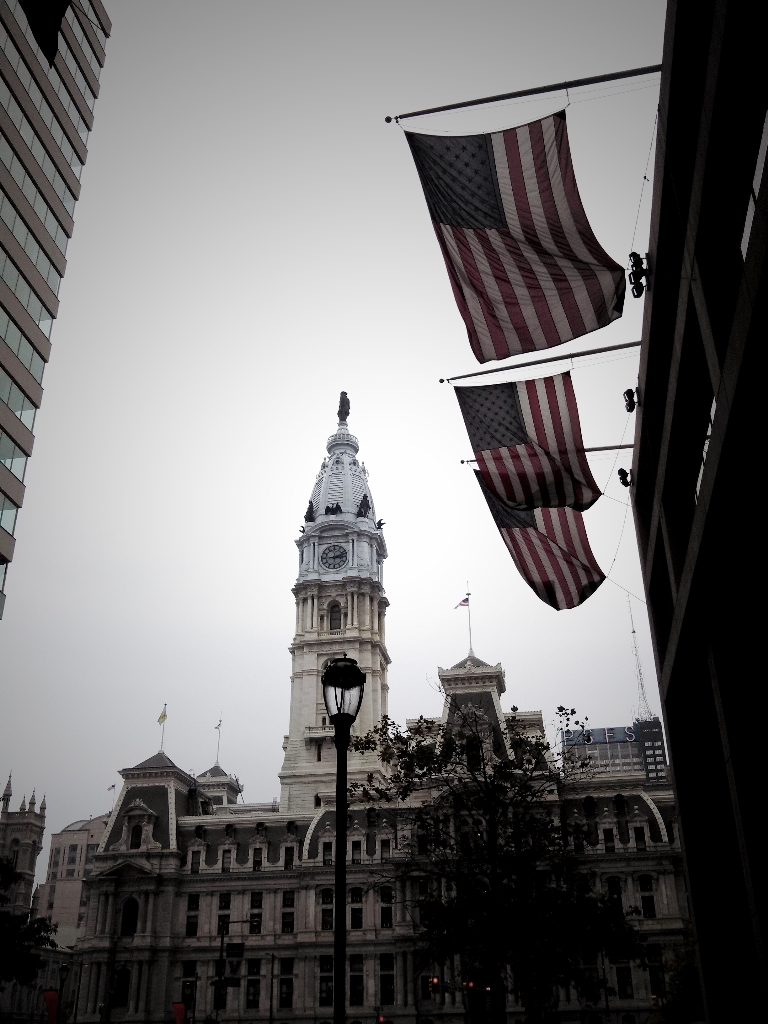
philly-city-hall-flagI think I found the bright side to Donald Trump. This election has left Conservatism as the only political philosophy not really represented. Even the Bernie Bros have a lot of their biggest concerns represented in the newly minted Democratic Party platform. But real Conservatives? Who speaks for them?

I (and others) am starting to think it’s the Democratic Party.

People keep talking about how this Donald Trump candidacy is reshuffling traditional party allegiances into  a never-before-seen arrangement. And yet, watching the Democratic National Convention speeches last night from Tim Kaine, Joe Biden, and especially Barack Obama, it looks like a reemergence of the blue collar, Southern Democrat.

Maybe, rather than a reshuffling, there is a course correction: a return to politics as it was prior to Nixon, Goldwater, and Johnson. Perhaps (dare I say?) this is actually a moment for normalization of American politics?
Continue reading

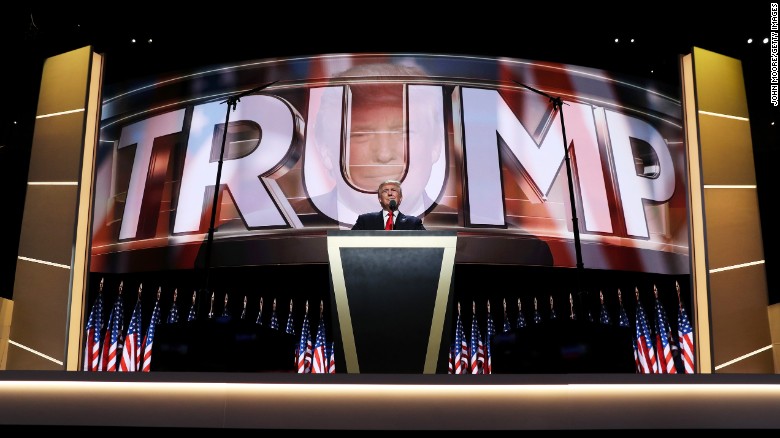
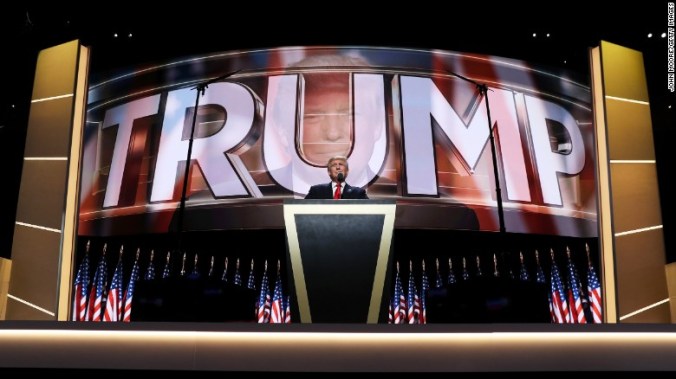
On the Trump Convention Speech: We are better than this


trump-convention

The hardest thing about writing anything about politics (or religion, for that matter) is not having someone write you off immediately by placing you into one of the Right-Left boxes that dominate our national discussion. I am really not a liberal progressive. I have voted Republican, Democrat, Libertarian, and even Green Party. In 2008 I voted down the ticket but conscientiously abstained from casting a vote for President as a “none of the above” protest vote.

All that to say, on most any issue, I can see both sides of it. I can see why people believe what they believe and I can see much of its merits. But (as so many written sentences this election season have concluded), that was until Donald Trump.

I am so strongly against Trump for President. I am not against critiquing the foreign and domestic policy views of the Obama administration and Secretary Clinton. I am not closed off to new recalibrations over trade and foreign policy. I understand the economic forces that have driven wedges between the working class and all others, and I can see the pain and malaise in middle America and groups that have been so forgotten and overlooked.

I see the forces that have given rise to Donald Trump and though I want to validate the cynicism, pain, and feeling of disempowerment, I struggle to know how to communicate to these voters that Trump is not the answer. He will not help you. People may respond that he’s better than Secretary Clinton. He’s not. Crunching the numbers, it is clear that Clinton’s policies would be far more effective in ameliorating these cultural and economic pressures.

You may not like Clinton personally, then, but we can’t overlook one candidate’s personal foibles only to condemn the other for theirs. On moral, legal, ethical, intellectual, and religious grounds, Trump is far and away the lesser of the candidates. If character, morality, and heck, even legal uprightness are important to you in choosing a candidate, Trump is worse.
Continue reading

A Prayer Service of Lament for Race & Injustice


job-silohetteLast week I led a prayer service of lament at my church for the racial injustice and violence experienced in our country. I put together the below order for the prayer service and it ended up being a helpful expression for us. I wanted to share this with anyone else interested in using it in their own contexts.

Another benefit of this service is that the contemporary prayers below are not mine or any other white males, but were written by women of color and slightly modified for our context. I hope this acts as a helpful outlet to give voice to our hearts as brothers and sisters.

[Prayer Guide: pdf/docx ; Leader’s Guide: pdf/docx]

Preparation

Encourage other voices that are not typically heard at your church to read the Scripture sections. In the times of silence, encourage open prayer from those sitting in the pews. Allow space for up to 5-10 minutes of silence, and be sure to let people know beforehand to expect such long silence.

Continue reading

Philly TONIGHT: A Prayer Service of Lament for Race & Injustice


black-and-blue-lament-e1468181738718[1]

The past few weeks (heck, the past several years) have exposed so many fissures in the fabric of American society. It has shown how power, politics, and the invisible structures and systems around us have attempted to paper over real divisions that still remain. Last week, especially, showed us how these divisions can overflow into violence and cut to the core of the American psyche.

And the Christian Church ought to be there to give voice to this pain.

Tonight at 7p at Liberti Church‘s Center City Campus (17th and Sansom St), I will be leading a service of lament for our country, our cities, and our hurting black communities experiencing injustice. There will be time to hear Scripture, reflect, sit in silence, and also offer prayer from those in the pews. We will ask hard questions, sit in the pain, and not settle for easy answers. It is open to the public and all are welcome, no matter your religion, political persuasion, or personal opinion in this national discussion. I hope to see you there.

[image credit: photo from the Intersect Blog]

The Belgic Confession: Church, State, & Reformation


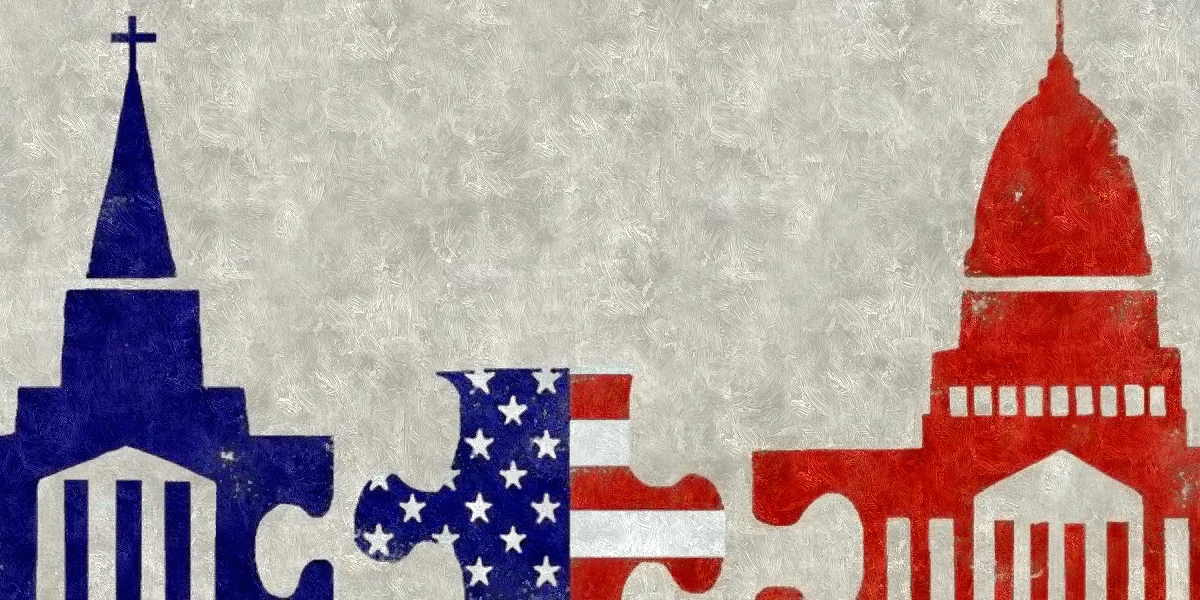
church-state-puzzle

As I prepare for ordination in the Reformed Church in America, I am wrestling with the documents, Creeds, and Confessions to which I will be committing myself. I invite you to reflect alongside me.

In the Belgic Confession, one of the most foundational documents of the Reformed tradition, there is an incredibly odd Article towards the end–number 36. It is about the Civil Government and it says, among other things:

We believe that because of the depravity of the human race, our good God has ordained kings, princes, and civil officers. God wants the world to be governed by laws and policies so that human lawlessness may be restrained and that everything may be conducted in good order among human beings….

And the government’s task is not limited to caring for and watching over the public domain but extends also to upholding the sacred ministry, with a view to removing and destroying all idolatry and false worship of the Antichrist; to promoting the kingdom of Jesus Christ; and to furthering the preaching of the gospel everywhere; to the end that God may be honored and served by everyone, as he requires in his Word….

The whole of the Confession is worth your time and reading. It is beautiful and ecumenical. Its desire is to bring people together and articulate the Reformed tradition in a charitable and loving way. And yet, this Article–the next to the last one in the whole writing–sticks out like a sore thumb in both tone and content. It’s so confusing. Why is it written this way? What do we make of it today?

Continue reading

Does this mean Gregory the Great would have supported Bernie or Cruz?


Ran across this when looking at some Ancient Commentaries on John 21, and thought it was hilarious. I first thought that Gregory must have been Feelin’ the Bern, but then I wondered if this sounded more like the whole “abolish the IRS” crowd. What do you think?

We know that Peter was a fisherman, whereas Matthew was a tax collector. Peter returned to fishing after his conversion, but Matthew did not again sit down to his business of tax collecting, because it is one thing to seek to make a living by fishing and another to increase one’s gains by money from the tax office. For there are some businesses that cannot—or hardly can—be carried on without sin. And these cannot be returned to after conversion.
— Gregory the Great (540-604CE), Forty Gospel Homilies