Cruz/Fiorina ’16: A Marriage of Convenience, For One


cruz-fiorina-1

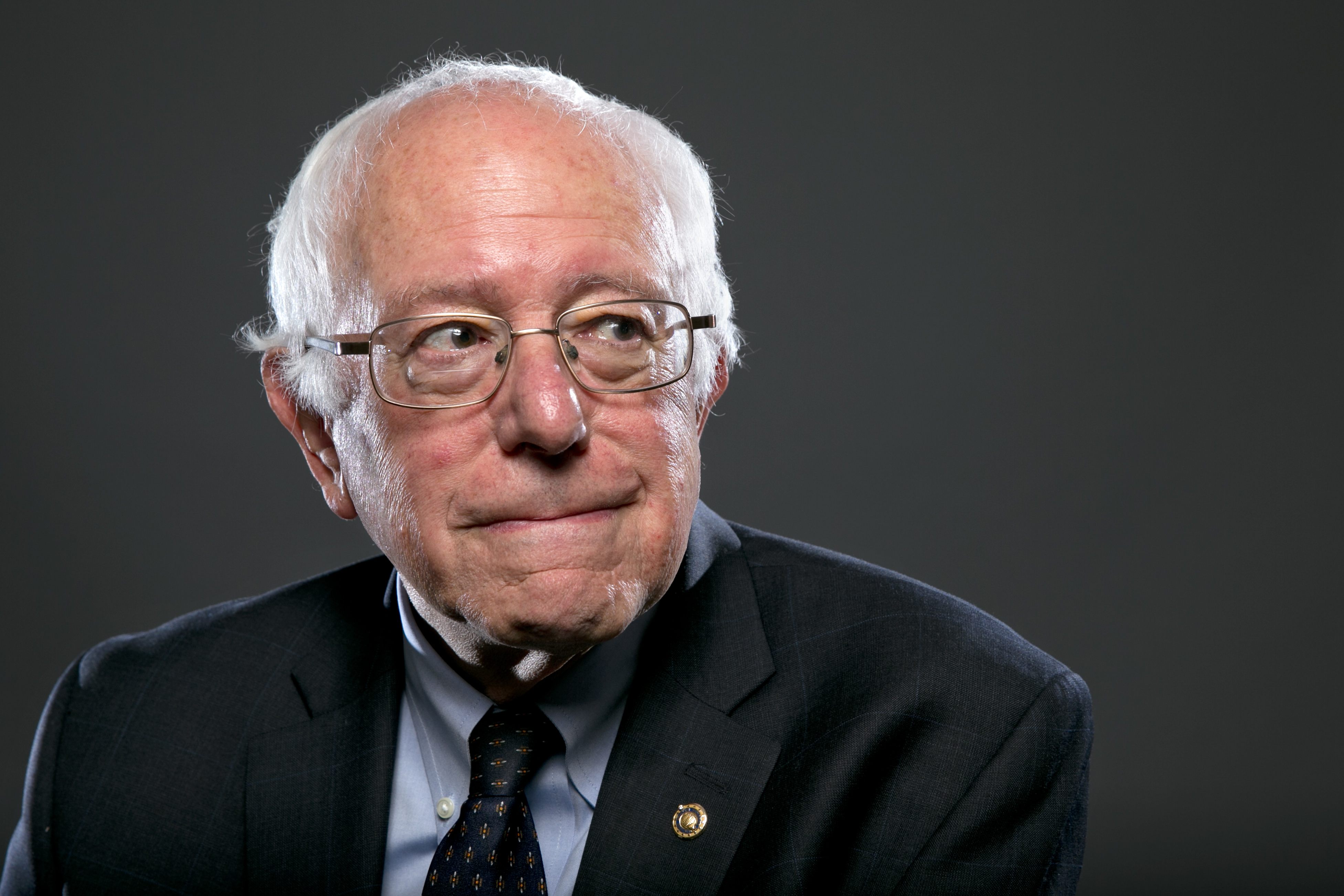
I really liked Carly Fiorina when she was running for President. I admit: even though I voted for Bernie Sanders on Tuesday, Fiorina would have been one of my top choices early on in the campaign. Yeah, yeah, yeah, it’s confusing, I know. Anyway, a friend of mine who knew this was the case asked for some of my thoughts on whether her choice as Ted Cruz’s VP pick made me any more inclined towards Cruz. Well, here were my thoughts:

Man, if Cruz was going to do anything to make me even consider voting for him, this was it.  Even though I would have voted for Kasich over Fiorina, Kasich as VP wouldn’t encourage me to vote for Cruz as much as this pick. I really like Fiorina and think she could be an incredibly powerful and effective Vice President.

That being said, however…
Continue reading

The Moderate We Need: Why I’m voting for Bernie Sanders in PA


BernieSanders-3

At this point it is a cliché to point out the brokenness of the American political system. In the past eight years, we have seen the least productive Congressional sessions in our country’s history, and have watched as even the most routine political acts are turned into controversial sideshows. What we need is not ideology, dogmatism, or a “political revolution”. We need a functioning, effective democracy.

And it is for that reason that this Tuesday, April 26th, I will be voting for Senator Bernie Sanders in the Pennsylvania Democratic Primary.

Let me explain.

Though I cannot in good conscience throw my lot in with today’s Republican party, I consider myself a conservative in my political philosophy. I am a registered Democrat (rather than an Independent) only because in a city as blue as Philadelphia where our Democratic primaries are the decisive ones, I’d have no say in my city’s politics if I weren’t.

Nevertheless, I do not agree with the idealistic and utopian vision that much progressive politics entails. I loathe the cynical identity politics of the Democratic party. I think the bigger the federal government is, the more frayed our communal bonds become. Further, politics must also have a moral foundation. Now, both Democrats and Republicans would agree with that, but there is a difference between ideology and morality.
Continue reading

American Lent in the Season of Trump


One of the smartest and funniest women at my church, Alyssa, has this great blog you should all follow. In it, her observations on life, cities, and spirituality are whip smart and hilarious. Several weeks ago, she put up a post asking “Is Trump America’s Lent?” She writes:

For the purposes of this argument, let’s call Lent an annual wake-up call, a reminder that we aren’t as good as we think we are….Trump’s success so far is a wake-up call in itself, like a large-scale Lent: maybe we aren’t as good as we think we are. Apparently, as a country we’re actually more racist and fearful than we thought we were just a few months ago, when people laughed at the thought of him actually standing a chance. The land of the free might just be okay with building that wall. The home of the brave is actually pretty scared of Muslims.

This is incredibly insightful, and I think it turns our national “Trump-versation” to a helpful place in the Lent season. Rather than trying to understand “the Trump voter” on a micro-individual level–a level full of misunderstanding, prejudice, and judgmentalism on all sides–we might turn our gaze inward to our nation as a whole. Looking at the bigger movements and structures of our society, we can ask the hard questions that you can’t really ask when staring another individual in the face.

Continue reading

Terror, Rage, Hope & Christmas Lights


Flickr-Advent-Candles-rabasz

This Advent, we’re meditating on the idea of Hope by looking at quotes from Christians and talking about what they might say about our Advent Hope.

“It is precisely because the Christian hopes for the ultimate and definitive, that she also hopes for the temporal and provisional. Precisely because she hopes with joy for the dawn of the great light, that she hopes with provisional joy for the little lights, which may come and go, but which will not come and go in vain.

These little lights act as temporary illuminations that can help the Christian to look and move more properly towards that which they can only point to, but which in their proper time and place can in fact actually represent to us!

Because the Christian hopes for the Last Day, for the eternal year, he hopes for the next day and the new year, from which, whatever they may bring, he can always expect at least new indications of the coming of Jesus Christ.”

–Karl Barth, Church DogmaticsIV.3.2, p.938 (edited for clarity)

Read those words again. Slowly. We need these words, especially this year. As predators of consumerism, terrorism, pseudo-fascism, jingoism, escapism, and liberal idealism lie in wait to consume our souls, we need a light in the darkness. We need something to hold on to.

Continue reading

Advent and… (the series)


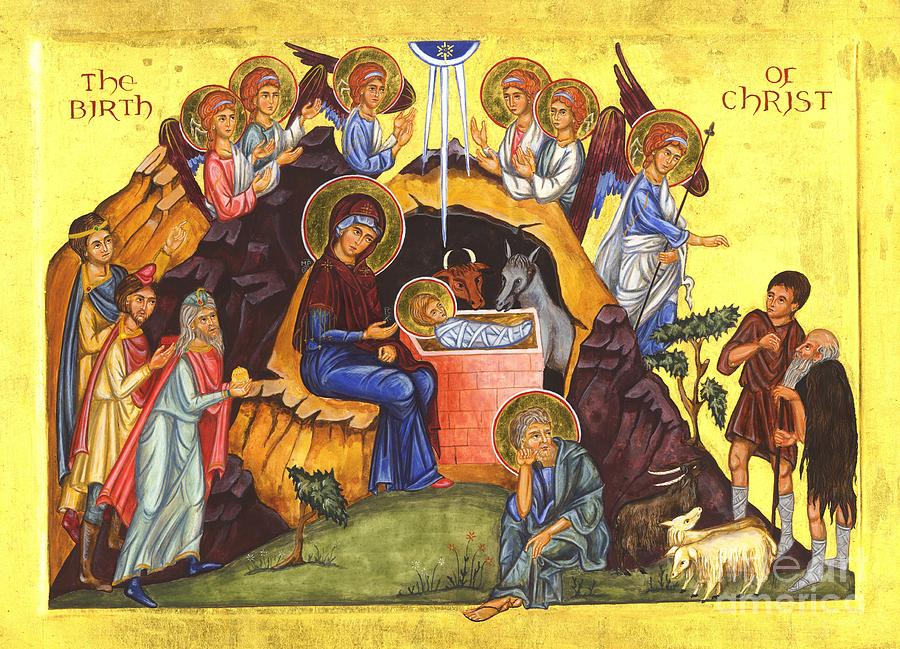
advent-nativity-icon

This is the dedicated post page for the Advent series “Advent and…”. In it, we looked at the various ways Advent connects to seemingly unrelated parts of our life and existence.

Welcome to Advent, 2012.
This was the series introduction. I looked at how Advent speaks to our whole selves, including a whole host of “un-Christmas-y” kinds of things.

Advent & Sex: we are holy ground
When you think of Christmas time, you don’t often think about sex. This post talks about the implication of Christ’s arrival for our sex lives.

Advent & Sex-lessness: here’s to singleness & celibacy!
The Advent story is a notably sex-less affair. What this means for us is huge. This was by far the most widely read post of this series, and in the top five most widely read posts in this blog’s history.  Continue reading

Worse than the Klan: MLK on White “Moderates” discouraging Black Action


“I must confess that over the last few years I have been gravely disappointed with the white moderate. I have almost reached the regrettable conclusion that the Negro’s great stumbling block in the stride toward freedom is not the White Citizen’s Council-er or the Ku Klux Klanner, but the white moderate who is more devoted to ‘order’ than to justice; who prefers a negative peace which is the absence of tension to a positive peace which is the presence of justice; who constantly says ‘I agree with you in the goal you seek, but I can’t agree with your methods of direct action;’ who paternalistically feels he can set the timetable for another man’s freedom; who lives by the myth of time and who constantly advises the Negro to wait until a ‘more convenient season.’ Shallow understanding from people of goodwill is more frustrating than absolute misunderstanding from people of ill will. Lukewarm acceptance is much more bewildering than outright rejection.”
– Martin Luther King, Jr.

Does God Really Love Cities More?


philly-coffee-reflection-buildingThe seminary program I’m in is one focused on urban centers, and to that end we end up reading writings by a crew of pastors and theologians and who want to give a theological emphasis to cities. I’m currently in a course in which we’re reading people like Tim Keller and Harvie Conn.

I bought in to all of this for a long time, but now I’m having some reservations (some of which I’ve mentioned before), which I want to offer up to you all and get your thoughts.

Urban “versus” Rural?

Ever since moving into cities, I’ve fallen in love with them. After hearing Tim Keller talk about them for the first time while in college, I totally bought into the centrality of cities into God’s ongoing mission.

And then….I met my girlfriend who grew up Mennonite on a 300-acre dairy farm in Western Pennsylvania. And it threw all my thoughts on this issue upside down.
Continue reading

The Weight of Gratitude: A Sermon of Mine


job-silohetteI’m going on three decades of attending church services. I’ve heard a lot of sermons on gratitude and almost all of them are the same.


They spend much of their time trying to convince us Americans that we actually are far more wealthy than we ever thought. We have more stuff than most any other people in human history, and so we need to stop being so consumeristic and unsatisfied and just learn to be grateful and give thanks for what we have—because we have a lot. And us Christians have even more reason to be thankful, as we have the greatest gift of all: Jesus!

But all this does is lead us towards some brief, unsustainable, inch-deep emotion of happiness which we then call “gratefulness” and then walk out the door thinking we’ve gotten our annual “gratitude shot”—all while being able to ignore the violence raging in the world and in our souls.

So where is gratitude when we face violence and doubt, or when we hit the muck and mire of life, the pits and poverties of existence, the pain and injustice? Does gratitude have nothing to say?

Well that’s what my most recent sermon discusses (I’ve also written about this before). The sermon text is Psalm 40,  Let me know what you think. Here’s the audio:

You can also download it here, or subscribe to our podcast. If reading is more your style, here is my manuscript for your perusal. Continue reading

“Selma”: A Post-Christian Treatment of Christianity


Martin_Luther_King,_Jr._and_Lyndon_JohnsonI recently re-watched Selma, the movie about the Civil Rights Marches in Selma, Alabama led by Martin Luther King, Jr. I really, really love this movie. Watching it again, I couldn’t help but notice some powerful dynamics in how faith is represented in the film.

It was directed by Ava Duvernay, who, with this movie, became the first black female director to ever be nominated for an Academy Award. I don’t like artist analysis in approaching a work, as I think a piece of art should stand on its own regardless of its creator. But at times, after the fact, it can illuminate some aspects. And indeed, in looking into Duvernay’s background, I found that she is a very helpful symbol for the spiritual place many in our society find themselves.

She grew up in Compton, in the midst of many of the structural, generational, and long-standing effects of political and economic segregation, disempowerment, and white privilege. She went to an all-girls Catholic high school where, no doubt, she received a very robust religious education.

And yet, now, as she made this film about a man whose legacy is built on acts flowing from his religious convictions, when Rolling Stone asked her, “Are you religious yourself?”, she responded with, “No, not religious. But I love God.”

This, I think, captures well the dynamic of a film like Selma in our day-and-age, when it comes to the relationship between faith and culture. Let me be clear: the film is not in the least hostile to faith. This is not some Christian cultural martyrdom post. The film powerfully depicts the religious tenor and foundation of King’s movement.
Continue reading

In Philly TONIGHT: Mayoral Candidate Forum on Homelessness & Poverty


client-mouth-beard-bwIn Philadelphia, there is a non-partisan group called Vote for Homes that advocates for political action around issues of homelessness and poverty. Tonight they are hosting a forum with the candidates in Philadelphia’s mayoral race to ask them all the same set of questions regarding housing, economics, social justice, homelessness, and poverty. The event will be moderated, and the candidates will be pressed hard to really answer the questions and not give political non-answers. It should be incredibly eye-opening to the values of the candidates. Here’s the info:

Real Solutions for Hunger & Homelessness Mayoral Candidates Forum
Thursday, May 7 from 6:30 pm to 8:30 pm
Broad Street Ministry
315 S. Broad Street, Center City Philadelphia

Location is wheelchair accessible. Sign language interpretation will be provided.

Some of the Best Must-Reads for #Baltimore & #FreddieGray


black-face-profile-crop
If you’re anything like me, your social media feed is overwhelmed by chatter about Baltimore and the ensuing unrest after the death of yet another unarmed black man, Freddie Gray, at the hands of police. I have my own thoughts, emotions, and passions in all of this (some of which I’ve talked about before), but at the end of the day I’m still a white man–there’s only so much I can speak to these issues.

With that in mind, I want to offer the voices of others in some of the most thought-provoking pieces I’ve read the past few days (in both good and bad ways). I hope this offers context, understanding, and perspective, stretching our minds and getting us thinking (and hopefully talking) in ways we perhaps have not been. Add links to any of your favorite pieces in the comments below.

Mandatory Reading

“Nonviolence as Compliance” | The Atlantic
“When nonviolence is preached as an attempt to evade the repercussions of political brutality, it betrays itself…. When nonviolence is preached by the representatives of the state, while the state doles out heaps of violence to its citizens, it reveals itself to be a con.”

“David Simon on Baltimore’s Anguish” | The Marshall Project
“[How to fix Baltimore?] We end the drug war. I know I sound like a broken record, but we end the fucking drug war [that’s destroying] police/community relations, in terms of trust, particularly between the black community…”
(This is the best summary I’ve read on the context of what’s going on. But it’s long. If it’s too long for you, The Washington Post has a brief summary.)

Continue reading

A Brief Theology of Stewardship


paul-money-lent-12-02
Recently, for a class of mine, I had to think through what I thought about the idea of “Stewardship”, or how we relate to and care for the material things around us. The context for this was trying to think well and deeply about how we would attain and treat money being raised to plant new churches. Here were some of my thoughts.

Economics of Abundance

“It is here that the revolutions of empty and inordinate desires takes place: of the lust for a superabundance which is not the natural and beautiful abundance of life but the overflow of nothingness….” (Karl Barth)

“We live lives at the intersection of two stories about the world: the Eucharist and the market. Both tell stories of hunger and consumption, of exchanges and gifts; the stories overlap and compete.” (William Cavanaugh)

When it comes to stewardship, I have two guiding principles. The first is that the Kingdom of God is an economy of abundance that protests the dominant economic narrative of our culture that resources of all kinds exist in a state of scarcity. An economy of scarcity means we must compete in a zero-sum game to maximize our gains and defend against our losses.

To lead on the basis of scarcity is to seek excellence not to honor God, but to “compete” in the ecclesial marketplace for the most market share. It is to turn fundraising into conquests and battles, rather than a loving invitation into vision and mission (as Henri Nouwen beautifully reminds us). In my personal life, scarcity breeds anxiety, worry, and fear; letting the next pay-grade guide my job decisions more than vocational call. It puts a greater emphasis on saving now rather than spending wisely.

Continue reading

No, ISIS has nothing to do with the end of the world. Please stop saying that.


isis-flag-iraq

It’s been a long time since I’ve been immersed in Southern Evangelicalism where a certain brand of interpreting world events looms large. I grew up in the Bible Belt, where Saddam Hussein, Desert Storm, the fall of the USSR, the growing rise of Israeli nationalism, and “slipping societal morals” were all “signs” of the “end times” or “the last days”. I sat through youth group meetings where our senior pastor would talk about how the book of Daniel had coded prophecies about nuclear weapons in space.

(Being in high school, I saw no problem with him making that argument by saying that the book’s “original language” uses the Greek word dynamos from which we get the word “dynamite”; it was only later that it clicked for me that Daniel is written in Hebrew and Aramaic, not Greek.)

Moving to the Northeast, the bastion of mainline Christianity; and attending two different seminaries from traditions very different from this prophecy-interpreting one, I was under the false impression that this whole game of interpreting current events in apocalyptic ways was rightly losing steam.

But then, this past week, the tragedy of ISIS (or the so-called “Islamic State”) beheading 21 Egyptian Coptic Christians happened. I first found out on Facebook, when I saw a procession of ancient Christian articulations of mourning filling my news feed. “Come, Lord, Jesus.” “Lord, have mercy.” “Kyrie Eleison.” I, myself speechless, decided also to lean heavily on old words from our Christian family to find comfort and express lament.

Not everyone went this way, though. After these initial responses, my Facebook and Twitter feeds began to fill with phrases and out-of-context Bible verses that I hadn’t seen in years. People were posting blog posts and verses all of which were trying to say that these deaths amounted to some unique act of “global Christian persecution” that was somehow emblematic of the world’s “last days” or “end times”.

Today I’d like to offer a seven reasons why this is wrong-headed and unhelpful:
Continue reading

ISIS, The 21, and Letting The Bible Speak For Itself


Featured Image -- 12968

Yes and amen.

josh's avatarJosh Howerton

Yesterday, shortly after WG’s ended at The Bridge, news broke of ISIS releasing a video in which 21 Egyptian Christians – scornfully called “the people of the Cross” by the terrorists  – were marched to a secluded beach and savagely beheaded by men in black masks. After huddling our little family around the computer to talk about it, I was going to write a post. But sometimes a horror is so deep it’s best to place your hand over your mouth, unchain the Bible, and let it speak for itself…

Indeed, the hour is coming when whoever kills you will think he is offering service to God.  – John 16:2

Also I saw the souls of those who had been beheaded for the testimony of Jesus and for the word of God… They came to life and reigned with Christ for a thousand years.  – Revelation 20:4

Indeed, all who desire to live a godly life…

View original post 196 more words