An idiot defends the Patriot Act


paul-american-flag-coffee-mug-12-03Perusing around, I ran across this response to an article by Dana Milbank from 2003 on the anniversary of 9/11. The article originally appeared in The Washongton Post, but I could only find it at this odd site. Here, the commenter offers a summary of the article and an opinion:

This article is about recent comments President Bush made recently on expanding the Patriot Act of 2001.  These are surprising comments due to the fact that the Patriot Act is already one of the most controversial Acts ever passed by Congress.  The act extremely expanded federal police powers by severely restricting the civil liberties of terrorism suspects.  Under the act, federal officers need less than ever before to find “just cause” in apprehending, detaining, and punishing those accused of terrorist acts.  The “Patriot 2” as it has been dubbed, would contain clauses allowing for the issuance of subpoenas without grand juries, holding of suspects without bail, and the pursuance of the death penalty in a broader spectrum of cases, still involving murder.  Many politicians are telling the media that the Bush administration is trying to fight sudden “Anti-Patriot Act” feelings by going on the offensive: Talking of expanding the original Patriot Act.

In my opinion, the comments made by Bush were so logical and fair.  As a strong supporter of the original Patriot Act, I see nothing wrong with Bush asking Congress to give federal officers the exact same powers to apprehend terror suspects as they do to apprehend embezzlers or drug traffickers.  Many of the politicians are also putting these negative feelings on John Ashcroft, when he has apparently been doing an incredible job.  Ever since September 11th, there has not been a single other terrorist attack on American soil.  In my opinion, he needs to be given the ability to continue whatever he is doing.

The person that wrote this was me. I wrote it over 10 years ago as an assignment for my High School AP Government class, where we had to read and respond to current event articles.

If you have ever stumbled on any political post on this blog (after 2007 or so), you know that I am not of this same mind at all. In fact, this was my “one-issue” that determined my Presidential vote this year. (Hopefully, you can also see that my writing has somewhat improved–yikes!). Shortly after this was written, I sat deciding on whether to go to a large urban university or Liberty University. My decision was made when my dad told me that he thought I “grew better in thorny soil”. That’s where I went, and that’s what molded me.

So let this be an encouragement that neither the environment you’re raised in nor the zeal with which you hold an opinion can close you off from change and growth. Always keep your mind open, pursue knowledge, and doubt your doubts. And spend some time in thorny soil. Happy New Year!

If I’m right about cities, then Republicans are in deep trouble.


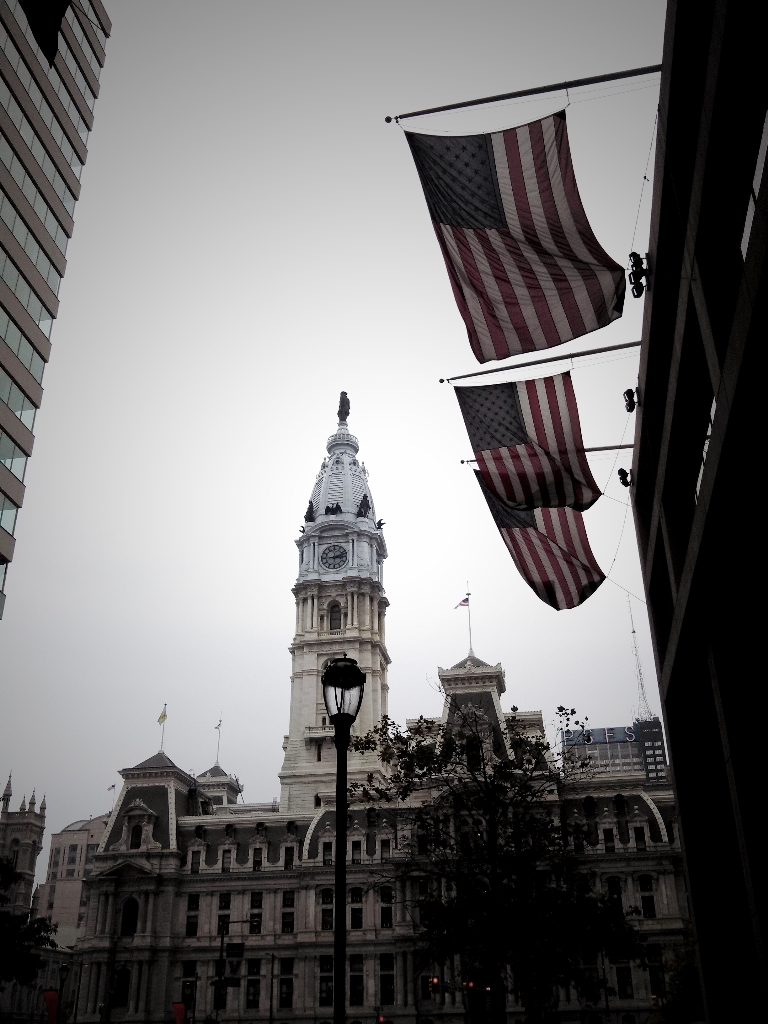
philly-city-hall-flagIt’s been too long since we’ve had a political post hasn’t it? Last week, as part of my “Urban Lessons” mini-series, I wrote on how cities are perhaps the fountainheads of everything that ends up in suburban and rural areas. The things that take place in cities, it seems, always ends up flowing outward into the rest of the country, even if it takes decades or generations to do so.

I had that on my mind when watching this segment of The Rachel Maddow Show from Monday night’s episode. The segment is based off an excellent piece by Alexander Burns in Politico called “GOP big-city mayors vanish”. In it, Burns writes:

Largely unnoticed in Washington, urban Republican politicians have emerged over the last year as perhaps the nation’s most severely endangered political species, as the party has either failed to compete for high-profile mayor’s offices or has been soundly rebuffed by voters. It’s a significant setback that some Republicans view as an ominous sign for the GOP in a country growing steadily more urban and diverse.

Continue reading

Urban Lessons: Why cities will save our souls. [VIDEO]


Yesterday I started a brief little series going through some lessons I have learned from my first semester back in seminary. I first talked about how (at least in my mind) cities had to be taken off their pedestal. There are desires and needs of the human soul that can’t be met in cities. We need other types of livable environments as well.

And yet, through this semester I was re-grounded in my belief in the essential importance and centrality of urban settings. Above, you’ll find a video reflection I had to make in which I give my perspective on this question: Why should Christians engage in cities? In it, I speak about some of these dynamics that are in greater detail below. (Sorry for the poor video quality.)
Continue reading

Urban Lessons: Why cities will kill your soul.


paul-philly-skyline-2I just completed my first trimester of seminary (round 2). I took a class class on Urban Christianity that, while it may not sound like a difficult and comprehensive graduate course, really was demanding at every level. So much so, in fact, it has really changed a lot of the ways I’ve thought about the city and how humans relate to it (especially Christians).

The class really caught me at just the right time. To a certain extent, even before coming to this class, I “got” it. I had imbibed enough Tim Keller and Church Planting material to understand the centrality of the city in the story of the Bible. Further, my church is now my fourth urban church plant, I go to church and live, literally, in “Center City” Philadelphia, and I work in the midst of the brokenness of the city, seeing the extremes of its beauty and brokenness in ways that few people do in their everyday lives.

And yet, especially due to the rural roots of “certain people” extremely close to me (haha), I felt I needed to engage in this class to develop a far more nuanced view of the city. And I think I got that. Over a few posts over the next couple of weeks, I’d like to share some of the lessons I’ve learned through this time. I think some of these things are lessons that all of us cool urban twentysomethings could do well to internalize.

Continue reading

How’d We Get Here?: An open letter to my Republican friends (gov’t shutdown, day 2)


kilroyart-Im-just-a-BillHey, Republican friend.

Yeah, I’m writing to you. Not to the pundits or the politicians (not that they’d read this anyway), but you: the everyday Joe (or Jane) that considers themselves a Republican, who reads these headlines about the government shutting down and wonders how it got here and whether or not the people you most agree with are actually at fault here. This post is a long one, but hopefully it’s a helpful one.

But first let me say that, on a grand scale, I’m with you politically. I consider myself a center-right pragmatist. I think the government should be dedicated to very few things, the private sector should be utilized whenever possible, and that States–rather than the federal government–are the greatest laboratories for democracy and the greatest vehicles of government to their people.

But there’s a bigger context to this showdown that I fear is getting lost in all the noise. Everyone seems to be focusing on a series of events in the past month or so that led to this, but it actually goes back a little further than that.

Continue reading

How to End Homelessness (this is what I do for a living) [VIDEO]


philly-rowhomes-neBelow, you will find a brief documentary that was done at my wonderful job, Pathways to Housing, to highlight the work that we do. It features many of the clients and coworkers I work with, and I had the chance to be present for a few of the film shoots. It is so beautiful and well-done. I’m so happy to share with you all a part of me that I don’t really talk about much in the rest of my life.

(Also, if you’ve lived in Philadelphia for a few years, you might recognize some folks in this video that you used to see on the street. But now, they have housing.)

I have spent most of my time in the field of social work pretty disengaged intellectually and emotionally. The older, more subtly coercive model of social work marked my previous companies, and the way the work was structured definitely played more to my weaknesses than my strengths. This left me in a constant state of feeling like I was terrible at my job. And so, it was just easier to not invest much of myself into it at all.

And so I’m only now learning how much of a difference it makes to love and adore your job. This is where I’m at now. I’m at an amazing company with amazing people doing amazing work that produces amazing results. I feel I’m good at my job, and I feel like I’m flourishing professionally, intellectually, and emotionally in it. There’s so much hope and excitement over my work. Here a couple of things I’ve recently heard clients say:

“When I was homeless, I felt like an animal, stuck in a concrete jungle. I only came out to eat and survive. Now that I have housing, though, I feel like a human again. It feels good to be human.”

“I haven’t been homeless my whole life, but I’ve always been a human being.”

And so, though much of my writing (and conversation) is centered around religious, political, and church things, I’m happy to share a little bit of how I spend 40+ of my hours each week. I hope you are encouraged and that you are offered a little bit of hope in the midst of our urban brokenness.

Injustice & The Human Jesus (and some more Syria thoughts)


oldrich-kulhanek-untitled2For one of my seminary classes (which started this week) I’ve had to read the Gospel of Matthew. When you read a large chunk of a Bible book in one sitting, you really do get to make connections and get perspective you didn’t have before. I had many moments like that when reading Matthew yesterday, but I had one particularly poignant moment that relates to all of the Syria talk that’s going on in our country right now, and adds to my own comments a couple of days ago.

In Matthew’s Gospel, Jesus begins preaching on his own, gathers some disciples around him and continues teaching while they watch. Eventually, in Chapter 10, he sends this community of people, encouragement, and support off to do ministry in various towns in the wider area and to do what he has been doing among them.

Which means he is alone again.
Continue reading

A Christian Pacifist’s Lament for Syria, with help from Quakers


Godwin-untitled-sketch-bw-cropped

{summary: Though I consider myself a pacifist and consider force as something that goes against the Kingdom of God, I feel that governments, because they are not the Kingdom of God will always fall short of that and have a necessary level of sin in them. And so, for the sake of a greater good, I would not speak against my government using military action in Syria (though I wouldn’t say I’d explicitly “endorse” it).}

As many people have been doing, I have been snarkily criticizing President Obama’s pursuit of making an attack on Syria. It seems too pointless, too risky, too naivetoo counter-productive, and too lonely. I had felt sadness over the plight of Syrians, but while the rebel forces are over-run by Islamic radicals and terrorist groups, I haven’t thought that empowering, arming, or making their victory certain was better in the long-run. (If you need a refresher on the details of the Syria situation, this is a great one.)
Continue reading

Why was Obamacare necessary? Christians, it seems.


nyt-flowers-medicine-bw{abstract: My point in this post is pretty simple. Christians seek radical end-of-life care dramatically more than non-religious people, and this accounts for a huge portion of American Health Care cost. In this piece, I ask if this drove prices up, therefore creating the situation where, ironically, Obamacare (a policy Evangelicals widely despise) was necessary.}

I wrote a while ago about my own current preoccupation with my fear of death. It caused me to read several related things, including the amazing book, The Art of Dying. In it, Rob Moll carefully helps guide Christians back toward embracing death for what it is: our greatest enemy, yes, but an enemy whose sting has been turned into a doorway to Glory Itself.

And so, as the horror-turned-beauty that Death is, the book encourages us to spend our energy preparing for Death more than avoiding it. He encourages Christians to recapture the doctrine of the “good death”.

And yet, it seems that American Christians are prone to do everything but that.

Moll talks of a study published in the Journal of the American Medical Association that found that Christians were three times more likely than those without religious faith to pursue aggressive end-of-life care, even though they fully understood they were dying and that the treatments would most likely not add any time to their lives.

One researcher told Moll, “patients who received outside clergy visits had worse quality of death scores than those who did not.” And if you have problems with this particular study, know that the book is full of research, studies, and interviews that lay out the pretty clear case that American Evangelicalism widely avoids preparing for death.

Now, we can talk about why this is and whether or not this is a sound Christianly posture another day (I happen to think it is not). Hopefully I’ll write a full review of the book in the weeks ahead. Today, though, I wanted to point out a huge irony this made me think of.
Continue reading

Regarding Obama’s Surveillance Views


Listening to President Obama’s press conference today, as he outlined “reforms” to the intelligence-gathering if the N.S.A., I had this thought:

He’s missing that people aren’t simply worried that abuse might be happening in the N.S.A. programs. Rather, people think the programs themselves are the abuse. People want the programs changed and limited, not simply to be more awareness of them.

What do you all think?

The Historical, Political & Theological Roots of Urban Pain


26359563536I’m trying to get an early start on reading my seminary books (which I’m still trying to purchase–thank you so much to all who have helped out!). I’m currently enjoying Mark Gornik’s To Live in Peace: Biblical Faith & the Changing Inner City. I’ve read similar books before, and expected more of the same, but this really is a much higher level-analysis of urban policy than I thought it would be. He is writing from the context of the inner city community of Sandtown, in West Baltimore. I’m really liking it and encourage you to check it out yourself.

I wanted to devote my entire post today to a series of excerpts from his section going through the historical and theological roots of urban and racial difficulties. In light of recent comments–especially by conservatives–demonizing those who live at this level and at these places in the world (or demonizing the government policies that serve them), I found this appropriate in offering us some perspective.

On a side note, for newer readers: I do not ascribe to a particular party and I actively speak out against both of the main ones wherever I see injustice, hypocrisy, and absurdity. This just happens to be an area of policy where Republicans are far more guilty. Here are the excerpts (the bold-faced lines are my emphases). Continue reading

Yes & Amen: NYT on Bradley Manning Sentence & Press Freedoms. [QUOTES]


obama-newspaperEverything about this New York Times editorial is absolutely right. We should praise the NYT Editorial Board for their brave and clear stance on this issue. The money quotes:

A Mixed Verdict on Manning

Lurking just behind a military court’s conviction of Pfc. Bradley Manning, on charges that included multiple violations of the Espionage Act, is a national-security apparatus that has metastasized into a vast and largely unchecked exercise of government secrecy, and the overzealous prosecution of those who breach it….

When he entered his guilty plea, Private Manning said he was trying to shed light on the “day-to-day reality” of American war efforts. He hoped the information “could spark a debate about foreign policy in relation to Iraq and Afghanistan.” These are not the words of a man intent on bringing down the government. To the contrary, Private Manning continues to express his devotion to his country, despite being held without trial for three years, nine months of which amounted to punitive and abusive solitary confinement.

Private Manning still faces the equivalent of several life sentences on the espionage counts regarding disclosure of classified information. The government should satisfy itself with a more moderate sentence and then do something about its addiction to secrecy.

Also be sure to read the NYT’s Public Editor’s piece on the decade-long government persecution of their own reporter, and how an appeals court recently decided that reporters do not have a First Amendment right to protect the sources.

A Blow for the Press, and for Democracy

The chilling ruling by the United States Court of Appeals for the Fourth Circuit said that even though a journalist has promised confidentiality to a source, “there is no First Amendment testimonial privilege, absolute or qualified, that protects a reporter from being compelled to testify by the prosecution or the defense in criminal proceedings about criminal conduct that the reporter personally witnessed or participated in.” National security necessitates that those who illegally leak classified information be brought to justice, the court said. It added that it saw no clear legal justification for treating a reporter differently than any other citizen, and that “other than Sterling himself, Risen is the only witness who can identify Sterling as a source (or not) of the illegal leak.”….

The case has real-world consequences not only for journalists but for all Americans. It is part of a troubling trend that includes unprecedented numbers of criminal investigationsinvolving leaked information; the obtaining of reporters’ phone records; and even one government claim that a journalist “aided and abetted” a leak.

We’re living in strange times. And until we start speaking out and letting these issues actually affect how we vote, I fear nothing will change.

What do you think? Do you think things need to change? Why or why not? What do you think is the most effective right to producing change?

How the NSA can impact our souls. [QUOTE]


Persons of faith should be deeply concerned about the current surveillance flap not because privacy is an absolute end in itself but rather because it points to and safeguards something else even more basic and fundamental, namely, human dignity. According to Vatican II’s Declaration on Religious Freedom, Dignitatis Humanae, real dignity requires that human beings “should act on their own judgment, enjoying and making use of a responsible freedom, not driven by coercion but motivated by sense of duty.” Such responsible freedom is the basis for both the establishment of friendships and the maintenance of family [and social] life. Without the possibility of non-coercive self-disclosure, which is vitiated by unfettered intrusion, such relationships are fatuous.

— Timothy George, “American Stasi? What’s Wrong with NSA Surveillance?” via First Things’ On the Square blog

Just a friendly reminder that “Americanism” is a heresy. Even today. (Happy 4th!)


paul-young-america-flagI’m really not trying to ruin anyone’s party. I promise. But I just wanted to remind everyone that in 1899 Pope Leo XIII declared “Americanism” a heresy in the Catholic Church.

(I have provided this picture of this post’s author in order to help soothe any anger over this reminder.)

Basically, in the middle of the 19th-century, there was a huge influx of Catholics into America from Europe. Being so far away from the “home base” of European Catholicism, these Catholic leaders started “softening” Catholicism in order to make it more palatable to the new context they found themselves in.

Continue reading

Repeal the 4th Amendment! (and a few other quick & dirty items)


american-flag-waving-sunsetLast week, I wrote up a post with several short and random items just listed out with some thoughts brought up by the NSA Surveillance leaks. I had a few ideas that I forgot to put in last time (and it would have made the post too long anyway), so here they are.

Egypt. Firstly, in the midst of continuing NSA leaks, and even the Director of National Intelligence admitting he lied under oath to Congress, is it wrong of me to be a little frustrated at Egypt right now? I mean, they’re taking up all of the news cycle coverage. Can’t we get a little time for a Constitutional crisis here? Stop stealing the spotlight.

(You too, Snowden, although I know it’s not all your fault.)

Law vs. Constitution. This is one I forgot to say last week. Everyone keeps wanting to stress that these surveillance and wiretapping programs were legal and law-abiding; that Congress and the Judiciary were fully aware of it.

Well, I already mentioned last week about the Judciary part of this, but as far as Congress goes, they’re right–it is indeed legal for the Executive branch to have been doing this stuff. But, there are two caveats to that.
Continue reading