August Book Club on Christianity & Race: “Divided by Faith” by Emerson & Smith


August’s Book book-divided-by-faith-race width=

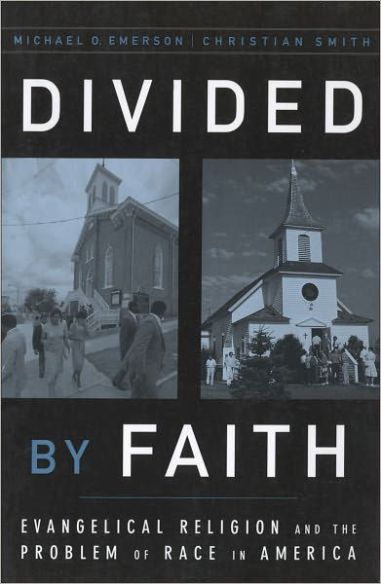
Divided by Faith: Evangelical Religion & the Problem of Race in America
by Michael Emerson & Christian Smith
Last night’s book discussion went really well, and it makes me even more excited for this month’s meeting.

For my church‘s monthly Theology Book Club, I’m excited to have us read an especially timely and important book, Divided by Faith by sociologists Michael Emerson and Christian Smith. The opening lines of the Preface summarize their purpose beautifully:

To learn more about American life, this book examines the role of white evangelicalism in black-white relations. Our argument is that evangelicals desire to end racial division and inequality, and attempt to think and act accordingly. But, in the process, they likely do more to perpetuate the racial divide than they do to tear it down.

In America, we have a problem with race. White Christians, I think, genuinely act in good faith to play a positive role in race relations in America. And yet, they often end up unintentionally exacerbating some of the broader cultural problems that feed into racial injustice.
Continue reading
Join the Liberti Church Theology Book Club!


July’s Book book-jamessmith-hownottobesecular

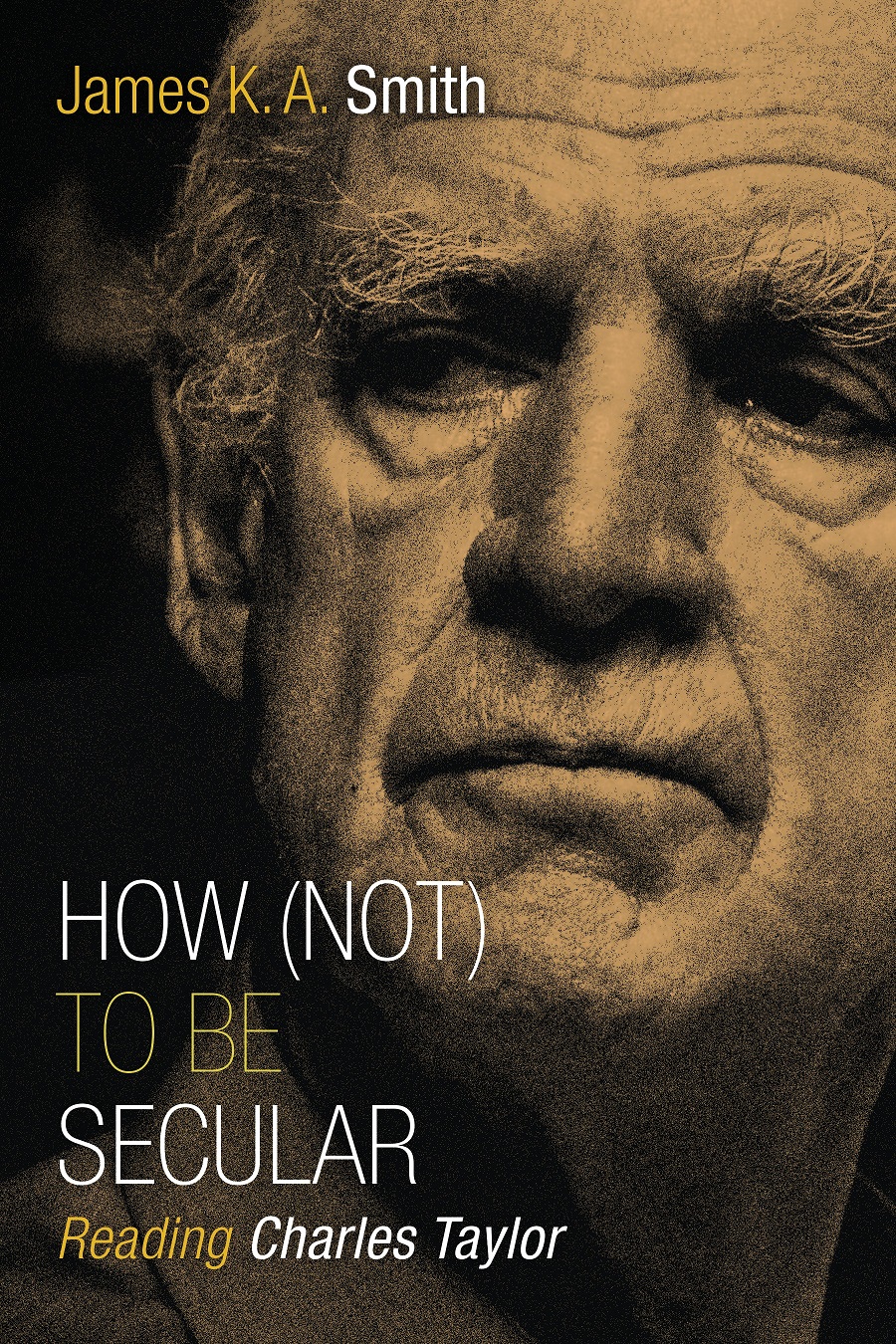
How (Not) To Be Secular
by James K.A. Smith
Amazon


Wtsbooks

For those of us that are Christians, we come to church on Sundays to get re-grounded and re-oriented in the rhythms and truths of the Christian life.

Many of us also try and live life in various small groups and Bible Studies throughout the week in order to press these truths all the more deeply in our hearts and communities.

But still, some of us are wired to wrestle with big ideas in a different way. That’s why at my church we’re starting the Liberti Theology Book Club: a way to walk with others through different perspectives and insights on theology, the Bible, and Christian thought.

It’s been designed to take up as little of your time as needed, while also letting us really work through some deeper and harder parts of faith. Also, because of the decentralized nature of it, anyone across the country can join in!

Continue reading

Book Club Blogging: Intro to a Secular Age


de-Goya-The-GiantFor the Book Club I’m leading at my church, we’re reading James K.A. Smith’s How (Not) To Be Secular (a summary of a much bigger, denser book, A Secular Age by Charles Taylor). To begin, we turn to the opening pages to get our bearings and become acquainted with the general contours of the pages to come.

Introduction

Honestly, if the Preface and Introduction were all there was, this would be worth the price of admission. It is such a helpful 50,000-foot view of the ideas unpacked in the rest of the book.

Smith’s account begins with an attempt to narrate some of what our day and age “feels” like. He speaks of the disconnect between typical American Christianity and the way the rest of the world experiences reality. He points out that nonbelievers in the Christian faith are actually able to find meaning, fullness, and significance without appealing to any divine Being. And yet, even those without belief can’t seem to shake a certain “hauntedness” to our world.

In short, neither adherents to religion nor those that don’t find much usefulness for it can construct a way of experiencing reality that takes into account all of what it means to inhabit humanity today. We’re all sort of stuck in this liminal space, this limbo, seeking distraction of reductionism to break the tension.  We’re all “suspended between the malaise of immanence and the memory of transcendence”.
Continue reading

Bible Nerds: Help Me Choose NICOT/NICNT Commentaries!


My go-to Bible Study software of Logos. They have some amazing sales every once and a while and right now they are having a great sale on the New International Commentary Series (popularly known as NICOT and NICNT). They are selling each volume at $19.99 a pop, which is amazing. I am really picky about commentaries, but I know a good deal when I see it. So, I’m enlisting your help to help me pick out a few of these for my library.

So…for those of you that have had experience with these, which would you say are really good and why? Which would you say are definitely not worth one’s time?

So you know what I’m looking for: I go to commentaries more for biblical critical scholarship, not systematic theology. Even though I am theologically conservative, I really do not enjoy commentaries by conservative Evangelicals that spend most of their time grinding their conservative axe against all those “big bad liberals”. Those commentaries end up being more about conservative theological apologetics than the text. For that reason, I find it far more helpful to engage with commentaries that have an openness and sympathy to critical (“liberal”) scholarship.

In short, if one of the primary selling points for a commentary is that it is “conservative”, then it’s probably not for me. I can think of so many other adjectives I would prefer came to one’s mind first to describe a good commentary. If a commentary writer is conservative, great! But breathlessly defending that dogma at the expense of the text isn’t helpful to me.

Okay sorry, soapbox done. What do you all think?

St Teresa & A Woman’s Longing to Preach


François_Gérard_-_St_Theresa_(detail)Saint Teresa of Avila was a 16th-century mystic and Carmelite nun who traveled around teaching and writing mystical treatises on the interior life of maturing Christian spirituality and contemplative practices. (Here’s a great intro on her life.)

To read her writings and to read about her life is one of the most powerful testimonies to a woman’s place in the Christian church. She constantly rubbed the male power structures the wrong way and in many of her writings one can see how she bends over backwards to accommodate their concerns about a powerful woman, trying to demonstrate how a woman can teach and lead while also living in accordance to the doctrines of the scriptures. And yet, more than any intellectual argument, it is her grace, maturity, and powerful insight into the Bible, the Christian Life, and the human soul that are some of the greatest apologetics for a woman’s full right to teach and preach and lead in the Church. I am currently reading through her magnum opus, The Interior Castle, and it is breathtaking. I ran across this brief passage and lamented along with Teresa… Continue reading