our failed function, God’s full faithfulness | Advent {3}


This week, I’m meditating on a few particular aspects of the Advent event. I’m thinking through and writing about how, in Jesus, God inhabited our creaturely form, care-taking function, comprehensive fallenness, and communal formation.

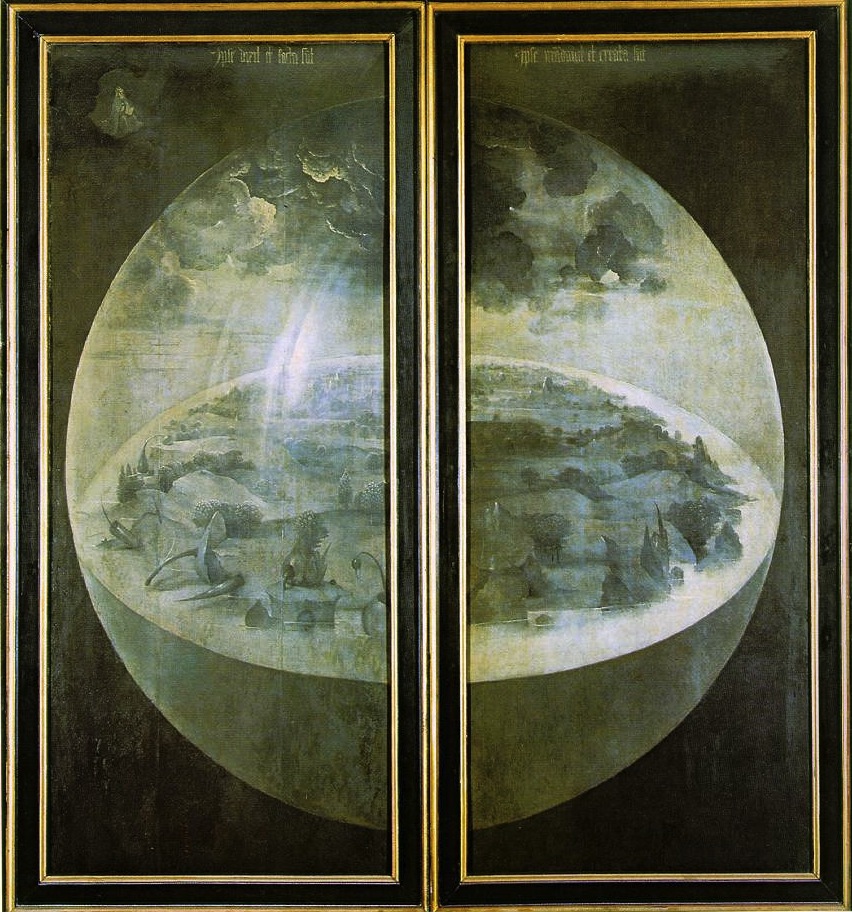
As I said in the teaching I gave over the summer about the Nature and Narrative of the Bible, the opening chapters of the Bible describe this divine act of creating in very architectural terms; the same words are later used in describing the building of the tabernacle and the temple. In this we see that God’s act of creating was, in essence, building this world as his temple in which he would rest (for more on this see John Walton’s amazing book, The Lost World of Genesis One, or just watch this short video).

In the story, he builds and establishes this Temple-World, and then creates and ordains two priests–Adam and Eve–to be his representatives in this temple to care for it and work in it faithfully. In the ancient world, temples were usually placed in the midst of large and beautiful gardens which acted as extensions of the temple itself; to care for the garden was to care for the temple, and to make the garden larger was to expand the scope and size of the temple.
Continue reading

Advent, Evolution, & Absolution


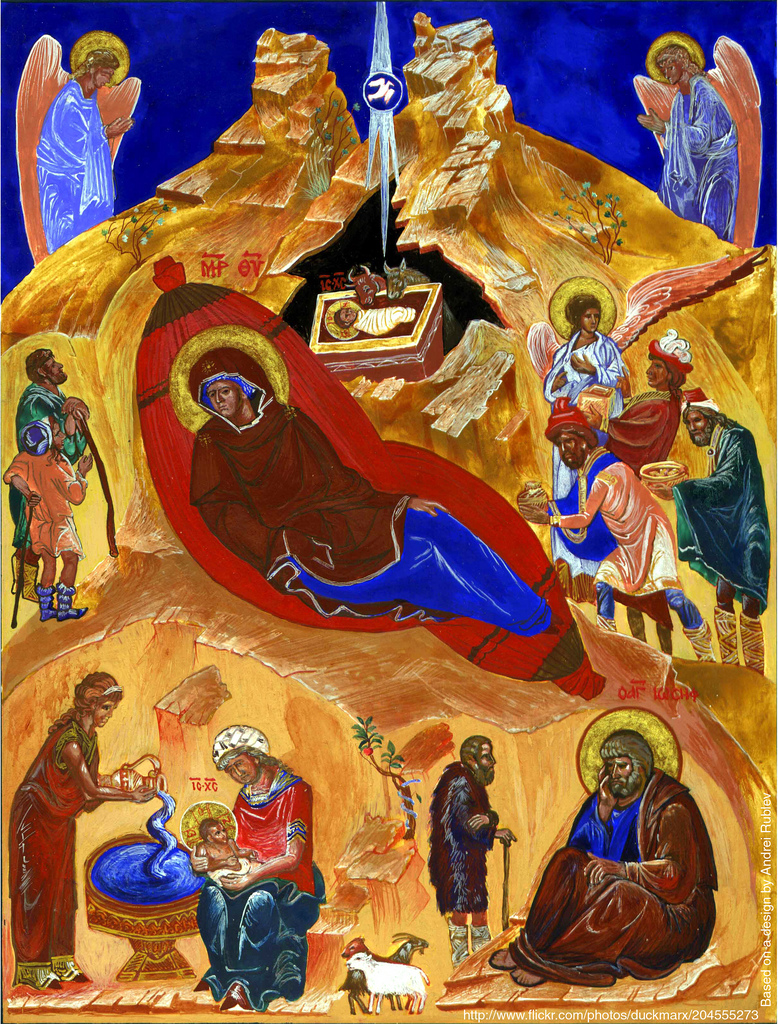
It’s Advent. A time where we especially orient ourselves towards rejoicing and celebrating the fact that God did not remain far off and merely create a “legal” or “dogmatic” satisfaction for the plight of his creation and creatures. Rather, he broke into it and came into his creation and among his creatures. In this year’s Advent series, we’re exploring how, in this Coming, Jesus took on our creaturely form, care-taking functioncomprehensive fallenness, and communal formation.

First, God took physical, human, creaturely form. In the study I did–and subsequent lecture I gave–on Beauty a couple of years ago, I defined “Beauty” as the attribute of something that expressed complexity simply. Is not this God-in-human-flesh (theologically referred to as the Incarnation) the most beautiful of all miracles to take place? The Infinitely Complex God inhabits the simplest of human forms: a child.
Continue reading

Welcome to Advent. 2011. {1}


Yesterday was Day 1 of the season of the Church Calendar known as Advent (latin for “coming) . From now until Christmas, we spend time intentionally mediating upon the truth this season brings: God has come among us, clothed in the vestiges of human flesh.

Yes, this time of year was arbitrarily chosen centuries ago to recast pagan lunar festivals in a new light. Yes, many of the traditions of Christmas (fir trees, gift-giving, wreaths, etc.) find their source in pagan socio-religious rites. Yes, Jesus was probably more likely born in April, not December. Yes, Christmas has been co-opted by commercialism and consumerism. Nevertheless, this time has been set aside for nearly two millennia so that Christians around the world could, with one mind and heart, dwell upon the depths of the glory given to us in the events that transpired all those years ago.
Continue reading

Troy Davis, Capital Punishment, & the Death of Conscience


This is a tough one to write. And it’s long. I broke almost all of my personal blogging rules in this, but I just need to get this out. I’ve spent the past two days with this post and it’s central ideas rolling around in my head and even now as I sit to type, I have little knowledge how it’s all going to come out.

Today, for the first time in my young life, I shed tears for a man that was executed at the hands of the State. Two nights ago, Troy Davis was finally executed in Georgia for the 1989 murder of an off-duty police officer. Questions still abound concerning his guilt and innocence, the politics at play in the various boards and courts that refused to change their minds, and the calcification of a seemingly dispassionate justice system  that renders helpless the voices of those it presumes to protect. This New York Times article perfectly captures the complexity and tension that exists right now over this topic.
Continue reading

Weekend Must-Reads {09.09.11} | church leadership retreat edition


This weekend I find myself with the honor, joy, and privilege of heading to a two-day long leadership retreat for my amazing church, liberti church: center city. In honor of this, I wanted to post articles by myself and others focusing on Church philosophy, community, and such. Some of them are a bit longer than usual, so feel free to grab a cup coffee before digging in. I hope you find these helpful and encouraging no matter where you find yourself in relation to the Christian Church. Have a great weekend. And be sure to stop by next week; I’m pretty excited for the stuff I’ve got planned for the blog then.

And Thus It Begins: liberti home meetings & my heart | the long way home

liberti: center city’s home meetings start next week. I wrote this blog post last year the day before I began leading a brand new group in the Rittenhouse neighborhood of Philadelphia. It’s wonderful to look back over the past year with these people and see that God has answered every prayer I had in this post. I’m still serving these amazing people as their leader, and I can’t wait to see them on Tuesday.

On the State of Contemporary Theology | Fors Clavigera – James K.A. Smith

Here, the author of one of my favorite books I’ve ever read, Desiring the Kingdom, offers his thoughts on the current state of theology, denominations, and theological education. A quick must-read for all.

Continue reading

Weekly Must-Reads {08.30.11}


Admittedly, this week’s Must-Reads are a bit random, but I think you all will enjoy them. There are no consistent themes this time around, just a little hodge-podge of humor, politics, theology, etc.. As usual, feel free to add your own links for myself and others to read in the comments section, as well as comment on these articles.

__________

Things Organized Neatly

This site is starting to make its rounds amongst our crew here in Philly. We’re obsessed, but it’s so worth it. I’ve taken some of the pictures and have them rotating as my laptop background to reflect my interest in bookswritingcoffee and breakfasthistorymy favorite board gamedressing nicelybeing coolfacial hair, and shaving.

God, Math & the Multiverse | the Veritas Forum

I haven’t actually watched/listened to it yet, but it should be pretty phenomenal. Thanks for the link, Colin.

Continue reading

Weekly Must-Reads {08.11.11} | reasonable Christianity edition (in honor of John Stott)


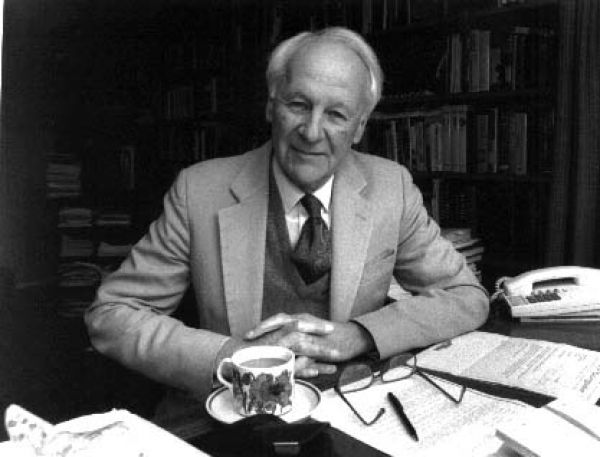
This week, I wanted to focus on extremely “reasonable” expressions and discussion surrounding Christianity: it’s heroes, it’s application, and how to live it out. This is in honor of a great man we lost recently. A couple of weeks ago, John Stott, a great and fairly unassuming hero of the Church, died. He is very much responsible for the shaping of a Christianity that is both just and intelligent. Even though he did not preach nor speak regularly, and mostly wrote academic books, it is he that laid the theological foundation that has only now finally trickled down to the masses of young and “restless” Christians today–whether we know his name or not. It is the shoulder of this giant of the faith upon which we all now stand. Let us not forget that. I have provided some links to that end.

___________

John Stott Has Died | Christianity Today

This is Stott’s obituary in Christianity Today. Read up on his life and read some of the homages linked to in this article. He was an amazing man.

Evangelicals Without Blowhards | NYTimes.com Opinion

This is by Bill Kristof, a weekly contributor to the blogs at NYT. He is not a Christian, and yet he devotes this article in honor of John Stott–his work, his influence, and the presence of millions of Evangelicals that are continuing his work today by caring about justice in this world.

Continue reading

Weekly Must-Reads {06.20.11} | a New York Times Op-Ed miscellany


This week, as I compiled my favorite reads for the week, I realized nearly all of them were from the New York Times. I found these on different days, at different times, and had no idea that I kept bookmarking the same site over and over again. But still, all of them are very different and I encourage you to peruse, read, ponder, and post your thoughts!

__________

Instead of Student Loans, Investing in Futures | NYTimes.com

Ever since the financial crisis hit, I’ve been so intrigued by other economic models for getting things done. This article follows one idea when it comes to funding higher education. And it really seems to work. I also love that this particular idea was not dreamt up by nor financed by the government.

Continue reading

Weekly Must-Reads {05.24.11} | theology & politics edition


As promised, this week’s weekly must-reads tend towards the theological. We do have some political “leftovers” from last week that you all should find interesting. So, as usual, read to your heart’s content and please comment and let me know what you think about these! 

__________

More Like Prayer 5 | Jesus Creed

Fascinating and oh-so-brief introduction to a whole new way of looking at the gospel, politics, and the church. Wow.

Mercifully Forsaken | Christianity Today | A Magazine of Evangelical Conviction

Wow. Simply wow. Such a beautiful and powerful piece of writing on the mercy of God in his forsaking of us. Did not expect this from Christianity Today (front page, no less!).

Continue reading

Weekly Must-Reads {05.17.11} | politics & writing edition


This week’s weekly must-reads are focused on the pressing political matters of the day: Obama, Osama, the budget “crisis”, etc. I’ve thrown in some fun articles on writing at the end. And for my more “theologically-inclined” friends: don’t worry, I’ll throw you some stuff next week. But in the meantime, check these things out and let me know your thoughts in the comment box below.

Running in the red: How the U.S., on the road to surplus, detoured to massive debt | The Washington Post

As we hit the federal debt-ceiling this week, I wanted to send this article everyone’s way. It is such an enlightening read on how our economic surplus became our deficit–and it’s a reasoned, insightful, factual, calm, and immensely helpful article. (SPOILER ALERT: it was BOTH Bush and Obama’s faults, but mostly Bush’s).

News Desk: Don’t Release the Photos | The New Yorker

This article convinced me that Obama’s decision to not release the photos of dead bin Laden was the right call.

Jon Stewart wants release of bin Laden photos | Salon.com

This video changed my mind back to its opinion that Obama should release the photos of dead bin Laden.

Continue reading

The Scandal of Holy Week {v}: conclusion & benediction


As I said in Part 1, this series was originally given as a sermon to a group of prisoners attending my church’s prison ministry. This is the conclusion and benediction I gave them at the end. This post picks up right after the end of Part 4, where we listed out practical ways that Jesus prepares his disciples for them forsaking him and the ways he reveals himself to already-wayward disciples, thereby calling them back to Him. I encourage you to read the other parts of this message: Part 1: the forsaking of GodPart 2: the Grace of JesusPart 3: the limits of Grace?Part 4: the restoration of disciplesPart 5: conclusion & benediction]

Conclusion

These are not guarantees: all these different practical things I’ve mentioned are not the “magic formula” for how to restore your faith if you feel you’ve lost or forsaken it. Sometimes none of these things are necessary; the Centurion did not seem to have any of these things. Sometimes, you’ll do all of these things for years–decades, even–and nothing will change.

All I can tell you is that He is worth it. The God of Holy Week is a God worthy to be wrestled against for years and years and years and years until he finally meets you, even if it is for the briefest of moments before slipping away back into frustration, doubt and sin.
Continue reading

The Scandal of Holy Week {iv}: the restoration of disciples


[Update: this series has been completed. Part 1: the forsaking of GodPart 2: the Grace of JesusPart 3: the limits of Grace?Part 4: the restoration of disciplesPart 5: conclusion & benediction]
In Part 1 of this series, we saw that we will all forsake Jesus many times in our lives, just as the disciples did on the Thursday night of Holy Week. In Part 2, we saw that in light of this abandonment, Jesus responds to those that forsake him by being unconditionally and unlimitedly gracious towards them in their forsaking of him. In Part 3, we looked at just how scandalous and beautiful this grace is and how and why we often try and limit it. Today, we give practical ways that we can prepare ourselves to come back to our Lord, even after we have forsaken him in our own “Thursday” seasons.

As we saw in Part 1, Holy Week was a week-long process in which everything–creation, creatures, and God Himself–all forsook Jesus, turning their back on him. We’ve said several times now that true disciples of Jesus are not those that never forsake Jesus, but they are those that after forsaking him, turn back. And so, to help us see how we do this, let’s look at the first person in this story to turn back.

Continue reading

The Scandal of Holy Week {iii}: the limits of Grace?


[Update: this series has been completed. Part 1: the forsaking of GodPart 2: the Grace of JesusPart 3: the limits of Grace?Part 4: the restoration of disciplesPart 5: conclusion & benediction]

In part 1 of this series, we looked at the original Holy Week and saw how everything and everyone has and will forsake Jesus. We said that “Thursday”–the day when the disciples forsook Jesus–will come for every disciple. In part 2, we saw that Jesus, as he relates to those that have forsaken him and those that will do so, responds and relates to them on the basis of pure, unfettered grace. Today we look at why this matters and what it looks like in our lives.

We’ve seen that every disciple will forsake Jesus, but the true disciples of God are the ones that come back after they have left him. And further, it is my contention that what brings people back is not fear, not Law, but the unbounded and free Grace of Jesus.

But let’s be honest–this process can be a long one. It can be months, years, or even decades before these true disciples of God return to Him. People can go very far down the path of sin’s temptations, and still be Christians. In fact, any of us can go very far down the path of sin’s temptations and still absolutely be beloved, regenerated, Christian children of God.
Continue reading

The Scandal of Holy Week {ii}: the Grace of Jesus


[Update: this series has been completed. Part 1: the forsaking of GodPart 2: the Grace of JesusPart 3: the limits of Grace?Part 4: the restoration of disciplesPart 5: conclusion & benediction]

Last week, we saw how Holy Week, kicked off by Jesus’ “Triumphal Entry” into Jerusalem, was merely the beginning of a series of events that led to everything around Jesus forsaking him. We went on to ask how disciples of Christ might avoid their own version of “Thursday”–the night the disciples betrayed and forsook Jesus. The reality is, though, that every disciple of Christ has, does, and will forsake Jesus many times over. And so, the proper question to bring to Holy Week is not “how might I keep myself from forsaking Jesus”, but rather “how does Jesus respond to those–including myself–that will end up forsaking him?” I went on to say

“The answer I want to fight for? Jesus responds to all of our forsaking him with pure, unadulterated, offensive, and scandalous Grace. My main point in this message is this: A disciple is not someone who never forsakes Jesus; it’s someone who, after forsaking him, comes back.

Today we will look back at Holy Week to see the ways that Jesus demonstrates this scandalous Grace to those that have and will turn their backs and abandon him.
Continue reading

On Easter: “Adam Killed a Bird, But Jesus Brought Him Back” (a poem)


_____________________________________________________

Adam Killed a Bird, But Jesus Brought Him Back

Now looking through the glass not dim, Coltrane all around;
he sets a tone of dissonance, rightly now it seems.
For as the beauty clothes me in, a tragedy is found:
woodchips below – a resting place – long for love supreme.

For there he lies with outstretched span, stricken by a car;
afflicted by our fallenness, and smitten by our thorns.
He struggles with the weight of pain, not getting very far.
To stop, release his spirit’s breath – give way to Death’s dark door.

I prayed a prayer, and thought some thoughts, and something in me burned.
Oh I see my Savior, the pains he took! For me: protect,
for prone to wander, weak I am, to that which I once yearned.
Until you did in me and Him- my soul: You resurrect.

And thus to show He heard my prayer and strengthen my weak frame,
up pops the bird, into the air; and now my soul shall do the same.

[read my other Holy Week poetry here]

all writings licensed: Creative Commons License