The Bible, Slavery, & Atheists{2b}: Theology & Ethics | Reform & Revive


By the time I finished the next article in the series, it was substantive enough and socially-oriented enough to warrant being posted on my webzine Reform & Revive.  The previous post was on on how secular Philosophy can inform our view of ethics and contribute to the discussion of Slavery, Atheism, and the Bible.  This one is about how Christian theological ethics can uniquely inform our ethics in modern times.  The article covers a LOT of ground and is the longest one I’ve written yet in this series.  Hopefully that’s not a turn off.  This article has more of my thought concerning truth and Biblical interpretation than perhaps any one article I’ve ever written contains.  Here’s the link:

http://reformandrevive.com/2009/12/22/a-theology-of-ethics-contemporary-applications/

It seems in light of my earlier post I’ve decided to pour more of myself into this series, rather than just quickly finishing it off.  Hopefully it’s helpful.

Lastly, I keep getting private emails, texts, and messages from Christians talking about how much they’re enjoying this series, and how helpful it is to them, but hardly any Christians are publicly commenting.  I’m getting tons of comments from my atheist friends, though.  Discrepancy?  I think so.  If you have a thought, please leave it.  It could be really helpful to get more input on this and diversity of thought on this.

Thank you all for your support and encouragement.  It means a lot.

The Bible, Slavery, & Atheists{2a}: Philosophy & Ethics


As I’ve looked at and read the various articulations about this issue put forward by my atheist friends, I’ve noticed a few philosophical assumptions about ethics that are driving many people’s perspective on how the Bible does/should talk about these things. In this post, I’d like to highlight those things and show how they are neither philosophically or theologically correct. By the time I finished writing, it was really long, so, using one of the few benefits of blogging as a medium of discourse, I will put up the second part (concerning the more theological side of this) tomorrow or the next day.

The Philosophy of Ethics

Principles vs. Applications

Even the most cursory look shows that the study of ethics is the study of transcendent principles that govern our morality and behavior. There is an important distinction though made between those transcendent principles and their applications. One can hold to the exact same set of principles, but apply them differently at different times/cultures. It is simplistic and reductionistic to think that anyone’s “ethics” will be applied in the exact same way every time. No ethicist secular or otherwise treats ethics in this fashion. I believe that Scripture is consistent throughout in its transcendent principles, though not in their comprehensive applications (below). To navigate applications takes another pair of things the Bible talks at length about: faith and wisdom (more in the next post). Further, I don’t think this principle/application distinction provides any serious ethical challenge to biblical authority. The Bible itself never claims to treat ethics in this reductionistic manner, so to force it upon Scripture is dishonest.

One of my atheist friends mentioned the converts in isolated African tribes where nudity is prevalent, saying that if Christians were consistent, they must insist that they all cover up in order to be Church members in good standing. Except there’s a problem with that: there is no Christian ethic of “non-nudity”. There is a Christian ethic of “modesty” that says that we have the responsibility to adorn God’s beautiful creation of the human body in such a way that it maintains the respect and dignity it deserves. Now, how respect and dignity is shown changes culture to culture, so it takes wisdom to see where the human form is being abused in that culture — and that is not a compromise of Christian ethics. The consistent biblical principle has still been preached, upheld, and lived. If ethics (secular or Christian) were as naively structured as is necessary for some of these atheist criticisms to make sense, then the entire field of ethics would be unnecessary and non existent, because we could have a computer program that could make all the black-and-white moral decisions for us.

Continue reading

The Bible, Slavery, & Atheism: Part 1b


this is real (I did it myself)

The next post is pretty much done, but I wanted to send out this quick note before moving on. The previous post revealed a lot of things that I neglected to make clear. My fault. Sorry.

First and foremost, the last post was not meant to settle the question on slavery and the Bible. I just wanted to get out what the Bible actually says about it. The most I wanted to accomplish toward addressing the issue was to let people see a clear trajectory within Scripture wherein no part is inherently contradictory to the parts before or after it, no more than a seed is contradictory in nature or form to a fully blossomed flower. I also wanted to give a sense of the complexity of the issue. In every passage that lies out even the most comprehensive sets of morality and ethics for the Israelite people, you never see slavery there. It was never an action that was consistently seen as something moral. It’s not a freedom that the Israelites are free to use whenever they desire; it’s used sporadically, meaning that there must be something else going on beyond some explicit commentary by God on the moral nature of slavery. The New Testament is clear that the crucifixion of Christ was something that was foreordained and ultimately brought about by God, but this neither expunges the moral responsibility of the people that actually did it, nor says that God is all about crucifixion and thinks it is “morally neutral” or “ethically okay”. He clearly thinks it is wrong and evil, and yet He clearly ordained it, allowed it, and used it to bring about his promised redemption to the world.

Continue reading

An Open Response to Some Atheist Friends Regarding Slavery & Biblical Ethics (pt. 1)


[First off, this is a long one, and only part 1 of 6, so beware before you start reading.]

On Facebook, there appeared a status by an old atheist friend of mine from undergrad named Larry (supported by another friend Christopher). Here was the thesis of the post:

Regarding moral relativism the christians are hypocritical. They say they believe in a moral objectivity given by god…but how is it then, that they believed slavery was a product of the old days, as it was applicable to the time it was practiced (and sanctioned by the bible) but now condemn it? The bible, last I checked did not change. I think this is a PRIMARY example of moral relativism exhibited by the church and christians. So how can they sit here and tell us that a proof for god is moral objectivity?

In other words, how could the ethics of Christians change over time if the book they supposedly base their ethics upon has not changed? Either the God that inspired the Bible was completely incompetent in his revelation or there was no God revealing anything at all. The note caused a discussion that resulted in almost 90 comments, and I quickly realized that if I were going to respond, it would need to be in a more lengthy manner than a Facebook comment (which is not the most helpful of mediums of debate). So here it is. I’d like to respond to the ideas that came out in the discussions. I want to disagree with them on the basis of five ideas:

Continue reading

Beauty: The Complete Series


screen-captureIn 2009 I did a seminar at my old church, Epiphany Fellowship, on the topic of Beauty. I spent about nine months doing research, reading, talking, and thinking before offering it to the community. I then separated my overall talk into the series of blog posts you’ll see below. A year later, I updated the main manuscript with some expanded thoughts. Those blog posts represent the material before the update.

On this page you’ll find the audio from the talk and the updated manuscript,, as well as a special appendix I put together offering a complete breakdown of every word in both Greek and Hebrew that the English Standard Version of the Bible translates as “beauty” or “beautiful”, broken down by frequency.  Along with those words (and all their forms), I’ve offered the most literal definition of each so you can easily see the huge range of meanings that the Biblical words for “beauty” carry. I hope it’s helpful. You don’t need any knowledge of Greek or Hebrew to understand it or get something from it.

Series Table of Contents

Resources for this series:

[photo by David Schrott]

The Outline for the Entire Series:

Resources for this series:

[photo by David Schrott]

The Gospel is Beautiful{12} | it is finished


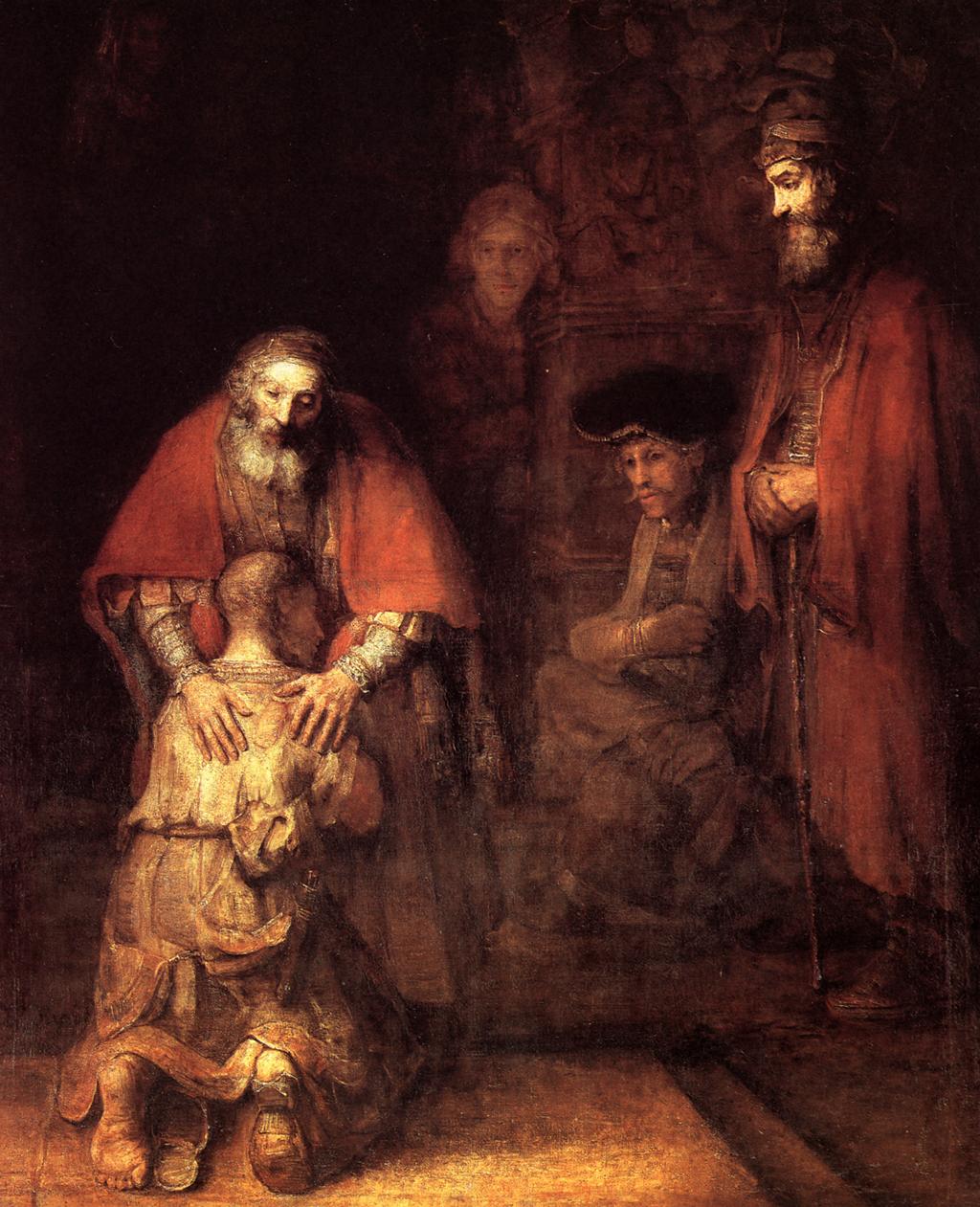
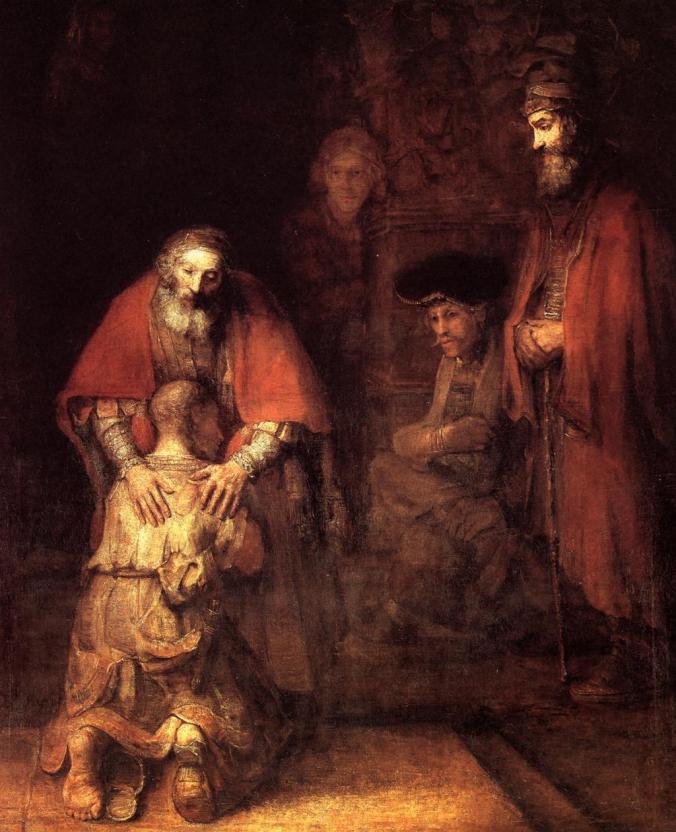
Rembrandt-Return of the ProdigalWell, it’s done. This is the end of the Beauty series. I won’t say too much, because this part is long enough already. I would just remind all of you of two things. Firstly, this whole piece began with the story of the most beautiful thing I have ever seen: the city of Edinburgh as I stood above it on top of a hill in the city. Secondly, our definition of Beauty: Beauty is the attribute of something that expresses complexity, simply. It what takes the complex strands of the world, reality, experience, or God and weaves those complexities into a simpler tapestry which we can perceive with our physical and spiritual senses. The more complexity expressed more simply, the more beautiful something is. And with that, let’s finish this thing out. What’s coming next? I have a post ready for that that I’ll post up in a couple of days. We pick up right where we left off

In conclusion, I want to talk about the thing that ties every one of these things together. The thing in which there exists in a glorious and beautiful harmony between all the different things we’ve talked about tonight. The last part of our text tonight, Ecclesiastes 3:15 says “That which is, already has been; and that which is to be, already has been; and God seeks what has been driven away.” God seeks what has been driven away.” In conclusion, the Gospel is Beautiful. The Gospel, in short, is the story and message of Christianity. It comes from the Greek word meaning “good news”. So what is this good news for us? The news that God did the ultimate act of beauty. The ultimate act of condescension of filling this finite world with the most Infinite of Beings for the sake of knitting it together again, and actually ultimately filling it with Himself. You see, God began History and ordered it in such a way that it was beautiful. He filled this simplicity with the marks of Himself, so all things pointed to Him and reflected Him perfectly. Humans came on the scene and were made in His image so that they as well truly and purely reflected, represented, and “Imaged” (that would be the theological term) this God on earth. But sin entered into the world, and made this world fallen from its original place of beauty. And we have followed suit. You see, sin is not finding certain things, people, or places beautiful. It’s that we find them more beautiful than God and these responses that are due God, we give to other things. We worship and “image” and express fallen simple things rather than the Holy complex God. We all have done this. I have done this. You have done this. You have soiled your beauty and abandoned it to your lusts! You no longer represent the One whom you were meant to mirror and reflect and therein find your beauty! You merely represent the world. The lowly fallen world. Fallen people imaging fallen things. There’s no beauty in that.

But God, being rich in mercy. Though we have abandoned God’s beauty and our own true beauty, God has not abandoned them. He loves His Beauty. And He loves the Beauty of His creation. So this God, for the sake of the worship His own beauty, and our own own joy in His Beauty, comes. The most perfectly knit together tapestry in the universe chooses to come and express the most Holy Complexity in the most intimate simplicity. This perfectly woven tapestry walks the earth, lives the perfectly woven life, and then stares into the cup of God’s perfectly woven wrath reserved for all things and people that are not beautiful in this world. And he drinks it. This perfect tapestry of complexity expressed simply goes to the cross willingly and allows the tapestry of His soul to be torn apart strand by strand by strand as the wrath of God that hung over everyone who would believe was gathered by God and poured it on Himself. That wrath that hung over many of us in here. That wrath that hangs above some of us tonight, that will be poured out on something. Either on Christ at the cross, or in you in Hell. Did you know that Hell is beautiful? Not for those that are there, but it is. It is pure, white, Justice and Wrath poured out on all that was wrong in the world. So God’s wrath will be poured out either in Hell or the Cross.

And history revolves around this cross. Because at the same time that Christ, Beauty Itself, was literally being torn apart, he was reconciling all things to Himself. In other words, he was taking every stray strand in the universe – every bit of evil, suffering fallenness there will ever be in history – and reserving its proper place in the final tapestry of History that we call heaven. He was making Himself the common glorifying thread that would reknit the broken fabric of a broken creation. And so we live now in the process and story of God putting all those strands in their proper place. As more and more beauty floods the earth He is still inviting his people to join Him in this epic story. He is calling his people to praise Him and draw near to Him, and out of the overflow of that to proclaim His Beauty to others and make more beauty, so as to usher in this new creation – or to put it in our terms tonight – the New Tapestry of Creation. Better than before. It is the one that has woven in it the purpose for all pain, sickness, death, and dying that God has ordained and allowed to take place so that this tapestry might make good on it all to the praise of the Beauty of God’s name.

And we, His people, His Bride, those that are “in Christ”, that are simple people Imaging and expressing the most complex of Beings, are woven into that tapestry that is Heaven and the New Creation. We’re not just going to live in it, we are part of it. Second Corinthians 5:17, in most Bibles reads: “if anyone is in Christ, he is a new creation. The old has passed away; behold, the new has come.” But that’s not what it says in the Greek. It doesn’t say “if anyone is in Christ, he is a new creation”. There is no “he is”. The Greek literally says “If anyone is in Christ: new creation!” More accurately, I think it should be translated “If anyone if in Christ, this is the new creation. he old has passed away; behold, the new has come.” I remember an old professor at Westminster named Richard Gaffin. He used to go up to students, stop them, and just say to them “you are just as resurrected now as you will ever be”. We often forget that. Yes, we will get new bodies and the penalty, power, and presence of sin will be done away with, but as far as our souls go, we are as resurrected now as we will ever be.

We are the new creation. The new tapestry. We have been woven into the fabric of this ever-increasingly redeemed world that is being flooded with the Beauty of God. The new has come in Christ. Through the Gospel. The good news of our salvation is that all that has been ugly with the world and in ourselves has been conquered. Beauty is here, and Beauty is ever increasingly filling the earth, and this Beauty is our salvation from ugliness and sin. George Marsden in his incredible biography of Jonathan Ecdwards ends the whole book with this summary of Edwards’ view of all of life and salvation. He says that

“[Edwards believed that] God’s trinitarian essence is love. God’s purpose in creating a universe in which sin is permitted must be to communicate that love to creatures. The highest or most beautiful love is sacrificial love for the undeserving. Those. . . who are given eyes to see that ineffable beauty will be enthralled by it. . . They will not be able to view Christ’s love dispassionately but rather will respond to it with their deepest affections. Truly seeing such good, they will have no choice but to love it. Glimpsing such love . . . they will be drawn from their self-centered universes. Seeing the beauty of the redemptive love of Christ as the true reality, they will love God and all that he has created.”

The Gospel, this salvation, is beautiful.

And we receive this salvation by seeing its Beauty, turning our stirred affections toward this God, and trusting that we cannot reknit our own souls but Christ has reknit them for us. And as our affections are further stirred we press into Him ever increasingly as He draws ever-nearer to us. I pray, I plead, that those in here tonight that have not done so, would trust this beautiful God to have accomplished for them what they could not do for themselves. Please, consider this story, this message. See if it is not the most beautiful thing you could ever conceive. Just for a moment, see if something in you is stirred for this God. Even if you don’t believe He exists, or that He is this particular God that I have spoken of tonight, is there something in you that at least wishes it were true? Wishes it were this way? Wishes that God did in fact arrange everything to make it all beautiful in its time? Even if you won’t admit it, if that’s true, if you did wish this were the case, don’t ignore that. You have been designed to long for the Beauty of this Gospel, this story. Don’t ignore it. Sovereign, Beautiful Father, Lover, and Lord, save people that read this.

In conclusion, I’m going to break every rule I learned in my preaching class this last semester about how to end a message and end mine tonight with a poem. But not someone else’s poem. This is a poem I wrote in one take one particular afternoon through broken tears standing on top of a hill looking out over the city of Edinburgh as I was taken over by the most beauty I’ve ever seen. Let this encourage the weary saints reading this blog post, and let it perhaps woo those that have yet taste what these words are about. You can find the poem here, or just click in the section above entitled “The Site”.

Here are the links to the full manuscript and the full audio of my presentation of this material:

Click for Manuscript Pdf

Manucscript

Click here for sermon audio

Audio

Proclaiming & Producing Beauty{11}


Sandorfi - KalfonariumThe next post after this will be the last in this series.  But today, we are finishing up the section on how we respond to Beauty.  As I stated earlier, there are two fundamental ways we respond to Beauty: we contemplate it, and we enjoy it.  But, within the enjoyment piece, I think there are four main ways to to that: we praise, participate in, proclaim, and produce Beauty.  Once more, our working definition is Beauty is the attribute of something that expresses complexity, simply.  It takes the loose strands in reality and weaves them together into a tapestry that out senses are able to perceive.

Now, let’s pick up right where we left off:

Proclaim

But the process is still not over. First we praise the thing as beautiful, then we participate in its beauty on its own terms. Thirdly, we proclaim it as beautiful. Proclamation is not the same as praise. I believe it was C.S. Lewis that something along the lines of this: joy in something is not complete until it is shared with someone else. Proclamation is the telling of the Beauty of this thing to someone else. It is sharing in this affection with someone else. Here we start seeing something about Beauty that will lead into our final response: Beauty longs to be known and spread – almost like a virus. It wants to inspire you to tell others about it, so that those people might participate in it as well. For creational Beauty this is done in many obvious ways like reviews and just telling someone else about it. For divine Beauty, this is typically referred to as preaching. Speaking of this God should be the natural response to someone who has praised and participated in the Beauty of God. It is out of the overflow of this in someone’s heart that they should speak. Not out of begrudging compulsion or sheer white-knuckled obedience. We tell others about the things we find most beautiful. Should this not also apply to the highest of all beautiful people – God?

Produce

This brings us to our last part in the process of responding to beauty. It’s very much tied to the previous one and has to do with Beauty replicating itself. God, in His love for us, calls us to respond to beauty not only by proclaiming beauty in word, but also producing beauty in deed. Produce is the last way we respond to Beauty. We are built in the Image of a God who doesn’t just desire, delight in, and display Beauty, but a God who also does Beauty. We, likewise, all have abilities to produce beauty. Not only that, our response to beauty is not complete until it has inspired us to likewise create beauty. Every musician in here knows what it’s like to be at a show or concert, seeing someone play the instrument that you play and suddenly having your mind swirling with musical ideas you want to try out when you get home. There’s an entire field of art history that tries and find the obscure pieces that inspired some of the greatest pieces of art we adore today. It works off the assumption that nothing that beautiful exists without inspiration before it. The longer I live, the more I am convinced that everyone has some creative ability in them. I don’t care how “uncreative” you think you are. You are built in the image of a Creator God! You have not only the ability, but I fully believe the responsibility as well to bring forth more beauty in this world and further participate in God’s “re-knitting” of the universe. Now this “creative” ability in all will look different in everyone, so don’t think you have to stick to conventional forms of “creativity”. Really, anything that makes beauty does this. It can be gardening, serving, counseling, or raising your kids, even. I would argue all those take a certain type of “artistic eye” to do them well. We all have it. Find it. Do it well. Do it often. And do it as a response to the Beauty that is around you in both God and Creation.

This also shows itself in the Christina life (and in our text) as holiness, or “doing good” as the author of Ecclesiastes puts it. Seeing the Beauty of God should inspire us to holy living and loving of others. Serving those around us in order to share with them and replicate the Beauty of God that we have seen.

Click for Manuscript Pdf

Manucscript

Click here for sermon audio

Audio

Baptized in Beauty{10} (Enjoy, Pt. II)


Schrott1

photo credit: David Schrott

For those that have followed this series on Beauty, you will know that we have hit three major sections so far: “Why do we long for Beauty?“, “What is Beauty?“, “What things are Beautiful?“, and now we’re in the “How do we respond to this Beauty” section. I am in the process of laying out four “stages” of an appropriate and full response to Beauty. The first stage of this response is a contemplation of the Beauty.  The second is our enjoyment of it.  The first step in that process is Praising Beauty, which we talked about last time. In this post, we talk about the next step. This also happens to be my favorite part of the process of responding to Beauty. It’s when we are joined to Beauty and are swept up in its complexity and nuances. I love this feeling, I love this experience, and I loved writing and talking about it. I hope you enjoy reading it. Once again, the full manuscript and audio of the lecture I gave on this is below. We pick up right where we left off, saying that we must praise Beauty.

______________

Bur praising is not enough. Seeing something beautiful and calling it such does not complete the purpose for which that beauty exists. Beauty has an attractive quality. It draws you toward it at a very deep level. The next step, after acknowledging this beauty is to allow it to suck you in. I call this “Participating” with the Beauty of that thing or person.

Practically, this looks lots of different ways. With other people, it’s a drawing near to that person. Conversing with them. Viewing more of the nuances of the Image of God in them that makes them beautiful. For art, it looks like accepting the art on its own grounds and letting it draw you in in whatever way it’s asking of you. For plays and films it’s that idea of “suspension of disbelief”, where you allow yourself to forget that you technically “know” this isn’t real, and you let yourself get sucked into this beauty. Other forms of art tend to ask us to get lost in the object itself and explore its nuances. Closing your eyes during a musical piece and hearing every note; letting the words of a poem get inside of you and change the vocabulary you use to describe its own beauty or the world around you; letting distractions fade as you stare at a painting and see every stroke, every color (anyone who has seen a piece in real-life by John Singer-Sargent or Vincent VanGogh knows this feeling most definitely). Have you ever cried because of Beauty? This is participating with it. In the contemplation stage of this process you ask yourself “what is the beauty of this thing asking of me? It’s drawing me to itself, but to what end?”

But what about God? What about Divine Beauty?  This is where His Beauty shows especially brilliantly. All other forms of beauty can only draw you near to itself. God can and does actually draw you into Himself and Himself in you. We can participate with Him in a way that every other form of beauty only faintly strives for. How? Well, He takes the first step upon changing someone by actually sending his very Spirit to dwell within His people.

But God not only let’s us participate in His Beauty spiritually, but also physically.  After He draws near to us, we do what the Bible calls “abiding” in Him, where we draw near to Him through various things the Bible calls “means of grace”. These are traditionally called sacraments.  They are physical things that we participate in and by faith He meets us there. One of the clearest examples is Baptism.  It is where we are brought into union and participation with Christ in response to his faithfulness and action toward us.  Another is Communion. Just think of the word: “Co-mmunion”. It’s where we “commune” with God. That bread and wine is a symbol, but not just that. It is in those elements that we His people are actually drawn further into God to “commune” and participate with Him in His beauty. This is why Communion is such a big deal in the Bible. God kills people – even Christians – because they misuse this beautiful thing. He will let no one lightly and trivially participate and be drawn into His Beauty.

This should lead us to a “sacramental” view of life, where God is using all things to communicate Himself to us and communicate His Grace to us. Let everything: every good-tasting piece of food, every sunset, every cool breeze, every joyful moment all be moments where God communicates Himself and His grace to you so you might participate and be joined to Him in His Beauty and we further praise Him even more. Historically, the Christians that do this well have been referred to as “mystics”. They are the ones that say seemingly crazy things. Brother Lawrence was a 17th century monk and he said: “I have at times had such delicious thoughts on the Lord I am ashamed to mention them.” John Owen, my favorite Puritan, says

O to behold the glory of Christ…Herein would I live; herein would I die; herein would I dwell in my thoughts and affections…until all things below become unto me a dead and deformed thing, no way suitable for affectionate embraces.

Oh that we longed in that way for God. There is a participation in the Glory, Beauty, Majesty, Goodness, and Love of God that is at hand for those who believe and far for those who don’t. Please, I beg of you, if you are not a believer, seek the Beauty of God, for it’s only suitable response is to be drawn into into and know his intimacy in this way. He, the fountain of all good things, the One for Whom your soul was made, does not disappoint those who seek to know Him. Participate in Beauty.

Click for Manuscript Pdf

Manucscript

Click here for sermon audio

Audio

Enjoying Beauty{9}, Part I: Praise it.


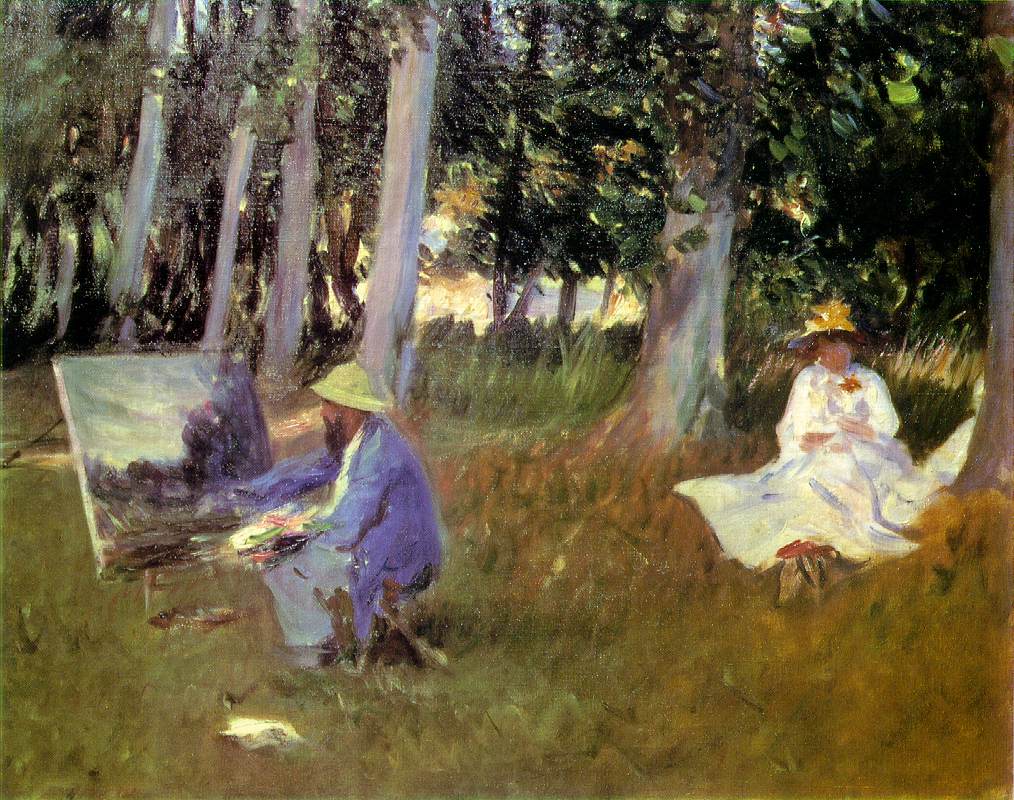
Sargent - Claude Monet Painting in a Garden

We’re almost done! This is the home stretch of the series. After this, there are three more posts in this series on beauty. Then maybe a summary-conclusion article. Last time, we talked about what it looks like to contemplate Beauty. Here, we ask why we contemplate it and what the implications of this answer are. So, why do we contemplate Beauty?

So we can enjoy it to the fullest.

Our text says that God’s gift to man is the ability and call to enjoy and take pleasure in all things, even our vain toiling and strivings of heart. After contemplation, there comes the time when we must engage with what we have contemplated. Even in Christianity, our theological study and discovery of who God is is not complete until actually close the Bible, look up, and enjoy this revealed God. But how? What does this enjoyment look like? Well, as I’ve thought about it, I’ve broken down enjoyment into four different stages. To enjoy Beauty, we Praise it, Participate in it, Proclaim it, and Produce more beauty. Let’s break this down:

First, we praise the beautiful things.

This seems fairly simple at first, but it has a deeper level to it. In its external form, praising the beauty of something is as simple as calling it beautiful. But what about nature? Or art? Or a book? or poem? Perhaps the original artist is dead or not available for you to say to them, “Hey, that’s beautiful.” Those cases help show us that “praise” goes deeper than mere words. “Praise”, more accurately, is a turning of affections toward the object of the beauty before you. It’s acknowledging beauty at the deepest part of who you are. Now, don’t worry. I’m distinguishing between the affections we turn towards these things and the affections we have for God. Those that have been changed by God to see His Beauty have had their deepest affections changed so that God is highest in those affections. But it’s okay to have an affection for things that God loves and has affections for. Having affection for His Church, His people, your family, and Beauty (even the Beauty of quote-unquote “non-religious” things) is completely in line with someone who has been changed by God to see Him as most beautiful. The implications of this more accurate idea of “praising” are huge. First, it means that you can be “praising” with your lips and not actually be praising. It also means that you can be praising something fully, accurately, and appropriately without ever having uttered a word. Imagine staring at a beautiful piece of art. It’s just you and the art while everything else fades away, and every distraction disappears. In that moment, as your affection swells for this thing of Beauty, you are calling it beautiful – you are praising.

In the next few days we’ll discuss what it looks like to Participate in Beauty.  This will be a much longer, more developed idea.  And my favorite way of enjoying Beauty.  So until then…

Here are the manuscript and lecture that this series is based off of.

Click for Manuscript Pdf

Manucscript

Click here for sermon audio

Audio

The Contemplation of Beauty{8}


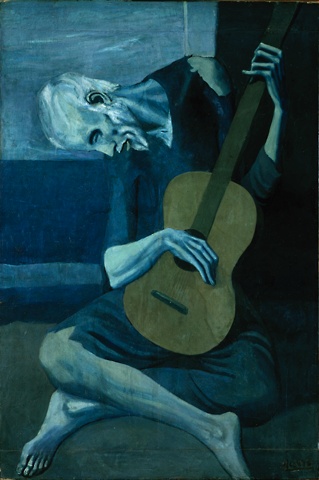
Picasso - The Old GuitaristSorry for the brief hiatus.  I don’t quite know what happened.  Probably just getting used to work and a new schedule and everything.  I have a few “lighter” articles in the works for the next couple of days, plus I’m working on more substantial things for other sites.  I’ll let you all know.  But now, back to beauty.

Last we left the Beauty series, we were discussing the proper way in which to respond to it.  Though there’s no absolute “most proper” way to respond, I used our main Biblical text that we’ve been looking at, and an idea developed by C.S. Lewis to break down our response into two useful categories: contemplation and enjoyment.  Before we enjoy, we contemplate.  This is not to say we can’t enjoy anything apart from comprehensively knowing it, but it does say that a contemplation and exploration of things helps us enjoy them more fully; and to be enjoyed to the fullest is the ultimate desire of Beauty itself.  But what does this contemplation look like in real life?

Let’s recall our defintion of Beauty as the attribute of something that expresses complexity, simply.  It’s what takes the complex unwoven strands out there in reality and weaves them into a tapestry that we can perceive with our spiritual and physical sense.  The more strands are woven more simply, the more beautiful that tapestry is. So in its most basic form, the contemplation of Beauty is thinking through what “strands” or what “complexity” is being represented in the thing in front of you.  So what does it look like? Well, formally, in philosophy, this endeavor is called “Aesthetics” or “Metaphysics”. It’s the philosophical study of Beauty and Beautiful things.

In the real world, for the rest of us, I thought of two ways this could look. First, when presented with something that your senses find beautiful, ask yourself, “What is it that’s actually being stirred in me?” Is it romance? Sorrow? Reminders of childhood joys? That stirring is your soul resonating with the strands that are in the tapestry in front of you. This is what art critics are really good at doing: teasing apart the strands that make up any given piece of art. The second way I could see this look is when you are encountered with something or someone that everyone seems to think is so beautiful but you just don’t get it. Maybe it’s the Mona Lisa. You may think: “Yeah, it’s a good painting, but what’s the big deal?” Maybe it’s some piece of abstract art that everyone else is swooning over but you. Maybe it’s a book, poem, or song you just don’t understand. In this case, I would encourage you to do research, read criticism, and try and understand the complexity behind the tapestry that others are noticing, but not you. It seems like people that know Music theory really well seem to like Jazz and Classical more than others. It seems like trained poets like weird abnormal poetry. The better you can understand the complexity in something, the easier it is for you to appreciate and ultimately enjoy the fullness of its beauty. This is why I would encourage all of you to be very curious about as many topics as possible. It’s not for the sake of more knowledge, but so that you can better enjoy the world around you and see it’s Beauty in everything.

Now, what I just went through is more for our everyday use and understanding of subjective, created Beauty. But more importantly, we must learn what it means to contemplate the Beauty of God. In Christianity this endeavor is called “Theology”. If Theology is (as most people know) “the study of God”, then it by definition is the study of Beauty Itself. This is what Theology was meant to be. It’s the kind of theology God calls us to do. Theology is the contemplation of the various complexities and revealed “strands” of God in order to better enjoy Him. John Calvin talks about this in his Institutes of the Christian Religion. He says that if your quote-on-quote “theological study” isn’t leading you to greater praise and enjoyment in God, then you’re not really studying theology! At that point it’s just studying literature – getting a better idea of this “character” named God in this “novel” called “The Bible”. This is why I had to leave seminary. I was in the midst of such beauty and I was numb to it! I was too immature. I didn’t have the spiritual infrastructure to see it for how beautiful it was! This infinite complexity being placed in front of me day in and day out was not leading me to enjoy Him. How many of us live day in and day out surrounded by the objective beauty of Christ and it does nothing to us? This contemplation of the Beauty of God can help us. Just yesterday our brother Marc Savage sent that group text (I have no idea how many of you got it) with this quote from Charles Spurgeon: “There is something exceedingly improving to the mind in a contemplation of the Divinity. It is a subject so vast, that all our thoughts are lost in its immensity; so deep, that our pride is drowned in its infinity. No subject of contemplation will tend to more humble the mind, than thoughts of God.”

May I challenge all of us to press in and seek the complexities of Who this God is and how He has revealed Himself? Understanding the beauty of God is of the utmost importance to the Christian, because His beauty is completely pointless. It can’t be manipulated, used, or abused. It can only be enjoyed. Something I’ve learned over time: whenever spirituality of any kind goes awry and goes off track, the Beauty of God is one of the first things to go. The inability to accept the mysterious complexities of God is the beginning of all heresy. You can’t have a right enjoyment of the Beauty of God and be a legalist, libertine (someone who abuses grace), or a hypocrite. Seeking to enjoy the Beauty of God is a guard against all these things. In my reading, one of my favorite things I came across was from a Catholic theologian named John Navone. He says in his book Toward a Theology of Beauty that Christian theologians (which I would argue should be all of us) are people given the task of articulating and putting into words how everything in life is given to us by God. Navone calls this the “givenness” of life and selfhood. This means that all of life is grace – unmerited favor; and that even things that are usually seen as secular (types of visual art, media, culture, jobs, and types of “non-Christian” music) are actually things that “mediate the mystery of the dawn of Christ’s Kingdom, as epiphanies or manifestations of grace. We as theologians [(and I would argue as artists and beholders of beautiful things)] are charged with the task of ushering in and articulating the mysteries of beauty which we will rest in forever.” That’s amazing. He goes on to say that “Theologians [(and I’d say even Christian artists)] are engaged in a dialogue, not only with their public, but with the object of their contemplation.” This should be one of the distinguishing factors between artists that are Christians, compared to those that are not: non-Christian artists can only use their art to dialogue with other people (speaking horizontally) and other art (speaking down). Only the Christian can make art with the confidence and hope that it also speaks and dialogues upwards to a God pleased to see, hear, or watch it.

Now what if you’re hearing all this, but you wouldn’t say you’re a Christian. First, if your interest has been piqued, but you just don’t get it, I’d give you the same encouragement I gave to those earlier that don’t understand the Beauty of things that others find beautiful. Learn about this God. Stick around. Ask questions. Seek answers. Try to see the infinite complexity of this God and how simply he has revealed Himself. Look into how He has revealed Himself and start to pick apart the strands of the incredible tapestry he has revealed Himself as. Secondly, let me encourage you: there is objective Beauty. You heart yearns for it and longs for it, and it is out there. Objective beauty is when the fullest possible complexity is expressed to us. So God – infinite complexity – is that objective Beauty Itself. But people don’t know full objective beauty before they know God. This complexity cannot be comprehended until God changes someone to comprehend it. If you’re not there yet, that’s fine. Pray. Ask God to change you as He has changed many of us. Contemplate this God. Contemplate His world. Contemplate all Beauty.

Why?  So we can enjoy Beauty.  I’ll see you next time.

Here are the manuscript and lecture that this series is based off of.

Click for Manuscript Pdf

Manucscript

Click here for sermon audio

Audio

How Do We Respond to Beauty{7}?


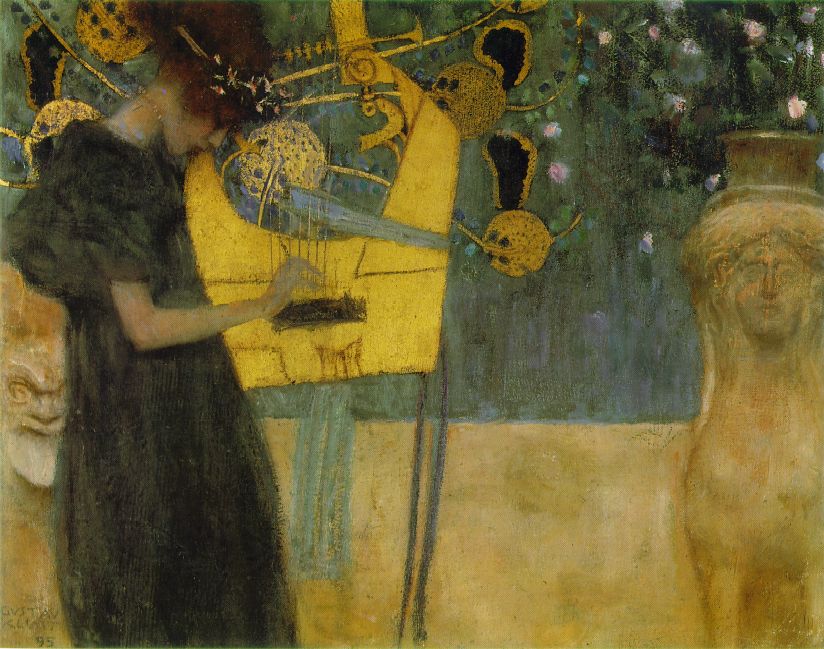
Klimt - Music 1

_______________

Wow. We have covered a lot of ground so far. We’ve discussed what beauty is, what things are actually beautiful (God, Nature, Humans, Art), and why they are beautiful. But there’s one more very important thing left to discuss (that will take a while to unpack): how are we meant to respond to Beauty? We used our text (Ecclesiastes 3:11-15) to give us a context to figure out a definition of Beauty, and then we applied that definition to different things, so let’s go back to it and see how we are supposed to respond to this beauty.

“He has made everything beautiful in its time. Also, he has put eternity into man’s heart, yet so that he cannot find out what God has done from the beginning to the end. I perceived that there is nothing better for them than to be joyful and to do good as long as they live; also that everyone should eat and drink and take pleasure in all his toil—this is God’s gift to man. I perceived that whatever God does endures forever; nothing can be added to it, nor anything taken from it. God has done it, so that people fear before him. That which is, already has been; that which is to be, already has been; and God seeks what has been driven away.”[Ecclesiastes 3:12-15]

The ultimate response, the final goal, of seeing all the Beauty God has put in our hearts, put in the world, and is doing in and around us, is joy and doing good. But the writer did something before he could declare this: he thought about it and “perceived” this to be the case. You see this in the final verses of this section as well. After declaring the joy that should come from seeing Beauty, he then steps back and sees the bigger picture. He tells us what first must be true about God if we are going to ultimately respond to beauty the way we should.

Reading this reminded me of something C.S. Lewis once said. In one of his philosophical works (I honestly don’t remember which one) he says that humans interact with things by contemplating and enjoying. He says that they cannot do these things at the same time though they can rapidly move back and forth between the two. I think this is a great way of saying what the author in Ecclesiastes is saying. We first must “perceive” (or contemplate) Beauty and then we enjoy the Beauty that God is making all things into and that he has placed into our hearts and world. Often, this distinction between contemplating and enjoying happens so rapidly that it seems like it is happening at the same time, so don’t worry, I’m not necessarily saying that you can’t enjoy beauty before sitting down and thinking about it, researching it, and writing out some paper something. Even before contemplating something and learning its complexities you can enjoy the Beauty of something. But this is the same way that a husband can enjoy his wife on the first day they’re married, but he must spend time and effort after that contemplating and getting to know his wife, so he can enjoy her more fully and more comprehensively. Contemplation is not necessary to enjoy at first, but it is necessary to enjoy fully.

I know this was a brief post. It’s just because the next several sections are substantial enough to deserve their own posts. So, mull on this for a while, read some other new posts of mine at Reform & Revive and GoingToSeminary.com, and Monday we’ll go really in depth into the contemplation of Beauty and beautiful things.

Click for Manuscript Pdf

Manucscript

Click here for sermon audio

Audio

Review: John Navone’s “Toward a Theology of Beauty”


In my attempt at writing shorter and more frequent posts (rather than feeling the burden to produce daily meaty posts), I thought I’d put up this little review of a little book (91 pages) I just finished called Toward a Theology of Beauty by John Navone (1996, The Liturgical Press).  I had originally started reading it for the Beauty message I gave, but I never finished it.  As time went by, though, the things I had read in this book began creeping back into my thoughts, so I decided to finish it, and let me tell you, that was a good call.

This is an incredible book. I’m still in awe of it. It seizes your soul and takes it to the highest realms of the mind and heart of the Beautiful Triune God. I have almost an entire journal filled with notes I have taken form this book.  I will look over these notes often for years to come, to let myself get swept away by the ideas present here.  Navone doesn’t have progressive outline, so it’s difficult to lay out exactly everything he talks about.  The best thing one could do is shoot over to the Amazon.com page for the book and “Look inside” to peer at the Table of Contents for his topics.  Suffice it to say, the book is theologically comprehensive.  It doesn’t answer many of the more practical questions we may have about art, human beauty, and such, but it does help in a much greater understanding of the more ethereal and abstract realities of Beauty, especially as it originates in and delights God Himself.

I guess my only critique is a common one I had with most things I read during my preparation.  It assumes the validity, and authority of ancient Greek philosophy, especially the distinction between the True, the Good, and the Beautiful.  He uses this Hellenistic concept throughout.  Many things I read used this “trinitarian” framework to shape and organize their thoughts.  I don’t know how valid this is and I would argue this limits us in many ways.  but this is minor, and doesn’t really take away from the wonder and awe of this book.

Navone is a Catholic theologian, and if I learned one thing from reading this book, it’s that Catholics understand Beauty in a way that only 2,000 years of thought and reflection can provide. We Protestants can learn a lot from our Catholic brothers and sisters. Heck, after reading this, I’m practically Catholic now myself.

Navone’s writing is beautiful, his thoughts profound, and theology rich. I highly recommend this book to anyone looking to increase their worship of a Beautiful Transcendent God.

Ah, the Beauty{6} of Art


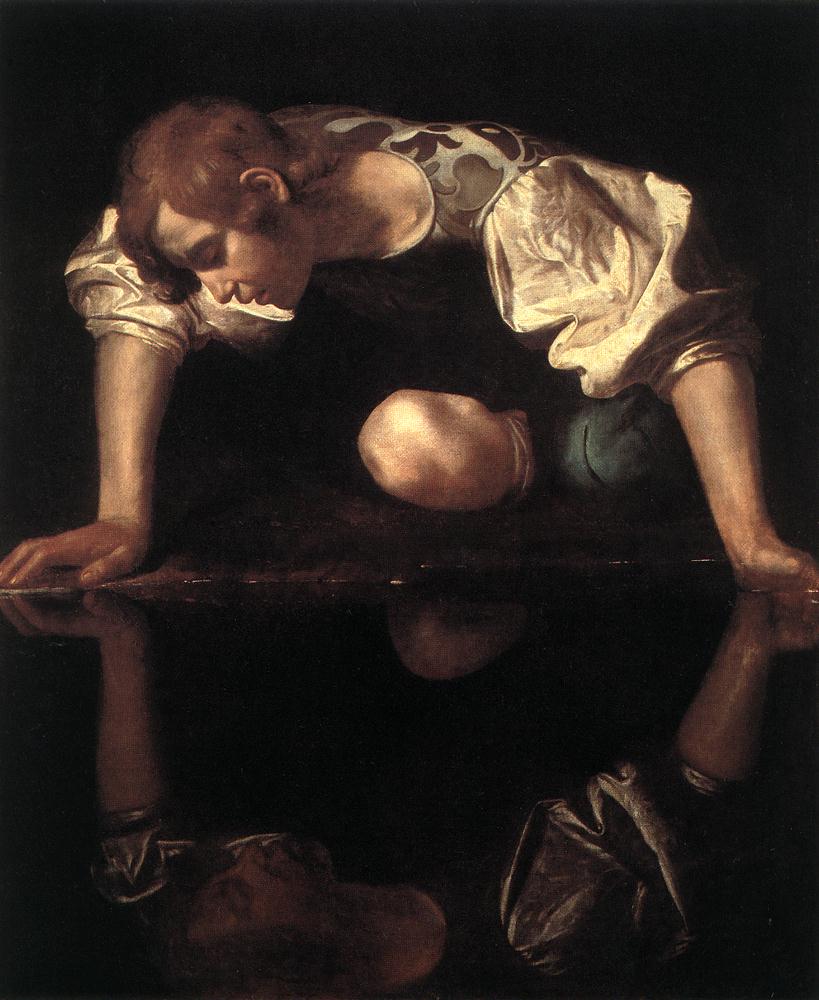
Caravaggio - NarcissusThis is the next installment in the Beauty series (for the complete series, click here).  This is based on the manuscript I wrote for a message I gave at Epiphany Fellowship in Philadelphia (links to both the manuscript and the audio are at the bottom).  We’ve gone through a lot so far, including a discussion of why we long for Beauty, a definition of Beauty, and how science and nature are beautiful.  This series has received great feedback from people (and it’s only about half done!).  So feel free to jump in and comment and keep the discussion going.  Today’s post is on the beauty of Art.

_______________

Humanity’s creations are beautiful.This is where we get to talk about art.

For some reason (I have no idea why) this was actually the very last section I worked on.Whether that means it’s a lot better or a lot worse, I don’t know.Anyway, art is a really tough thing to talk about.Its a huge topic that everyone has an opinion on, and as time has gone on, the conventions of art and what it is have broken down and definitions have broadened almost to the point of not really being definitions at all.Not only this, but you also seem to have people forgetting some very important things that we all must be reminded of.

First off, we are too quick to call God the “Supreme Artist”.That’s taking a description of humans and describing God with it.We’re right in starting with him in trying to understand art, but seeing Him as the “Supreme Artist” generally makes us picture in our minds the type of artistry we like best, and then begin thinking that God values that kind the most.This ends up being a bottom-up kind of description of art rather than top-down.Before God is Artist, He is a Creator, so we must start thinking of art creative-ly.This means that the way God is an artist is by making things that are not him and weren’t around before.So when I refer to God as Artist, that’s what I have in mind.

Secondly, we must keep in mind that God Himself was the first abstract artist.I kept reading all these books and articles written by Christians about art and so many of them seemed to not have room in their “theologies of art” for the abstract.The opposite of “abstract” art is “representational” art – art that “re-presents” something we know exists.When God did His artistry, it was all abstract.There was nothing to “re-present”So that being the case, I can’t think that God isn’t glorified in even the most abstract of art.There may even be an argument that abstract art is closer to the heart of God than representational.I’m not making that argument, but someone could.

Thirdly, as most Christians recognize, we create things because God does.In the first passage in the Bible that talks about people being made in the “Image of God” in Genesis 1:27, the logical question that follows is: what exactly does that mean?Now, theologians and philosophers have argued about this for thousands of years, and I’m not going to try and finish that fight right now, but I will say that it’s interesting that at this particular time in Scripture that this verse shows up, there’s only one thing we know about this God that humans are apparently in the “image of”: that He has the desire and ability to make things.I imagine that’s where we get our desire and ability.As G.K. Chesterton points out in his book “The Everlasting Man”, whatever role evolution may have played in the development of this world, it can’t by itself explain art.You don’t see monkeys in caves making bad art and humans now making good art.There’s something about art that reflects what makes us unique among all created things.

So when we do create and we do make, what does this have to do with beauty?Everything.I really do believe that art, like science, is a necessary endeavor in furthering God’s plan in History.God’s creation merely points to God’s Beauty.It doesn’t make beauty itself.Humans, on the other hand, actually make beauty and play an integral part in God “making all things beautiful in their time“.Let’s go back to our definition of “Beauty”:Complexity expressed simply – many complex strands woven into a sensually perceived simple tapestry.  The more complexity of “strands” that are represented in a piece of art, the more beautiful it is.And remember- different people, due to many factors, will find and feel different “strands” running through different pieces of art, leading to different personal aesthetic standards for each of us.

So imagine every strand in the universe is there before an artist preparing to do a piece.You have suffering over here, hope here, joy here, God, evil, life, humanity, death, birth, redemption, pain – all there before the artist.In art, the artist grabs as many of those strands as they can and crams and weaves them into the piece.And the more there are, the more beautiful it is.That’s why many people don’t like Postmodern art.There’s no complexity.It’s too simple and says nothing.There are not enough strands in it to strike the heart of a person so they can actually call it beautiful.A complexity of ideas makes art beautiful.In the Preface to The Picture of Dorian Gray, Oscar Wilde writes out his thoughts on Beauty and art.He writes: “It is the spectator, and not life, that art really mirrors.Diversity of opinion about a work of art shows that the work is new, complex, and vital.When critics disagree, the artist is in accord with himself.”Though I disagree with Wilde on some of what he’s saying, nevertheless he is noticing that different strands in any piece should resonate with different people.Some people will be offended.Others will praise it.It’s just the way beautiful things are. After all, it’s how God and the Gospel are.

I’ll end this oh-too-brief section on art with a few comments on the distinction between “Christian” art and “secular” art.As Phil Ryken, just down the street at Tenth Pres writes in his book Art for God’s Sake: Bad Christian art “ultimately dishonors God because it is not in keeping with the truth and beauty of His character.It also undermines the church’s gospel message of salvation in Christ.”How? Well, the kind of modern art that most Christians scoff at is art that is completely void of goodness, light, and truth.But Christian art tends to do the same thing by being void of other very real things in this world: depravity, pain, and sin.When our art shies away from these things, in effect, we’re avoiding showing the world what they need salvation from.Jesus didn’t come to save some cute coffee mug or bumper sticker kind of world.He came and suffered, bled, and died an ugly death that we celebrate as the most beautiful event in all of history.We must make room in our art to explore the darkness and pain of this world so we can show them that Christ can and does engage and enter into brokenness to see it redeemed.

To conclude, recall what I said a couple of posts ago on the structure and nature of history and time?  History is not the story of the present hurtling through time towards some future endpoint we call “heaven”.  Rather, it is the beauty of that future world invading the present, even as we sit and read this.  If “Beauty” is the end goal for which God is making all things in their time (Ecclesiastes 3:11), then whatever floods the world with Beauty is actually furthering this process of redemption.  Artists, both saved and secular, are actually missionaries of sorts, as they help reweave the fabric of the universe with the beauty of their creations.

Are you all starting to see why we need artists?Good artists doing good and beautiful work; and not trite, kitschy, cute things that keep us away from the real world out of fear that we might “catch it” or something?A creation always reveals something about its creator.If you are a Christian reading this right now, may I urge you to show the world through your creations that you have been saved by a Gospel that makes you care about excellence engaging darkness, beauty engaging filth, order engaging chaos, and redemption conquering sin?Let our art, our creations, speak of a beautiful work that a beautiful God has done in us, whether or not it is an explicitly “religious” piece.

Art is beautiful, and necessary for the redemption of this world.

Resources for this series:

Human Beauty{5} | (Anthropological Aesthetics)


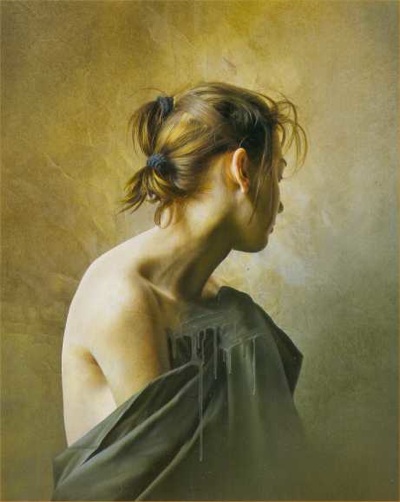
Sandorfi - Ange-smallerOkay, I’ve realized that I’m only about half-way done with this series on Beauty, so after this week, I’m going to make this into a once-a-week series for the rest of its duration. After Wednesday, after we talk about art, the theoretical foundation will be laid and the rest of the series is merely application. So every Monday, I’ll post the next part. I want to do this so people don’t get tired of it, so I can talk about the many other things rolling around in my head, and lastly, I want to do this so that people will actually engage the material and have time to digest it.

With that being said, this is the next section in the series on the Beauty of humanity. You will not find the usual bold/regular font distinction I’ve had to make in the other parts of this series because pretty much all of this is new material I didn’t get to cover in the message. I know this is all very inadequate. If I ever turn this message into a book or something, I’ll be fleshing this out a whole lot more. A few nights after I gave the message this whole manuscript was based on, I ended up talking to my roommate for about an hour further unpacking these ideas about physical beauty to him. He pretty much received an hour long lecture full of material that was in neither the message nor the manuscript. All that to say: there’s far more application of our working definition of beauty that could be made concerning human beauty, and far more questions that can be answered. Maybe someday I’ll engage some of those, but for now, I’ll just put this up and answer any specific questions as they come. I hope this is helpful. You can find the whole series here. Once more, links to the full manuscript and audio of the message are below.

Humans are Beautiful.

Humans are the crown of God’s creation. In the opening chapters of Genesis you see that with each day of creation, what God creates grows increasingly complex and nearer to the heart of God, until you reach that final creative act, where God intimately makes humans in his very own image. We can’t lose this. All humans have dignity, worth, and beauty, no matter where they end up eternally. God loves all humanity, and so should we. Being image-bearers gives us all innate worth and innate objective beauty. But, as we are all very aware of, humans also have a very subjective sense of beauty as well. This is where we get to talk about physical beauty briefly. Though I can’t do full justice to this topic here, I’ll try to give you some tools to better think through these things on your own. I know there’s a lot of brokenness over this issue in this room. Lots of pain and baggage that I wish I could deal with more. People who’s beauty has been abused or insulted. People who have used their own beauty to fill that eternity in our hearts, but to know avail.

Though I can’t hit every issue involved in this, I do want to say two main things that I hope are helpful. First, remember our definition of Beauty? Beauty is complexity expressed simply. Everything about us is always expressing the almost infinite complexity that comes from being human. Physical unattractiveness, it seems to me then, is when this human complexity is not physically expressed very simply, orderly, or harmoniously. Does this make sense? Is it not true that the ideas of “ugliness”, “grotesqueness”, and similar descriptors carry with them a sense of “busyness”, “disarray”, and “too much going on”- the opposite of simplicity and order? I say this not only to give an understanding of physical unattractiveness, but to to remind us that our physicality expresses parts of our humanity. In the tapestry of being human, our physicality – how we carry, dress, make-up, and build-up ourselves – emphasizes and expresses different strands within that tapestry. What parts of the beautiful artwork you are are you trying to accentuate and emphasize with your physical beauty? Your own strength? Your ability to draw eyes to yourself? Or do you use your beauty to point others away from yourself to the one of whom your beauty is but a shadow of? There’s a difference between True Beauty and Seductive Beauty. True Beauty is whatever attracts us towards our ultimate fulfillment and happiness. It draws us towards higher, more complex joys, excellencies, and goods. Seductive Beauty on the other had is beauty that tries and draw us away from our highest good and draws us towards lower things- baser pleasures, compromises, and harms that will eventually be our ultimate unhappiness and destruction. If you are not trying to draw people to their greatest good, then you’re drawing them to destruction.

Secondly, remember earlier, where I said that some people, because of culture, experiences, and such value different “strands” of that tapestry of the world differently? This is a complex way of saying that different people find different things beautiful, and that’s okay. That’s good. Humans were made to make value judgments. This is so that we who have been changed by God can look at him and rightfully and freely declare him as all Beauty. We were made this way so that we could assign true value to true things. But this good purpose of assigning value to things has become distorted because of sin and we often give the wrong value to wrong things. We long for Beauty, so we often (especially when we are not joined with God who is Beauty Itself) try to fill things with more meaning, more complexity, more “strands” in order to make them seem more beautiful, but it’s a false beauty that will never really deliver. It’s imposed on things and not recognized from within things. So, I think physical beauty is an outward reminder of the original goodness, order, and “complexity-expressed-simply” that people were made for, just like deformities are outward reminders of the fallenness of this world. We are supposed to be drawn to physical beauty. That’s okay. But sin takes that one strand of the tapestry of what makes someone completely beautiful as simply a human, and makes it more valuable than all the other strands. The problem is not when we recognize and enjoy physical beauty, it’s when we prioritize it above other things. So, feel free to pursue romance with someone you are physically attracted to (amen) and feel free to acknowledge when you see physical beauty. But, the encouragement I’ll give you is this: as you do so, make sure you are spending plenty of time enjoying and rightfully calling “beautiful” the God Who’s Beauty overshadows all others. Practicing right value judgments with the One of highest value helps us see ourselves and the rest of the world more properly.

Humanity is beautiful.

Art by Istvan Sandorfi.

Here are the links to the audio of the message, and the full manuscript.

Click for Manuscript Pdf

Manucscript

Click here for sermon audio

Audio

Nature, Science, and the Structure of Time |Beauty{4}


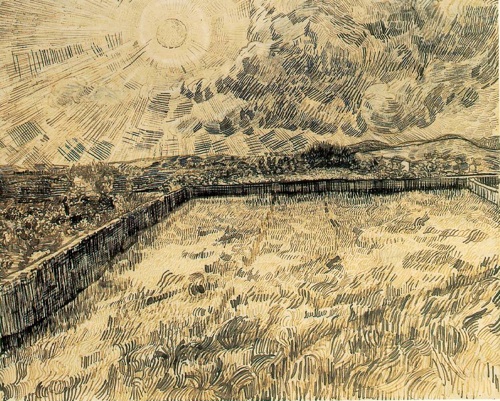
Van Gogh - Wheat Field with Cloud-smallerWe’ve been doing a little series here at the blog on Beauty. I recently gave a talk on it and I’m taking excerpts of the full manuscript, the fruit of several months of labor, and posting them online for all to enjoy and engage with. In this post, I break some of the order in the original manuscript to talk about both space and time. My point is simple: nature and history are beautiful. I’m applying a definition of beauty I discuss here, that says that Beauty is the attribute of something that expresses complexity, simply. To help explain that, I’ve been using the imagery of complexity represented as the strands that make up everything in the universe. Beauty is when these strands are woven together into a tapestry we can perceive with our senses (physical or spiritual). We’ve already discussed how God Himself is beautiful. Next week we’ll talk about the beauty of humans and then art. Should be good. The links to the full manuscript and the message audio are at the bottom. [Bold: things I had time to say in the talk// Regular: things I didn’t have time for]

God’s creation is beautiful.

The Bible clearly tells us in several places that nature proclaims God’s Glory, and that many of God’s invisible attributes are made plain to us by Creation. Thomas Aquinas, in his book Divine Names, in the section on God being called “Beauty” says that divine beauty is the motive for God creating all of this. God loves his own divine beauty so much that he wants to share it as much as possible. So, he creates creatures and mysteriously communicates this likeness of Beauty to them. God intends everything in creation to become beautiful in the fullness of His divine Beauty so, just like he has placed a deposit of eternity into our hearts, He has placed a deposit of that beauty in creation. Modern science was birthed out of an awe for this beauty. People looked out on the earth and saw that it worked on ordered processes, and these people determined to find out what those laws and processes were. Science and medicine is humanity accomplishing what theologians call the “Dominion Mandate” – when God commands the first humans to “subdue the earth”. Science is the process of looking deeply into the tapestry of the created world and seeing what strands comprise it. They get to stare into the inner workings of the beauty of God in this world. It’s sad that the Church has so divorced itself from this endeavor of worship. The comedian Steve Martin is also a novelist and playwright. He wrote one of my favorite plays called “Picasso at the Lapin Agile“. The premise is pretty simple: what would happen if Pablo Picasso, five years before he painted his definitive painting Les Desmoiselles d’Avignon met a young scientist named Albert Einstein in a small cafe a year before he published a little book called “The Theory of Relativity”? It’s one of the smartest and funniest plays I’ve ever seen. There’s a scene about halfway through where Picasso lays out his creative process and then looks at Einstein and says, “But what do you know about it anyway? You’re just a scientist. You just want theories”. Einstein replies with, “Yes, but like you, the theories must be beautiful. Do you know why the sun doesn’t revolve around the earth? Because the idea is not beautiful!” He further explains this and then Picasso says, “So you bring a beautiful idea into being.” God’s creation, and the laws that run it, are beautiful.

History is beautiful.

As our text says, History is the context in which all things are being made beautiful. This is where the Beauty of God, His creation, humans, and their creations all collide and interact in order to bring about this beauty and peace in the world. It is the ultimate tapestry in which all these strands are being woven together. One of the best understandings of history I’ve ever heard came from Harold Best, dean of Wheaton College’s Conservatory of Music and author of the incredible book that everyone should read before they die “Unceasing Worship” in a message he gave called “Continuous Worship: Is “Worship” the Only Word for Worship?” In it, he points out that the Eastern mind sees time as circular. Life repeats itself and moves in consistent cycles. The Western mind, on the other hand, sees time as linear, with a definite beginning and a definite ending. Now most of us have heard this before and then were told the various reasons why the Western idea was right.

Best, in the message, and our text tonight, both point out how our modern Western bias is misguided. Our text tells us some of the ingredients God uses to make all things beautiful in their time. And God employs these same list of things over and over and over again through time. In fact, one of the consistent themes of the book of Ecclesiastes is the vain repetitions and cycles that seem to make up life. In Best’s message, he points out that time is in fact neither linear nor circular. It’s helical – in the shape of helix. That shape, so essential to the creation and sustenance of life is actually woven into time. Life moves in circularly as it linearly moves through time. Assuming that’s true, let’s apply our definition of Beauty and see what happens. History is the story of God liberating all of creation from its bondage to decay and ugliness into participation in the glory and Beauty of God. If this is true, then every moment that goes by means the further Beautifying of the world. Imagine, then, time as moving in this circular fashion towards the glory and Beauty of God, the earlier parts being made of less woven strands and slowly, over the years, through time, God employs people, situations, art, Jesus, and the Cross to weave these strands ever and ever more securely together into the Image of Heaven.

What this means then is that time isn’t merely moving forward toward some point in the future we call “Heaven” or “the end of time”, Heaven is actually invading the present as we speak, as we sit here, as art is made, as people are seen as beautiful – we are actually ushering in heaven on earth as those strands are pulled tighter and tighter together to form this epic tapestry of history. In Marilynne Robinson’s book Gilead, she writes from the perspective of an old Congregationalist preacher about to die. This man, reflecting on life and heaven says this as he thinks about this very topic we’re talking about: “I feel sometimes as if I were a child who opens its eyes on the world once and sees amazing things it will never know names for and then has to close his eyes again. I know this is all mere apparition compared to what awaits us, but it is only lovelier for that. There is human beauty in it. And I can’t believe that, when we have all been changed and put on incorruptibility, we will forget our fantastic condition of mortality and impermanence, the great bright dream of procreating and perishing that meant the whole world to us. In eternity this world will be Troy, I believe, and all that passed here will be the epic of the universe, the ballad they sing in the streets. Because I don’t imagine any reality putting this one in the shade entirely, and I think piety {and a love for God has done on this earth] forbids me to try.” Jonathan Edwards described history flowing into the Beauty and Glory of Heaven like this: As time moves forward now and on through eternity, God’s people are ever steadily rising higher and higher into the Glory of God, perhaps with an increasing velocity towards a height to which they will never attain. This history is beautiful. Don’t waste it on trivial, lower, ugly things.

Click for Manuscript Pdf

Manucscript

Click here for sermon audio

Audio