Urban Lessons: Why cities will save our souls. [VIDEO]


Yesterday I started a brief little series going through some lessons I have learned from my first semester back in seminary. I first talked about how (at least in my mind) cities had to be taken off their pedestal. There are desires and needs of the human soul that can’t be met in cities. We need other types of livable environments as well.

And yet, through this semester I was re-grounded in my belief in the essential importance and centrality of urban settings. Above, you’ll find a video reflection I had to make in which I give my perspective on this question: Why should Christians engage in cities? In it, I speak about some of these dynamics that are in greater detail below. (Sorry for the poor video quality.)
Continue reading

Urban Lessons: Why cities will kill your soul.


paul-philly-skyline-2I just completed my first trimester of seminary (round 2). I took a class class on Urban Christianity that, while it may not sound like a difficult and comprehensive graduate course, really was demanding at every level. So much so, in fact, it has really changed a lot of the ways I’ve thought about the city and how humans relate to it (especially Christians).

The class really caught me at just the right time. To a certain extent, even before coming to this class, I “got” it. I had imbibed enough Tim Keller and Church Planting material to understand the centrality of the city in the story of the Bible. Further, my church is now my fourth urban church plant, I go to church and live, literally, in “Center City” Philadelphia, and I work in the midst of the brokenness of the city, seeing the extremes of its beauty and brokenness in ways that few people do in their everyday lives.

And yet, especially due to the rural roots of “certain people” extremely close to me (haha), I felt I needed to engage in this class to develop a far more nuanced view of the city. And I think I got that. Over a few posts over the next couple of weeks, I’d like to share some of the lessons I’ve learned through this time. I think some of these things are lessons that all of us cool urban twentysomethings could do well to internalize.

Continue reading

A Brief History of Secular Discernment & Decision-Making


fall-river-philly-kelly

This is a post in our series on the Christian Practice of Discernment. 

Struggles around decision-making have existed ever since humans first had a sense that their lives had some sort of telos or purpose. Eventually, humans came to an understanding that each decision directly bears on the events and “story” that will come after it. And so they started thinking through principles that could guide this process. Later, Christians would contribute greatly to this discussion.

But before we can start exploring how the Bible and Christianity engages with decision-making and Discernment, we need to see how else it has been engaged throughout history. Today, we’ll look at a “secular”(*) history of decision-making and Discernment. Our next post will look through Church History.
Continue reading

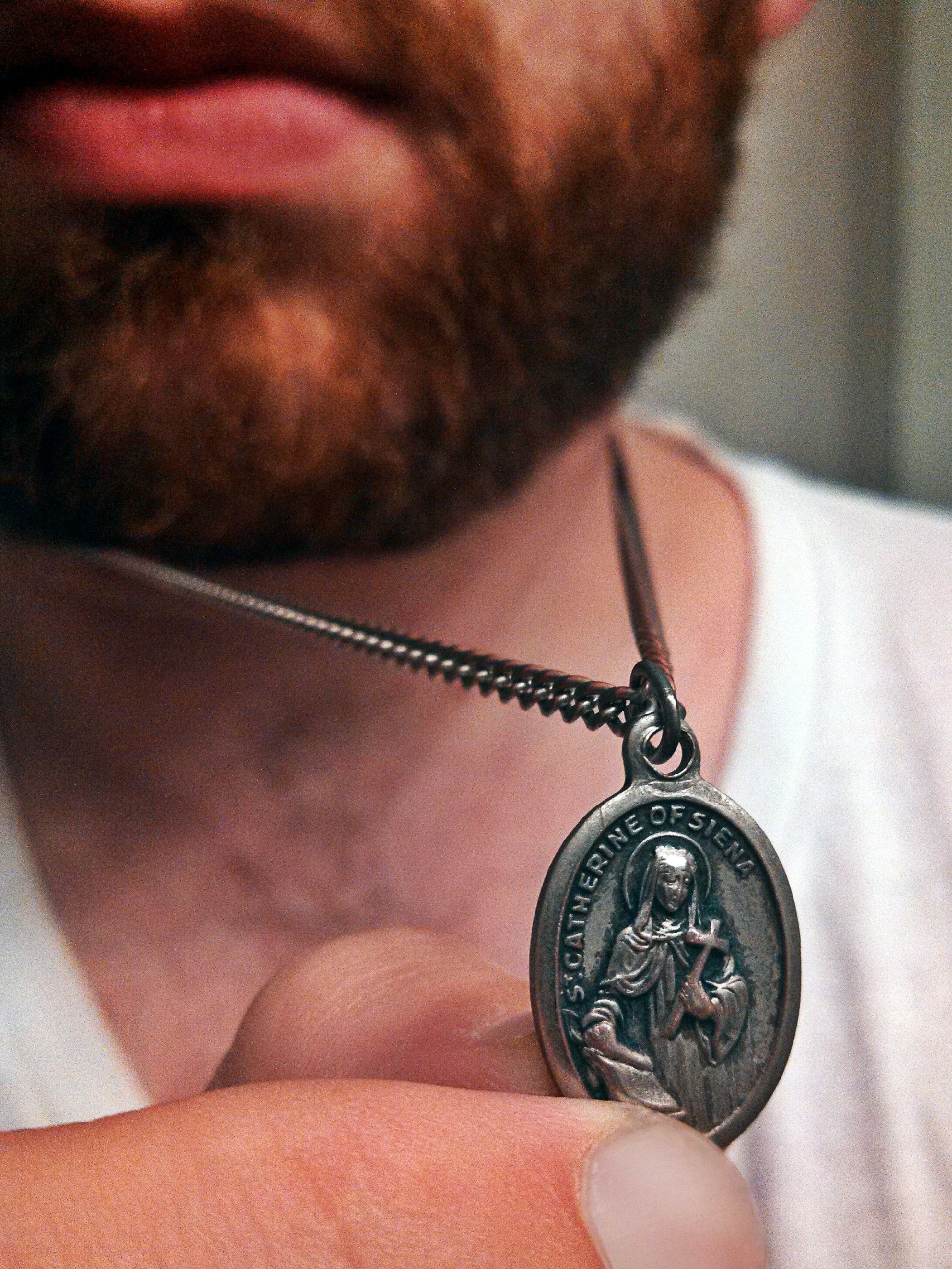
Meet Catherine of Siena, the Saint I Pray To.


st__catherine_of_siena_iconNote: this weekend, I wrote a post collecting all of my responses to people’s Protestant concerns with praying (or “talking”) to saints. Before you express your disagreement to this present post, I’d ask you at least read some of that.

Well, my previous post on praying to saints caused a lot of conversation on my social media. Slightly more than half of people disagreed with it (strongly), and the rest seemed to appreciate it. So before I begin today, I want to make something clear: this blog’s purpose is not to start flame wars or disagreements among friends. I genuinely want to be helpful to people–even when that means challenging and stretching them, and even when they strongly disagree with me. One need not be convinced of a position to be helped by reading about it.

With that being said, let me tell you my experience of finding a saint to pray (or “talk”) to, and then let me tell you a little bit about her.

Throughout history, there have been saints to whom God has given unique grace in certain areas of life. When the Church knew of and could recognize such saints, it declared them “patron saints” of those things they seemed to have special, almost unparalleled grace for.

In times of need in a specific aspect of life, much of the Church throughout history has felt comfortable praying to those earlier saints that seemed especially graced for those kinds of situations.

So…here’s my funny story.

Continue reading

Some Protestant Saint-Praying Clarifications & Responses


Wow. Last week’s post about praying to saints really brought out more passion in people than I thought it would. Both here on the blog and on Facebook, here were some clarifying comments I left. By the way, this was the best comment on that post that challenged my thinking. I hope this helps.

First, here is my final, quick summary clarification of my position and why Evangelicals need not be freaked out about all this. If you read nothing else on this post, let it be this:

I really wish there was a different and better word than “prayer” for this. I agree that what most of us Protestants think of when we think of prayer really should only be directed at God.

Further, I’m simply advocating for this to be one more optional means of grace a Christian can participate in, depending on how they are wired. This shouldn’t take away from anyone’s participation in union with Christ or praying to him anymore than Bible memorization, fasting, listening to sacred music, or reading a devotional book does.

Everything critics have said they think should only be reserved for God, I absolutely agree with. I am certainly not suggesting we turn our affections, praise, adoration, or even our hearts towards those that have died. I just think we can talk to them, and they can intercede for us to God. I don’t think they talk back, that we experience their presence, or that they magically impart any more of God’s favor than asking a friend to pray with us would.

As Paul said, our outer selves are wasting away, while inwardly we’re being renewed day by day. Those that have died are, in a very real sense, just as “alive” as we are now, albeit absent from the body.

Therefore, all I think is (1) they can see and know what’s going on down here, and (2) they talk to God.

If those two things are true, then I don’t see the inherent evil, harm, or soul-destroying error it might be to simply “talk” to those that have gone before–not “commune with”, “worship”, or any of the other dimensions of “Godward prayer”. Just sending up some prayer requests to the part of the Body of Christ that is absent from the body, but present with the Lord.

What’s the harm in that?

Continue reading

Catholics Aren’t Crazy: On Praying to Saints (Happy All Saints’ Day!)


This is a post in an on-going series called Catholic Aren’t Crazy exploring misconceptions Protestants have about Catholicism and lessons we can learn from them.

UPDATE: I responded to some critiques and gave some clarifications.

UPDATE II: Here’s the story of the Saint I pray to, Catherine of Siena.

Yesterday was Halloween. That makes today All Saints’ Day (read more about the history of these holidays in yesterday’s post).

All Saint’s Day has taken on different meanings for different groups of Christians. What seems to stay consistent, though, is that it is a celebration of the victory attained by those faithful Christians who have died. They are no longer pilgrims, as we are, but are the triumphant ones, having finished their race well and been brought into their peace with God. We celebrate Christ’s effectual victory over sin and death and that this has been granted to those that have gone before us.

The hope and encouragement in this holiday is not simply that we “remember” these saints, or meditate on their example. Instead (and this is important), there has been a long-held belief in the Christian Church that we still have a mystical communion and relationship with those saints that have already died. When Christians throughout Church history (and the Bible) have referred to “The Church”, they don’t simply mean those still around today, but all the saints who have ever lived (even in the Old Testament!). We are all the Church.

So we can truly celebrate those that have gone before us because we are truly still connected to them in a very real and vibrant way.
Continue reading

Discernment: Making Decisions Christianly & Why It Matters


paul-city-bwMore so than other practices, Discernment is not something we try to do to enrich our lives or draw closer to God. Rather, it is a basic function of our storied existence, driven by our own internal narratives. Because of this, we necessarily find ourselves in positions where decisions great and small need to be made.

Unlike most other practices of the Christian faith, the question here is not whether or not we will practice Discernment, but rather how well we will do it, and how intentionally we will cultivate it. The challenge is not so much to articulate a vision for Discernment so much as to find out what truly Christian Discernment looks like.

series intro

That is why I chose Discernment for a research paper I wrote for my seminary program this semester. It’s essential to human life and being. This is also why I want to share many of the lessons I learned along the way of writing this paper and putting into practice. And so today I’m starting a new blog series exploring this Christian practice of decision-making, also called Discernment.
Continue reading

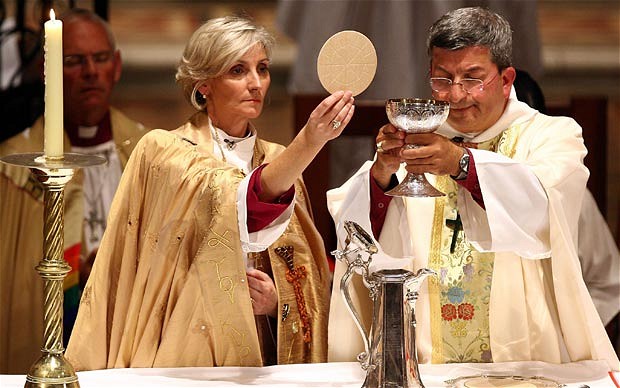
So, some women were ordained last week and…it wasn’t that exciting.


female-woman-bishop-anglican-communion

This is a post in our on-going series on Women in the Church.

The past week of my life was filled pretty heavily with church stuff. First, my church hosted our denominational meeting for those churches in our church family that are in cities. They talked about new developments in my seminary program, gave updates on the health of current church plants, adopted the 2014 budget, and ordained and commissioned new pastors to serve in churches across the country. It was a day and half filled with theology jokes, family talks, overdue introductions, and post-meeting sessions of cocktails and cigars on the front steps of the church.

Second, as I mentioned last week, my church spent yesterday celebrating it’s maturation from a “church plant” (a church that still relies on other churches for most of its support and leadership) to a full-blown self-sustaining, self-leading church. My parents came in town, the music was loud, the sermon was great, and we had a large block party after the service with a moon bounce, chili cook-off, and homebrew contest (the bourbon barrel stout won, by the way. It was called “The Nord’s Wrath”).

It was great, and it will be a block of days I will not soon forget.

Continue reading

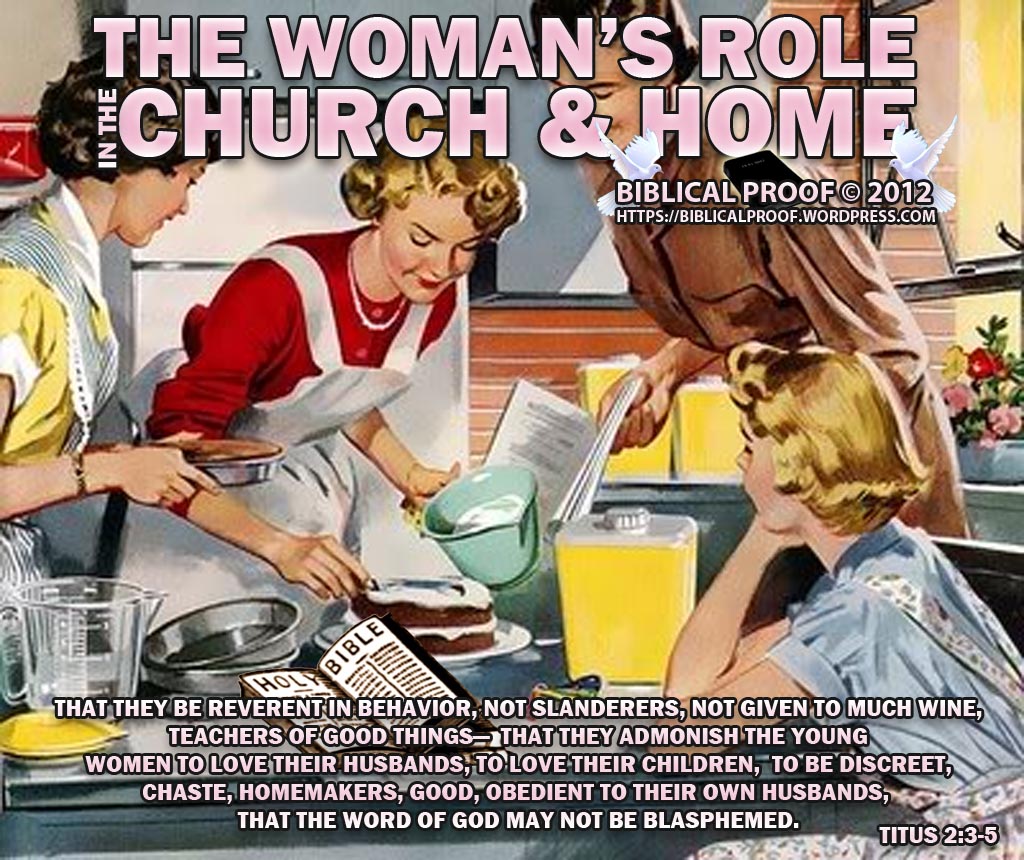
The Woman’s Role: What’s Wrong With This Picture? [casual fri]


biblicalproof-womansroleinchurchandhome

In my research for this on-going series on Women and the Church, I ran across this picture above. And for this Friday, I wanted to throw it out there to get people’s reactions.

If you agree with the overall point, do you appreciate the representation? Do you think this is a helpful representation? How would you present your perspective differently, in visual form?

If you don’t agree with it, what would you say to the designers of this picture? How would you counter this use of this verse? What bothers you the most about the picture? Is there any core of truth to this picture?

Discuss.

(image source)

“Coffee Crucifix” (a sonnet for National Coffee Day)


Coffee Crucifix

Crescent ring under porcelain smooth
___stain the wood-stained finish.
______(It is finished.)
___Marked with muddy water;
___mark the merry day; to
___marry the murdered man.

Floral notes in blackened waves
___crash the shore of trembled lips.
Choral bright, in darkest night,
___wake the tone of trebled kiss.

Younger tastes left open-wide; older eyes made
satisfied.

Mark the wood: complex simplicity.
Pierce my heart: storied infinity.

[read my other Holy Week poetry here]

all writings licensed: Creative Commons License

I have found the Holy Grail against women in leadership, and I am ruined


Countering-the-Claims-of-Evangelical-Feminism-Grudem-Wayne-9781590525180This is a post in an on-going series on Women in the Church.

A while ago, I stumbled on a clearance copy of the book Countering the Claims of Evangelical Feminism by Wayne Grudem. Now, for those that don’t know, Grudem is one of those super-influential evangelical theologians that doesn’t get a lot of play in the wider culture. He’s not going to make any headlines like Mark Driscoll, and he’s not going say anything too outside the conservative box, like Rob Bell. He’s a quiet intellectual who writes and influences a lot.

Through college, I had a bunch of friends obsessed with his “Big Blue Book”, Systematic Theology, which is an accessible, clear introduction to what became the “New Calvinism” fad. In short, he’s sort of a Calvinistic Baptist that believes the Holy Spirit is still doing more outlandish sorts of things.

And yet, if you look at all of his publications, the vast majority of them are simply various versions and editions of just these two books (well, admittedly, the book I’m writing about today is an abbreviated version of this book). It’s quite easy to see that Grudem has devoted his life primarily to two things: Systematic Theology and Gender Roles in the Church. A lot of the arguments you’ll hear from complementarians–those that do not think Women should be allowed to exercise authority in Church or Home contexts–come straight from Grudem.

And so, in the interest of being fair in my Women and the Church series, I picked this book up to hear “the other side”. The book goes through 45 of (what Grudem feels are) the absolute best Egalitarian arguments. He lays out the individual argument, usually printing a paragraph-length quote from someone who has expressed that opinion. And then he offers responses (usually about 1 to 4) for each of these points. Each chapter is 2 to 5 pages long.

I went into the book with only minor curiosity, because I was raised with his perspective, was completely inundated with it in college, and pretty much felt I knew most of the arguments he would throw out there.

Well I was wrong.
Continue reading

AMAZING Interview and Q&A about Women in the Church


haddad-mimi-rhe-egalitarian-womenWell, I think it’s time to restart our on-going series on Women in Ministry, don’t you?

While researching a particular argument for limiting Womens’ role in the Church, I stumbled on this interview and Q&A on Rachel Held Evans’ blog. It is a conversation with Mimi Haddad, President of Christians for Biblical Equality. And it is wonderful.

This whole disagreement about Women in the Church can produce a lot of noise that’s difficult to sift through. Too often, people on both sides end up retreating back to their respective sides and both fulfilling a lot of stereotypes while lobbing that accusation at the other side. This ends up entrenching the conversation even more deeply and intractably. The conservatives end up speaking sort of demeaningly about women (even unintentionally) and accusing egalitarians of not believing the Bible, all while egalitarians end up resorting to radical and simplistic feminist-sounding rants and calling all conservatives misogynists.

Haddad’s interview is wonderful because it moves against this. She is gracious, though firm in her convictions, and maintains the big picture of the discussion rather than getting lost in the rabbit-hole of interpreting individual proof-texts. She speaks in such a conversational, disarming, and winsome way. She brings up common-sense and clear-headed perspectives that are such a breath of fresh air for someone who sits for too long trying to pick apart individual texts. You can tell she loves the Church and the Bible and wants to honor them both well.

It also reinvigorated me to continue this discussion. There is still much more to be said, and as I have the privilege of being part of a church that will be ordaining its first female elder next month (the first church of this kind I’ve been a part of!), these issues are especially pertinent to those around me and the discussions we’re having.

And so, in the weeks to come, see this space fill back up with this discussion. Many of the things I want to write about will be building upon many of the ideas found in this interview and Q&A. So, if you want a big picture preview of what’s come, check it out. Really, I can’t recommend it enough.

Martin Luther on Baptizing Babies


“You say you don’t baptize children because they don’t believe. Why do you preach the Word to adults who don’t believe, unless perhaps in the hope that they may believe? You do it on the strength of God’s command alone. For if you baptize me because I say I believe, then you baptize on account of me and in my name. Therefore, since you don’t know whether I believe or don’t believe, you do it only because of God’s command. It isn’t necessary to exclude children, since as a rule you baptize all, whether they believe or not. It would be a terrible thing if I were baptized on the strength of my confession.”

– Martin Luther (Table Talk No. 549) on paedobaptism

“Simplistic Atheism: a final response” by Daniel Bastian [GUEST POST]


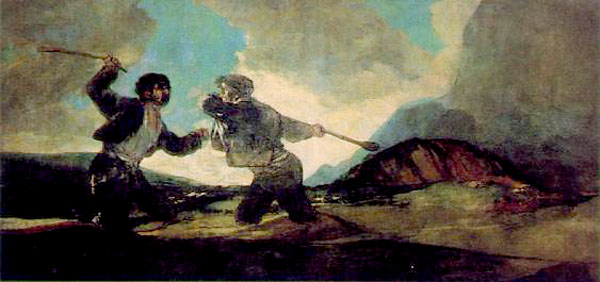
de Goya-fight with cudgels"

(Note: These exchanges are now complete. There is a Table of Contents to the discussion now available.)

Well, it seems that we were not in fact done with this little series. After my final post, Daniel chose to take me up on my offer to have the final word (as I normally try to do in exchanges like this). He has chosen to respond, point-by-point, to my list of what things would lead me to embrace Atheism. If you feel like any of the points still demand a reply from me, or if you have any questions about what Daniel says, feel free to to comment here, on Facebook, or get in touch with me privately. For my part, though, I consider this particular set of exchanges finished. Once again, I thank Daniel for this exchange. I hope you enjoyed it as well.

Paul,

When I initially decided to compile a list of criteria that would convince me my conclusion on the question of theism was wrong, I had sincere hope that a Christian, Muslim or other person of faith would tally up a corresponding register. I am glad to see you rose to the challenge and enrolled in this dialogue. It has been a wonderfully enlightening experience for me, and I do hope that sentiment is mutual.

I read your piece the day it was posted and while at first I found much of it persuasive, the more I reflected the more I realized it was probably the list I would have drafted two years ago, before I renounced my faith. Much of your criteria seems to rest firmly on the aesthetic appeal of the Christian narrative. And this would seem to slot right in line with your epistemological moorings-a concern for the communal connection, compelling force and overall mesmerism of a worldview over against its underlying facticity.

Yet it seems this only holds true up to a certain threshold, given a few of the items on your list. You seem to be OK with affirming the faith given its impact on your life, the power of influence you’ve seen it have on history, and the way it has shaped others with which you’ve crossed paths. But if you were to discover beyond reasonable doubt that this narrative was based on so much myth, that this loosely corroborated Yeshua the gospels are based on was a mere mortal (item #1), you would relinquish the faith forthwith.

Thus it seems to me that our epistemic divergence is one of degree, not of type. With that in mind, I’ll attach some brief notes beside the items in your list. Continue reading

A Christian & An Atheist: A Discussion [a table of contents]


Schrott-Cigarettes-Bible-Jeremiah

I had the privilege over the past couple of weeks of engaging in a spirited back-and-forth with a good friend of mine, Daniel Bastian. Unfortunately, in the speed with which this exchange occurred, I know it was hard for people to keep track of the writings, the arguments, and the comments. And so, I’m writing this post in hopes of making it easier for people to follow. Here you will find a “Table of Contents” of sorts for the entire exchange, as it appeared on this blog.

Sadly, much was said over Facebook comments (and even blog comments) that cannot be sorted out and highlighted in their proper place. Comments on each post were scattered among different places and sites and posts, and so to try and consolidate them and make any sense of them for the reader would be nearly impossible. These long-form pieces will have to do, though I’ve provided the link to the Facebook comments when able, in case the interested reader wants to wade in.

____________________
Continue reading