God & Her Glory {3}: The Biblical & Historical Evidence


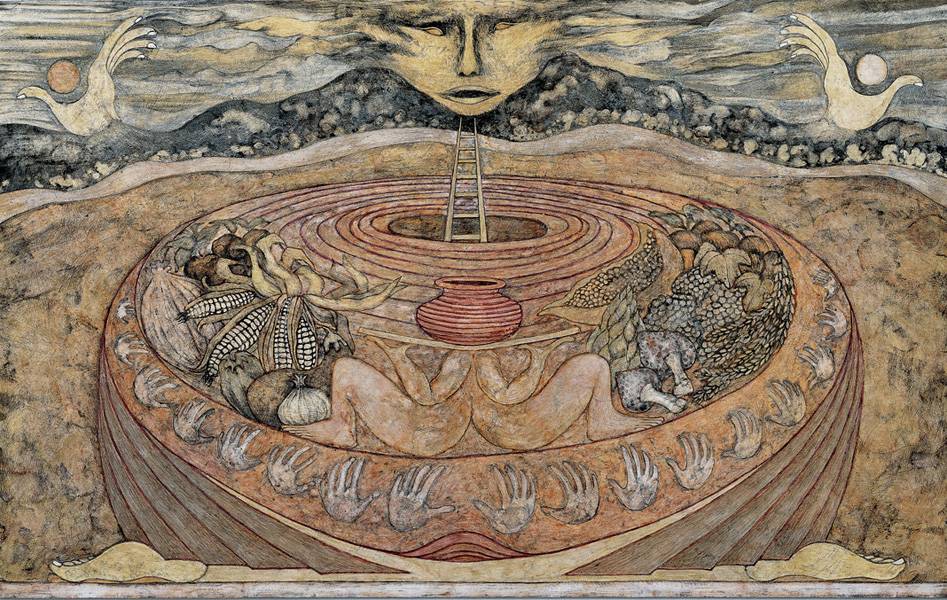
meinradcraighead-enclosedgarden

Having gone through this series on feminine language for God, I realize now I should have started with this post rather than ended with it. Following an almost Lutheran model of Law then Grace, I wanted to impress upon us the depth of the problem first, and then give us the “Good News” that the solution is both available and faithful. This may not have been the most helpful way to do it. My apologies.

Nevertheless, here I’ve tried to provide a comprehensive list of Biblical and historical references to the Feminine Divine. The Biblical texts are mostly in order that they appear in the Bible, the historical quotes are roughly chronological. Some pieces may seem stronger than others. I offer them with little or no commentary. Due to the length of this, significant quotes are in bold. If you have any questions, feel free to ask below and I can provide further sourcing, answers, etc. as needed. I hope this helpful. Continue reading

God & Her Glory {2}: How our Words & History Affect Women


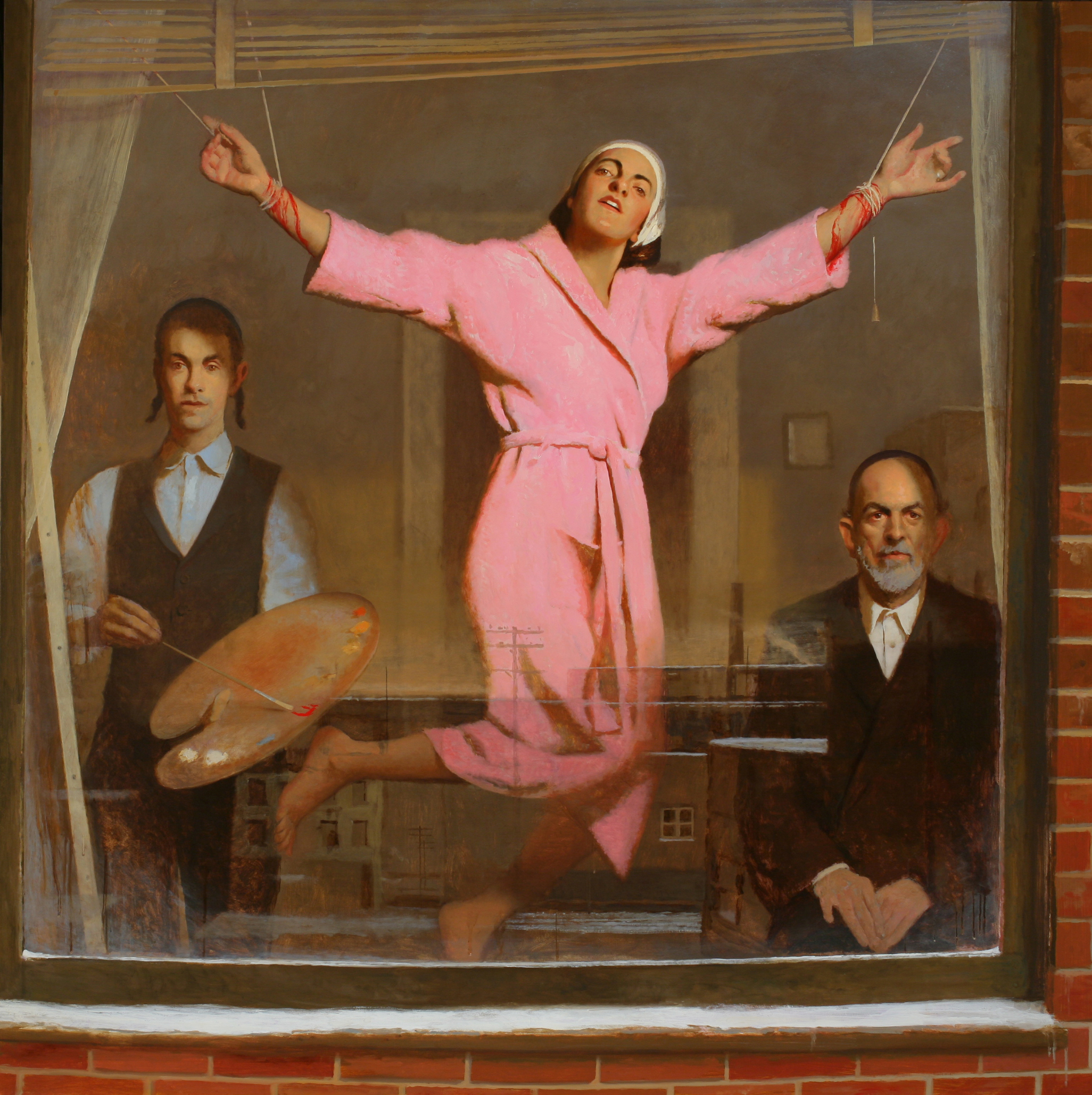
Bartlett-The-Brooklyn-Crucifiction_BoBartlettI have been surprised about how strongly people have responded to this little series on using feminine language to talk about God. I want to make clear the audience I have in mind. I am talking to people that either haven’t really thought about this before, or feel a little weird about it but don’t have a strong opposition to it. If you believe that this is actually wrong, sinful, and deeply unfaithful to the nature of God, then these posts probably aren’t for you. We’d have to go much deeper into a theology of Scripture, Sexuality, Humanity, and Gender. I may do that another time, but not right now. Today, I want to talk about the way our language about God speaks to gender and some history of how we use gendered language.

Theology of Gender Language

For the longest time, the way I would have defended masculine language for God would be with an appeal to the idea of “headship”. This is the idea that different systems and ways of human relating have people that “head” them–like a “head” of State, for example. And as the “head”, this leader stands as the representative for everyone they lead and care for.

Conservatives on this issue (as I used to be) believe that husbands act as the “head” of their family unit, including their wives. Most of these conservatives would be the first to tell you that this does not mean that women in general should see men as their “heads” in general. And yet, there is still this idea that “maleness” serves as the “head” of “femaleness”. In other words, “maleness” serves as the representation of all humanity, whereas “femaleness” does.

Continue reading

God in Her Glory {1b}: A Good Facebook Debate (for a change)


wwii-woman-we-can-do-it-feminismWow. I’ve actually been surprised at the response to the last post in this little mini-series on using feminine language to talk of God. I thought I was addressing one simple thing in the life of churches, but I misjudged the degree to which people would feel like this touched on everything from their thoughts on the Bible to the nature of Jesus himself. One of the best sets of exchanges was on Facebook in response to yesterday’s post. Below, I’ve reproduced a lightly edited version of the conversation. I hope you find it interesting as well. And let me know what you think!

DEBATER: Your post says, “The model of God as Father may be profound and true; but it is not the only model, and it does not render other models less true or profound.”  It’s Jesus’ own self-disclosure and revelation of God. It’s more important than any other ‘model’ and it isn’t really a model. “Father” is not a metaphor. Its a reality for Jesus. And I’m not talking about Jesus’ physicality like his weight or hair color. Jesus revelation is of God as Father. That’s the particularity. He said pray to God as father. And he’s the Son. That’s ontological. The feminine is redeemed in Jesus, but its redeemed not by Jesus taking on the sign of the feminine, but by taking on the sign of the masculine redeemer of the oppressed and abused feminine.

ME: Your last line especially uses terms and ideas entirely foreign to the Scriptures. I’m actually shocked that you saw no issue in writing that. Women need a male redeemer to be redeemed? Even if you point to the ancient cultural idea of the male kinsman-redeemer, surely you aren’t saying that this (clearly) cultural accommodation is some revelation of the essentially gendered nature of God and redemption? The Old Testament also had lambs being sacrificed, and not people. Does that mean that Jesus in some sense had to partly be an “actual” lamb rather than a metaphorical one?
Continue reading

God & Her Glory {1}: “Our Mother, Who Art in Heaven…”


T78 INT 70

Well, they warned me.

It was my first year at my first seminary. I had the honor of being chosen for an “Inter-Seminary Seminar” course in which people from five very different seminaries got together, were given a topic they all disagreed about, and then spent a semester writings papers to and debating with one another.

One of those seminaries was a liberal Lutheran one. I was told ahead of time that the students (usually women) from this school, every year, always made a big, emotional deal about masculine language being used in the papers. And indeed, at the beginning of every single paper discussion, the first comment was always a tear-filled lament over the use of masculine pronouns throughout the paper.

And so, when it was my turn to write a paper, I tried to be sensitive to this. I changed “mankind” to “humanity”, “brothers” to “brothers and sisters”, etc. And yet, when my paper came up for discussion, they opened up once more with an impassioned complaint against the male-centered language. I told them that I had tried to be sensitive to that. They said, “no, the problem was in your use of the masculine pronouns for God!
Continue reading

National Geographic (& a poem) on International Women’s Day


Sandorfi-KalfonariumToday is International Women’s Day, and to honor it, National Geographic has a powerful photo spread of women from around the world, called “Portraits of Strength”. While looking through some of the comments, I saw this beautiful poem posted by the poet herself. Read the poem, see the pictures, and listen to the stories of a woman today.

I am a tree
Helen Bar-Lev

Did you think I was a woman?
Oh no, I am a tree
rooted and immovable
impossible to conceive
the scenes
that I have seen

Now gnarled and warped
weathered and aged
wrinkled and withered
bent to the ends of recognition
too rigid to give in
to the whim of man
I stand true to the tune
of the wind echoing
my own inner rhythm
persistent, consistent, constant

Perhaps every tree
was once a woman –
only a woman could stand so strong
fall so proud
when the axe of age claims her
and earth sets a bed for her

© 10.2006 Helen Bar-Lev


[image credit: “Kalfonarium” by Istvan Sandorfi]

On Theology: Choose Your Own (Feminist) Adventure


Delaunay-City-Paris

I recently told some friends about this year’s Lent series on “Male Feminist Theology”. One of them looked at me suspiciously and said, “I know what each of those three English words mean by themselves, but I have no idea what they mean together; it sounds like you’re fitting together things that don’t naturally go together”.

People often hear phrases like “Black Theology”, “Liberation Theology”, or “Feminist Theology”, and feel like there is a profound arrogance at play–isn’t simple “Theology” enough? Why must each group have their own pet theological opinions that belong only to them? But this is to profoundly misunderstand these theologies.
Continue reading

Quick Christian Feminism Quiz: What do you think of this image?


edwina-sandys-christa-edit

From Lynn Japinga’s excellent Feminism & Christianity: An Essential Guide (p.93):

Artist Edwina Sandys created a sculpture of a female form, arms outstretched as if hanging from a cross. The sculpture, entitled Christa, has created controversy wherever she is displayed. Critics say the statue defies the historical fact that Jesus was a man. Some viewers feel that the symbol of the cross is degraded or even blasphemed by a Christ in female form. Others are disturbed by the sexual overtones of the naked woman. Some people are troubled by yet another violent image of female suffering. A few people see in the sculpture the message that the death of Jesus symbolizes the pain of all human suffering.

The response to [this image] reveals various theological assumptions. Some people dismiss…the sculpture because they are literally false. Jesus was a man. End of discussion. Other people consider these images offensive and uncomfortable. It insults Jesus, and them as well, to think of him as a woman. These imaginative reconstructions of important events in the life of Jesus pose an important theological question: What difference does it make that Jesus was male?

Have at it. What do YOU think about this piece? What’s your first gut reaction? Why? What difference does it make that Jesus was male?

Continue reading

Lent & Male Feminism: Reflections & Repentance


ash-wednesday-faces-of-the-faithful-photos

Today is Ash Wednesday. It is the beginning of the Lent season of the Christian Church Calendar. It is the time of year in which we turn up the volume on those darker whispers in our hearts to hear what they say. We turn our ears to the cries of the world bear the wounds of a weeping earth in our hearts and hands. And oh, the wounds are deep.

We come to this Lent with the weight of so much on our collective shoulders: so much brokenness, so much injustice, so much pain, heartache, death, and violence in the world. I honestly thought that 2015 would bring relief from 2014. So far, it has not.

But in the midst of the chaos that reigns both within and without, I am determined to turn my thoughts and this blog towards one area in which the Church as a whole needs to repent; an area in which I feel we can make some real progress in this day and age: Women in the Church.

I do have an on-going series on this topic that I’ve been adding to for the past couple of years, but I think it’s important and helpful to turn towards it particularly now. Lent has always had a deep connection to this topic for me.
Continue reading

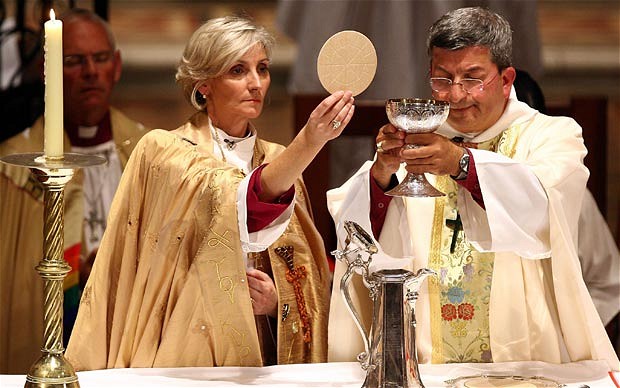
Congrats to the Women of the Church of England!


female-woman-bishop-anglican-communionI thought it would make more headlines this week in the U.S, but it didn’t, so I thought I’d put it here. Two days ago, the Church of England voted overwhelmingly to allow for female bishops in their ranks. They had for twenty years now allowed for female priests but–as is the odd logic that accompanies church hierarchies such as this–they thought it a step too far to allow women to be bishops. I don’t know. But either way, let us rejoice their is one more place in the world where women can fully and freely exercise the gifts God has given them.

Click here for more posts in my occasional series on Women in the Church.

Anna, the Prophet of the Lord | Luke 2.36-38


There was also a prophet, Anna the daughter of Phanuel, of the tribe of Asher. She was of a great age, having lived with her husband seven years after her marriage, then as a widow to the age of eighty-four. She never left the temple but worshiped there with fasting and prayer night and day. At that moment she came, and began to praise God and to speak about the child to all who were looking for the redemption of Jerusalem.
Luke 2.36-38

What a powerful testimony. She was only married for seven years before her husband died. She had been a widower for 84 years. What pain and loneliness she must have felt. And yet, how did she spend it? Serving God’s people as a prophet, being especially in tune with those “looking for Israel’s redemption” and then proclaiming Jesus to them. Even before the Cross and Resurrection, Jesus was the answer for the longing of God’s people for redemption.

Also, Luke said he went through all of the accounts and picked and chose what would get “in” and what wouldn’t. Of all the little anecdotes he chooses to keep in and keep out, he chooses this. What a powerful woman she must have been for her to have been seered into the collective consciousness of God’s people retelling this story.

See other Marginalia here. Read more about the series here.

An Egalitarian Easter Week Meditation [QUOTE]


From Cyprian, 3rd-century bishop of Carthage, to a virgin consecrated by the church:

““I will multiply,” says God to the woman, “thy sorrows and thy groanings, and in sorrow thou shalt bring forth children, and thy desire shall be to thy husband, and he shall rule over thee.” You are free from this sentence. You do not fear the sorrows and the groans of women. You have no fear of child-bearing; nor is your husband lord over you; but your Lord and Head is Christ, after the likeness and in place of man; with that of men your lot and your condition is equal. . . .”

Moses the Levite? | Exodus 2:1


Now a man from the house of Levi went and married a Levite woman.
Exodus 2.1

These are Moses’ unnamed parents. It’s interesting that the text makes a point to say they are both Levites, the priesthood branch of the family. Notice that both Aaron and Miriam, Moses is siblings, would have also come from the priesthood side of the family. I wonder if this gives Miriam a certain Priestley role in the community as well? Either way, I never noticed that Moses and Aaron are both Levites. This gives Moses a much more priestly, rather than prophetic, role in what he does, and the function he serves in the story and the community.

See other Marginalia here. Read more about the series here.