What is Faith? (a call to Atheism)


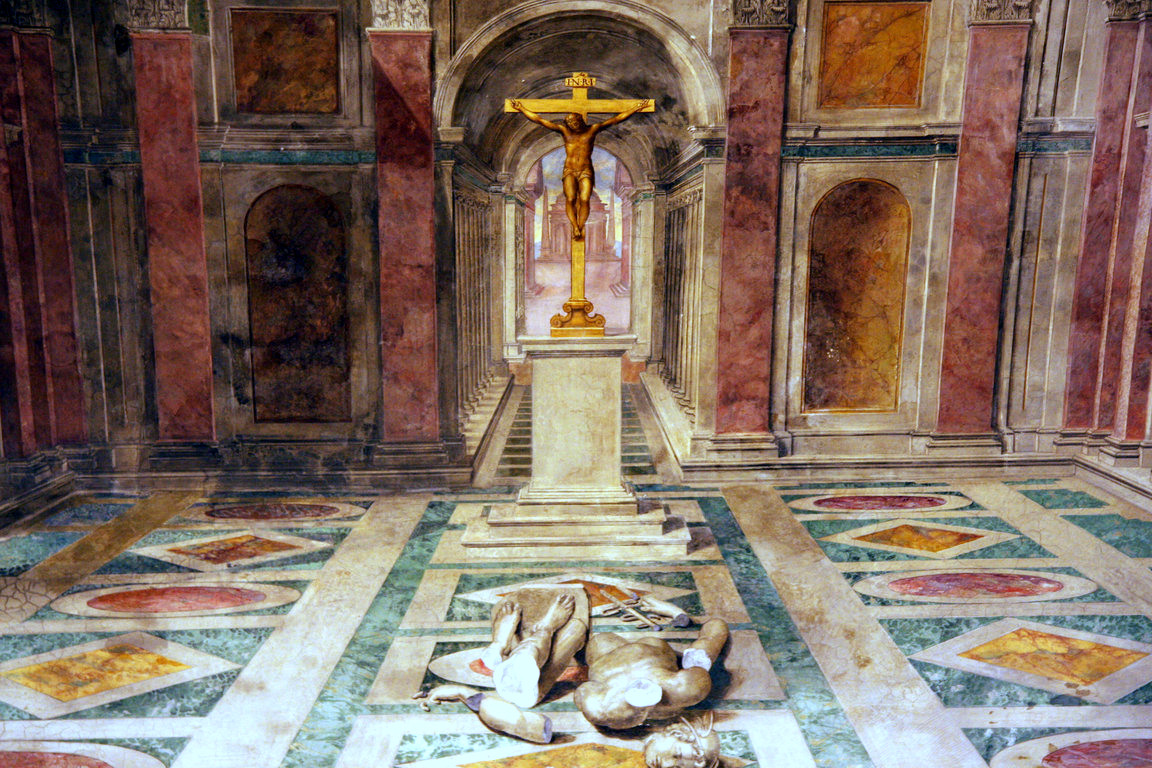
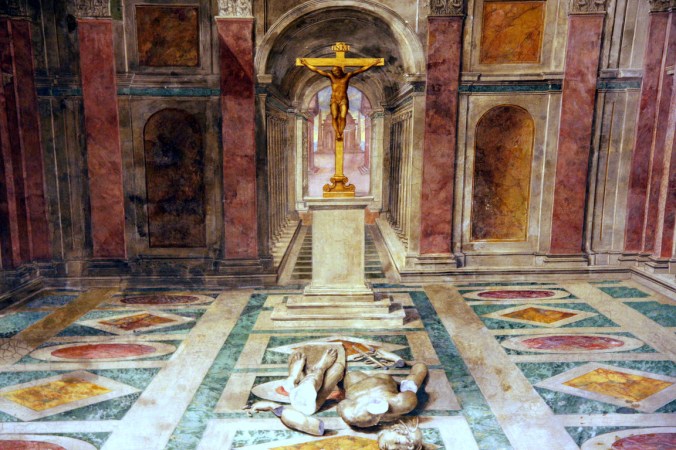
art by Amy Roberts

art by Amy Roberts (see bottom for link)

My good friend Monica sent me an email with a link to this New York Times blog that had a little weekend competition:

define “Faith”

The post gave the Bible’s definition of faith, a few quotes from others on what faith is and then told other “co-vocabularists” to offer their definitions (the pithier the better).

In a display ad absurdem and ad nauseam of the make-up of NYTimes readers, the vast majority of “definitions” are atheistic rants about how faith is just believing things that are so plainly and clearly not true.  It’s the opiate of the masses.  It’s the crutch that helps weak-minded people get through life.  So on and so forth.

I understand the sentiment.  I do.  And I also see why they think that.  It was just comical seeing post after post after post of people that were so clearly speaking from such bitterness, hurt, and pain that went well beyond “calm, collected reason”.  Even the atheist puts some level of faith in things, even though they feel like this faith is justified by their logical deductions.  Faith isn’t a bad word.  It doesn’t have to be religious at all.  My mac dictionary’s first definition for it is “complete trust or confidence in someone or something.”  The second definition is the religious one!  But in spite of this, that word, for some reason, touches such a deep nerve within those hostile to Christianity that they must do more than simply display a disagreement with a prevailing notion.  It’s not good enough being a-theistic, they must be anti-theistic.

And that, I find, is very interesting.  It implies that atheism is more than a lack of belief.  It can’t stay at that merely reasoned philosophical place.  It is at its core a most outward expression of the rebellion of the heart, and the antagonism of that rebellion must and will come out.

Don’t get me wrong, I love atheists! I do!  But it looks like Atheism is becoming the new radical fundamentalism of the urban United States.  Now I know how absurd all us Christians probably looked for the past 50+ years with all of our political activism, ad hominem attacks on dissenters, made-up “culture wars” to agitate our base, over-excessive vitriol against “opponents” of our system, a circling of the wagons to maintain a false sense of security for “us” and ease of insult towards “them”, and a childish fanatical assent to a few tired (fundamental) tenets with a few tired (apologetic) defenses made by a few tired (hyperbolic, caricatured) leaders that are already irrelevant.

I guess its Atheism’s turn to take the wheel.  Try not to mess up the country in the same ways we did.  Neither you guys nor us have history on our side when it comes to our particular systems reigning supreme.  Things just don’t seem to go well.  Have fun.

As far as my contribution to the discussion?  Here was the little definition I gave:

FAITH: trusting that another has accomplished on your behalf what you ought to have done but can’t.

Grace and peace.

and Faith.

[more artwork by Amy Roberts can be found here]

Philosophy & Theology {1} | The Basics


Photo 56bOver the next few posts, I want to share some brief elementary thoughts and philosophy and theology. In this post, I just want to flesh out a basic worldview I have concerning philosophies and how they fit into a Christian perspective. All posts in this series will then be various applications of these ideas. Looking at things this way has certainly helped me wade through the waters of philosophies that all seem to be right in some respect and the confusion that follows. I hope this helps others out there.

My basic thought is this: as humans made in the image of God, the true parts of any “worldview” or “philosophy” will resonate with us. We are made to resonate with the truth of the Gospel, therefore any worldview we construct tat is appealing to us in any way must touch on some thing we know to be true and long for. I just don’t think that humans are able to come up with a worldview that in some point isn’t actually true. We can only work with what there actually is in the world. Sure we can pervert and distort true things, but they will still be based on true things.

Anyway, what this means is that any particular philosophy can help us recast the Gospel and talk of it in different terms that may increase our worship. For example, with existentialism (where the big question is what comes first, essence or existence?), when Moses is talking to God at the burning bush, Moses pretty much asks Him “what’s your essence?” God answers “I exist” (“I AM”). Existentialism can give us new categories to plum even more depths within this one encounter and ultimately lead to more worship of God. The Bible helps answer the questions of philosophy and philosophy can help us see greater truths in Scripture.

[More on existentialism in an upcoming post . . .]

Orthodox Christianity does not hold (and never has) that the Bible is the sole source of knowledge about God. It says that the Bible is the ultimate and authoritative source of knowledge about God under which all other sources are submitted. The brief example above (hopefully) showed a benefit of bringing existentialism under the authority and clarity of the Bible in order to help us answer (or better understand) questions that the Bible is silent about. Problems in this area arise when people try to submit the Bible to existentialism. It just doesn’t work. The Bible just isn’t the Bible apart from it being the authority and rule of faith in all theology.

I have found the study of secular philosophy very helpful to birthing in me greater worship of our God. But (going back to my first point), though that is the case, I don’t think any one philosophy has the market cornered on theology. All philosophies (from Platonism to Aristotelianism to Humanism to Atheism) have some bit of truth in them. Lower things really are corrupt versions of purer forms; we really do understand history by looking at its final purpose; God really does love humans such that he acts for their benefit; and there really is a freedom and autonomy that man enjoys when they give way fully to their innate rebellion and deny the very existence of God. That’s why I don’t find it helpful (or biblical) to say that “I’m a Christian _________” (fill in the blank with whatever philosophy or worldview you like). To me it’s like saying “I’m a Christian chocolate cake eater”. Uh, okay. I just don’t think that says much and it forces me to ask “Really? That’s how you ultimately define your worldview?” Don’t get me wrong, a good chocolate cake can make me worship God (in all seriousness), but that’s not a useful designation.

In summary: Philosophy is the study of all that is most fundamental about us. Therefore, those that have been thought to have great wisdom in this area should be studied and read because they may in fact be whispering insights to us from within the mind of God that is in seed form within His image in us. C.S. Lewis once said that it is impossible to contemplate and enjoy at the same time. We go first the the Bible to get the material for our contemplation. But then we must look up from the text to the world and reality around us and enjoy the God that has revealed Himself in those Scriptures. A fruitful place I have experienced this is in my brief, elementary study of Philosophy. Hopefully you can see it as well. Enjoy the ride.

If it weren’t for God, I’d be an Atheist


Forgive how disconnected my thoughts are. I’m taking a break from all my reading for Grad school to write this and I’m really tired. Anyway, I’m really frustrated right now.

For all those still in Richmond, the United Secular Alliance (U.S.A.) of VCU (the atheist “campus ministry”) is bringing in Christopher Hitchens, one of the “Four Horsemen” of the New Atheism (as many evangelicals lovingly call them; the other three main evangelical atheists Dennett, Dawkins, and Harris), on Tuesday to debate a Christian apologist who I think they had to find after no campus ministry answered their call for a debater.

Several weeks ago, I was inspired by this news to watch some videos with this apologist, Frank Turek, and then watch a bunch of videos from Harris, Dawkins, and Hitchens online (including a fascinating discussion between Richard Dawkins and Alister McGrath at Oxford). Anyway, like I said, I’m really frustrated.

As I hope the leaders I know and love of the U.S.A. read this, I have one main take way from this post. If no one gets anything else out of this, just take this:

Christian conversion is first and fundamentally a spiritual event with intellectual implications, rather than the more outspoken model out there that it is an intellectual event with spiritual implications.

All the tenets of the Christian faith as encapsulated in what the Bible refers to as “the Gospel” are the highest of all Divine wisdom. They are. The Gospel is the highest of all possible “storylines” this world could go through. The Bible over and over again places this Gospel against human wisdom and shows the futility and hopelessness of a non-Christian, non-theistic worldview.But here’s the key: this is only truly seen from the inside.

I look at Hitchens and am reaffirmed in my belief that conversion is and must be a spiritual act initiated and accomplished by God, and not by man. Apart from God, I really would be a rational atheist. For someone not converted by God, Atheism really is the only logically consistent worldview.

“Conversion” is an act by God by which he changes the very nature of the individual so their entire perceptual framework is changed. Many Christians seem to act like every non-Christian out there is just miserable as they perpetually and willfully suppress the faith they secretly know is true; that they can’t have any healthy relationships, raise any good children, and their worldview necessitates a holocaust and wonton anarchy of bloodthirsty violence and debauchery.

This certainly is not the case, because it is not giddy emotionalism, healthy relationships, good kids, or the social benefits of any given worldview that defines its “truth”. Many Christians act like this is the case. This is the “christianity” that is often offered to the Hitchens’ of the world. The nice, perfectly packaged, logically superior worldview that makes everything better.

One need not look long at the world to see the absurdity and repulsion this profession must evoke. Christians often try to appeal to the same standard of rationalism to undergird their faith that Atheists do to form theirs. This can be helpful I suppose to a point, as long as the Christian knows that this is the standard of truth the Bible spends its entire time mocking, so none of our faith can rest in it.

Ultimately, it was not archaeology, philosophy, pragmatism, or logic that drew us to the realities of this “Christianity thing”. It was the effectual and Sovereign work of God that changed us so we then saw the evil of our hearts, the beauty of Christ, and the wisdom of this “storyline” of the Gospel.

What is this highest of all Divine wisdom, so far above human minds that it cannot be comprehended naturally but must be revealed to us? That God, being the source of all life, has a justifiable claim on those that use this gift of life, and He has so desired we use this life to be joined to the source of it and in that find our ultimate rest, joy, and peace. But humanity, seeking to find that rest, joy, and peace in lower things he can manipulate, control, and take responsibility for, left union with this source of life for lower things and in that allowed sin to weaken and corrupt every part of themselves – mind, will, and emotions.

And then, while we were the rightful repositories for the full wrath of God, He rescued us. For humanity committed these acts of treason, so humanity must be the one to pay for them. But weakened and corrupted, humanity has not the ability to do this fully and live.

So God came in the form of a human and lived the life of righteousness we were meant to live, and died the death we were supposed to die, taking the cup of God’s wrath that hung perilously over the heads of those that would be saved and pouring it fully upon Himself, suffering more than any sinner ever will in Hell, that he might bring his people to Him, to be joined once more with that source of life. And all he asks is that we would but trust that what he lived and died was adequate to do for us what we were not able to do for ourselves, and that we cannot add to it, nor take from it.

Does this answer “all the questions”? No. But no Christian becomes a Christian because all their questions are answered or because the flow of the propositional statements lined up. I don’t believe in Christianity because it makes sense; I know I have and will encounter things in life that will challenge that.

In short, I can’t not believe in God, because Christianity ultimately is self-verifying. This is so important. It’s ultimate validity and truth does not lie in history, philosophy, facts, human experience, logic, or reason. It lies in the within the Source of all Truth, God Himself. Can I use all the grounds listed above to show the superiority of the Christian worldview and the beauty of its wisdom? Yes, but that is not what converts people or changes their mind.

To the unconverted mind, this highest of all wisdom is foolishness. But this realization of the necessity of revelation should not be something that brings self-righteousness as if we Christians were able “figure out” and discern this highest of Divine Wisdom while those foolish Atheists just aren’t astute enough. No, this show of our absolute dependence on God to know anything about God should bring us to our knees in humility and praise.

That a God this good would still reveal Himself and change us when it would be absolutely just for Him to let us continue to wallow in our weakness and corruption, forever disconnected from this source of all true life, peace, and deep transcendent joy.

So, even though after my little bit of movie-watching I think Turek is going to embarrass himself and the other Christians in the room by reinforcing every bad stereotype, know that no one’s conversion depends upon Turek or anyone else, but it depends on God who can stop the mouth of Hitchens or Turek at any moment He pleases and change the hearts of anyone in that room to see the wonders and beauty of His Glorious, Wise, and Beautiful Self.

I pray He might.