Insecurity Leads to Fasting? | Ezra 8:21-23


Then I proclaimed a fast there, at the river Ahava, that we might deny ourselves before our God, to seek from him a safe journey for ourselves, our children, and all our possessions. For I was ashamed to ask the king for a band of soldiers and cavalry to protect us against the enemy on our way, since we had told the king that the hand of our God is gracious to all who seek him, but his power and his wrath are against all who forsake him. So we fasted and petitioned our God for this, and he listened to our entreaty.
Ezra 8:21-23

What an odd and beautifully honest aside. At first I was put off by the logic here. “I proclaimed a fast…For I was ashamed.” I thought “that’s a terrible reason to have a fast!” But the more I thought about it the more I realized that, of course!, that’s the right time to fast! When you are most unsure, most in need, most insecure. This is when “we might deny ourselves before our God.”
See other Marginalia here. Read more about the series here.

Women at the Cross | Matthew 27:55-56


Now when the centurion and those with him, who were keeping watch over Jesus, saw the earthquake and what took place, they were terrified and said, “Truly this man was God’s Son!”

Many women were also there, looking on from a distance; they had followed Jesus from Galilee and had provided for him. Among them were Mary Magdalene, and Mary the mother of James and Joseph, and the mother of the sons of Zebedee.
Matthew 27:55-54

It’s really interesting to me that Matthew adds this little addendum to the end of the account. Why point out the women that were there? Is the assumption that all the men have scattered, and so Matthew had to show his sources for this story?

See other Marginalia here. Read more about the series here.

Introducing Marginalia: a new part of this blog


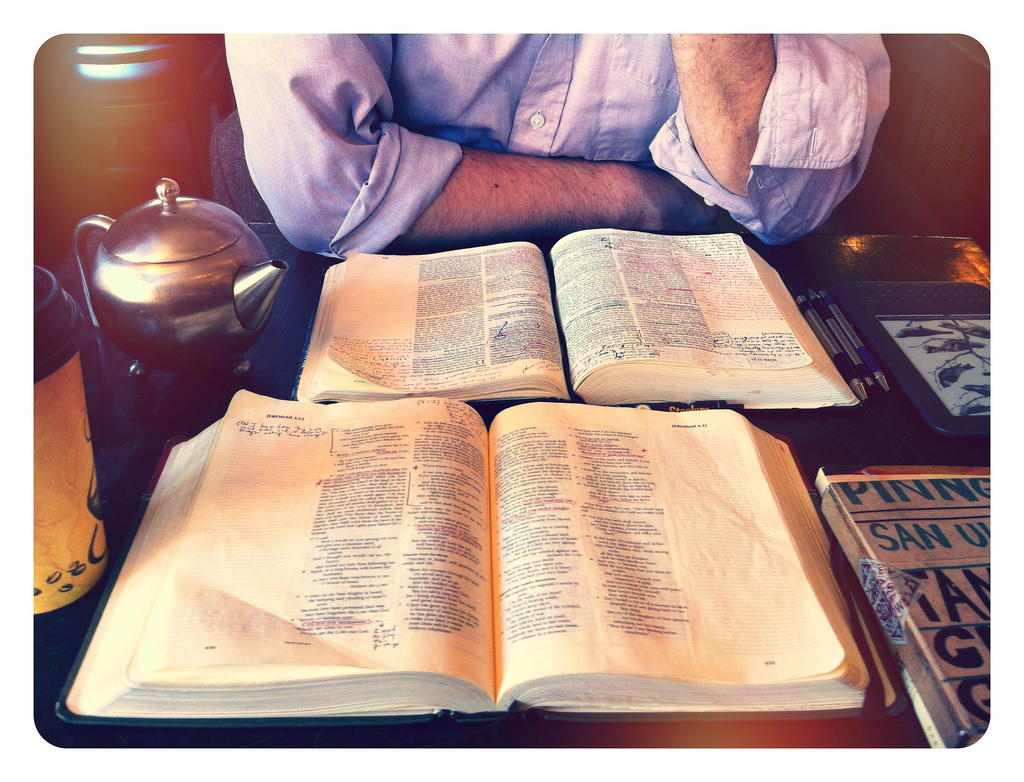
schrott-bibles-paul-coffee

I’ll be honest. It’s been years since I’ve been able to find a way to regularly read the Bible that sticks and works for me. To be frank, readings plans usually don’t work for me because I get bored. Depending on the plan, you’re either stuck in the same book for long stretches of time or you’re jumping around so much that you lose the sense of the whole.
This year, I think I’ve started a regimen that is clicking: the M’Cheyne Bible reading plan. At any given time, I’m going through four completely different part of Scripture and for me, this is keeping me really engaged. As I’ve gone on through the plan these past couple of months, I started highlighting and writing up little notes on random verses here and there. Lots of themAnd I’d like to share them with you.

So today, I’m introducing a new little part of this blog called Marginalia, where I’ll be posting these short little meditations on Scripture as I go through this plan.
Continue reading

Abraham’s son Ishmael was part of Covenant! | Genesis 17.23-27


This is my covenant, which you shall keep, between me and you and your offspring after you: Every male among you shall be circumcised… and it shall be a sign of the covenant between me and you…. Both the slave born in your house and the one bought with your money must be circumcised. So shall my covenant be in your flesh an everlasting covenant. Any uncircumcised male who is not circumcised in the flesh of his foreskin shall be cut off from his people; he has broken my covenant.”… As for Ishmael, I have heard you; I will bless him and make him fruitful and exceedingly numerous; he shall be the father of twelve princes, and I will make him a great nation. But my covenant I will establish with Isaac, whom Sarah shall bear to you at this season next year.”…. Then Abraham took his son Ishmael and all the slaves born in his house or bought with his money, every male among the men of Abraham’s house, and he circumcised the flesh of their foreskins that very day, as God had said to him…. And his son Ishmael was thirteen years old when he was circumcised in the flesh of his foreskin. That very day Abraham and his son Ishmael were circumcised; and all the men of his house, slaves born in the house and those bought with money from a foreigner, were circumcised with him.
Genesis 17.23-27

Yes, God said that Ishmael would not be the primary bearer and “administrator” of the covenant, but he still bears its marks. Reminds me of a reading from Lesslie Newbigin where he talks about how through our election and Covenantal relationship with God, Salvation is extended to all the nations. “Election” isn’t about blessing; it’s about responsibility to extend the Blessing to others.

Other peoples (even those not in the elect people of God) participate in and receive the full benefits of being part of the Covenant. To be elect is to extend these Covenantal blessings to all nations (as we see here with Abraham). To be marked as God’s is to be placed on mission.

Ishmael was still joined to the covenant! Praise God for his gratuitous grace!

See other Marginalia here. Read more about the series here.

This is why Genesis was written (and Ken Ham doesn’t see it)


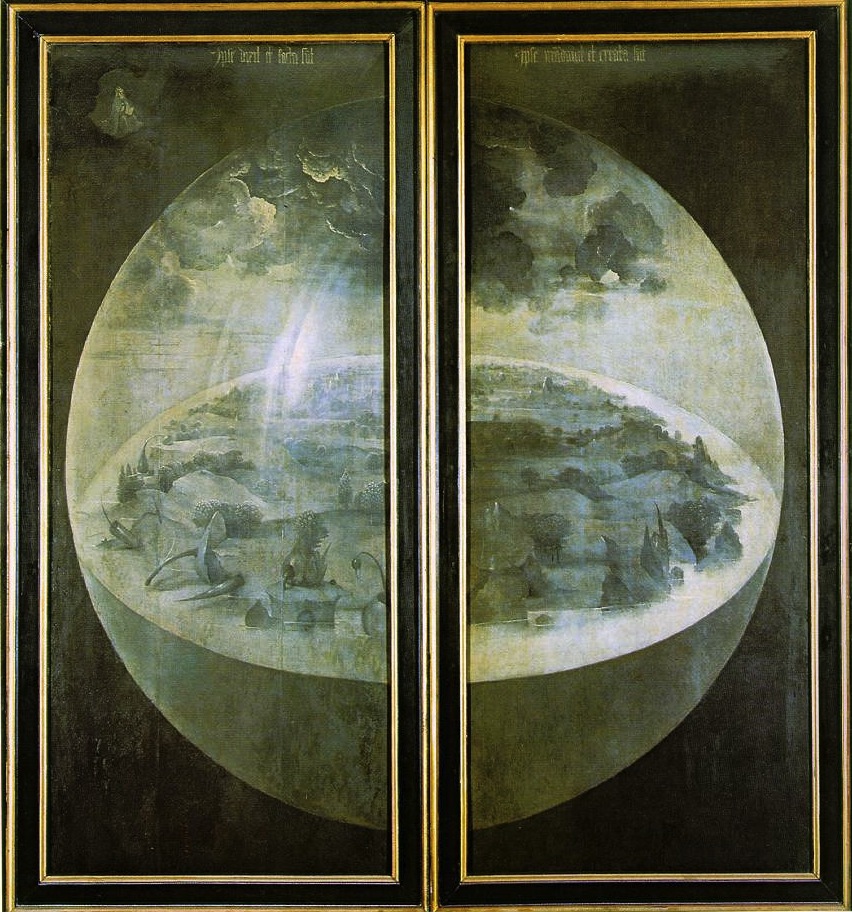
Bosch-Garden-Earthly-Delights-Outer-Wings-Creation-WorldIf my Facebook feed is representative of the general population at all, then I can confidently say that most of you have heard about the debate between Ken Ham and Bill Nye about creationism and evolution.

On this blog, I try not to get too much into issues of great contention in the church family when I don’t think it’s necessary, especially when I think it would unnecessarily prevent someone from reading this blog with a free conscience, or just mess with their head too much. But this is the one issue that I have felt the freedom to be blunt, bold, consistent, and loud about my opinion. So, I don’t have too much to add to everyone else out there that was more or less lamenting this debate more than celebrating it. Maybe I’ll have some thoughts next week coming at it from a different angle, but we’ll see.

Today, I wanted to share with you a video from the in-person portion of my Hebrew class a couple of weeks ago. To get an A in the class I have to translate, memorize, and recite a section of the Genesis 1 in the Hebrew. To help us with that, my professor made a video of him reciting it and acting out the recitation in front of us.
Continue reading

Abraham almost loses his son & he worships?! | Genesis 22.13-14


 And Abraham looked up and saw a ram, caught in a thicket by its horns. Abraham went and took the ram and offered it up as a burnt offering instead of his son. So Abraham called that place “The LORD will provide”; as it is said to this day, “On the mount of the LORD it shall be provided.”
Genesis 22.13-14

This is right after the whole “sacrifice Isaac” thing. To me, this such an odd response. Not only does Abraham worship God after this, which is crazy enough as it is, but he also sets up a memorial to remember this by! If I were him, I’d need some space from this God for a bit and I’d want to forget this incident as soon as possible.

I’ve always thought it odd that the book of Hebrews puts such an emphasis on Abraham and calling him the “father of faith” and extols his faith so much. Whenever I read that I think about how he had Ishmael with Hagar, due to a lack faith, and (twice) gave his wife up to be the wife of someone else because he was scared they’d kill him–another example of a lack of faith!

But then I read things like this and I think to myself, “Oh yeah, now I get it.”

See other Marginalia here. Read more about the series here.

A Sacrament Primer (and some questions I still have)


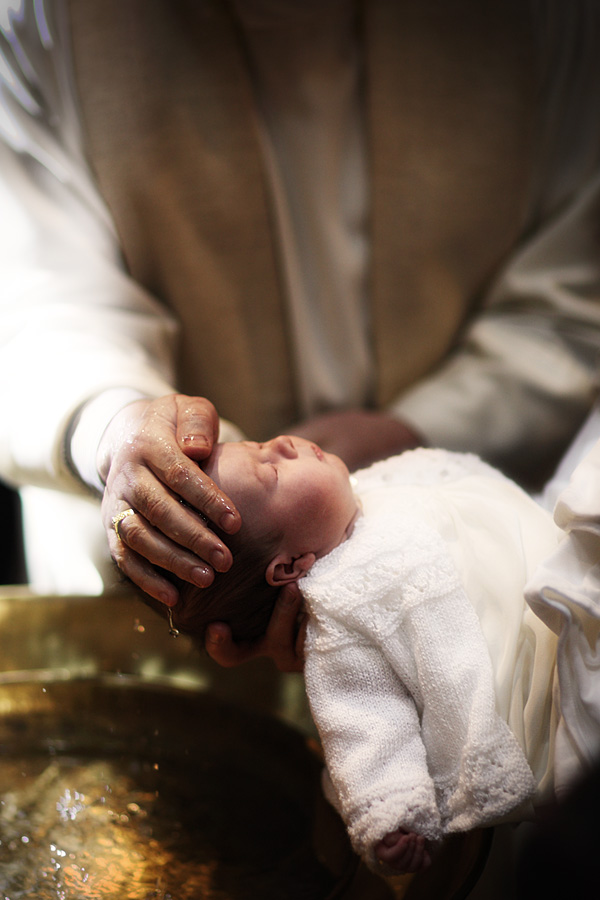
infant-baptism-water-7

For my worship and liturgy class, we had to write up a little thing explaining how we would explain the Sacraments to an everyday person. We were also supposed to throw up some questions that we might still have about them. Here are is mine.

In the beginning of the Bible, we see God create what amounts to a “temple-world”. He wants to dwell in this temple, with his people, and make it his home. He ordains priests to care for it but they fail. So God puts in motion a plan and story to rebuild this world and re-prepare it for his dwelling.

The focal point of this story and our entire faith is Jesus Christ. He is God among us having come dressed in humanity. The Gospel of John says he literally “templed” among us, using our created humanity as something he was pleased to dwell in.

This is the Gospel; it is our life and strength as Christians.
Continue reading

What Draws Out Jesus’ Compassion? | Matthew 15.32


Then Jesus called his disciples to him and said, “I have compassion for the crowd, because they have been with me now for three days and have nothing to eat; and I do not want to send them away hungry, for they might faint on the way.”

Matthew 15.32

What evokes Jesus’ compassionate response and provision? Faithfulness, neediness, and weakness. That’s it. Not performance, not even belief. Just walking with him while being needy.

Further, we can be confident that he knows our need and knows we will “faint on the way” without him responding. And respond he will.

See other Marginalia here. Read more about the series here.

Advent & Hoping for God to be With Us


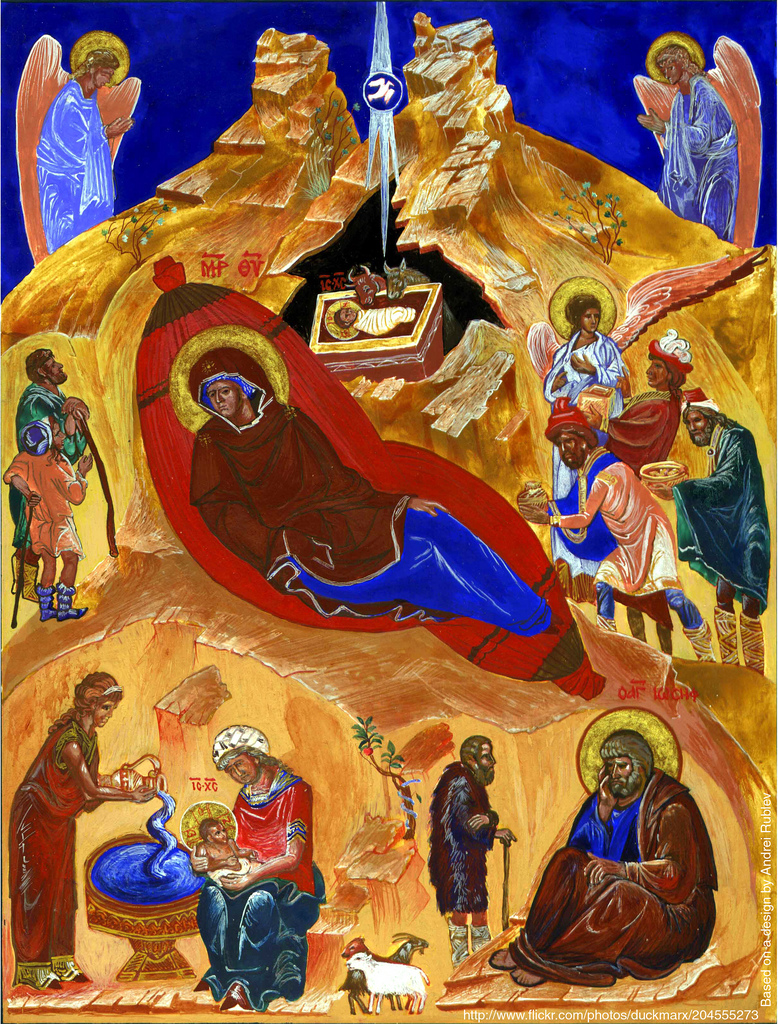
icon-Nativity-christmasThis is the meditation I wrote that appeared in this weekend’s reading and reflection in Liberti Church’s Advent 2013 Prayerbook, which can be downloaded for free.

The Reading:

Again the Lord spoke to Ahaz, saying, Ask a sign of the Lord your God; let it be deep as Sheol or high as heaven. But Ahaz said, I will not ask, and I will not put the Lord to the test. Then Isaiah said: “Hear then, O house of David! Is it too little for you to weary mortals, that you weary my God also? Therefore the Lord himself will give you a sign. Look, the young woman is with child and shall bear a son, and shall name him Immanuel.

If you’ve been keeping up with this Prayerbook (or any Advent guide), then congratulations! I hope it’s spoken to you and you have experienced God in its readings and meditations.

That being said, you might be wondering: why is this Prayerbook continuing after Christmas Day?

It was only a couple of years ago I found out that in the Church Calendar, Christmas is not just a day—it’s an entire season! Advent Season leads into Christmas Season. Why is this? Advent has a similar relationship to Christmas that Lent does to Easter: it’s meant to be the time of reflection, preparation, and repentance that prepares us for the unbridled, no limits, over-the-top celebration and joy of Christmas. Our spiritual ancestors knew that celebration takes time and preparation. That’s what Advent has been.

But now we’re in the Christmas Season—the time of complete unfettered celebration. But why?
Continue reading

A Biblical Critical Advent: Luke’s Cosmic Christmas


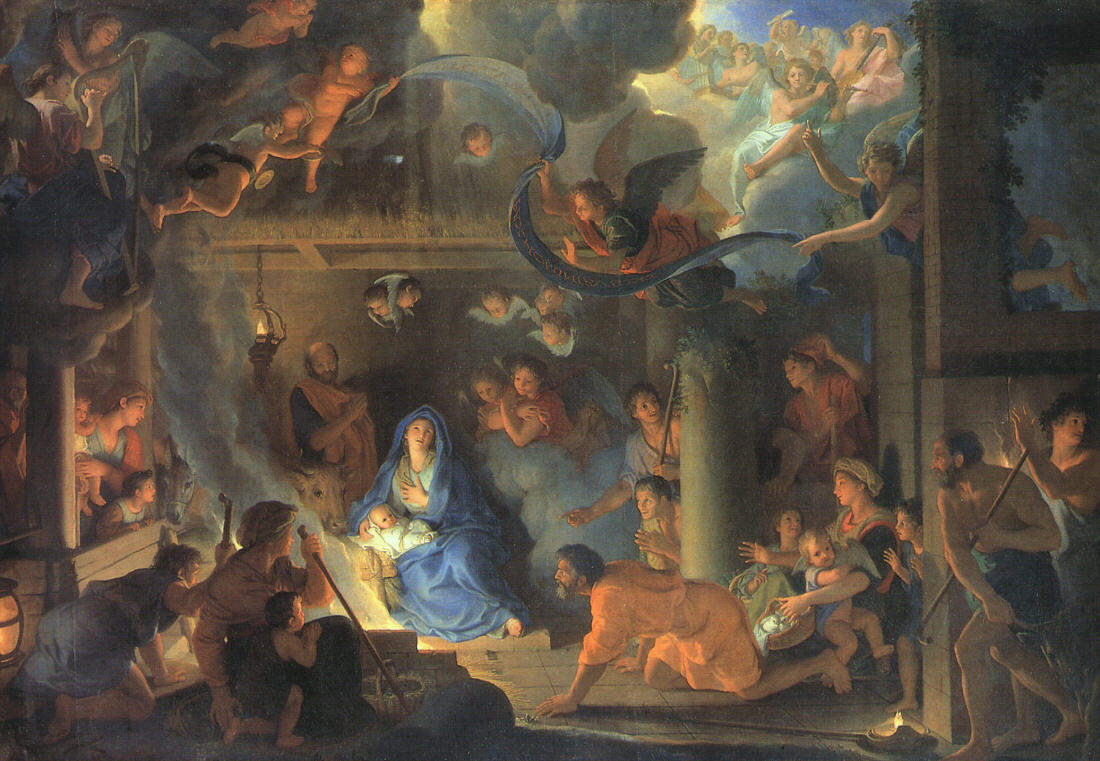
Charles-le-Brun-Adoration-of-ShepherdsFor Advent this year, I wanted to put up a few posts looking at Matthew and Luke’s Nativity stories as they were meant to be read: as two separate stories with their own purposes and themes. We often just mush them together, and I think we lose something in that process. Last week, we sat with Matthew’s Nativity story. Today, we turn to Luke’s Christmas.

Matthew’s Nativity focuses on how Christmas plays right into Israel’s own story; how this is exactly how the Jewish Messiah should be expected to have come into the world. Luke’s Gospel, on the other hand, emphasizes Jesus’ significance to the entire world, all parts of society, and the entire cosmic order.

In other words, Jesus’ mission in Luke is much larger than simply Israel. These and other Lukan themes are brought out quite strongly and explicitly in his Nativity narratives. Today we’ll see how he does this through signs of the universal mission of Jesus, the story’s emphasis on the lowly and powerless, and his stories of Spirit-filled joy.

Continue reading

Advent & Longing for Home


Sandorfi-MadeleineThis is the meditation I wrote that appears in a reading and reflection in Liberti Church’s Advent 2013 Prayerbook, which can be downloaded for free.

There is an incredibly profound way in which we don’t feel at Home in our own humanity.

Too often, Christians see their own personal spiritual growth as a loss, a lessening, or an abandoning of their own humanity. This can lead us to subtly use people and things to try and find our soul’s Home. And so we awake to find anxiety, manipulation, doubt, guilt, and self-loathing ruling and reigning so many parts of our lives and relationships. (Am I alone in this?)

We can sometimes think of Christianity as a process of our souls leaving the “Home” of their weakened humanity and finding a “new, spiritual Home” in Jesus. The logic goes that you were originally one way, then Jesus “saved” you, and now you are able (and are commanded) to be something else, now that you are His.

But Advent radically flies in the face of this.
Continue reading

A Biblical Critical Advent: Matthew’s Old Testament Christmas


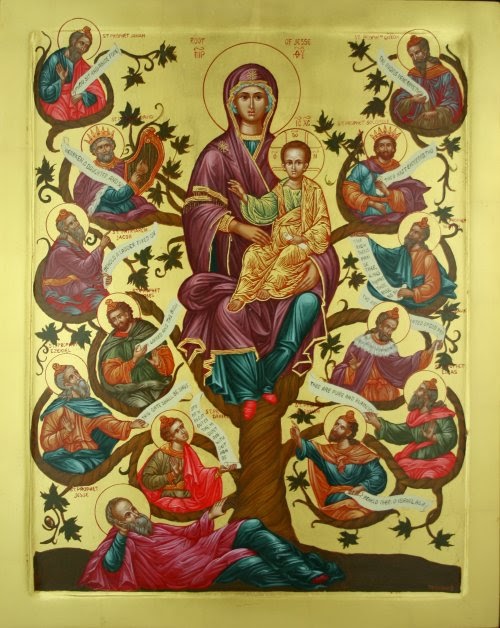
root-jesse-matthew-icon

For Advent this year, I wanted to put up a few posts looking at Matthew and Luke’s Nativity stories as they weren’t meant to be read: as two separate stories with their own purposes and themes. We often just mush them together, and I think we lose something in that process. Today, we look at Matthew’s Christmas Story.

It’s well-known that the Gospel of Matthew portrays Jesus as the fulfillment of Jewish messianic expectations. But the path Matthew takes in doing this moves against the way most messianic expectations played themselves out at time. Matthew recalibrates these expectations to show how even in Jesus’ infancy and birth, his “Messiah-ness” includes a retelling of Israel’s own history, both good and bad.

You can see this especially clearly in the way Matthew crafts his version of the Nativity story. Today, we’ll look at three particular aspects of this story that show his unique thematic and purposeful crafting of the birth story: his use of people and names, geography, and the fulfillment of the Old Testament.
Continue reading

Have yourself a biblical critical Christmas


Nativity-logosSorry, this post isn’t about the pessimism and critical irony that can sometimes mark how we engage in this time of year. When I use the phrase “biblical criticism”, I’m referring to (as Wikipedia says) the  “[scholarly] study and investigation of biblical writings that seeks to make discerning judgments about these writings”.

Last year, I wrote about how the story of the Wise Men can inform our doctrine of the Bible. This Advent, I want to do a brief series where we use the tools of scholarly observation to look at each of the two Nativity compositions (yeah, only two out of four gospels have them) and see each of them on their own terms.

For millennia, the birth narratives of Jesus Christ in the Gospels have captivated readers both within and without the Christian faith. Their reading and meditation form the beginning of the Christian Church calendar, and their theological implications of Incarnation form the foundation of nearly all of the distinctives of the Christian faith.
Continue reading

What is the Proclamation of the Word?


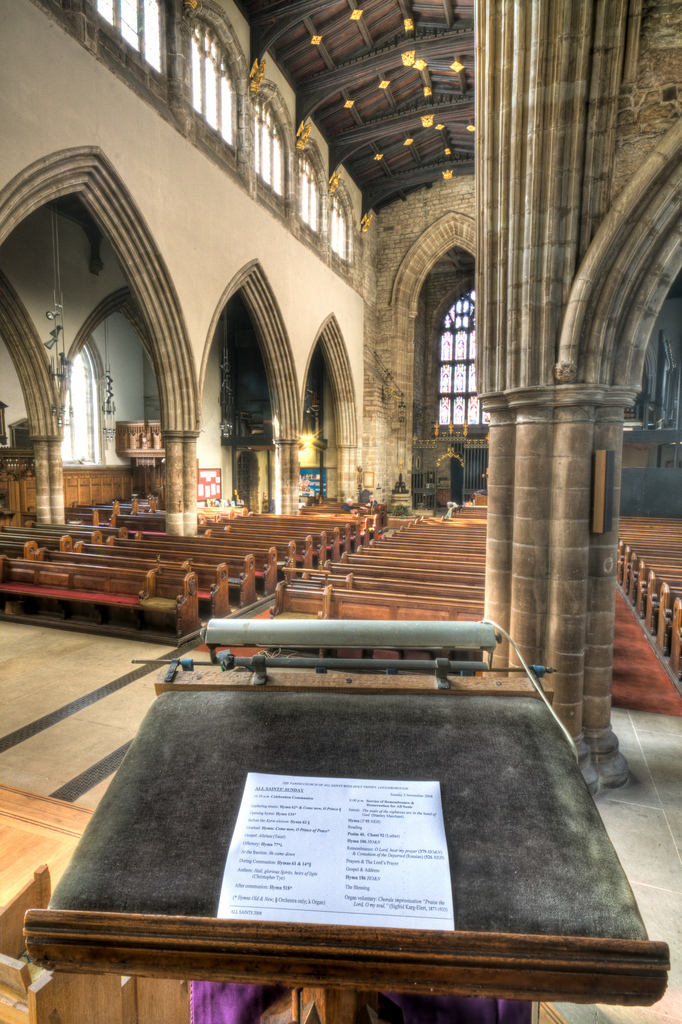
pulpit-church-hdr-bibleFor a class recently, I had to read a bunch of items on the part of a worship service in which the Bible is front and center. This “section” of the service is called “The Proclamation of the Word”, or more generally, the “sermon” or homily”. I ran across this great quote:

The very act of preaching, in fact, sets up questions and problems.  Most people no longer understand the difference between preaching and other types of public speaking…. Many people think of a sermon as an occasion for being entertained, instructed, or inspired in matters of religion — hence the customary comment at the church door, “I enjoyed your sermon.”  Nowadays, it is only congregations who have been engaged in a new way of thinking for a long time who are going to sit expectantly waiting for the Word of God to be spoken — for preaching, properly understood, is the good news that God preaches through human beings.  Astonishingly enough, this is the method of communicating that God has chosen.  This is an offensive idea; there are a hundred complaints to be brought against it.  Most common is the objection, “How can anyone presume to speak the Word of God?”  Or to put it another way, “How can any human being be so arrogant as to think he is a mouthpiece of God?”  How indeed?  It is a very good question.  The validity or invalidity of preaching rests on such issues as these. (Fleming Rutledge, Not Ashamed of the Gospel)

I think Rutledge is right (and not just because she is an incredible preacher–all you complementarians could learn a thing or two from her!): people don’t seem to really see preaching as fundamentally different than any other lecture or other public speaking. Preaching is often (subtly and unspokenly) seen (or at least treated) as “mere” personal edification–similar to a book discussion or philosophical lecture or self-help conference.
Continue reading