Advent & Hoping for Justice


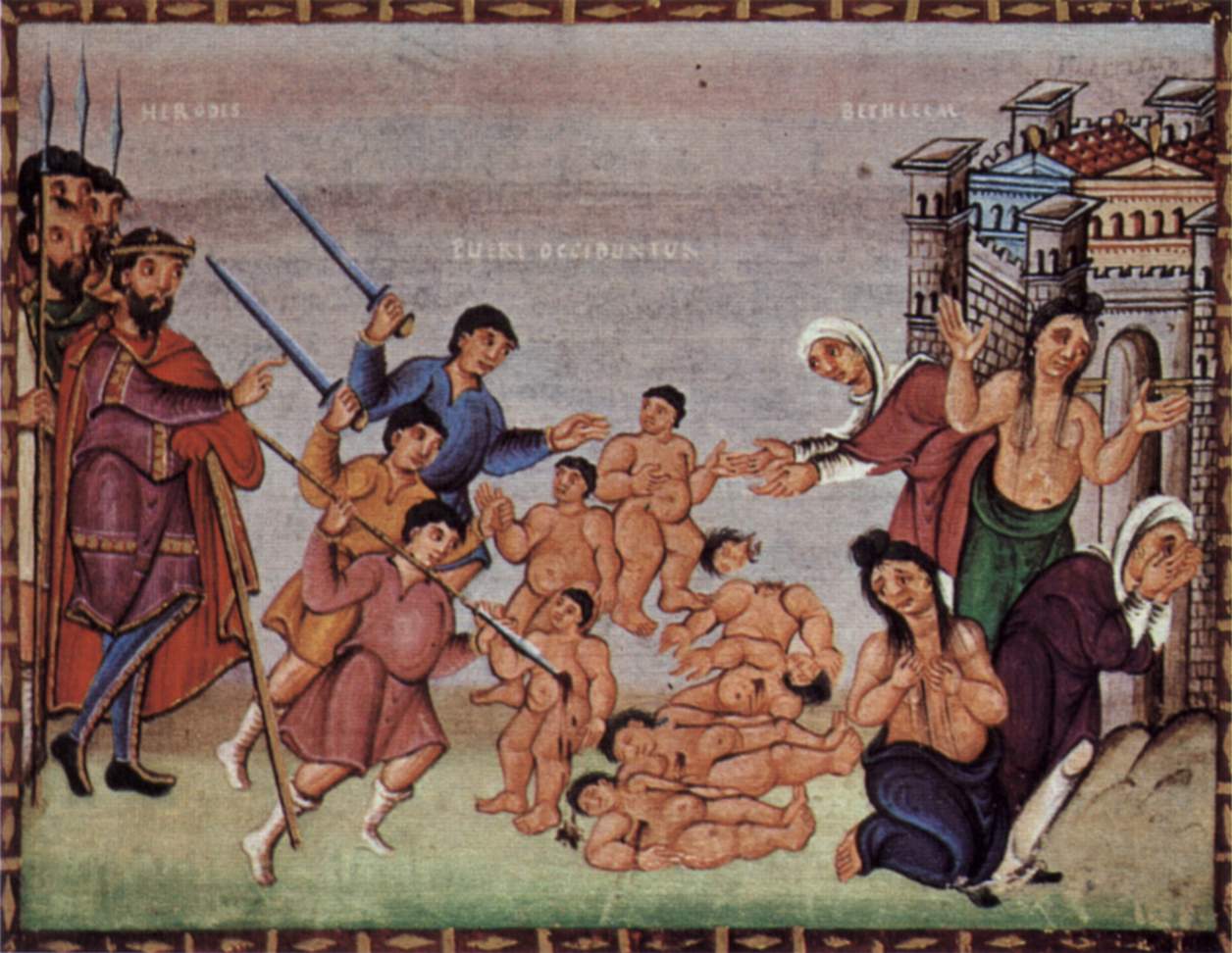
Massacre-of-innocentsThis is the meditation I wrote that appears in today’s reading and reflection in Liberti Church’s Advent 2013 Prayerbook, which can be downloaded for free.

First, a question.

Think back on the Christmas story. After Jesus is born, when he’s about three-years old, King Herod puts out a decree calling for the death of all infants, trying to kill Jesus. An angel comes to Joseph in a dream and tells him to flee to Egypt to prevent Jesus from dying in this slaughter.

Here’s the question: why flee to Egypt?

If they stayed and Herod killed the child Jesus, wouldn’t that still be the Son of God dying unjustly at the hands of a Roman provincial governor? Why go to all that effort to wait 30 years later for the same thing to happen on a cross?
Continue reading

Advent & Hoping for Peace


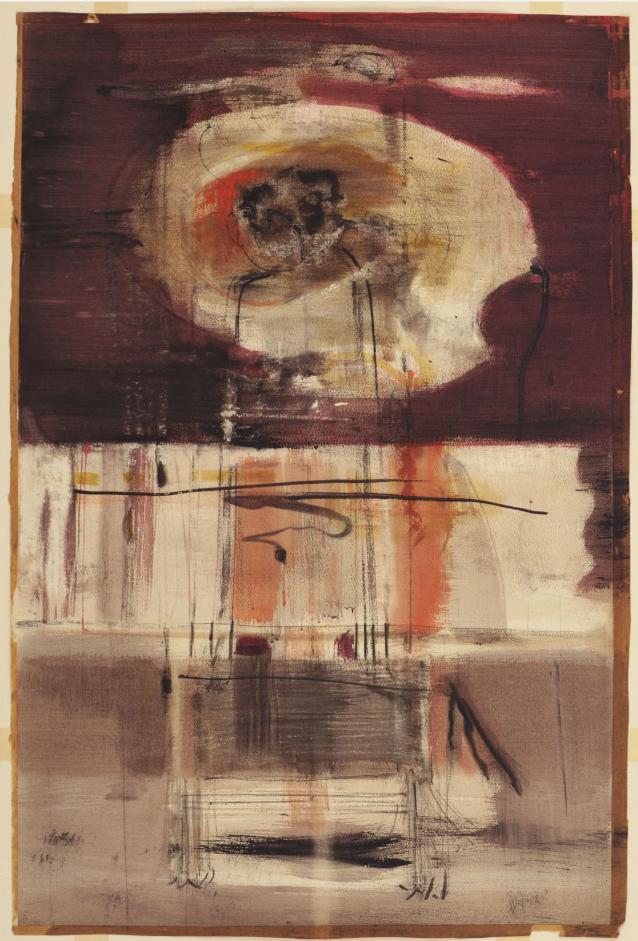
Rothko-untitled-2This is the meditation I wrote that appears in today’s reading and reflection in Liberti Church’s Advent 2013 Prayerbook, which can be downloaded for free.
This world is anything but peaceable. Humanity is constant in its injustice and wickedness inflicted upon one another across this world. It makes you wonder if “humane” is a misnomer. And we can’t just blame all of this on free will, either. The natural world rages against us with its own violence with staggering regularity. And all of this hits home the most when it’s those closest to us that suffer under this world with little peace on hand.

We look at all of this and ask that oldest of questions: “Why?” But when we open the pages of Scripture, we don’t find answers to this seemingly core thread running through our existence. The God of the Bible seems far more concerned with answering “what” questions than “why” questions–what is the nature of reality? what is the problem with the world? what is the solution?

But there is good news for all of us that struggle against the violence of this world: Advent.

In Advent, God does not merely see our why‘s and disregard them as silly and human; he does not simply leave us to our own to wrestle and struggle and doubt. He doesn’t answer our whys. He simply looks at us and the world with compassion, acknowledges to us the way things are, and rolls up his sleeves to address it.
Continue reading

Lament & Remembrance (Nostalgia Can Hurt)


paul-window-bw-schrott

Lately, I’ve found myself getting very nostalgic, remembering past relationships, friends, places I’ve lived, and people I’ve known. And honestly, I don’t know why my remembering and thinking through all of these things in the past has caused more tears than laughter, especially in the area of relationships.

I have found myself lingering on the Facebook profiles of old roommates whom I’ve completely lost touch with inexplicably. I have been reading through old emails and blog posts that remind me of spiritual fathers and mothers with whom disagreements over the past several years have led to very real divisions..

And yesterday, I heard a song that reminded me of a situation a couple of years ago that was incredibly painful for me. It wasn’t really any one’s particular sin or moral failings that ended up causing all the hurt and pain; just the collision of people’s own baggage and immaturity and struggles. As I thought back on it I remembered the false ideal picture of reality I had blindly painted for myself at that time. I remembered the slow, painful process that was this picture being broken down brick by brick over the course of several weeks. I felt again the shadows of the anxiety and pain from that time.
Continue reading

Urban Lessons: Why cities will save our souls. [VIDEO]


Yesterday I started a brief little series going through some lessons I have learned from my first semester back in seminary. I first talked about how (at least in my mind) cities had to be taken off their pedestal. There are desires and needs of the human soul that can’t be met in cities. We need other types of livable environments as well.

And yet, through this semester I was re-grounded in my belief in the essential importance and centrality of urban settings. Above, you’ll find a video reflection I had to make in which I give my perspective on this question: Why should Christians engage in cities? In it, I speak about some of these dynamics that are in greater detail below. (Sorry for the poor video quality.)
Continue reading

A Brief History of Secular Discernment & Decision-Making


fall-river-philly-kelly

This is a post in our series on the Christian Practice of Discernment. 

Struggles around decision-making have existed ever since humans first had a sense that their lives had some sort of telos or purpose. Eventually, humans came to an understanding that each decision directly bears on the events and “story” that will come after it. And so they started thinking through principles that could guide this process. Later, Christians would contribute greatly to this discussion.

But before we can start exploring how the Bible and Christianity engages with decision-making and Discernment, we need to see how else it has been engaged throughout history. Today, we’ll look at a “secular”(*) history of decision-making and Discernment. Our next post will look through Church History.
Continue reading

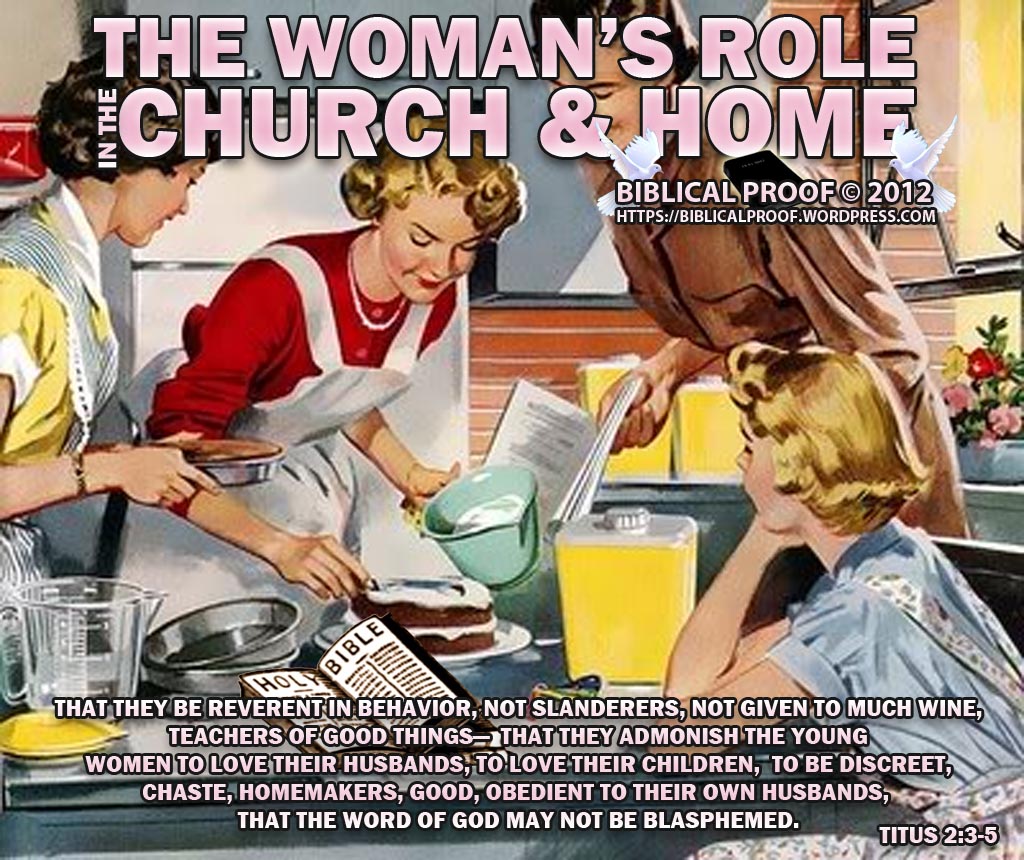
The Woman’s Role: What’s Wrong With This Picture? [casual fri]


biblicalproof-womansroleinchurchandhome

In my research for this on-going series on Women and the Church, I ran across this picture above. And for this Friday, I wanted to throw it out there to get people’s reactions.

If you agree with the overall point, do you appreciate the representation? Do you think this is a helpful representation? How would you present your perspective differently, in visual form?

If you don’t agree with it, what would you say to the designers of this picture? How would you counter this use of this verse? What bothers you the most about the picture? Is there any core of truth to this picture?

Discuss.

(image source)

I have found the Holy Grail against women in leadership, and I am ruined


Countering-the-Claims-of-Evangelical-Feminism-Grudem-Wayne-9781590525180This is a post in an on-going series on Women in the Church.

A while ago, I stumbled on a clearance copy of the book Countering the Claims of Evangelical Feminism by Wayne Grudem. Now, for those that don’t know, Grudem is one of those super-influential evangelical theologians that doesn’t get a lot of play in the wider culture. He’s not going to make any headlines like Mark Driscoll, and he’s not going say anything too outside the conservative box, like Rob Bell. He’s a quiet intellectual who writes and influences a lot.

Through college, I had a bunch of friends obsessed with his “Big Blue Book”, Systematic Theology, which is an accessible, clear introduction to what became the “New Calvinism” fad. In short, he’s sort of a Calvinistic Baptist that believes the Holy Spirit is still doing more outlandish sorts of things.

And yet, if you look at all of his publications, the vast majority of them are simply various versions and editions of just these two books (well, admittedly, the book I’m writing about today is an abbreviated version of this book). It’s quite easy to see that Grudem has devoted his life primarily to two things: Systematic Theology and Gender Roles in the Church. A lot of the arguments you’ll hear from complementarians–those that do not think Women should be allowed to exercise authority in Church or Home contexts–come straight from Grudem.

And so, in the interest of being fair in my Women and the Church series, I picked this book up to hear “the other side”. The book goes through 45 of (what Grudem feels are) the absolute best Egalitarian arguments. He lays out the individual argument, usually printing a paragraph-length quote from someone who has expressed that opinion. And then he offers responses (usually about 1 to 4) for each of these points. Each chapter is 2 to 5 pages long.

I went into the book with only minor curiosity, because I was raised with his perspective, was completely inundated with it in college, and pretty much felt I knew most of the arguments he would throw out there.

Well I was wrong.
Continue reading

AMAZING Interview and Q&A about Women in the Church


haddad-mimi-rhe-egalitarian-womenWell, I think it’s time to restart our on-going series on Women in Ministry, don’t you?

While researching a particular argument for limiting Womens’ role in the Church, I stumbled on this interview and Q&A on Rachel Held Evans’ blog. It is a conversation with Mimi Haddad, President of Christians for Biblical Equality. And it is wonderful.

This whole disagreement about Women in the Church can produce a lot of noise that’s difficult to sift through. Too often, people on both sides end up retreating back to their respective sides and both fulfilling a lot of stereotypes while lobbing that accusation at the other side. This ends up entrenching the conversation even more deeply and intractably. The conservatives end up speaking sort of demeaningly about women (even unintentionally) and accusing egalitarians of not believing the Bible, all while egalitarians end up resorting to radical and simplistic feminist-sounding rants and calling all conservatives misogynists.

Haddad’s interview is wonderful because it moves against this. She is gracious, though firm in her convictions, and maintains the big picture of the discussion rather than getting lost in the rabbit-hole of interpreting individual proof-texts. She speaks in such a conversational, disarming, and winsome way. She brings up common-sense and clear-headed perspectives that are such a breath of fresh air for someone who sits for too long trying to pick apart individual texts. You can tell she loves the Church and the Bible and wants to honor them both well.

It also reinvigorated me to continue this discussion. There is still much more to be said, and as I have the privilege of being part of a church that will be ordaining its first female elder next month (the first church of this kind I’ve been a part of!), these issues are especially pertinent to those around me and the discussions we’re having.

And so, in the weeks to come, see this space fill back up with this discussion. Many of the things I want to write about will be building upon many of the ideas found in this interview and Q&A. So, if you want a big picture preview of what’s come, check it out. Really, I can’t recommend it enough.

I’m starting to wonder about this whole Urban Christianity thing…


rooftop-philly-2

Let’s file this one under: Things I Never Thought I’d Say.

First, some realities.

America, almost since its founding, has had an Agrarian ideal spliced into its DNA that has thought more highly of the vision of the independent rural farmer–building himself up from nothing and sustaining his family by the work of his brow–over and above the idea of the dirty urban manufacturer, competing with others for the few jobs that are there.

Further, it’s pretty clear that during White Flight in the mid-1900s, whites took the association of “good, religious folk” with them to the suburbs (along with the support and attention of governments), leaving the cities to be seen as the cesspools of sin that deserved to rot away.

Along with this, the American Church (especially so, but this is definitely global) has tended to neglect cities, enjoying the safe numbers and comfort of the suburbs. In my opinion, this has helped ravage American faith, causing it to take on the aspects of the surrounding suburban culture, making it often isolating, consumerist, capitalistic, intellectual, based on convenience, behavior-driven, and not rooted to any sort of historical tradition or depth. (This does not extend to individuals per se, and it is a broad generalization, but it’s one that I think statistics would show is generally true.)

Continue reading

Are Cities too broken for Christians to fix them?


philly-city-hall-1As I go through these seminary discussions and readings concerning the relationship between Christians and cities, two things are pretty certain for me. First, God loves cities and had/has great intentions for them. Second, things went horribly, completely, and utterly awry.

I have the privilege of taking these courses along with incredibly thoughtful people. They haven’t just taken wholesale this newly “rediscovered” urban emphasis of Christian faith. They get the reality that God and the Bible have an urban-centric feel to them, but they really want to fight for a conception of God’s work in the world that comes to bear upon every person in every type of place in the world–not just city-dwellers.

And so I’ve been wondering: is this “urban call” to Christians a general one, or does it only go out to a very specific type of person? Are the difficulties in cities so big, so intractable, and so unique that only certain types of Christians with certain types of giftings could find a place for Kingdom work?
Continue reading

Injustice & The Human Jesus (and some more Syria thoughts)


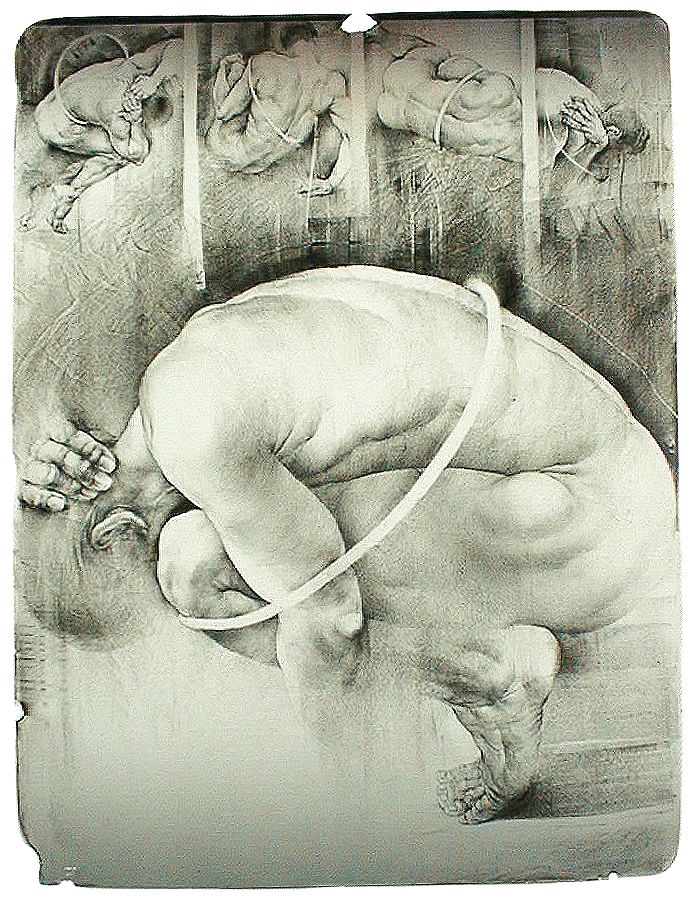
oldrich-kulhanek-untitled2For one of my seminary classes (which started this week) I’ve had to read the Gospel of Matthew. When you read a large chunk of a Bible book in one sitting, you really do get to make connections and get perspective you didn’t have before. I had many moments like that when reading Matthew yesterday, but I had one particularly poignant moment that relates to all of the Syria talk that’s going on in our country right now, and adds to my own comments a couple of days ago.

In Matthew’s Gospel, Jesus begins preaching on his own, gathers some disciples around him and continues teaching while they watch. Eventually, in Chapter 10, he sends this community of people, encouragement, and support off to do ministry in various towns in the wider area and to do what he has been doing among them.

Which means he is alone again.
Continue reading

A Brief History of Liturgy (for those interested)


emergent-tree-house-churchYesterday, I posted some brief thoughts on liturgy and how it shapes us.  Those words were primarily taken from a document I wrote up a few years ago to train those leading liturgy. Today, I wanted to post another little section from that piece, going through an extremely brief history of liturgy in the Bible and how it developed in the early church.

Liturgy in the Bible

We see fairly early on that God intends for there to be a definite pattern or shape to worship among his people. He spends chapter after chapter talking about both the space and structure of the worship of the Israelite people in both the Tabernacle and the Temple. This continues in the Jewish community even today.

But at this point in the story of the Bible, the fullness of all that God will do to bring about our worship is incomplete, and so this worship is merely anticipatory of something that is to come. But throughout the Bible we get glimpses of a definite pattern to how God relates to his people–to how this story will eventually look in it fullness. This story–this pattern–is what forms the structure of our liturgy even today.

Throughout the Bible, repetition of form and phrases is used to shape the people of God. In the Psalms, the same phrases are used over and over again in the music. In the Old Testament, verses from other parts of it are meditated upon and repeated for worship.
Continue reading

How Liturgy Shapes & Makes Us


schrott-cross-church-office-apartment

UPDATE: I posted a brief history of liturgy and its movements.

A couple of nights ago, those that help lead and facilitate the worship service at my church met to discuss how we should continue to grow and remain faithful to our mission in the city of Philadelphia through our liturgy and music. It reminded me once more of how much I love being a part of this church and its tradition, and how excited I am to live life with these people.

Meditating on these discussions about our liturgy, I was reminded of the myriad of ways that the structure of one’s worship service forms the people that sit there each Sunday. I thought of how liturgy functions. If you go to a church, it has a liturgy: some structure that proclaims a certain story and shape of existence, and it changes people to fit into that shape and story.

And this got me thinking of a document I wrote up a couple of years ago to help train and encourage those leading liturgy at our church. In it, I wrote about six “facets” of the diamond that is liturgy. And that’s what I wanted to post here today.

These are some ways that liturgy acts to shape us. After each thing, I’ve given a sample topic and tried to show how liturgy functioning in that way can speak to and shape someone in that area. This was originally meant as a guide for people that introduce the service and try to acclimate people to the liturgy.

I hope this reminds us that liturgy matters, and being intentional about your liturgy is such an important part of leading and ministering within your church context. If you don’t serve as a leader in this aspect of your church’s life, and don’t really speak to liturgy formation, I hope this helps you recognize the formative nature of your church’s liturgy, and that it helps you connect to and engage with your church in a deeper, more intentional way. For more on this, I could not suggest more highly James K.A. Smith’s book Desiring the Kingdom.

Continue reading

Confessions of a Lapsed Charismatic, pt. 1


Grace-words-mouth-poetry-psalms

{summary: Though rooted in a Reformed tradition that usually spurns this, I am very much a theological charismatic. I believe in the full, contemporary exercise of the Holy Spirit through his Church, including all of the manifestations this has had throughout Church History. And yet, though I “believe” these things, over the past few years, they’ve played a smaller and smaller part in my life. In this piece, I reflect on that.}

UPDATES: Part 2 is up, where I go through a brief history of tongues in a corporate church context. I’ve also posted Part 3, where I focus in on the why and how of individual praying in tongues.

Several days ago, the New York Times had a wonderful Op-Ed piece called “Why We Talk in Tongues“, by a researcher who is exploring this phenomenon. (It was also appropriate, as it is still sort-of, but not really, still Pentecost.) The piece seems to have been pretty popular. Playing around with Google Trends a bit, it seems that this article made the topic of talking in tongues more popular than it has been since “Speaking in Tongues” by Justin Bieber popped up on YouTube a few years ago. This article made the topic more popular than even Megan Fox’s revelation that she speaks in tongues (and is still a practicing Pentecostal).

It got some play all over my Facebook feed, and a couple of friends asked for some of my thoughts. That they asked for my opinion was both flattering and dismaying; it reminded me of how little I talk about this part of my spirituality among my church community.

I remember years ago, when I first found my church in Richmond, Virginia, right at the end of my first semester in college. I walked into this special evening service and I immediately knew this was where God wanted me. I joined the church and was exposed to a beautiful display of charismatic theology.

Continue reading