Some random, contradictory thoughts on Hell. Discuss.


Rothko-untitled-2Below, you’ll find a random assortment of 30 completely disjointed musings on Hell. Each paragraph is its own statement, in no particular order. This is not meant to be a discussion of where I currently land on this issue. I’d love to just get your thoughts. Respond as you like, below.

(1) In the past 10 to 15 years, the American Church saw a new emphasis on Idolatry as the foundation of sinfulness, rather than “Law-breaking”. I’m starting to see a new re-emphasis on Law-Breaking and Hell as punishment for this. And yet, the “Law” is always connected to God’s Image and Character, and so Law-Breaking is living by a wrong law, or image, and therefore is idolatry. We have an analogy for how a Judge responds to breaking the law, and this leads to the popular view of Hell since Medieval times. But what is the analogy for the response to transgressing an image?

(2) Can any Universalist tell me what the point of missions or Evangelism is in this life, if their perspective is true?
Continue reading


My problem with “quiet times” (some rest for the journey?)


prayer-hands-bible

If you’ve spent any real time in the Church, you probably are well-aware that there are some practical things that “mature Christians” end up doing (or so we hear) to “pursue Christ” and intimacy with God on days other than Sunday. Usually, this is some set of practices, disciplines, and rituals that surround two key things: the Bible and Prayer.

In the Bible Belt, where I’m from, the common term to describe this is the “quiet time”. This can be a devotional that includes a snippet of Bible verses with some meditations and prayers. It could be reading a passage and then journaling about it. It can even be going through an established liturgy of prayer with rotations of Scripture found throughout (here’s my favorite).

Whatever form it takes, it’s usually a subjective engagement (prayer) with the “objective” revealing of God (the Bible). It is usually rooted in the Bible, and even the prayer or journaling is seen as a response to how God reveals Himself in the Scripture. “Quiet times” are, fundamentally speaking, time spent with God in the Bible.

I’m sure the experience is very different in other branches of the Christian family tree, but at least in Evangelicalism (my bread-and-butter), “quiet times” become the go-to litmus test for one’s own spiritual health. If people are going through difficult times, we nudge them towards the Bible more. If we are to feel spiritually vital, healthy and mature, we gain the impression, over time, that it must flow from regular, disciplined quiet times.

But as I have lived through my own pursuit of the elusive “consistent quiet time”, dealt with decades of feelings of spiritual inadequacy, and seemingly had every time of requesting prayer on my behalf be about trying to get the grace to have these quiet times, I have slowly realized there are problems with how we have conceived of the “quiet time”. Come walk with me a little bit.

Continue reading

Foreshadowing the City [a photo sermon]


philly-traffic-skyline-sunset

For those new to  the blog: occasionally, I try and write a “photo sermon” based on the themes of WordPress’ Weekly Photo Challenge. This week’s theme is “Foreshadow“.

* * * * *

Foreshadowing is a huge part of the Christian faith. The opening words of the Bible offer us the problem that the rest of the book will explore a solution to. It says, “In the beginning, God created the heavens and the earth.” From the beginning, “heaven” and “earth” are two different things, in two different “places”. God intends to bring them together and make them one. How will he do it? The book invites us to read on.
Continue reading

New Testament & History: Christians can be confident [a retort]


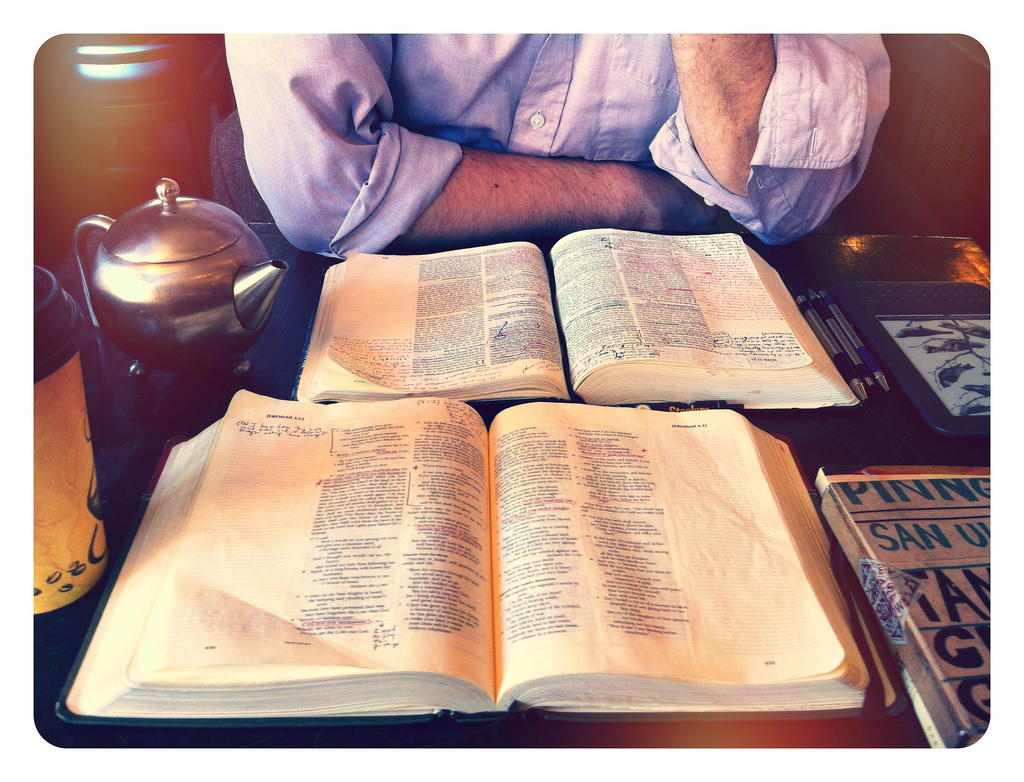
bible-schrott-coffee-paul

(Note: These exchanges are now complete. There is a Table of Contents to the discussion now available.)

Update: Daniel has posted a reply below.

When I have these kinds of exchanges on the blog, I really try to let the other person have the last word. After all, I have home field advantage here. I was absolutely ready to move on to my last part of this ongoing exchange with my friend Daniel Bastian in response to his Facebook post about his Atheism.

Last week, I wrote a post trying to give a cursory response to some of his claims about the Bible and miracles. Daniel wrote a response, posted a couple of days ago. I offered a brief response to his critique of my view of miracles. I was really eager to get back to writing about other things.

But it seems I can’t. Not yet.

I’m starting seminary back up this Fall, not simply because I’m interested in all the “knowledge” about the Bible, but because I feel I actually have a (pastoral?) concern for the spiritual well-being of people. I care a lot about what people might see on this blog, and I care that they are able to receive these things in ways that will be ultimately helpful to them.

And I fear that his post, at least for Christians not well-read in these issues, will cloud the waters more than clear them. Don’t get me wrong. Christians should wrestle with what Daniel has written in earlier posts, especially when it comes to the more abstract philosophical concerns of God’s existence and work in this world. These are things that don’t have easy or even clear responses by Christians. I’m not worried about Christians having restless nights or days as they wrestle with legitimate difficulties in the seeming difference between what they believe about God and the way the world seems to be.

But, when it comes to the Bible and the Resurrection, I don’t think we are on as shaky ground as Daniel makes it seem. Let’s discuss.

Continue reading

“New Testament Historicity: A Response” by Daniel Bastian [GUEST POST]


run-down-Bible

(Note: These exchanges are now complete. There is a Table of Contents to the discussion now available.)

Today continues an on-going exchange between myself and a friend of mine, Daniel Bastian. These were inspired by a Facebook post he wrote about why he is Atheist (in this current post, whenever he says “OP”, he means “original post” and is referencing that). Last week, I wrote a post about the trustworthiness of the Scriptures and miracles. Here is his response.

Update: I have some responses posted for his section on miracles in this post. And, honestly, I feel he gets so many things wrong int his post, I’ll have to write another response to this tomorrow. 

More important update: I have a full response to this article now posted.

Paul,

Thank you for the thoughtful post. I think this is your most cohesive piece yet and, better yet, even dives below the surface of a few of my arguments. And allow me to just say up front that it is truly a breath of fresh air to commune with a non-fundamentalist on matters of faith. Rarely do I find a Christian with a sophisticated understanding of the faith’s foundational texts and the underlying nuance operative in these discussions. It is truly refreshing.

In my response I’d like to first address the broader themes of your post and then drill into a few of the more specific items you have noted. Along the way, I will correct some errors, highlight some omitted details, and point out some oversights and oversimplifications that obscure the analysis of New Testament historicity.

At the first, it seems that you still resist recognizing the non-Christian-centric applications of my arguments. Yes, some of my arguments did single out Christianity, as that is the religion I retired from at age 25 and is thus the one in which I am most conversant. However, if you were to step outside the hermetically sealed Christian bubble for just a moment, their broader implications should become apparent. Let’s try again.
Continue reading

How We Prove God (a prayer by Karl Barth)


hands-pray-sepia“Dear heavenly Father, we ask you to give us all your Holy Spirit, and to give it continually, that it may awaken, enlighten, encourage, and enable us to dare to take the small and large steps of moving out of comfort with which we can comfort each other and into hope in you. Turn us away toward you! Do not allow us to hide from you! Do not let us do anything without you! Show us how glorious you are and how glorious it is to trust and obey you!

We would ask the same for all people, that the nations and governments may bow to your Word, and that they will be willing to work for justice and peace on earth, that your Word may be understood and taken to heart by all those who are poor, sick, imprisoned, troubled, oppressed, and unbelieving; that through word and deed it may be made known to them; and that it may be perceived by them as the answer to their sighs and cries; that all Christian churches and confessions may learn to recognize it anew and serve it with renewed faithfulness; that its truth may be and remain bright here and now in all of humanity’s error and confusion, until such a time as it shall ultimately enlighten all people and all things.

You are glorified, you who make us free in Jesus Christ, your Son, by confessing and standing on this: that our hope is in you. Amen.”

— from Karl Barth, “Pentecost” in Fifty Prayers

(Note: This was posted as part of a series of back-and-forths between an Atheist friend and myself. These exchanges are now complete. There is a Table of Contents to the discussion now available.)

Simplistic Atheism {3}: The Bible, Miracles, & History


schrott-bibles-paul-coffee

(Note: These exchanges are now complete. There is a Table of Contents to the discussion now available.)

We continue our response to Daniel Bastian’s blistering critique of religious belief. Part 1 tried to respond to what seems to be Daniel’s basic understanding of the world, reason, and spirituality. Part 2 focused entirely on his use of scientific claims and findings to discredit (at least the need for) religiosity. Yesterday, Daniel responded to Part 2 (here was my response). Today, we narrow in on his views of the Bible, miracles, and history.

A Simplistic Bible

(Disclosure: a lot of this is cut-and-paste from various comments here and on Facebook. Also, I’ve taught a few classes that have a more detailed discussion of a theology of Scripture. Those can be found here, here, and here.)

The points about the Bible in Daniel’s post were especially difficult to read. In fact, they were my inspiration for my post last week talking about how Christianity can shape the types of Atheistic beliefs people come to. My frustration came from the fact that, since Daniel originally wrote this (a while ago), I’ve watched him engage with and express respect for others that offer substantive critiques to what he ended up re-posting last week.

In his points, he expresses a view of the Bible that is mechanical, wooden, systematic, simplistic, and puts expectations on the text that it doesn’t even place on itself. It seems like he is only responding to the modernist, fundamentalist view of the Bible (what I called a “Straw Bible”), and I know his thinking is far more nuanced than that–I couldn’t understand why he still perpetuated this. But nevertheless, he did, so I’ll address it as it’s posted.
Continue reading

Simplistic Atheism {1}: a Reason & Spirituality that’s too small


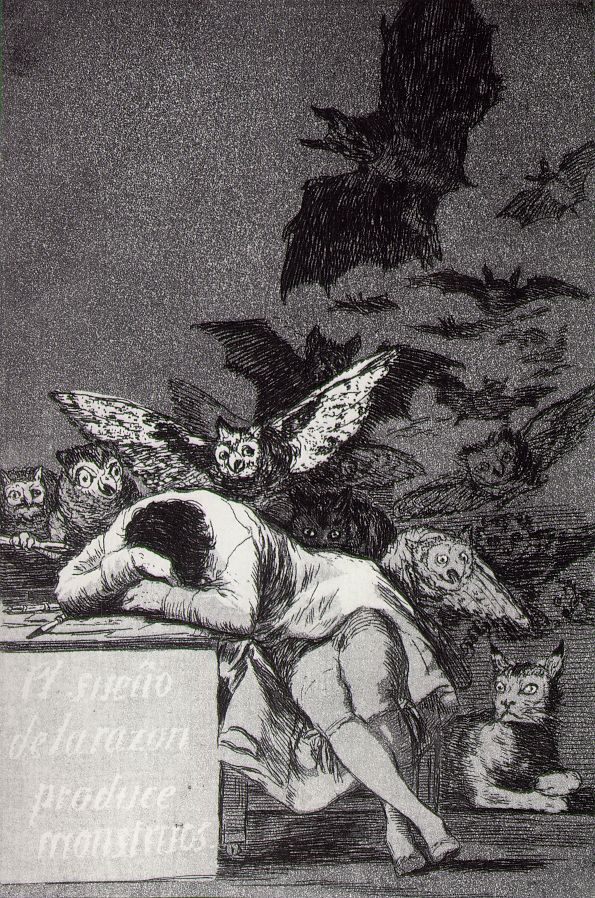
de-Goya-Sleep-Reason-produces-monsters

(Note: These exchanges are now complete. There is a Table of Contents to the discussion now available.)

Last week a friend of mine named Daniel Bastian posted a well thought-out catalog of the reasons why he is an Atheist (let me know if the link doesn’t work). This list includes items that don’t usually pop up in similar offerings, and I encourage every Christian to read this list and wrestle through the realities of what he says.

As I thought about it, though, and thought through how I would respond to some of these things, I found a consistent theme to what I would critique to each of his points: over-simplicity. In this series of posts, rather than going through each of the writer’s twenty points, I’d like to go through some broader ideas he touches on, and offer my thoughts.

By the time I was done writing everything up, I had at least four parts to this response. Today, we’ll briefly talk about how Daniel’s post represents an over-simplifying of human reason and spirituality..
Continue reading

Ascension: Our glory & the Bible’s hinge


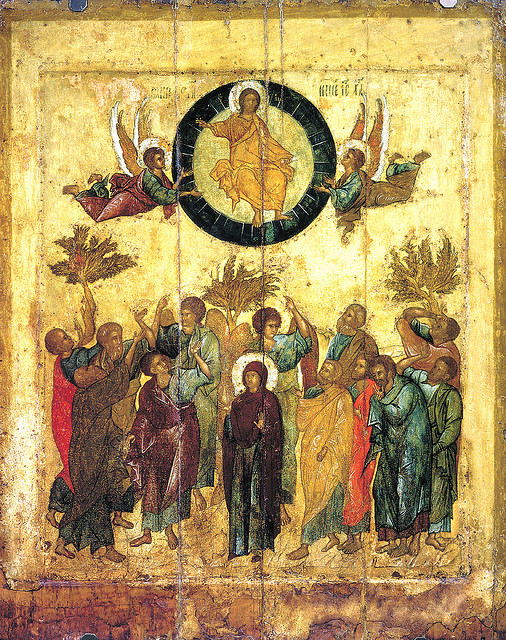
jesus-christ-ascension-iconToday in the Christian church calendar is Ascension Day, the day we celebrate Christ ascending into heaven 40 days after his resurrection and now sits at “the right hand of God the Father.” (You can read a prayer and poem I posted earlier for this Holy Day)

The Useless Ascension

The idea of “Ascension” doesn’t seem to get a lot of play nowadays in the Church. This, in spite of the fact that it is an essential part of all the Church’s earliest doctrinal formulations, and the subject of the most-quoted Old Testament verse in the New Testament:

The Lord says to my lord, “Sit at my right hand until I make your enemies your footstool.”

Compared to other, non-creedal things like Hell, homosexuality, and “attacks on biblical authority”, the Ascension isn’t really talked about. Maybe this is because the Ascension isn’t really a “doctrine”–it’s an “event” and a “declaration”.

And we western Christians love our systematic “doctrines” that we can pick apart as nauseam and/or figure out how we can “apply it to our lives” in such a way that we can feel like we’re “good Christians.” But honestly, the Ascension doesn’t have many direct applications for today.
Continue reading

Women & Church History: the century we’re still recovering from {pt.2}


Dubay-lizglass-eyeThis is a post in an on-going series on Women in the Church.

Yesterday, I began talking about the history of Women in the early Church. Up front, I gave my primary source for information, this issue of Christian History Institute Magazine on “Women in the Early Church”, which I will quote from in this post. If you need more information, you can go there.

I also gave a brief sketch of my view: women were quite active in leadership in the first two-centuries of the Church, but come the 200s, some radical things began to change in the Church–things that still effect us today, especially as it pertains to women in ministry.

(Most of this material is comes from the excellent article “The Early Controversies Over Female Leadership” by Dr. Karen J. Torjesen.)
Continue reading

Church History: Where have the female leaders been? {pt1}


sandorfi-quo-vadis[This is a continuation of our on-going series on Women in the Church]

Update: Part 2 is now up.

First off, one of the main limitations of writing is the necessity of producing summary titles for what you write. This post should, more precisely, have the title “Where have all of the ordained, teaching, preaching, and leading female leaders in Church History been?” But I can only put so much in the title before it becomes absurd.

I say that because even complementarians (who don’t think women should be ordained) will freely acknowledge the valuable place women (in general) have had in the Church over the years. They simply think that, in spite of gifting or value, God has placed limits on who should lead his church in ordained, official ways. So…sorry for any confusion.

When it comes to the Bible and the contemporary benefits women in Church leadership could offer, I’m pretty comfortable, confident, and secure in my egalitarianism. I think it is a faithful, consistent, practical, and edifying view to hold, and I see evidence for it written and displayed all over the place.

And yet, I’m in the extreme minority, relative to Church History.
Continue reading

And….We All Have a New Pope! (Catholics Aren’t Crazy)


pope-funny-bigMere minutes ago, a new Pope emerged from the conclave in Rome after Pope Benedict’s surprising resignation several weeks ago. The new Pope is the cardinal formerly-known as Jorge Mario Bergoglio.

But now, he is Pope Francis.

Now, I am fully and securely a Protestant, as most of the readers of this blog are. But for those of us that find ourselves in that Protestant tradition, we often forget a little detail of that name: Protestant.

It means, literally, “the protesting ones”. We are “protest-ant” about many of the practices and teachings of the Catholic Church. But to “protest” something does not necessarily mean you are no longer a part of it.

This is why I describe myself, denominationally, as a “Protesting Catholic”. (Okay, I stole that from Austin Ricketts.)

And you should to.
Continue reading

The Story of Repentance: believing vs. achieving


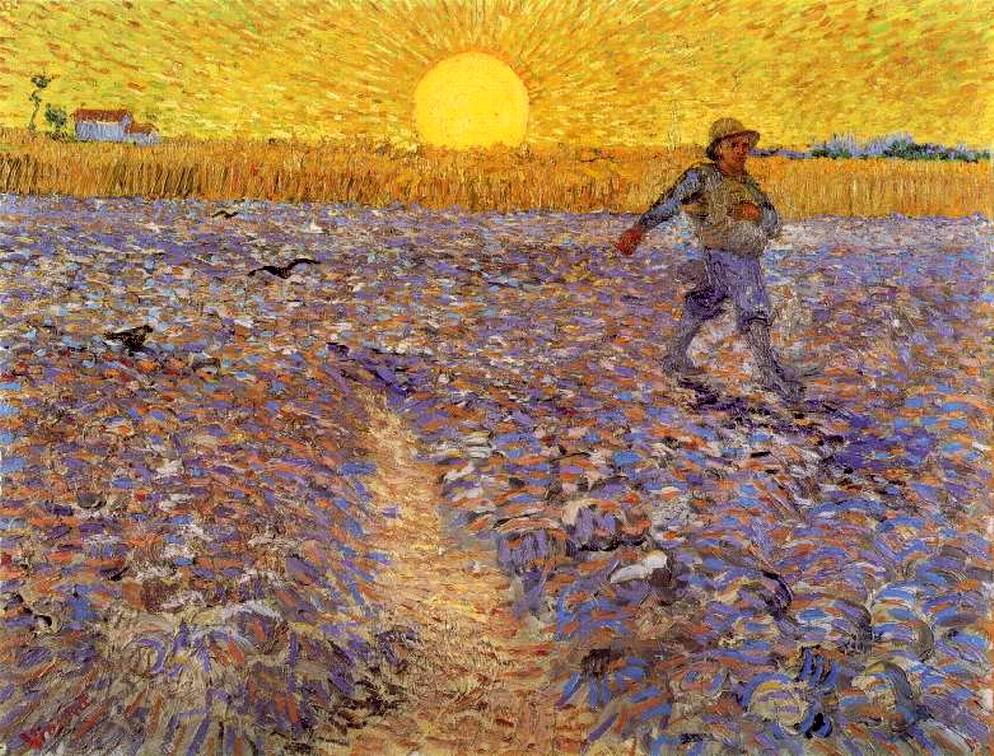
Van Gogh-Sower with Setting SunThis post is part of my 2013 Lent series: Reflections on Repentance.

I almost titled this post “theology in the service of real-life”.

The last time I wrote about repentance, I talked about the difficulties I have with some of the ways people in the Church talk about repentance. I then started researching the topic. And as I did, I found some amazingly helpful realizations about this in the Bible.

So today, I just wanted to take some time and explore this topic throughout the entire story of the scriptures. Hopefully, we can come to some conclusions about what repentance means for us today, and perhaps even some answers to our previous concerns in the last post.
Continue reading

The Sex-Slave’s Name is Jesus


sandorfi-le-pardon-wide

In preparation for my upcoming Guatemala blogging trip next month, I’ve been reading the wonderful book Geography of Grace by Kris Rocke and Joel Van Dyke. It opens by talking about the horrific story of Judges 19, where a nameless woman who is no more than a sex-slave, is given to a gang of men who gang rape her all night. She is then dismembered while still alive and the parts of her body are mailed to the twelve tribes of Israel. I found these lines so beautiful and redemptive in the just of such darkness.

When reading Judges 19 with a sanctified imagination, it is as if we become the disciples of Jesus on the road to Emmaus in Luke 24. This passage tells of the disciples’ long walk with the stranger who is suddenly revealed as Jesus when he reenacts that meal on the night that he was betrayed. Just as the stranger is revealed to be Jesus in the breaking of the bread, so too is the unnamed woman revealed to be Jesus in the breaking of her body.

“Just as you have done it to the least of these . . . ”

lf we reflect long enough on the heart of the unnamed Woman [of Judges 19], We will come to know not only her heart, but her name as well. We will dare to give her the dignity of a name that she has been denied for more than three thousand years. We will even dare to name her the name above all others.

As grace flows downhill and pools up in Judges 19, We are confronted with what looks like a cesspool. It is offensive and scandalous beyond words, but if we can hold our gaze long enough and reflect on the Woman, she teaches us a hard but liberating truth-that she was not alone in her abandonment. She was not alone when she was handed over to the mob. She was not alone when she was gang-raped and beaten that night. She alone was not cut into twelve pieces and handed out to Israel. God was with her that night. God too was abused, beaten, raped, and dismembered. Where is God? God is with us, particularly among the least. Immanuel.

Ash Wednesday Egalitarianism, or “Why do female preachers suck?”


paul-schrott-ash-wednesday-bwYes, that’s me in that picture. I love that picture. It’s been used in a few posts since it was taken a couple of years ago. This isn’t (just) because of some weird sense of narcissism that loves to see my face on my blog posts. Rather, this picture is a very meaningful reminder of one of the most formative nights in my Christian life.

I said in the beginning of this series on Women in the Church that for most of my life, I had been one of the staunchest defenders of male-led church leadership. I knew all the arguments, I believed the caricatures of the other side, and importantly, I had experienced that women made terrible preachers of sermons.

Now remember: this was “pre-conversion” Paul that was thinking these things. But still, as I had visited friend’s churches, listened to audio, and seen female televangelists, it was hard not to notice that I had never heard a “good” sermon offered by a woman. It seemed clear to me, then, that this unique “anointing” and “gifting” to preach was reserved for men.

Don’t get me wrong. I had received incredible guidance, teaching, and wisdom from women. But these had been in the contexts of schools, lectures, books, blogs, campus ministers, podcasts, and the wider world–not church sermons.

Continue reading