Male-Only Church Leadership: Blessing or Curse?


michaelangelo-adam-eve-eden-fall

In these discussions on women’s roles in church leadership, a favorite little one-off argument by Egalitarians (and a pretty darn good sound bite) is that the very idea of exclusive male headship is part of the curse laid upon humans in the Genesis Eden story. In Genesis 3, this is what God speaks over the woman as a curse in response to her sin:

“I will greatly increase your pangs in childbearing; in pain you shall bring forth children, yet your desire shall be for your husband, and he shall rule over you.”

I’ll be honest with you. I haven’t done the research on the Hebrew or scholarship on those lines to know exactly what these lines really might mean.

Honestly, both sides could use them. Conservatives could say that the curse is that women will desire the authority that God rightfully gave men. Egalitarians would say that man’s “rule” over women is the curse.
Continue reading
Women & the Church: What’s Adam & Eve got to do with it? [2]


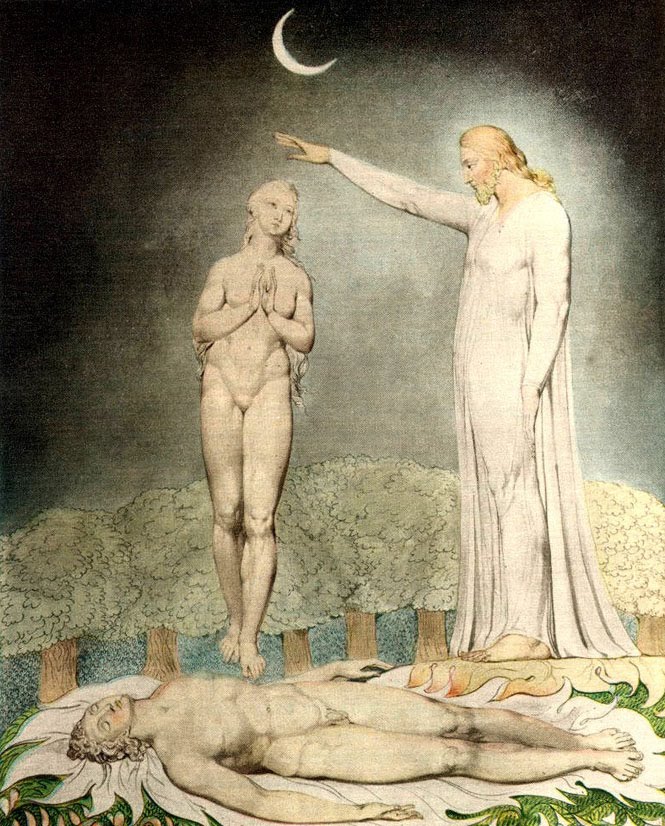
blake-creation-eveYesterday, in our on-going series on women in leadership roles in the church, we began looking at an argument often given by conservative complementarians when presented with the cultural context behind 1 Timothy, some of the most seemingly clear verses in scripture that limit a woman’s role in the church. Oftentimes, egalitarians offer the cultural context to show that these woman-limiting verses are in fact speaking to specific things going on at the time (as I did), rather than some eternal prohibition for all churches at all times.

The conservative response that we began looking at is when they say that the cultural context is all well and fine, but Paul’s foundation for what he says does not appear to be the immediate context at the time, but rather the very structure of creation itself. We looked at those verses to try and argue that this is not at all what Paul is doing in the text.
Continue reading

Women & the Church: What’s Adam & Eve got to do with it? [1]


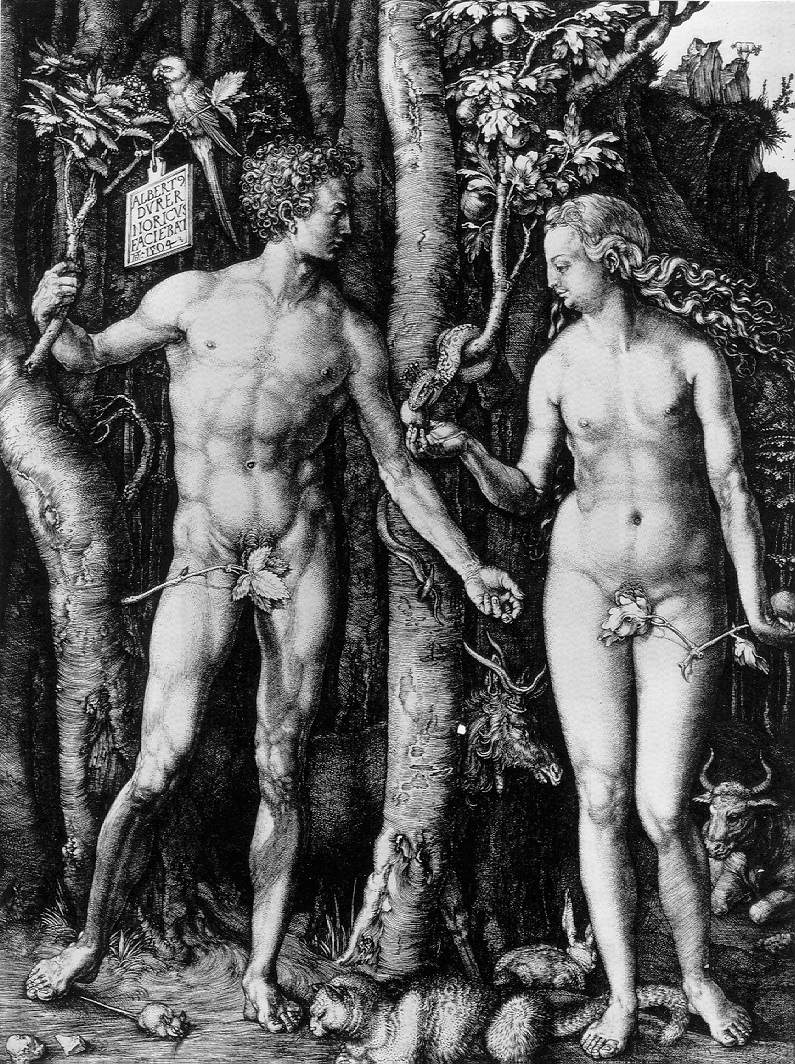
durer-bw-adam-eve

As I’ve been looking into these “Women in Ministry” discussions for this on-going series, they usually follow a similar pattern. Conservatives will point to some Bible verses, Egalitarians will point to the context (as I did in our last post), and then, at some point, the conservatives bring up this simple, yet logical and reasoned argument:

Yes, you can point to the cultural context all you want, but at the end of the day, Paul’s reason for what he says, is not the cultural context, but the very structure of pre-sin creation in which God created Adam first. This is something that’s true no matter the context.

Now, I’ve said repeatedly that my egalitarian beliefs come not from desire to move away from the Bible, but my attempts to be all the more obedient to it. And so, I want to take this argument as seriously as possible. I’ll attempt to do that in these posts.

As I started writing up the problems I had with this “creation-order” argument, it became so long, that I had to break it up into two posts. Today, we’ll focus on the particular Timothy passage in question and other related things that Paul writes. Tomorrow we’ll focus on the Genesis story itself to see what it might say to this.

The Timothy Passage

Continue reading

On Women Leaders in the Church: Timothy’s cultural context


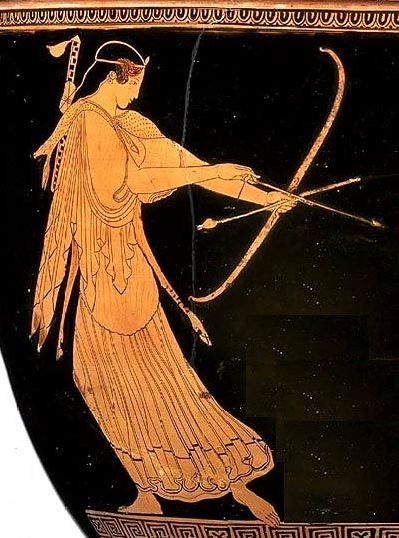
artemis-greek-urnFor many of the Christians that believe women are not to be ordained, authoritatively teach in churches, nor hold formal church leadership offices, 1 Timothy 2:8-14 is the first (and oftentimes the only) Bible text they throw out as a conversation-ending, slam dunk against people they feel are “re-writing” the Bible for their own ends.

When last we left our on-going series on women in the church, we talked about the text and translation of this passage. We talked about its history of mistranslation and how the seemingly best and most consistent translation offers us a different picture than the traditional one. Today, we’re going to pull back from the text itself to look at the culture and context behind the letter.

my thesis

I’ll give my view up front, so you can leave it, take it, or read on for why I land there. This post is a long one.
Continue reading

Epiphany: a great time to talk Magi & biblical errancy


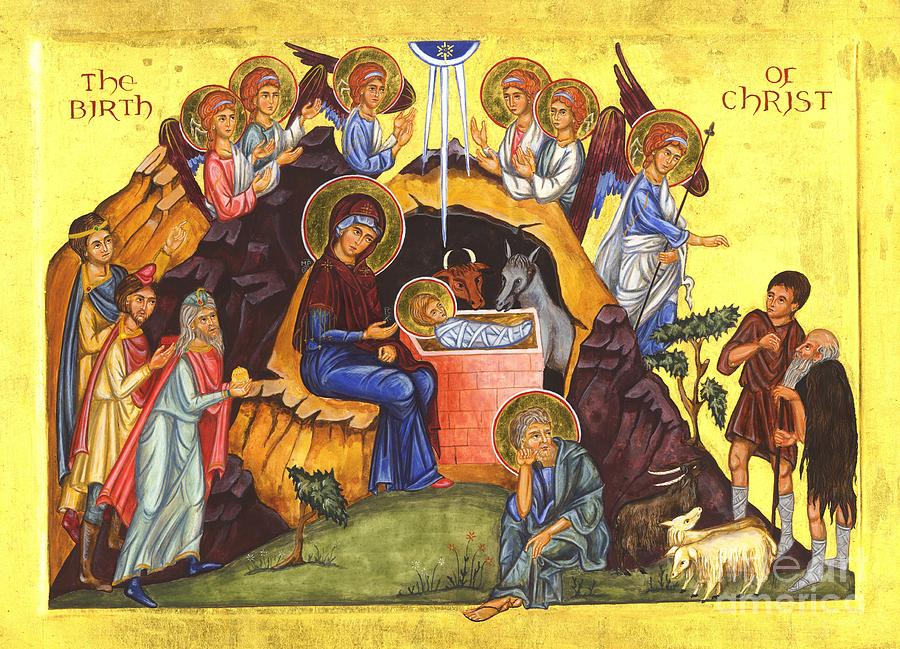
advent-nativity-icon This Church season of Epiphany primarily celebrates the coming of the wise men to see the young Jesus. Now think of the popular conceptions of the “wise men”. I imagine the picture that comes to mind is much like the one above: a quaint manger, farm animals, some shepherds, and the three wise men, presenting their gifts to the newborn Jesus.

I’m not sure how many of us know how wrong this is.

The wise men did not visit Jesus in the manger, their paths did not cross at all with the shepherds (that we know of), and, contrary to some of the most well-engrained church and musical traditions, their number is not given–“three” is just a guess. This guess is probably based on the fact that three gifts were offered (though the 6th-century Armenian Infancy Gospel, the source of the Western tradition of the wise men’s names and ethnicities, lists far more than just three gifts). The Eastern Church tradition even says it was twelve.

And yet, for over a thousand years, on into the present day, these traditions concerning the Wise Men have persisted. We know the sources of these traditions, we know when they became popularized, and we know how they’ve been used in Christian preaching and church life through the centuries. Every Advent season, even the most cursory drive in the suburbs will offer nativity scenes peppered with three wise men adoring the manger-laden Christ.

This reminded me of Jannes and Jambres.
Continue reading

2 amazing hours on the Christian end of the world


A few people have asked about my blogging absence (I have felt honored that they have noticed!) Anyway, I’ve been sick, first with a stomach flu, and now with an upper-respiratory thing. I lost my voice last week and am only now recovering it. It’s weird; I hardly ever get sick.

Anyway, this has kept me from blogging, but it’s given me the chance to watch and read some amazing things (about which I’m sure I’ll write more in the weeks to come). One of the highlights of my time was this video, An Evening of Eschatology, hosted by Bethlehem Baptist Church and moderated by John Piper (here’s some background to this talk):

This is an amazing discussion, and very insightful for those of us Christians that either have passionate views on the end of the world or don’t think about it much (as a friend used to say, “I’m a ‘pan-millennialist’: I believe in the end it’ll all just pan out.”).
Continue reading

PSA: BibleGateway.com now has the NRSV Bible for free


For those that care, the website BibleGateway.com now offers the New Revised Standard Version (NRSV) [Wikipedia] as one of their many English translation options.

If you’re looking for a Bible verse or passage, or if you do lots of web writing about the Bible and need a good online Bible with lots of options, I’ve found BibleGatweay.com to be the best, especially for copying-and-pasting elsewhere.

This is also the most widely-used Bible site that now has access to this translation of the Bible. Before this, I couldn’t find it anywhere free online except at a weird, obscure site or two.

So why have I been eager for this translation (and why should you be)? The NRSV is the most ecumenically-used translation in the English-speaking world. It’s the standard translation used by Catholics, Anglicans, many Eastern Orthodox, and my own church. It’s also the standard translation used in academic Bible study.

And so, even though I still have a soft spot for the ESV, I like feeling like I’m swimming in the same stream as my church leadership (and academia, but that’s not as big a deal). And so, I prefer the ESV or the NRSV for in-depth Bible study, while I’m a lot more flexible in my more casual Bible reading.

So compare some versions and see if you like the NRSV yourself. Hopefully this new availability of this resource makes your continued engagement with the Bible all the more fruitful and exciting.

And so

Advent, Evolution, & Absolution [RE-POST]


Today, I’m re-posting a piece I wrote exactly a year ago for last year‘s Advent series. During this year‘s, we’re seeing how the Advent event affects parts of our lives that we usually don’t associate with it. Today, it’s Advent and Evolution. You can follow the series here.

It’s Advent. A time where we especially orient ourselves towards rejoicing and celebrating the fact that God did not remain far off and merely create a “legal” or “dogmatic” satisfaction for the plight of his creation and creatures. Rather, he broke into it and came into his creation and among his creatures. In this year’s Advent series, we’re exploring how, in this Coming, Jesus took on our creaturely formcare-taking functioncomprehensive fallenness, and communal formation.

First, God took physical, human, creaturely form. In the study I did–and subsequent lecture I gave–on Beauty a couple of years ago, I defined “Beauty” as the attribute of something that expressed complexity simply. Is not this God-in-human-flesh (theologically referred to as the Incarnation) the most beautiful of all miracles to take place? The Infinitely Complex God inhabits the simplest of human forms: a child.

Continue Reading –>

Advent & Mary: Ordained as Prophetess, Priestess, & Queen


Tanner-the-anunciation-mary

This Advent, we’re seeing how this season affects parts of our lives we usually don’t associate with it. Follow the series here. This post is also filed in the series “Catholics Aren’t Crazy” and “Women Leading Stuff in Churches“.

If a woman is revered by the church for giving the faithful their savior, then surely women are good enough for leadership roles in the church to save it. –Vishwanath Ayengar

I ran across that quote in some letters to the editor of Newsweek a couple of years back in response to a cover story arguing that if women were ordained as priests in the Catholic Church, there wouldn’t have been any sex abuse scandal. I don’t know if that’s true, but the quote is insightful and (hopefully) thought-provoking.

I can hear conservatives now: Well, God used a donkey to speak! He used Caiaphas the high priest to unknowingly prophesy about Jesus before sentencing him to death! He used Judas to bring about Christ’s crucifixion and therefore our salvation! It doesn’t mean that they were fit to be ordained pastors!

Yeah, yeah, I get it. This post isn’t necessarily meant as a “proof” or “defense” of women’s place in ministry (though it’s a part of my on-going series on the topic). I just want to revel a bit in some divine mystery. Can we all just put our swords down and marvel?
Continue reading

On Women Leading Stuff in the Church: 1 Timothy 2:8-12


In this series on women in the church I haven’t taken the usual approach of jumping right to Bible verses. I feel there are far deeper things that affect how we interpret before we even opened the Bible. I thought we should talk about that.

This has also been a really hard post to write. For much of my readership (especially those whose minds I am most interested in changing–male church leaders who disagree with me), I don’t know what I can say that’s different than what they’ve heard before. I don’t like feeling like I’m contributing to the noise.

So here’s what we’re going to do. I’m just going to try and deconstruct the more conservative view of these verses (this post), and then offer a reconstruction of how I view the verses now (the next post). If people need me to cite sources and such, then I can do that in the comments. I won’t bog down this post with that stuff, because the people that care are generally the people that both know where to find the information and/or already know it and have incorporated it into their view. So here we go.

the text

Here’s the text in question. This is the single most “problematic” text for those that see a valid place for women in the ordained leadership offices of the Church. The text is 1 Timothy 2:8-14 (ESV):
Continue reading

Could you maybe help me win some Bible stuff? One click is all that’s needed.


Hello, blog readers. I just ran across this sweepstakes on the site of my favorite Bible Study software, Logos. To celebrate the release of Logos 5, they are giving away a Microsoft Surface Pro tablet with Logos 5 on it. With my seminary and graduate school studies starting anew, both of these items would be of great, great value to me, my thinking, my studies, and my writing. Which means, if you all help me win this, I promise you’ll reap the benefits here on the blog as well.

With that being said, could I humbly ask you to click the this link? For each person that clicks, I get 5 more entries into the drawing: http://ptab.it/iGGA

Thanks again.

Women & the Church: 2 things that began changing my mind


the journey

If it’s not obvious so far, I wanted to make something clear before we begin: these posts in this series on Women the Church are walking through the same path my own journey took get to where I am.

In my last post, there was a concern that a friend brought up that I didn’t get to talking about the biblical texts enough. Well, this is because both egalitarians and complementarians are looking at the same biblical texts. In my own shifts on this issue, the key changes were not “new” Bible verses I found.
Continue reading

Women & the Church: we’re ALMOST to the Bible, but first…


Well, we’ve gone through some of my own journey and some of the ways this discussion goes, but the real meat of this discussion centers around a few key biblical texts. Various refutes and refutations’ refutes can be found with any easy Google search. I don’t necessarily want to re-hash the more widely-publicized textual minutiae of the issue, though some of that will be necessary.

In this post, I could easily just list the three primary offending texts and then talk about how my view differs from others’ views. But those other people’s views don’t come out of thin air. They are based in many more (and, epistemologically more important) assumptions and bigger issues that usually never get touched on.

And so, as I continue this series, today I just want to touch on the ways people go about using the Bible in this, and then defending how I feel like we should use the Bible here. After this post, beginning next week, I promise we’ll start getting into actual biblical texts. But we need to do this first.

Because, as anyone that has studied theology begins to realize, everything comes back to your chosen interpretive method and filters–what’s usually referred to as a “hermeneutic”.

Continue reading

Christian egalitarians: authority-fearing, culture-worshipping, Bible-hating, puppy-kicking liberals (and other truths)


I hate pontificating.

Now, don’t get me wrong. Often, we can only hate most deeply that which we know most truly. Going through the annals of this very blog and my own conversations (especially during college), pontification makes frequent guest appearances.

By “pontification” I mean saying something authoritatively more for the sake of emphasizing the authority with which you say it than the point for which you did. It’s speaking to your base and those who agree with you, and it often says more about you than it does for the topic at hand. And generally, especially for issues where there is deep disagreement, it accomplishes absolutely nothing more than entrenching each side.

Continuing this series on gender relationships in the church, I don’t want to do that. I really don’t. But too often, this is the case.

Continue reading

On women leading & teaching stuff in churches: a story


Women, and their role in shaping society’s power structures, are at the fore-front of our nation’s consciousness and cultural discussion right now–Evangelical and otherwise.

Socio-politically: Maureen Dowd wrote about it this past week. Hanna Rosin wrote a book about this happening. Sandra Fluke got Rush Limbaugh into a tizzy and then spoke at the Democratic National Convention. Republican leaders, for some reason, could simply not stop talking about rape. Mitt Romney bragged about his binders full of them. Last week, Americans elected the largest number of females to Congress than it ever has.

In Evangelicalism: Rachel Held Evans brought attention to misogyny and patriarchalism at one of the bastions of the Neo-Reformed. Her new book, which already carried some controversy, has been criticized and patronized by conservative evangelicals, including one of the top female thinkers of that flock (Evans’ response, a scholar’s rebuttal). Concerning said bastion, after a rough search and count for the phrase “Complementarianism”, it seems that over half of the results appeared this year alone. At the time of this writing, a different bastion of the Neo-Reformed, upon visit to their site has as the featured video: “Complementarianism: Essential or Expendable?”. The Church of England just announced their new Archbishop of Canterbury, Justin Welby, and one of the main issues being talked about is his views on women’s ordination.

And so, I’m starting a series of posts (as I usually do) to offer up some of my thoughts on the Christianity side of this discussion–thoughts which I hope are helpful to us all. But first, I find it only fair to tell you all my journey into this and where I stand. I’ve hinted at it before, but a fuller treatment might be in order.

Continue reading