Exodus International is Right on Gay Reparative Therapy (i)


Update III: I wrote some final thoughts on these posts.

Update II: The second part of this post is up.

Update: I wrote some brief thoughts on a frequent reply I’ve received to this post: “what about gays that are wilfully and persistently disobedient in their sin?” Check it out.

Why on earth am I writing such lose-lose posts as these? I have no idea. Well, here we go.

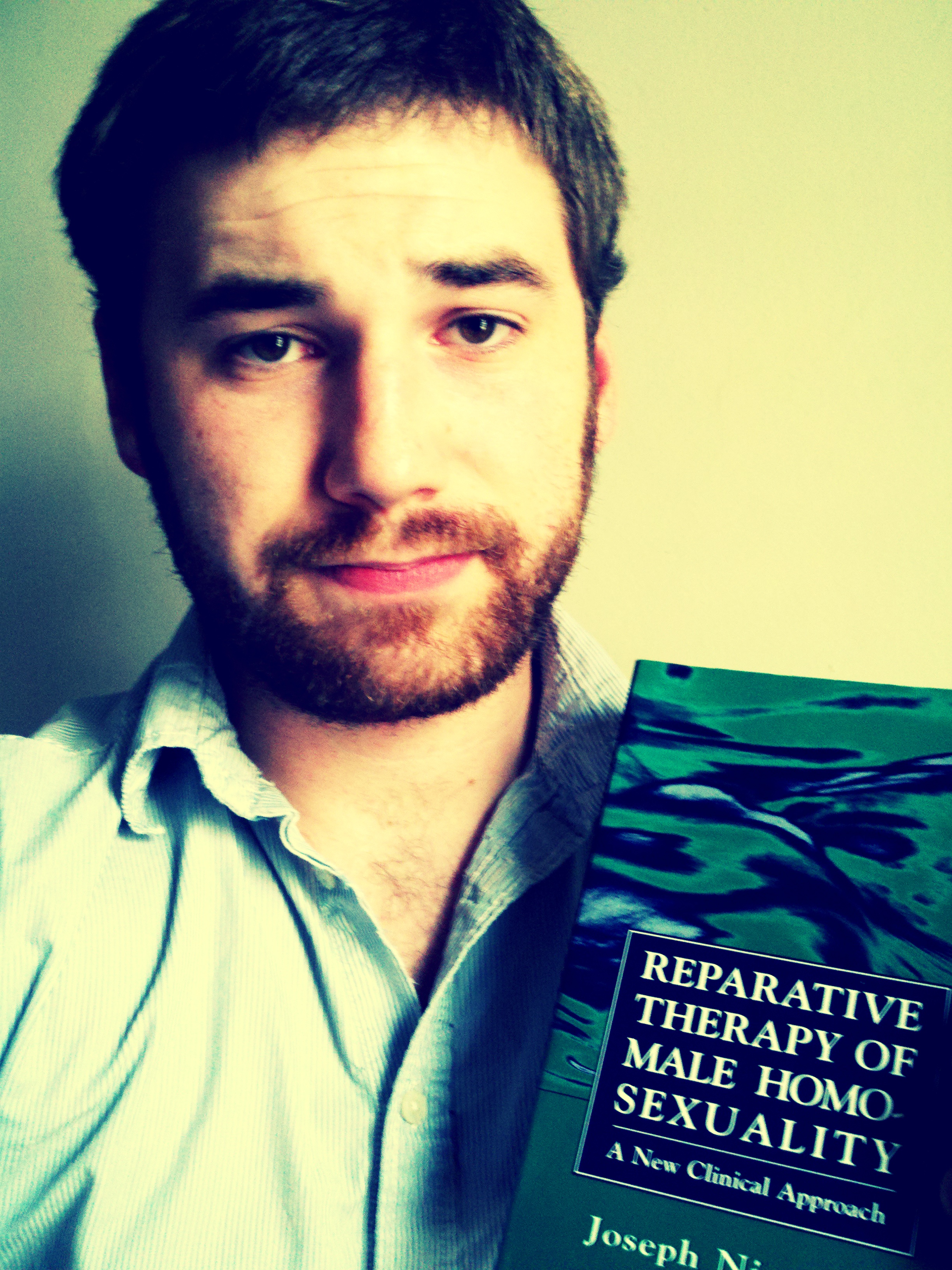
Last week, Exodus International, one of the biggest and most-well-known Evangelical ministries to homosexuals, came out against what’s called “Reparative Therapy” or “Conversion Therapy”. The New York Times had a big write-up on it (as well as NPR) and an interview with Alan Chambers, the President of Exodus International. And now the whole news cycle is all a-flutter over this. Right when I think the story is dead, I see another headline about “rifts” forming in the Evangelical community and such.

Reading these articles has made me so frustrated with both the Right and the Left in their treatment of this discussion. There’s so much to say, I apologize for the lack of flow or organization that follows.

There are some really important things that seem to be getting lost in this discussion–on both sides.

Continue reading

Class 2: The Rest of the Pentateuch (from Exodus to Deuteronomy)


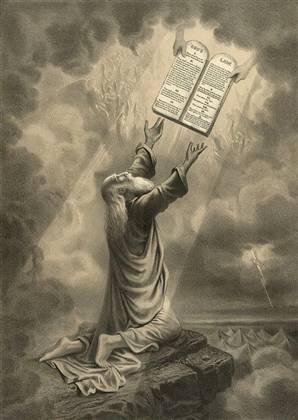
This week was the second week in the six-week Bible Survey class I’m doing at my church. We went through the rest of the Pentateuch, or more specifically, Exodus through Deuteronomy. I was originally hoping to do all the historical books of the Bible, then I was just hoping to get through Joshua. I did neither. We just got to Deuteronomy. But that will be okay.

In the recording, there’s also a brief discussion we ended up having on the importance of historicty and the Old Testament–a topic that’s only going to more of issue as we move forward in this class. Be sure to listen and get in on the discussion! You can follow the class on the class page above.

**Remember, we have next week off, so the next lecture is on 7/22, with our first field trip on 7/28.**

This Lecture Covers:

  • Review of the foundational ideas of the Bible we talked about last week
  • A more refined response on my part on the doctrine of “Revelation”
  • Survey of the content, background, and application of Exodus through Deuteronomy
  • Discussion concerning the historicity of the Old Testament and its importance

Download: [Audio] [Notes] Continue reading

Class 1: The Bible & it’s Story, OT Intro, & Genesis


This past week, I started the Bible Survey Class I mentioned earlier today. It’s a six-week class going through a theology and history of the Bible and its contents, with an emphasis on these facts helping to build up the spiritual life of Christians. It also goes into a lot of the historical development and issues behind the Bible, so it could also be of interest to non-Christians. You can follow the class on the class page above.

This Lecture Covers:

  • What is the Bible?
  • What is Revelation?
  • The History of Israel
  • The History of the Old Testament
  • Genesis: Contents, Background, and relevance to Christians

Download: [Audio] [Notes]

[audio https://prodigalpaul.com/Bible%20Survey/Bible%20Survey%201-Intro-OT-Genesis.mp3]

Bible Survey Class // liberti church center city


Update: I have the first lecture up.

For those interested, I have been given the opportunity to serve at my church this summer by teaching a six-week long Survey of the Bible class. It’s been super fun getting back into all my old seminary books (as well as getting some new ones).

In the class, we’ll go through a theology of the Bible, the history and background of the Bible, as well as go through each of the books of the Bible. In the last class, we’ll talk about how to use this knowledge and the Bible itself to cultivate an actual life of worship and  devotion. We will also taking two “field trips”. One to see the Dead Sea Scrolls at the Franklin Institute, the other to the Penn Museum of Archaeology and Anthropology.

We’ll be recording the lectures, and I’ll post both the audio and my manuscripts on this blog for your edification (hopefully). So feel free to take a look at the official page above for the Bible Survey Class.

Be sure to question, counter, encourage, and ask me on the posts for each of these posts.

Also, if you’re in Philly on Sundays through July and August, please feel free to stop by. We”ll be doing these classes at liberti church: center city from am to pm, after church, at 17th and Sansom in center city Philadelphia.

The first class audio and manuscript will be going up later today so check back!

The Pentateuch: Moses vs. the Documentary Hypothesis [OPEN MIC]


imageUpdate: I realized I was wrong.

Okay, for many of you, this will seem silly and inconsequential; others will find it blasphemous. But bear with me for this quick post.

Starting in a few weeks, I’ll be teaching a survey of the Bible class through the summer at my church (I’m going to try and record it and post it here each week). To prep for this, I’ve been delving back into seminary-land, reading about 12 different OT Surveys, OT intros, and Pentateuchal commentaries to get ready for just the Intro to the Old Testament and Pentateuch parts.

And of course, this brings up the issue of the authorship of the Old Testament. Honestly, I don’t plan on going more than 2 minutes on the topic in this class, but I want that two minutes to be fair, informed, helpful, and above all, edifying to the people in the room. I want people walking away understanding that godly people disagree on this stuff and why they do. I don’t want to caricature and criticize unnecessarily.

The main issue I’m working through is what part Moses (or any other pre-10,000 B.C. ancient authors/editors/redactors) had in writing the Pentateuch.

Continue reading

MUST-READ: “Why I Will Not Divorce the Bible” by Jared Byas


My fellow former-Westminsterian (and co-author of a book I plugged a few weeks ago), Jared Byas, just posted an incredible blog post on his blog, Seeking the Good & Claiming it for the Kingdom. The post is called “Why I Will Not Divorce the Bible” and he articulates in such clear prose and winsome graciousness many of the thoughts and perspectives I have when engaging the Bible and then turning to engage the world around me.

Byas writes about how Evangelicals and theological “progressives” both end up devaluing the Bible and not truly respecting it or being “married” to it. He does a great job of exposing the reductionism of both sides as they use various techniques to keep the Bible at arm’s length so they don’t really have to deal with it as it is. (I’ve written similarly before.)
Continue reading

“But even if not” | one of the best sermons I’ve ever heard, by Sam Wells


This past weekend, I had the honor of being at Duke Divinity’s baccalaureate for their graduating divinity students. It was a full-scale service (minus communion, and plus the hood ceremony for the graduates), complete with songs, prayers, and a homily.

And oh what a homily it was.

That night, Sam Wells, the (now former) dean of Duke Chapel, delivered his last ever message as dean. Late last year, he accepted the call to vicar of St. Martin-in-the-Fields in London, and this was the last homily he was to offer to these students he obviously loved so much. These final words to them were purposeful and intense, offering a handhold for each one of us in the muddy waters of life and vocation.

I pray these words impact you as they did me, and that you return to them often. You can view the message below, or check out Duke Chapel’s myriad of other ways to find and keep up with their messages. The message starts at 57:40 (the embedded video won’t jump to that time-mark automatically, but this link will take you right there if you don’t want to click around below).


CashTag

Enjoy the Post? Leave a tip with Square Cash!

Christianity as Sin Management?


Anyone that follows this site regularly has probably noticed I’ve been taking it easy on the blogging this week. As my want to blog slowly began turning into a need, I knew I had to take a step back and approach it a little more leisurely.

This past week, our Executive Pastor preached a great sermon on the “I am the Vine, you are the branches”/”Abiding with Christ” section of John, and it really re-enlivened my taste-buds for time spent with Jesus. I knew I had to reassess my priorities. My near-daily blog writing was only possible because I was sacrificing sleep to do it (as I’ve done before), which in turn made it all the more difficult to wake up in the morning and do anything resembling communing with Christ.

And so, this week, I have been able to get up more easily, make my coffee, pour some cereal and do some devotional time.
Continue reading

READ THIS BOOK: “Genesis For Normal People” by Peter Enns & Jared Byas


A theologian whom I respect and a professor with whom I went to seminary have teamed up to offer a really great book on the first book of the Bible. Genesis for Normal People: A Guide to the Most Controversial, Misunderstood, and Abused Book of the Bible is a walk-through of Genesis following its themes and history. They open with these words:

Genesis is an ancient story. This may sound like an obvious or even patronizing way to begin. Of course it’s an ancient story. But once we look at what this means, that short phrase might be the most important thing to remember about Genesis. It will guide the rest of this book, showing us how to approach Genesis and what we should expect from it.

For many, the opening book of the Bible is a little confusing. It reads strangely, it doesn’t “sound” like any other book of the Bible, and, as Christians, we don’t know why we would even want to read it (except maybe for the first few chapters, but even those have a bunch of problems of their own).

Ever wondered what a sane, intelligent, and faithful understanding of Genesis would be in light of the findings of science or history? Ever pondered what the relationship between Adam and Darwin might look like? Have you ever been confused by a random history channel special that cast doubt on some of the stuff in Genesis? Ever tried to read the darn book only to only to ask yourself why you started to in the first place? Do you want to know how it connects to the rest of the Bible? Would you want all this talked about and explained in everyday terms with little prior biblical or theological knowledge needed?

Well, this is the book for you. (If you’re still skeptical, you can read a wonderfully comprehensive review of the book here.)

A quick note for any atheists or skeptics that find themselves reading this: this book is also for you. As a champion of (what I feel are) “not crazy” ways of reading Genesis, I have received a lot of pushback from atheists over the years who try and argue that the only true and faithful ways to read the book are in those (what I feel are) “crazy” ways. They try and say that if you “accommodate” the difficulties in Genesis away, you no longer have the faith you were trying to defend in the first place, and so you might as well abandon the whole enterprise. I challenge you to read this book and walk away feeling the same way.

_______

As far as obtaining the book, I have good news, and I have bad news:

Good News: it’s only $1.99 (for a limited time, then it will go up to $4.99)

Bad News: at least for now, it’s only available for Kindle E-Readers.

The Good News about the Bad News: you can download free apps on your computer, phone, or tablet to read the book anyway. A recent survey by the Pew Research Center showed that computers were the most popular device to read an ebook on; not a phone, tablet, or even a Kindle. So….you have no excuse.

The Children’s Bible: my favorite devotional [casual fri]


Okay, once again, I find myself in what many past saints have referred to as a “spiritual dry season”. I can’t count how many times on this blog I’ve bemoaned being here. And honestly, this is because I think I’ve spent more of my Christian life in these times than out. It’s kind of the norm. Don’t worry, I’m finally getting help.

As is the case with most people experiencing times like this, one of the first casualties is any personal Bible reading. I get to that place where I just don’t want to read the Bible–or, more precisely, I want to, but I just don’t have the spiritual strength to do it (anyone who’s been a Christian for any length of time probably knows what I mean).

But there’s one tool that God has given me that he consistently uses to draw me back to himself. I found myself picking it up again this past week and wanted to to share it all with you.
Continue reading

Philly’s Outdoor Feeding Ban: Good for the City, the Church, & the Gospel (ii)


Yesterday I wrote a post about the Philadelphia ban on outdoor feeding of the homeless. I wrote about how the issue here is not about hunger, it’s about choice. It’s also not a religious freedom issue, as some groups say. These feedings have been one way that Christians have tried to accomplish their call to serve the homeless. Banning these outdoor feedings does not ban our service, just one particular way we’ve done it. Lastly, I talked about how honoring someone’s dignity is more about acting for their greatest good more than it is about creating space for them to choose whatever they want.

Today, I want to talk about how this ban is actually good for the Gospel in this city.
Continue reading

On Palm Sunday (or, “Oh, the Glory, the Beauty, & the Tragedy of Being Human!”) [REPOST]


This past Sunday was Palm Sunday, the Christian holiday that ushers in Holy Week. It celebrates the “triumphal entry” of Jesus into Jerusalem (Mk 11:1-11). Seen with the insight of hindsight, though, this is one of the oddest “triumphal entries” one could imagine. It is the triumphal kick-off for what will be the death of the Son of God.

Lately, I’ve been thinking about the common “courtroom” analogy for the Gospel. You’ve surely heard it: You are standing before a judge. You are guilty. The punishment is death. It is a right and just penalty for your crimes. But then Jesus comes in and freely offers to take your punishment for you on your behalf so you can be set free. Will you accept this gracious offer?

Many an atheist has pointed out the logical flaws in this analogy, but I think there are even bigger issues I have with it. Really, it only works if the parties involved in this switch are seen as equals. A pure man for a guilty man — seems like an even trade, right? But how then does the death of this one man absolve the sins of a multitude? How is this even just?

Continue reading

Love: The Beginning & End of Divine Suffering | Lent {7b} [GUEST POST]


[Yesterday, my good friend Austin Ricketts kicked off this two-part post, part of my own Lent series, talking about how the “disposition” or “intention” of God is Love, firstly exercised towards God’s own Self in the Trinity. And this Love moves away from the lover toward the loved as it is given. Therefore….]

Update II: In an interesting twist, Austin has since recanted these comments, though I still entirely agree with these original ones. So….I’m going to keep them up, but with this comment.

death & distinction in God

The reason why death is an appropriate notion by which to understand this relation, then, is that death entails separation or distinction between two or more things that otherwise belong together.

Death is not an end of life, necessarily, but rather a limit and transition.  For humans, the Bible points out that there is a limit and transition that occurs at material death.  At that time, humans exist as a bodiless soul, at least until the final resurrection.

Death is a separation or distinction between two or more things that naturally belong together; in the case of humans—a body and a soul.

Considering God again, “separation” can’t really be the right word.  Distinction is more orthodox.  I mentioned earlier that it is incorrect to see a “lessening” of the Father’s being when transitioning to the Son.  That’s because there isn’t a lessening of being at all.  Quite the opposite.
Continue reading

The Slain God of Evolution | Lent {6}


This Lent, we’ve been going through a series meditating on some of the implications of the fact that we worship a God who was “slain before the foundations of the world”–in eternity past–and therefore has some aspect of “slain-ness” to his very nature.

In the last couple of posts, we’ve been focusing on what this means for the many references in which the Bible says that the world was created “through Jesus”. What might it mean that the world came into being through a suffering and slain Lord? What might it mean for our own suffering?

This got me thinking about Evolution.

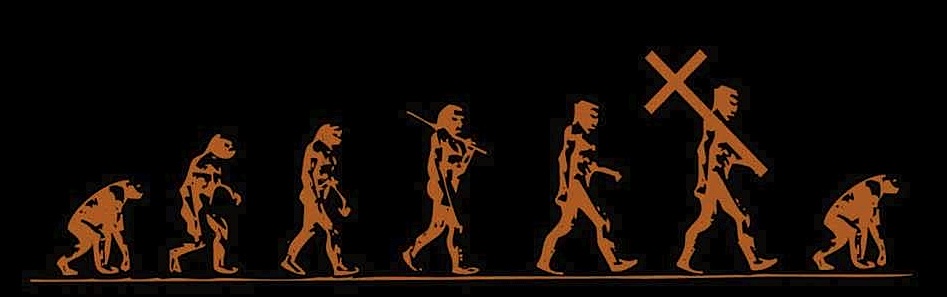
Obviously, the main vehicle driving Natural Selection is death and dying. This is one of the biggest hindrances that Christians have to the idea of Evolution. If our usual categories are correct of a “good” creation “falling”, and only then ushering “death” into the world, how does the thoughtful Christian deal with the realities of Evolution?

I think this Lenten idea of God’s “slain-ness” can help.
Continue reading

Lent-erpretative Musings {a theological interlude} {3b}


This is the second part of a post in which I’m talking about some of my guttural objections to some of the ways I’m treating the Bible for my ongoing Lent series, and then my responses to my own doubts. [Part 1]

_____________

This would not at all have been in the minds of the original writers. The original writers, at most, it seems, would have seen themselves talking about how God simply “ordained” Jesus’ death since eternity past. They probably were not thinking about making a statement about a “slain” and suffering aspect to the nature of God.

My responses: There is no mainstream view of the Bible that I know of that holds that each of the biblical writers had the fullness of theological knowledge at their disposal. They were still human (and poor, uneducated humans at that!).
Continue reading