Catholics on Scripture and Inerrancy


Oh, the Bible. It’s the lifeblood of the Church. It’s our backbone. But there’s so much we don’t get, and the culture both within and without the Protestant Church hasn’t helped. In its response to the Enlightenment, Evangelicals adopted the ground rules and assumptions that undergird modernism, namely, that Truth must be something that has a one-to-one correlation to things in created reality (as opposed to Ultimate Reality–God Himself), therefore making science and history the only vehicles for this Truth. This has caused so many problems with the rest of the world when talking about a little doctrine: Inerrancy which means, at its simplest level, that the Bible contains no “errors”. What does that mean?

Catholics can help us answer this.

I fear that Evangelicalism is becoming increasingly irrelevant to the current discussion on nearly every front because of these improper assumptions about Scripture. Catholics, though, were having these discussions in the Middle Ages! They have largely already dealt with the things that we Protestant are only now encountering issues with. This gave them a foundation that let them maintain intellectual and biblical credibility in light of the Enlightenment and now modernism. Here’s what they say about Scripture in the Catholic Catechism:

Continue reading

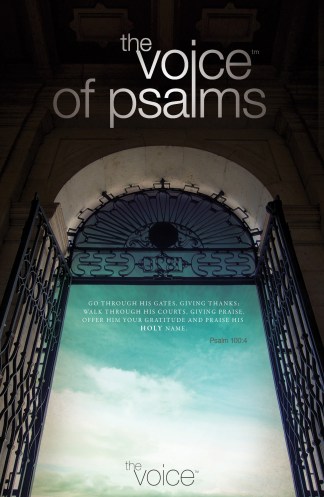
REVIEW: “The Voice of Psalms” by Ecclesia Bible Society


The Voice of Psalms
Ecclesia Bible Society
Thomas Nelson Publishers, 2009
Purchase at Amazon

__________

The Voice of Psalms (Thomas Nelson) is a special collection of the Psalms in the new Voice translation of the Bible. It contains four reading plans (one for Advent, Lent, Praise, and one for comfort and guidance). It has also has 75 “practical and insightful reflections” on various Psalms.

Most Bibles are translated with the assumptions of systematic theology undergirding them, acting as if what makes the Bible divine is that is has this particular combination of these particular words. The Voice, on the other hand takes seriously the assumptions of biblical theology, that the Bible is divine because of the true God and true story of redemption it testifies to. In translating The Voice, biblical scholars and theologians are teamed up with artists, writers, poets, novelists, memoirists, playwrights, lyricists, and other creative minds in order to make the translation both beautiful and unique for each book of the Bible.

Continue reading

It’s that time of year again….Lent.


I was just reading the article I wrote last year when I gave up Facebook for Lent. So much has changed. I remember that last year I saw fasting during Lent as some Catholic thing that might be a good idea to do. Also, my reason for giving up Facebook was to help me in the areas of procrastination and discipline.

On the discipline front, it’s funny to have watched how things have played out since then; even more so in light of this year’s Lent. As I finished up that second semester of seminary, my procrastination and discipline issues only worsened.As I dropped out and spent the summer woefully unemployed and poor, my nights got later, I became completely unproductive on nearly every front, and my soul seemed to shrivel because of my lack of discipline and consistent pursuit of God.

In the Fall I moved to a new church community and slowly started to become revived. For the first time I began to understand Calvin’s assertion that theology is only truly theology when it’s lived out. I can no longer divorce orthodoxy from obedience. As time went on, I got swept up in the various means of grace that God has given his church (to be talked of more later), and I was drawn to Him. In the midst of my “dry season” (as we charismatics call them) I feebly reached for a few resources to keep the dwindling flame alive. I eventually got my hands on a sweet copy of the Book of Common Prayer. As of about a month ago, after getting some help, I actually began getting up at a consistent early time and doing some morning devotions. I’ve even been doing some evening devotions as well. I’ve been more consistent in my thinking, writing, and planning. It’s been amazing. I feel my soul revived. After reading that Lent post from last year, I can’t help but wonder if this newfound discipline and productivity are the fruits of the grace obtained in last year’s Lent season.

Continue reading

Open Mic: A Prolegomena of Transgenderism (pt.ii)


UPDATE: This series is finished. Part 1 can be found here and Part 3 is here.

Yesterday, I started a little miniseries on Transgenderism in response to a question a friend sent me. They were wondering how Christians are supposed to look at this particular issue. I laid out the questions and definitions involved here and asked for feedback (be sure to read all of those comments). Today, I’m talking about a “Prolegomena of Transgenderism”.

Prolegomena” is just a big (but appropriate) word that basically refers to all the things we must keep in mind before trying to answer big questions. For example, in Systematic Theology, Prolegomena is when we lay out the very foundation of our knowledge about the given topics and the presuppositions that will guide us through the rest of the endeavor. That’s what this post is. I want to explore a couple of perspectives that have driven a lot of the answers I’ve seen about this before trying to come to firm conclusions in the next post. So, with all that being said, let’s get started.

Continue reading

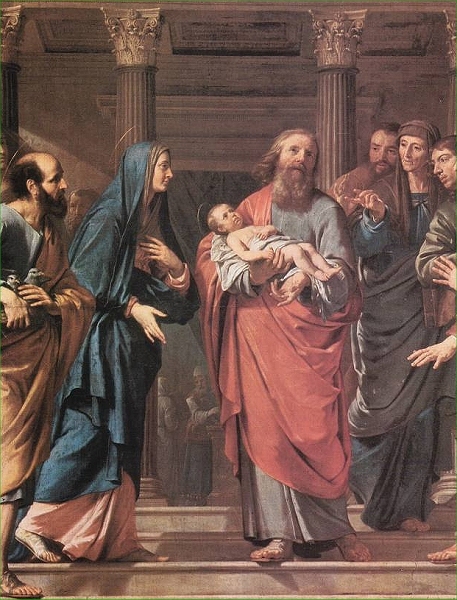
Holy Day Meditations: Jesus Presented at the Temple


The backbone of my morning and evening meditations and prayer has become the Anglican Book of Common Prayer. It has taken me a while to figure out how to use it (with a lot of help from a friend), and I’m still clumsily trying to make my way along, but it is an amazing book. It gives just the right amount of both freedom and structure to give me both guidance and excitement. I’m really enjoying it. Secondly, I am a relatively new member of a church that belongs to the Reformed Church in America. Both of these things has led me to encounter ancient church documents, creeds, and traditions I was never exposed to as a Bible Belt Southern Baptist.

One of those newfound traditions that is really becoming a major part of my life is the Church Calendar. According to the calendar, we are currently in the season of Epiphany, where the church celebrates the travel of the Wise Men to see Jesus, therefore declaring him King and Lord among all the nations, and today is the Church Holy Day on which we celebrate Jesus’ presentation by His parents in the temple (forty days after Christmas) (Luke 2:22-40). As I went through the Daily Lectionary this morning, I found that focusing on this event and meditating on it bore some very real personal fruit that I wished to share.

Continue reading

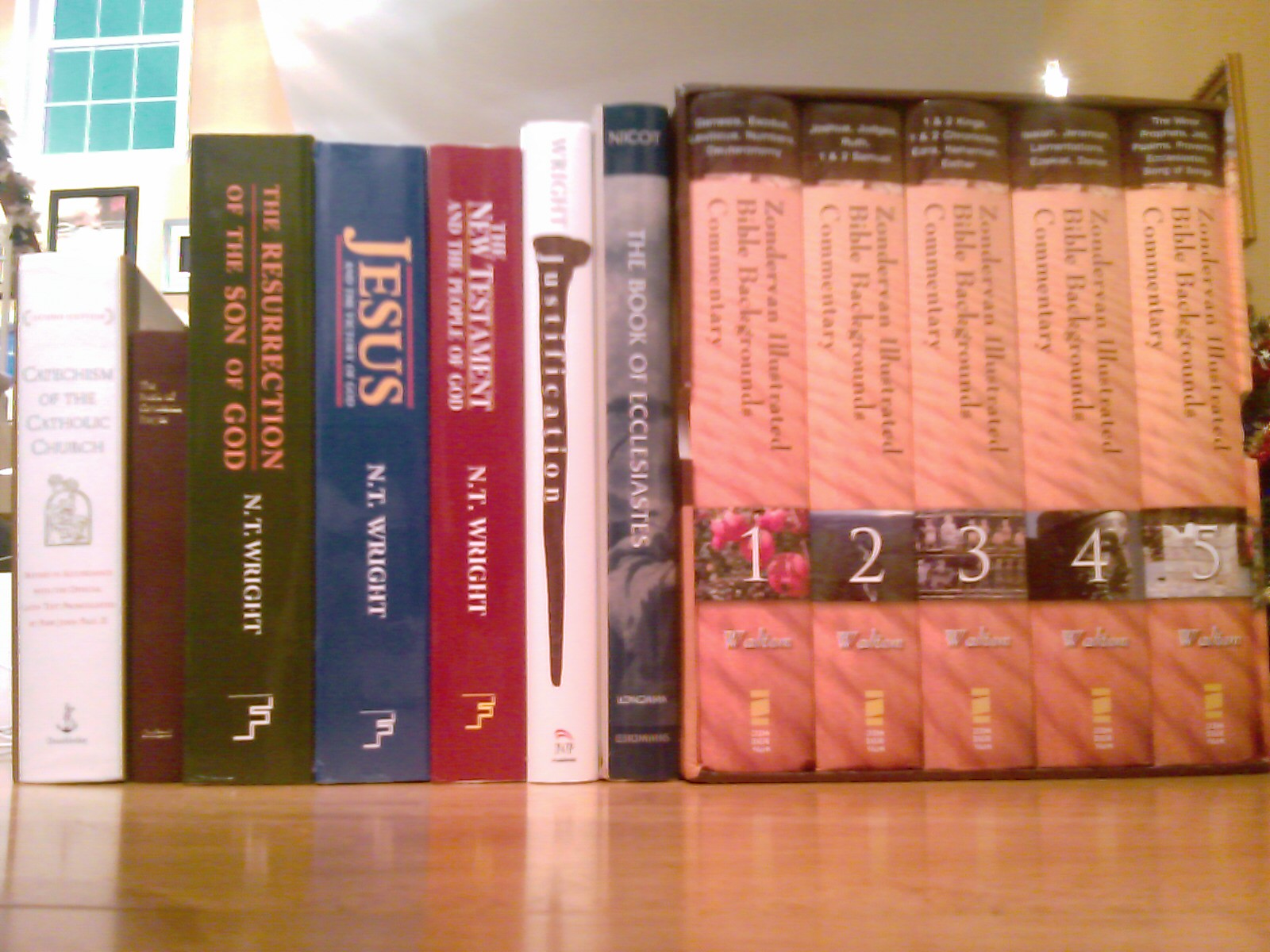
What an Ex-Seminarian gets for Christmas


In order from left-to-right:

The Bible, Slavery, & Atheists{2b}: Theology & Ethics | Reform & Revive


By the time I finished the next article in the series, it was substantive enough and socially-oriented enough to warrant being posted on my webzine Reform & Revive.  The previous post was on on how secular Philosophy can inform our view of ethics and contribute to the discussion of Slavery, Atheism, and the Bible.  This one is about how Christian theological ethics can uniquely inform our ethics in modern times.  The article covers a LOT of ground and is the longest one I’ve written yet in this series.  Hopefully that’s not a turn off.  This article has more of my thought concerning truth and Biblical interpretation than perhaps any one article I’ve ever written contains.  Here’s the link:

http://reformandrevive.com/2009/12/22/a-theology-of-ethics-contemporary-applications/

It seems in light of my earlier post I’ve decided to pour more of myself into this series, rather than just quickly finishing it off.  Hopefully it’s helpful.

Lastly, I keep getting private emails, texts, and messages from Christians talking about how much they’re enjoying this series, and how helpful it is to them, but hardly any Christians are publicly commenting.  I’m getting tons of comments from my atheist friends, though.  Discrepancy?  I think so.  If you have a thought, please leave it.  It could be really helpful to get more input on this and diversity of thought on this.

Thank you all for your support and encouragement.  It means a lot.

weekend update


I wanted to write a quick note to anyone that’s been confused about the lack of writing on all of my sites.

For one reason or another, I’ve decided to do more research on the Slavery, Bible, and Atheism series.  Here’s why: It’s a six part series and so far each part has required two separate posts.  I am mostly done with the second post of Part 2, and for the whole series so far, I have almost 20 pages of content written.  With the stuff I want to say, and the content I wish to cover, I’ve realized that by the end of the series, if I stay on pace, I could have anywhere between 60 and 75 pages worth of material written.  And this doesn’t even include the pages worth of comments I’ve written on comments on Facebook and here on the blog.  So far, all I’ve written has been very “bloggy” in style and language; in other words — completely unworthy of even considering trying to see published.  It’s been very polemical and directly addresses other people and conversations not directly involved in this blog.

Continue reading

The Bible, Slavery, & Atheists{2a}: Philosophy & Ethics


As I’ve looked at and read the various articulations about this issue put forward by my atheist friends, I’ve noticed a few philosophical assumptions about ethics that are driving many people’s perspective on how the Bible does/should talk about these things. In this post, I’d like to highlight those things and show how they are neither philosophically or theologically correct. By the time I finished writing, it was really long, so, using one of the few benefits of blogging as a medium of discourse, I will put up the second part (concerning the more theological side of this) tomorrow or the next day.

The Philosophy of Ethics

Principles vs. Applications

Even the most cursory look shows that the study of ethics is the study of transcendent principles that govern our morality and behavior. There is an important distinction though made between those transcendent principles and their applications. One can hold to the exact same set of principles, but apply them differently at different times/cultures. It is simplistic and reductionistic to think that anyone’s “ethics” will be applied in the exact same way every time. No ethicist secular or otherwise treats ethics in this fashion. I believe that Scripture is consistent throughout in its transcendent principles, though not in their comprehensive applications (below). To navigate applications takes another pair of things the Bible talks at length about: faith and wisdom (more in the next post). Further, I don’t think this principle/application distinction provides any serious ethical challenge to biblical authority. The Bible itself never claims to treat ethics in this reductionistic manner, so to force it upon Scripture is dishonest.

One of my atheist friends mentioned the converts in isolated African tribes where nudity is prevalent, saying that if Christians were consistent, they must insist that they all cover up in order to be Church members in good standing. Except there’s a problem with that: there is no Christian ethic of “non-nudity”. There is a Christian ethic of “modesty” that says that we have the responsibility to adorn God’s beautiful creation of the human body in such a way that it maintains the respect and dignity it deserves. Now, how respect and dignity is shown changes culture to culture, so it takes wisdom to see where the human form is being abused in that culture — and that is not a compromise of Christian ethics. The consistent biblical principle has still been preached, upheld, and lived. If ethics (secular or Christian) were as naively structured as is necessary for some of these atheist criticisms to make sense, then the entire field of ethics would be unnecessary and non existent, because we could have a computer program that could make all the black-and-white moral decisions for us.

Continue reading

The Bible, Slavery, & Atheism: Part 1b


this is real (I did it myself)

The next post is pretty much done, but I wanted to send out this quick note before moving on. The previous post revealed a lot of things that I neglected to make clear. My fault. Sorry.

First and foremost, the last post was not meant to settle the question on slavery and the Bible. I just wanted to get out what the Bible actually says about it. The most I wanted to accomplish toward addressing the issue was to let people see a clear trajectory within Scripture wherein no part is inherently contradictory to the parts before or after it, no more than a seed is contradictory in nature or form to a fully blossomed flower. I also wanted to give a sense of the complexity of the issue. In every passage that lies out even the most comprehensive sets of morality and ethics for the Israelite people, you never see slavery there. It was never an action that was consistently seen as something moral. It’s not a freedom that the Israelites are free to use whenever they desire; it’s used sporadically, meaning that there must be something else going on beyond some explicit commentary by God on the moral nature of slavery. The New Testament is clear that the crucifixion of Christ was something that was foreordained and ultimately brought about by God, but this neither expunges the moral responsibility of the people that actually did it, nor says that God is all about crucifixion and thinks it is “morally neutral” or “ethically okay”. He clearly thinks it is wrong and evil, and yet He clearly ordained it, allowed it, and used it to bring about his promised redemption to the world.

Continue reading

An Open Response to Some Atheist Friends Regarding Slavery & Biblical Ethics (pt. 1)


[First off, this is a long one, and only part 1 of 6, so beware before you start reading.]

On Facebook, there appeared a status by an old atheist friend of mine from undergrad named Larry (supported by another friend Christopher). Here was the thesis of the post:

Regarding moral relativism the christians are hypocritical. They say they believe in a moral objectivity given by god…but how is it then, that they believed slavery was a product of the old days, as it was applicable to the time it was practiced (and sanctioned by the bible) but now condemn it? The bible, last I checked did not change. I think this is a PRIMARY example of moral relativism exhibited by the church and christians. So how can they sit here and tell us that a proof for god is moral objectivity?

In other words, how could the ethics of Christians change over time if the book they supposedly base their ethics upon has not changed? Either the God that inspired the Bible was completely incompetent in his revelation or there was no God revealing anything at all. The note caused a discussion that resulted in almost 90 comments, and I quickly realized that if I were going to respond, it would need to be in a more lengthy manner than a Facebook comment (which is not the most helpful of mediums of debate). So here it is. I’d like to respond to the ideas that came out in the discussions. I want to disagree with them on the basis of five ideas:

Continue reading

Baptized in Beauty{10} (Enjoy, Pt. II)


Schrott1

photo credit: David Schrott

For those that have followed this series on Beauty, you will know that we have hit three major sections so far: “Why do we long for Beauty?“, “What is Beauty?“, “What things are Beautiful?“, and now we’re in the “How do we respond to this Beauty” section. I am in the process of laying out four “stages” of an appropriate and full response to Beauty. The first stage of this response is a contemplation of the Beauty.  The second is our enjoyment of it.  The first step in that process is Praising Beauty, which we talked about last time. In this post, we talk about the next step. This also happens to be my favorite part of the process of responding to Beauty. It’s when we are joined to Beauty and are swept up in its complexity and nuances. I love this feeling, I love this experience, and I loved writing and talking about it. I hope you enjoy reading it. Once again, the full manuscript and audio of the lecture I gave on this is below. We pick up right where we left off, saying that we must praise Beauty.

______________

Bur praising is not enough. Seeing something beautiful and calling it such does not complete the purpose for which that beauty exists. Beauty has an attractive quality. It draws you toward it at a very deep level. The next step, after acknowledging this beauty is to allow it to suck you in. I call this “Participating” with the Beauty of that thing or person.

Practically, this looks lots of different ways. With other people, it’s a drawing near to that person. Conversing with them. Viewing more of the nuances of the Image of God in them that makes them beautiful. For art, it looks like accepting the art on its own grounds and letting it draw you in in whatever way it’s asking of you. For plays and films it’s that idea of “suspension of disbelief”, where you allow yourself to forget that you technically “know” this isn’t real, and you let yourself get sucked into this beauty. Other forms of art tend to ask us to get lost in the object itself and explore its nuances. Closing your eyes during a musical piece and hearing every note; letting the words of a poem get inside of you and change the vocabulary you use to describe its own beauty or the world around you; letting distractions fade as you stare at a painting and see every stroke, every color (anyone who has seen a piece in real-life by John Singer-Sargent or Vincent VanGogh knows this feeling most definitely). Have you ever cried because of Beauty? This is participating with it. In the contemplation stage of this process you ask yourself “what is the beauty of this thing asking of me? It’s drawing me to itself, but to what end?”

But what about God? What about Divine Beauty?  This is where His Beauty shows especially brilliantly. All other forms of beauty can only draw you near to itself. God can and does actually draw you into Himself and Himself in you. We can participate with Him in a way that every other form of beauty only faintly strives for. How? Well, He takes the first step upon changing someone by actually sending his very Spirit to dwell within His people.

But God not only let’s us participate in His Beauty spiritually, but also physically.  After He draws near to us, we do what the Bible calls “abiding” in Him, where we draw near to Him through various things the Bible calls “means of grace”. These are traditionally called sacraments.  They are physical things that we participate in and by faith He meets us there. One of the clearest examples is Baptism.  It is where we are brought into union and participation with Christ in response to his faithfulness and action toward us.  Another is Communion. Just think of the word: “Co-mmunion”. It’s where we “commune” with God. That bread and wine is a symbol, but not just that. It is in those elements that we His people are actually drawn further into God to “commune” and participate with Him in His beauty. This is why Communion is such a big deal in the Bible. God kills people – even Christians – because they misuse this beautiful thing. He will let no one lightly and trivially participate and be drawn into His Beauty.

This should lead us to a “sacramental” view of life, where God is using all things to communicate Himself to us and communicate His Grace to us. Let everything: every good-tasting piece of food, every sunset, every cool breeze, every joyful moment all be moments where God communicates Himself and His grace to you so you might participate and be joined to Him in His Beauty and we further praise Him even more. Historically, the Christians that do this well have been referred to as “mystics”. They are the ones that say seemingly crazy things. Brother Lawrence was a 17th century monk and he said: “I have at times had such delicious thoughts on the Lord I am ashamed to mention them.” John Owen, my favorite Puritan, says

O to behold the glory of Christ…Herein would I live; herein would I die; herein would I dwell in my thoughts and affections…until all things below become unto me a dead and deformed thing, no way suitable for affectionate embraces.

Oh that we longed in that way for God. There is a participation in the Glory, Beauty, Majesty, Goodness, and Love of God that is at hand for those who believe and far for those who don’t. Please, I beg of you, if you are not a believer, seek the Beauty of God, for it’s only suitable response is to be drawn into into and know his intimacy in this way. He, the fountain of all good things, the One for Whom your soul was made, does not disappoint those who seek to know Him. Participate in Beauty.

Click for Manuscript Pdf

Manucscript

Click here for sermon audio

Audio

Tim Sinclair’s First Sermon Ever | (a too little, too late wedding gift)


One of my best friends, favorite guys, and men of God I respect the most, Tim Sinclair, preached his first sermon a few weeks back at Aletheia Church in Richmond.  He also just got married last Saturday.  I must admit that knowing Tim, I never saw him as a preacher or church planter.  I saw him as a great one-on-one ministry or small group kind of guy, but not necessarily as a preacher-behind-a-podium (or music stand) kind of guy.  Well, in short, this sermon blew me away.  I called him immediately after finishing the sermon to express my great joy in the gifting he had been hiding from us all along.  Really, it’s amazing.

So I encourage you all: download this sermon, listen to it, and leave a comment of encouragement for Tim, his budding ministry, and his budding marriage.

itunes_7

Click for Audio: Tim Sinclair: Rest.mp3

Faithful Forgiveness.pdf

Click for Manuscript: Tim Sinclair: Rest.pdf

Textual Criticism & the Glory of God


Here is the summary of my final paper for the Textual Criticism portion of my New Testament Intro class.  Enjoy:

My ultimate goal in all these classes is doxological.  That’s how I’m judging my success; not by grades, but whether not I have a greater affection for Christ at the end of each course.  I can say I have that at the end of this course, but it’s not without a price, I feel.

What do I do with, say, the ending of Mark?  How do I preach that text?  Though I absolutely disagree with the Textus Receptus-only arguments, I must say there’s something romantic and (dare I say) “Reformed-sounding” in their arguments.  The idea that God is Sovereign and Providential enough to bring about a final text, even with all its textual errors is enticing (probably because it removes all further critical thought from the process).

It’s ultimately more difficult to reject these notions, though, because you’re forced to face a few realities.

Mainly, what do we do with these texts, then?  If we keep them, then we’re Catholic because we’re placing tradition over the Word as it originally was.  If we get rid of them we seem liberal because we’re subjecting and changing the Bible based on an authority outside of itself.

What about the hypothetical stay-at-home mom that comes to me with the ending of Mark, wanting to know what it means?  Do I unpack textual criticism on her and tell her it wasn’t original so don’t worry about it?

In that case, what if Jesus’ words in John 8:1-11 have been such a comfort to her through the darkest of times?  Is that the Word of God, while the ending of Mark (snakes and all) is not?  How much doubt will it give her to know that there are words in her Bible that John Mark didn’t actually write?  In short, what are the pastoral implications of textual criticism? I don’t know.

Personally, I’m fine with things as they are—keeping very unlikely readings out of the text and just footnoting much.  I’m facing no faith-crises because of this.  I see how far God would go to condescend Himself and thereby draw me to Him, even amidst the messiness of scribal error and change.

I’m just in that very good spot of wrestling through things to see how they fit in a context of proclamation and ministry.  I’m sure they do—they must.

I’m finding that seminary accomplishes its very interesting call of answering many of your questions all while giving you many more, bigger, and deeper questions to grapple with along the way.  This is good.  This will certainly give me more nuance in my ministry of God’s word and His people—a greater understanding of the depth and complexity of God’s Word.

I see now things aren’t so black and white, and that’s by design.  If it weren’t, then we would trust God and His Word on a basis other than Himself.  He will force us to live this life by faith and by no other thing will we be able to fully rest upon—not even the individual black and white text on the page of the Bible, but rather on the Sovereign, Supreme, all-Beautiful, all-Righteous, all-Knowing, all-Just, and all-Gracious God of the Bible.