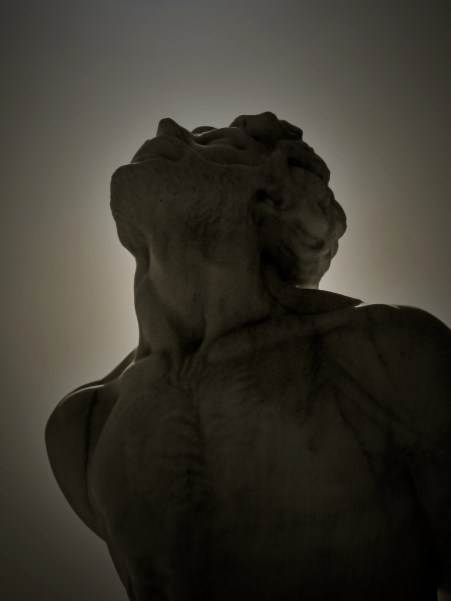
“Rage Against the Dying of the Light”: My Good Friday Sermon


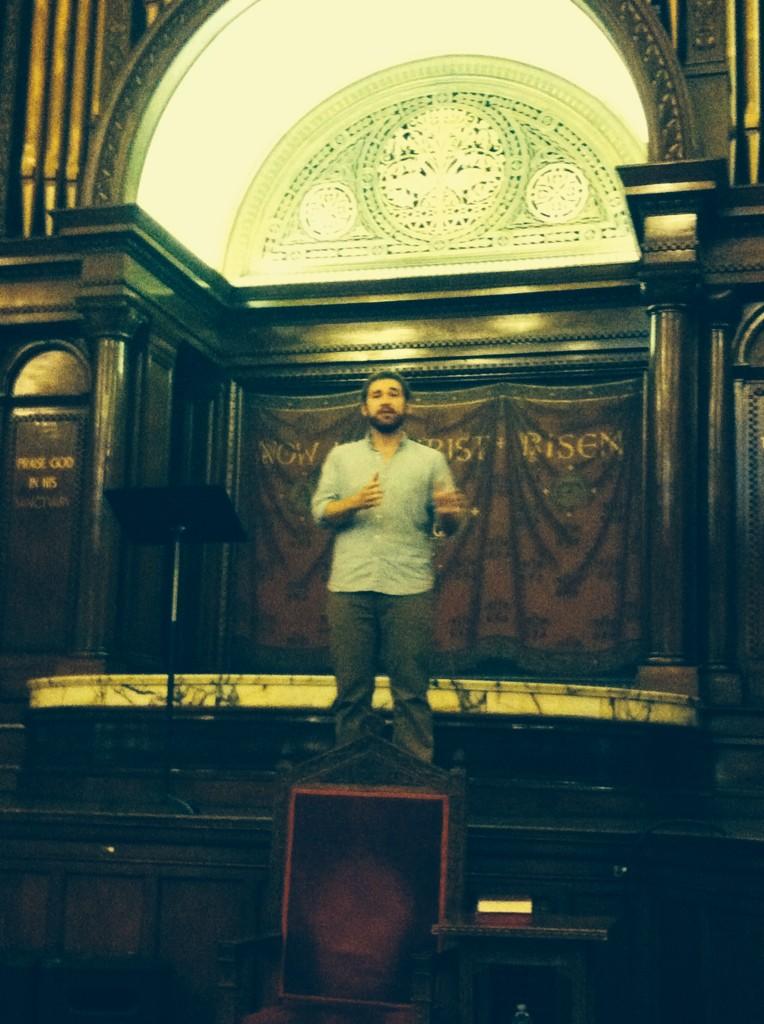
job-silohetteI had the honor of giving the reflection at our Good Friday service this year. For the service, we did a series of extended readings, from Luke 22.39-23.56, from Jesus praying in Gethsemane to his burial.

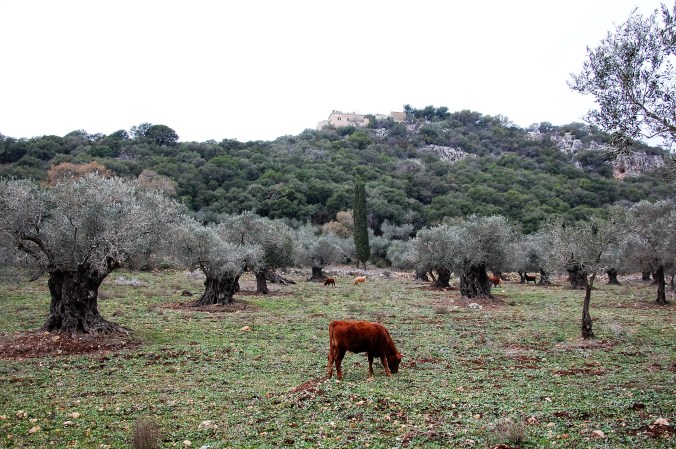
Preaching on this passage was a unique privilege for me, having recently returned from Israel. I walked these very steps that Jesus takes in our story. I prayed in the shade under the Olive Trees in the Garden of Gethsemane on the Mount of Olives. I walked down the Kidron Valley to the place where it’s actually quite possible Jesus was imprisoned overnight, beaten, and mocked. I walked through Old City Jerusalem to the fortress of Pilate. Our hotel was right outside the old city walls near the place of Crucifixion.

This passage therefore, especially in light of that trip, was so rich with meaning throughout. Nevertheless, the focus of my message was living in the darkness and tension between Good Friday and Easter.

Here’s the audio:

You can also download it here, or subscribe to our podcast. If reading is more your style, here (and below) is my manuscript for your perusal. Also, here is a picture of the cemetery I reference in the sermon:
Continue reading
My Sermon on Christ in the Darkness (John 1)


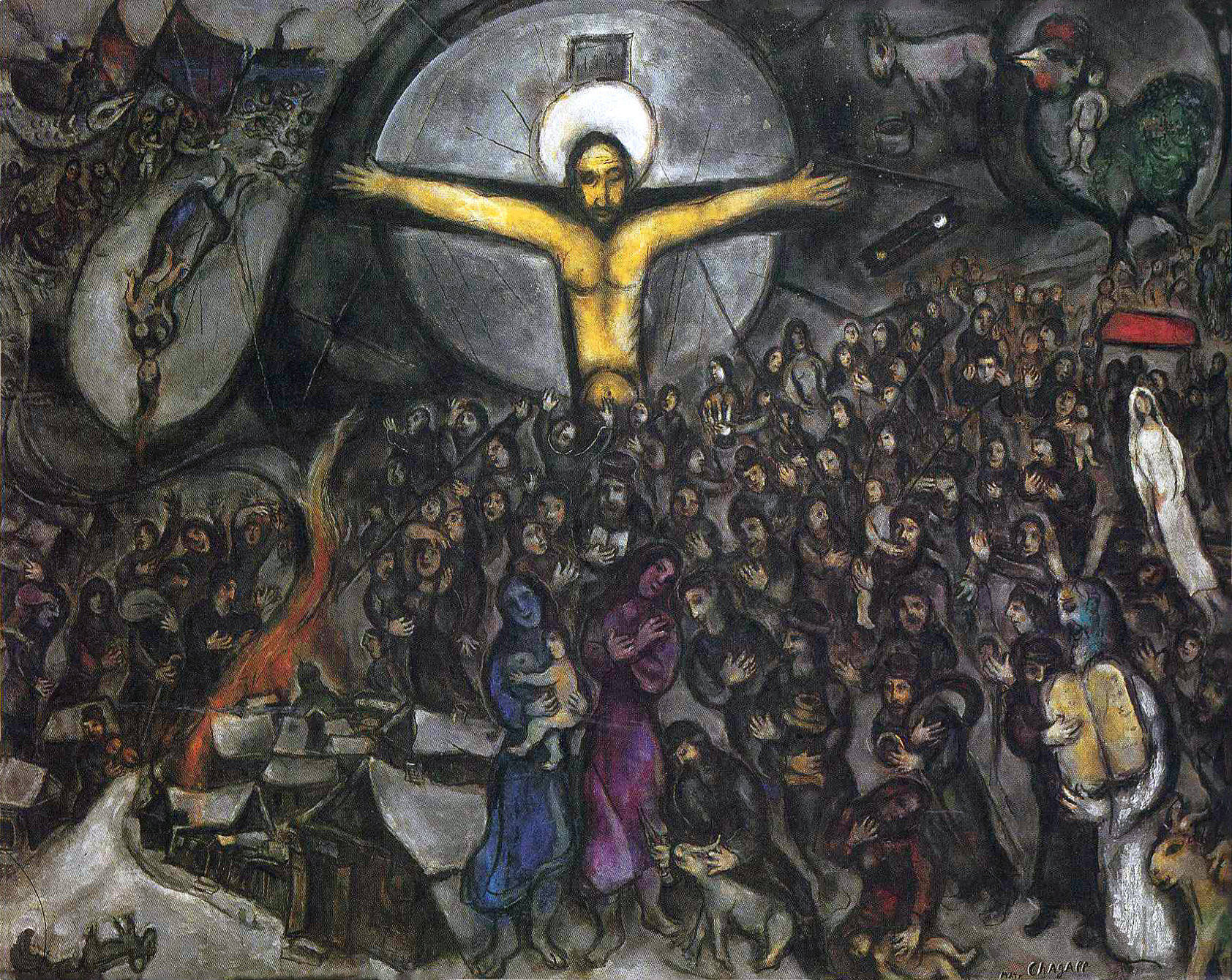
chagall-exodus

During the Advent season, I preached a sermon on John 1.1-5,10-18, the famous Logos. In the sermon, we talk about Jesus revealing himself in the midst of the darkness of this world and our hearts, and so encouraging us to press all the more deeply into darkness rather than running from it. Looking back on it, I think it’s a very “Lent-y” sermon and so I’d like to throw it up here this week during Holy Week. It was my first sermon I preached without a manuscript, so there’s no version to read (sorry). But here it is for listening:

You can also download it here, or subscribe to our podcast here.

[Image credit: “Exodus”, by Marc Chagall]

Israel, Day 3: A Roman Siege, the Northern Kingdom, & Hanging Out in Syria


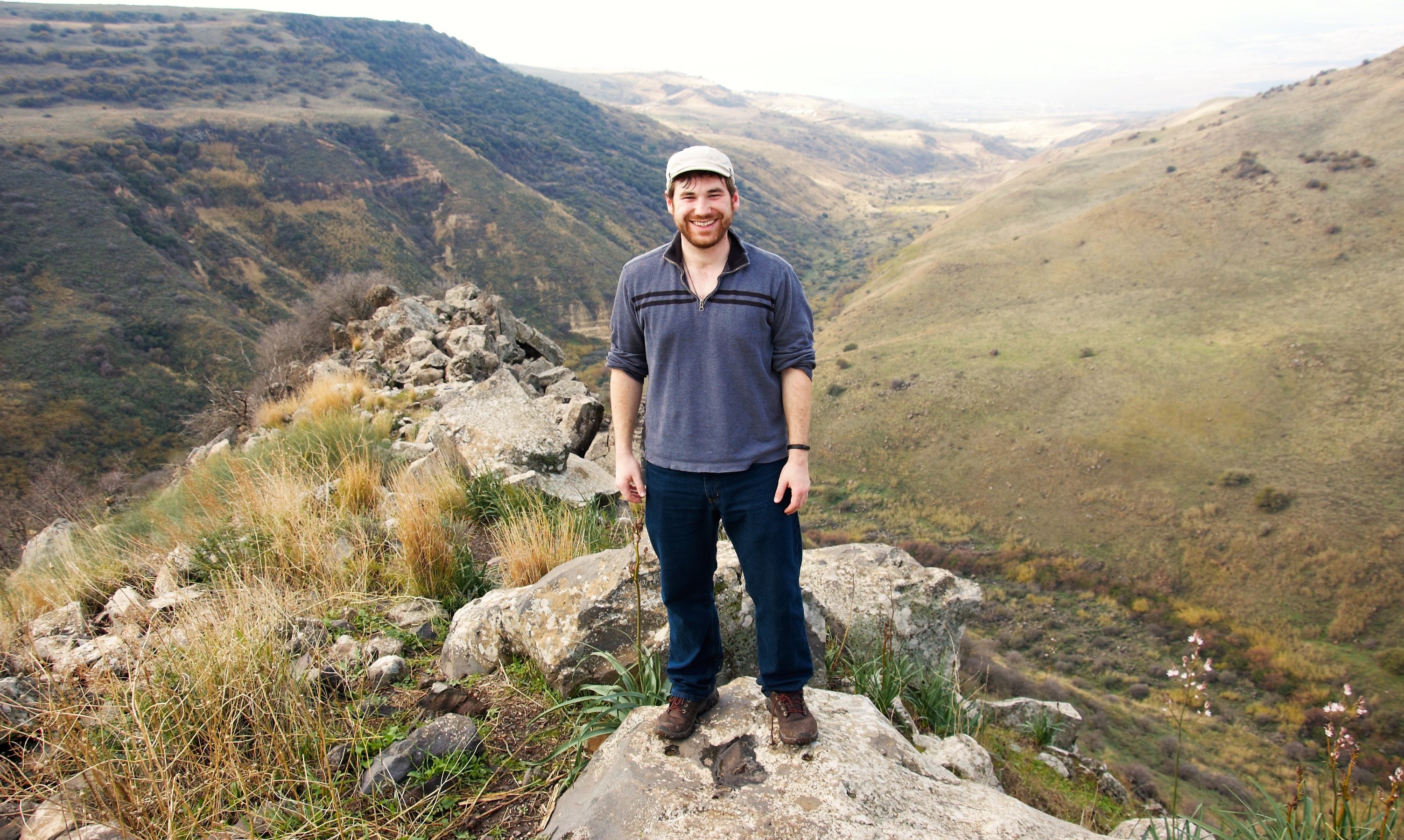
Paul-golanheights-israel-gamla

I am back from Israel-Palestine, but the effects of this trip are still lingering with me, both emotionally and spiritually (and physically). I still want to share this trip with all of you. My time in this land will be popping up in many thoughts, reflections (and pictures) from here on out on this blog, but first, I want to keep documenting the basic schedule and images of what we did during the trip.

One key thing to remember about this trip was that it was not a vacation or tourist time. It was part of an “Intercultural Immersion” seminary course. Throughout our weeks here, our guides and professors repeatedly brought us to these moments of dwelling with the “Living Stones” of Israel-Palestine, and not just being enamored with the Dead Stones of ruins and biblical history.

This means that, in the days to come, you will see me write about our times hearing speakers and learning lessons about the Israel-Palestine conflict, as well as time we spent at sites that have little to nothing to do with “Bible stuff”, but have a deep and visceral place in the minds and culture of contemporary Jewish and Arab peoples.

Continue reading

Israel, Day 2: Christian Pilgrims, Jesus’ Home, and…I’m on a boat!


Both wifi and wakefulness are hard to come by on this trip. My body is still trying to get used to being 7 hours off. Anyway, my biggest lesson on this day was a small, but profound one: I’m having to repaint the mental images of the entire BIble in my mind.  Israel is in the Middle East, right? The Middle East is desert and barrenness, right?

Wrong. I can see why this was the Promised Land. It (so far) has been nothing but lush and beautiful. We’ve yet to see sand anywhere. If this were a movie, the overall color palette would not be a dry, arid yellow, but green, grey, and black. It lush and rocky. The beaches are gravel-grey, not yellow and sandy. It is beautiful. Hopefully my pictures can convey some of this. On this rainy day, we spent it around the area around Northern Galilee.

Starting tomorrow, we will be staying with Palestinian Christian families in their homes in Bethelehem, and we’ll likely not have much access to internet and modern conveniences. Don’t know when I’ll put another post up (I’m already a day behind in writing! We had a crazy day today!), but keep up in your prayers, and enjoy the pictures. Continue reading

My Pilgrimage to Israel & Palestine: Day 1


DSC_2033 (2)

A couple of days ago, I kissed Philadelphia goodbye, boarded a plane, and began the nearly 24-hour process of traveling to the Middle East for a two-week long trip to Israel and Palestine. Today was Day 1 (I’m 7 hours ahead, so while I’m about to go to bed, most of my readers are probably getting this in the afternoon).

I’m part of a team of students in my seminary program who are engaging in this Intercultural Immersion trip, where we will be spending time throughout Israel and the Palestinian territories.

Anyway, I’m sitting here at the end of the first day. I’m exhausted physically, as well as emotionally. I had no idea just how disconnected my religious faith has been to the real world. I love historical things and enjoy walking in others’ footsteps and inhabiting their space once more. And yet, for the most important part of me, I have never had any material interaction with the physical, tangible stuff of my faith’s own story.

I realized today that I have learned to live my Christian life in such a way that I have no mental frameworks for how I’m processing this. I took for granted that I could have a thriving, deep, spiritual existence without having seen and walked the lands and places from which the beliefs were born. And yes, we can have such thriving spiritual lives without visiting this land.

But (to overuse a phrase people use all the time when they come back from this region), I feel like the Bible has transitioned from a silent, black-and-white movie, to a full HD Imax one. It’s crazy. I’m still processing it all. It’s surreal, to say the least.
Continue reading

Oh no! What’s a Feminist Fundamentalist to Do?


Processed with VSCO with a6 preset

This post is part of our on-going series about Male Feminist Theology.

Yesterday I wrote about my fears of hypocrisy when it comes to Church and Theology in relation to Women and their experience in the world. I talked about how some people see the Bible as a product of patriarchal culture, and therefore is simply wrong when it comes to women. Others (like myself) try and argue that the Bible is itself in favor of women exercising full authority and presence in the Church and Theological consideration.

But when I do this, is it just another form of fundamentalism to doggedly refuse to let go of my belief that the Bible “has” to be right in this area? Here are a few things that have at least helped me sleep at night and move forward in this pursuit of a Male Feminist Theology.
Continue reading

A Male Feminist Wrestles with the Bible (come watch!)


schrott-bibles-paul-coffee

This post is part of our on-going series about Male Feminist Theology.

When we last met, I tried to lay out a theology of the Bible that makes sense when we take into account the experiences of women–an experience that is marginalized, embodied, and connected to the earth itself. When you do that, you realize that a top-down understanding of the Bible is inadequate. The way God reveals himself is primarily from the bottom-up.  And that is how we should see the Bible–not as a divine dispatch from the heavens, but as an emerging reality out of the embodied, painful reality of human existence.

My argument was that the top-down idea that God spoke from on high and people wrote down his words in the Bible, is actually a patriarchal view that concentrates power and knowledge at the top and restricts it only to those with the privilege of being “in the know”.

Whether you agree with all that or not, there’s actually a bigger elephant in the room than our theological ideas about the Bible: the actual contents of the Bible itself. If you want to be sensitive to the realities of women in the world, what should you do when you approach passages (both Old Testament and New!) that disregard, demean, and disempower women?
Continue reading

What Should a Male Feminist Think of Our Messy Bible?


run-down-Bible

This is part of our series on Male Feminist Theology.

First, I have to say up front: this has been the hardest post of this series (so far).  Today we’ll talk about the theology of the Bible, in the next post we’ll talk about the actual content of the Bible. But first, let’s get the big picture again (because it’s been a while). 

There’s no such thing as a “neutral” theology. All articulations of theology are more sensitive to certain assumptions and concerns than others. What we historically conceive of as “regular ol’ theology” is, historically speaking, White Western Male Theology.

This series is an attempt to sketch a theology attuned to the heart of God towards our sisters all over the world who suffer more than any other single group. Women are (and always have been) by far the most abused, oppressed, poverty-stricken, and marginalized people globally. Therefore, I think there is a need for theology that speaks to this and frankly, our classical Western theology has come up short.

Continue reading

The Weight of Gratitude: A Sermon of Mine


job-silohetteI’m going on three decades of attending church services. I’ve heard a lot of sermons on gratitude and almost all of them are the same.

They spend much of their time trying to convince us Americans that we actually are far more wealthy than we ever thought. We have more stuff than most any other people in human history, and so we need to stop being so consumeristic and unsatisfied and just learn to be grateful and give thanks for what we have—because we have a lot. And us Christians have even more reason to be thankful, as we have the greatest gift of all: Jesus!

But all this does is lead us towards some brief, unsustainable, inch-deep emotion of happiness which we then call “gratefulness” and then walk out the door thinking we’ve gotten our annual “gratitude shot”—all while being able to ignore the violence raging in the world and in our souls.

So where is gratitude when we face violence and doubt, or when we hit the muck and mire of life, the pits and poverties of existence, the pain and injustice? Does gratitude have nothing to say?

Well that’s what my most recent sermon discusses (I’ve also written about this before). The sermon text is Psalm 40,  Let me know what you think. Here’s the audio:

You can also download it here, or subscribe to our podcast. If reading is more your style, here is my manuscript for your perusal. Continue reading

Ascension: Our glory & the Bible’s hinge


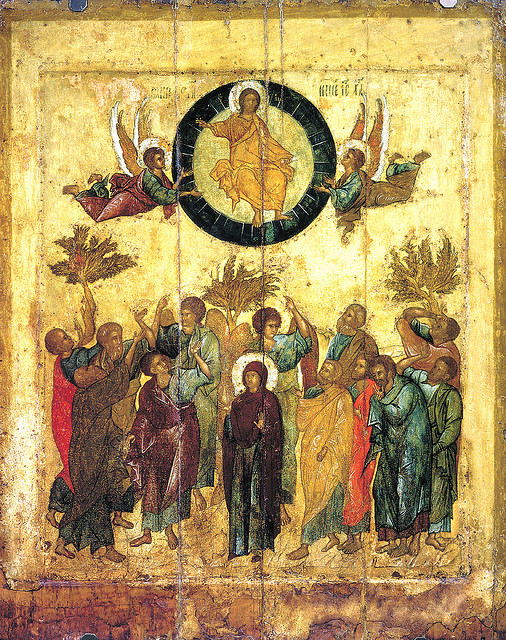
jesus-christ-ascension-iconToday in the Christian church calendar is Ascension Day, the day we celebrate Christ ascending into heaven 40 days after his resurrection and now sits at “the right hand of God the Father.” (You can read a prayer and poem I posted earlier for this Holy Day)

The Useless Ascension

The idea of “Ascension” doesn’t seem to get a lot of play nowadays in the Church. This, in spite of the fact that it is an essential part of all the Church’s earliest doctrinal formulations, and the subject of the most-quoted Old Testament verse in the New Testament:

The Lord says to my lord, “Sit at my right hand until I make your enemies your footstool.”

Compared to other, non-creedal things like Hell, homosexuality, and “attacks on biblical authority”, the Ascension isn’t really talked about. Maybe this is because the Ascension isn’t really a “doctrine”–it’s an “event” and a “declaration”.

And we western Christians love our systematic “doctrines” that we can pick apart as nauseam and/or figure out how we can “apply it to our lives” in such a way that we can feel like we’re “good Christians.” But honestly, the Ascension doesn’t have many direct applications for today.
Continue reading

God & Her Glory {3}: The Biblical & Historical Evidence


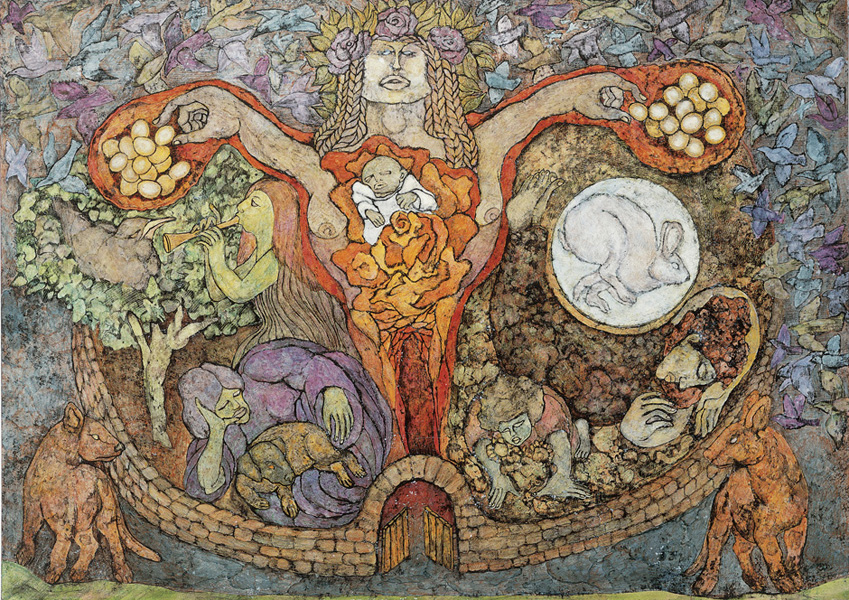
meinradcraighead-enclosedgarden

Having gone through this series on feminine language for God, I realize now I should have started with this post rather than ended with it. Following an almost Lutheran model of Law then Grace, I wanted to impress upon us the depth of the problem first, and then give us the “Good News” that the solution is both available and faithful. This may not have been the most helpful way to do it. My apologies.

Nevertheless, here I’ve tried to provide a comprehensive list of Biblical and historical references to the Feminine Divine. The Biblical texts are mostly in order that they appear in the Bible, the historical quotes are roughly chronological. Some pieces may seem stronger than others. I offer them with little or no commentary. Due to the length of this, significant quotes are in bold. If you have any questions, feel free to ask below and I can provide further sourcing, answers, etc. as needed. I hope this helpful. Continue reading

My Sermon on Judgment, Poverty, Sheep, & Goats


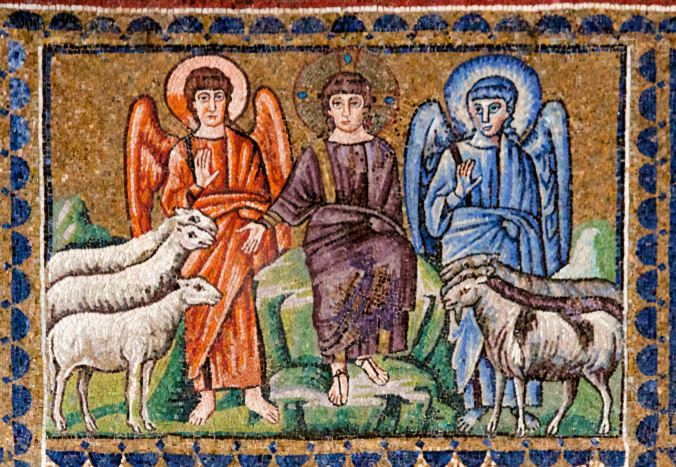
Christ-Shepherd-Judgment-Icon

Yesterday, I got to preach the hardest sermon I’ve gotten to preach (so far).

The text is Matthew 25:31-46, what is commonly called “The Parable of the Sheep and the Goats”. It’s also the one where Jesus shows up as a naked and hungry beggar and prisoner. It’s one of the most difficult, confusing, and doubt-inducing texts in the Gospels. Let me know what you think. Sermon cameos include Albert Camus, Samuel Beckett, Martin Luther, and homeless Jesus. Here’s the audio:

You can also download it here, or subscribe to our podcast. If reading is more your style, here is my manuscript for your perusal. Continue reading

ISIS, The 21, and Letting The Bible Speak For Itself


Featured Image -- 12968

Yes and amen.

josh's avatarJosh Howerton

Yesterday, shortly after WG’s ended at The Bridge, news broke of ISIS releasing a video in which 21 Egyptian Christians – scornfully called “the people of the Cross” by the terrorists  – were marched to a secluded beach and savagely beheaded by men in black masks. After huddling our little family around the computer to talk about it, I was going to write a post. But sometimes a horror is so deep it’s best to place your hand over your mouth, unchain the Bible, and let it speak for itself…

Indeed, the hour is coming when whoever kills you will think he is offering service to God.  – John 16:2

Also I saw the souls of those who had been beheaded for the testimony of Jesus and for the word of God… They came to life and reigned with Christ for a thousand years.  – Revelation 20:4

Indeed, all who desire to live a godly life…

View original post 196 more words

My church let me preach another sermon. Here it is.


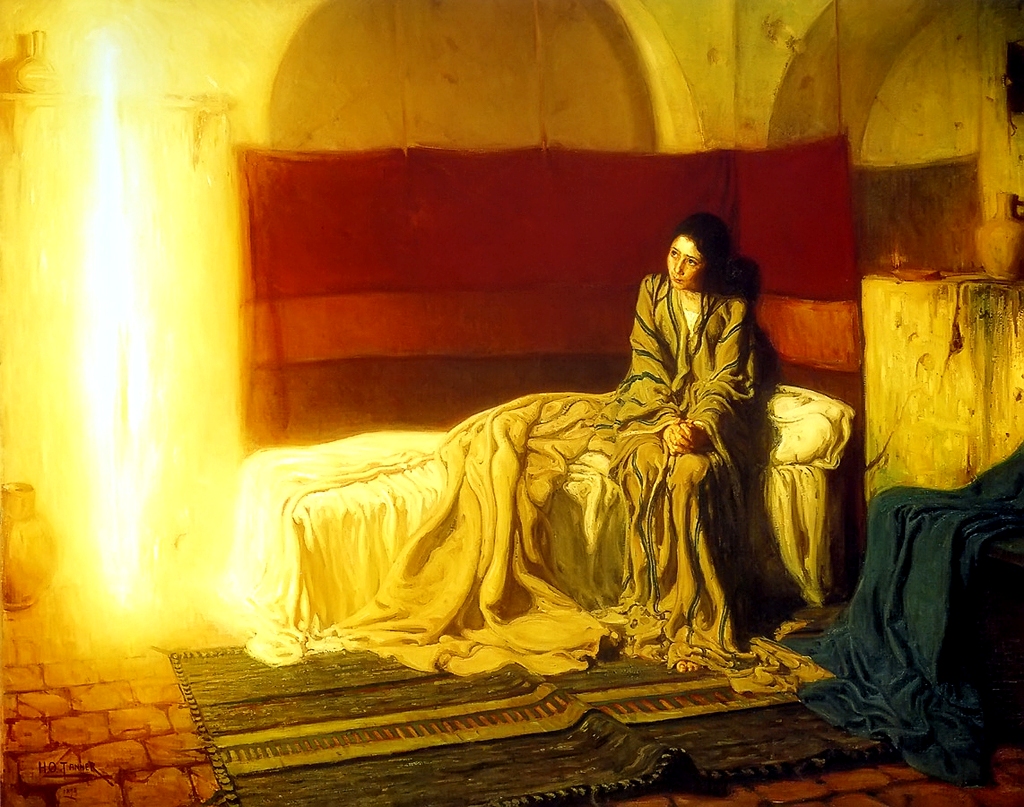
Tanner-the-anunciation-mary

Believe it or not, even after preaching my first real sermon ever, my church let me preach again. All jokes aside, I had the honor of preaching this past Sunday as part of our Advent series.

The text is Luke 1:26-38, the moment in the life of Jesus known as The Annunciation, when the angel Gabriel tells Mary that she will give birth to Jesus. Cameos in the sermon include Mary, Friedrich Nietzsche, Karl Barth, the podcast Serial, racism, white privilege, and the story of everything. Here’s the audio:

You can also download it here, or subscribe to our podcast here.
Continue reading

My first Sunday Morning Sermon. I’d like to share it with you.


paul-liberti-sermon-preachingSure, I’ve done some lectures, taught some classes, led a home group, and preached a sermon in a seminary class, but I’ve long believed that there was something truly sacred and “other” about preaching to a church family in a gathered worship service. And it’s something I had never done.

I’ve always been an over-zealous guy, and very wise leaders have pulled the leash on me, telling me to just sit and watch for a while, until the time was right to put me in front. This has continued through my life at my church in Philly, as they’ve slowly discipled me and loosened the leash bit by bit in service to our people.

Well this past week I had the honor of preaching my first Sunday morning sermon to my church family. It felt good and I myself experienced such a grace and blessing in preparing for it and offering it to my brothers and sisters. And so, I’d like to share it with all of you as well.

It’s the final sermon in our series “Finding Freedom” that went through the Ten Commandments. The text is Matthew 7:13-29, the very end of the Sermon on the Mount. Here’s the audio:

You can also download it here, or subscribe to our podcast here.
Continue reading