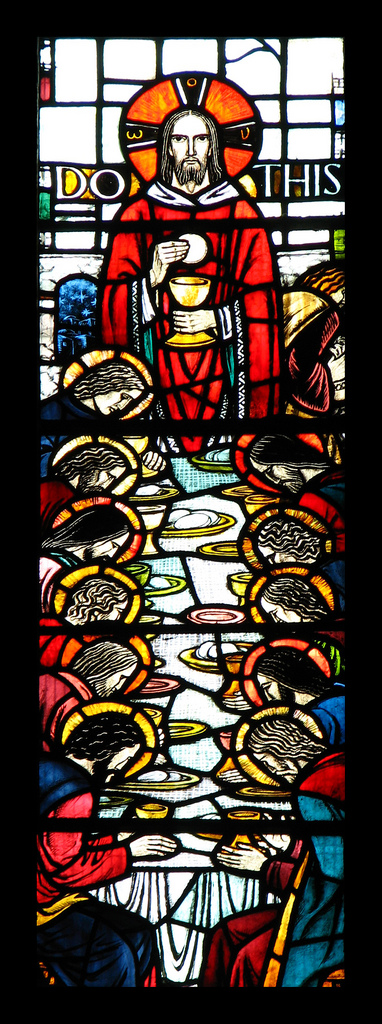
 After my previous post on how Communion is no more a “symbol” than Advent itself, I can already hear some people right now thinking: “Wait. Isn’t this the Catholic idea of communion?” (As if that would be the worst thing.) I’ve mentioned some of my Communion views before in this ongoing series, and what I articulated is a synthesis and summary of the ideas of many theologians, both Protestant and Catholic. The pop idea of the Catholic view on the Eucharist is not really right or helpful (as is the pop conception of most of Catholic doctrine). Catholicism’s “Eucharist problem” is more historical and rhetorical than theological.
In the earliest decades and centuries of church history, people were able to simply maintain the simple doctrine that at Communion, they are receiving the true presence of Christ in the Bread and the Wine (source, albeit biased). In the middle ages, though, people starting asking themselves “Wait, what does that actually mean?” Differing answers started forming and a diversity of opinion about the Eucharist began taking place. The leaders of the Church tried to bring some commonality to this. In fact, the medieval Catholic church made a few “errant” teachers affirm these statements in 1078 and 1079:
Continue reading

 the long way home