I’m Obsessed with Myself (a blog fast)


I haven’t talked about it much (on this blog or to many people), but for the past 6 or 7 months I’ve been in professional counseling, primarily for anxiety (and it’s various outward expressions). There is a constant tension and busyness inside me that keeps me from living so many aspects of life. The counseling has been challenging, amazing, and painfully slow in the growth it has been producing in me.

But growth it has produced.

A couple of weeks ago, I decided to take a week off from the blog, somewhat as an experiment. That week, I experienced more freedom from the various expressions of anxiety in my life than I had for years. I began to experience once again that communion with Christ I’ve written about wanting before. I was reading his Word, praying, and serving those around me with such calm and freedom.

I then thought to myself, “Wow. That was amazing! Now, I can go back to blogging.” I came back to the blog all last week, and all the anxiety came rushing back with it.

Continue reading

“Sleeping Alone”: for all those hurting in their singleness…


My good (online) friend Lore Ferguson (for whose site I recently guest-posted) just had an old post of her’s published on the site The High Calling. It’s called “Sleeping Alone” and it’s some of her meditations on the sustaining life of God in her singleness.

And wow, is it amazing. It’s raw, honest, unflinching, and gracious. Read it right now and then come back here. Here’s an excerpt:

Singleness is a beautiful thing and when I take account of the past decade I see a faithfulness to its beauty in my life in a way that only comes from grace, but I also see a succession of tiny funerals every step of the way. A cemetery full of them. Adventures I have had alone. Mornings I have woken alone. Moments I have reveled in alone. Each one bringing joy in its experience and mourning in its completion.

Life is meant to be shared and marriage is not the only way to share life, I know this, but the mystery of two flesh becoming one is a mingling that cannot be known by me, with my bed all to myself, 400 thread count sheets, open window, and quiet morning. And I mourn this.

Continue reading

MUST-READ: “Why I Will Not Divorce the Bible” by Jared Byas


My fellow former-Westminsterian (and co-author of a book I plugged a few weeks ago), Jared Byas, just posted an incredible blog post on his blog, Seeking the Good & Claiming it for the Kingdom. The post is called “Why I Will Not Divorce the Bible” and he articulates in such clear prose and winsome graciousness many of the thoughts and perspectives I have when engaging the Bible and then turning to engage the world around me.

Byas writes about how Evangelicals and theological “progressives” both end up devaluing the Bible and not truly respecting it or being “married” to it. He does a great job of exposing the reductionism of both sides as they use various techniques to keep the Bible at arm’s length so they don’t really have to deal with it as it is. (I’ve written similarly before.)
Continue reading

The Early Church: not so big on grace, so why are we so obsessed?


As promised, today Lore Ferguson, over at Sayable posted my second guest post on her blog, as she is on a sabbatical. My first post went up yesterday. Originally, Lore had asked me to write a post on grace. Ironically, this was the first post I wrote for her (almost an anti-grace article–even thought it’s really not). Anyway, I hope you enjoy it. Leave comments and, like I said yesterday, follow her blog. You won’t regret it. Here’s a preview of today’s post:

I grew up in a pretty stereotypical Evangelical setting, which led to a pretty stereotypical back-and-forth between guilt and self-righteousness. That is, until I heard the Gospel of radical Grace.

Many of us have this same story, where it has been so healing to hear that how God relates to us is not, in fact, based on our performance. Instead, everything necessary for God to be pleased with us has been accomplished on our behalf by his Son.

And so, in response to this, we fall in love with God’s Grace. We pray for it, long for it, and cry for it. We read books about it, write about it, and blog about it (I even did a five-part series on it myself). We try and speak it into others’ lives while trying to figure out why we don’t apply it to our own. We joyfully build our relationship with God on the glorious foundation of His Grace. It is fundamental, primary, and essential.

In short: we love Grace.

Imagine my surprise, then, as I fell in love with liturgy and forms of worship that were centuries-old, to begin noticing the utter lack of “grace” from the prayers and worship of the earliest saints.

Continue reading →

Sinning Into Our Day of Grace (and God’s Joy in it)


One of my favorite bloggers, Lore Ferguson of the blog Sayable, has taken a sabbatical from her writing for the month of May, and asked me to write a couple of guest posts on her site about grace. My first one is up todaythe second will be up tomorrow (Update: the second post is up). Feel free to read my and comment there. And be sure to follow her blog. She’s an amazing writer that can find God and beauty in the most seemingly mundane of things. Here’s a taste of my post today (it touches on some similar ideas as yesterday’s post):

Pharisees grumble: why do you eat with sinners?

He tells them a story about a lost coin and the joy one has when they find it. He then goes on to tell similar stories about a lost lamb and a lost son.

We love to jump from the coin to the lamb and the son, but Jesus says something very interesting between those sections. He reminds the Pharisees of a central truth to the heart of God:

“there is more joy in heaven over one sinner who repents than over ninety-nine persons who need no repentance.” (lk15.7)

Did you catch that? He doesn’t say: “there’s more joy over one sinner who repents over ninety-nine that do not repent.” He focuses not on our action, but on our need.

It seems there is more joy in the heart of God over his creation needing forgiveness than if it had never needed forgiveness at all. God takes joy in forgiving and being gracious, but this implies there needs to be sin to graciously forgive.

Perhaps our sin can be good news to God.

Continue reading →

Christianity as Sin Management?


Anyone that follows this site regularly has probably noticed I’ve been taking it easy on the blogging this week. As my want to blog slowly began turning into a need, I knew I had to take a step back and approach it a little more leisurely.
This past week, our Executive Pastor preached a great sermon on the “I am the Vine, you are the branches”/”Abiding with Christ” section of John, and it really re-enlivened my taste-buds for time spent with Jesus. I knew I had to reassess my priorities. My near-daily blog writing was only possible because I was sacrificing sleep to do it (as I’ve done before), which in turn made it all the more difficult to wake up in the morning and do anything resembling communing with Christ.

And so, this week, I have been able to get up more easily, make my coffee, pour some cereal and do some devotional time.
Continue reading

In Defense of Douthat: a response to Patrol Magazine


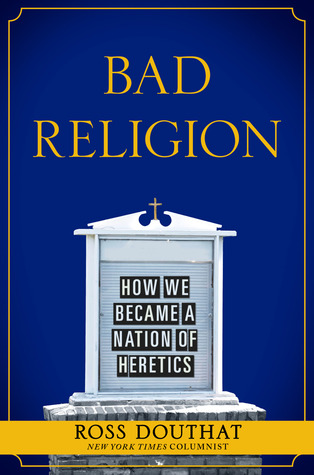
Last night I had the privilege of going to a book talk and signing by Ross Douthat (a new hero of mine), promoting his new book Bad Religion: How We Became a Nation of Heretics. It was, more or less, a summary of the book’s primary lines of argumentation, followed by a Q&A.

The book itself (which I am only half-way through) lays out some pretty provocative ideas that are sure to ruffle the sentiments of most anyone that finds themselves securely in allegiance with either of the left-right poles of society. I have yet to find someone who sits in ambivalence concerning this book. It evokes. It calls out. It leads to introspection and reaction. You either love it, or you hate it.

This is further complicated by the times we live in. In a world of blogs, podcasts, comment boxes, and the online immediacy of opinion, there is an unspoken and unrealistic expectation of comprehensiveness in any person’s expression of thought. There was a time where an author would write a book, others would write whole books in response, and then the original author would respond with a follow-up book. This process then moved on to newspapers and magazines (the Federalist Papers come to mind).

Continue reading

Going Medieval on my Atheist Self (on art & assurance)


Even back in my hyper-Calvinist days–assured that I was chosen, secure, and Elected unto salvation–I recognized the reality that if I were not a Christian, I’d certainly be an Atheist. If there was some way that I could be convinced that Christianity was a fraud (and here are some ways), I would not face any temptation to be a Buddhist or New Age mystic or anything of the like. No, No. I would be a hardened, militant Atheist.

How do I know this? Well, Christianity has the idea that within each believer is the “Old Self” and the “New Self”. This Old Self is, essentially, who we are apart from God.

That Old Self, though we fight it our entire Christian lives, won’t actually be fully snuffed out until the end of all things. And so, in a sense, if we’re sensitive to it, we can sometimes “feel” that “without-God” version of ourselves rolling around in there somewhere in our hearts.
Continue reading

Ross Douthat: a new hero of mine


Look at that face. If I saw him walking down the street, I would think he was just another guy; I’d have no idea the kindred spirit that lay in this man’s mind.

Ross Douthat (don’t ask how to say his last name), like myself, seems to be a man that life has continually thrown from one-extreme to the other: born in San Francisco, and then transplanted to New Haven, Connecticut; attended Harvard and then turned around three years later and wrote a book denouncing the Privileged culture there; started out as a Pentecostal, then converted to Catholicism; wrote for his college newspaper and is now the youngest-ever Op-Ed columnist at the New York Times.

These extremes seem to have helped him settle in nicely with a well-informed and balanced view, able to to comfortably exist, engage, and critique in a world of poly-everything.

Over the past year or so, I’ve seen (and been sent), a few of his articles and blog posts, but I think I was missing something. All I knew of him was that he was a Catholic writer with a sharp mind, and I didn’t pay him much proactive attention.

And this was to my great detriment.

Somehow I stumbled upon this set of exchanges on Slate, where Will Saletan, one of the most thoughtful secular liberals I’ve ever read, engages Douthat on some issues raised in Douthat’s newest book Bad Religion: How We Became a Nation of Heretics. This exchange cemented Douthat’s stature in my mind, as well as his place in my reading repertoire. It’s great. You all need to read it.

I’ve started to read the book, and it’s definitely going to be a personal classic for me and a turning point in my development as a solidly religious person firmly engaged in the body politic. I also have the privilege of attending a book talk/signing with him next week here in Philly.

I have much more I could say and commend about him (including the fact that he’s a Catholic who fully-embraces praying in tongues–kindred spirit indeed!), but to do so would steal precious time from you, the gracious reader of this blog post, that could be spent reading Douthat’s work itself. Here’s a representative piece to get you started.

Oh. And you’re welcome.

Hey! It’s Still Easter!


When I had appendicitis last week, our preaching pastor visited me in the hospital. Having missed the service that Sunday–the first after Easter Sunday–I asked him what new sermon series he had started, now that Easter was over.

He looked at me a little surprised (as I’ve been so into liturgy and the Church Calendar the past couple of years) and informed me of something that I had apparently missed:

Easter is an entire season that is 50 days long.

(Wikipedia confirms.) Oh why do we shorten our time to rejoice and celebrate? This season is our excuse to go crazy and be joyful, bold, secure, and confident before our God and this world.

We have 33 more days before we celebrate Pentecost.
Continue reading

The Children’s Bible: my favorite devotional [casual fri]


Okay, once again, I find myself in what many past saints have referred to as a “spiritual dry season”. I can’t count how many times on this blog I’ve bemoaned being here. And honestly, this is because I think I’ve spent more of my Christian life in these times than out. It’s kind of the norm. Don’t worry, I’m finally getting help.

As is the case with most people experiencing times like this, one of the first casualties is any personal Bible reading. I get to that place where I just don’t want to read the Bible–or, more precisely, I want to, but I just don’t have the spiritual strength to do it (anyone who’s been a Christian for any length of time probably knows what I mean).

But there’s one tool that God has given me that he consistently uses to draw me back to himself. I found myself picking it up again this past week and wanted to to share it all with you.
Continue reading

On Masculinity (here’s looking at you, Driscoll & Piper) [QUOTE]


I know it’s a little long for a quote, but I promise, it’s very worth your time.

Within Christianity, the masculine image of God is often defined in these terms of control, power and dominion. Much of the Christian faith, though, requires that men recognize their limitations and depend on God. We accept salvation through his son and sanctification by the power of the Holy Spirit. It is a faith where the last shall be first (Mk 10:31), marked by a life of service to others….

Consider the definition offered by John Piper: “At the heart of mature masculinity is a sense of benevolent responsibility to lead, provide for and protect women in ways appropriate to a man’s differing relationships” ([Recovering Biblical Manhood and Womanhood] Piper and Grudem, 2006, p. 35). It is a definition that emphasizes leading, providing for and protecting women. But it offers no insight on how men relate to one another. Depending on your reading of this definition, it either smacks of male chauvinism or places greater value on women’s needs. No doubt well intentioned, it offers little guidance for men who are already confused, wounded and lost about their masculinity….
Continue reading

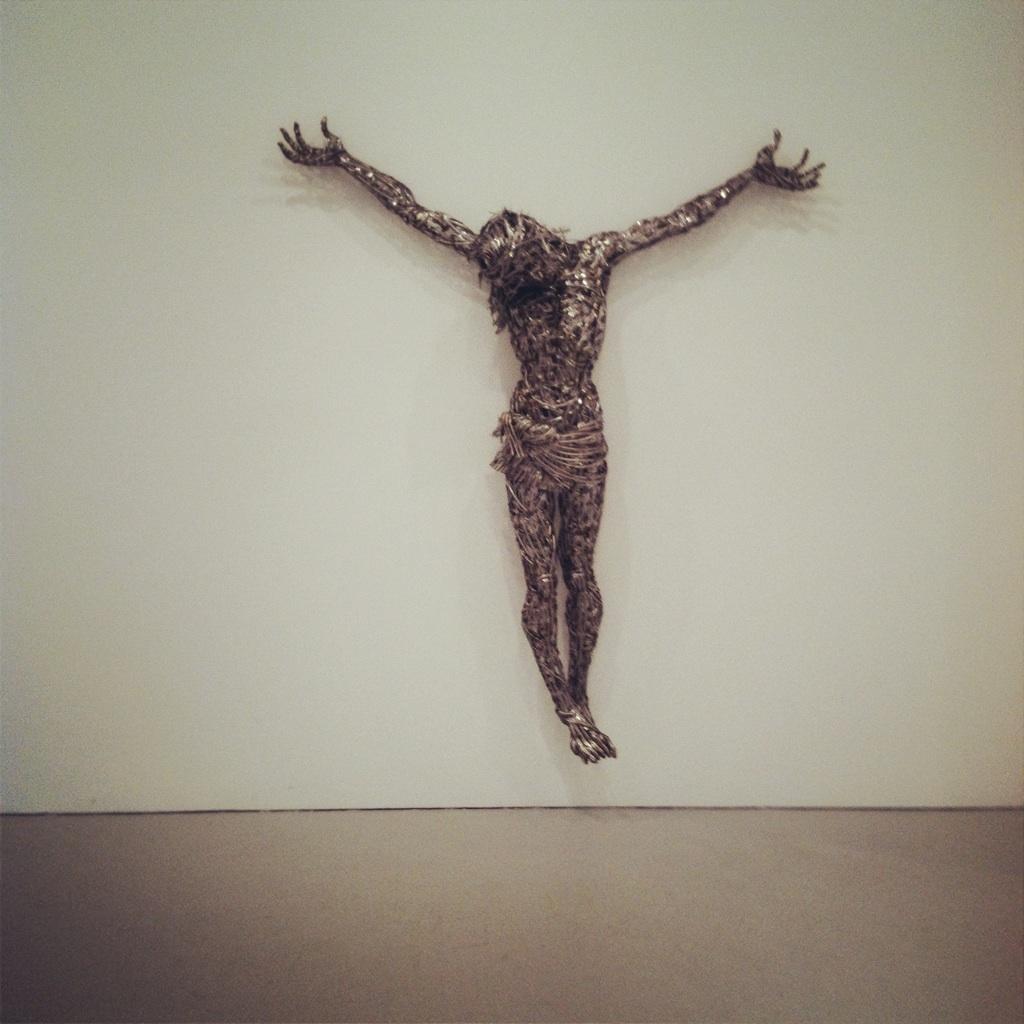
“15 Glances” at the Crucifix | Lent {11}


In the tradition of giving honor where it’s due, I’ve like to offer up the post that served a the inspiration for this whole series I’ve been doing on “The Lamb Eternally Slain” (which still isn’t done, even though it’s no longer Lent. It’ll be okay, though). The post is by Ben Myers, a thoughtful and thought-provoking theologian who draws from many theological corners for his thinking (much like myself). Here it is:

The Icon of the Cross: 15 Glances | Faith & Theology

Austin Ricketts, who wrote a couple of the posts in this series, sent to me this post of Ben’s nearly nine months ago. I still remember where I was as I read it and was caught up in it’s transcendent, sweeping reflections on the icon of the Cross. (Yes, we are referring here to “icon” as in the artistic representation of religious things for use in meditation or worship. Don’t worry, fellow Protestants, icons aren’t nearly as bad or idolatrous of a thing as we were raised being told.) I had the idea then for this blog series on my blog, but held on to it until Lent, thinking it most appropriate for this time (instead of Advent, haha).

In his post, Myers spends some time jotting down 15 reflections (or “glances”) on this icon. I have copied a few of my favorites below, but please check out the full post–there’s far more beauty in store for you.

Continue reading

Chesterton on the Atheism of God on Good Friday [QUOTE] | Lent {10}


When the world shook and the sun was wiped out of heaven, it was not at the crucifixion, but at the cry from the cross: the cry which confessed that God was forsaken of God. And now let the revolutionists choose a creed from all the creeds and a god from all the gods of the world, carefully weighing all the gods of inevitable recurrence and of unalterable power. They will not find another god who has himself been in revolt. Nay (the matter grows too difficult for human speech), but let the atheists themselves choose a god. They will find only one divinity who ever uttered their isolation; only one religion in which God seemed for an instant to be an atheist.

–from Chesterton’s Orthodoxy, as quoted by philosopher  Slavoj Zisek, in this article on “German Idealism & Christianity, from Hegel to Chesterton” (via Micah Towery). Read the rest of this Lent series on “The Lamb Eternally Slain”

From His Father [GUEST POEM]


by Jen Huber

He can easily say what he has lived by:
God and belonging; known from childhood.

He was raised to believe in what was taught
To stand by his father’s belief in his Father
Accept the judgement of another,
The forgiveness of one another
Believing in something unseen

From generation to generation
This belonging to faith has remained
And grasped his life long-lived
And to know that his Father carried
Him throughout his time

He can easily say what he has died for

[image credit: Lauren Chandler]