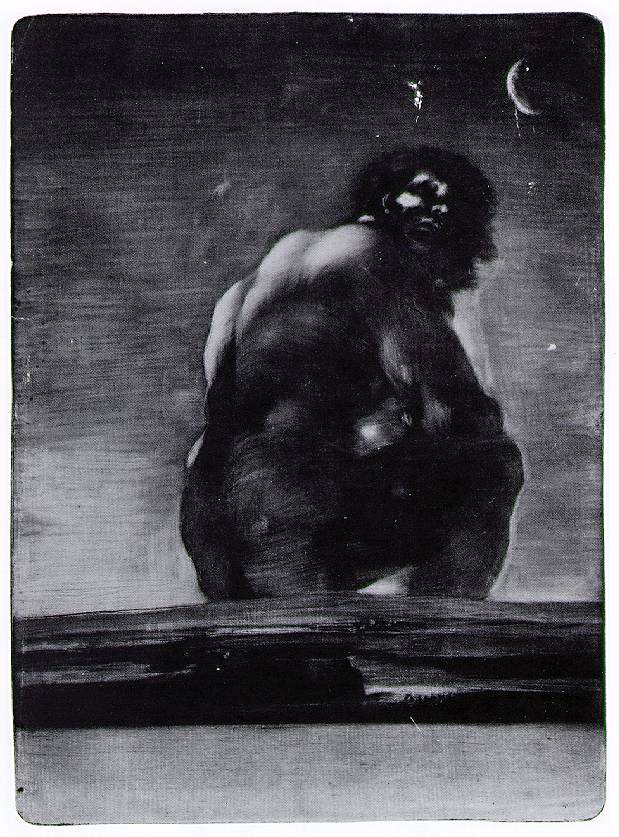
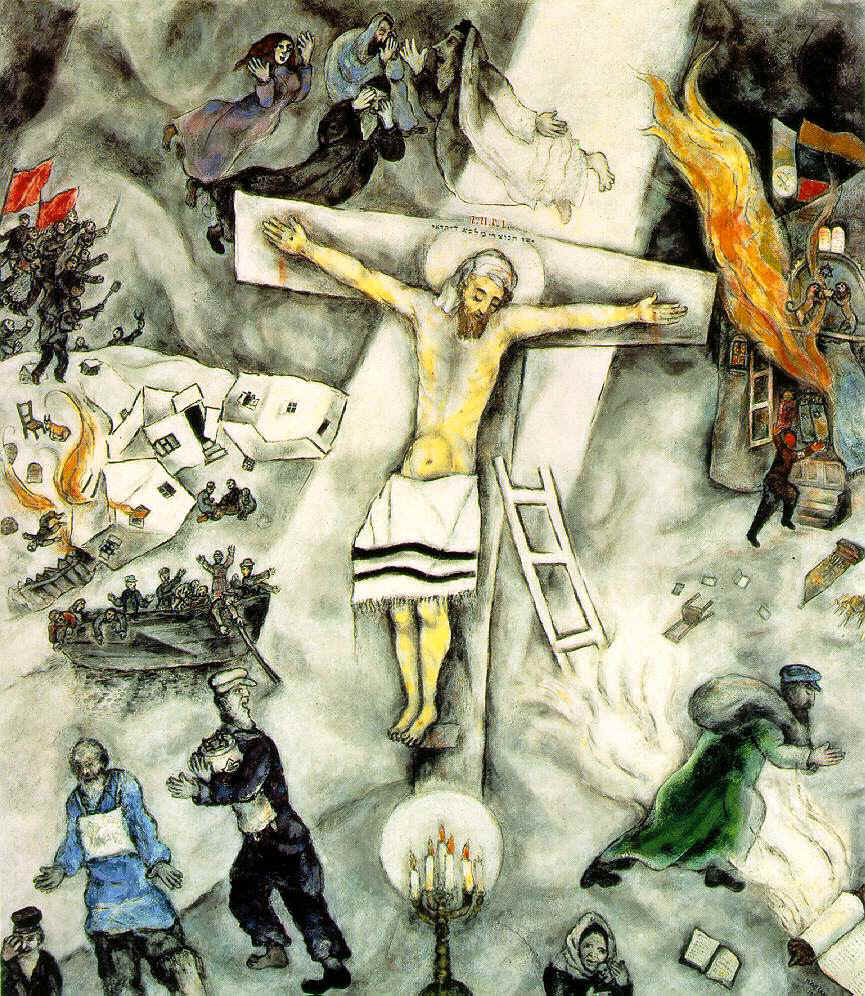
more free music for Lent from New York Hymns


For anyone that keeps any sort of track of the Church music scene, they will know that it is sort of a fad nowadays to update older hymns with modern music, instrumentation, and melodies. Some of my favorite groups that do this are Indelible Grace, Red Mountain Church, Sojourn Music, and Redemption Hill (my old church in Richmond). I love all these acts, but even they are hit-and-miss in some of their executions.
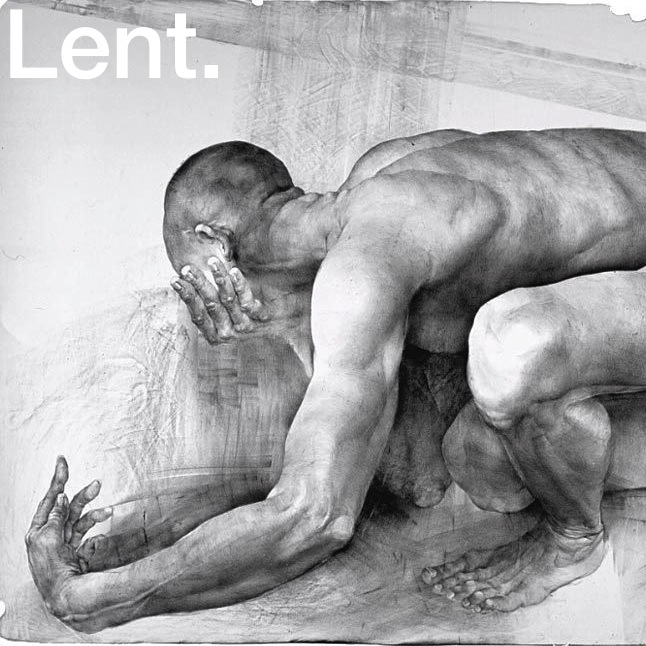
A newer group (I think) on this scene is New York Hymns.
Continue reading

a beautiful quote on our security in the Incarnation (by T.F. Torrance)


The stark actuality of Christ’s humanity, his flesh and blood and bone, guarantees to us that we have God among us. If that humanity were in any sense unreal, God would be unreal for us in him. The full measure of Christ’s humanity is the full measure of God’s reality for us, God’s actuality to us, in fact the measure of God’s love for us. If Christ is not man, then God has not reached us, but has stopped short of our humanity – then God does not love us to the uttermost, for his love has stopped short of coming all the way to where we are, and becoming one of us in order to save us. But Christ’s humanity means that God’s love is now flesh of our flesh and bone of our bone, really one of us and with us.

— T.F. Torrance, Incarnation, 185

A good friend posted this on Facebook, and I just had to post it. It connects very well to a few of the Advent posts I did recently (namely the ones on Evolution, our Fallenness, doubting God’s “liking” of us, and how he makes us most human).

I’ve never actually read Torrance before, but I’ve heard a lot about him from people that were, at the time, reading his work. From what I understand, though, he is a theologian whose mind is brilliant and pen is beautiful–a combination sorely lacking in the Christian world today. I also hear that he is a theologian to which I would feel a certain affinity, so I look forward to reading more of him.

God loves me. But does he like me? (on being “Christ-like”) | Advent {8b}


[This is Part 2. Read Part 1 here.]

My church has been doing a series called “The Other Christmas Stories” where we’ve been going through other texts in the Bible that comment on and meditate upon the event of Advent. The first message was preached on that quintessential Advent text, John 1. The preaching on these verses really struck me:

But as many as received him, to them he gave power to become the sons of God, even to them that believe on his name: Which were born, not of blood, nor of the will of the flesh, nor of the will of man, but of God.
— John 1:12-13

The sermon went on to remind us that in these verses is a promise that the Advent did not happen in order to make us into something we are not, but rather to give us the power to become who we most truly are (children of God). Now, I want to be clear. I grew up in Church hearing that phrase “be who you are” (and hearing it in music), and in certain seasons that thought has been helpful to me, but I’m not quite trying to express the same sentiment.
Continue reading

What the Gospel is not. [QUOTE]


“I believe the word gospel has been hijacked by what we believe about “personal salvation,” and the gospel itself has been reshaped to facilitate making “decisions.” The result of this hijacking is that the word gospel no longer means in our world what it originally meant to either Jesus or the apostles.”

— Scot McKnight, “The King Jesus Gospel

Amen. I’m so glad this book was written. So far, it’s pretty amazing. And on the Kindle, it’s currently only $3.99.

Posted from WordPress for Android on my Droid X

God loves me. But does he like me? (on being “Christ-like”) | Advent {8a}


UPDATE: Part 2 of this post is now up.

I have a quick confession. I technically ascribe to the “flavor” of Protestantism called “Reformed” that takes the roots of its doctrinal tradition all the way back to the leaders of the Reformation. The first church I really learned much of anything about Christianity and theology is Reformed…ish. The seminary I went to prides itself in being the bastion of orthodoxy for “Reformed” theology. My church is a member of the Reformed Church in America family of churches.

But, I’m not a good Reformed man.
Continue reading

The Formation of God | Advent {6}


All last week, I offered some meditations on this season of Advent. I actually have several more I’ll be posting more or less every day until Christmas, but today I’ll be offering the last in this little alliterated series in which we’ve been exploring how in the Advent event, Jesus took on our creaturely form, care-taking function, comprehensive fallenness, and now, communal formation.

We spend a lot of time and energy in this season focusing on how Jesus has changed everything and how the implications of Advent change much of our lives and existences. But Jesus did not merely come to change and affect things, but to also be changed and affected by them.
Continue reading

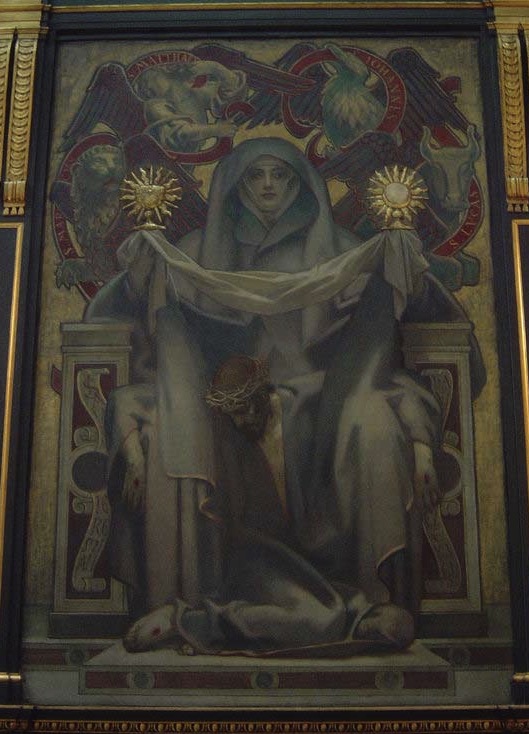
Artist John Singer Sargent on the Advent {5}


image

“Being made man, I am maker of man, and redeemer of what I have made. God in the flesh, I redeem body and soul.”

“On the cross is the figure of the dead Christ, with the figures of Adam and Eve, typifying Humanity, kneeling on either side. They are bound closely to the body of Christ, since all are of one flesh, and each holds a chalice to receive the Sacred Blood. About the feet of Adam is entangled the Serpent of Temptation. Above the arms of the cross there is inscribed in Latin “The sins of the world have been redeemed.” At the foot of the cross the Church is symbolized by the Pelican feeding its young, while around it doves symbolize the Seven Gifts of the Holy Spirit.”

Read a full description of the pieces here. Find the official website for the commission here.

__________

Continue reading

What Christ did not taste, Christ did not redeem. | Advent {4}


This Advent season, we’ve been meditating on how the Advent reminds us how God took on our creaturely form, care-taking function, comprehensive fallenness, and communal formation.

First, a question.

Think back on the Christmas story. After Jesus is born, when he’s about three years old, the wise men go to King Herod and say that they’re looking for this newborn King. Herod is shocked to hear about a child-king having been born right under his nose, whose potential future reign threatens his own, and so he puts out a decree calling for the death of all children ages three and under (in history and art this is referred to as “The Slaughter of the Innocents”. An angel comes to Joseph in a dream and tells him to flee to Egypt to prevent this from happening.

Here’s the question:

Why flee to Egypt? If they stayed and Herod killed the child Jesus, would that not still be Jesus, the Son of God–the Incarnate God–dying unjustly at the hands of a Roman provincial governor attempting to cement the reign of the powers and principalities of the world? Why go to all that effort to wait 30 years later for the same thing to happen on a cross?
Continue reading

a Jesuit Priest on Evolution. Enjoy.


Is evolution a theory, a system or a hypothesis? It is much more: it is a general condition to which all theories, all hypotheses, as systems must bow and which they must satisfy henceforth if they are to be thinkable and true. Evolution is a light illuminating all facts, a curve that all lines must follow… There is an absolute direction of growth, to which both our duty and our happiness demand that we should conform. It is human function to complete cosmic evolution…. Christ is realized in evolution.

Pierre Teilhard de Chardin, Jesuit Priest and trained paleontologist in “The Phenomenon of Man“, ca. 1930s

I’ll be writing more about this in my Advent reflection on Monday. [Read reflection 1]

Dmitri, I Am (on sin, story, & salvation)


I once read a very good book by one of my former professors called When People Are Big and God is Small. It’s about the sin many in church history have called “Fear of Man.” I read this entire book with a particular friend in mind, wanting to know what I could say to her to help her in her struggles with this. It wasn’t until the final pages that I realized that this was something that I myself wrestle with profoundly.

But the book was now done, I didn’t want to immediately re-read it, and so I had missed my place in the story; I had missed how it could have spoken to me and perhaps led me to some freedom and healing in this. Indeed, even though I’d hear the author lecture about it years later, I still write about and struggle with my “Fear of Man” issues today.

Have you ever had a similar experience of missing yourself in a story?
Continue reading

A Death Penalty Follow-Up


Last week, I wrote a post about the recent case of Troy Davis and how this had inspired me to rethink and reconsider my position on the use of Capital Punishment by the government to punish those convicted of crimes they deemed worthy of such a response. In my attempt to be nuanced, I fear I may have given a wrong impression of where I stand now.

I think some people may have walked away from the post thinking that I believe that the government should have the right to bring the death penalty to bear upon some criminals, but Christians shouldn’t actually do it (or something like that). This isn’t quite the case.

Let me restate what I’m thinking even more clearly and simply: I don’t see a justification for Christians supporting the use of Capital Punishment by the government in any case. 

Continue reading

Of Robes & Righteousness


Yesterday I went to two church services. The first was my home church, where I participated in one of the best services we’ve ever had (oh, Communion was so sweet!); the second was the church of one of my closest and dearest friends. I could have just met up with him after his service, but I decided to go anyway. Why?

I thought I was looking pretty good yesterday.

Of course, this wasn’t the only reason I went (it’s an amazing church and I’d definitely go there if liberti weren’t around), but it was a real factor. People had spent that morning complimenting me, and I both appreciated and enjoyed it. And so, I wanted to be seen. (Surely all of us have experienced this sometime, right? Come on, I’m just trying to be honest.)

During the service, I found myself thinking about this. There is a constant conflict we have with our embodied selves and the garments that clothe them. I’ve spoken of this tension before and how our responses to it often betray a hatred we seem to have for our bodies. Our clothing both reveals and conceals at the same time; it communicates things about us all the while hiding our greatest intimacies.

Continue reading

to “why?” is human, to “what” is divine


One of the most impacting moments of Terrence Malick‘s Tree of Life is this moment where the son in the film prays to God: why do I have to be good if you’re not? Shortly after, there is this beautiful shot where the camera zooms in on the silhouetted back of the boy as he stands in an open door. As the camera approaches, we get a voice-over from the grown-up version of this child saying: Father, why do you hurt us? This moment is so powerful because you don’t know if he’s talking about his earthly father or his Heavenly one.

Fast-forward. The other day, as I was looking through The Economist and reading on all the loss, debt, crisis, and violence in the world, I noticed I kept having similar fleeting prayers go through my mind: why did that happen? or why did it have to be that way?

Neither the son in Tree of Life nor I found answers.

Continue reading

Weekend Must-Reads {09.09.11} | church leadership retreat edition


This weekend I find myself with the honor, joy, and privilege of heading to a two-day long leadership retreat for my amazing church, liberti church: center city. In honor of this, I wanted to post articles by myself and others focusing on Church philosophy, community, and such. Some of them are a bit longer than usual, so feel free to grab a cup coffee before digging in. I hope you find these helpful and encouraging no matter where you find yourself in relation to the Christian Church. Have a great weekend. And be sure to stop by next week; I’m pretty excited for the stuff I’ve got planned for the blog then.

And Thus It Begins: liberti home meetings & my heart | the long way home

liberti: center city’s home meetings start next week. I wrote this blog post last year the day before I began leading a brand new group in the Rittenhouse neighborhood of Philadelphia. It’s wonderful to look back over the past year with these people and see that God has answered every prayer I had in this post. I’m still serving these amazing people as their leader, and I can’t wait to see them on Tuesday.

On the State of Contemporary Theology | Fors Clavigera – James K.A. Smith

Here, the author of one of my favorite books I’ve ever read, Desiring the Kingdom, offers his thoughts on the current state of theology, denominations, and theological education. A quick must-read for all.

Continue reading