What is Faith? (a call to Atheism)


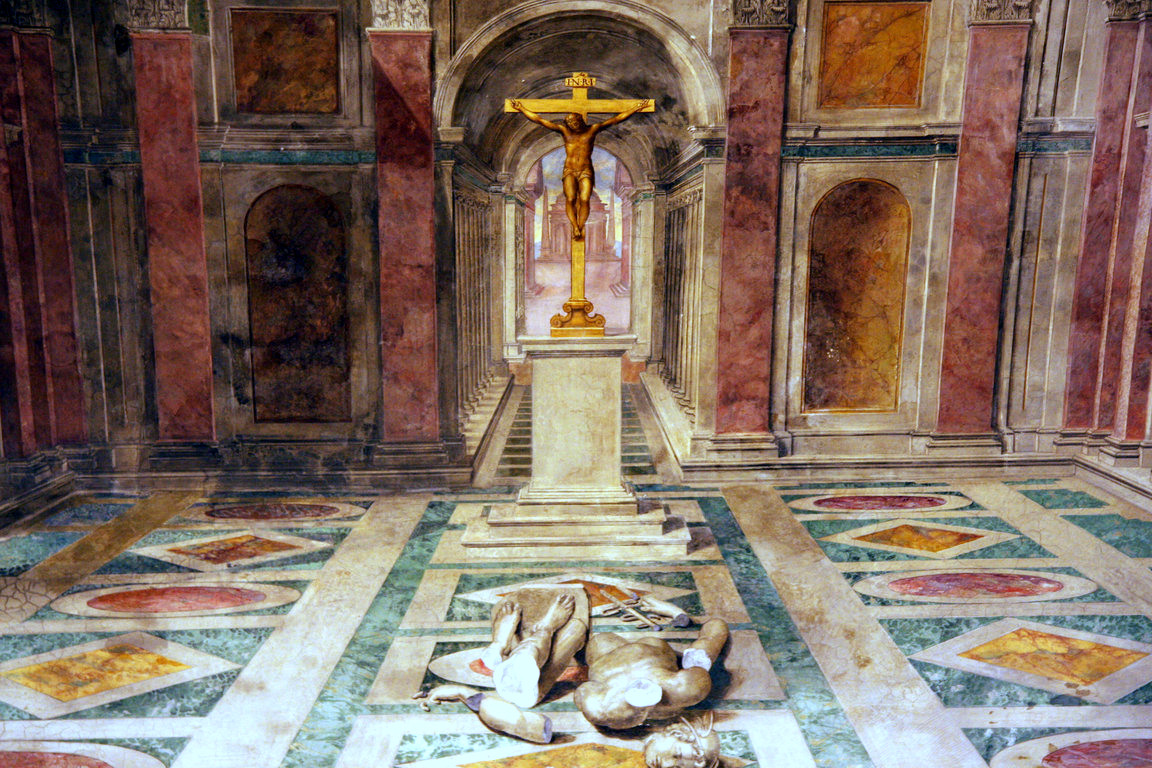
art by Amy Roberts

art by Amy Roberts (see bottom for link)

My good friend Monica sent me an email with a link to this New York Times blog that had a little weekend competition:

define “Faith”

The post gave the Bible’s definition of faith, a few quotes from others on what faith is and then told other “co-vocabularists” to offer their definitions (the pithier the better).

In a display ad absurdem and ad nauseam of the make-up of NYTimes readers, the vast majority of “definitions” are atheistic rants about how faith is just believing things that are so plainly and clearly not true.  It’s the opiate of the masses.  It’s the crutch that helps weak-minded people get through life.  So on and so forth.

I understand the sentiment.  I do.  And I also see why they think that.  It was just comical seeing post after post after post of people that were so clearly speaking from such bitterness, hurt, and pain that went well beyond “calm, collected reason”.  Even the atheist puts some level of faith in things, even though they feel like this faith is justified by their logical deductions.  Faith isn’t a bad word.  It doesn’t have to be religious at all.  My mac dictionary’s first definition for it is “complete trust or confidence in someone or something.”  The second definition is the religious one!  But in spite of this, that word, for some reason, touches such a deep nerve within those hostile to Christianity that they must do more than simply display a disagreement with a prevailing notion.  It’s not good enough being a-theistic, they must be anti-theistic.

And that, I find, is very interesting.  It implies that atheism is more than a lack of belief.  It can’t stay at that merely reasoned philosophical place.  It is at its core a most outward expression of the rebellion of the heart, and the antagonism of that rebellion must and will come out.

Don’t get me wrong, I love atheists! I do!  But it looks like Atheism is becoming the new radical fundamentalism of the urban United States.  Now I know how absurd all us Christians probably looked for the past 50+ years with all of our political activism, ad hominem attacks on dissenters, made-up “culture wars” to agitate our base, over-excessive vitriol against “opponents” of our system, a circling of the wagons to maintain a false sense of security for “us” and ease of insult towards “them”, and a childish fanatical assent to a few tired (fundamental) tenets with a few tired (apologetic) defenses made by a few tired (hyperbolic, caricatured) leaders that are already irrelevant.

I guess its Atheism’s turn to take the wheel.  Try not to mess up the country in the same ways we did.  Neither you guys nor us have history on our side when it comes to our particular systems reigning supreme.  Things just don’t seem to go well.  Have fun.

As far as my contribution to the discussion?  Here was the little definition I gave:

FAITH: trusting that another has accomplished on your behalf what you ought to have done but can’t.

Grace and peace.

and Faith.

[more artwork by Amy Roberts can be found here]

“Let’s Get it On” – Song of Solomon blog


READ THIS FIRST:

I have a new post up on my Song of Solomon Bible Study blog.

It was written a few days ago and since then it has been brought to my attention how weird it might be that I concern myself even somewhat with the sexuality of married couples.  The thought process is: you’re single.  Therefore, you have no business telling couples how the Bible says to have good sex.  It’s inappropriate and “shameful”.

My favorite metaphor for my relationship with Christ is the Bride/Bridegroom metaphor and the subsequent parallels between the sexuality and spirituality.  I love it.  But is it weird for me to think this way before I’m married?  I’ve thought and talked like this for several years now and no one has ever told me it’s awkward or inappropriate, but now a couple of people have, so I’m wondering:

Is it inappropriate, awkward, or weird for me to write the kind of post I just did on the Song of Solomon Bible Study site?

I’d really like feedback from everyone.  WARNING: the post is potentially sort of sexually graphic.  No more than Song of Solomon itself, but still – Jewish boys weren’t allowed to read the book until they were twelve for a reason.  So if you are drawn into temptation particularly through text and words, you probably shouldn’t read.

But for everyone else, please read and let me know.  I really am ready to change my perspective on this if I need to, I just need some feedback from my brothers and sisters.  So, here it is.  Read and let me know what you’re thinking.

http://solomonssong.wordpress.com/2009/06/16/41-51-lets-get-it-on/

I hope everyone has a good weekend.  I’ll be back on Monday with some posts I’m pretty excited about including posts on Christian cursing and the Southern Baptist Convention.

Philosophy & Theology {II} | “Christian” Existentialism [2]


A couple of days ago, I laid out some reasons why “Christian” Existentialism was not the end-all-be-all philosophical orientation for the Christian. But, as I explained in my first post in this series, Philosophy is not the enemy of theology. Rather, it can help us understand other finer points of theology by giving us new categories to think in. So, I proceeded to give three ways that Existentialism can inform our theology. The first way was that it helps us see sin in regard to our personal orientation to God. This post continues with two more ways:

Secondly, a big discussion in Existentialism the relationship between our “existence” and our “essence”.  I pointed out in the previous post that when god was asked by Moses “what’s your essence?” God answered “I exist”. This is the way it is with God. His nature and being are equated with His existence. He simply “is”. The big question concerning these two things in Existentialism is “which comes first?”. Classic Existentialism holds that our existence comes first and our essence is formed and shaped by our existence. This brings up some problems for the Christian. The Bible talks about our essences being known by God before we ever existed, but it also says that there’s something of our essence that is corrupt at its core. When God “knows” us before we exist, does he know our corrupted selves? Does God create us depraved? The Bible seems fairly clear in its representation of the nature of God that He doesn’t create and form our essences as corrupt, so it look likes the question is a bit more complicated than just “which comes first”.

Best I can figure, it looks like both essence and existence have narrative frameworks and are seen as whole things that are shaped through eternity past and future. In short, the story goes like this: God knows and forms our essence-1 (S1), which is pure and good in his sight. He then creates the world of existence-1 (X1) which is made good but then falls and gives way to a different realm of existence, existence-2 (X2).  At the moment this essence-1 enters into existence-1 (X1), it comes into the fallen world and becomes essence-2 (S2) which is corrupt. Christians, then, at conversion are changed at the very level of their essence such that they then become pure in essence (essence-3) living in a corrupt existence (existence-1 still). The rest of the life of the Christian is a slow work by God and others to bring more and more of this Christian’s life and existence in line with their now pure essence-3 (s3), to prepare them for existence-3 (X3). Existence-3 is when this created world/realm within which we exist is restored and glorified and finally our pure essences-3 are able to live in freedom and peace in pure existence-2 in glorified eternity.  Here’s what it looks like graphically:

__________

screen-capture

__________

Lastly, there is a very important service that Existentialism lends to the spirituality of the Christian life. In Existentialism, there is a loss of the objectivity of knowledge. All we know is our existence, and that is a very small sphere of knowledge indeed. What this tenet of the philosophy does is create a very strong sense of angst. Existentialists carry the reputation for being very depressed people, seeing as they can know nothing more than (1) they exist, and (2) they can’t know more than that. We can be sure of no other knowledge. This makes you feel very small in a world of chaos that you can do nothing to change. This sort of worldview should make people very despairing, and it has for people such as Samuel Beckett and Albert Camus. But for others, like Jean-Paul Sarte and Soren Kierkegaard, Existentialism seemed to create a humble sobriety that actually allowed these men to enjoy life in a way many Christians could learn to do.

The Christian life is angst. It’s messy. It’s sloppy. That’s why it’s lived by faith – i.e. “trust”. Reality is such that we will be forced to have to trust our Creator to save us, because there really are no objective grounds (that we can know) upon which His salvation is based. This is because God knows He is the greatest of all things and our tendency is to drift from Him. It’s His love that makes us need to draw near. But, when we do, it shows us even more where we fall short and we cry out to God more. He draws even nearer and we are able to experience that One for whom our soul was made. Faith is not neat. Faith is not tidy. Faith is not naive. Faith is not imbecilic. Faith is having the courage to admit your finitude and inadequacy in order to be joined to and in communion with the Joy of joys, Peace of peaces, King of kings, and Lord of lords.

As one friend put it: “I will not resolve to embody that kind of [naive] faith ever again. So, I will read Scripture, asking God to communicate to me what in me is broken, what is unreconciled, what needs restoration, liberation, salvation. And I will sit at the foot of the cross, in the pain of who I am. And I will ask God for reconciliation, restoration, liberation, salvation. On the other side of it all, I will trust Christ more deeply. This is sanctification. This is working out my salvation in fear and trembling. And then, hopefully I will have caught my breath, and it will all begin again.”

Existentialism helps us recapture the “fear and trembling” part of working out our salvation (hence the title of Kierkegaard’s famous work).

I’ll end with perhaps my favorite set of quotes I have ever read. These have had such a profound impact on me and so reflect how I understand these things to be. These words are from the poet Joe Weil in an interview with Patrol Magazine. I leave you with these words that could have been written by the most quintessential existentialist:

“I once described faith as something I got on my shoe and can’t kick or wash off. I’m stuck with it. My poems are the trespasses and blasphemies of a malpracticing Christian, one who can’t stop ogling an attractive leg, or wanting to be first, who is venial, foolish, seldom at peace, horny and lonely, and so far from the kingdom of God that his whole life becomes the theme of that distance, someone knowing he is in deep shit. It’s the perfect place to be, where you can’t fool yourself into thinking you’re on the right track…The only thing I have to offer God is my sins. I am interested in mercy when it appears in places where you would never expect it. I am interested in love that shovels shit against the tide. I am interested in grace…It is better to be annihilated and crushed by God, if you are in love with God, then it is to have no relationship at all. Better God smite you then merely be absent. God does not ‘tolerate’ me. God loves me.”

Philosophy & Theology {1} | The Basics


Photo 56bOver the next few posts, I want to share some brief elementary thoughts and philosophy and theology. In this post, I just want to flesh out a basic worldview I have concerning philosophies and how they fit into a Christian perspective. All posts in this series will then be various applications of these ideas. Looking at things this way has certainly helped me wade through the waters of philosophies that all seem to be right in some respect and the confusion that follows. I hope this helps others out there.

My basic thought is this: as humans made in the image of God, the true parts of any “worldview” or “philosophy” will resonate with us. We are made to resonate with the truth of the Gospel, therefore any worldview we construct tat is appealing to us in any way must touch on some thing we know to be true and long for. I just don’t think that humans are able to come up with a worldview that in some point isn’t actually true. We can only work with what there actually is in the world. Sure we can pervert and distort true things, but they will still be based on true things.

Anyway, what this means is that any particular philosophy can help us recast the Gospel and talk of it in different terms that may increase our worship. For example, with existentialism (where the big question is what comes first, essence or existence?), when Moses is talking to God at the burning bush, Moses pretty much asks Him “what’s your essence?” God answers “I exist” (“I AM”). Existentialism can give us new categories to plum even more depths within this one encounter and ultimately lead to more worship of God. The Bible helps answer the questions of philosophy and philosophy can help us see greater truths in Scripture.

[More on existentialism in an upcoming post . . .]

Orthodox Christianity does not hold (and never has) that the Bible is the sole source of knowledge about God. It says that the Bible is the ultimate and authoritative source of knowledge about God under which all other sources are submitted. The brief example above (hopefully) showed a benefit of bringing existentialism under the authority and clarity of the Bible in order to help us answer (or better understand) questions that the Bible is silent about. Problems in this area arise when people try to submit the Bible to existentialism. It just doesn’t work. The Bible just isn’t the Bible apart from it being the authority and rule of faith in all theology.

I have found the study of secular philosophy very helpful to birthing in me greater worship of our God. But (going back to my first point), though that is the case, I don’t think any one philosophy has the market cornered on theology. All philosophies (from Platonism to Aristotelianism to Humanism to Atheism) have some bit of truth in them. Lower things really are corrupt versions of purer forms; we really do understand history by looking at its final purpose; God really does love humans such that he acts for their benefit; and there really is a freedom and autonomy that man enjoys when they give way fully to their innate rebellion and deny the very existence of God. That’s why I don’t find it helpful (or biblical) to say that “I’m a Christian _________” (fill in the blank with whatever philosophy or worldview you like). To me it’s like saying “I’m a Christian chocolate cake eater”. Uh, okay. I just don’t think that says much and it forces me to ask “Really? That’s how you ultimately define your worldview?” Don’t get me wrong, a good chocolate cake can make me worship God (in all seriousness), but that’s not a useful designation.

In summary: Philosophy is the study of all that is most fundamental about us. Therefore, those that have been thought to have great wisdom in this area should be studied and read because they may in fact be whispering insights to us from within the mind of God that is in seed form within His image in us. C.S. Lewis once said that it is impossible to contemplate and enjoy at the same time. We go first the the Bible to get the material for our contemplation. But then we must look up from the text to the world and reality around us and enjoy the God that has revealed Himself in those Scriptures. A fruitful place I have experienced this is in my brief, elementary study of Philosophy. Hopefully you can see it as well. Enjoy the ride.

Derek Webb’s “Stockholm Syndrome” {“Freddie, Please” pt. II}


derekwebb.jpg

[TO ANYONE THAT COMES ACROSS THIS POST: there is updated information and another song on a later post.  All the songs found here are also there, in addition to the much anticipated song off the new record “What Matters More?”  Here’s the link for that post.]

It has been brought to my attention that yesterday’s post is already out of date. Apparently, there was a 12-hour window to download the song. I’ve received a couple of requests to make the music file available for download here. After much thought about the ethics of it all, I’m thinking that since Derek Webb did post it up for free, and he didn’t include any statement prohibiting this, I’ll go ahead and post a link to download it. If any representatives of Webb see this and want me to take this down, I’ll be glad to do so. I really want to support Derek in any way.

[UPDATE: Thanks to Shane Bertou for posting these other audio files up. In the article, he also has the so far assembled audio from the currently released “stems” that form Webb’s song that apparently is being referred to as “Stockholm Syndrome” for the time being.]

So on that note, here’s a link to download the new song “Freddie, Please” off of Derek Webb’s upcoming album “Stockholm Syndrome”, along with the other full songs that have been released so far:

“Freddie, Please” by Derek Webb

from Shane’s site:

“Heaven”

“The Spirit vs. the Kick-Drum”

Thanks to Angina Pectoris for bringing these other recordings to my attention.

Here are other sites concerning Webb and the album. Please visit these as well to support the artist and his craft.

Grace and peace.

Derek Webb’s new free song about Fred Phelps


Untitled[EDITOR’S NOTE:  there was apparently a 12- hour window in which to download this song.  That window having passed, I have made the song available on another post on this site.  Continue reading if you want the story behind the song. Click here for the article.]

If you don’t care about background, story, or mystery, and just want free music and lyrics, you can skip down to the asterisks.

Okay, for everyone else, there are two things you should know about that would really help you enjoy this post.  The first thing is who Fred Phelps is.  He’s the “pastor” of Westboro Baptist Church. This is the church that protests dead soldiers’ funerals with the signs reading “God hates fags.” Most of us Christians don’t like Fred Phelps at all.

Including Derek Webb.

Which brings me to the second thing you might want to know about. It is Derek Webb‘s recent “Lost-style” mystery/game/scavenger hunt/fake-controversy thing.  Long story-short: email’s went out to fans from Webb saying “my new album’s controversial, my label doesn’t like it, I’ll figure something out.”  These emails had a code in them which led to the discovery of a website, twitter account, and other strange things (type “kickdrum”, then look right under his left eye, go to the site, type “youneverknow”. This is what use to pop up.). The unofficial hub of speculation has become the comments section of this article on Patrol Magazine.

Anyway, through his site and twitter account, Webb puts out “instructions” (i.e. “scavenger hunt clues”) for various cities in the the country.  People find the clue, email the code to him, and he releases a zip file of small 1 or 2 second sound clips.  No one has any clue what these sound clips are for.  Supposedly you’ll be able to put them together, but with how long they’ve been so far, there won’t be enough audio for even one full song, much less an entire album.  This has been going on for a couple of weeks with people finding these parts and no major updates happening.

***Until today.***

About 45 minutes prior to me writing this post, Derek Webb posted on the Twitter account a couple of messages that when decoded read “redownload stem 2”.  When you do that on this site, inside the zip file is the first song released off of Derek’s new album “Stockholm Syndrome”.  [NOTE: The song can now be found here] It’s called “Freddie, Please” and it is all about Fred Phelps.  It’s a really good song and it makes me really excited about the rest of the album.  It’s not the now-infamous “sh*t” song that will be on the album, but it’s one of the other anticipated songs.  Every one of Webb’s albums has been a completely different style and it looks like he’s taking a more ambient/drum machine/lounge-techno/postal service-style approach to this album.

Anyway, the song pretty much justifiably kicks Fred Phelps in the face.  Best I can tell, it’s from the perspective  of Jesus asking Phelps “How could you tell them you love me when you hate me?”  In the song, Jesus affirms his love for those despised in the world and says that when Phelp’s is picketing these funerals he is in essence “picketing my grave for loving the things you hate.”

Good for you, Derek.  So go download stem 2 at www.ParadiseIsAParkingLot.com and listen to this great song.  [NOTE: the song is no longer there. Instead, go here to download the song] Here are the lyrics:

Freddie, Please

Freddie, please
how could you do this to me?
How could you tell them you love me
when you hate me,
Freddie, please?

You know I’ll love you honey,
and i’ll bleed you dry with money
I’ll talk where I know you can hear.
Cause Freddie can’t you see,
brother, you’re the one who’s queer?

And the stone’s been rolled away
but you’re picketing my grave
for loving the things you hate.

Then why do you seek the living among the dead?

Freddie?

My First Sermon Ever


For my first homiletics class at Westminster, called “Gospel Communication,” we were all put in different groups, each dealing with a certain type of text.  Everyone was to write up a sermon on their text and one person from each group actually preached their sermon to the class.

Well, I preached my first real sermon ever this past Thursday.  It was recorded, so I’ve decided to share it along with the manuscript.  It’s on “The Parable of the Unforgiving Servant” in Matthew 18 and deals with forgiveness.  It’s about 30 minutes long.  Personally, being my own worst critic, I see many flaws in it (the structure was somewhat muddled, I talked too fast, and I somewhat went against the traditional interpretation of the text), but overall I was pretty happy with it.  It seemed like the class was as well.

If you don’t have 30 minutes to spare, just listen to the last 8 minutes or so.  I think that’s the point I hit my most significant “flow.”

Two more personal notes: first, I know I haven’t blogging much recently.  Things have been nuts and Seminary’s been kicking the trash out of me.  As the semester gets closer and closer to finishing, you’ll see more posts again.  Secondly, I have no idea how the pictures below will look on facebook.  They will either not show up, be really big, or be fine.  I don’t know, so I apologize for any formatting issues.

Here’s the audio and manuscript:

itunes_7

Click for Audio: Faithful Forgiveness.mp3

Faithful Forgiveness.pdf

Click for Manuscript: Faithful Forgiveness.pdf

Free Anathallo Hymns Album


Apparently, today was the day that Brent Thomas of Holiday At The Sea (formerly Colossiansthreesixteen.com) decided to start his blog over (you can read why here). So why does this warrant me writing a post? Well, Brent was the one hosting a free album by the amazing band Anathallo. Upon a quick glance at the new site, I didn’t see him express any intention of reposting those songs. So, I’ll be glad to do it myself. Here they are. Just right click the names and save:

Tracks:

Here is Brent’s old post telling the story of this album:

The Greek word anathallo means “To renew, cause to grow, or bloom again,” which is an appropriate umbrella for the band of that name. The band’s music is hard to categorize but yet familiar, experimental yet accessible and often focuses on the themes of renewal and redemption.

In 2004, the band recorded an EP simply entitled “Hymns,” a surprisingly sparse and traditional take on six hymns. The short release demonstrates the band’s loving attention to detail and the creation of ambiance and emotion, not simply through the lyrics but also the music itself. Incorporating many of the harmonies and odd instrumentations of their other releases the release, for the most part, remains true to the hymns themselves and honoring their content. The presentation is both humble and heartfelt, something missing in many “worship” recordings of late.

This was a limited release with all proceeds going to support a homeless mission. It remains out of print (and from what I understand, will not be reprinted) and therefore remains a mystery to many. I was lucky enough to purchase one of the few available copies several months ago and with the band’s permission, I am making the entire release available for download.

May these draw you nearer to Christ. Be sure to thank the band for their generosity.


CashTag

Enjoy the Post? Leave a tip with Square Cash!

If it weren’t for God, I’d be an Atheist


Forgive how disconnected my thoughts are. I’m taking a break from all my reading for Grad school to write this and I’m really tired. Anyway, I’m really frustrated right now.

For all those still in Richmond, the United Secular Alliance (U.S.A.) of VCU (the atheist “campus ministry”) is bringing in Christopher Hitchens, one of the “Four Horsemen” of the New Atheism (as many evangelicals lovingly call them; the other three main evangelical atheists Dennett, Dawkins, and Harris), on Tuesday to debate a Christian apologist who I think they had to find after no campus ministry answered their call for a debater.

Several weeks ago, I was inspired by this news to watch some videos with this apologist, Frank Turek, and then watch a bunch of videos from Harris, Dawkins, and Hitchens online (including a fascinating discussion between Richard Dawkins and Alister McGrath at Oxford). Anyway, like I said, I’m really frustrated.

As I hope the leaders I know and love of the U.S.A. read this, I have one main take way from this post. If no one gets anything else out of this, just take this:

Christian conversion is first and fundamentally a spiritual event with intellectual implications, rather than the more outspoken model out there that it is an intellectual event with spiritual implications.

All the tenets of the Christian faith as encapsulated in what the Bible refers to as “the Gospel” are the highest of all Divine wisdom. They are. The Gospel is the highest of all possible “storylines” this world could go through. The Bible over and over again places this Gospel against human wisdom and shows the futility and hopelessness of a non-Christian, non-theistic worldview.But here’s the key: this is only truly seen from the inside.

I look at Hitchens and am reaffirmed in my belief that conversion is and must be a spiritual act initiated and accomplished by God, and not by man. Apart from God, I really would be a rational atheist. For someone not converted by God, Atheism really is the only logically consistent worldview.

“Conversion” is an act by God by which he changes the very nature of the individual so their entire perceptual framework is changed. Many Christians seem to act like every non-Christian out there is just miserable as they perpetually and willfully suppress the faith they secretly know is true; that they can’t have any healthy relationships, raise any good children, and their worldview necessitates a holocaust and wonton anarchy of bloodthirsty violence and debauchery.

This certainly is not the case, because it is not giddy emotionalism, healthy relationships, good kids, or the social benefits of any given worldview that defines its “truth”. Many Christians act like this is the case. This is the “christianity” that is often offered to the Hitchens’ of the world. The nice, perfectly packaged, logically superior worldview that makes everything better.

One need not look long at the world to see the absurdity and repulsion this profession must evoke. Christians often try to appeal to the same standard of rationalism to undergird their faith that Atheists do to form theirs. This can be helpful I suppose to a point, as long as the Christian knows that this is the standard of truth the Bible spends its entire time mocking, so none of our faith can rest in it.

Ultimately, it was not archaeology, philosophy, pragmatism, or logic that drew us to the realities of this “Christianity thing”. It was the effectual and Sovereign work of God that changed us so we then saw the evil of our hearts, the beauty of Christ, and the wisdom of this “storyline” of the Gospel.

What is this highest of all Divine wisdom, so far above human minds that it cannot be comprehended naturally but must be revealed to us? That God, being the source of all life, has a justifiable claim on those that use this gift of life, and He has so desired we use this life to be joined to the source of it and in that find our ultimate rest, joy, and peace. But humanity, seeking to find that rest, joy, and peace in lower things he can manipulate, control, and take responsibility for, left union with this source of life for lower things and in that allowed sin to weaken and corrupt every part of themselves – mind, will, and emotions.

And then, while we were the rightful repositories for the full wrath of God, He rescued us. For humanity committed these acts of treason, so humanity must be the one to pay for them. But weakened and corrupted, humanity has not the ability to do this fully and live.

So God came in the form of a human and lived the life of righteousness we were meant to live, and died the death we were supposed to die, taking the cup of God’s wrath that hung perilously over the heads of those that would be saved and pouring it fully upon Himself, suffering more than any sinner ever will in Hell, that he might bring his people to Him, to be joined once more with that source of life. And all he asks is that we would but trust that what he lived and died was adequate to do for us what we were not able to do for ourselves, and that we cannot add to it, nor take from it.

Does this answer “all the questions”? No. But no Christian becomes a Christian because all their questions are answered or because the flow of the propositional statements lined up. I don’t believe in Christianity because it makes sense; I know I have and will encounter things in life that will challenge that.

In short, I can’t not believe in God, because Christianity ultimately is self-verifying. This is so important. It’s ultimate validity and truth does not lie in history, philosophy, facts, human experience, logic, or reason. It lies in the within the Source of all Truth, God Himself. Can I use all the grounds listed above to show the superiority of the Christian worldview and the beauty of its wisdom? Yes, but that is not what converts people or changes their mind.

To the unconverted mind, this highest of all wisdom is foolishness. But this realization of the necessity of revelation should not be something that brings self-righteousness as if we Christians were able “figure out” and discern this highest of Divine Wisdom while those foolish Atheists just aren’t astute enough. No, this show of our absolute dependence on God to know anything about God should bring us to our knees in humility and praise.

That a God this good would still reveal Himself and change us when it would be absolutely just for Him to let us continue to wallow in our weakness and corruption, forever disconnected from this source of all true life, peace, and deep transcendent joy.

So, even though after my little bit of movie-watching I think Turek is going to embarrass himself and the other Christians in the room by reinforcing every bad stereotype, know that no one’s conversion depends upon Turek or anyone else, but it depends on God who can stop the mouth of Hitchens or Turek at any moment He pleases and change the hearts of anyone in that room to see the wonders and beauty of His Glorious, Wise, and Beautiful Self.

I pray He might.

How to be a Christian at Virginia Commonwealth University & Hopefully Maintain the Respect of those Around You


You will decide to go Virginia Commonwealth University after being accepted into both The College of William & Mary and Liberty University. Your school will want you to go to William & Mary. Your youth group will want you to go to Liberty.

You will–for a reason unknown to you–not go to William & Mary but never regret the decision for even a second. Your school friends will not care as much as you’d expect.

You will not go to Liberty because it is Liberty University, but you will tell people it’s because you couldn’t stand being in a place where everyone agreed with you. Your youth group will care much more than you’d expect. They will keep accidentally forgetting you aren’t going to God’s school, Liberty, but keep purposely forgetting you are going to Satan’s school, VCU.

First and foremost, upon arrival, understand that every word you say in some way, shape, and form can and will offend someone. You realize this is a fact; you get used to it and quit your whining.

Also, you will understand it is by the very nature of who you are that every word will be scrutinized, analyzed, and criticized for every error inherent in the words you say. Sometimes, they will find said errors. Understand that no, contrary to the victory smile on their faces, these moments do not amount to the complete and utter destruction of the past 2,000 years of Christian belief and thought.

Next, ignore last point and treat the survival of Christianity as the weight borne on your shoulders and only yours. Understand that yes, the whole of God’s will for the earth is in your hands to make or break.

Remind yourself again this isn’t true.

Never, ever under any circumstances use the a-word, the b-word, s-word, gd-phrase, or the worst of all: the f-words. (Note for the pagans, these words are: Absolutist, Book of Revelation, Sin Nature, Gays & Damnation, Fundamentalist & Falwell)

You will try your hardest to tell the liberal intellectual elitist feminist urban artists that you don’t think that voting Republican is a stated Christian virtue. They will not believe you and continue to call you closed-minded and spoon-fed by your parents to always vote Republican. You will grow accustomed to these phrases being applied to you. Other wonderful colloquialisms to look out for: intolerant, racist, misogynist, homophobic, Jew-hater, prideful, arrogant, radical, Mel Gibsonite, asshole, and “fucking God-lover.”

Every once and a while, to show people you are not a legalistic Pharisee- say a curse word. You shouldn’t use it as an expletive, though. Be sure to only use it sparingly to sprinkle conversation with colour. Make sure it’s funny.

Live with a Buddhist, an Atheist, and a Jew. You will get no sleep for the entire year you do so, but the parties, sex, and the food will make up for it. You will abstain from the first two activities. You will partake in the third. Again: you will partake in the third.

Do things that people wouldn’t expect Christians to do. These may include having gay friends, voting Democrat, watching rated-R movies, kissing girls, admitting you’re wrong, not judging people, talking about your sins and weaknesses, working on Sundays, being active in politics, giving money to people, forgiving people, missing church on a Sunday to help someone else, reading, and pretty much being a real, feeling, loving human.

You will go through many faith crises. You will be scared to tell anyone about them because the Christians will shame your doubt, and the Non-Christians will gloat in the seeming affirmation of their beliefs (or rather, disbeliefs). You will start to view yourself as isolated in the world, with only God and some feeble hope for a future earthly love beside you to keep you going.

You will constantly hear that people only use religion as a crutch. You will feel the violent urge to prove this wrong while God is whispering in your ear the entire time to just rest your head on His shoulder as He holds you and wipes away your tears. You relent, but not as often as you should.

You will need to always be right, always be strong, always be secure and interesting, never wavering in any of this lest those around you think they have stood victorious over Almighty God.

Embrace all this.

You will realize that God is God even if you are not.

You will realize that the pains of life you go through will help you relate to and love more people than you could ever imagine. They will become your joy in a strange, quiet, unspeakable way.

You will realize that God saves people; you don’t.

Weight upon weight, burden upon burden, will fall away as you see that you are meant to glorify this God by enjoying Him, being satisfied in Him, and rooting your joy and pleasure in Him, in an eternal, unshakeable place that no situation, power, or seemingly wise human can touch. This will make you happy.

Still, people will be offended by everything you say. They will either misunderstand or understand all too well that which you have tried to soften through tact. Tact will be both your best friend and worst enemy. Love to hate to love it.

Be sure to accept early on that the most sensitive issues are the ones that will come up the most: Free Will, Abortion, Homosexuality, and most of all, Hypocrisy.

You will slowly realize that every form of disbelief is rooted in a past pain inflicted on someone by a Christian, the Church, or seemingly by a misunderstood God. No disbelief is purely intellectual. You will see, it’s a heart issue, not a mind issue. You will spend almost all your time apologizing for all other Christians everyone has ever met, trying to be the one exception to the rule.

You will love dearly, and hurt greatly.

You will pray for those around you, late into the night, knees raw from the carpet beneath them, eyes red from the tears streaming down, and knuckles white from passion. The word that will come across your lips more than any will be “Why”. It will be answered rarely.

Still, you will go on. You will go on because your very will has been seized by a Sovereign stronger than you; because your very affections and desires have been changed, your spiritual taste buds delighting in the taste of the glory of God more than the glory of You. His glory just tastes so much better to your soul. You were made for this, meaning you will be more truly yourself by delighting in God than you ever were in fighting against Him.

Oh, and before it is forgotten, you must be told that you will learn all the various ways of saying you’re a virgin. “Proud v-card carrier,” “ridin’ the v-train,” ‘member of the v-club with a prime parking space beside the pool,” and “Yes, I’m a virgin” are some of the more popular ones.

Everyone will think your purity ring/promise ring/v-ring is a wedding ring. They will all ask about it. Form an answer early on and stay consistent; this will be easiest.

You will try to not ever sound “preachy” but passionate, but everyone will think you are preaching at them and will not like it. You will, inevitably, despite all your greatest efforts, speak too much, listen too little, and write “how to” guides that start off really funny, have way too abrupt of a tonal change half-way through and then become really serious, only to try and salvage some humor towards the end, probably to no avail.

Life will be good, because, as you will see, God is.

To sum up the experience, you will love and embrace the eccentricities of a meta-existential cognitive living with teleological features leading to a psychotheolgical eschatological perspective of its consummation being in an increasingly Christian hedonistic affective eternality.

In other words, you will be the only one that really understands the things that come out of your mouth, as absurd as they are. Get to know His words more. You will then know Love in all His depths, and from this, you will learn to love others as He has loved you,

and in that you will find the key to it all.

Good luck, and God speed.

[Note: this was an assignment I did for my Scotland Creative Writing Course. It is a stylized parody piece off of the famous “How to . . .” prose pieces from Lorrie Moore.]