On Not Following the Christian Blogosphere (a plea)


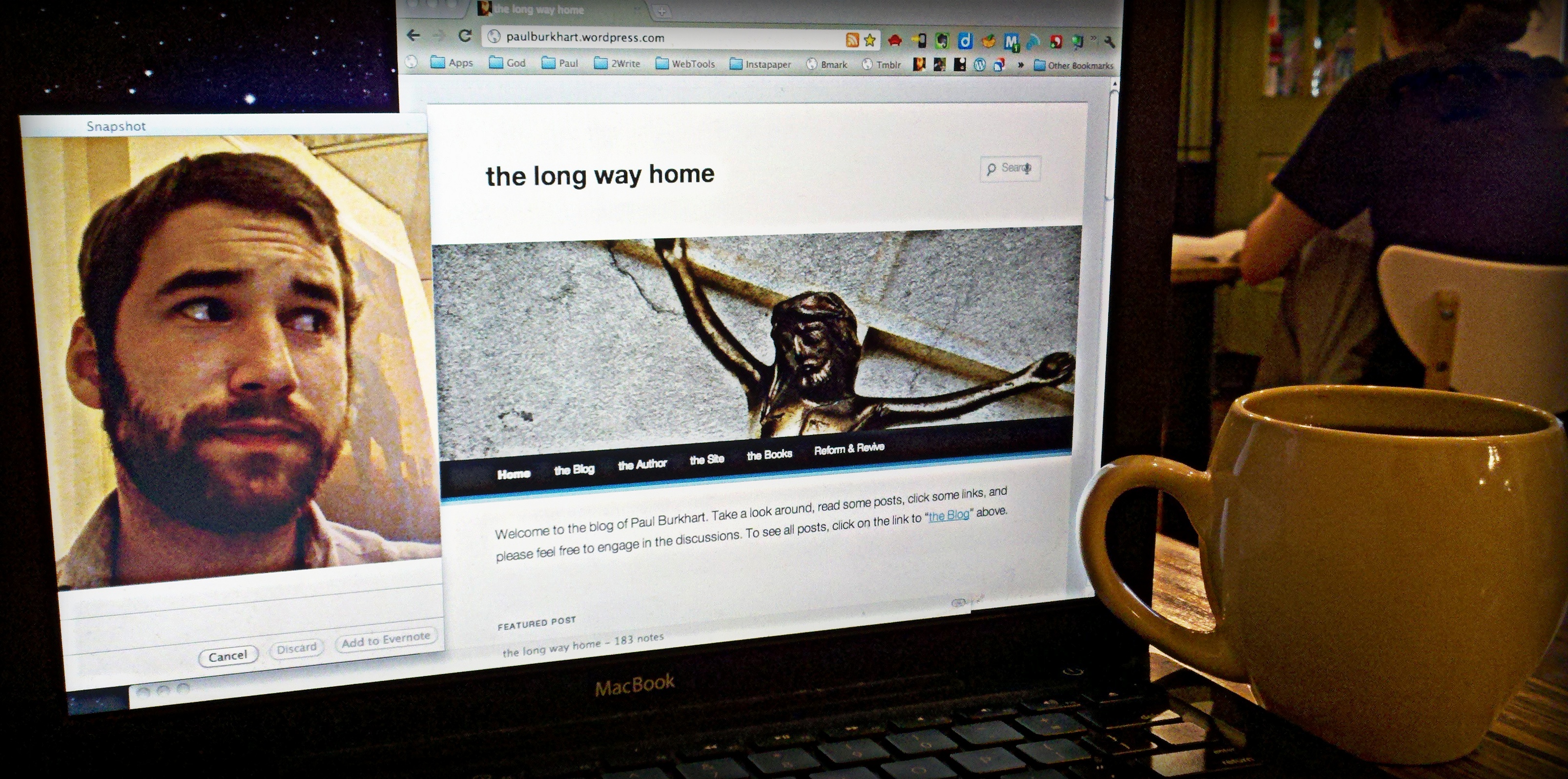
paul-blog-coffee

I pride myself on thinking that a large percentage of the readers of this blog have no idea of this odd subculture/alternate universe that is the “Christian blogosphere”. So for those that don’t know: there is a very large labyrinth of (largely evangelical) blogs and conferences and podcasts and websites that are dedicated to talking about “the” “Christian view” on any manner of things that (1) really don’t affect much of people’s real lives or (2) seem kind of weird to have a “Christian view” of.

It’s not simply talking about things from a Christian perspective (like this blog), but rather doing so with a particular reactive, evangelical, tribal “flavor”. I’m sure I fall into that at times here, but I’m not proud of it and I try to act against it.

the dangers of the Christian blogosphere

There are two primary things about the nature of these sites that more easily lend themselves to human weakness, I feel.
Continue reading

Karl Barth: Our Freedom, Our Home, & God’s Directing [AMAZING QUOTES]


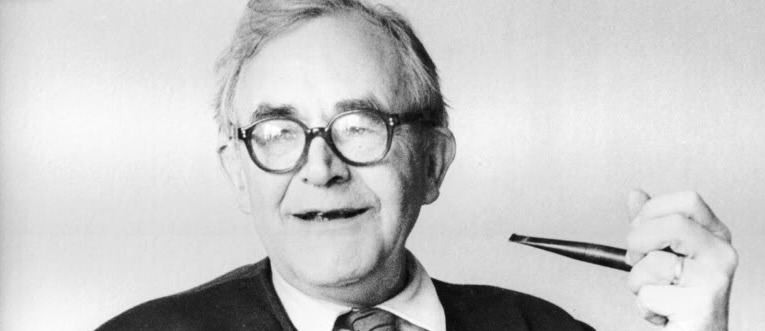
karl_barth crop

I’m writing this long paper on the ancient Christian Practice of Discernment. In my research, I pulled out some Karl Barth, my favorite theologian (hands down), and got to soak in the beauty of these words, and I wanted to share them. Now, for people that don’t read “real” and “proper” theology, this is it. It’s circular, it repeats itself, and it’s unnecessarily complicated and unclear. I know. I get that. But I promise, if you can spend a few minutes, quiet yourself, and focus, I promise the pay-off is huge. This guy stands as a tower over all of modern theology and deserves more attention than he gets. I’ve done slight edits to some of the wording and paragraph breaks for clarity. Enjoy.

* * * * * * * *

God’s direction is an all-powerful decision, His own divine act of lordship. By this means, too, God vindicates His honor and maintains His glory. By this means, too, He exercises authority….

God’s direction is the directing of humans into the freedom of His children. It is this which has taken place in Jesus Christ no less uniquely than the once-for-all fulfillment of the divine sentence on all humanity. In suffering in our stead the death of the old nature, and bringing in by His resurrection the life of the new, He has made room for the being of all humanity to be at peace with God.

On the basis of what we are and is not by virtue of the divine sentence passed and revealed in Jesus Christ… we have no other place but this—the kingdom in which God can be at peace with us and us at peace with God. Jesus Christ…is the all-powerful direction of God to us to occupy this place, to live in this kingdom. If we are told in Him who we are and are not, we are also told in Him where we belong, where we have to be and live.

Continue reading

Good Morning (prayer)! [photo sermon]


ultimo-coffee-cortado

Each week, WordPress has a Weekly Photo Challenge, where they give a theme and invite people to highlight photography representing that theme, accompanied by a few meditations on it. OccasionallyI try and write a “photo sermon” or meditation based on those themes, accompanied by a photo of mine . This week’s theme is “Good Morning“.

* * * * *

In one of those oddities of tire human condition, I love sleep, and yet I avoid it like the plague. I have a terrible sleep schedule. My sleep pattern is a microcosm of my lack of discipline in many parts of life, and maybe even an extremely low level of self-harm, where my body and heart wouldn’t really know what to do if it were consistently well-rested. There’s something about a constant weight of tiredness that—maybe—makes one feel “productive”, even as it steals productivity away from you.

This is a lie. I know. I’m working on it in therapy.

In some Christian circles, people claim “life verses” for themselves; bits of the Bible that they feel speak to them so deeply that the words amount to a blanket summary, call, encouragement, guiding principle, or telos to their life. People usually pick a “life verse” that speaks to what they want their life to be or how they want God to work in their lives.

Continue reading

AMAZING Interview and Q&A about Women in the Church


haddad-mimi-rhe-egalitarian-womenWell, I think it’s time to restart our on-going series on Women in Ministry, don’t you?

While researching a particular argument for limiting Womens’ role in the Church, I stumbled on this interview and Q&A on Rachel Held Evans’ blog. It is a conversation with Mimi Haddad, President of Christians for Biblical Equality. And it is wonderful.

This whole disagreement about Women in the Church can produce a lot of noise that’s difficult to sift through. Too often, people on both sides end up retreating back to their respective sides and both fulfilling a lot of stereotypes while lobbing that accusation at the other side. This ends up entrenching the conversation even more deeply and intractably. The conservatives end up speaking sort of demeaningly about women (even unintentionally) and accusing egalitarians of not believing the Bible, all while egalitarians end up resorting to radical and simplistic feminist-sounding rants and calling all conservatives misogynists.

Haddad’s interview is wonderful because it moves against this. She is gracious, though firm in her convictions, and maintains the big picture of the discussion rather than getting lost in the rabbit-hole of interpreting individual proof-texts. She speaks in such a conversational, disarming, and winsome way. She brings up common-sense and clear-headed perspectives that are such a breath of fresh air for someone who sits for too long trying to pick apart individual texts. You can tell she loves the Church and the Bible and wants to honor them both well.

It also reinvigorated me to continue this discussion. There is still much more to be said, and as I have the privilege of being part of a church that will be ordaining its first female elder next month (the first church of this kind I’ve been a part of!), these issues are especially pertinent to those around me and the discussions we’re having.

And so, in the weeks to come, see this space fill back up with this discussion. Many of the things I want to write about will be building upon many of the ideas found in this interview and Q&A. So, if you want a big picture preview of what’s come, check it out. Really, I can’t recommend it enough.

On a Theology of “Non-Place” & Being the Suburb of God


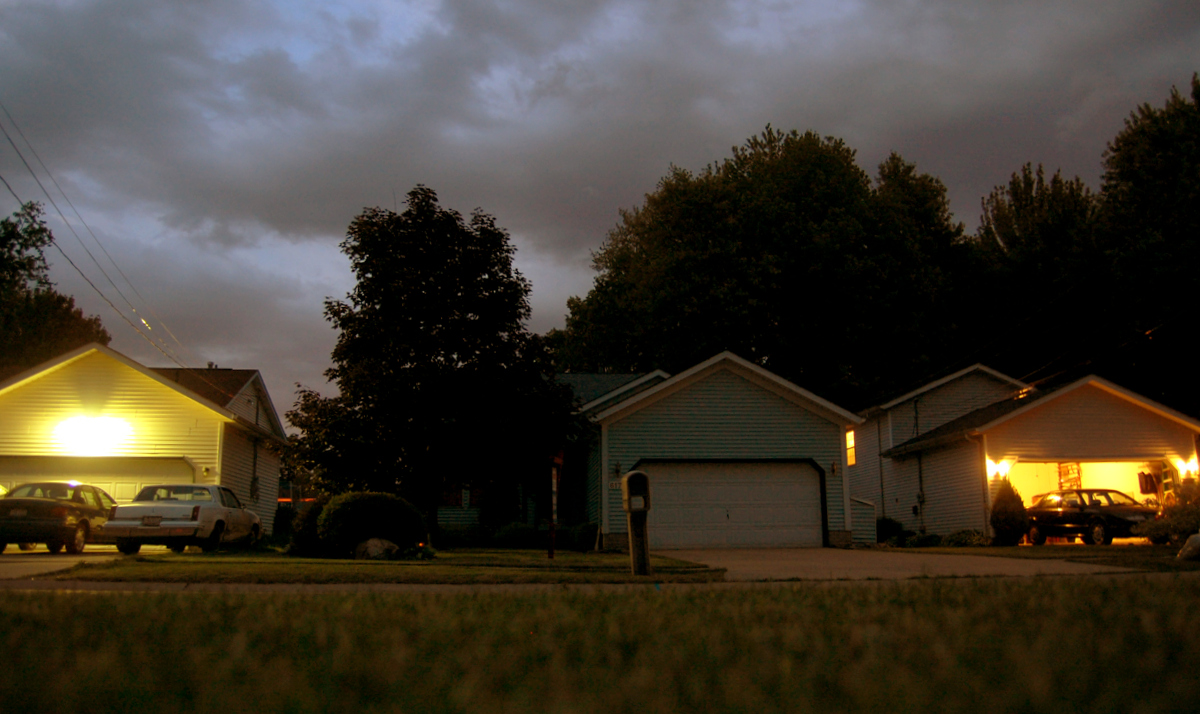
suburbs-flickr

Yesterday’s post on how I’m wrestling through a Theology of the City really seemed to have struck a chord. Here on the blog, there was an interesting discussion about how to theologically view the suburbs. We asked many questions, but landed at few answers. And so, I thought I’d continue the discussion by posting the essence of these conversations on the blog and seeing if we can’t keep the conversation going.

To further offer context, I’ve also added a video I had to record as an introduction to my “Urban Christian” seminary class. In it, I offer a little background on where I’m coming from in this discussion and how I came to question my own subtle sense of urban elitism. The angle also makes my hands look massive, so you can enjoy that as well. Feel free to read these exchanges, and jump in, offering your own comments to move this discussion along!

_______________________________

Jacob Haynes wrote:
Continue reading

What is Discipleship? A Definition.


discipleship-silhouette

For one of my spiritual formation classes, I had the privilege of reading Deitrich Bonhoeffer’s Life Together and Henri Nouwen’s In the Name of Jesustwo incredible books. Last night, after having read these books, we were then asked to offer our own one sentence definition of Discipleship, and then spend some time expounding on the definition. Here was my contribution. Feel free to add your own definitions below.

______________________________

Discipleship: The cultivation of an inner and outer life–with both ourselves and others–that is marked by a humble reliance on the work, words, life, and leading of Christ and His Spirit.

The thing that struck me most about these readings as it pertains to discipleship was the weird paradox of one’s inner- and outer-lives. In both Nouwen and Bonhoeffer, there is such an emphasis that our hearts’ goal should be nothing less than the heart of Christ Himself and our reliance upon it. And yet, the primary access point to this Heart is found in the simple, mundane bodily actions we take upon ourselves with regularity.

The way in is from without, I suppose.

Especially for those of us in seminary and who minister in a Church context, isolation in these endeavors can be such an easy temptation. I don’t even pastor a church, and yet as a deacon leading a home group or class or the Sunday liturgy, I feel that damnable desire just to be liked, and not be seen for who I really am.
Continue reading

Martin Luther on Baptizing Babies


“You say you don’t baptize children because they don’t believe. Why do you preach the Word to adults who don’t believe, unless perhaps in the hope that they may believe? You do it on the strength of God’s command alone. For if you baptize me because I say I believe, then you baptize on account of me and in my name. Therefore, since you don’t know whether I believe or don’t believe, you do it only because of God’s command. It isn’t necessary to exclude children, since as a rule you baptize all, whether they believe or not. It would be a terrible thing if I were baptized on the strength of my confession.”

– Martin Luther (Table Talk No. 549) on paedobaptism

Are Cities too broken for Christians to fix them?


philly-city-hall-1As I go through these seminary discussions and readings concerning the relationship between Christians and cities, two things are pretty certain for me. First, God loves cities and had/has great intentions for them. Second, things went horribly, completely, and utterly awry.

I have the privilege of taking these courses along with incredibly thoughtful people. They haven’t just taken wholesale this newly “rediscovered” urban emphasis of Christian faith. They get the reality that God and the Bible have an urban-centric feel to them, but they really want to fight for a conception of God’s work in the world that comes to bear upon every person in every type of place in the world–not just city-dwellers.

And so I’ve been wondering: is this “urban call” to Christians a general one, or does it only go out to a very specific type of person? Are the difficulties in cities so big, so intractable, and so unique that only certain types of Christians with certain types of giftings could find a place for Kingdom work?
Continue reading

Putting the FUN back in Fundamentalism! (vs. Atheism)


anastasis-resurrection-dead-hell

For those that follow this blog only through WordPress, you may have seen the guest post yesterday–a beautiful meditation on spiritual realities that Autumn brings to our minds–and didn’t think much of it. It was pretty and all, but not controversial, right?

Not so, on Facebook.

A good friend, and Atheist (that we here at the blog know quite well), made a comment taking issue with references to the “Fall” and “first parents” (and even the Resurrection) on the grounds that these do not jive with evolutionary science. (Although I don’t think he clicked on the link to a similar post I wrote last year in which I used the same terminologies in the same way, but whatever.) He was surprised that I would have let a seemingly “young earth creationist” (someone who thinks the world was created in six literal days) post on my blog.

Though I assured him that this guest poster was not, in fact, a young earth creationist, and was merely speaking using the common poetic language shared by all of Christian theology and not at all trying to speak in scientific terms, he doubled down. Then, Christians and Atheists all jumped into this thread. Sarcasm, insults, and “who-said-what when” arguments began, all having little to do with the post, and more to do with who was condescending first, who understands genre theory, and who were the more aggressive and defensive parties in the discussion.
Continue reading

The Reasons Why You Don’t Believe in Grace [LINK]


I absolutely love this. Very much related to my post from earlier today.

epkruger's avatarElias Kruger

It started soon after you were born. As a baby, you were already being compared. In your first doctor visit and you were put in a percentile, literally comparing you to all the babies in the country. You may have grown in a loving home where you were accepted for who you were and cherished for just being there. Yet, some may not have been this lucky always being measured against the better behaving, smarter and prettier sibling. If you escaped that at home, you sure did not escape it in your social life. As you entered the playground, kids assessed you and so determined how you should be treated. Teachers and school teachers placed you in special classes based on your talents or lack thereof. From very early on, you were labeled.

As you have grown in you’re the educational system the message continued. They measured you by grades, liked or…

View original post 383 more words

Injustice & The Human Jesus (and some more Syria thoughts)


oldrich-kulhanek-untitled2For one of my seminary classes (which started this week) I’ve had to read the Gospel of Matthew. When you read a large chunk of a Bible book in one sitting, you really do get to make connections and get perspective you didn’t have before. I had many moments like that when reading Matthew yesterday, but I had one particularly poignant moment that relates to all of the Syria talk that’s going on in our country right now, and adds to my own comments a couple of days ago.

In Matthew’s Gospel, Jesus begins preaching on his own, gathers some disciples around him and continues teaching while they watch. Eventually, in Chapter 10, he sends this community of people, encouragement, and support off to do ministry in various towns in the wider area and to do what he has been doing among them.

Which means he is alone again.
Continue reading

Charismatic Confessions, pt. 2: Tongues Don’t Have to be Weird


peter-preaching-statue{abstract: The Bible talks about two types of tongues that take place among the Church: speaking in human languages that get translated, and speaking a “heavenly language” that sounds like non-sense and an interpretation is given. The apostle Paul encouraged people to prefer speaking in regular human words rather than tongues, and this practice turned into the later historical practice of rooting authoritative Church speaking in Bible-based sermon preaching. Paul then encourages, and I have embraced, that we move speaking in tongues away from a corporate church usage and a private, prayer one. The next post will talk about praying in tongues.}

UPDATE: Part 3 is up, where I talk about the what, why, and how of individual praying in tongues.

Yesterday, I got thinking about my charismatic past. I mentioned an Op-Ed piece in the New York Times about recent research on the phenomenon of speaking in tongues. This got me thinking about my own charismatic past and experience of these sort of things, and reflecting on how little a part of my life those things are now. Except, that is, for personal praying in tongues.

A couple of nights ago, I raided my bookshelf and pulled down every theologian that may have said anything about this phenomenon and looked through all of them. Every person said something different. There are so many different opinions about tongues. I don’t write this post to sort out this issue or give a definitive account or defense of where I land. I just want to introduce some people to this idea who might otherwise be weirded out, strongly against it, or don’t really know what to think about it.

Continue reading

My Walk to Church: One Shot, Two Ways (a photo sermon)


rittenhouse-alley-church-hor

For those new to  the blog: each week, I try and write a “photo sermon” based on the themes of the WordPress Weekly Photo Challenge. This week’s theme is “One Shot, Two Ways“, which is a silly title to describe taking two shots, from the same place, at the same time, but trying to make them very different.

* * * * *

Whenever I walk to my church, it’s one of the strangest experiences for me. I grew up in the South, when Sunday morning was a time of slow traffic, long lines at Donut shops, and lots of people milling around as they meander their way to their respective churches.

Not so, in Philadelphia.

As I walk down the few neighborhood blocks that stand between my house and the city center, I’m quite often by myself. I occasionally have my heart sink when I see a woman making the “walk of shame”, where she’s walking home in the same dress and heels from the night before, trying to fix tussled hair and making sure all of her personals are still in her purse as she walks. It could just be the time of morning and a potential hangover, but she never looks happy.

I usually see runners. They enjoy being able to run on the city streets in the cool of the morning with no annoying pedestrians to dodge. I also see a fair share of dog owners, still in pajamas, annoyed that their pet couldn’t hold it for a few more hours and give them more sleep.

Continue reading

My problem with “quiet times” (some rest for the journey?)


prayer-hands-bible

If you’ve spent any real time in the Church, you probably are well-aware that there are some practical things that “mature Christians” end up doing (or so we hear) to “pursue Christ” and intimacy with God on days other than Sunday. Usually, this is some set of practices, disciplines, and rituals that surround two key things: the Bible and Prayer.

In the Bible Belt, where I’m from, the common term to describe this is the “quiet time”. This can be a devotional that includes a snippet of Bible verses with some meditations and prayers. It could be reading a passage and then journaling about it. It can even be going through an established liturgy of prayer with rotations of Scripture found throughout (here’s my favorite).

Whatever form it takes, it’s usually a subjective engagement (prayer) with the “objective” revealing of God (the Bible). It is usually rooted in the Bible, and even the prayer or journaling is seen as a response to how God reveals Himself in the Scripture. “Quiet times” are, fundamentally speaking, time spent with God in the Bible.

I’m sure the experience is very different in other branches of the Christian family tree, but at least in Evangelicalism (my bread-and-butter), “quiet times” become the go-to litmus test for one’s own spiritual health. If people are going through difficult times, we nudge them towards the Bible more. If we are to feel spiritually vital, healthy and mature, we gain the impression, over time, that it must flow from regular, disciplined quiet times.

But as I have lived through my own pursuit of the elusive “consistent quiet time”, dealt with decades of feelings of spiritual inadequacy, and seemingly had every time of requesting prayer on my behalf be about trying to get the grace to have these quiet times, I have slowly realized there are problems with how we have conceived of the “quiet time”. Come walk with me a little bit.

Continue reading