The Lord is Fleeting [photo sermon]


train-knitting-fleeting

For those new to  the blog: each week, I try and write a “photo sermon” based on the themes of WordPress’ Weekly Photo Challenge. This week’s theme is “Fleeting“.

* * * * *

A garden cool. A God at leisure. Lovers conspire. Nectar tasted.

The God is gone.

He appears in visitors and shapes and shadows, and as a voice to an ancient Babylonian:

“I will make you…”

The Babylonian’s faith is counted as righteousness, and deservedly so, for this man doesn’t hear the voice of God in any way for decades. (And I get mad when his voice leaves me for months.)

This God lets his people sit in slavery for hundreds of years. When his Chosen asks to see his Glory, He offers only the briefest glimpse of his back. When His People stray at Sinai, He still offers to give them every benefit that He promised–the land, the victory, and their identity. The only difference: He would send his angels with them and withdraw his own Presence.

They freak out.
Continue reading

Trusting in our theology vs. Trusting in Jesus {guest post}


bosch-christ-carrying-the-crossToday’s post is by one of my oldest and best friends, Whit Wilson. He is currently in his first year in a master’s in counseling program at Biblical Seminary, just outside Philadelphia. I hope you get to hear more from him as he continues his education.

In the first year of my current program, three classes are required relating to the use of the Scriptures in counseling. Class 1 focuses on an overall interpretational approach to Scripture, class 2 is on the Old Testament, and class 3 is on the New Testament.

This semester my cohort and I are in the New Testament class with an eccentric and somewhat unorthodox professor who enjoys challenging various long-held theological assumptions and beliefs with the goal of helping us freshly think through these issues (everything from gender roles to homosexuality to the afterlife). I can’t say that I agree with him on everything (or most things for that matter), but I have enjoyed his fresh approach and the way he encourages us to think critically about how we use and interpret the Bible.
Continue reading

How the Church Can Win the Culture War [QUOTE]


The church is elected to responsibility, called to be the church to and for the world–not in order to save it or conquer it or even transform it, but to serve it by showing what redeemed human community and culture look like, as modeled by the One whose cultural work led him to the cross. In short, we’re sent out to be martyrs, witnesses of the Crucified One. In that way, we win by losing.

–James K.A. Smith, Desiring the Kingdom: Worship, Worldview, & Cultural Formation

Change: God is Real [Guatemala, Day 4] [photo sermon]


church-philly-bw-cross-market-east

For those new to  the blog: each week, I try and write a “photo sermon” based on the themes of WordPress’ Weekly Photo Challenge. This week’s theme is “Change“. I thought I’d take this chance to begin processing my time in Guatemala with Lemonade International.

* * * * *

I don’t struggle with the plurality of beliefs about God. If there is a God, I am quite confident (as arrogant as it may sound) that Christianity is the proper understanding of Him.

Rather, my struggle is with the sense that God is there at all. Many of the posts on this blog have dealt with my open acknowledgment of my “inner atheist” (as I’ve called him several times), and how I’ve tried to deal with him.

I don’t know that I need to expound on this too much, as I’m confident many of the readers here get this already, but just in case: this doubt is not intellectual; it is existential. I often miss that abstract sense and “feeling” of God’s existence. Continue reading

“Strong like Lemonade….and sweet.” [Guatemala, Day 3]


LemonadeInternationalB-25

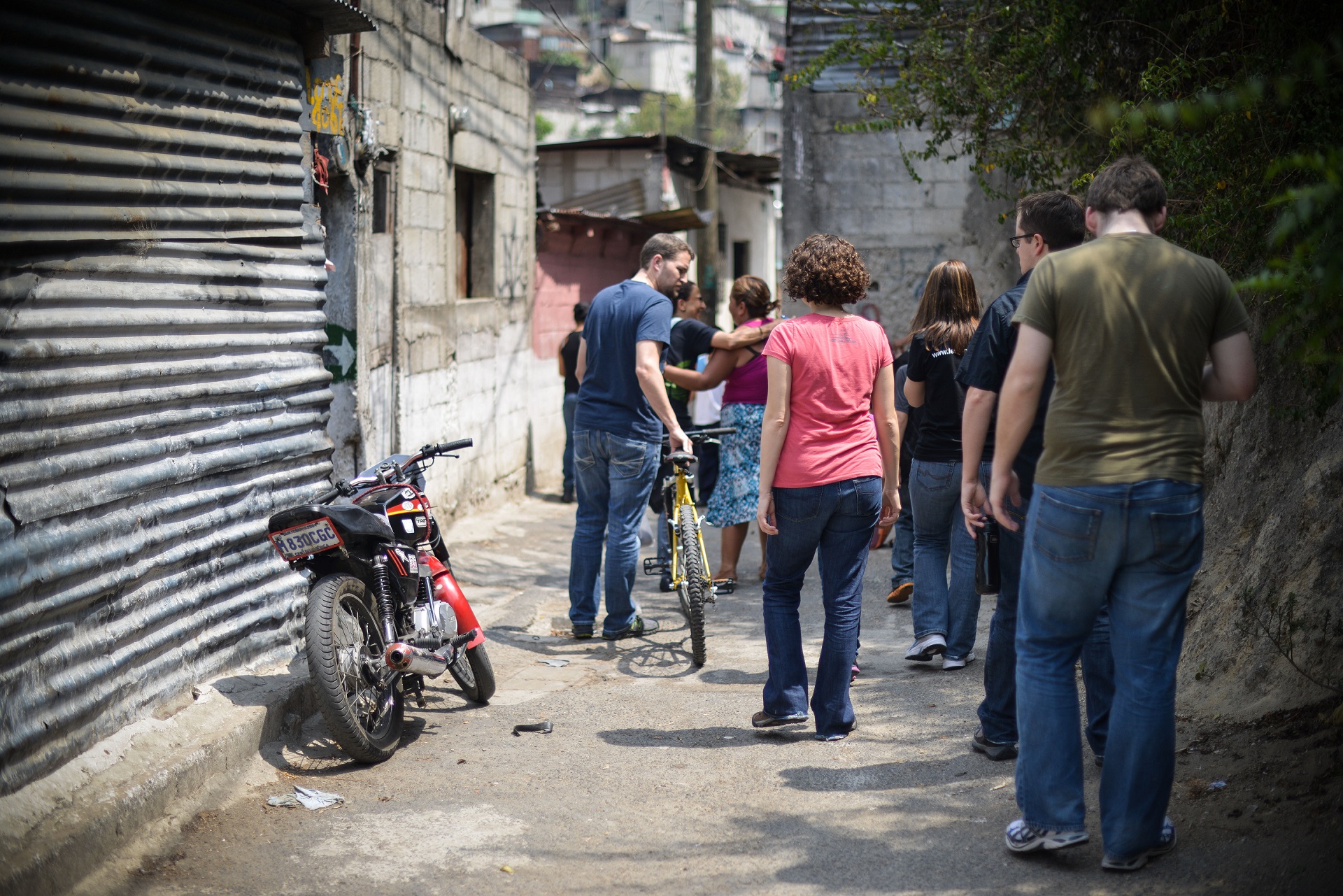
Tonight is my last night in Guatemala. By the time this is posted and most of you read this, I will be on a plane (or, more likely, waiting in an airport), on my way back home.

The past couple of posts this week have been a little intense. The way I received and processed those first few days was definitely through the filter of brokenness and pain. And this was definitely appropriate. There were so many stories of poverty, violence, abuse, economic exploitation, injustice, paedophilia, and rape that I simply could not tell.

We have to see the need for hope before we can feel its presence.
Continue reading

As We Lay Dying [Guatemala, Day 2]


guatemala-cemetery-dump-cross

Since God’s children share in flesh and blood, Jesus himself likewise partook of the same things

Today began with a meeting of the microenterprise crew–the staff and several of the women who have benefited from small loans to help start small businesses in the area.

Lemonade International is insistent that this is merely a solution to help some of those that are gifted in this way. Lemonade International partakes of the flesh and blood of these people, weak as they are, and sees how they can serve them as individuals with individuals needs.

I leave encouraged. Continue reading

Chasing Grace [Guatemala, Day 1]


la-limonada-door-1

Last night. She sat in the corner of the bed-couch in the corner of the room. One leg tucked under the other, face still red from the laughter she has both given and received over dinner. In one turn, though, the tone becomes serious as a question rises above the crowd, asking for her story. The story that has brought us here.

A nurse to burn victims, Tita began making home visits to a severely injured gang member, not knowing that her feet were walking upon the holy ground of poverty, violence, and death.

She eventually realized that she was in the neighborhood of La Limonada, nestled in the valley of the shadow of Guatemala City, considered a trash heap by those outside; both the people and the items are considered its waste.

And yet she continued going. And serving. And loving. Continue reading

The Story of Repentance: believing vs. achieving


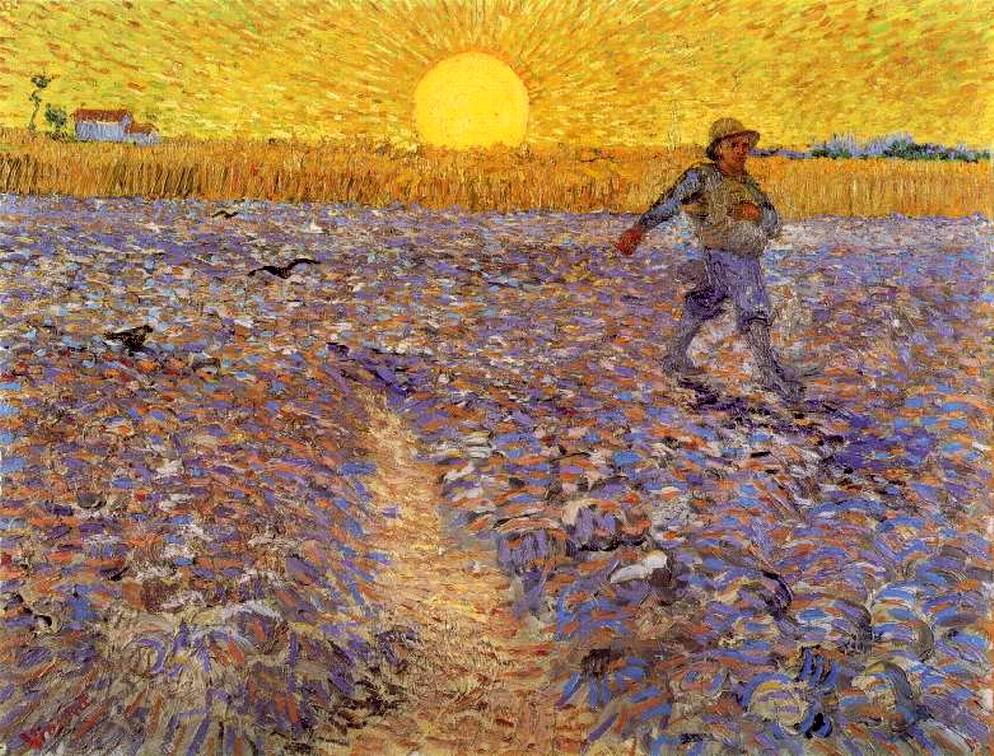
Van Gogh-Sower with Setting SunThis post is part of my 2013 Lent series: Reflections on Repentance.

I almost titled this post “theology in the service of real-life”.

The last time I wrote about repentance, I talked about the difficulties I have with some of the ways people in the Church talk about repentance. I then started researching the topic. And as I did, I found some amazingly helpful realizations about this in the Bible.

So today, I just wanted to take some time and explore this topic throughout the entire story of the scriptures. Hopefully, we can come to some conclusions about what repentance means for us today, and perhaps even some answers to our previous concerns in the last post.
Continue reading

Resurrection Gives Us Joy in Lent & Death


La-Pieta-IYes, as cliché as it is, I’m watching the new Bible mini-series on the History Channel. I’m actually enjoying it. A few things are odd (the ninja angel, for one), and they made some interesting choices on what to leave out (was the extended Sodom sequence really worth cutting out the entire Exodus story, Wilderness wandering, and golden calf rebellion?). But there is still a sense of ownership, that this is our story.

(Side note: for those of us that study the Bible and don’t necessarily think historicity is the highest purpose for which it was written, it’s encouraging to still feel that feeling of identity-formation when encountering our story–even when it’s seen as “just” a story.)

Anyway, a review of the show is not why I’m writing today. I just had a brief thought I wanted to share.

In Episode 1 of the mini-series, we see Pharaoh’s son die at the end of the plague sequence. Watching him carry the pale, lifeless body of his son, it reminded me of Michelangelo’s la Pieta (a version of which you can see above). It was actually quite moving, and I was surprised that I only realized now the sadness of this part of the story. Continue reading

I’ve got some problems with repentance (and how you people talk about it)


belle-isle-bridge-long-walk This post is part of my 2013 Lent series: Reflections on Repentance.

Martin Luther famously kicked off the Reformation by saying the whole of the Christian life is one of repentance. In this, he was implying that it was not a singular moment, but rather a lifelong process. Yet, as I’ve lived life in the Church, I have found that this is not quite the way that most Christians talk about repentance, nor does it seem to be the way the Bible itself does.

If you ask your run-of-the-mill Christian convert, or even pastor or theologian, what repentance is, you will usually get some answer that involves the phrase “180 degrees” or talk about a change of your mind or turning away from a sin you do.

Good sermons and books on repentance will usually involve the Luther formula of using the Holy expectations of a Holy God to expose just how sinful we are, and then hitting us with just how radical God’s grace is in light of that. They will show us our need, trying to woo us to a God that forgives us. They try to expose even those sins hidden to ourselves or those that we hide from others or those that have beset us for years, and then invite us to “turn” from those things and instead trust God.

Sermons and books like this have contributed to beautiful moments in my life, drawing my heart to God and convicting me of my sins.

And yet, I have a problem with this. In these articulations of repentance, there seems to be a disconnect. A major, major disconnect.
Continue reading

Intelligent Repentance: Hearing our Hearts


[This is part of my 2013 Lent series: Reflections on Repentance.]

“Is anyone thirsty? Come and drink— even if you have no money!
Come, take your choice of wine or milk— it’s all free!
Why spend your money on food that does not give you strength? Why pay for food that does you no good?
Listen to me, and you will eat what is good. You will enjoy the finest food.

“Come to me with your ears wide open. Listen, and you will find life.
I will make an everlasting covenant with you.
I will give you all the unfailing love I promised to David.
See how I used him to display my power among the peoples.
I made him a leader among the nations.
You also will command nations you do not know, and peoples unknown to you will come running to obey,
because I, the Lord your God, the Holy One of Israel, have made you glorious.”

Seek the Lord while you can find him. Call on him now while he is near.
Let the wicked change their ways and banish the very thought of doing wrong.
Let them turn to the Lord that he may have mercy on them.
Yes, turn to our God, for he will forgive generously.

“My thoughts are nothing like your thoughts,” says the Lord.
“And my ways are far beyond anything you could imagine.
For just as the heavens are higher than the earth,
so my ways are higher than your ways and my thoughts higher than your thoughts.”

The writings of the Prophet Isaiah, Chappter 55, verses 1-9 Continue reading

Lent & Repentance: Come & Mourn with Me Awhile


ash-wednesday-faces-of-the-faithful-photos

This is part of my 2013 Lent series: Reflections on Repentance.]

Last week was Ash Wednesday, which begins the church season of Lent. On that day, hundreds of millions of people (perhaps even as much as a billion) went to quiet services and got ash crosses finger-painted on their foreheads.

It’s a strange act, but perhaps the most striking one in Christian tradition. It’s certainly my favorite.

No matter how widespread Christianity has been in the world, I can’t imagine there was ever a time in which the public mark of ashes on one’s face did not stir some sort of double-take from passers-by. Even to this day, it’s the most counter-cultural and outward thing many American Christians widely do.

Ashen forehead crosses are one of the few Christian traditions that is still ours, and hasn’t been co-opted by the wider culture, and thereby watered-down in its meaning or force.
Continue reading

On Women Leaders in the Church: Timothy’s cultural context


artemis-greek-urnFor many of the Christians that believe women are not to be ordained, authoritatively teach in churches, nor hold formal church leadership offices, 1 Timothy 2:8-14 is the first (and oftentimes the only) Bible text they throw out as a conversation-ending, slam dunk against people they feel are “re-writing” the Bible for their own ends.

When last we left our on-going series on women in the church, we talked about the text and translation of this passage. We talked about its history of mistranslation and how the seemingly best and most consistent translation offers us a different picture than the traditional one. Today, we’re going to pull back from the text itself to look at the culture and context behind the letter.

my thesis

I’ll give my view up front, so you can leave it, take it, or read on for why I land there. This post is a long one.
Continue reading

Merry Christmas Season!!!


wood-jesus-heart-christmas-humor

As of today, it is Christmas season!

Today, we turn our minds from the sin that required God to take human form in Jesus Christ, and we give ourselves the freedom to respond with unfettered joy to this fact. We give gifts in response to the gift that’s been given to us; we sing songs in response to the heavenly angelic song that inaugurated his birth; we eat good food with others in response to the body of Christ–the bread of life–having come among us.

Today begins the culmination of our thinking and meditating these past 4 and half weeks. This Advent, I’ve been trying to connect this time to parts of life that we may not usually associate with it. And so, if you have any time and interest, here are those posts from this year’s Advent series (and by the way, holy crap. I had no idea how much I had written this year until I made this list).

May they help you enter into this next Church season with depth and joy. (You can also check out last year’s series, if you want.) Continue reading

Advent & the Goodness of Worldliness, c/o Dietrich Bonhoeffer [QUOTE]


‎”I remember a conversation that I had in America thirteen years ago with a young French pastor. We were asking ourselves quite simply what we wanted to do with our lives. He said that he would like to become a saint (and I think it’s quite likely that he did become one). At the time I was very impressed, but I disagreed with him, and said, in effect, that I should like to learn to have faith. For a long time I didn’t realize the depth of the contrast. I thought I could acquire faith by trying to live a holy life, or something like it. I suppose I wrote The Cost of Discipleship as the end of that path. Today I can see the dangers of that book, though I still stand by what I wrote.

I discovered later, and I am still discovering right up to this moment, that it is only by living completely in this world that one learns to have faith. One must completely abandon any attempt to make something of oneself, whether it be a saint, or a converted sinner, or a churchman (a so-called priestly type!), a righteous man or an unrighteous one, a sick man or a healthy one. By this-worldliness I mean living unreservedly in life’s duties, problems, successes and failures, experiences and perplexities. In so doing we throw ourselves completely into the arms of God, taking seriously not our own sufferings, but those of God in the world–watching with Christ in Gethsemane. That, I think, is faith: that is metanoia; and that is how one becomes a [human] and a Christian (cf. Jer. 45!). How can success make us arrogant, or failure lead us astray, when we share in God’s sufferings through a life of that kind?”

— Dietrich Bonhoeffer, Letters and Papers from Prison (via Kait Dugan)