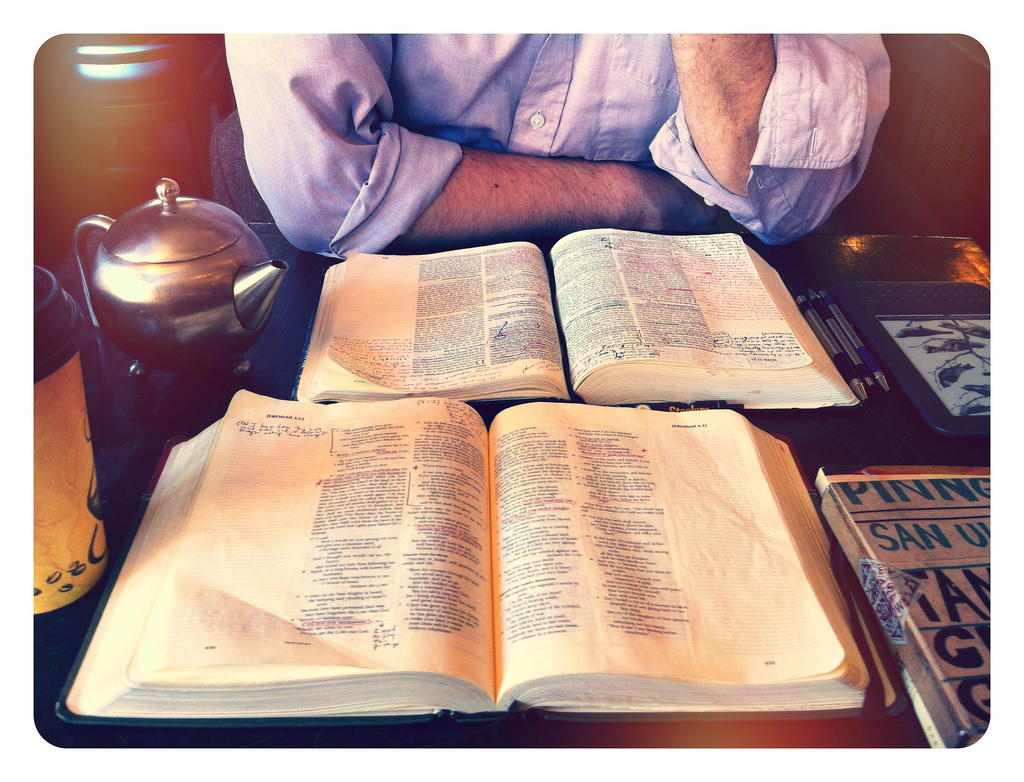
Using the Bible to Meet with God


Last week, I asked a bunch of you how you go about using the Bible and the study of its contents to actually nourish your soul and meet with God. I got some great responses both here and on Facebook. This week, I wanted to put up how I ended up approaching this during the class I taught at my church. It’s super short, not very deep, and much more can/should/will be said. For what it is, I hope it’s genuinely helpful and speaks to how we might meet God through the Scriptures.

How do we move from the Facts of the Bible to the God of the Bible? From knowing the Bible, to knowing the Person? From Scripture being informational to formational?

The Meeting Place of God

As I said in the first class I taught, the Bible is not the passive “Revelation of God”. It is the place through which the Holy Spirit actively “reveals God” to us. When it comes to the Bible, we should start thinking more in verbs, not nouns. The Bible is “simply” a meeting place for God and his people, where he might meet them as he desires, by His Spirit.

When we meet God in Scripture, its the convergence of four things: Us and our faith, God and His Spirit.
Continue reading
The New Old New Atheism of Simon Critchley & Others


I have noticed, recently, especially with the waning influence (or at least presence) of the “New Atheists” in the public square, that there has been a shift in the tack that Atheists have taken against Christianity in the past year or so.

Philosophical movements generally begin in academia, then find themselves trickling down to the masses as those twenty-something college students that were influenced by these academic discussions now move on into the wider world. Both Atheism and Evangelical Christianity generally find themselves one generation behind in these philosophical developments of the world.

So, for example, when the world was just beginning to move on into “post-modernity” (notwithstanding the functional meaninglessness of such terms at this point), it was the heyday of  Atheistic and Evangelical evidentiary apologetics, representing firm pre-modernist, Enlightenment thought (on both sides). Arguments centered around the very existence of Jesus, fidelity in translation and transmission, Intelligent Design, and the general historical reliability of the Bible.

Continue reading

Class 6: NT Letters, Revelation, & The Bible in Worship (WE’RE DONE!)


This week was the last week in the six-week Bible Survey class I’m been doing at my church.

It’s been an honor to do this class, and I feel like this last one went especially well. Others seemed to find it genuinely helpful.

We ended our time in this class by talking for a little bit about how we can use the Bible–and all the information we just gleaned these past weeks–in our own, personal, spiritual lives.

To conclude the class, this Saturday we will be going to University of Pennsylvania Museum of Archaeology and Anthropology. You really won’t want to miss this. I’ll be putting a post up on this tomorrow.

For those that have followed in class and online, thank you so much for doing so. It was such an honor to be able to do this class, and I can’t believe I was given the time and grace to do it.

I hope that these resources are found to be helpful to those that invest their time into them; and that they draw each of you into a greater knowledge, love, and desire for our God as He meets us in our Scriptures.

And lastly, over the next months, I will be compiling all of these notes, as well as other essays I’ve written on the Bible in the past and self-publishing a book in both print and electronic forms. If you think about it, please pray for me. I’m starting to see that self-publishing is a lot more costly and complicated than I had originally thought.

This Lecture Covers:

  • A chronological survey of the contents and background of Paul’s letters
  • Discussion of the contents and background of the other letters of the  New Testament
  • A talk about that crowd-favorite, Revelation. We talked about how it fits into the greater story of Scripture, how it’s often misread, how to properly read it, and it’s contents and background
  • How one should approach the Bible to build up their spiritual life
  • Practical methods people can employ to know God through the Scriptures

**Side Note: twice in the audio of this lecture, I refer to Galatians and James as books that may each have been the “first book of the Bible written”. I meant to say “New Testament”, not “Bible”. Sorry.**

Download: [Audio] [Notes] Continue reading

How do you use the Bible and Bible knowledge in your spiritual life? [OPEN MIC]


This weekend, I will be teaching the last class in my six-week Bible Survey class at my church. I want to end the class talking about how to use the Bible (and especially the knowledge gleaned from the class) in one’s personal (and corporate) spiritual life. How does the Bible actually function in a believer’s life to cultivate a dynamic, deep, and intimate relationship with Christ and the Holy Spirit? I have my own thoughts on this, but I want to hear from all of you. So here are some questions:

  • Do more Bible “facts” actually have a direct impact on your spiritual engagement with God? In other words, has studying the backgrounds of the Bible ever led to meeting God? How or why not?
  • What practical methods of immersing oneself in Scripture have been most fruitful to you spiritually?
  • How might people use the tools of Biblical Studies (commentaries, etc.) to treat the Bible formationally, rather than merely informationally?
  • For those that are oriented in such a way that they constantly want to know the context, background, history, date, etc. of Scripture, how have you been able to quiet all these questions in order to meet God?
  • Similarly, for those more “intellectually”-oriented, how have you been able to move beyond the intellect to engage other parts of yourself with Scripture?
  • How do we move beyond facts of Scripture to the Person of Scripture?
  • If (as I said in the first class, and other theologians have said) the Bible only “becomes” the Word of God as the Holy Spirit meets us during our engagement with it, what have been the most effective practical ways that you have invited the Holy Spirit into your Bible Study time?
  • In your experience, what have been some of the pitfalls in other approaches that are commonly endorsed by the contemporary church, or what are some of the realities that aren’t talked about often?
  • What would you say if you were me (haha)?

Feel free to respond below, in a Facebook comment, email, text, or phone call. Thanks.

Class 5: Intertestament, pt. 2; NT Intro; Gospels; Acts


This week was the fifth week in the six-week Bible Survey class I’m doing at my church.

And wow, we covered a lot in the class. But still, this class probably had the greatest percentage of material I had prepared that was not actually touched on in the talk. This makes the manuscript that much more full of extra material.

Covering the topics above, I have 35 pages of material below.

You may have noticed that I never actually finished the materials I talked about last week. Well, entering into an entirely new testament of the Bible put me in a mindset that I just couldn’t go back to finish up writing about every one of the Prophets. I’ll do it someday. I promise.

Lastly, mark your calendars for August 25th, where we will be going to University of Pennsylvania Museum of Archaeology and Anthropology. You really won’t want to miss this. Details to come next week.

This Lecture Covers:

  • A discussion of the Political and Religious history between the Old and New Testaments
  • An Introduction to the Background of the New Testament
  • Background and context of Jesus, his upbringing, and his life
  • Survey of the content and background of the Gospels.
  • An extensive and in-depth look at the book of Acts.

Download: [Audio] [Notes] Continue reading

Visions of Arcadia: the most terrifying art exhibit I’ve ever seen


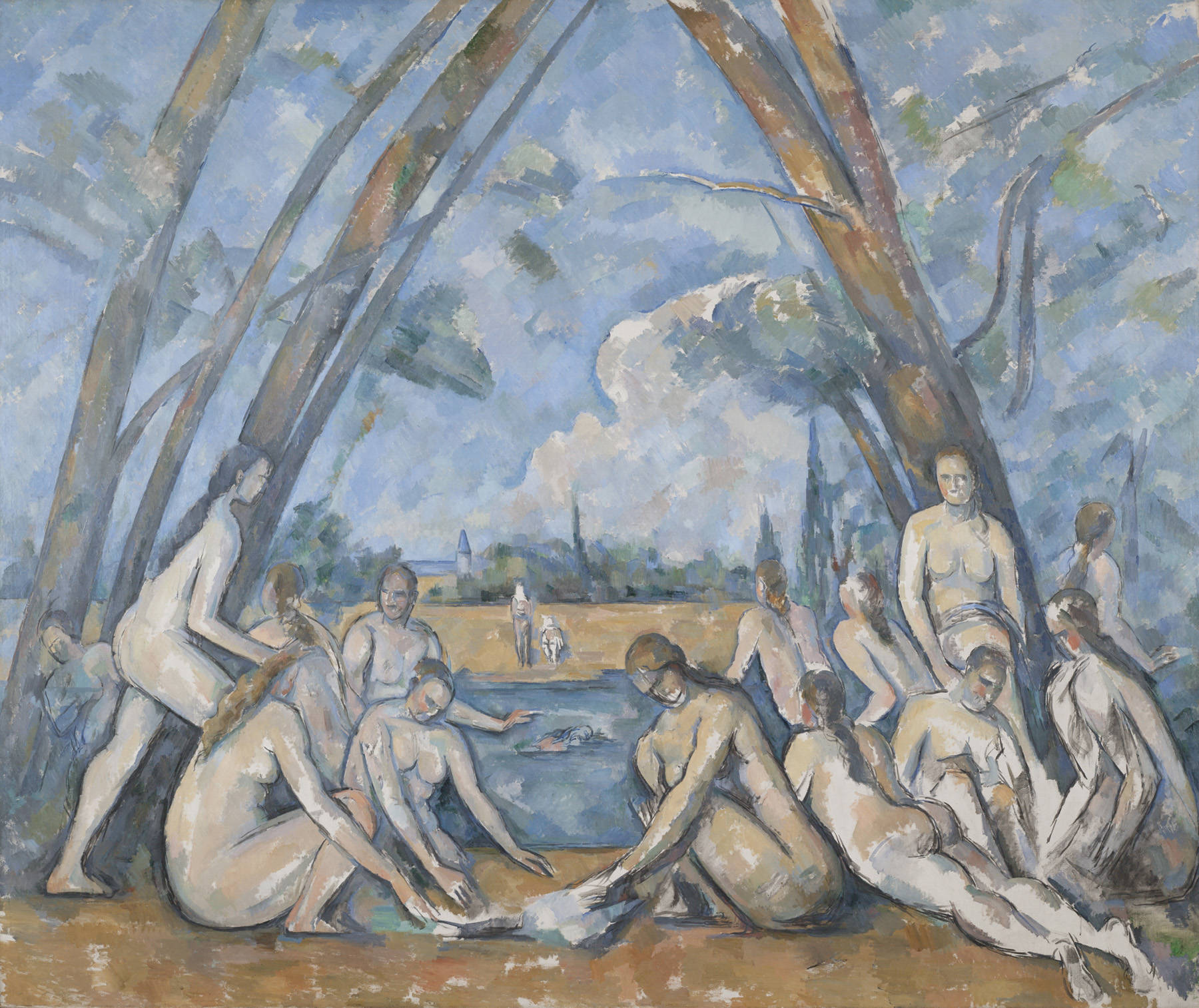
This weekend I had the privilege of seeing the Philadelphia Museum of Art’s new exhibit Gauguin, Cézanne, Matisse: Visions of Arcadia. The exhibit showcases works exploring the idea of “Arcadia“: an idyll pastoral world envisaged in Virgil’s first major poetic work Eclogues where nymphs and fauns dwell alongside Bacchus and Pan; where human dwellers exist in peace, rest, and joy in the natural world.

(To put it simply: you can usually recognize Arcadian themes at work in a piece of art when it has naked people hanging out in nature–usually around rivers.)

This image of Arcadia, having been explored in art epochs in the past, overtook art once more right as modern art was being born, right around the turn of the 20th century. In fact, the exhibit subtly makes the argument that this image of a rural, paradisal ideal is an essential element in modern art’s development. The modernists’ dilemma–the tensions between longing and reality, finding and losing, permanence and transience, human and mythic–all find their embodiment in this Arcadian world.

The exhibit begins with excerpts from Virgil’s poetic treatment of this theme, set beside works that visualized his words. These run along one wall. On the opposing wall of this introductory hallway, there are excerpts from Stéphane Mallarmé’s modernist treatment of Arcadia, L’Apres-midi d’un Faune, accompanied by pen-and-ink drawings from Matisse that visualize his words.

The exhibit is great, but very theoretical. It works subtly and on nuance. It’s not just a bunch of pretty things thrown into a room. Instead it is a thesis–an argument–in visual form. It watches a theme develop from myth to poetry to visual art (and then from Renaissance to modern) and explores how they are all connected and converse with one another. It’s really like no other exhibit to which I’ve ever been. If you get the chance, see it.

But that’s not why I’m writing today.
Continue reading

Class 4: Prophets, pt. 2; Wisdom Books; & Intertestamental Period, pt. 1


This week was the fourth week in the six-week Bible Survey class I’m doing at my church.

We didn’t quite get to the Introduction of the New Testament like I had planned. This class was a bit different than other ones. Rather than focusing on a lot fo content of each book, this week was mostly a “tour” of these sections of the Bible and History, with some “highlights” along the way. The main point was to give people a bigger picture of these things to help them read the Bible themselves.

Just like last week, my notes are very incomplete. Most everything I said is in there, but I definitely want to provide a lot more in the notes than I say–and that hasn’t been filled in for most of the books so far. I will be spending the next two weeks filling that in. Once I’m done, I’ll let you all know. Thanks for your patience.

Lastly, I know I did a very poor job at telling the story of the Intertestamental history. I will try this again and condense it more in the next class. I will be much better prepared then.

This Lecture Covers:

  • Principles to keep in mind to help when reading the Prophetic books
  • Highlights from the Prophetic Books
  • Survey of the content and some of the background of the Wisdom Books of the Old Testament, with a special focus on the content of Job
  • Survey of the History between the Old Testament and New

Download: [Audio] [Notes] Continue reading

notes from last week’s class are finally done!


Earlier this week, I posted the audio and incomplete manuscript for Class 3 for the Bible Survey class I’m doing. Last night, I finally finished polishing up the notes with all the extra information I wasn’t able to say in the class. I hope it’s helpful. This final manuscript comes in at 36 pages long (admittedly, that’s with size 14 font to make it easier to read online, but still), so there is lots of stuff there that wasn’t talked about (especially with Kings, Chronicles, Ezra-Nehemiah, and Esther).

So, check it out below, download it, share it, critique it, and let me know what you think! I’d love to get some feedback on these to know if they’re actually helpful. Enjoy, and thanks for your patience! (and P.S. don’t forget about the Dead Sea Scrolls trip tomorrow.)

Class 3: The Historical Books & Prophets, pt. 1


This week was the third week in the six-week Bible Survey class I’m doing at my church.

And yes, we actually covered all the books of the Old Testament from Joshua to Nehemiah, did an intro to the Prophets, and had a brief discussion on the ethical problems with the “Old Testament God” in an hour.

You can find a small article I wrote on those atrocities and “ethical dilemmas” of the Old Testament attached to the end of the Notes below.

At the time of this writing, I’m not quite done with the notes, but I wanted to get the lecture audio to everyone. So, below you will find an incomplete version of the notes. I will upload a revised version later today (or tonight) with everything else filled in. I’ll update this post when that happens, as well as the Scribd doc below.

Also, as I posted about earlier today, as part of this class we will be going to the Dead Sea Scrolls exhibit this Saturday in Philadelphia. There are also discounted tickets available. Check the link, and I hope to see you there!

This Lecture Covers:

  • A discussion of the Deuteronomistic and Priestly Histories of the Old Testament
  • Survey of the content and background of the Historical Books of the Old Testament from Joshua to Nehemiah
  • An general introduction to the Prophets
  • A discussion concerning the atrocities committed in God’s name by the Israelites in Joshua and Numbers

Download: [Audio] [Notes] Continue reading

a homosexuality post-script & conclusion


Most of last week on this blog was spent discussing some recent “conversations” about the Evangelical church’s relationship with the homosexual community. I first addressed conservatives, and then progressives (as well as some thoughts on the “willful persistence in sin” comment I hear from conservatives a lot). This week, we move on. But not yet. In response to some of the ways people have responded to these posts, I felt I needed to write this.

In conclusion to it all…

These posts I’ve written got a lot of circulation around the web (and to those who commented/posted links, I thank you), and so for anyone that runs across them, I want to make something clear:

It might seem odd that I’ve typed far more words and dripped more sarcasm in attacking the more conservative side of this issue, all while ultimately agreeing more with them at the end of the day. In the end, even with all of my many theological and social disagreements, I cast my lot with them, even though I know most of them would not have me.

These posts, hopefully, have been written in the same spirit as Mark Noll’s blistering attack on Evangelical anti-intellectualism, The Scandal of the Evangelical Mind, which he calls “an epistle from a wounded lover”.
Continue reading

Class 2: The Rest of the Pentateuch (from Exodus to Deuteronomy)


This week was the second week in the six-week Bible Survey class I’m doing at my church. We went through the rest of the Pentateuch, or more specifically, Exodus through Deuteronomy. I was originally hoping to do all the historical books of the Bible, then I was just hoping to get through Joshua. I did neither. We just got to Deuteronomy. But that will be okay.

In the recording, there’s also a brief discussion we ended up having on the importance of historicty and the Old Testament–a topic that’s only going to more of issue as we move forward in this class. Be sure to listen and get in on the discussion! You can follow the class on the class page above.

**Remember, we have next week off, so the next lecture is on 7/22, with our first field trip on 7/28.**

This Lecture Covers:

  • Review of the foundational ideas of the Bible we talked about last week
  • A more refined response on my part on the doctrine of “Revelation”
  • Survey of the content, background, and application of Exodus through Deuteronomy
  • Discussion concerning the historicity of the Old Testament and its importance

Download: [Audio] [Notes] Continue reading

Class 1: The Bible & it’s Story, OT Intro, & Genesis


This past week, I started the Bible Survey Class I mentioned earlier today. It’s a six-week class going through a theology and history of the Bible and its contents, with an emphasis on these facts helping to build up the spiritual life of Christians. It also goes into a lot of the historical development and issues behind the Bible, so it could also be of interest to non-Christians. You can follow the class on the class page above.

This Lecture Covers:

  • What is the Bible?
  • What is Revelation?
  • The History of Israel
  • The History of the Old Testament
  • Genesis: Contents, Background, and relevance to Christians

Download: [Audio] [Notes]

[audio https://prodigalpaul.com/Bible%20Survey/Bible%20Survey%201-Intro-OT-Genesis.mp3]

Bible Survey Class // liberti church center city


Update: I have the first lecture up.

For those interested, I have been given the opportunity to serve at my church this summer by teaching a six-week long Survey of the Bible class. It’s been super fun getting back into all my old seminary books (as well as getting some new ones).

In the class, we’ll go through a theology of the Bible, the history and background of the Bible, as well as go through each of the books of the Bible. In the last class, we’ll talk about how to use this knowledge and the Bible itself to cultivate an actual life of worship and  devotion. We will also taking two “field trips”. One to see the Dead Sea Scrolls at the Franklin Institute, the other to the Penn Museum of Archaeology and Anthropology.

We’ll be recording the lectures, and I’ll post both the audio and my manuscripts on this blog for your edification (hopefully). So feel free to take a look at the official page above for the Bible Survey Class.

Be sure to question, counter, encourage, and ask me on the posts for each of these posts.

Also, if you’re in Philly on Sundays through July and August, please feel free to stop by. We”ll be doing these classes at liberti church: center city from am to pm, after church, at 17th and Sansom in center city Philadelphia.

The first class audio and manuscript will be going up later today so check back!

The Heretical Liturgy of American Nationalism [QUOTE]


I’m suggesting that [Nationalism] constitutes a liturgy because it is a material ritual of ultimate concern: through a multisensory display, the ritual both powerfully and subtly moves us, and in so doing implants within us a certain reverence and awe, a learned deference to an ideal that might one day call for our “sacrifice”…. Over time, these rituals have a cumulative, albeit covert, effect on our imaginary. And together, I’m arguing, these constitute liturgies of ultimate concern: the ideal of national unity and commitment to it’s ideals is willing to make room for additional loyalties, but it is not willing to entertain trumping loyalties. (Just try to remain seated at the next playing of the national anthem.) The fact that there seems to be little tension between Christianity and American Nationalism is not a function of the generosity (let alone “Christianness”) of the America ideal but rather a sign of a Christianity they has accommodated itself to these military ideals of battle, military sacrifice (which is very different from the Christian ideal of martyrdom), individual (negative) freedom, and prosperity through property.

Implicit in the liturgies of American nationalism is a particular vision of human flourishing as material prosperity and ownership, as well as a particular take on intersubjectivity, beginning from a negative notion of liberty and thus fostering a generally libertarian view of human relationships that stresses noninterference. Related to this is a sense that competition and even violence is basically inscribed into the nature of the world, which thus valorizes competition and even violence, seeing war as the most intense opportunity to demonstrate these ideals. The vision of a kingdom implicit in this liturgy is antithetical to the vision of the kingdom implicit in Christian worship. I think the liturgical take on American nationalism can help us to see why so few Christians experience a tension here; it can also help to diagnose the cause of the church’s complacency and complicity: many Christians experience no tension between the gospel according to America and the gospel of Jesus Christ because, subtly and unwittingly, the liturgies of American nationalism have so significantly shaped our imagination that they have, in many ways, trumped other litutgies. Thus we now see and hear and read the gospel through the liturgical lenses of the “American Gospel”….

The republic claims to have an identity and unity about it, and even claims to have acieved the goal of shalom–to already be a nation “with” liberty and justice for all…. No hint of eschatological deferral; no sense of “not yet” failure to measure up; but a confident claim of justice here and now, secured by the republic….

And as I’ve tried to sketch above, I think there are good reasons to worry that the ideals of the republic are antithetical to some of the defining ideals of the people of God, called to imitate a suffering Savior, who was executed at the hands of military power. What’s explicit in the [Christian] Creed, if we tease it out, is in significant tension with what’s explicit in the Pledge [of Allegiance].

James K. A. Smith, Desiring the Kingdom: Worship, Worldview, & Cultural Formation

Read my thoughts on Christian Patriotism, and a related quote from Ross Douthat in Bad Religion.

Posted from WordPress for Android on my Droid X

On Post-Partisanship, Conservative Condescension, & Hope | Patrol Magazine


I love this post from Patrol last week, where Jonathan D. Fitzgerald replies to a recent post by David French at Patheos. In Fitzgerald’s piece, he encourages us to keep our post-partisanship and hope, no matter what “real life” might throw at us.

One point of dissent, though: what he calls “Idealism”, I think is a lot closer to “Realism”. Post-partisanship is very earthy, ground-level, and pragmatic, not simply conviction to an idea; it’s a commitment to the world that actually is, rather than a world conformed to pre-conceived “ideals” of right and left.

Christ isn’t pushing us to an idealized world, but rather a realized one. Just as in God’s Word and on Christ’s body, in the New Creation there will still be scars and grit and paradoxes–hardly an “ideal”–but there will also be the full realization of all the intention, promise, and telos of Creation.

This is all semantics, probably, but I think many in Church History (especially Neibuhr) would agree with this re-phrasing. Either way, read the post:

We Will Not Give in to Pessimism: A Response to David French by Jonathan Fitzgerald