Top 10 Reasons Why Men Shouldn’t Be Ordained [casual fri]


In this on-going series on women in the ministry of the church, I’ve certainly tried very hard to not be snarky, sarcastic, or ungracious to those that disagree with me on these issues. Nevertheless, this was a bit of fun I could not resist. It’s from a post on the (now defunct, it seems) blog Christian Feminism (of course). It was originally a comment left on one of their posts. I loved this list so much, I decided to post a few of my favorites from the list. Enjoy.

Top 10 Reasons Why Men Shouldn’t Be Ordained

10. A man’s place is in the army.

9. For men who have children, their duties might distract them from the responsibilities of being a parent.

8. Their physical build indicates that men are more suited to tasks such as chopping down trees and wrestling mountain lions. It would be “unnatural” for them to do other forms of work.

7. Man was created before woman. It is therefore obvious that man was a prototype. Thus, they represent an experiment, rather than the crowning achievement of creation.

6. Men are too emotional to be priests or pastors. This is easily demonstrated by their conduct at football games and watching basketball tournaments.

5. Some men are handsome; they will distract women worshipers.

4. To be ordained pastor is to nurture the congregation. But this is not a traditional male role. Rather, throughout history, women have been considered to be not only more skilled than men at nurturing, but also more frequently attracted to it. This makes them the obvious choice for ordination.

3. Men are overly prone to violence. No really manly man wants to settle disputes by any means other than by fighting about it. Thus, they would be poor role models, as well as being dangerously unstable in positions of leadership.

2. Men can still be involved in church activities, even without being ordained. They can sweep paths, repair the church roof, change the oil in the church vans, and maybe even lead the singing on Father’s Day. By confining themselves to such traditional male roles, they can still be vitally important in the life of the Church.

1. In the New Testament account, the person who betrayed Jesus was a man. Thus, his lack of faith and ensuing punishment stands as a symbol of the subordinated position that all men should take.

Two quick questions for all you complementarians out there….


I’m still in the process of writing my first post on a specific text (1 Timothy 2:8-15). It’s not done yet (I chose to have an amazing of night full of wings and really good friends instead of writing it).

Because of the impending holiday weekend and the travel days that it entails, I’ll probably be putting that one up on Monday (sorry to get everyone fired up just to drop you for almost a week), but in the meantime, I wanted to solicit some help from my more conservative friends out there (also usually called “complementarians“) on a couple of questions I’ve had during this on-going series on Women in the Church. First:

Under a complementarian view, what would the traits of a failed husband in this respect look like? In other words, what does a “feminine” husband look like? Does that look anything like the way you think women are supposed to act in the home?

What I’m getting at is this: when I think of these answers (on both extremes), I think of terms like “weak, passive, indecisive, silent, not-present, abusive, exploitative, manipulative, and aggressive”.
Continue reading

On women leading & teaching stuff in churches: a story


Women, and their role in shaping society’s power structures, are at the fore-front of our nation’s consciousness and cultural discussion right now–Evangelical and otherwise.

Socio-politically: Maureen Dowd wrote about it this past week. Hanna Rosin wrote a book about this happening. Sandra Fluke got Rush Limbaugh into a tizzy and then spoke at the Democratic National Convention. Republican leaders, for some reason, could simply not stop talking about rape. Mitt Romney bragged about his binders full of them. Last week, Americans elected the largest number of females to Congress than it ever has.

In Evangelicalism: Rachel Held Evans brought attention to misogyny and patriarchalism at one of the bastions of the Neo-Reformed. Her new book, which already carried some controversy, has been criticized and patronized by conservative evangelicals, including one of the top female thinkers of that flock (Evans’ response, a scholar’s rebuttal). Concerning said bastion, after a rough search and count for the phrase “Complementarianism”, it seems that over half of the results appeared this year alone. At the time of this writing, a different bastion of the Neo-Reformed, upon visit to their site has as the featured video: “Complementarianism: Essential or Expendable?”. The Church of England just announced their new Archbishop of Canterbury, Justin Welby, and one of the main issues being talked about is his views on women’s ordination.

And so, I’m starting a series of posts (as I usually do) to offer up some of my thoughts on the Christianity side of this discussion–thoughts which I hope are helpful to us all. But first, I find it only fair to tell you all my journey into this and where I stand. I’ve hinted at it before, but a fuller treatment might be in order.

Continue reading

Weekly Photo Challenge: Renewal


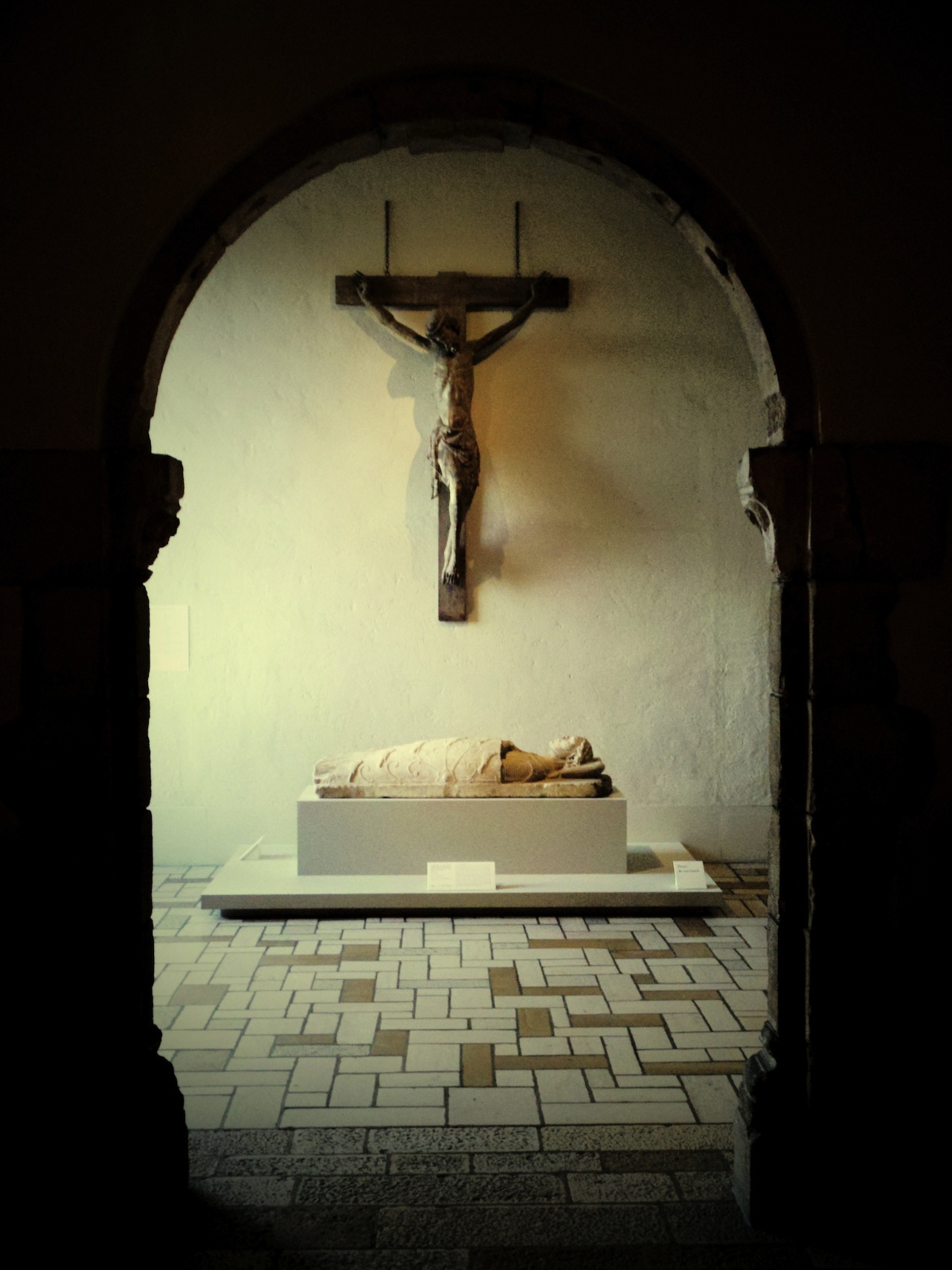
This week’s WordPress Weekly Photo Challenge theme is “Renewal“.  This here is a picture of one of my favorite rooms in the Philadelphia Museum of Art. It’s in the medieval art section (a section which, as I’ve written before, carries much significance to my soul).

I still remember the first time I turned the corner and saw this crucifix on the wall. It’s crude, yet so beautiful. It faces another, dimly-lit room in which there is a medieval-era altar on which there was taken countless pieces of Eucharist.

The last time I was at the museum, though, I noticed a bit of symbolism I’d never noticed (and I have no idea why). This crucifix is positioned above a 13th-century knight’s tomb effigy. After spending some time in reflection near the aforementioned altar, I looked back through the arch and for the first time noticed that the gaze of the dying Christ seemed to be settling not on the museum passer-bys, but on the effigy of the dead knight before him.

The Christ’s gaze of sadness and pity no longer seemed to be for his own sufferings, but for the death and suffering of this one that lay before him. This gaze seemed to carry with it not only sadness, but also a stoic confidence that through this act, he would bring an end to this knight’s sleep.

Through this act of loss and sadness, here is a picture now of rebirth and renewal, made all the more meaningful as I took this picture from the steps of that altar, bathed in darkness, on which was consecrated and served Christ’s body, broken for our renewal and light–then, and today.

See my past Weekly Photo Challenges here.

___________________________

Continue reading

A “vagina” & minor theological disagreement is going to keep a good book off of a Christian bookstore’s shelves


Just look at that smile. Doesn’t seem like the face of someone that wants to destroy Christianity, does it? Well, some would disagree, and one Christian bookstore wants to protect us from her.

One of the best voices in contemporary Evangelicalism today is Rachel Held Evans. She writes about many things, but a major part of her writing–and the topic of her most recent book A Year of Biblical Womanhood: How a Liberated Woman Found Herself Sitting on Her Roof, Covering Her Head, and Calling Her Husband “Master”–is the place of woman in Christian homes and churches.
Continue reading

Weekly Photo Challenge: Happy (multi-header!) [casual fri]


This week’s WordPress Weekly Photo Challenge theme is “Happy“. The prompt they have offered us is to make a collage of those things that make us happy. So…here’s mine. Click on any of the pictures to bring up the full-size gallery.

Continue reading

some brief thoughts on “willful persistence in sin” & homosexuality


Update III: I posted some final thoughts on these posts.

Update II: In some commenting I did on facebook, I feel I communicated myself more clearly on a couple of issues than I did on this post. So, below, you’ll find those clearer comments, edited for your consideration.

Update: The second and final part of these posts is up.

In response to my post earlier today on Exodus International’s decision to move away from “conversion therapy” of homosexuals, in which I criticized many more conservative reactions (don’t worry, you progressives will get your due tomorrow, haha). A couple of comments, messages, and such have asked me about that classic Evangelical formulation that homosexuals that “persist in their sin” or “walk in deliberate willful disobedience” cannot be “saved”.  (This idea is based on some parts of 1 John, but that application of those verses has too many interpretive issues to go into here, as I type on my phone. Suffice it to say, though, that it’s a bad application and doesn’t naturally flow from the text).

Anyway, back to the question.

Life is much more complicated than those simplistic categories of “willful”, “deliberate”, and “persistent” (and “sin”, frankly). Being in counseling myself, and being a counselor, this whole “willful disobedience” thing is much grayer than that articulation implies.

What do you do with pastors that are irresponsible in their preaching and “pastoring”, and even in light of SO many other believers telling them they are wrong, disobedient, harmful, and sinfully relating to their people, they “wilfully persist” in that? What about all of us Christians that “willfully persist” in driving even 5 mph above the speed limit? What about the person in the church that never stops gossiping, even in spite of sitting in sermon after sermon on the topic? Or all the southern and midwestern christians that “wilfully persist” in their gluttony?
Continue reading

a note on Grace from a friend (I miss you, Michael Spencer)


Two years ago (almost to the day), a dear friend of mine passed away. Michael Spencer (or, the “Internet Monk” as he was more widely known) encouraged me for years with his blog writing critiquing the wider church with both wisdom and bite (the site is being continued by one of his good friends and avid readers). He died of cancer, and in that death, the Church lost a great man. His one published book, Mere Churchianity, was published several months later. It’s a great summary of his life and thought. I highly encourage anyone to get it.

While he was still living, I wrote on this site about how he influenced and affected me. I also wrote this piece for Patrol Magazine after he died (I still remember the tears blurring my vision as I typed that up).

Anyway, another dear blogging friend, Lore Ferguson, is going on sabbatical from her own amazing blog and asked me to write a guest post on–of all topics–grace. I told a couple of my friends this the other night, and one of them said, “Wow! That’s you favorite topic!” It certainly doesn’t feel that way.

As I was thinking through that, I was reminded of the best thing I’ve ever read on grace, and I wanted to share it with you all. It’s an essay by Michael Spencer. I cried through this piece as well (a lot of crying in this post. Hmm…). It was the inspiration for the sermon I delivered at my church’s prison ministry that later was turned into a five-part series on this blog called “Holy Week & the Scandal of Grace“.

I want to give you the link to the article, an extended quote, and then the end of his piece that I adapted as a benediction at the end of the sermon. Enjoy. And grab some coffee. And some tissues.

Link: Our Problem with Grace: Sweat. Hand-wringing. “Yes, but…”
Continue reading

Philly’s Outdoor Feeding Ban: Good for the City, the Church, & the Gospel (ii)


Yesterday I wrote a post about the Philadelphia ban on outdoor feeding of the homeless. I wrote about how the issue here is not about hunger, it’s about choice. It’s also not a religious freedom issue, as some groups say. These feedings have been one way that Christians have tried to accomplish their call to serve the homeless. Banning these outdoor feedings does not ban our service, just one particular way we’ve done it. Lastly, I talked about how honoring someone’s dignity is more about acting for their greatest good more than it is about creating space for them to choose whatever they want.

Today, I want to talk about how this ban is actually good for the Gospel in this city.
Continue reading

Philly’s Outdoor Feeding Ban: Good for the City, the Church, & the Gospel (i)


Update: the second (and final) part of this article is up, where we discuss some ways to look at this theologically.

Just over a month ago, Mayor Michael Nutter of Philadelphia announced a controversial plan to ban the outdoor feeding of homeless individuals in the city parks and on the Benjamin Franklin Parkway, home to many of this city’s finest museums, including the soon-to-open (and just as controversial) Barnes Foundation.

This has been met with the expected and understandable anger and protest from many of the city’s hunger-based non-profits and faith-based homeless ministries that participate in these outdoor feedings (the ban is still in process and has not been enforced yet). Some leading homeless advocates support it.

Many of these religious groups understandably feel like this move is an over-reach of cold, heartless government, trying to keep the church from doing its God-given call to feed the hungry and clothe the naked. Many have felt like this is an imposition on the religious freedom of the Christians of Philadelphia.

I would like to, as humbly as possible, disagree.

Continue reading

Please help me give my money away! [UPDATED]


As I said the other day while introducing Lent this year, the Lenten season has historically been marked by three practices of those that participate in it. Prayer and fasting tend to get most of the attention, but almsgiving is another component of a Lent-historically-done-well. Almsgiving is the ancient term for giving materially of your resources for the purpose of charity, love, and grace.

I have never been good at giving my money away. Tithing has always been difficult for me to practice; giving to the homeless has been hard; and I always have a good excuse why I’m not able to give to some cause greater than myself. Sure, I’ll talk about the organization or even write a blog post in support of it, but it’s hard for me to part ways with my money.

This season, however, I wanted to try an experiment to fight against this and hope and pray that God meets me in it and grows me in deep, lasting ways.

This Lent, I want to give away some of my money everyday. For Monday through Saturday (the Church considers Sundays Lent “mini-breaks”), I want to give some amount of money to a non-profit or charity that can use it to help others.

But I need help.

If you have a non-profit or charity or social justice organization that you particularly like, could you leave a comment below telling me what it is?
Continue reading

A Death Penalty Follow-Up


Last week, I wrote a post about the recent case of Troy Davis and how this had inspired me to rethink and reconsider my position on the use of Capital Punishment by the government to punish those convicted of crimes they deemed worthy of such a response. In my attempt to be nuanced, I fear I may have given a wrong impression of where I stand now.

I think some people may have walked away from the post thinking that I believe that the government should have the right to bring the death penalty to bear upon some criminals, but Christians shouldn’t actually do it (or something like that). This isn’t quite the case.

Let me restate what I’m thinking even more clearly and simply: I don’t see a justification for Christians supporting the use of Capital Punishment by the government in any case. 

Continue reading

Prayer & the Christian Life [a teaching I did at liberti church] {AUDIO}


Last week, I posted the manuscript and audio from a teaching I did on the Bible from a series of seminars/discussions my church has been doing called “Summer Conversations“. This week I wanted to post the other teaching I did. This one was on the idea of Prayer. This was a really amazing thing to prepare for and the night went really well. Also, unlike last week, the audio turned out really clear.

Audio | download
Notes| download: pdf, Word, Kindle, ebook read: Google DocsScribd
Continue reading

The Nature & Narrative of the Bible [a teaching I did at liberti church] {AUDIO}


This summer, my church has been doing a series of seminars/discussions called “Summer Conversations“. I was asked to teach at two of them. I am providing the manuscript and audio from the first night here. The second one I’ll post next week. This first “seminar” was on The Nature & Narrative of Scripture. The night went really well. The audio, on the other hand, did not. This recording is really tough to listen to. Fortunately, for this particular talk, I wrote everything out in manuscript form and stuck pretty closely to it (especially Part 1). So, feel free to download/preview these in whatever way/format is most convenient for you and may they enhance your understanding of our God and how He has revealed himself.

[Also check out the other talk I gave at liberti on Prayer and the Christian Life (much better audio)]

Audio | download
Manuscript | download: pdf, Word, Kindle, ebook read: Google DocsScribd
Continue reading