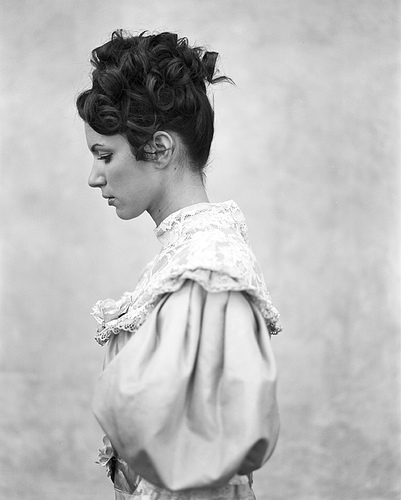
photo credit: David Schrott
For those that have followed this series on Beauty, you will know that we have hit three major sections so far: “Why do we long for Beauty?“, “What is Beauty?“, “What things are Beautiful?“, and now we’re in the “How do we respond to this Beauty” section. I am in the process of laying out four “stages” of an appropriate and full response to Beauty. The first stage of this response is a contemplation of the Beauty. The second is our enjoyment of it. The first step in that process is Praising Beauty, which we talked about last time. In this post, we talk about the next step. This also happens to be my favorite part of the process of responding to Beauty. It’s when we are joined to Beauty and are swept up in its complexity and nuances. I love this feeling, I love this experience, and I loved writing and talking about it. I hope you enjoy reading it. Once again, the full manuscript and audio of the lecture I gave on this is below. We pick up right where we left off, saying that we must praise Beauty.
______________
Bur praising is not enough. Seeing something beautiful and calling it such does not complete the purpose for which that beauty exists. Beauty has an attractive quality. It draws you toward it at a very deep level. The next step, after acknowledging this beauty is to allow it to suck you in. I call this “Participating” with the Beauty of that thing or person.
Practically, this looks lots of different ways. With other people, it’s a drawing near to that person. Conversing with them. Viewing more of the nuances of the Image of God in them that makes them beautiful. For art, it looks like accepting the art on its own grounds and letting it draw you in in whatever way it’s asking of you. For plays and films it’s that idea of “suspension of disbelief”, where you allow yourself to forget that you technically “know” this isn’t real, and you let yourself get sucked into this beauty. Other forms of art tend to ask us to get lost in the object itself and explore its nuances. Closing your eyes during a musical piece and hearing every note; letting the words of a poem get inside of you and change the vocabulary you use to describe its own beauty or the world around you; letting distractions fade as you stare at a painting and see every stroke, every color (anyone who has seen a piece in real-life by John Singer-Sargent or Vincent VanGogh knows this feeling most definitely). Have you ever cried because of Beauty? This is participating with it. In the contemplation stage of this process you ask yourself “what is the beauty of this thing asking of me? It’s drawing me to itself, but to what end?”
But what about God? What about Divine Beauty? This is where His Beauty shows especially brilliantly. All other forms of beauty can only draw you near to itself. God can and does actually draw you into Himself and Himself in you. We can participate with Him in a way that every other form of beauty only faintly strives for. How? Well, He takes the first step upon changing someone by actually sending his very Spirit to dwell within His people.
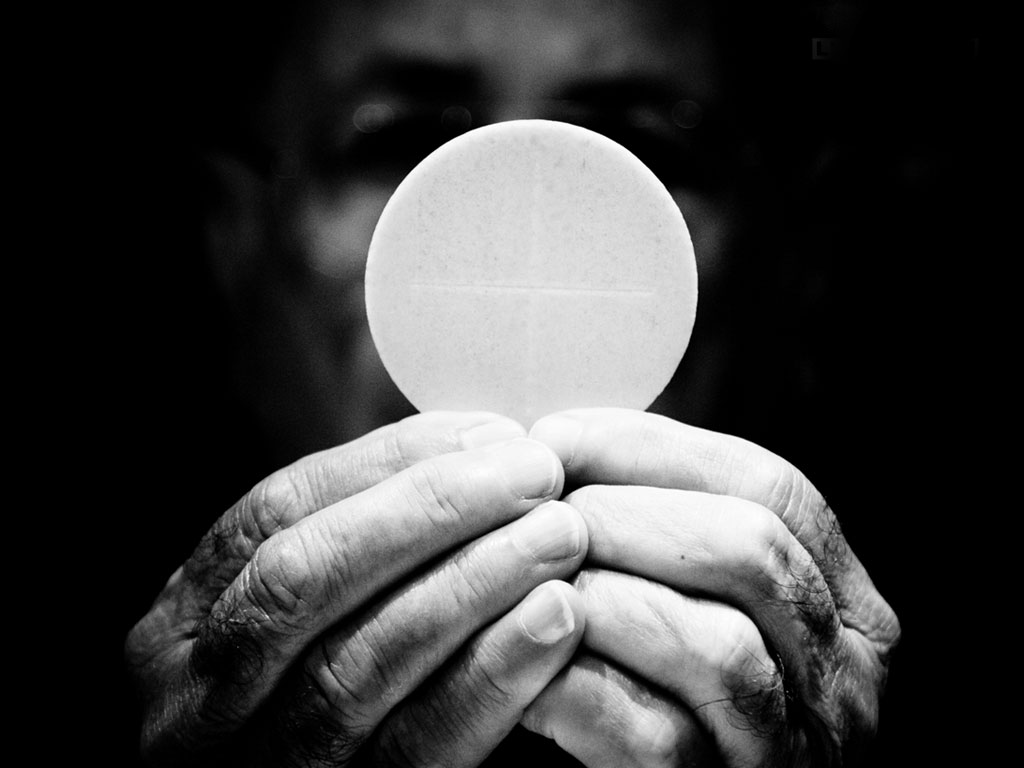
But God not only let’s us participate in His Beauty spiritually, but also physically. After He draws near to us, we do what the Bible calls “abiding” in Him, where we draw near to Him through various things the Bible calls “means of grace”. These are traditionally called sacraments. They are physical things that we participate in and by faith He meets us there. One of the clearest examples is Baptism. It is where we are brought into union and participation with Christ in response to his faithfulness and action toward us. Another is Communion. Just think of the word: “Co-mmunion”. It’s where we “commune” with God. That bread and wine is a symbol, but not just that. It is in those elements that we His people are actually drawn further into God to “commune” and participate with Him in His beauty. This is why Communion is such a big deal in the Bible. God kills people – even Christians – because they misuse this beautiful thing. He will let no one lightly and trivially participate and be drawn into His Beauty.
This should lead us to a “sacramental” view of life, where God is using all things to communicate Himself to us and communicate His Grace to us. Let everything: every good-tasting piece of food, every sunset, every cool breeze, every joyful moment all be moments where God communicates Himself and His grace to you so you might participate and be joined to Him in His Beauty and we further praise Him even more. Historically, the Christians that do this well have been referred to as “mystics”. They are the ones that say seemingly crazy things. Brother Lawrence was a 17th century monk and he said: “I have at times had such delicious thoughts on the Lord I am ashamed to mention them.” John Owen, my favorite Puritan, says
O to behold the glory of Christ…Herein would I live; herein would I die; herein would I dwell in my thoughts and affections…until all things below become unto me a dead and deformed thing, no way suitable for affectionate embraces.
Oh that we longed in that way for God. There is a participation in the Glory, Beauty, Majesty, Goodness, and Love of God that is at hand for those who believe and far for those who don’t. Please, I beg of you, if you are not a believer, seek the Beauty of God, for it’s only suitable response is to be drawn into into and know his intimacy in this way. He, the fountain of all good things, the One for Whom your soul was made, does not disappoint those who seek to know Him. Participate in Beauty.

Manucscript

Audio
0.000000
0.000000



 the long way home