Weekly Photo Challenge: Love (beyond death)


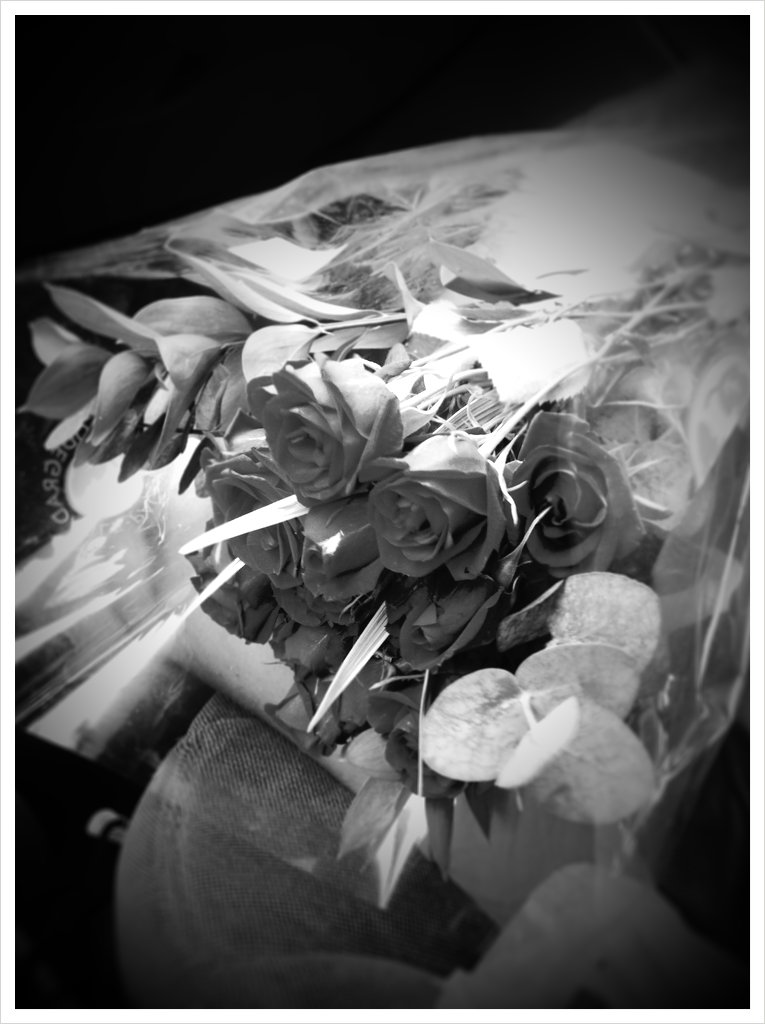
grave-bw-flowers

This week’s WordPress Weekly Photo Challenge theme is “Love“. The real “challenge” with this theme was try and find something not cliche; something you all would find “novel” and “creative”. As I perused my pictures, though, I fell on this one and all my notions of novelty and “coolness” went out the window. I realized I had a bigger, more important story to tell about love.

I had another client die last week. In my field, this is to be expected now and then, and I’ve had a few of my clients die in the past three years, and even more clients die that I knew from the caseloads of co-workers.

This death this past week has got me thinking about my work, my clients, life, death, and, you know, all those other light and airy topics we so enjoy thinking about (yeah, that was sarcasm). And it got me remembering the photo above.

Continue reading

Nature shows us the Resurrection


As part of my own personal devotions, I use A Year with the Church Fathers by Mike Aquilina (also a free Android App–Google FTW!). In it, he offers a little introductory summary, followed by some words by a church father, and then ends with a question to meditate upon and a concluding prayer.

This one struck me yesterday, as doubt in the Resurrection is something I struggle with a lot. Thank God we live and grow and struggle in such a long, continual stream of godly men and women having walked before us. We stand on the shoulders of giants, to be sure. I hope this encourages you as well.
Continue reading

2 amazing hours on the Christian end of the world


A few people have asked about my blogging absence (I have felt honored that they have noticed!) Anyway, I’ve been sick, first with a stomach flu, and now with an upper-respiratory thing. I lost my voice last week and am only now recovering it. It’s weird; I hardly ever get sick.

Anyway, this has kept me from blogging, but it’s given me the chance to watch and read some amazing things (about which I’m sure I’ll write more in the weeks to come). One of the highlights of my time was this video, An Evening of Eschatology, hosted by Bethlehem Baptist Church and moderated by John Piper (here’s some background to this talk):

This is an amazing discussion, and very insightful for those of us Christians that either have passionate views on the end of the world or don’t think about it much (as a friend used to say, “I’m a ‘pan-millennialist’: I believe in the end it’ll all just pan out.”).
Continue reading

Advent & the Goodness of Worldliness, c/o Dietrich Bonhoeffer [QUOTE]


‎”I remember a conversation that I had in America thirteen years ago with a young French pastor. We were asking ourselves quite simply what we wanted to do with our lives. He said that he would like to become a saint (and I think it’s quite likely that he did become one). At the time I was very impressed, but I disagreed with him, and said, in effect, that I should like to learn to have faith. For a long time I didn’t realize the depth of the contrast. I thought I could acquire faith by trying to live a holy life, or something like it. I suppose I wrote The Cost of Discipleship as the end of that path. Today I can see the dangers of that book, though I still stand by what I wrote.

I discovered later, and I am still discovering right up to this moment, that it is only by living completely in this world that one learns to have faith. One must completely abandon any attempt to make something of oneself, whether it be a saint, or a converted sinner, or a churchman (a so-called priestly type!), a righteous man or an unrighteous one, a sick man or a healthy one. By this-worldliness I mean living unreservedly in life’s duties, problems, successes and failures, experiences and perplexities. In so doing we throw ourselves completely into the arms of God, taking seriously not our own sufferings, but those of God in the world–watching with Christ in Gethsemane. That, I think, is faith: that is metanoia; and that is how one becomes a [human] and a Christian (cf. Jer. 45!). How can success make us arrogant, or failure lead us astray, when we share in God’s sufferings through a life of that kind?”

— Dietrich Bonhoeffer, Letters and Papers from Prison (via Kait Dugan)

Advent & the Connecticut Shooting: Ross Douthat’s “The Loss of the Innocents”


winter-snow-trees-bw

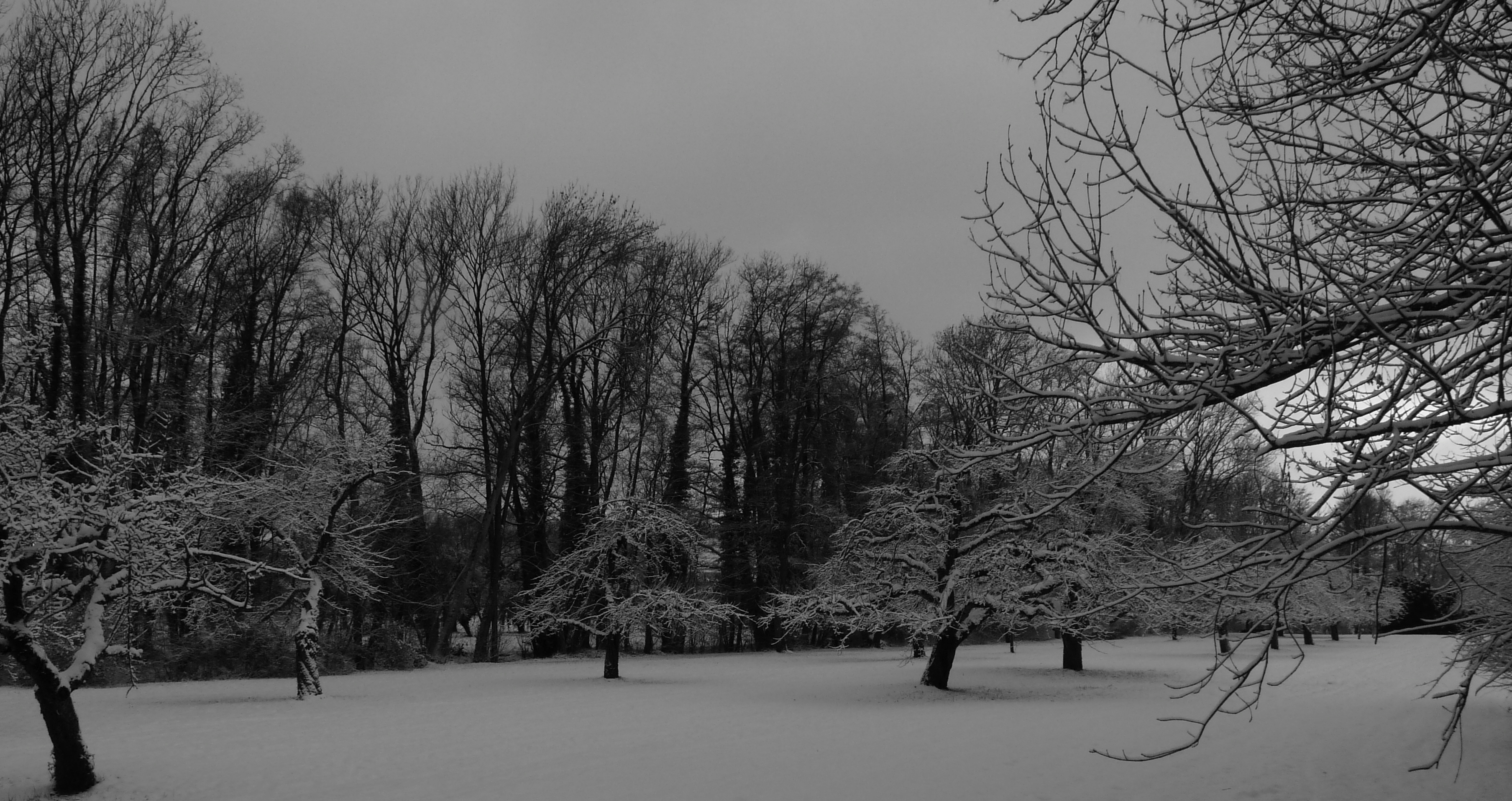
In the same spirit as today’s earlier post by Austin Ricketts, I wanted to share with everyone this incredible piece by New York Times columnist Ross Douthat (one of my favorite writers), entitled “The Loss of the Innocents”. It’s a beautiful and haunting reflection on the human condition and the theological senselessness inherent in events like last week’s mass shooting at an elementary school in Newtown Connecticut. He then concludes with these beautiful words of Advent hope in the midst of such darkness:

In the same way, the only thing that my religious tradition has to offer to the bereaved of Newtown today — besides an appropriately respectful witness to their awful sorrow — is a version of that story, and the realism about suffering that it contains.

That realism may be hard to see at Christmastime, when the sentimental side of faith owns the cultural stage. But the Christmas story isn’t just the manger and the shepherds and the baby Jesus, meek and mild.

The rage of Herod is there as well, and the slaughtered innocents of Bethlehem, and the myrrh that prepares bodies for the grave. The cross looms behind the stable — the shadow of violence, agony and death.

In the leafless hills of western Connecticut, this is the only Christmas spirit that could possibly matter now.

Read the full piece here.

Advent & Suffering: silent only for a time [GUEST POST]


richmond-mary-snow

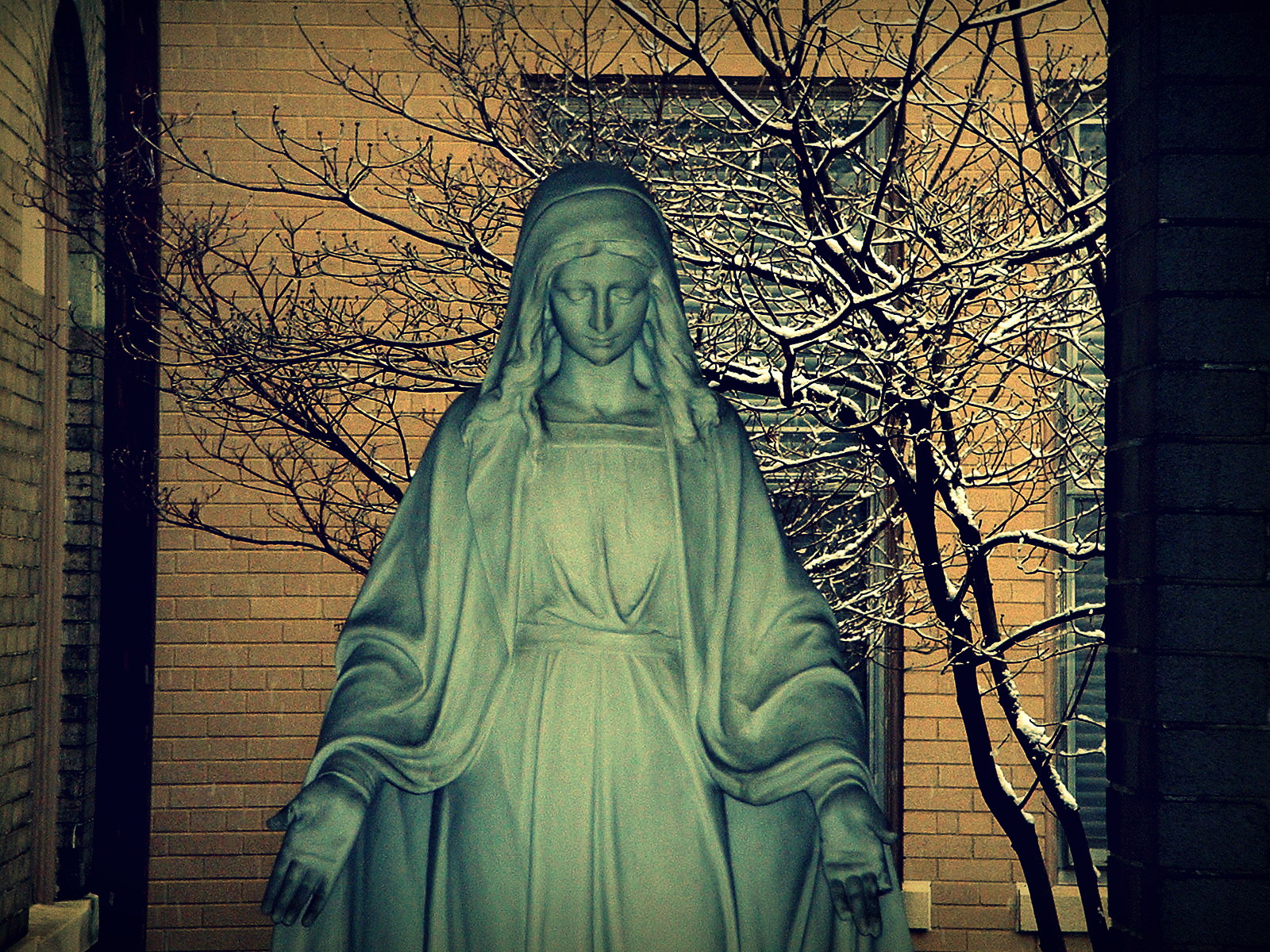
[Here’s another post by my good friend and occasional blog contributor Austin Ricketts. In light of last week’s shooting in Connecticut, it takes on even more meaning.]

“I was mute and silent, I refrained even from good. And my sorrow grew worse…I have become mute, I do not open my mouth, because it is you who have done it. Remove your plague from me; because of the opposition of your hand I am perishing”

These words are painful. They hit the reader with sadness and little hope. The Psalm itself does not end on a happy note:

“Turn your gaze away from me, that I may smile again before I depart and am no more.”

Why all this talk of sorrow during this time of year, a time that should be joyous and celebratory? It’s safe to say that many will not feel the joy that should be felt during this Advent. Many will feel that deep turning feeling in their stomach, the beginning of depression, the weight in the center of their back.

Not all see the light.
Continue reading

Advent & Politics: The Government is on His Shoulders


laureti-triumph-christianity-pagan-statue

This Advent season, we’re seeing how the Advent event affects parts of our lives that we usually don’t associate with this time. You can follow the series here.

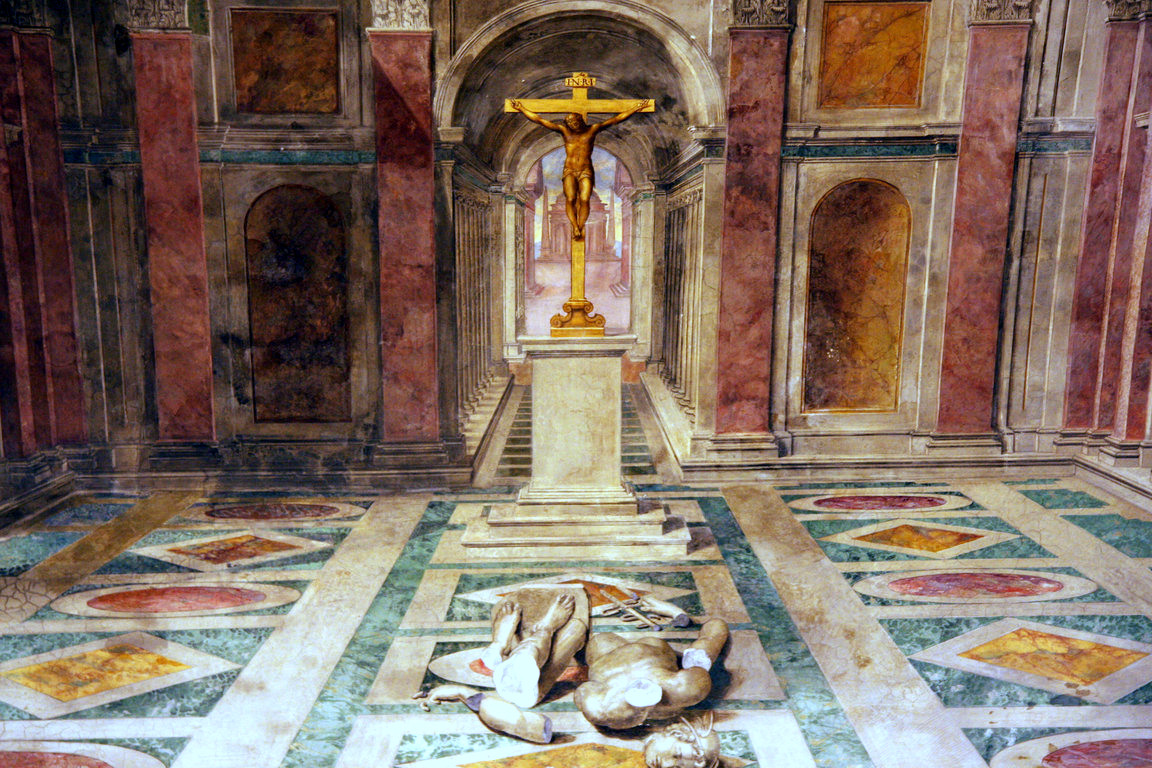
The book of Isaiah is a minefield for biblical studies, mainly because of the development it seems its contents went through to get to its final form. It appears to be a strange stitching together of many writings, perhaps by many people, for several different purposes. But in all of its complexity and mystery, there is one theme that it consistently holds throughout its contents: politics. The political movements of the nation of Israel and the nations around it–and God’s movement in and through all of it–occupy most every chapter of the book.

Interestingly, this is also where many of the most dramatic and explicit messianic prophecies are found–specifically Advent prophecies. When telling the Christmas story, the gospels quote Isaiah (I believe) more than any other Old Testament book. Images of virgins, Emmanuel, Davidic lineage, “roots of Jesse”, and John’s “voice crying in the wilderness” all find their source here.

There seems to be an intimate connection between politics and Advent.
Continue reading

Herman Bavinck on the Advent Incarnation


The doctrine of Christ is not the starting point, but it certainly is the central point of the whole system of dogmatics. All other dogmas either prepare for it or are inferred from it. In it, as the heart of dogmatics, pulses the whole of the religious-ethical life of Christianity. It is ‘the mystery of godliness’ (1 Tim. 3:16). From this mystery all Christology has to proceed. If, however, Christ is the incarnate Word, then the incarnation is the central fact of the entire history of the world; then, too, it must have been prepared from before the ages and have its effects throughout eternity…the incarnation is not an incidental decree that emerged later: it was decided and determined from eternity. There was not time when the Son did not exist; there was also no time when the Son did not know he would assume and when he was not prepared to assume the human nature from the fallen race of Adam. The incarnation was prepared from eternity; it does not rest in the essence of God but in the person. It is not a necessity as in pantheism, but neither is it arbitrary or accidental as in Pelagianism.

Reformed Dogmatics, Vol. 3, pp. 274; 276-277 (found this by way of friend-of-the-blog Austin Ricketts)

Free Advent Mixtape Available Now!


Advent-Mixtape-Cover

Update: I got some inspiration and updated the Mixtape, changing the song selection/order a little bit from when this was originally posted. Sorry for the inconvenience.

A new church season, a new mixtape. You can find this year’s Advent Mixtape above, in the appropriately-named tab, or just click here. It’s free, and you can stream, download, or share it.

It’s very similar to last year’s except with some songs removed, added, and re-ordered. I definitely think this one is better. (Let me know what you think!) Be sure to read my post introducing Advent this year, including ways than you can more intentionally participate in this season. I hope this Mixtape can play some role in your time as well.

Here’s some more info, from the “Advent Mixtape” page:
Continue reading

Welcome to Advent, 2012.


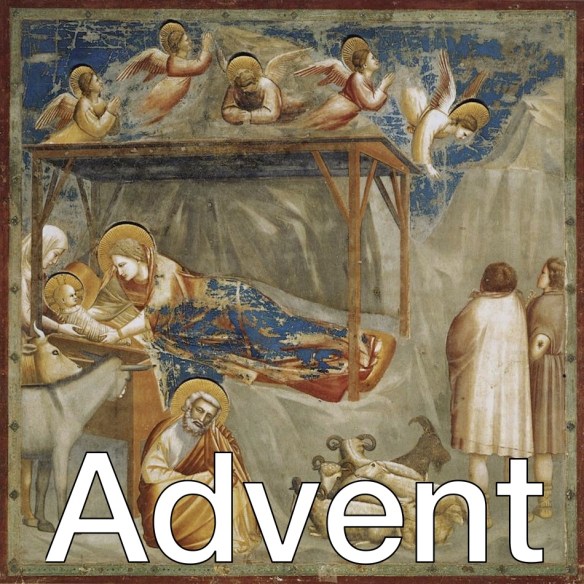
This Sunday marks the first Sunday of Advent. This is the New Year’s Day of the Christian Church Calendar. It’s the season in which we celebrate and meditate upon the “Advent” (latin for “Coming”) of Jesus into the world in the Incarnation. This season begins this Sunday and lasts until Christmas.

In this time, we stare deeply into the reality that the Creator God of the universe came into human form by way of human birth.

The season is marked (as with every Church season) with a profound tension. We meditate on the darkness into which Christ entered the world, as well as the light he brought in his Coming. Advent is a time that we sit in the tension of past, present, and future, and see how this most-differentiating belief of Christianity has profound implications on these places in time, and indeed, the whole of human life and experience.

This is why, for this year’s Advent, I’ll be doing a series meditating on how Advent affects seemingly unrelated parts of human life: art, politics, sexuality, singlenesswomen’s ordination, social justice, Evolution, suffering, humor, the city, and more.

There are several other ways you can engage in this season:
Continue reading

a prayer for election day


O Lord our truest Ruler and King, many words have been said these past months leading to this election day. Far too many of these words have been hurtful, fearful, divisive, angry, and anxious. Being able to see our nation’s policies so tangibly, it is far too easy to equate this nation with your Kingdom, and so act as if this election were of supreme eternal importance.
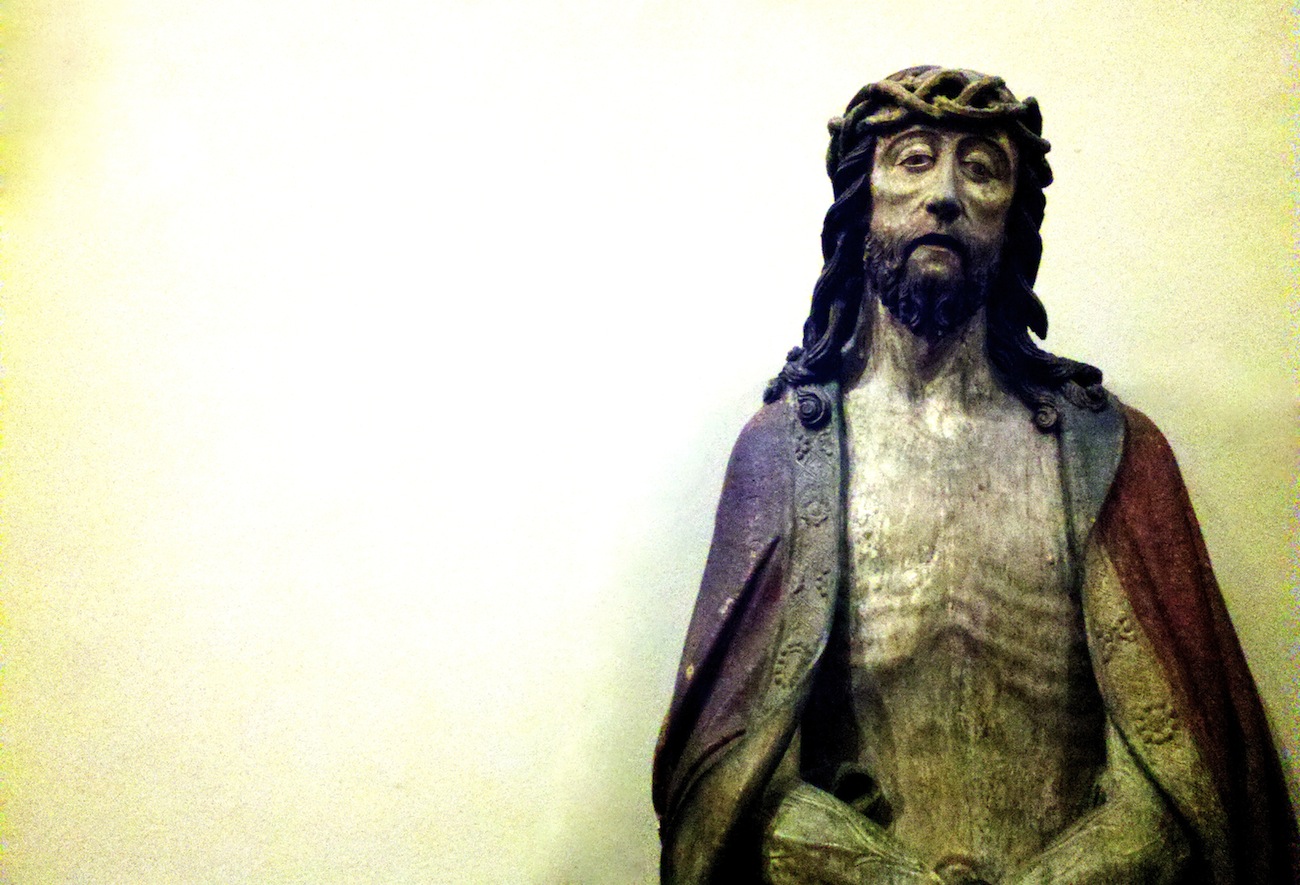
Lord, forgive us, we pray.

Bless the leaders of our land–those that have been and those that will be, after today–that we may be a people at peace among ourselves and a blessing to other nations of the earth. Let this be the conviction of every leader as they model for us, however imperfectly, political relations amongst both their fellow countrymen and citizens of the world.

Lord, keep this nation under your care.

Continue reading

Hope of the Earth: a political eschatology (we can all breathe)


November 7th, we will wake up to front pages declaring with finality the results of the American Presidential Election. Most of us will see these headlines and have some sort of emotional reaction (especially those of us that stayed up as late as we could to know the results early).

Depression? Fear? Anger? Injustice? Sadness? Joy? Elation? Ecstasy? Worship? Peace?

I remember after the 2004 election when Bush beat Kerry. Going to a large, urban University dominated by idealistic and passionate liberal youth, the campus was in mourning for the rest of that week. People walked in silence, hugged one another, and I saw a good number of people crying as they resigned themselves to what they felt would be the end of every good thing they’d ever thought about this country.

This election cycle, I was certainly active–probably more so than ever before (especially on this blog, at least). I’m almost certain that I have been blocked from my fair share of Facebook feeds and removed from some feed readers in the past six months or so. I’ve been quite passionate on those few issues that have guided so much of my writing and reading.

But I haven’t lost a bit of sleep over any of that stuff. I’ve been able to enjoy good books and beers, and pipes and peers, without any discussion of politics or debates or elections.
Continue reading

Evil & God {2}: I’m a Heretic, I Fear


This is my final post in a discussion I’ve been having with a very good friend of mine, Austin Ricketts, about the relation of Evil to the Nature of God. For more on the background of this discussion, see  Part 1 of this reply, although you should be able to gather a good idea of the conversation from this post. After this, I’ll let Austin have the last word, if he’d like.

Pressing into the Story of God’s Nature

I’ve been saying that God’s Nature is not static, but, just like us humans, it’s like a Story, unfolding in time (click here for more). Further, it’s a Story that includes Evil and Death within in. Hopefully I can clarify some points all the more by drawing out the “Story” metaphor further (because, at the end of the day, that’s all this whole “Narrative” framework is).

When I write a story about redemption and healing, I include evil in that story–evil that ends up being resolved and healed in the end. The thought of that evil (whatever it may be) is borne from my mind and existence. Just because the thought of that evil has “existed” in my mind, does not, however, make me evil.
Continue reading

Evil & God {1}: a refutation’s refute


Update: Part 2 of this post is up.

Last week, I wrote a post about being overwhelmed by God’s beauty in Western Pennsylvania. In it, I talked of the beautiful paradox of a God who would incorporate within his own divine life both Beauty and Suffering. My good friend (and huge theological influence) Austin Ricketts (who’s written on this blog beforetook issue with these statements, saying that he fears that they lead to making God the author of Sin and Evil. I wrote a reply to his comments in which I asked whether the very nature of God might be “narratival” and unfold over the course of history, and perhaps suffering and even Evil itself are “motifs” or “themes” in that “Storied Essence” of God–a story that eventually does away with these things. He wrote a reply in which he countered some of my views on revelation and some biblical texts.

Here, in the two parts of this post, I plan on (1) responding to Austin’s refutation, and (2) writing up some final thoughts (and fears) on my end. I’ll leave the final word to Austin if he so desires. Feel free to also chime in with your own thoughts if you like!
Continue reading

Evil & the Essence of God {2}: a storied solution?


Updates: Austin has replied to this post with his own thoughts. I have also edited this post to correct some of my incorrect Hebrew grammar Austin pointed out.

Earlier, I posted some comments that my good friend (and occasional contributor to this blog) Austin Ricketts wrote on my post yesterday about the relationship between evil, beauty, and the nature of God. Read those words if you would like his beautiful and articulate wrestling with this idea. Here is my response.

At some point in their lives, most people face the question: Can God stop this suffering? If not, is he God? If he can, but doesn’t, what kind of God is he?

Most of the time, attempts to push this question to a solid conclusion lead to unfortunate results. Many have abandoned God altogether over this, and still others, who maintain their faith, end up doing the mental gymnastics only to end up in positions entirely foreign to the Bible or that are even more illogical than when you began.

Here’s my attempt at a response, fully aware of the dangers that come with doing so. Please be gracious. Please reply. Point out my heresies, And please allow me the room to change my mind later on.

Continue reading